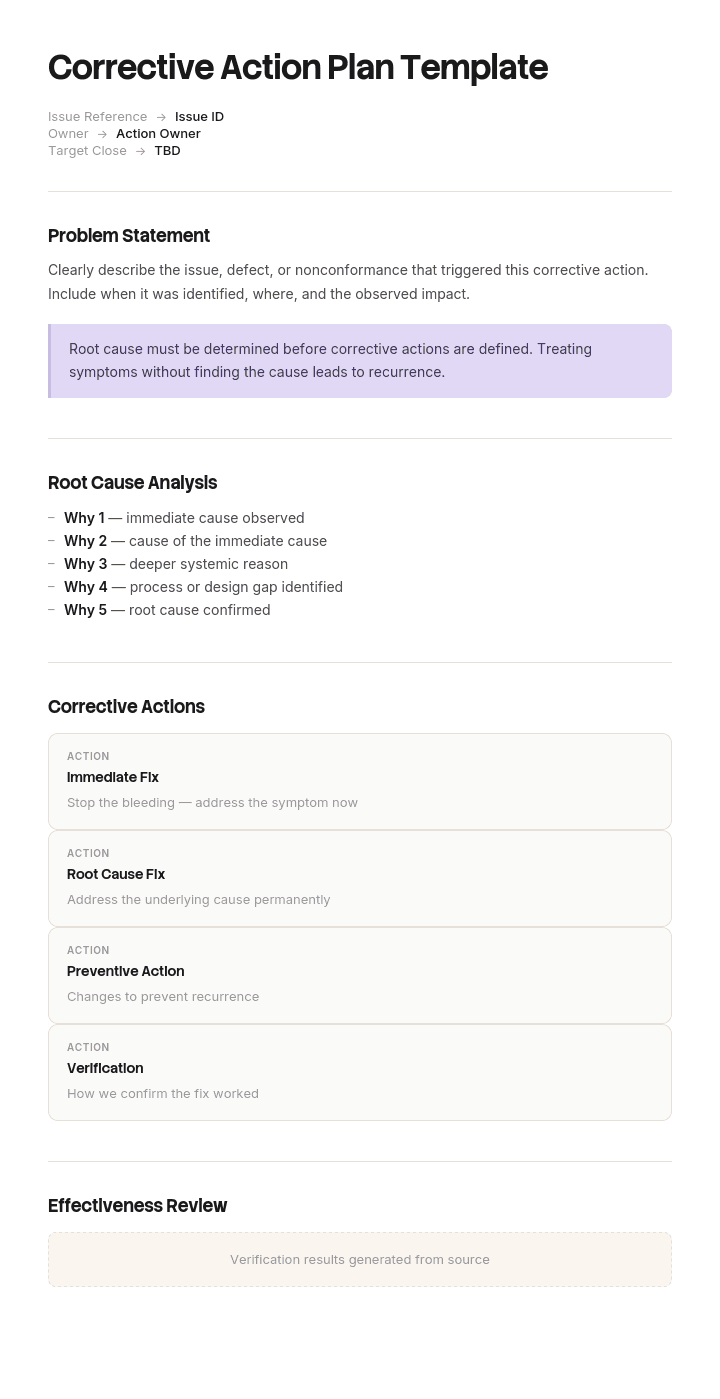
Use this template
A corrective action plan turns a problem into a solution that sticks. With Trupeer, you can save hours on quality documentation by starting with a free corrective action plan template, customizing it with your brand guidelines, and turning CAPs into video walkthroughs that drive accountability across teams.
A problem happens. Someone fixes the immediate damage, writes it up, and closes the file. Four months later the same problem happens again, and the corrective action plan from last time is filed as complete.
That is the standard failure, and it comes from one confusion: containing a problem is not correcting it. This free corrective action plan template keeps the two apart, and does not treat the plan as closed until someone has verified the fix actually held.
Download the corrective action plan template
Format | Best for |
|---|---|
Excel (.xlsx) | The working plan. Multiple actions, owners, dates, verification status, and a CAPA log across issues |
Word (.docx) | The written report, for audits, customers and management review |
The signed, closed record | |
PowerPoint (.pptx) | Presenting findings and actions to management or a customer |
Google Sheets | Live tracking where several owners update their own actions |
Free, editable, no watermark. Excel is the one most quality teams want, because a CAPA is a set of tracked actions rather than a narrative.
Which corrective action plan do you need?
Two very different documents share this name. Pick the right one before you start.
Situation | Document | What matters most |
|---|---|---|
A process, product or service defect | Quality corrective action plan or CAPA | Root cause, verification of effectiveness |
An audit or inspection finding | Corrective action plan in the auditor's required format | Evidence, dates, closure sign-off |
A customer complaint or return | Corrective action report, often 8D | Containment, customer communication |
An employee not meeting expectations | Employee corrective action plan | Clear standards, support offered, fairness, documentation |
A regulatory or compliance breach | CAPA, usually to a prescribed format | Traceability, preventive action, records retention |
A project going off track | Project corrective action | Recovery plan, revised baseline |
Most of this page covers the quality and process versions. The employee version is genuinely different and has its own section further down.
Containment, corrective and preventive action
The distinction that makes the difference between a plan that works and one that repeats. Three different actions, at three different levels, and every real plan needs all three.
Containment action. Stops the harm now. Quarantine the affected batch, pause the process, add a temporary manual check, notify affected customers. Fast, usually crude, and always temporary. Containment does not fix anything, and treating it as a fix is the most common error in this entire subject.
Corrective action. Removes the root cause of this specific problem so it does not recur. Slower, requires knowing the actual cause, and is what the plan is named after.
Preventive action. Stops the same cause producing problems elsewhere. If a training gap caused a defect on line two, preventive action asks where else that gap exists. This is the step almost everyone skips, and it is the one that produces compounding improvement rather than repeated firefighting.
A worked distinction. A customer receives the wrong part. Containment: check the rest of the order and ship the correct part today. Corrective: the picking label had two part numbers with one digit different, so change the labelling to make them visually distinct. Preventive: audit the whole catalogue for other near-identical part numbers and fix them too.
Plans that stop at containment are why problems recur. Plans that stop at corrective fix one instance. Only the third one changes the system.
How to customize this template in Trupeer
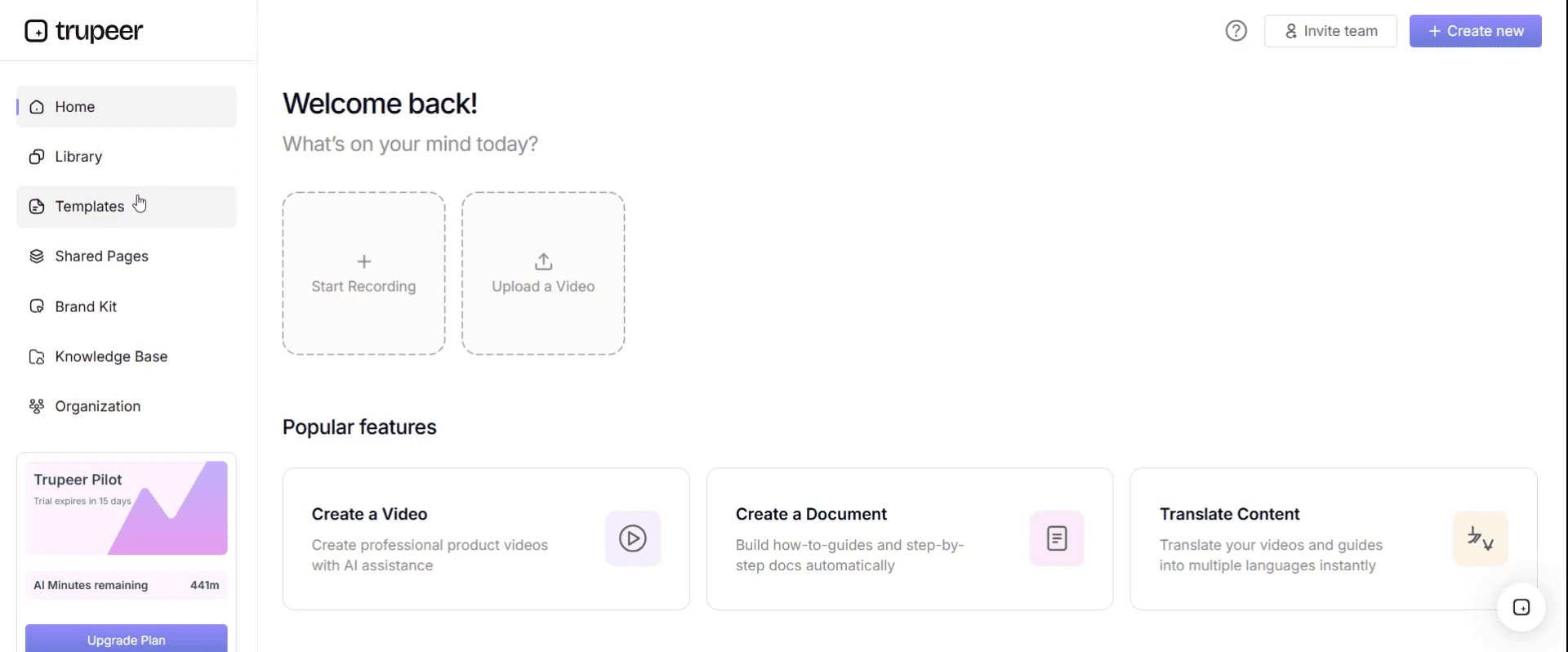
Step 1: Open the Templates Section
Go to the Templates section from the main navigation.
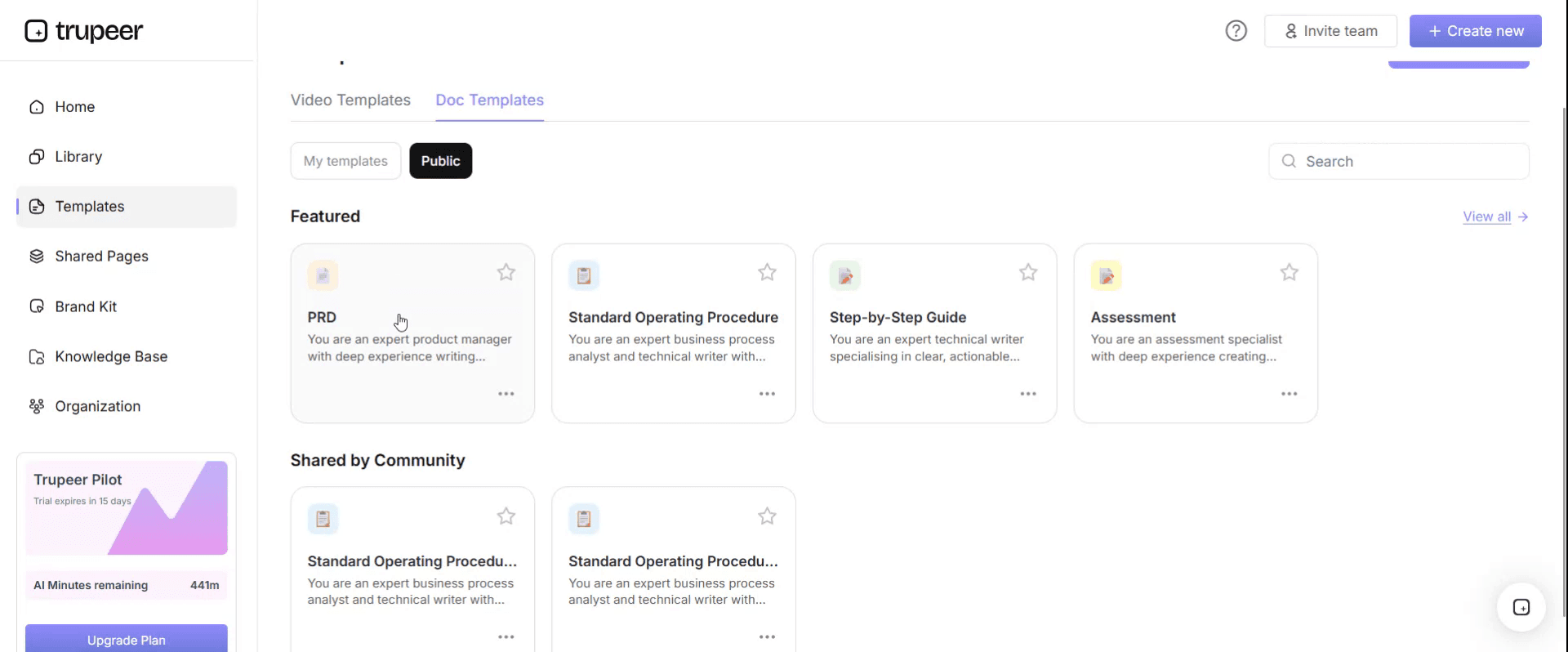
Step 2: Select and Open a Template
Click on any template you want to work with to open it.
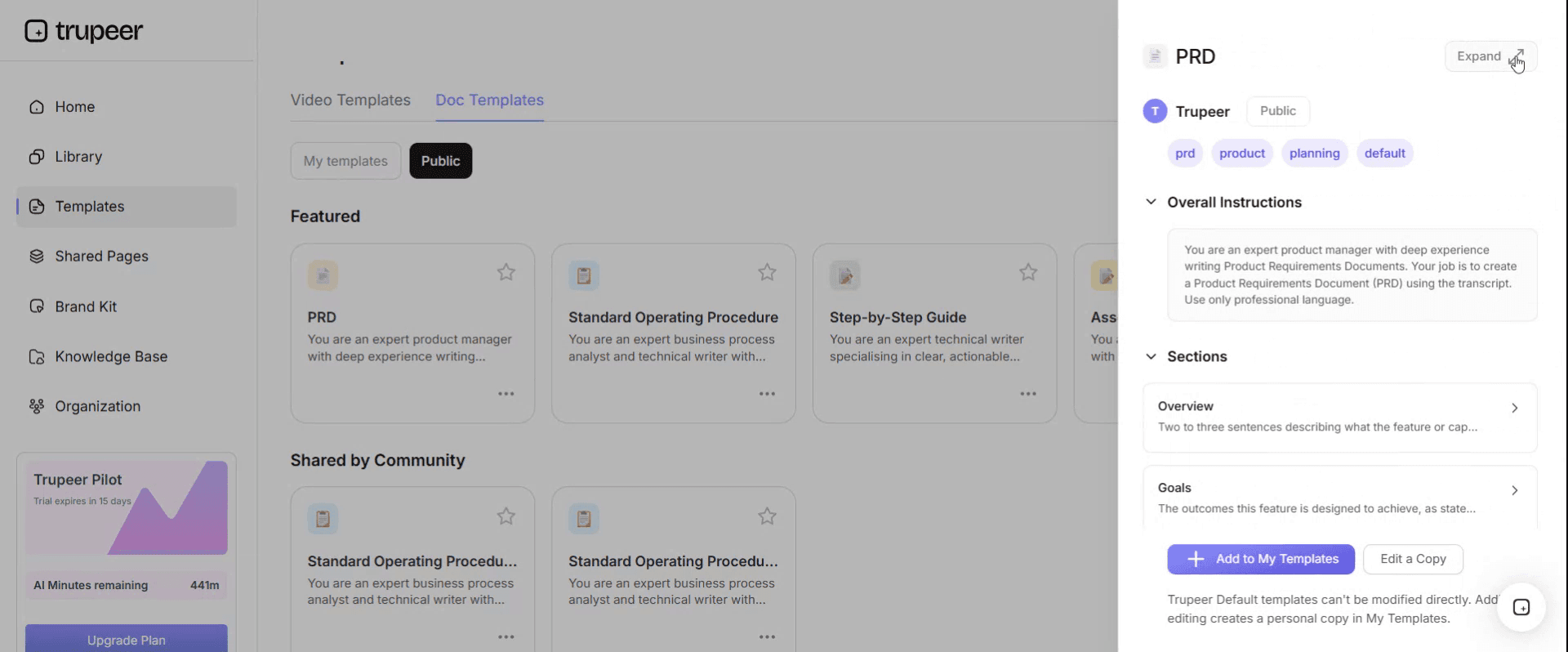
Step 3: Expand the Template View
If needed, expand the template view to see the full layout and details clearly.
Step 4: Edit the Template
Click on Edit to start modifying the selected template.
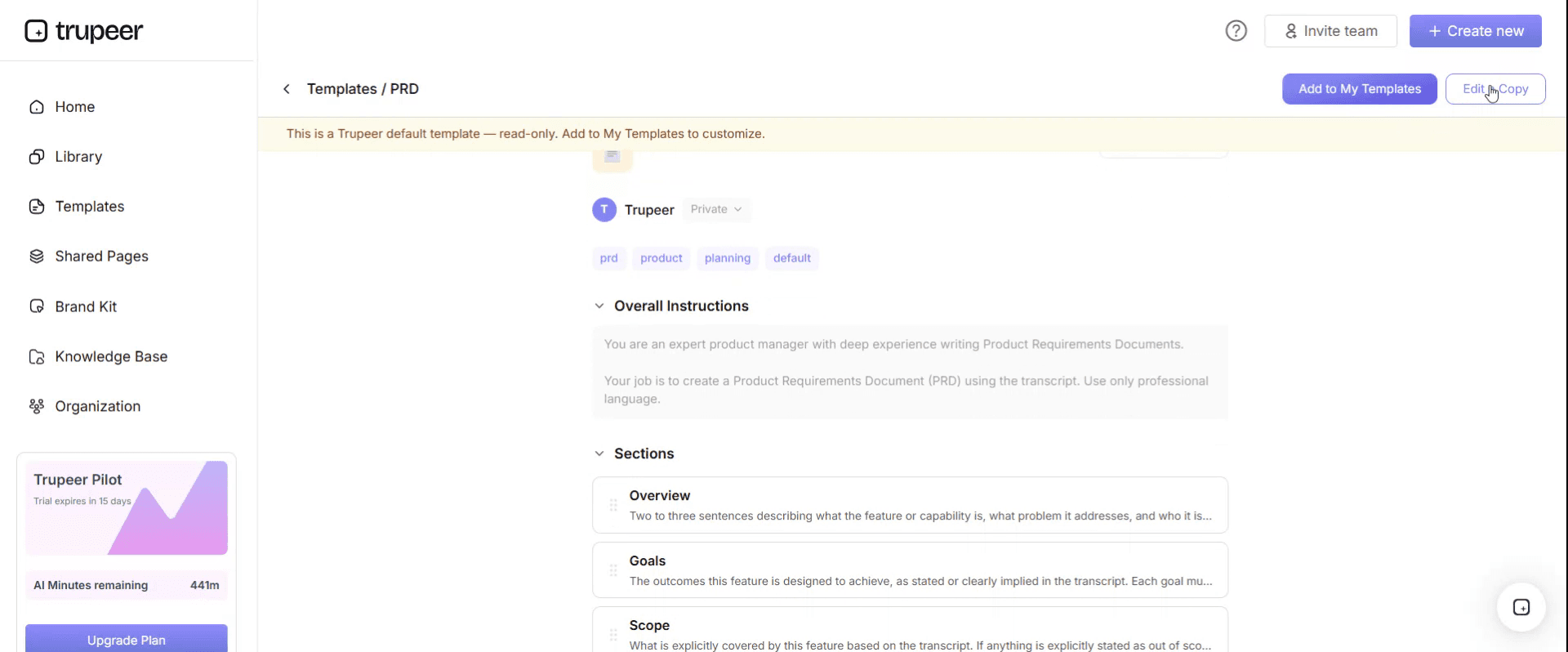
Within the editor, you can:
Add new sections
Define or update formatting rules
Add a logo and adjust its position and related settings
Step 5: Save Your Customized Template
After making all necessary changes, click Save to store the updated template as your own.
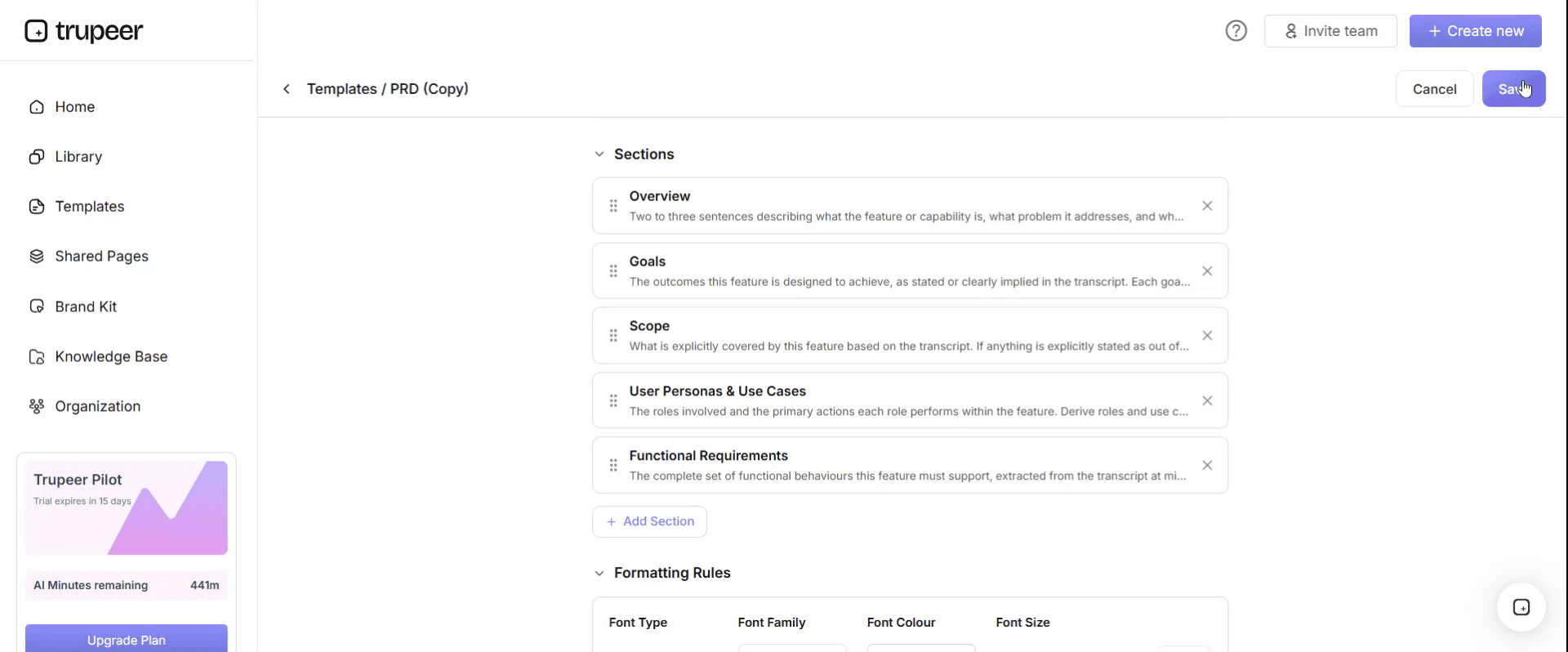
Step 6: Preview and Fine-Tune the Template
When you want to see how your customized template looks, open the Preview.
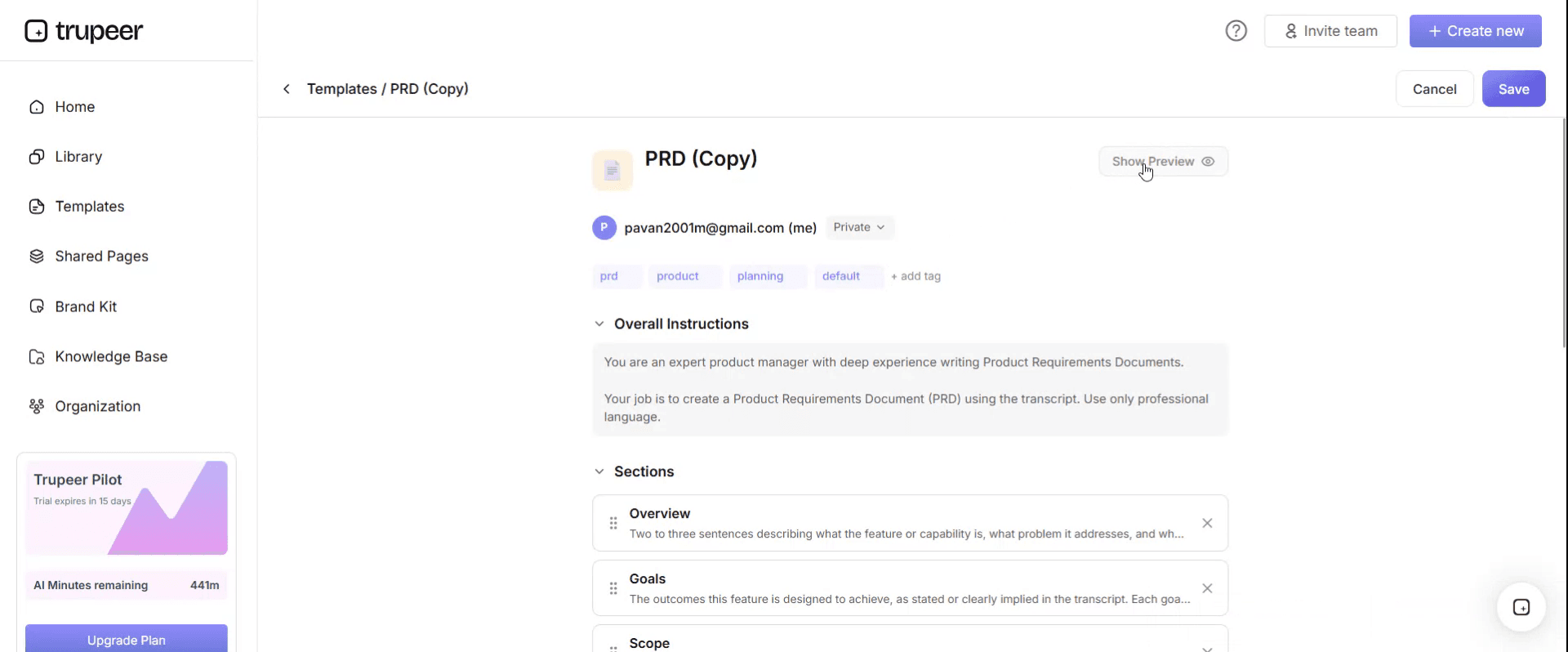
From the preview screen, you can continue to make adjustments directly if needed, ensuring the template appears exactly as you want.
With a corrective action plan template you can:
Save hours on documentation: Skip the blank page with a structure built for CAPA workflows.
Solve problems for good: Built-in root cause analysis prevents the same issue from recurring.
Stay on-brand: Apply your logo, fonts and colors using Trupeer's brand kit.
Train teams on changes: Pair CAPs with video walkthroughs to roll out updated procedures.
Stay audit-ready: Aligned with ISO 9001, IATF 16949 and FDA CAPA expectations.
Reach global teams: Translate CAPs into 65+ languages with one click.
A great corrective action plan stops small issues from becoming big ones. Use this template to capture every CAP clearly, completely and on-brand.
The corrective action plan template
Section 1: Document details
Field | Enter |
|---|---|
CAPA reference | CAPA-2026-014 |
Raised by and date | Name, role, date |
Source | Audit finding, customer complaint, internal defect, incident, near miss |
Severity | Critical, major, minor |
Process or product affected | |
Owner | Role accountable for closing it |
Target closure date | |
Status | Open, actions in progress, awaiting verification, closed |
Section 2: Problem description
State what happened, where, when, how often, and how it was detected. Quantify it. "Several units affected" is not a problem statement. "14 of 200 units in batch 4471, detected at final inspection on 3 August" is.
Section 3: Containment action
Action | Owner | Date | Status |
|---|
What was done immediately to stop the harm, and when the containment can be removed.
Section 4: Root cause analysis
Method used, the analysis itself, and the root cause identified. If you have more than one root cause, say so.
Section 5: Corrective actions
# | Action | Addresses which cause | Owner | Due | Status |
|---|
Section 6: Preventive actions
# | Action | Where else this cause could apply | Owner | Due | Status |
|---|
Section 7: Verification of effectiveness
Verification method | Criteria for success | When checked | Result | Verified by |
|---|
Section 8: Closure and sign-off
Closed by, date, and confirmation that verification criteria were met.
Filled-in corrective action plan example
CAPA-2026-014 · Raised by QA Manager, 3 August · Source: internal defect at final inspection · Severity: major · Owner: Production Manager · Target closure: 30 September
Problem description. 14 of 200 pump housings in batch 4471 failed final leak test at 2 bar. All 14 failed at the cover joint. Detected at final inspection on 3 August. No units shipped. Scrap value approximately £4,200. First occurrence of this failure mode on this product.
Containment action.
Action | Owner | Date | Status |
|---|---|---|---|
Quarantine batch 4471 in full | QA | 3 Aug | Done |
100% leak test on next 3 batches instead of sample | QA | 4 Aug | In place until CAPA closed |
Hold batches 4472 and 4473 pending analysis | Production | 4 Aug | Released 12 Aug after test |
Root cause analysis. Method: 5 Whys, supported by torque data from the assembly station.
Why did the units leak? The cover joint was not sealing. Why? Cover fasteners were under-torqued on the affected units. Why? The torque wrench in use had drifted below tolerance. Why? It was 6 weeks past its calibration due date. Why? Calibration scheduling relies on one person's spreadsheet reminder, and they were on leave when it fell due.
Root cause. Calibration scheduling depends on a single person with no cover or system alert, so calibration lapses go undetected.
Contributing cause. The assembly work instruction did not require operatives to check the calibration label before use.
Corrective actions.
# | Action | Addresses | Owner | Due | Status |
|---|---|---|---|---|---|
1 | Recalibrate all torque tools in cell 3 | Immediate cause | Maintenance | 8 Aug | Done |
2 | Move calibration schedule into the maintenance system with automated alerts at 30 and 7 days | Root cause | Maintenance Manager | 5 Sep | In progress |
3 | Assign a named deputy for calibration scheduling | Root cause | Maintenance Manager | 22 Aug | Done |
4 | Add a calibration label check to WI-0142 step 4 | Contributing cause | Process Engineer | 29 Aug | Done |
Preventive actions.
# | Action | Where else this applies | Owner | Due | Status |
|---|---|---|---|---|---|
5 | Audit calibration status of all measuring and torque equipment across all cells | Same cause, other cells | QA Manager | 12 Sep | In progress |
6 | Add calibration check steps to all work instructions using calibrated tools | Same gap, 14 documents | Process Engineer | 30 Sep | Not started |
Verification of effectiveness.
Method | Success criteria | When | Result | Verified by |
|---|---|---|---|---|
Review calibration compliance report | 100% of tools in date, no lapses | 30 days after action 2 | Pending | QA Manager |
Leak test failure rate on cover joint | Zero cover joint failures across 5 consecutive batches | 60 days | Pending | QA Manager |
Spot check 5 work instructions | Calibration check present and being followed | 60 days | Pending | QA Manager |
Closure. Cannot close until all three verification criteria are met. Containment (100% leak testing) remains in place until closure.
Note what the analysis found. The immediate cause was an out-of-tolerance torque wrench, and a weaker plan would have stopped at "recalibrate the wrench" and closed. The actual root cause was a scheduling system dependent on one person, which would have produced the same failure again with a different tool.
Root cause analysis methods
The corrective action can only be as good as the analysis. Four methods cover most situations.
The 5 Whys
Ask why the problem occurred, then why that occurred, repeatedly. Simple, fast, and requires no training, which is why it is the most used method in practice.
Its weakness is that it produces a single chain of causation and stops wherever the person asking runs out of knowledge or nerve. The example above stops at a scheduling system. It could have gone further, to why calibration scheduling was never systemised, which might be a resourcing decision. Knowing where to stop is judgement: stop at the point where you can act, and where acting prevents recurrence.
Use it for straightforward problems with a clear causal chain. Do not use it alone for anything with multiple interacting causes.
Fishbone or Ishikawa diagram
Categorises possible causes into groups, commonly the six Ms in manufacturing: manpower, method, machine, material, measurement and environment. In services the categories are often people, process, policy, place, technology and measurement.
Its strength is breadth. It stops you fixating on the first plausible cause, which is what the 5 Whys encourages. Use it when the cause is genuinely unknown or when several factors may combine. It works best as a group exercise, and it produces candidate causes rather than conclusions, so you still need evidence to confirm which one is real.
8D
An eight-discipline structured problem-solving process used widely in automotive and aerospace, and often required by customers as the reporting format for a complaint. It runs from forming a team, through problem definition, interim containment, root cause, corrective action, implementation, prevention, and finally recognising the team.
Use it when a customer requires it, or for significant recurring problems where the discipline of a full team process is justified. It is heavy for minor issues.
Pareto analysis
Rank causes or defect types by frequency or cost, and address the largest first. Useful before you begin, when you have many problems and limited capacity, rather than for analysing one specific failure. It answers which problem to work on, not why it happened.
Verification of effectiveness
The step that separates a real CAPA from paperwork, and the one most commonly skipped.
Verification asks whether the action actually worked, checked after enough time has passed for evidence to exist. It is not the same as confirming the action was completed. Installing a new alert is completion. No calibration lapses for ninety days is verification.
Define the success criteria when you write the action, not when you come to verify it. Criteria invented afterwards are always generous.
Allow enough elapsed time. Verifying a recurrence-prevention measure after a week proves nothing.
Use objective evidence: data, records, audit results. Not an assurance from the action owner.
Verify by someone other than the person who did the action.
If verification fails, the CAPA reopens and the analysis was wrong. That is a useful finding, not an embarrassment.
Keep containment in place until verification passes.
A CAPA closed without verification is a CAPA that will be reopened by the next occurrence.
Employee corrective action plan
Genuinely different from everything above, and worth treating separately.
An employee corrective action plan documents a performance or conduct issue, the standard expected, the support being provided and the review dates. It is often a formal step in a disciplinary process and can end in dismissal, which means it carries legal weight that a quality CAPA does not.
What it should contain. The specific performance or conduct concern with dated examples rather than generalisations. The standard expected, stated measurably. The support the employer will provide, which is what distinguishes a genuine improvement plan from a paper exercise. Review dates. What happens if the standard is not met. Employee comments. Signatures from both parties.
What makes it defensible. Specific documented examples rather than impressions. A standard the employee could realistically meet. Genuine support actually delivered. Consistent treatment compared with others in similar situations. Reasonable time to improve. A record that the employee had the opportunity to respond.
What makes it risky. Vague concerns like "attitude" without behavioural examples. Standards nobody else is held to. Support promised and not provided. A plan issued when the real intention is exit. Any plan where the underlying issue may relate to disability, protected leave or a recent protected activity.
Please note: employee corrective action plans intersect with employment law, disability accommodation and protected activity, and requirements vary by jurisdiction. Have any such plan reviewed by HR or qualified employment counsel before issuing it. Nothing here is legal advice.
For attendance-specific matters, the attendance policy template covers the policy layer that should sit underneath any individual plan.
What is a corrective action plan?
A documented plan to fix a problem and stop it recurring. It records what happened, what was done immediately to limit the damage, why it happened, what will be changed, who is doing it, by when, and how you will confirm the change worked.
It differs from an ordinary action plan in one respect that governs everything else: it requires a root cause. An action plan lists what to do. A corrective action plan first has to establish why the problem occurred, or the actions will address symptoms.
What is the format for a corrective action plan?
Eight sections, in this order.
Document details: reference, source, severity, owner, dates, status.
Problem description, quantified.
Containment actions, with owners and dates.
Root cause analysis, with the method stated.
Corrective actions, each mapped to a cause.
Preventive actions, addressing where else the cause applies.
Verification of effectiveness, with criteria and evidence.
Closure and sign-off.
Regulated environments often prescribe their own format, and auditors generally expect containment, root cause and verification to be visibly separate. If a customer or regulator gives you a format, use theirs.
The 7 essential components of a corrective action plan
A quantified problem statement.
Containment action, separated from correction.
Root cause analysis with a named method.
Corrective actions mapped to causes.
Owners and due dates on every action.
Verification of effectiveness with predefined criteria.
Formal closure with sign-off.
Missing any of these produces a predictable failure. Without a quantified problem you cannot tell whether it improved. Without separated containment you mistake a temporary fix for a solution. Without verification you close plans that did not work.
How to create a corrective action plan
Describe the problem with numbers. What, where, when, how many, how detected.
Contain it immediately and record that separately from the fix.
Assess severity to decide how much analysis is proportionate. A minor one-off does not need 8D.
Find the root cause using a method suited to the problem. Say which method you used.
Confirm the cause with evidence before designing actions. A plausible cause is not a confirmed one.
Write corrective actions mapped to causes, each with one owner and one date.
Ask where else this cause applies and write preventive actions.
Define verification criteria now, before the actions are done.
Implement, then wait long enough for evidence.
Verify with objective evidence, by someone independent, then close and remove containment.
What are the 7 steps of an action plan?
For a general action plan, as distinct from a corrective one: set the objective as a measurable outcome, break it into actions, assign an owner to each, set deadlines, identify resources and dependencies, define how success will be measured, and set a review cadence.
The corrective version differs by inserting root cause analysis before actions are written, and verification of effectiveness after they are completed. Those two additions are what make it corrective rather than merely a plan. For general planning, use the action plan template.
Corrective action plan examples by industry
Industry | Typical trigger | What the plan emphasises |
|---|---|---|
Manufacturing | Defect, scrap, customer return | Containment of affected stock, root cause, verification across batches |
Healthcare | Incident, near miss, inspection finding | Patient safety containment, systemic causes, evidence for regulators |
Food and beverage | Contamination, audit non-conformance | Immediate isolation, traceability, HACCP alignment |
Construction | Safety incident, defective work, NCR | Making safe first, method review, retraining and briefing |
Software | Outage, data issue, escaped defect | Rollback or mitigation, blameless post-mortem, process change |
Financial services | Compliance breach, control failure | Regulatory notification, control redesign, audit trail |
Education | Compliance finding, accreditation issue | Documented remediation against the specific finding |
HR | Employee performance or conduct | Standards, support, review dates, fair process |
The structure is the same across all of them. What changes is the weight given to containment, the evidence standard, and whether an external body has to be told.
CAPA in regulated environments
Where a CAPA system is a regulatory requirement rather than good practice, expect an auditor to test five things.
Whether every issue is captured, not just the ones someone chose to write up. Whether root cause analysis is genuine or a restated problem. Whether actions are completed on time and overdue ones are visible. Whether verification of effectiveness happened with objective evidence. And whether the CAPA log is complete and traceable.
The most common finding is not a badly written CAPA. It is a CAPA closed without meaningful verification, which reads as a system that generates paperwork rather than improvement.
Corrective action versus preventive action
Corrective action addresses a problem that has already happened, removing the cause so it does not recur. Preventive action addresses a problem that has not happened yet, removing a cause identified through trend analysis, near misses, audits or risk assessment.
The pairing matters because a corrective action taken in isolation fixes one instance. The preventive question, where else does this cause exist, is what turns a single fix into a systemic improvement. In the worked example above, recalibrating one wrench was corrective. Auditing every calibrated tool in the plant was preventive, and it is the action most likely to prevent the next incident.
Best practices
Separate containment from corrective action, visibly, in different sections.
Quantify the problem before analysing it.
Name the root cause analysis method used.
Confirm causes with evidence rather than consensus.
Map every corrective action to a specific cause.
Always ask where else the cause applies.
Define verification criteria before implementing.
Verify with objective evidence and an independent person.
Keep containment until verification passes.
Track overdue actions visibly rather than in someone's inbox.
Scale the process to the severity. Not everything needs 8D.
Common mistakes
Containment recorded as the corrective action, so the cause is never addressed.
Root cause that restates the problem. "The unit leaked because the joint did not seal" is a description.
Stopping at the first plausible cause without evidence.
No preventive action, so the same cause resurfaces elsewhere.
Actions with no owner or a team as the owner.
Verification treated as confirming completion rather than effectiveness.
Success criteria written after the fact.
Closing before enough time has elapsed for evidence.
Blaming an individual, which ends the analysis and guarantees recurrence.
The same problem generating a new CAPA repeatedly, which means none of the previous ones worked.
Using a quality CAPA format for an employee performance matter.
Fix the process, then show people the new one
Open the template in Trupeer AI, apply your brand kit so CAPA reports match your quality documentation, and edit any section directly. Setup is in the template guide.
Look at the actions in the worked example. Four of the six involve changing a documented process or a work instruction, and that is typical. Corrective actions almost always end in "update the procedure and tell people", which is exactly where they quietly fail, because a revised document circulated by email changes very little behaviour.
Record the corrected process once and Trupeer AI produces the updated written procedure and a narrated video walkthrough from the same pass, so the change arrives as something people can watch rather than a document revision they skim. Translate it into 65+ languages for multi-site operations, and keep the current version in your knowledge base so the old method is not still available. Use the same recordings for retraining, which is frequently a corrective action in its own right.
Record it. Brand it. Translate it. Trupeer it.
Frequently Asked Questions
Is there a free corrective action plan template in Excel?
Yes, and Excel is the version most quality teams use. It holds multiple corrective and preventive actions with owners, dates and status, plus verification criteria and results, and a CAPA log tab tracking every issue with its closure status.
Can I download a free corrective action plan template in Excel?
Yes. Every format is a free download with no account required and no watermark, reusable across as many issues as you need.
Is there a corrective action plan template for Excel with a CAPA log?
Yes. The Excel workbook includes a log tab listing every CAPA with reference, source, severity, owner, target date and status, which is what an auditor asks for first and what most teams assemble manually.
Is there a free corrective action plan template in Word?
Yes. Word suits the written report version, the one that goes to a customer, an auditor or management review, where the analysis needs to be read as a narrative rather than filtered.
Is there a free corrective action plan template in PDF?
Yes. The PDF is the signed, closed record with the sign-off block, and the filled example is included as a PDF so you can see a complete CAPA end to end.
Is there a free corrective action plan template in PPT?
Yes. The PowerPoint version presents findings and actions by section, which is the right format for a management review or a customer-facing corrective action presentation after a complaint.
Is there a corrective action plan template for an employee?
Yes, and it is a separate document from the quality version. It covers the specific concern with dated examples, the standard expected, the support being provided, review dates and what happens if the standard is not met. Because it can form part of a disciplinary process, have it reviewed by HR or employment counsel before issuing.
What is the free action plan template in Excel?
The general action plan template in Excel covers goals, actions, owners, dates and status, with conditional formatting for overdue items. Use that one for planning work. Use the corrective version on this page when there is a problem to diagnose, because it adds root cause analysis before the actions and verification after them.
What is a corrective action plan?
A documented plan to fix a problem and prevent its recurrence, covering what happened, what was contained immediately, why it happened, what will change, who is doing it, and how effectiveness will be verified. The root cause requirement is what distinguishes it from an ordinary action plan.
How do you create a corrective action plan?
Quantify the problem, contain it, analyse the root cause with a named method, confirm the cause with evidence, write corrective actions mapped to causes with owners and dates, add preventive actions for where else the cause applies, define verification criteria before implementing, then verify with objective evidence before closing.
What is the format for a corrective action plan?
Document details, problem description, containment action, root cause analysis, corrective actions, preventive actions, verification of effectiveness, and closure with sign-off. If a customer or regulator specifies a format, use theirs, and expect containment, root cause and verification to be visibly separate in any case.
What is the difference between containment and corrective action?
Containment stops the harm immediately and is temporary, such as quarantining stock or adding a manual check. Corrective action removes the root cause so the problem does not recur. Recording containment as the corrective action is the single most common reason problems repeat.
What is the difference between corrective and preventive action?
Corrective action addresses a problem that has occurred. Preventive action addresses one that has not, either by stopping the same cause producing problems elsewhere or by acting on a risk identified through trends and near misses. Together they form CAPA.
What is a good root cause?
One that, if removed, prevents recurrence, and that you can actually act on. If your stated root cause is a restatement of the problem, you have not finished. If it is "human error", you have stopped too early, since the useful question is what allowed the error to happen and go undetected.
How long should a corrective action plan take to close?
Containment within days. Corrective actions typically thirty to ninety days depending on complexity. Verification requires enough elapsed time for evidence, often thirty to sixty days after implementation. Plans closed in a week have almost certainly skipped verification.
Who should verify effectiveness?
Someone independent of the person who implemented the action, usually quality, an internal auditor or a manager. Self-verification by the action owner is the weakest form of evidence and the first thing an auditor challenges.
Can I customize this corrective action plan template?
Yes, every version is fully editable. Adapt it to your customer's required format or your quality system, and scale the process to severity rather than applying the full structure to every minor issue. In Trupeer AI you can also apply your brand kit so reports match your quality documentation.
Related templates
Frequently Asked Questions
What is a corrective action plan?
A corrective action plan (CAP) is a structured document that addresses a problem at its root cause - not just its symptoms. It captures the issue, root cause analysis, corrective actions, owners, deadlines and verification steps to ensure the problem is permanently solved.
What should a corrective action plan include?
A complete CAP includes the issue description, impact, immediate containment actions, root cause analysis (using 5 Whys, fishbone or similar), corrective and preventive actions, owners, deadlines, verification methods, effectiveness check and approval signatures.
What is the difference between corrective and preventive action?
A corrective action addresses an issue that has already occurred - it fixes the root cause to prevent recurrence. A preventive action addresses a potential issue that hasn't happened yet - it removes the risk before it becomes a problem. Together they form CAPA: Corrective and Preventive Action.
How do you write a corrective action plan?
Start by clearly defining the problem. Conduct a thorough root cause analysis - don't stop at symptoms. Define corrective actions that address each root cause. Assign owners and deadlines. Define how you'll verify the actions worked. Sign off and track to closure.
What is CAPA?
CAPA stands for Corrective and Preventive Action. It's a structured quality management process used in regulated industries (pharma, medical devices, automotive) to address non-conformities. CAPA is required by ISO 9001, IATF 16949, FDA 21 CFR 820 and many other quality standards.


