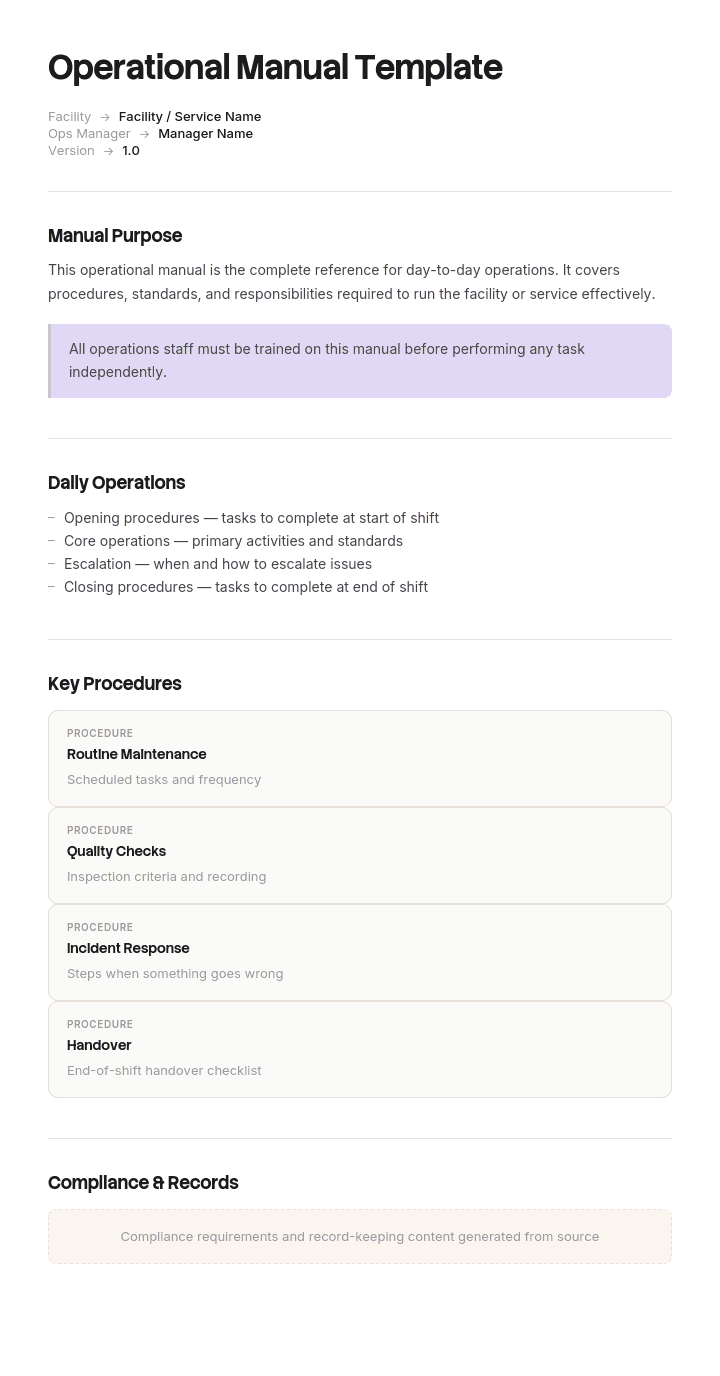
Use this template
An operational manual is the playbook that keeps a business running consistently. With Trupeer, you can save hours on writing operational manuals by starting with a free operational manual template, customizing it with your brand guidelines, and using our AI manual creator to turn dense ops content into clear video walkthroughs.
What is an operations manual template, and what is it for?
An operations manual describes how a business or a function actually runs: the recurring processes, who performs them, to what standard, and what to do when they go wrong. It is the document a franchisee, an acquirer, a successor or a covering manager would need in order to keep things working without the people currently doing them.
An operational manual template is the reusable structure behind it. Sections, order, level of detail and what each entry has to contain.
The reason it is worth being careful with is that this is one of the few documents almost nobody writes for a present reader. There is no customer waiting for it and no deadline attached to it, so it gets written speculatively, and speculative documents get written in the order that feels natural rather than the order that helps.
That order is the problem.
Why operations manual projects die around chapter four
Look at any operations manual that was started and abandoned, and the shape is identical. The front is finished and polished. The middle thins out. The back does not exist.
The front is company history, mission and values, the org chart, role descriptions and HR policies. That material is easy to write, requires no investigation, produces visible page count quickly, and feels like progress.
It is also the content least likely to prevent a problem. Nobody has ever been unable to run a shift because they did not have the company's founding story.
The operational content sits behind it: what happens when a member of staff does not turn up, who holds the keys, what to do when a customer complains, how the ordering works, what the escalation path is at nine on a Sunday. That material is harder to write because it requires talking to people and sometimes admitting there is no agreed answer. And by the time the project reaches it, four months have passed and the energy is gone.
So the manual is thickest where it matters least and thinnest exactly where the business is most dependent on one person's memory.
The fix is to reverse the order. Not to write faster.
How to customize this template in Trupeer
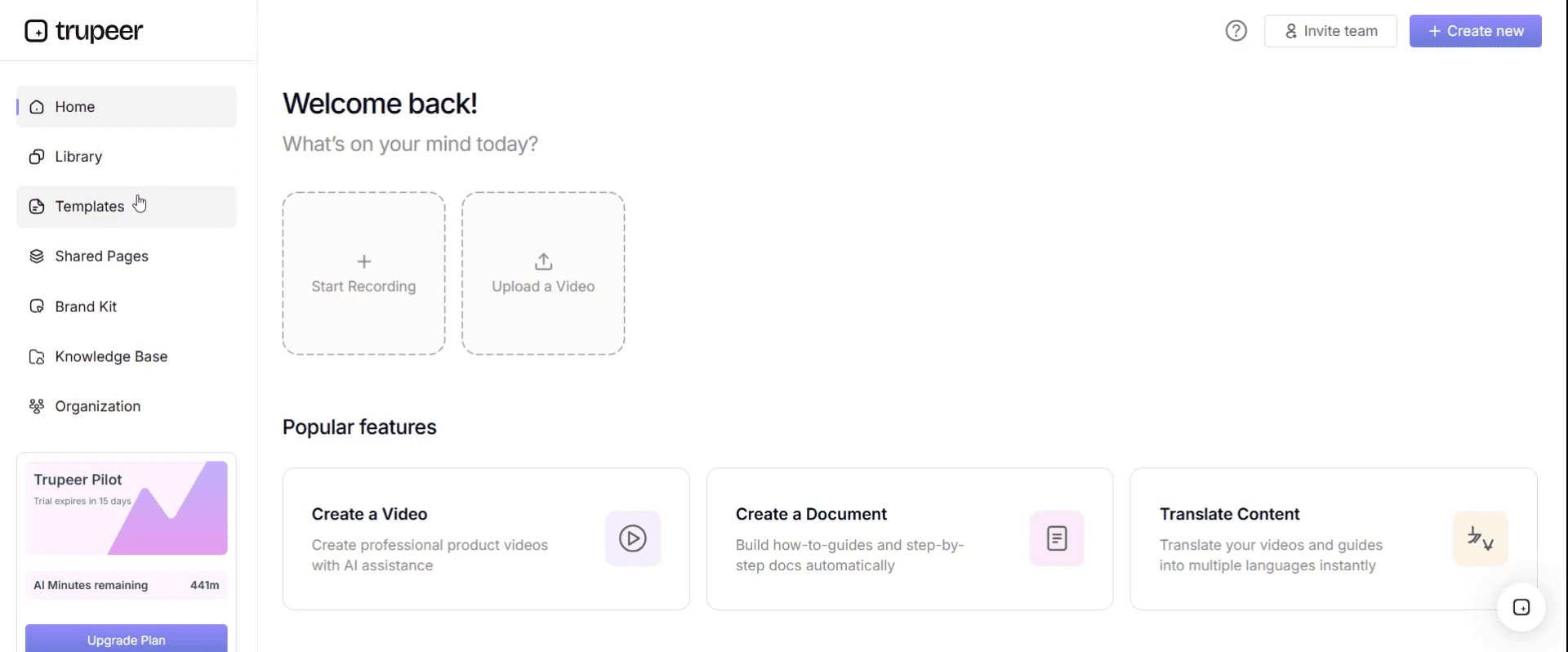
Step 1: Open the Templates Section
Go to the Templates section from the main navigation.
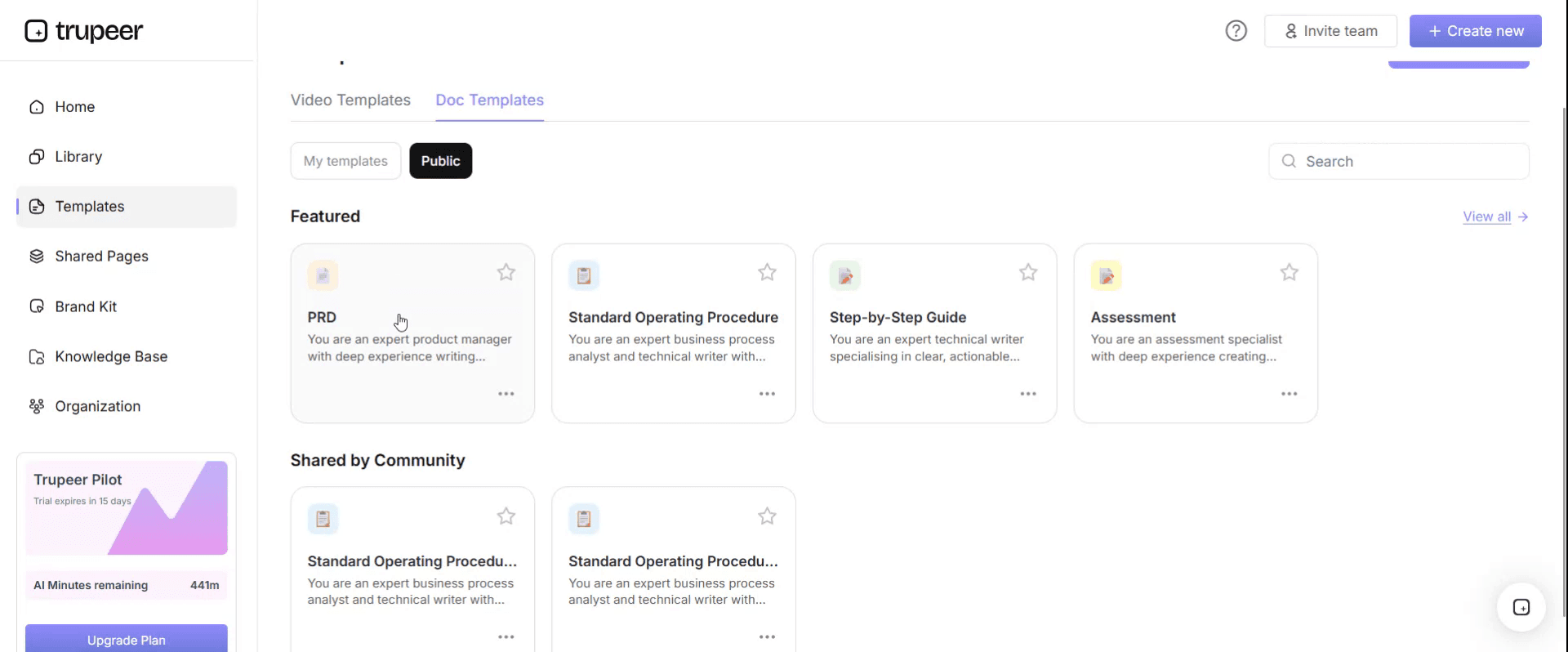
Step 2: Select and Open a Template
Click on any template you want to work with to open it.
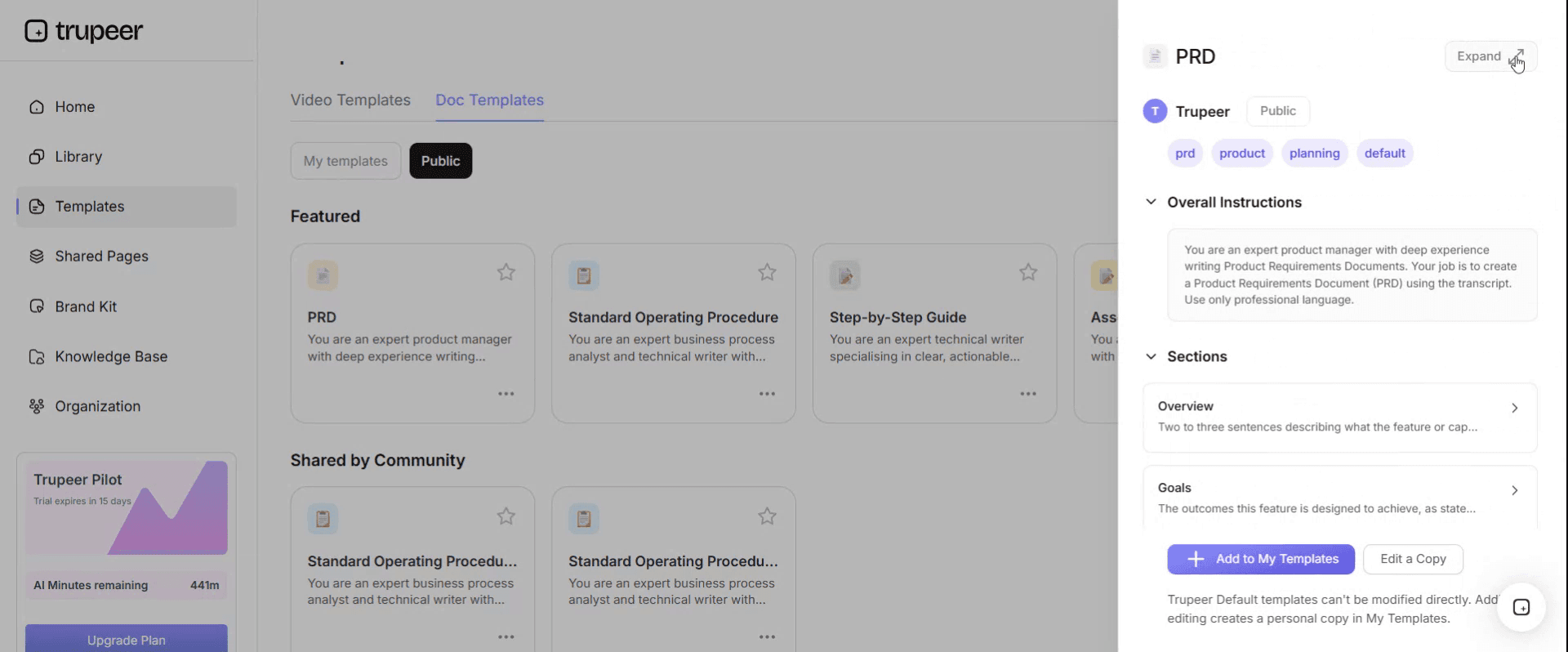
Step 3: Expand the Template View
If needed, expand the template view to see the full layout and details clearly.
Step 4: Edit the Template
Click on Edit to start modifying the selected template.
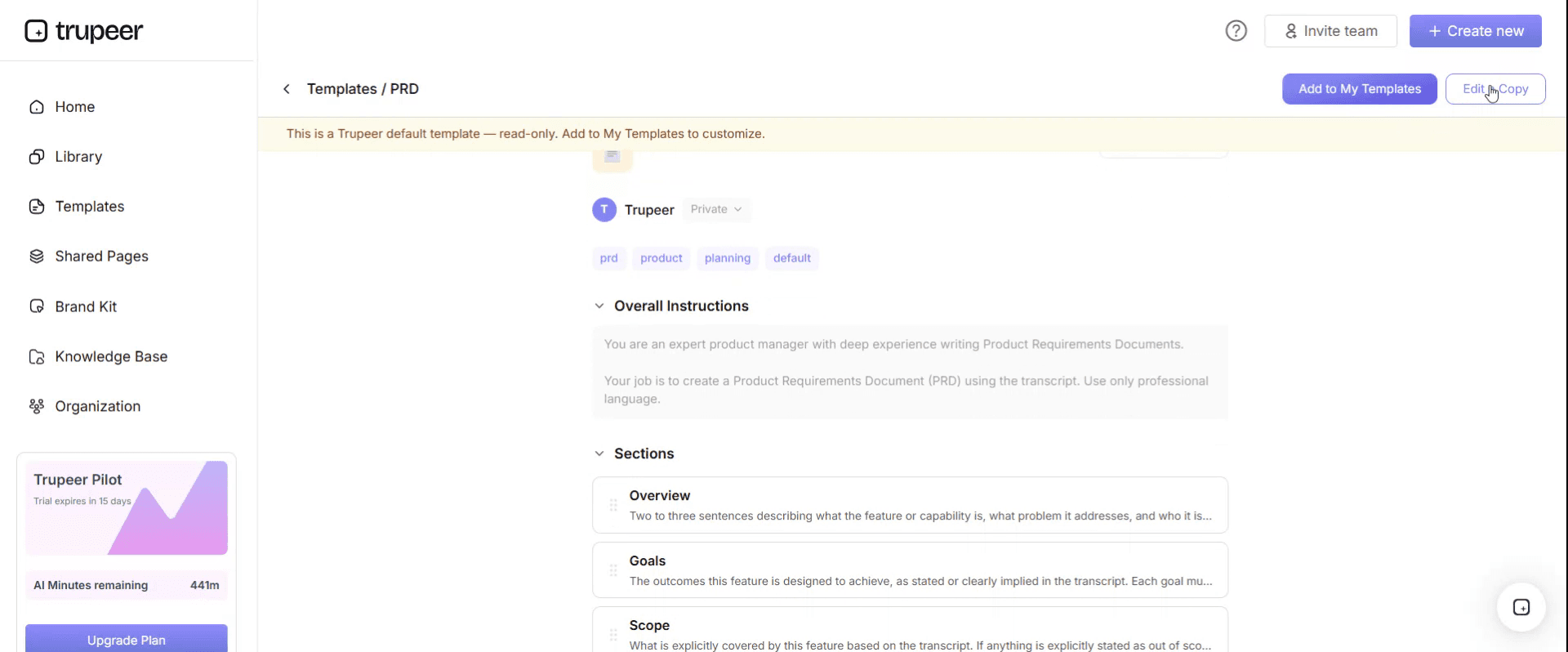
Within the editor, you can:
Add new sections
Define or update formatting rules
Add a logo and adjust its position and related settings
Step 5: Save Your Customized Template
After making all necessary changes, click Save to store the updated template as your own.
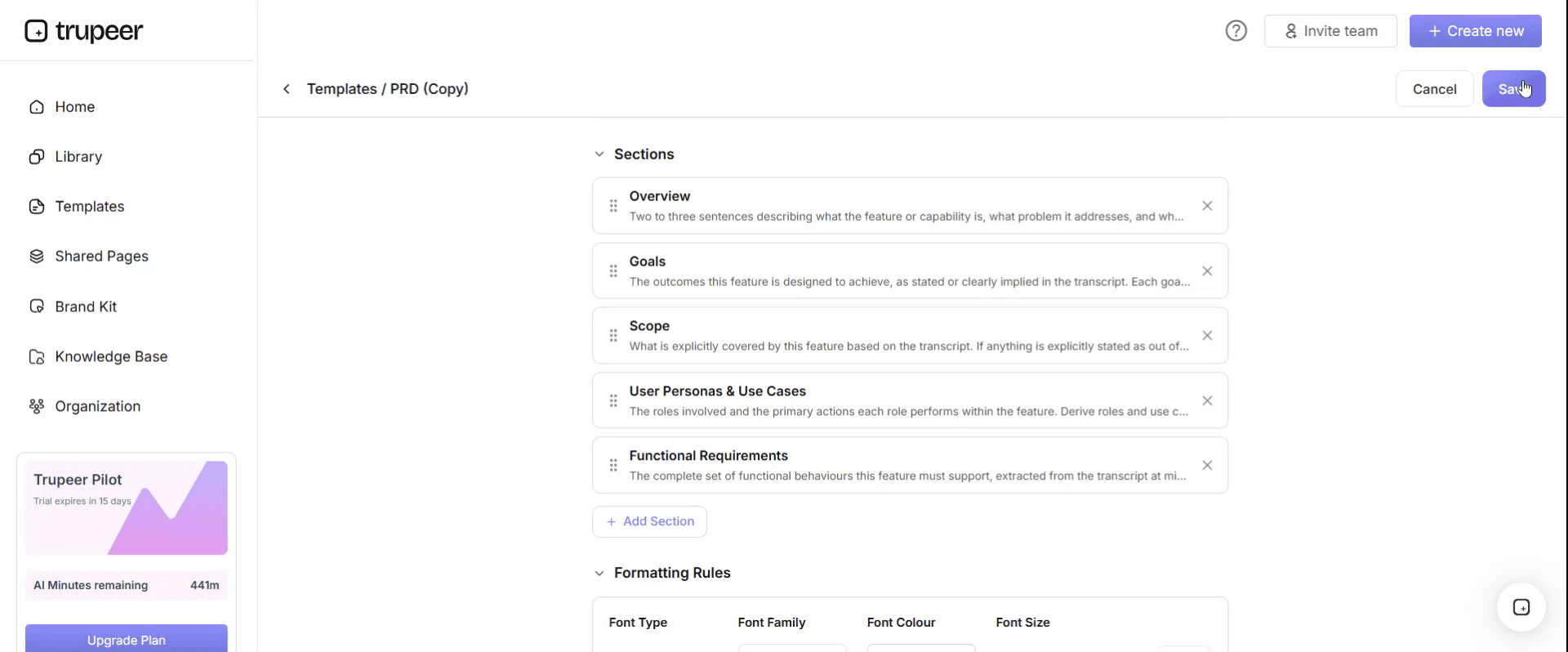
Step 6: Preview and Fine-Tune the Template
When you want to see how your customized template looks, open the Preview.
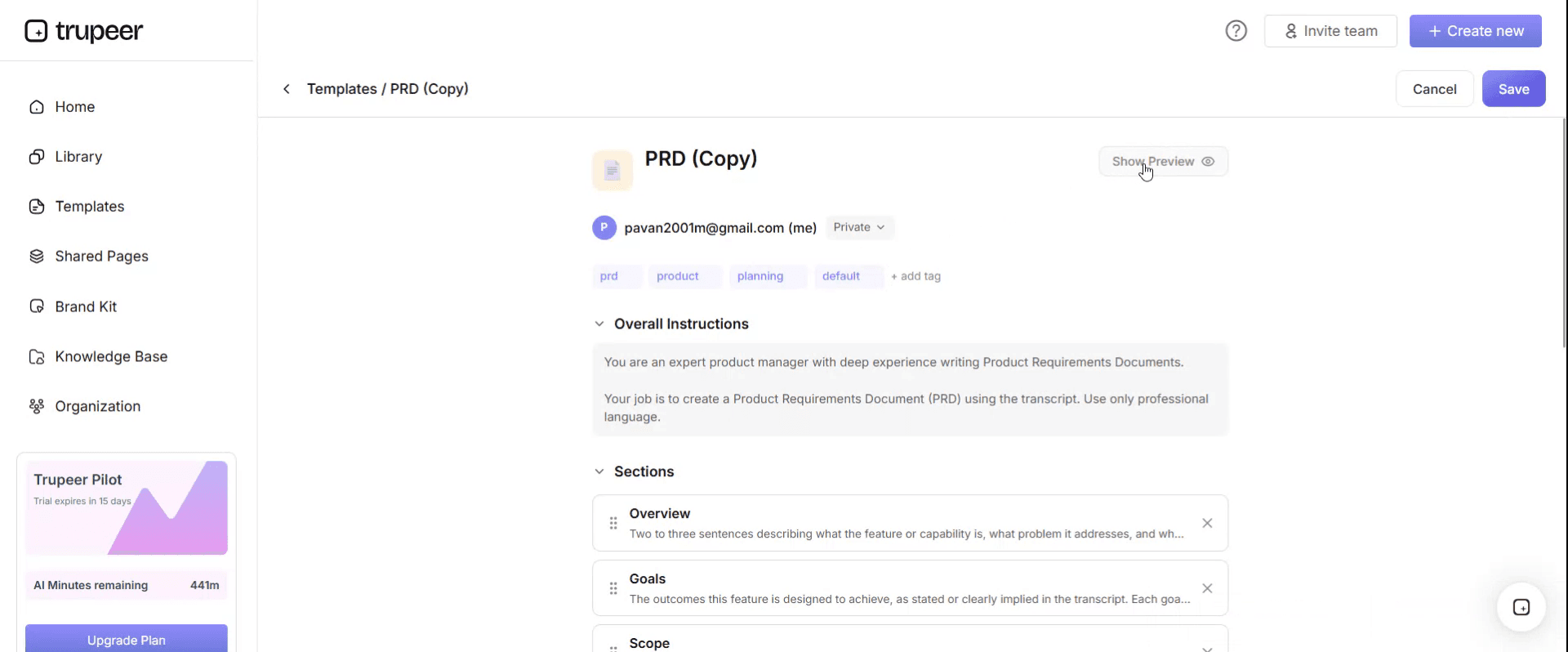
From the preview screen, you can continue to make adjustments directly if needed, ensuring the template appears exactly as you want.
With an operational manual template you can:
Save hours on writing: Skip the blank page with a comprehensive ops structure.
Standardize operations: Built-in sections ensure every team runs the business the same way.
Stay on-brand: Apply your logo, fonts and colors using Trupeer's brand kit - critical for franchise consistency.
Onboard faster: New managers and staff ramp up quickly with a clear ops manual.
Capture institutional knowledge: Document how the business actually runs - so the knowledge stays.
Reach global teams: Translate operational manuals into 65+ languages with one click.
How to rank processes by consequence, not by chapter
Before writing anything, list every recurring process in the area you are documenting. Twenty to forty entries is normal, and getting them out of people's heads takes an afternoon.
Then score each one on two things.
Frequency. How often does it happen. Daily, weekly, monthly, a few times a year.
Consequence of absence. If nobody performed this correctly for two weeks, what happens. Nothing much, some annoyance, money lost, a customer lost, or something unsafe.
Frequency | Consequence if unmanaged for two weeks | Priority |
|---|---|---|
Daily or weekly | Customer lost, money lost, or safety | Write first, in detail |
Daily or weekly | Annoyance or rework | Write second, briefly |
Monthly or less | Customer lost, money lost, or safety | Write first, in detail |
Monthly or less | Annoyance or rework | Reference an existing document, or leave it |
Rare | Anything | Only if it is the kind of rare that ends a business |
The top box is your manual. Everything else is a candidate for later or for a pointer rather than an entry.
Two things usually surprise people running this exercise. The highest scoring processes are frequently unglamorous and undocumented, meaning cover arrangements, access and keys, and who is allowed to authorise something. And several processes everyone assumed were critical turn out to be things one person does once a quarter that could stop entirely.
The ten operational processes worth writing first
For most small and mid-sized operations, the top of the ranking looks similar. Use this as a check against your own list rather than as the list itself.
How work is covered when somebody is absent, including who decides and who is authorised to call people in.
Access, meaning keys, codes, permissions and who holds what, with a register rather than a description.
What happens when a customer complains, including who can offer what without asking.
How the recurring order or supply cycle works, and what to do when a supplier fails.
The escalation path outside working hours, with names and numbers rather than roles.
How a new customer, contract or site is set up and handed to the operating team.
The quality check that is actually performed, at whatever frequency it is actually performed.
How a new starter is brought up to working competence, which usually already exists in another document.
What happens when the main piece of equipment or system fails.
How money is collected and what happens when it is not, including who chases and at what point.
Notice how many of those are about exceptions rather than about normal running. Normal running is generally well understood by the people doing it. It is the exception handling that lives in one head.
Free operational manual template: the structure to copy
Copy from here. One entry per process, one to three pages each.
Manual header. Scope, meaning which business or function this covers. Owner. Version and date. A contents list ordered by the ranking above rather than alphabetically or by department.
Per process entry:
Process name and when it happens. The trigger, in plain terms.
Who does it. Role, plus who covers when that role is absent. The second half is the field people skip and the reason the manual gets consulted at all.
What good looks like. The standard, stated so someone could tell whether it was met.
The steps. Either the actual steps, if short, or a reference to the existing SOP or work instruction. Do not restate what already exists elsewhere.
Decisions this role can make alone. What they can authorise, spend or waive without asking. This single field prevents more escalations than the steps do.
When it goes wrong. The two or three most common failures and what to do about each.
Who to contact. Named people with contact details and a review date on that list, since contacts go stale faster than processes.
Last checked. A date and a name. Not the date the wording changed.
Copy to here. Front matter, meaning company overview, values and structure, goes at the back or in a separate induction document. It is not useless, it is just not what this document is for.
What should be included in an operations manual?
The processes that would stop or degrade if the person who normally does them were unavailable for a fortnight, and nothing else in the first version.
That is a narrower answer than most templates give and it is deliberate. The standard contents list, running from company overview through policies to procedures, describes a finished manual that almost nobody ever finishes. Starting from the highest consequence processes gets you a manual that is useful at twenty pages rather than useless at two hundred.
Three things are worth including that templates often omit. The cover arrangement for every role, meaning who does this when the named person is away. The decision rights, meaning what each role can settle alone. And an access register, meaning who holds which keys, codes and permissions, which is nearly always the first thing anyone asks for in an absence and nearly never documented.
Three things are worth leaving out of the first version. Company history. Detailed HR policy, which belongs in a handbook with a different owner and approval route. And anything already written down properly somewhere else, which should be referenced instead.
The cleaning company whose manual missed 73 of 77 problems
Wrenford Cleaning Services runs commercial cleaning contracts with about a hundred and forty staff across sixty sites. The owner wanted to step back and eventually sell, so an operations manual was commissioned. A consultant and the operations manager worked on it for four months and produced two hundred and fourteen pages.
The contents ran as you would expect. Company history, eight pages. Values and culture, six. Org chart and role descriptions, twenty two. HR policies, thirty four. Health and safety, twenty eight. Ninety eight pages before a single operational process.
Then came the operations. Contract mobilisation, eleven pages. Daily cleaning specifications, eighteen. Quality audits, nine. Equipment, seven. And then it thinned out. Complaint handling was two paragraphs. Key handling and site access was one page and out of date. Emergency cover when staff do not turn up was not covered at all. Neither was chemical ordering by site.
Six weeks after the manual was signed off, the operations manager was signed off sick.
The owner logged every escalation that reached him during those six weeks. Thirty one calls about which staff cover which site when someone is off. Nineteen about keys, alarm codes and access. Fourteen about handling a client complaint. Nine about chemical ordering. Four about anything covered in the two hundred and fourteen pages.
Seventy three of seventy seven escalations concerned things the manual did not cover.
He worked roughly fifty extra hours over the six weeks. Two contracts issued formal complaints and one of them, worth thirty eight thousand a year, gave notice.
The rebuild took a different approach. The first ninety eight pages were removed and kept as a separate induction document. Every recurring process was ranked by frequency and consequence, and the top ten were written first, one to three pages each, referencing the existing specifications and checklists rather than restating them.
That took five weeks, against four months for the original.
At the next planned absence, a two week holiday, nine issues escalated to the owner against an equivalent rate of around twenty six before.
When the business was eventually sold, the buyer's due diligence asked for the operations manual. The ten process version is what was sent.
Reference, do not restate: keeping the manual true
The second reason operations manuals go wrong is duplication. The manual restates a procedure that already exists as an SOP, a checklist or a work instruction. Both copies are correct on the day. Within a year they disagree, and nobody knows which is authoritative.
The rule that prevents it: the operations manual contains no original procedural content. It contains the context, the ownership, the decision rights and the pointers, and the procedure itself lives once, wherever it already lives.
That makes the manual shorter, and it makes it stay true, because updating the SOP updates the manual by definition.
Where a process genuinely has no existing document, write it as a job aid or an SOP in its own right and reference it, rather than writing it into the manual. It is the same amount of work and it puts the content where it will be found by the person doing the task rather than only by someone reading the manual.
Keep the pointers checkable. Every reference gets a document name, an owner and a last checked date, so a broken pointer is visible rather than silent.
How to write an operations manual, step by step
List the recurring processes with the people who do them, in one session, without filtering.
Score each on frequency and consequence of absence, and sort.
Take the top ten. Resist the urge to take twenty.
For each, sit with whoever does it and write the entry from what they actually do rather than from what the process is supposed to be. Those differ, and the version people perform is the one that needs documenting first.
Fill the cover arrangement and decision rights fields deliberately, because they are the ones nobody volunteers.
Reference existing documents rather than restating them, and create the missing ones as standalone SOPs.
Then test it by absence. Have the owner of an area step away for a defined period, even a few days, and log what escalates. That log is your next ten entries and it is more accurate than any contents list.
When do you actually need an operations manual?
Being honest about this saves a lot of wasted effort, because most operations manuals are written for a reason that never arrives.
Four events genuinely require one. Franchising, where the manual is effectively the product being sold. Selling the business, where due diligence will ask for it and its absence affects both price and confidence. The owner or a key person stepping back from daily operations. And opening a second site, which is the first moment tacit knowledge stops travelling by proximity.
Two more make it worth having without requiring it. Rapid hiring, where the same explanations are being given repeatedly. And regulated or accredited operations, where documented process is a condition rather than a choice.
If none of those apply, the honest advice is to write the top ten processes and stop. A full operations manual written speculatively is a large investment in a document with no reader, and it will be out of date by the time one appears.
Operations manual, O&M manual or SOP: which is it?
Three documents share a lot of vocabulary and cause a lot of confusion.
An operations manual describes how an organisation or function runs. It is about people, processes and standards, it applies across the business, and it is maintained continuously.
An operation and maintenance manual describes how one physical asset or system is run and maintained. It is produced at handover, it is specific to that installation, and it is often a contractual deliverable. Our O&M manual template covers it, including why it is usually accepted rather than checked.
An SOP is the authoritative procedure for one task. Operations manuals reference SOPs. They should not contain them.
For the wider family, including instruction manuals, training manuals and user manuals, our manual templates page covers how to tell how many separate documents you actually need.
Can I get an operations manual template in Word or Excel?
Word or Google Docs for the manual itself, since the entries are prose and the document gets read in sections. Use real headings so the contents list generates itself, because navigation matters more here than in most documents.
Excel for two things. The process ranking, meaning your list with frequency, consequence and priority, which is where the decision about what to write happens. And the access register, which is data rather than prose and needs to be sortable and kept current.
PDF for the version handed to a buyer, a franchisee or an auditor, exported from the live copy. Keep the working version editable, because the contact list and the cover arrangements change several times a year.
How to build the manual from what people already do
The reason the top ten processes stay undocumented is not that nobody knows them. It is that writing them down means somebody sitting with somebody else, taking notes, and then spending an evening turning those notes into something readable, and that evening never comes.
Trupeer AI removes most of that. The person who does the job records themselves doing it once, and the output is a written procedure with the steps and screens already captured, ready to check rather than compose. Ten processes becomes a fortnight rather than a quarter, which is the difference between a manual that exists and one that is permanently about to.
Record it. Brand it. Translate it. Trupeer it.
Because the manual should reference rather than restate, the recordings become the SOPs and job aids the manual points at, living in your knowledge base in consistent branding. The manual creator covers the longer document and the SOP creator covers the procedures underneath it. Where the manual exists because somebody is stepping back, our knowledge transfer SOP covers the handover the document alone will not achieve. Setup instructions are in the document template setup guide.
Frequently Asked Questions
Is there a free operations manual template in Word?
The per process structure above pastes straight into Word or Google Docs and works as a house format. There is no gated download and no form. Build the process ranking first in a spreadsheet, because deciding what to write is the part that determines whether the manual is useful, and no template can do it for you.
Is there a free operations manual template in PDF?
Export your own once the first ten processes are written, and send that version to a buyer, franchisee or auditor. Keep the working copy editable, since contact lists and cover arrangements go out of date faster than the processes themselves.
Is there a free operations manual template in Excel?
Excel is right for the process ranking and the access register rather than for the manual. The ranking sheet needs columns for process, frequency, consequence, priority and whether a document already exists. That last column usually reveals that a third of what you were about to write is already written somewhere.
Where can I find an operations manual example in PDF?
Published examples are easy to find and worth reading for structure rather than content, since any real operations manual is specific to one business. The more useful exercise is to take your own top three processes and write them properly, then judge whether the format works before committing to twenty more.
How long should an operations manual be?
Twenty to forty pages for a first version covering ten processes. Manuals running past a hundred pages are usually carrying front matter that belongs elsewhere and restated procedures that already exist. Length is a poor proxy for usefulness here, and a common sign that the writing order was wrong.
Who should write the operations manual?
Whoever does the work, edited by whoever owns the manual. Manuals written entirely by a consultant or a central function tend to describe the process as designed rather than as run, which is precisely the gap the document exists to close. The owner's job is the ranking and the editing, not the drafting.
How often should an operations manual be updated?
On triggers rather than a schedule. When a process changes, when an absence reveals a gap, when someone who owns a process leaves, and when a new site or contract type is added. A calendar review arrives when nothing has changed and misses the week something did.
Do I need an operations manual to sell or franchise my business?
For franchising, yes, and it is effectively the product. For a sale it is not usually a condition, but its absence is noticed in due diligence and tends to affect both the price and the buyer's view of key person risk. In both cases a focused document covering the processes that matter carries more weight than a long one covering everything.