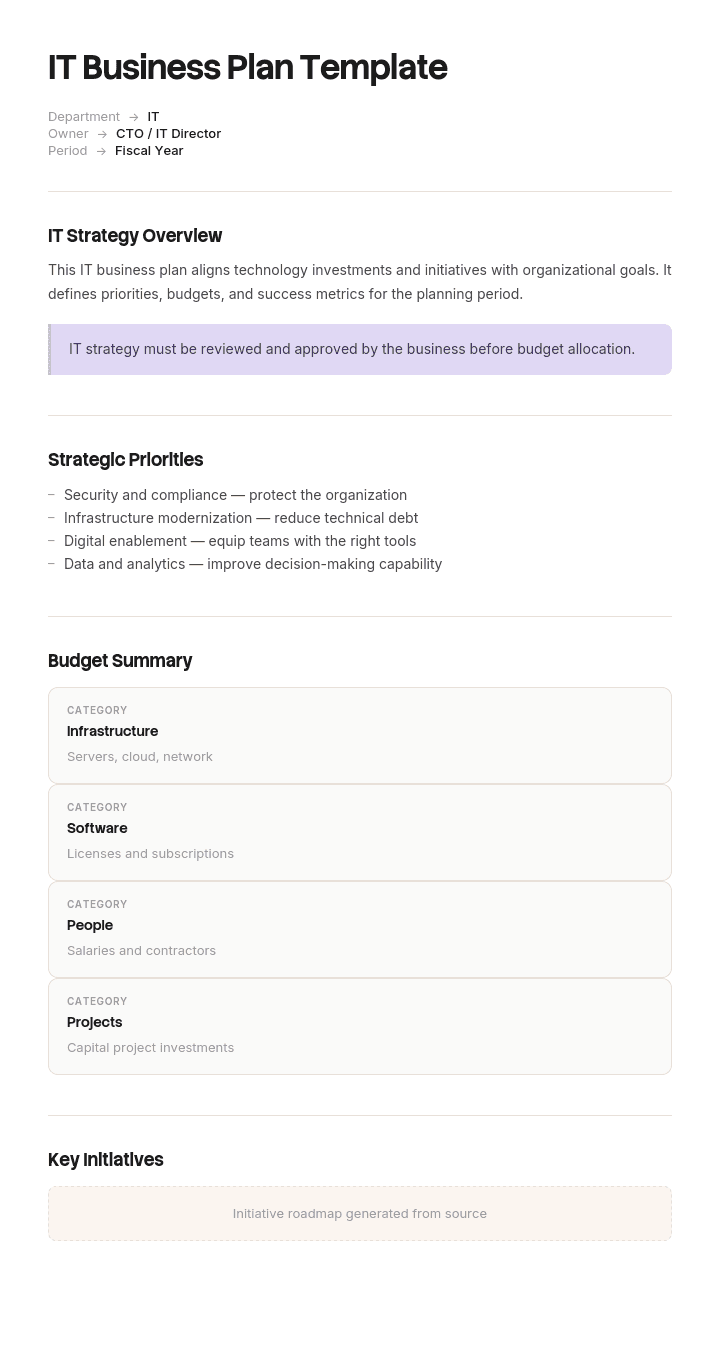
Use this template
A great IT business plan turns IT from a cost center into a strategic driver. With Trupeer, you can save hours on IT planning by starting with a free IT business plan template, customizing it with your brand guidelines, and turning the plan into a video walkthrough that aligns business and technical stakeholders.
An IT services business can look healthy on revenue and be losing money on half its clients. The contract pays monthly, the invoices go out, and nobody has worked out that one client generates three times the tickets of another paying the same.
That is the arithmetic this template is built around, because it is the arithmetic that decides whether the business works.
Download the IT business plan template
Format | Best for |
|---|---|
Word (.docx) | The written plan for lenders, investors or your own thinking |
Excel (.xlsx) | Unit economics, cost to serve, utilisation and three-year projections |
The finished plan for circulation | |
PowerPoint (.pptx) | The pitch version |
Google Docs and Sheets | Collaborative drafting |
.doc | Older systems |
Free, editable, no watermark. The Excel file is the substance. A narrative IT business plan without a cost-to-serve model is a description.
How to customize this template in Trupeer
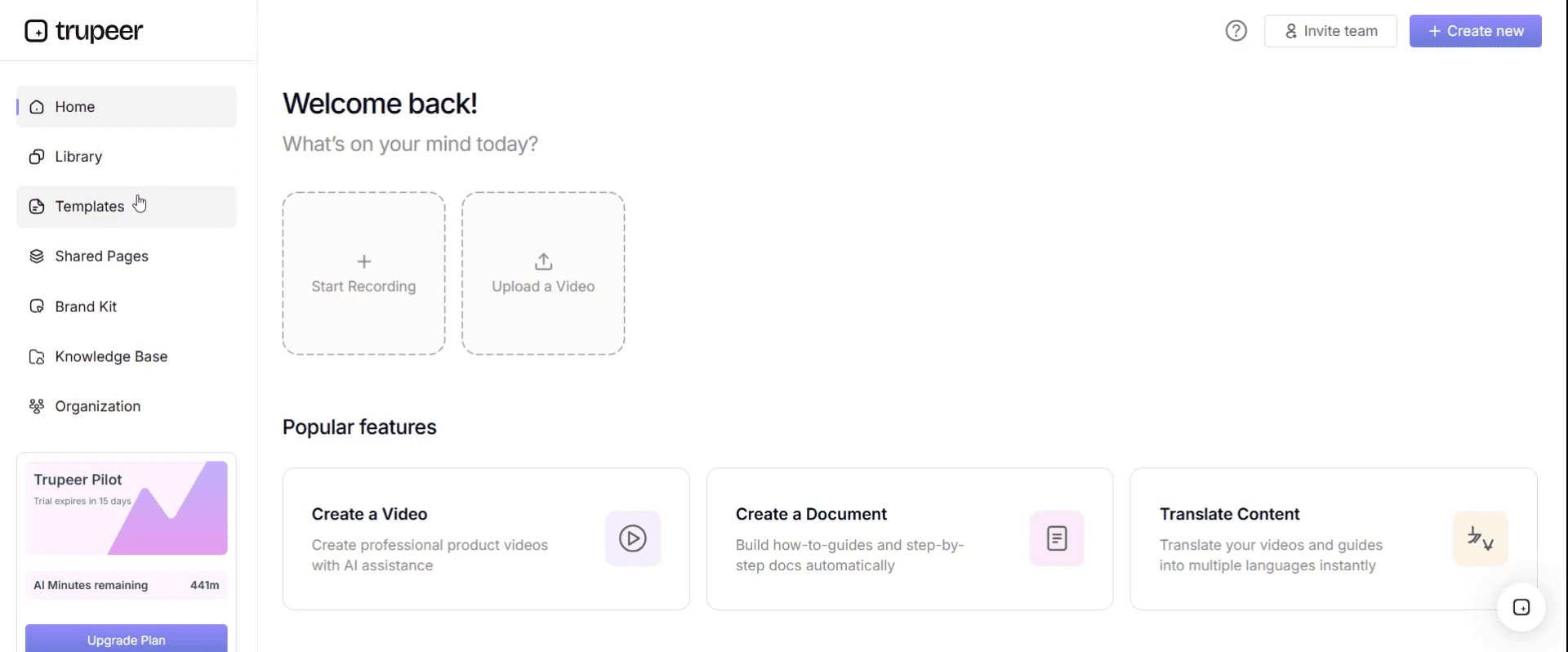
Step 1: Open the Templates Section
Go to the Templates section from the main navigation.
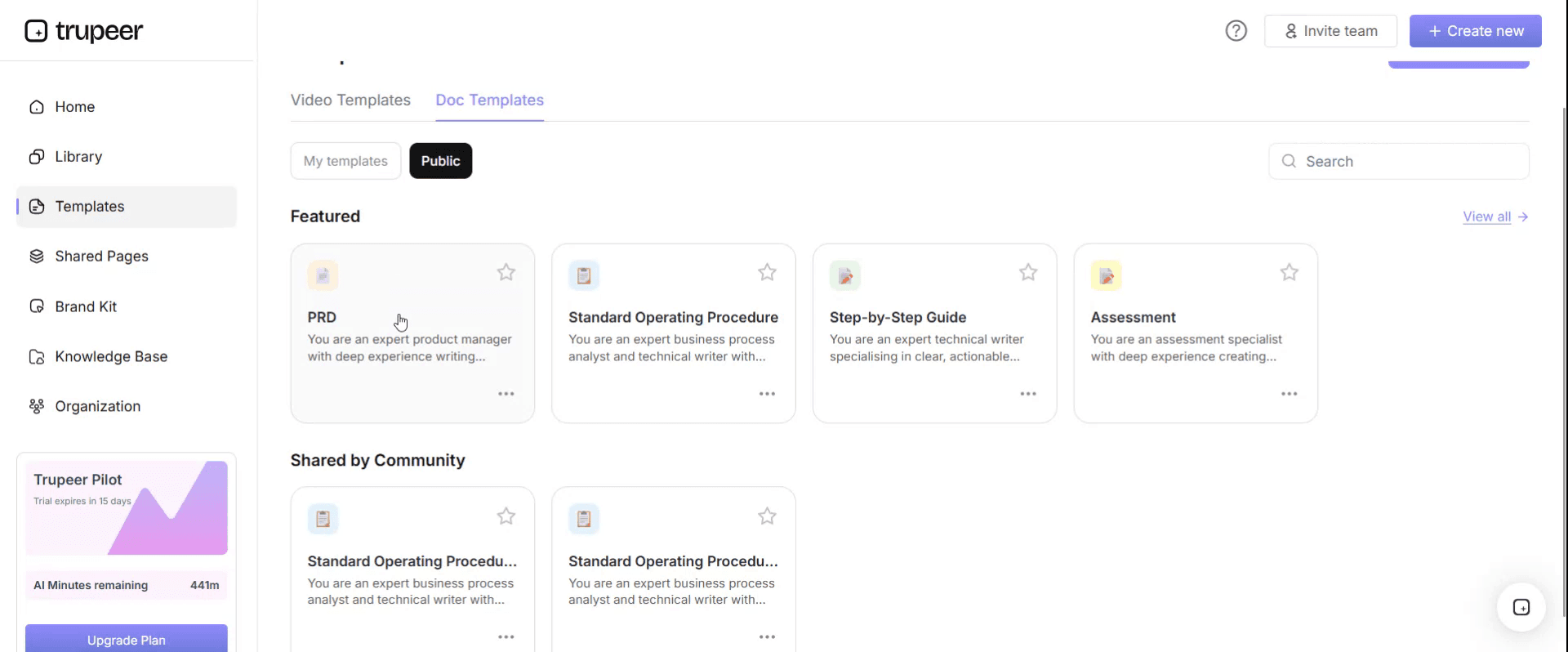
Step 2: Select and Open a Template
Click on any template you want to work with to open it.
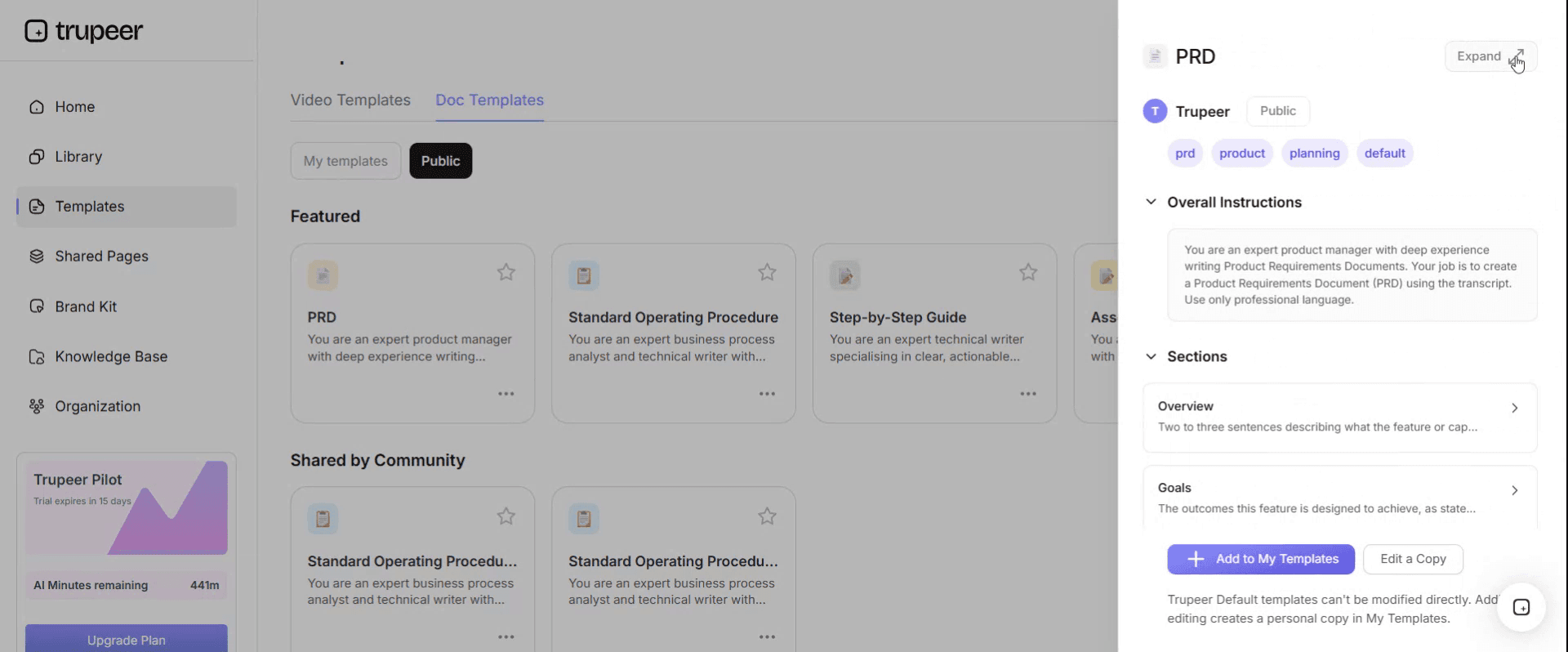
Step 3: Expand the Template View
If needed, expand the template view to see the full layout and details clearly.
Step 4: Edit the Template
Click on Edit to start modifying the selected template.
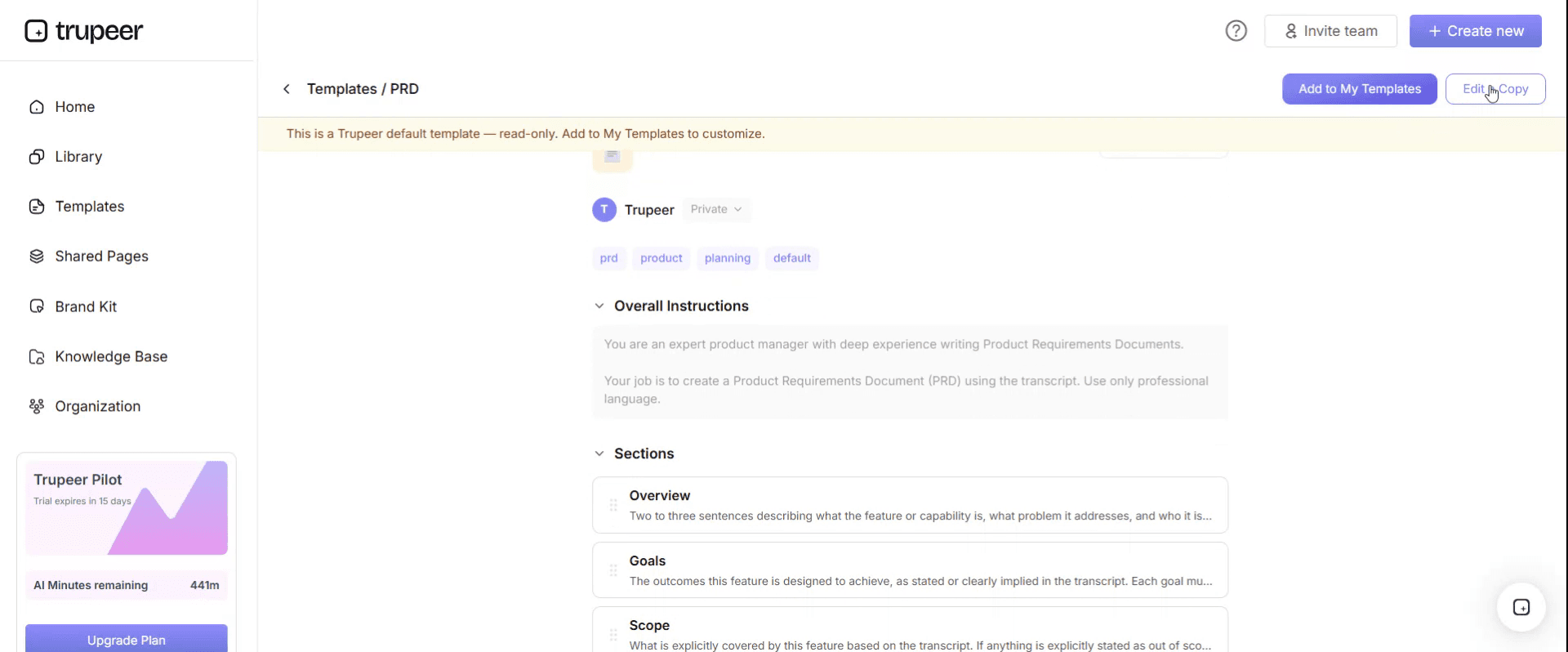
Within the editor, you can:
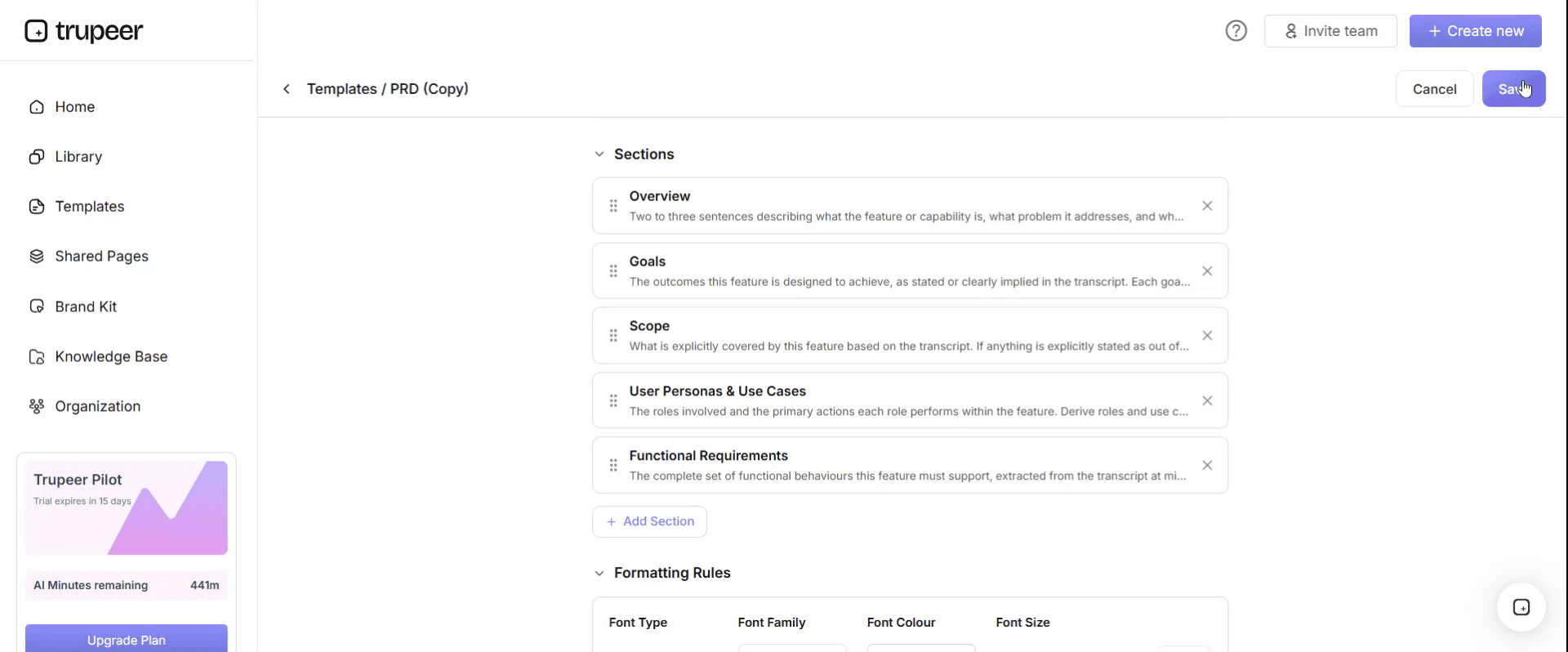
Add new sections
Define or update formatting rules
Add a logo and adjust its position and related settings
Step 5: Save Your Customized Template
After making all necessary changes, click Save to store the updated template as your own.
Step 6: Preview and Fine-Tune the Template
When you want to see how your customized template looks, open the Preview.
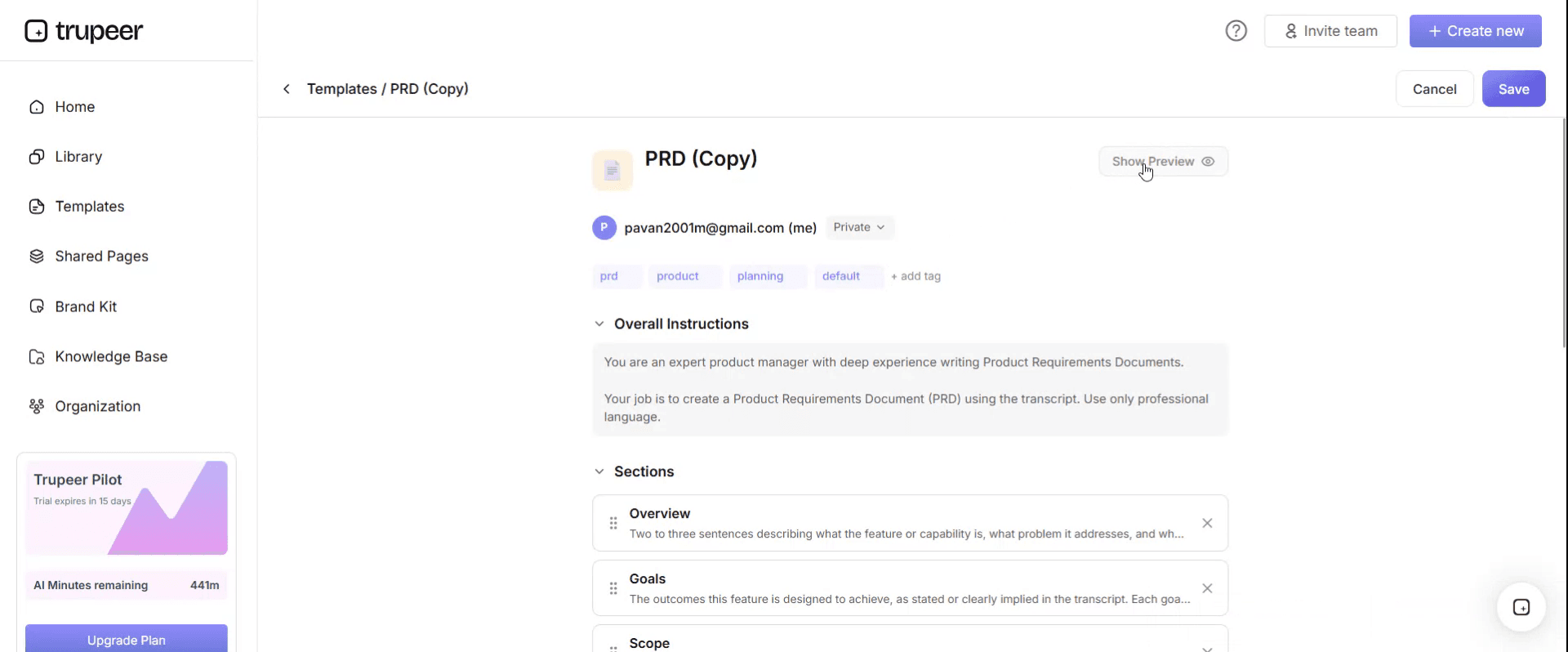
From the preview screen, you can continue to make adjustments directly if needed, ensuring the template appears exactly as you want.
With an IT business plan template you can:
Save hours on planning: Skip the blank page with a structure built for IT strategy.
Align with business goals: Built-in sections connect IT initiatives to business outcomes.
Stay on-brand: Apply your logo, fonts and colors using Trupeer's brand kit.
Communicate clearly: Convert the plan into a video walkthrough business stakeholders can absorb.
Stay accountable: Built-in KPI sections track whether IT is delivering on its plan.
Reach global teams: Translate the plan into 65+ languages with one click.
Which kind of IT business?
Four models, four completely different sets of numbers. The plan differs more between these than between an IT business and a non-IT one.
Model | Revenue | The number that decides it | Main risk |
|---|---|---|---|
Managed services (MSP) | Recurring, per seat or per device | Cost to serve per client | Unprofitable clients hidden by healthy total revenue |
IT consultancy | Project or day rate | Utilisation | Bench time between engagements |
Software or SaaS | Subscription | CAC payback and churn | Acquiring customers faster than you can retain them |
Reseller or hardware | Margin on product | Gross margin and working capital | Thin margins, cash tied up in stock |
Many IT businesses are two of these. An MSP that also does projects, or a consultancy building a product. Model them separately, because a blended view hides which one is subsidising the other.
MSP and managed services economics
The most common IT business, and the one where the numbers are least understood.
Revenue is straightforward. Seats or devices, multiplied by a price, plus project work.
Cost is where it goes wrong, because the two largest costs both scale with something other than revenue. Tooling scales with seats. Engineer time scales with tickets. And tickets do not correlate with seats.
That mismatch is the whole problem. Two clients paying the same can consume wildly different amounts of engineering, and unless you measure per client you will not know which is which.
Cost to serve per client
The single most important calculation in an MSP business plan, and the one most plans omit entirely.
For each client: tooling cost, plus engineer time at a loaded hourly rate, plus any third-party costs specific to them.
Worked, for two clients in the same business.
Client A | Client B | |
|---|---|---|
Seats | 60 | 25 |
Monthly revenue | £2,700 | £1,125 |
Tickets per month | 18 | 62 |
Tool cost at £12 per seat | £720 | £300 |
Engineer time at 45 min per ticket | 13.5 hrs | 46.5 hrs |
Engineer cost at £28 loaded per hour | £378 | £1,302 |
Total cost to serve | £1,098 | £1,602 |
Contribution | £1,602 | −£477 |
Margin | 59% | −42% |
Client B pays every month, never complains about the invoice, and loses you nearly five hundred pounds a month. On a revenue report they look like a customer. On a cost-to-serve report they are the reason the business is not growing.
Three responses exist and the plan should say which you would use: reduce the tickets by fixing the underlying cause, reprice the contract, or exit the client. Doing none of those and hoping is the default and it does not work.
The tool stack
The cost that surprises people, because it is per seat, recurring, and only ever goes up.
A typical managed services stack includes remote monitoring and management, a professional services automation or ticketing platform, endpoint protection, backup, email security, patch management, documentation and password management. Individually each looks affordable. Together they commonly run somewhere between eight and twenty pounds per seat per month.
Model it explicitly in the plan, per seat, with each tool listed. Two things then become visible: what proportion of your seat price is consumed before any human touches anything, and what happens to margin when a vendor raises prices, which they will.
Also model the minimum commitments. Many vendors have seat minimums that make small clients structurally unprofitable regardless of how well you serve them.
Utilisation
For consultancy and project work, the number that decides everything.
Utilisation is billable hours divided by available hours. The plan needs a target, an assumption about ramp for new hires, and honesty about what is achievable.
Realistic ranges vary, but the mistakes are consistent: assuming full utilisation from day one, ignoring holidays and training, treating internal work as billable, and forgetting that the person who does sales cannot also be fully billable.
Model bench time explicitly. A consultancy's profitability is largely determined by the gap between engagements, and a plan that assumes engagements run back to back is not a plan.
Recurring and project revenue mix
State the split and the target, because the two behave completely differently.
Recurring revenue is predictable, values the business higher, and grows slowly. Project revenue is lumpy, higher margin per hour, and disappears without warning. A business that is mostly project revenue has to sell continuously to stand still.
The useful metric is what proportion of your fixed costs is covered by recurring revenue. Above one hundred per cent means you survive a quiet project quarter. Below fifty per cent means a slow quarter is an existential problem, and any lender or investor will spot that immediately.
Software and SaaS economics
If you are building a product rather than delivering services, the numbers are different again: customer acquisition cost, payback period, gross churn, net revenue retention, and gross margin after hosting and support.
The distinguishing feature is that costs are front-loaded and revenue arrives over years, so the plan must show the cash trough before it shows the profit. A SaaS plan that shows profitability in year one is usually a plan that has not modelled acquisition properly.
The ecommerce business plan template covers unit economics and payback in more depth, and much of it transfers.
The plan structure
Section | IT-specific content |
|---|---|
Executive summary | Lead with the model and the unit economics, not the vision |
Business model | Which of the four models, and the revenue mix |
Services | What you deliver, at what tiers, with what is explicitly excluded |
Market and customers | Segment, size of client, sector, geography |
Competition | Named local and national competitors, and how you differ |
Sales and marketing | How clients are won, cost per acquisition, sales cycle length |
Operations | Delivery model, escalation, hours of cover, subcontractors |
Technology and tooling | The stack, cost per seat, vendor dependencies |
Team | Engineer to client ratios, hiring plan, certifications |
Financials | Unit economics, cost to serve, utilisation, projections, cash flow |
Risks | Concentration, key person, vendor, security, cyber liability |
Funding | Amount, purpose, and how much is working capital |
Two sections are consistently thin in IT business plans. Operations, where the delivery model determines the cost base. And risks, where IT businesses carry exposures that generic plans do not consider.
A worked example
Business: Managed IT services, 22 clients, 480 seats.
Monthly | |
|---|---|
Recurring revenue, 480 seats at £45 | £21,600 |
Project revenue, average | £6,000 |
Total revenue | £27,600 |
Tool stack, 480 seats at £12 | −£5,760 |
Engineers, 4 at £42k plus employer costs | −£16,100 |
Direct costs | −£21,860 |
Contribution | £5,740, 20.8% |
Overheads: premises, admin, sales, insurance | −£4,900 |
Operating profit | £840, 3.0% |
What the plan should say about this. A 3% operating margin is fragile. One vendor price rise or one engineer resignation removes it entirely. And recurring revenue covers 78% of the fixed cost base, meaning a quarter without project work produces a loss.
The cost-to-serve analysis finds four clients out of twenty-two are loss-making, together consuming about £1,400 a month of contribution. Fixing or exiting those four roughly triples operating profit without winning a single new client.
That is the point of doing the analysis. The growth plan in most MSP business plans is "win more clients". The faster route is usually to stop losing money on the ones you have, and it is invisible without per-client costing.
Financial projections
Four things, in this order of importance.
Cost to serve per client. Everything else depends on knowing whether a client is profitable.
Cash flow, monthly, for at least eighteen months. IT businesses can be profitable and cash-poor, particularly where hardware is purchased on behalf of clients or where projects invoice on completion.
Profit and loss, three years, monthly for year one.
Sensitivity. What happens to margin if the tool stack rises 15%, if utilisation drops five points, if your largest client leaves. Any experienced reader will run these, so run them first.
Risks specific to IT businesses
The section generic templates handle badly.
Client concentration. Where one client is a large share of revenue, state the percentage. Above about 20% it is a material risk and lenders will treat it as one.
Key person dependency. Common and rarely admitted. If one engineer is the only person who understands several clients' environments, that is a business risk, not a staffing inconvenience.
Vendor dependency. Your margin sits between what clients pay and what vendors charge, and you control only one of those.
Security and liability. An MSP with privileged access to client environments carries real exposure. Cyber liability insurance, incident response arrangements and contractual limits of liability belong in the plan.
Contract terms. Notice periods, auto-renewal, whether pricing can be adjusted mid-term. A book of clients on thirty-day notice is worth considerably less than the same revenue on twelve-month terms.
Technician supply. In many markets hiring is the binding constraint on growth. A plan showing revenue doubling without a credible hiring plan is not a plan.
How to write your IT business plan
Identify which model you are, and if you are two, model them separately.
Build the cost-to-serve model first, per client, before writing anything.
Cost the tool stack per seat, listing each vendor.
Set the utilisation assumption and justify it, including ramp and bench.
State the recurring to project mix and what proportion of fixed costs recurring revenue covers.
Build cash flow monthly, with hardware purchases and project invoicing timed correctly.
Run the sensitivities before anyone else does.
Write the operations section properly, since it determines the cost base.
Name the concentration, key person and vendor risks rather than hoping they go unnoticed.
Write the executive summary last.
Best practices
Cost to serve calculated per client, not averaged.
Tool stack modelled per seat with each vendor listed.
Utilisation assumptions justified, including ramp and bench.
Recurring revenue expressed as a percentage of fixed costs.
Cash flow monthly, with hardware timing correct.
Sensitivities run and shown.
Client concentration stated as a number.
Key person dependency acknowledged.
Contract terms described, since they affect valuation.
Hiring plan credible against the growth assumed.
Common mistakes
Revenue per client reported without cost to serve.
Tool stack costs averaged into overheads, hiding what they do to seat margin.
Full utilisation assumed from day one.
Bench time between engagements ignored.
Project revenue projected as if it were recurring.
Growth plan built entirely on new clients, ignoring unprofitable existing ones.
Cash flow omitted, so hardware purchases and project invoicing are invisible.
Client concentration not disclosed.
Key person risk unmentioned.
No sensitivity analysis, so the first question in a meeting is one you have not asked yourself.
One blended model for a business that is really two.
The operations section, made real
Open the template in Trupeer AI, apply your brand kit so the plan matches your other documents, and edit any section directly. Setup is in the template guide.
Look at the cost-to-serve table again. The variable that decides profitability is engineer time per ticket, and the largest lever on that is whether the same problem is solved from scratch every time.
Undocumented processes are why an engineer spends forty minutes on something another engineer solved last month. Record the fix once and Trupeer AI produces the written procedure and a narrated video walkthrough from the same pass, so it becomes a runbook rather than tribal knowledge. For an MSP that is not a documentation project, it is margin.
The same recordings serve client-facing self-service, which reduces ticket volume directly. Translate them into 65+ languages where clients need it, and keep the set in your knowledge base. The MSP SOP template covers the procedures themselves.
Record it. Brand it. Translate it. Trupeer it.
Frequently Asked Questions
Is there a free IT business plan template in Word?
Yes. The Word version holds the written plan with all sections, including the IT-specific operations, tooling and risk sections. Free download, no sign-up, no watermark.
Is there an IT business plan template in Word doc format?
Yes, a .doc version is included alongside .docx for older systems.
Can I download a free IT business plan template in Word?
Yes, every format is a free download with no account required and no attribution.
Is there a free IT business plan template in Excel?
Yes, and it is the more useful of the two. The Excel workbook holds the cost-to-serve model per client, the tool stack cost per seat, utilisation, the recurring to project revenue mix, three-year projections, monthly cash flow and the sensitivity analysis.
Is there a free IT business plan template in PDF?
Yes, as the finished plan for circulation and as a completed example so you can read a full plan before writing your own.
Is there a business plan template free to download as a PDF?
Yes. For a general business rather than an IT one, the business plan template covers the standard nine sections in PDF, Word, Excel and PowerPoint.
What is an IT business plan?
A business plan for a technology business, covering the same core sections as any plan but with financials built around the model you operate: cost to serve for managed services, utilisation for consultancy, acquisition and churn for software.
What should an IT business plan include?
The standard sections plus, specifically, which business model you operate, your service tiers and exclusions, the delivery model and hours of cover, the tool stack with cost per seat, engineer to client ratios and the hiring plan, cost to serve per client, and the risks particular to IT businesses including concentration, key person, vendor and security exposure.
How do you calculate cost to serve for an MSP?
Per client, add the tooling cost for their seats, the engineer time they consume at a loaded hourly rate, and any third-party costs specific to them. Compare that against what they pay. The critical point is doing this per client rather than averaging, because ticket volume does not correlate with seat count and averages hide the loss-making accounts.
Why do managed services businesses become unprofitable?
Usually because engineer time is consumed unevenly across clients while pricing is uniform. A client generating three times the tickets of another at the same price can be loss-making while appearing on the revenue report as a paying customer. Without per-client costing this is invisible, and the usual response, winning more clients, makes it worse.
What should you include about tooling in an IT business plan?
Each tool by name with its per-seat cost, the total per seat, and what proportion of your seat price it consumes before any human is involved. Also note minimum seat commitments, since these can make small clients structurally unprofitable, and model a vendor price rise in your sensitivities.
What is a good utilisation rate for an IT consultancy?
It varies by market and delivery model, so the useful discipline is justifying your assumption rather than benchmarking it. Account for holidays, training, internal work and ramp time for new hires, and model bench time between engagements explicitly, since the gap between projects is where consultancy profitability is decided.
How much recurring revenue should an IT business have?
Express it as a proportion of fixed costs rather than of total revenue. Recurring revenue covering more than 100% of fixed costs means you survive a quiet project quarter. Below 50%, a slow quarter is an existential problem, and any lender or investor will identify that immediately.
What risks should an IT business plan cover?
Client concentration with the percentage stated, key person dependency, vendor dependency and pricing power, security and liability exposure given privileged access to client systems, contract terms and notice periods, and technician availability, which is frequently the actual constraint on growth.
Can I customise this IT business plan template?
Yes, both the document and the spreadsheet are fully editable. Adapt the cost model to your business, since managed services, consultancy, software and reseller economics differ substantially, and use two models rather than one blended view if you operate more than one.


