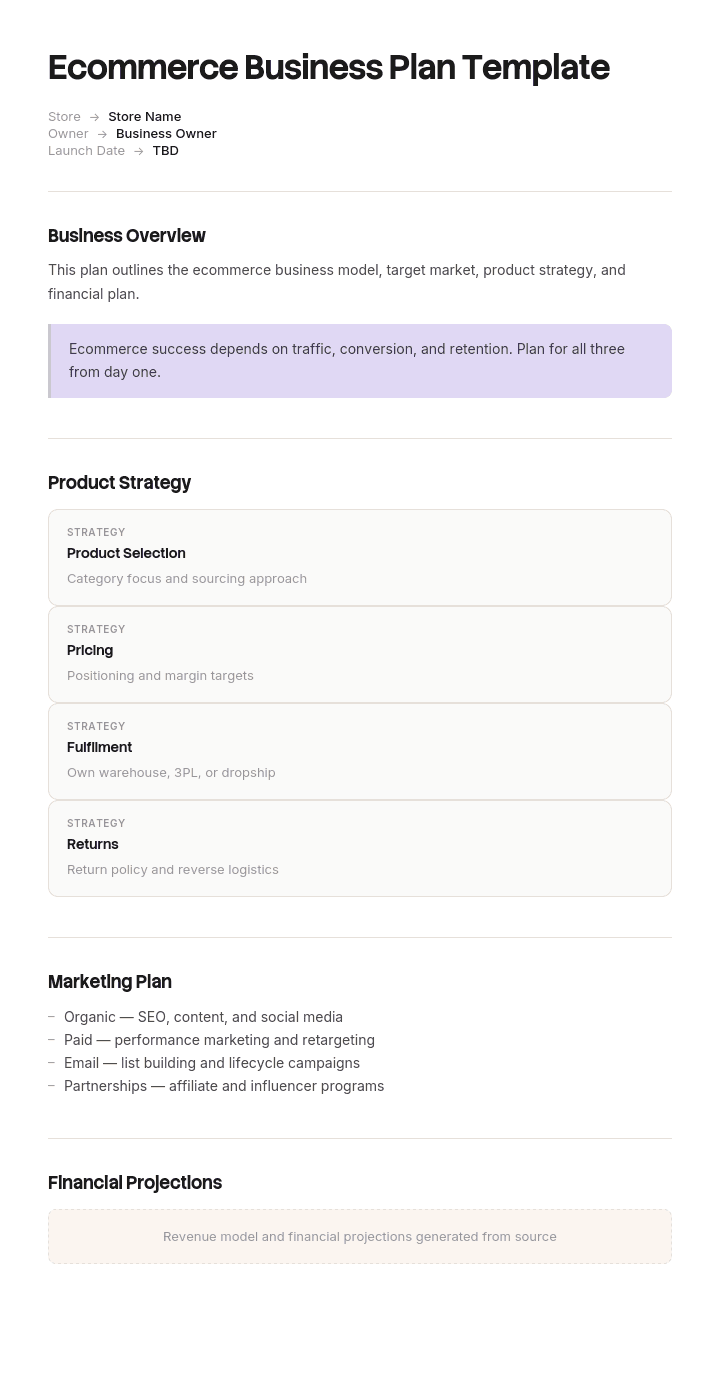
Use this template
The ecommerce playbook is different from a traditional business plan - product, fulfillment, marketing channels and unit economics dominate the picture. With Trupeer, you can save hours on planning by starting with a free ecommerce business plan template, customizing it with your brand identity, and turning the plan into a video pitch perfect for investors and partners.
Most ecommerce business plans describe a store and then attach revenue projections that go up. They rarely answer the two questions that determine whether the business survives: does each order make money after everything, and can you fund the gap between paying suppliers and getting paid.
This template covers the standard plan sections, but the work is in the spreadsheet.
Download the ecommerce business plan template
Format | Best for |
|---|---|
Word (.docx) | The written plan for lenders, investors or your own thinking |
Excel (.xlsx) | Unit economics, traffic model, cash cycle and three-year projections |
PowerPoint (.pptx) | The pitch deck version, twelve slides |
The finished plan for circulation | |
Google Docs and Sheets | Collaborative drafting with a co-founder |
Free, editable, no watermark. The Excel file is the one that matters here. A narrative ecommerce plan without a unit economics model is a description, not a plan.
What makes an ecommerce plan different
A general business plan asks whether the market exists and whether you can reach it. An ecommerce plan has to answer four more specific questions, and they are all arithmetic.
Does an order make money after product cost, shipping, payment fees, packaging, fulfilment and returns?
Can you acquire a customer for less than they are worth, and how long until you get that money back?
Where does the traffic come from, at what cost, converting at what rate?
How much cash does the inventory cycle consume, and does that get worse as you grow?
The last one is where ecommerce businesses die. A profitable, growing store can run out of money, and frequently does.
How to customize this template in Trupeer
Step 1: Open the Templates Section
Go to the Templates section from the main navigation.
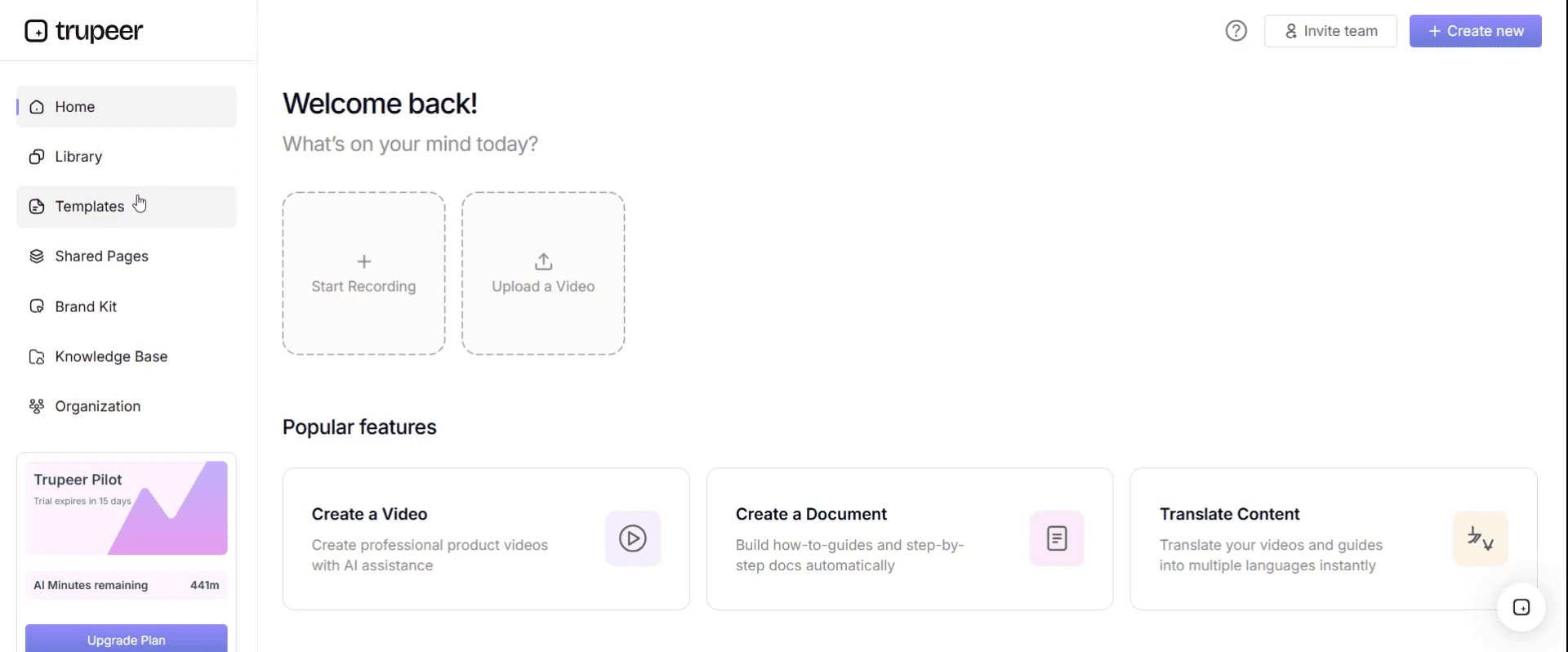
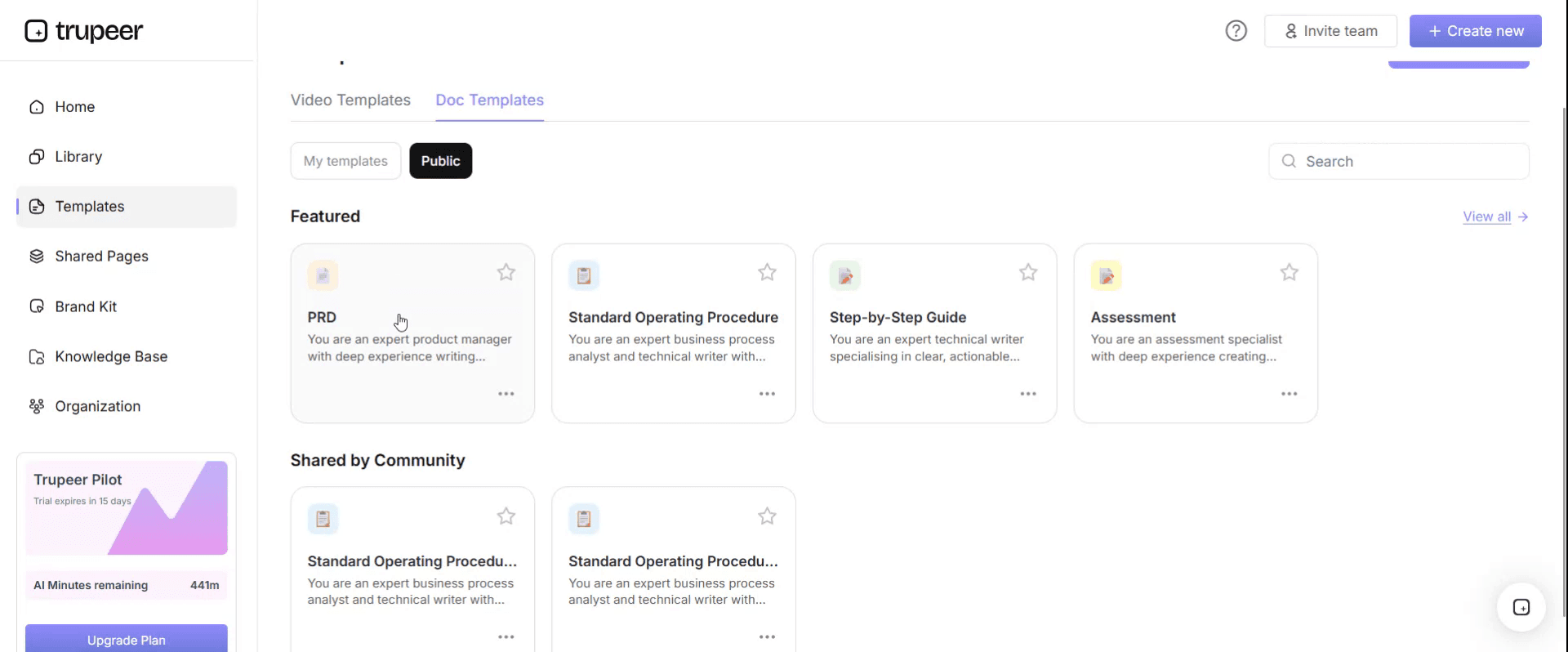
Step 2: Select and Open a Template
Click on any template you want to work with to open it.
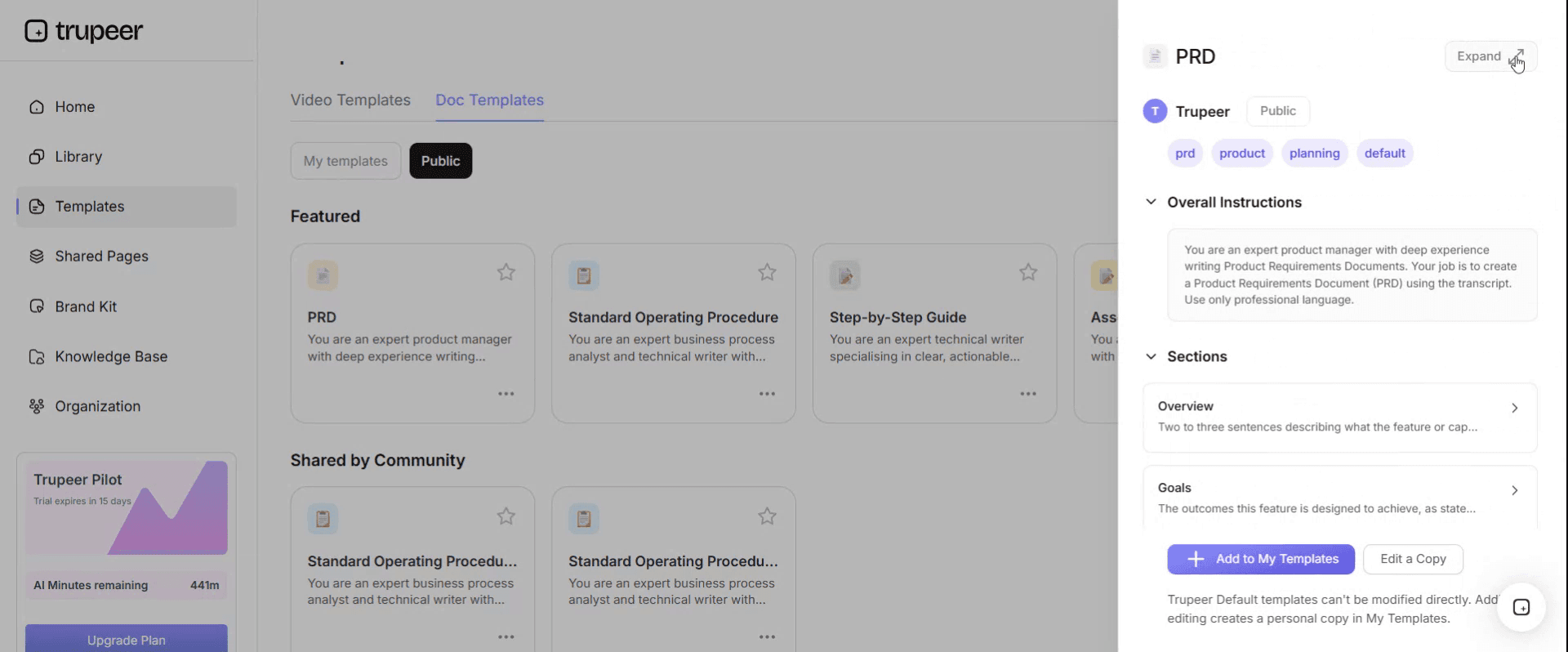
Step 3: Expand the Template View
If needed, expand the template view to see the full layout and details clearly.
Step 4: Edit the Template
Click on Edit to start modifying the selected template.
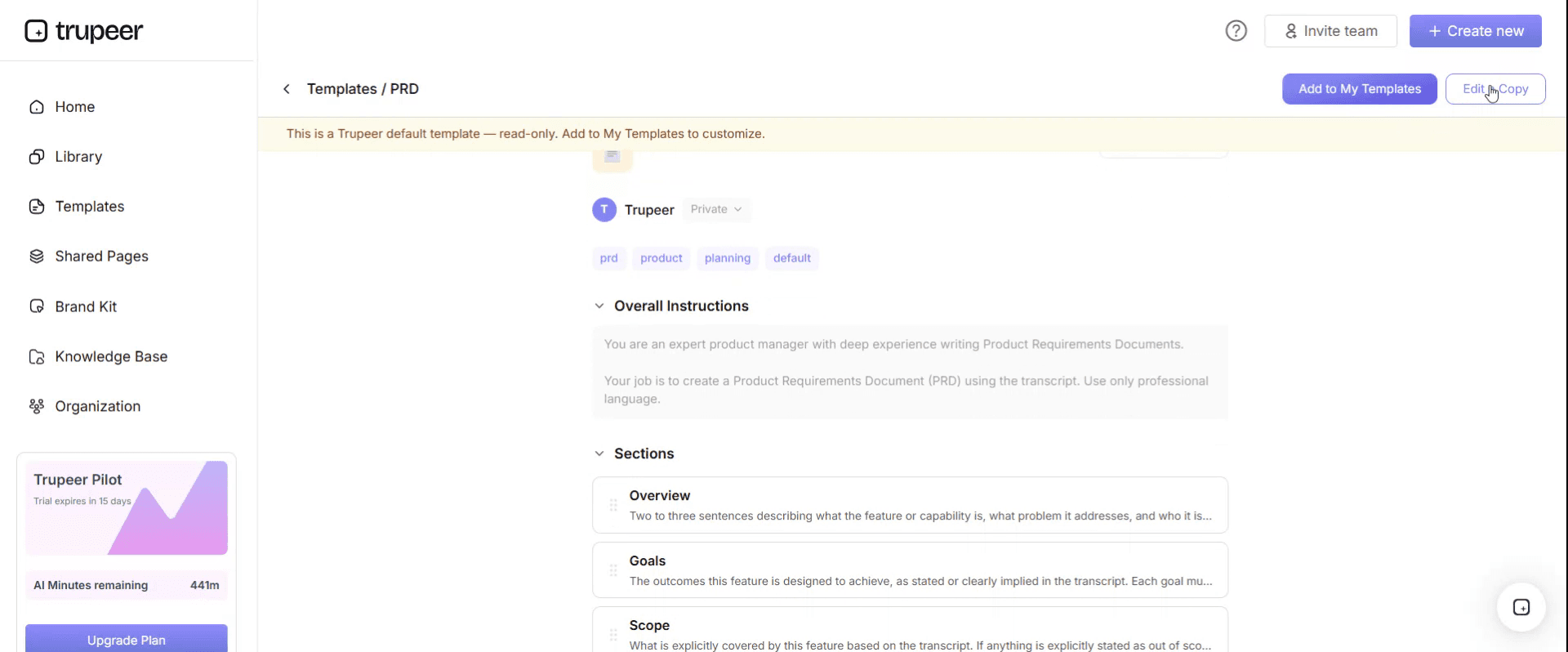
Within the editor, you can:
Add new sections
Define or update formatting rules
Add a logo and adjust its position and related settings
Step 5: Save Your Customized Template
After making all necessary changes, click Save to store the updated template as your own.
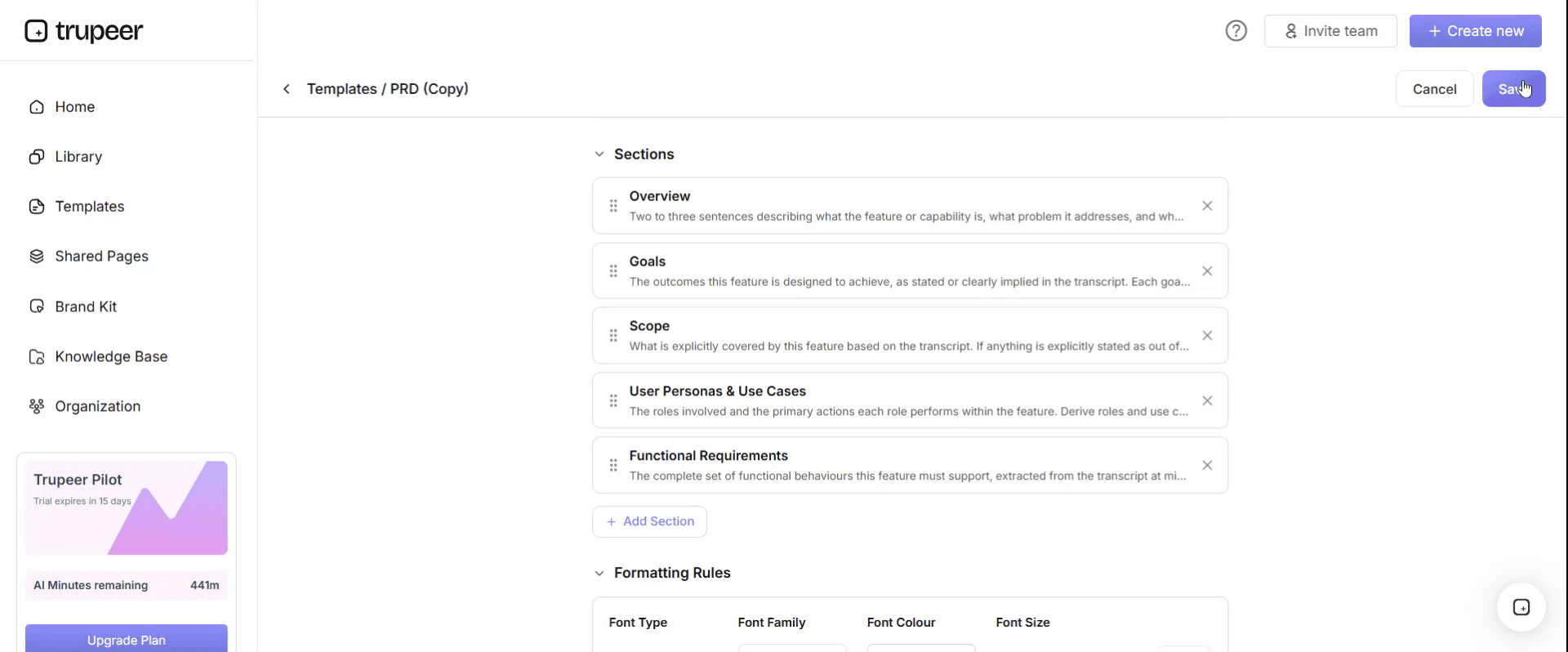
Step 6: Preview and Fine-Tune the Template
When you want to see how your customized template looks, open the Preview.
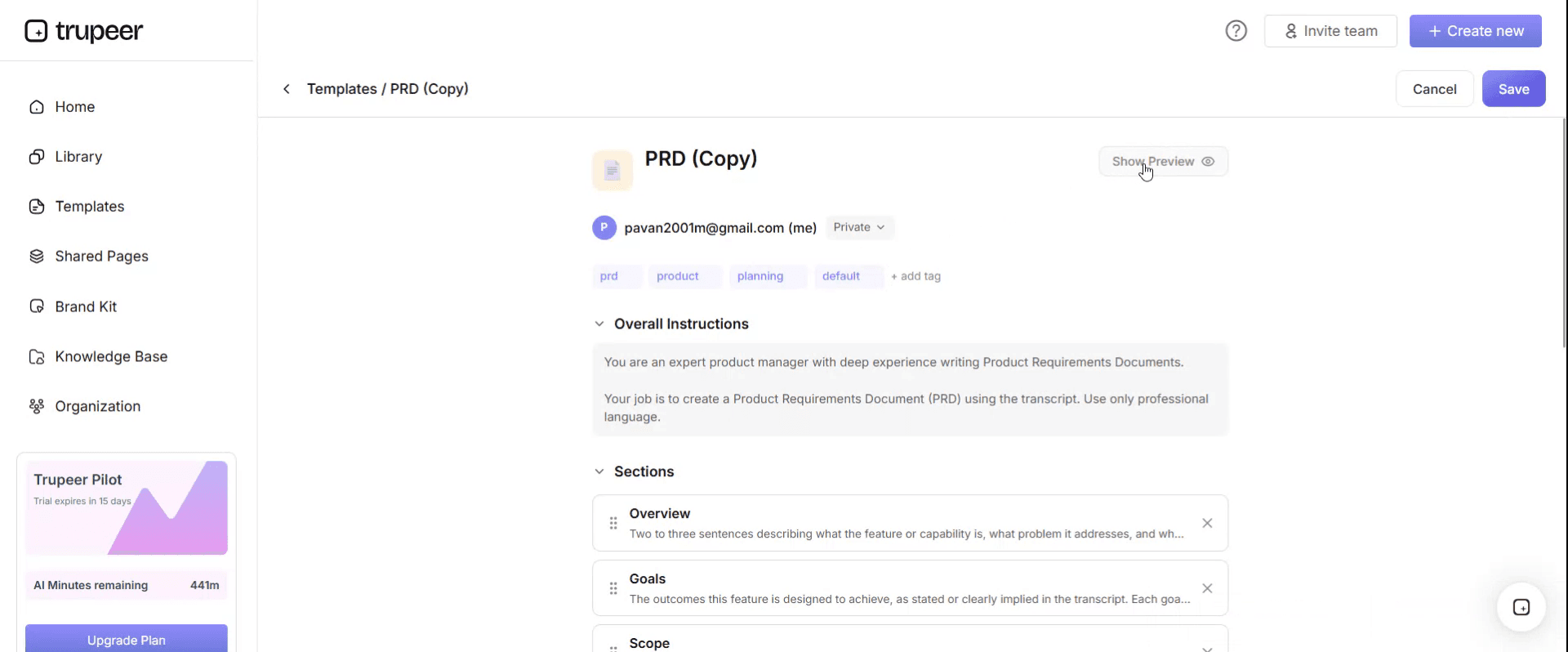
From the preview screen, you can continue to make adjustments directly if needed, ensuring the template appears exactly as you want.
With an ecommerce business plan template you can:
Save hours on writing: Skip the blank page with a structure built for online businesses.
Cover ecommerce specifics: Sections for sourcing, fulfillment, channels and unit economics.
Stay on-brand: Apply your logo, fonts and colors using Trupeer's brand kit.
Pitch with impact: Convert the plan into a video pitch for investors.
Iterate quickly: Update the plan and regenerate the video as the business evolves.
Reach global investors: Translate the plan into 65+ languages with one click.
The four numbers that decide it
Number | What it tells you | Rough danger signal |
|---|---|---|
Contribution margin per order | Whether an order is worth fulfilling | Below 30% of AOV leaves nothing for marketing and overhead |
CAC payback | How many orders until you recover acquisition cost | More than two orders on a low repeat-rate product |
Repeat rate and orders per customer | Whether you have a business or a series of transactions | Under 20% in year one makes paid acquisition very hard |
Cash conversion cycle | How long your money is tied up | Over 90 days means growth needs external funding |
Everything else in the plan is context around these four.
Contribution margin per order
Start here, because it constrains everything downstream. The mistake is stopping at gross margin, which ignores most of what an order actually costs.
Worked, for an average order of £65:
Line | Amount |
|---|---|
Average order value | £65.00 |
Cost of goods, 38% | −£24.70 |
Shipping cost £5.20, customer pays £3.95 | −£1.25 |
Payment processing, 2.4% plus £0.20 | −£1.76 |
Packaging | −£0.90 |
Pick and pack, 3PL | −£2.10 |
Returns provision, 12% rate at £8.50 per return | −£1.02 |
Contribution before marketing | £33.27 |
Contribution margin | 51.2% |
That figure, £33.27, is what you have available to pay for acquiring the customer and to cover overhead. Not £40.30, which is what a gross margin calculation would have given you.
Three lines get missed most often. Free shipping is not free, it is a margin line. Returns are not an exception, they are a cost per order across the whole business. And payment processing on a £65 order is more than most people expect.
Customer acquisition cost and payback
Continuing the same example. Monthly ad spend of £18,000 acquiring 420 new customers gives a CAC of £42.86.
Compare that to the £33.27 contribution on the first order. The first order loses £9.59. That is not necessarily a problem, but it means the business only works if customers come back.
Repeat rate of 34% in year one, averaging 1.6 orders per customer, gives a first-year contribution of £53.23 per customer. Against a £42.86 CAC, that is a ratio of 1.24.
That is weak. It means every customer generates about £10 toward overhead in their first year, and the business needs either a higher repeat rate, a higher AOV, or cheaper acquisition. Most plans would have shown this business as profitable, because gross margin looks healthy and revenue is growing.
Run this calculation before writing anything else. If the ratio is below 2, say so in the plan and explain what you will change, because any experienced reader will do the arithmetic themselves.
The traffic model
Revenue projections in ecommerce should be built from traffic, not asserted.
Sessions × conversion rate × average order value = revenue.
That forces three honest assumptions. How many sessions can you actually get, from where, at what cost. What conversion rate is realistic for your category and stage, and a new store should not assume the industry average. And whether your AOV assumption holds as you scale into colder traffic, since it usually falls.
Build it by channel, because blended numbers hide the problem:
Channel | Sessions | Conv. rate | Orders | AOV | Revenue | Cost | CAC |
|---|---|---|---|---|---|---|---|
Paid search | 14,000 | 2.1% | 294 | £62 | £18,228 | £11,200 | £38.10 |
Paid social | 22,000 | 1.1% | 242 | £58 | £14,036 | £6,800 | £28.10 |
Organic | 9,500 | 2.4% | 228 | £71 | £16,188 | — | — |
6,200 | 4.8% | 298 | £74 | £22,052 | £450 | — | |
Direct | 4,100 | 3.2% | 131 | £68 | £8,908 | — | — |
Blended, that looks fine. By channel, paid search is acquiring customers at £38 against a £33 first-order contribution, and email is carrying the business. That distinction changes what you do, and it only appears when you split the model.
The cash conversion cycle
The section almost no ecommerce business plan includes, and the one that determines whether you survive your own growth.
You pay a supplier deposit, wait for production, wait for shipping, hold stock, then sell. Card payments settle quickly, so money comes in at the point of sale. But you spent the cash months earlier.
For the same example business:
Stage | Days |
|---|---|
Supplier deposit to goods ready | 45 |
Shipping and customs | 20 |
Average days of inventory held before sale | 75 |
Payment received after sale | 2 |
Cash tied up per cycle | 138 days |
At 420 orders a month and 38% COGS, you are consuming roughly £10,400 of stock every month. Holding 75 days of inventory means about £26,000 sitting on shelves, plus around £21,000 in production and transit. Call it £47,000 of working capital just to operate at current volume.
Now grow 30%. You need roughly £61,000. The extra £14,000 has to come from somewhere, and it comes before the additional revenue arrives. This is why profitable ecommerce businesses run out of money, and why the plan needs a working capital line rather than only a profit and loss.
Three things shorten the cycle: supplier terms rather than deposits, less inventory held, and faster stock turn. State in the plan which of the three you are relying on.
The plan structure
Standard sections, with what changes for ecommerce.
Section | Ecommerce-specific content |
|---|---|
Executive summary | Lead with unit economics, not the vision |
Business overview | Model: own-brand, reseller, dropship, marketplace, subscription |
Products | Range, SKU count, margin by category, seasonality |
Customer analysis | Who buys, purchase frequency, basket composition |
Competitor analysis | Named competitors, their pricing, their positioning |
Marketing strategy | Channel mix, CAC by channel, the traffic model |
Operations | Fulfilment model, 3PL or self, returns handling, customer service |
Technology | Platform, integrations, payment providers |
Financial plan | Unit economics, traffic model, P&L, cash flow, working capital |
Funding request | How much, what it buys, and specifically how much is working capital |
The operations section is thinner in most ecommerce plans than it should be. Fulfilment errors and returns handling are the two things most likely to damage a young store, and both are operational rather than strategic.
Financial projections
Four statements, in this order of importance.
Unit economics. One order, fully costed. Everything else depends on it.
Cash flow. Monthly for at least eighteen months, with inventory purchases shown when the cash leaves rather than when the goods sell. This is the statement that matters most and the one most often done badly.
Profit and loss. Three years, monthly for year one.
Working capital requirement. How much cash the inventory cycle ties up at each revenue level, shown as revenue grows.
If a reader has time for one, they will look at cash flow. Make it the one you have thought about hardest.
Returns
Returns are a cost of doing business in ecommerce, not an anomaly, and leaving them out of the model overstates margin substantially.
Model three things: the rate, which varies enormously by category, from a few per cent in consumables to over 30% in apparel. The cost per return, covering inbound shipping, inspection, restocking, and the proportion that cannot be resold at full price. And the effect on inventory planning, since returned stock arrives back unpredictably.
Then state your returns policy in the plan, because a generous policy is a marketing decision with a direct margin cost, and the two should be assessed together.
Fulfilment and shipping
Self-fulfilment is cheaper per order at low volume and gives you control over the unboxing experience. It stops scaling somewhere between fifty and a few hundred orders a day, depending on complexity, and it is a poor use of founder time earlier than most people admit.
Third-party logistics costs more per order but converts a fixed cost into a variable one and removes a constraint on growth. Get real quotes rather than estimating, because pick and pack, storage, receiving and returns handling are all charged separately and the headline rate is not the cost.
Shipping charged to the customer is a conversion lever and a margin line at the same time. Free shipping above a threshold is common because it raises AOV, but model it rather than assuming, since the threshold determines whether it pays for itself.
Channel and marketplace strategy
Say explicitly where you sell and why.
Own store gives you margin, customer data and brand control, and requires you to buy every visitor. Marketplaces give you traffic and take a commission of typically 8 to 15%, plus you generally do not own the customer relationship. Social commerce, wholesale and retail each have different margin structures.
Most plans should model at least two channels with separate contribution margins, because a marketplace order and an own-site order are different businesses arithmetically. A 12% commission against a 51% contribution margin removes almost a quarter of it.
Platform choice
Keep this section short. Platform matters less than most first-time founders think and is easier to change than they fear.
State what you are using, what it costs monthly including apps, what it integrates with, and any constraint it places on the model. Then move on. A plan that spends two pages on platform comparison and one paragraph on unit economics is telling the reader where its author's attention is.
The pitch deck version
The PowerPoint file is twelve slides, for when you are presenting rather than sending.
Problem and opportunity. Product and range. The market. Business model. Traction, including any real numbers you have. Unit economics, which should be a full slide. Traffic and acquisition. Competition. Operations and fulfilment. Financial projections. Working capital and the ask. Team.
The unit economics slide is the one investors will spend longest on. Put the contribution build on it, line by line, rather than a single margin percentage. Showing the arithmetic signals you have done it.
How to write your ecommerce business plan
Build the unit economics first, in the spreadsheet, before writing any narrative.
Include every cost per order. Shipping, payment fees, packaging, pick and pack, returns.
Calculate CAC honestly, including all marketing spend and all salaries attributable to acquisition.
Work out payback in orders, not months. Months hide the repeat-rate assumption.
Build revenue from traffic, by channel, not as a growth percentage.
Model the cash conversion cycle and the working capital it requires at each revenue level.
Then write the narrative, which should explain the numbers rather than precede them.
State your riskiest assumption explicitly. Every experienced reader is looking for it, and naming it yourself is stronger than being caught by it.
Write the executive summary last.
Have someone unconvinced read it, ideally someone who has operated an ecommerce business rather than an advisor.
Best practices
Contribution margin, not gross margin.
Returns modelled as a per-order cost.
Traffic model split by channel.
CAC calculated per channel, not blended.
Payback measured in orders.
Cash flow monthly, with inventory purchases timed correctly.
Working capital requirement shown as revenue grows.
Marketplace and own-site contribution modelled separately.
Riskiest assumption named in the plan.
Operations section given real attention.
Common mistakes
Gross margin presented as if it were contribution.
Free shipping treated as free.
Returns omitted entirely, which can overstate margin by several points.
Blended CAC hiding one unprofitable channel.
Revenue projected as a growth percentage rather than built from traffic.
Conversion rate assumed at category average for a brand nobody knows.
No cash flow statement, only profit and loss.
Working capital ignored, so the plan shows growth the business cannot fund.
Payment processing fees left out.
Two pages on platform choice, one paragraph on unit economics.
Repeat rate assumed rather than justified.
Inventory purchases shown in the month of sale rather than the month of payment.
Write the operations down before you need them
Open the template in Trupeer AI, apply your brand kit so the plan and pitch deck match, and edit any section directly. Setup is in the template guide.
The operations section of an ecommerce plan is where most of the day-to-day risk sits, and it is usually the thinnest part of the document. Order handling, returns processing, supplier onboarding, customer service responses: these are the processes that break first when volume rises or when you hire your first person.
Record each one as you do it and Trupeer AI produces the written procedure and a narrated video walkthrough from the same pass, so the operations plan in your document exists as something a new hire or a 3PL can actually follow. Translate it into 65+ languages if you use overseas suppliers or support, and keep the set in your knowledge base.
Record it. Brand it. Translate it. Trupeer it.
Frequently Asked Questions
Is there a free ecommerce business plan template in Word?
Yes. The Word file contains the full written plan with all ten sections and guidance notes you delete as you write. Free download, no sign-up, no watermark.
Is there a free ecommerce business plan template in Excel?
Yes, and it is the more important of the two. The Excel workbook holds the unit economics build, the traffic model by channel, three-year projections, monthly cash flow and the working capital calculation. The narrative plan is much easier to write once the spreadsheet is done.
Is there a business plan template in Excel?
Yes. For a general business rather than ecommerce, the business plan template includes an Excel financial model covering profit and loss, cash flow and break-even without the ecommerce-specific unit economics and inventory cycle.
Is there a free ecommerce business plan template in PowerPoint or PPT?
Yes, a twelve-slide pitch deck version for presenting to investors or partners. The unit economics slide shows the contribution build line by line rather than a single margin figure, which is what investors spend the most time on.
Is there a free ecommerce business plan template in PDF?
Yes, both as a blank template and as a completed sample so you can read a finished plan before writing your own.
Where can I find an e-commerce business plan PDF?
The completed sample on this page is a full ecommerce plan in PDF, including the worked unit economics, traffic model and cash cycle. Read it for the level of specificity rather than copying the numbers, since those have to be true about your own business.
Can I download an ecommerce business plan template for free?
Yes, every format is a free download with no account required and no attribution.
What is an ecommerce business plan?
A document setting out what you sell, to whom, how they will find you, how orders are fulfilled, and whether the numbers work. It differs from a general business plan mainly in the financial detail: unit economics per order, acquisition cost and payback, a traffic-based revenue model, and the working capital the inventory cycle consumes.
What should an ecommerce business plan include?
Executive summary, business overview and model, products and range, customer analysis, competitor analysis, marketing strategy with a traffic model, operations covering fulfilment and returns, technology and platform, financial plan with unit economics and cash flow, and a funding request stating how much is working capital.
How do you calculate ecommerce unit economics?
Start from average order value and subtract cost of goods, net shipping cost after what the customer pays, payment processing, packaging, pick and pack, and a returns provision based on your return rate and cost per return. What remains is contribution before marketing, and that is the figure available to cover acquisition and overhead.
What is a good contribution margin for ecommerce?
It depends heavily on category, but below 30% of average order value leaves very little for acquisition and overhead, and makes paid marketing difficult. The more useful test is the relationship between contribution and CAC rather than the margin percentage on its own.
How do you work out customer acquisition cost?
Total acquisition spend divided by new customers acquired in the same period, calculated per channel rather than blended. Include all marketing spend and any salary attributable to acquisition. Then compare it to contribution per order to see how many orders it takes to pay back, which is where the repeat rate assumption becomes visible.
Why do profitable ecommerce businesses run out of cash?
Because inventory is paid for months before it is sold. If you pay suppliers 60 days before goods arrive and hold 75 days of stock, your cash is committed for around 135 days before the sale returns it. Growth makes this worse, since a larger business needs proportionally more stock, and that cash is required before the additional revenue arrives.
How much working capital does an ecommerce business need?
Enough to fund your cash conversion cycle at your target revenue, which means the inventory in transit plus the inventory on hand. Model it in the spreadsheet at each revenue level rather than estimating, and include it explicitly in any funding request, because underestimating working capital is the most common reason ecommerce funding rounds come up short.
Should I include returns in my financial projections?
Yes, as a per-order cost across the whole business rather than an occasional exception. Return rates vary from a few per cent to over 30% by category, and omitting them overstates contribution margin by several points, which then flows through every other projection.
Can I customise this ecommerce business plan template?
Yes, both the document and the spreadsheet are fully editable. Adjust the cost lines to your own model, since dropship, own-brand and marketplace businesses have genuinely different unit economics. In Trupeer AI you can also apply your brand kit so the plan and deck match.


