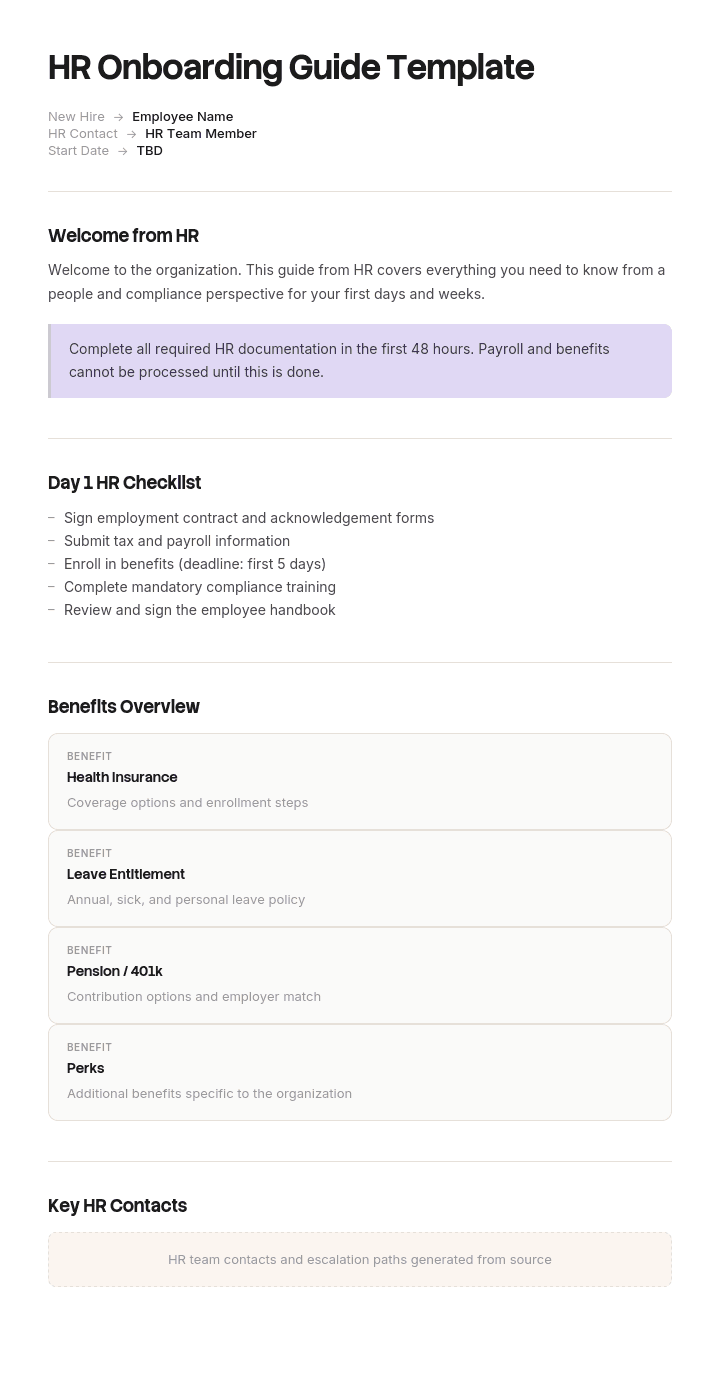
Use this template
The HR onboarding experience shapes a new hire's view of the company before they ever touch the work. With Trupeer, you can save hours on HR onboarding design by starting with a free HR onboarding guide template, customizing it with your brand guidelines, and turning the guide into engaging video modules new hires actually finish.
Onboarding fails in a specific way. The paperwork gets done because it is mandatory and someone chases it. The laptop arrives because IT has a ticket. And then the person sits at a desk on day three with nothing to do and nobody to ask, because the part that determines whether they stay is nobody's job.
This guide is for the people running the process. It separates what is legally required from what is merely arranged from what actually matters.
Download the HR onboarding guide
Format | Best for |
|---|---|
Word (.docx) | The process guide itself, for HR and hiring managers |
Excel (.xlsx) | The onboarding tracker: one row per hire, tasks across, owners and dates |
The approved version and printable stage checklists | |
Google Docs | Drafting with hiring managers and IT |
.doc | Older HR systems |
Free, editable, no watermark.
Which onboarding document do you need?
You need to... | Use |
|---|---|
Run the onboarding process as HR | This guide |
Track tasks per hire, with owners and dates | |
Give the new starter something to read | |
Plan their first 90 days of capability | |
Train them on systems and role tasks | |
Set out policies and terms | |
Onboard a client rather than an employee |
How to customize this template in Trupeer
Step 1: Open the Templates Section
Go to the Templates section from the main navigation.
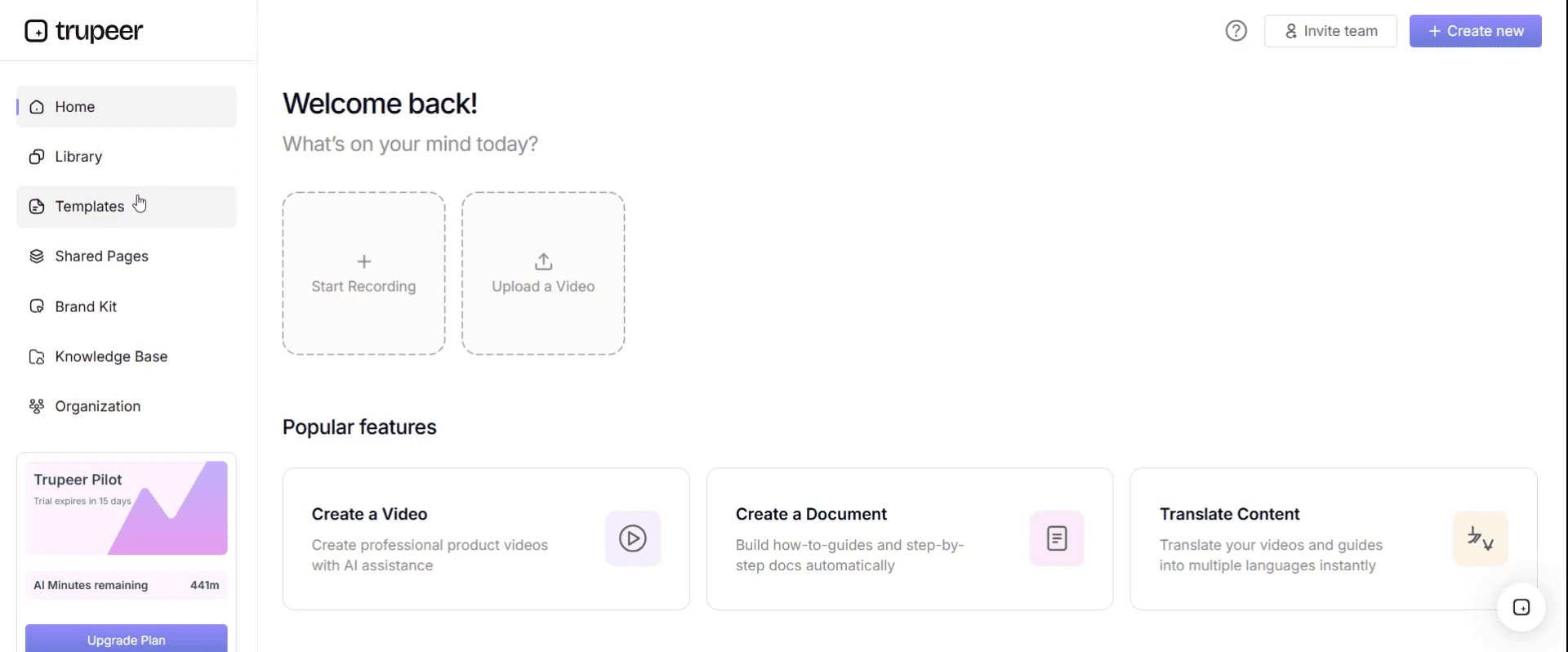
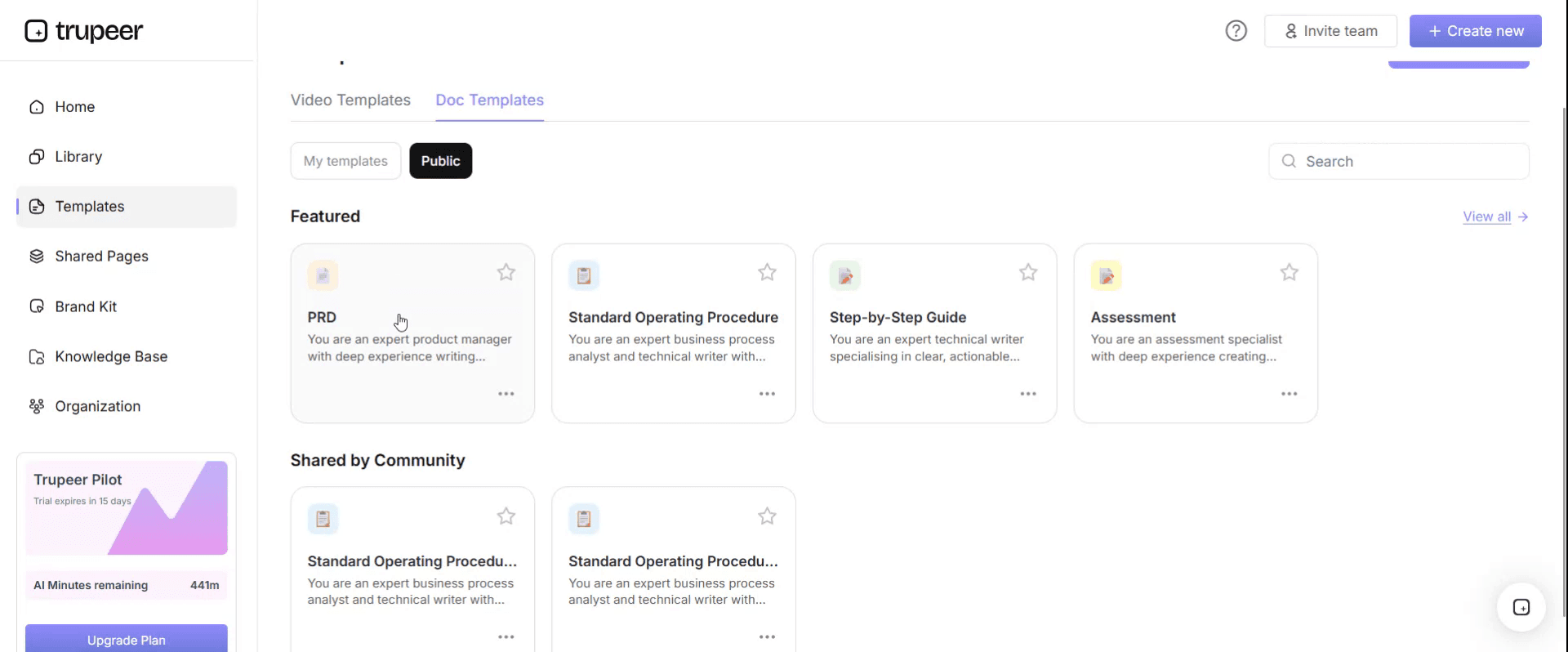
Step 2: Select and Open a Template
Click on any template you want to work with to open it.
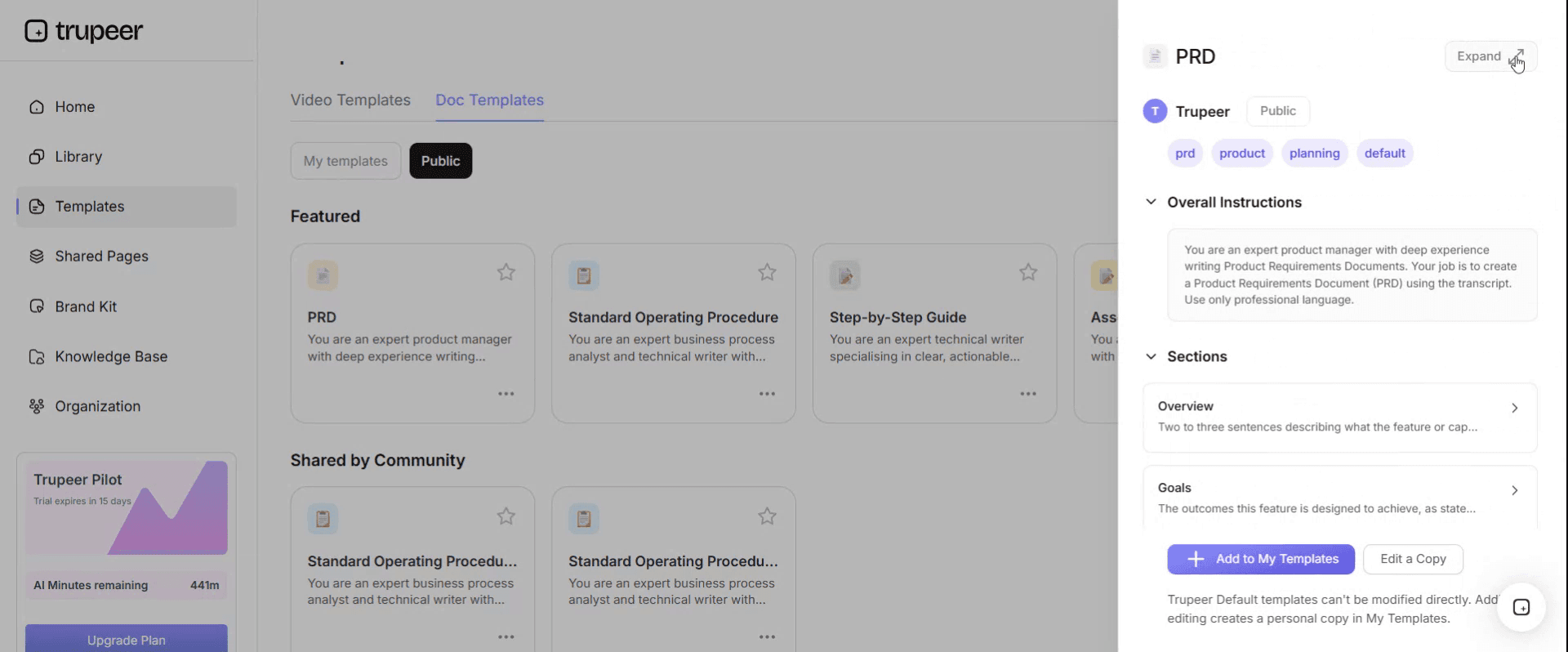
Step 3: Expand the Template View
If needed, expand the template view to see the full layout and details clearly.
Step 4: Edit the Template
Click on Edit to start modifying the selected template.
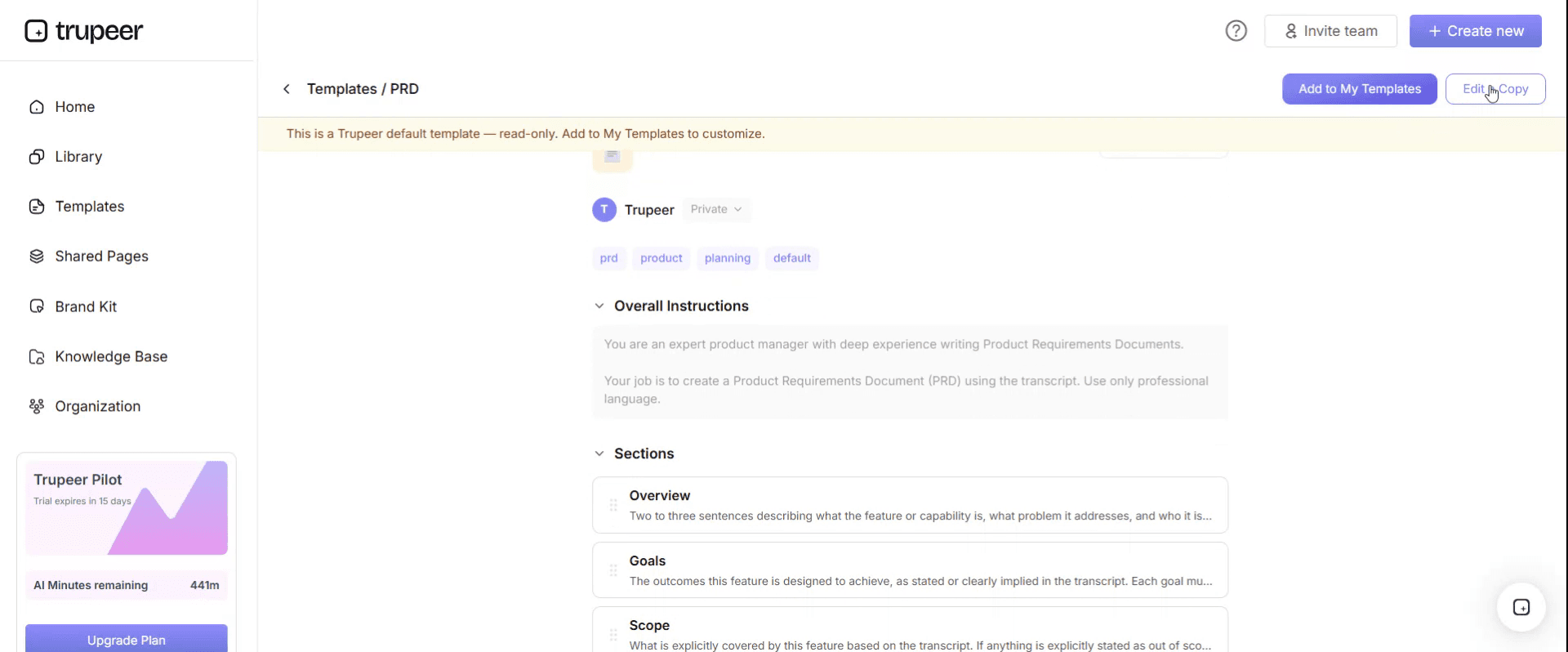
Within the editor, you can:
Add new sections
Define or update formatting rules
Add a logo and adjust its position and related settings
Step 5: Save Your Customized Template
After making all necessary changes, click Save to store the updated template as your own.
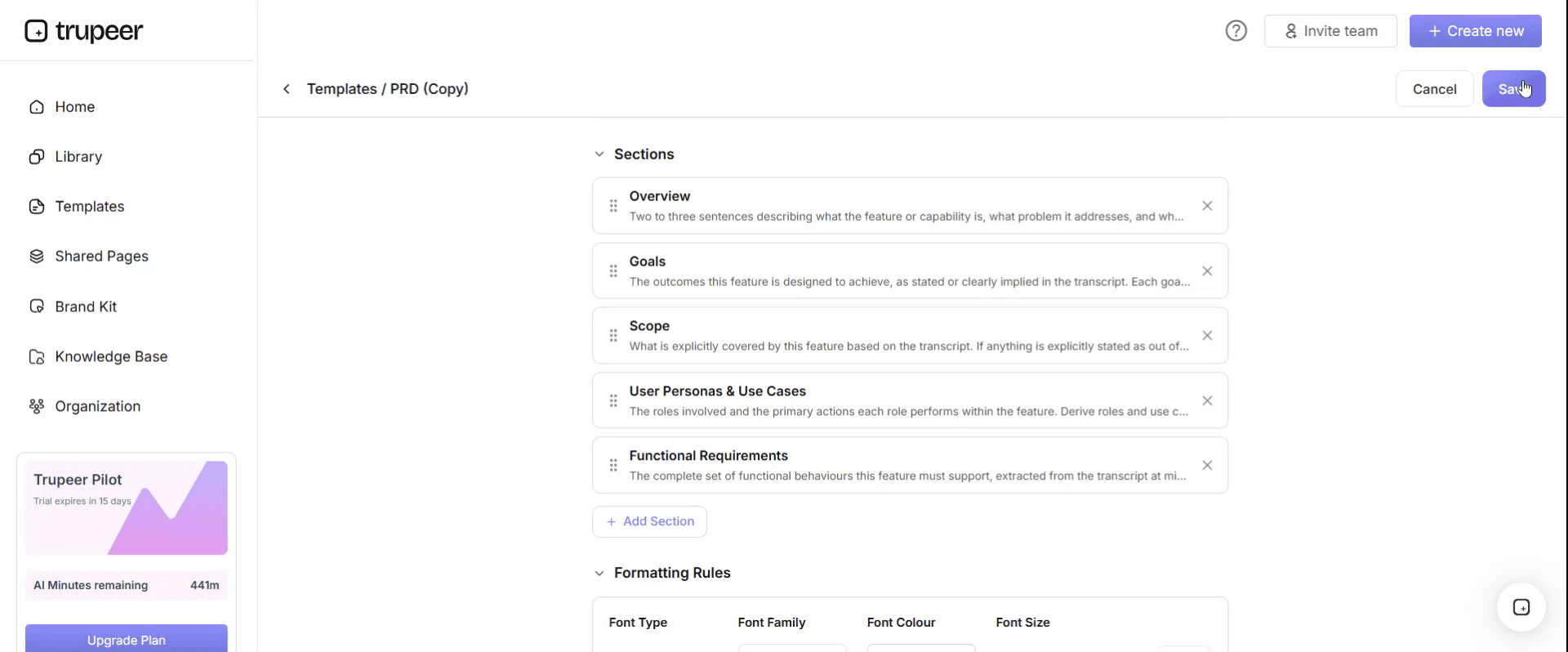
Step 6: Preview and Fine-Tune the Template
When you want to see how your customized template looks, open the Preview.
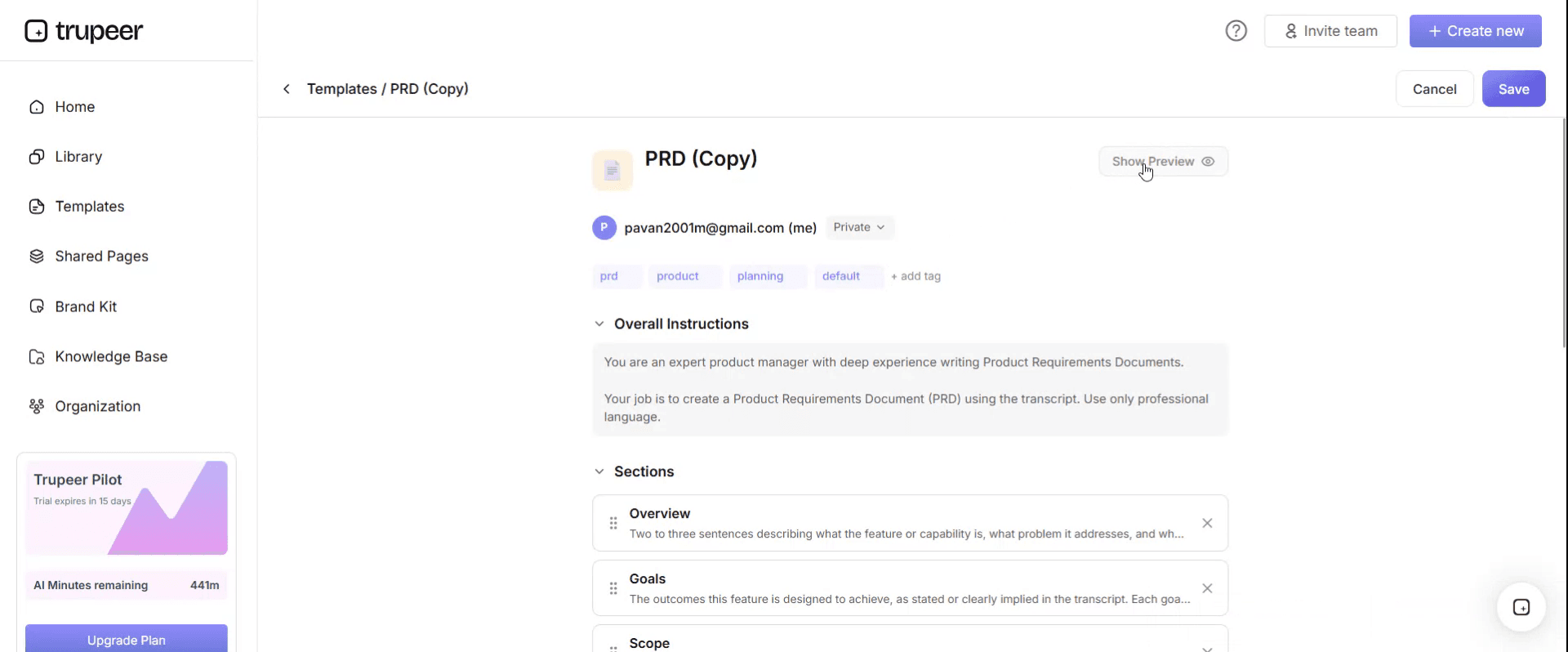
From the preview screen, you can continue to make adjustments directly if needed, ensuring the template appears exactly as you want.
With an HR onboarding guide template you can:
Save hours on design: Skip the blank page with a structure built for HR onboarding.
Improve first impressions: Built-in fields cover everything new hires need on day one.
Stay on-brand: Apply your logo, fonts and colors using Trupeer's brand kit.
Engage from day one: Convert dense onboarding paperwork into video modules.
Standardize HR onboarding: Use the same template for every new hire and location.
Reach global hires: Translate HR onboarding into 65+ languages with one click.
The three jobs of HR onboarding
Every onboarding task serves one of three purposes, and they get very different amounts of attention.
Comply. Right to work, contract, payroll, tax, data protection, mandatory training. Legally required, deadline-driven, and reliably completed because the consequences of missing them are visible.
Equip. Accounts, access, laptop, desk, systems, tools. Logistically demanding, usually completed, and the source of most day-one frustration when it is not.
Integrate. Understanding the role, meeting people, knowing how decisions get made, feeling like they belong. Nobody's explicit job, no deadline, no visible consequence for skipping it, and the single largest driver of whether someone stays.
The pattern is consistent: the first two get done because they have owners and dates, and the third does not. If you change one thing about your onboarding, give integration tasks an owner and a date like everything else.
Comply
The non-negotiable layer. Requirements vary considerably by country, so this is a shape rather than a list.
Typically covered: verifying the right to work, the signed contract and any supporting terms, payroll and tax registration, bank details, emergency contacts, pension enrolment or opt-out, data protection notice and consent where applicable, health and safety induction, and any mandatory training the role or sector requires.
Three practical points.
Deadlines are external. Payroll cut-offs and statutory registration windows do not move. Build them into the timeline rather than treating them as HR admin.
Verification often has to happen before or on day one, not during the first week. Getting this wrong can have consequences for the employer beyond inconvenience.
Keep the records properly, with retention periods per your policy and jurisdiction. This is the layer most likely to be examined later.
Equip
Everything the person needs to physically do the job.
Accounts and single sign-on, email, the core systems for their role, communication tools, hardware, peripherals, phone if needed, building access and passes, desk or workspace, parking, and any role-specific tools or licences.
The rule that prevents most day-one problems: everything is provisioned and tested before they arrive, not requested before they arrive. A ticket raised is not the same as an account that works, and the difference is discovered at nine on Monday morning.
Test by logging in as them, or having them log in a day early where your security policy allows.
Integrate
The layer that gets skipped, described concretely so it can be assigned.
Someone meets them at the door. Not reception, a person who is expecting them.
A buddy, briefed in advance, not appointed on the morning.
Their manager has time blocked on day one and in week one. Actually blocked, not intended.
Introductions scheduled, to the immediate team and the three or four people they will depend on.
A first task, small and real, in the first few days. Contributing something early matters more than any welcome pack.
How decisions get made, explained. The unwritten rules are what take longest to learn and nobody documents them.
A check-in at week one and month one, with someone other than their manager, so they can be honest.
Every item above needs an owner and a date in the tracker. Otherwise they are aspirations, and they will lose to whatever is urgent that week.
The five stages
Pre-boarding
From offer acceptance to day one, and the most underused window in the whole process.
Send the contract quickly. Keep in touch, because the gap between accepting and starting is when people get counter-offers and second thoughts. Collect the compliance paperwork in advance so day one is not a form-filling exercise. Confirm the start details: time, place, who to ask for, what to bring, what to wear. Provision everything and test it. Announce them internally before they arrive. Send something on the Friday before, so the first day does not begin with uncertainty.
The most common pre-boarding failure is silence between offer and start.
Day one
The day people form an impression that is difficult to change.
Someone expecting them at the door. A working setup. Lunch with someone. The manager available. A tour, physical or virtual. The essential access confirmed. Any remaining compliance items completed. Nothing else scheduled that requires them to know anything.
What to avoid: a full day of systems training, a stack of policy documents to read, and the manager in meetings.
Week one
Context before contribution, but with something real to do.
Introductions to the immediate team and key dependencies. Role expectations discussed explicitly, including what success looks like at 30 days. Team processes and rhythms explained. Systems training for the tools they will use most. A small first task. Buddy check-ins. A check-in with HR at the end of the week to catch anything going wrong early.
First month
Building competence and connection.
Regular one-to-ones established as a recurring commitment. Role-specific training. Broader introductions across the organisation. The 30-day review against agreed expectations. Feedback in both directions, and this is where most useful process improvement comes from because they can still see what was confusing.
First 90 days and beyond
Independence and the transition out of onboarding.
Reviews at 60 and 90 days. Probation review where applicable, with the date tracked and not missed. Development conversation once the role is understood. A formal end to onboarding, so both sides know it has finished. And an onboarding experience survey, which is far more honest at 90 days than at week one.
Onboarding that fades rather than ending means nobody knows whether it worked.
The HR onboarding guide structure
Section | Contents |
|---|---|
Purpose and scope | Which hires this covers, and any exceptions |
Roles and responsibilities | HR, hiring manager, IT, facilities, buddy, the new starter |
Compliance requirements | What must happen, by when, and who owns each |
The five stages | Activities, owners and timing for each |
Templates and forms | Links to everything referenced |
Systems and access matrix | What each role needs provisioned |
Remote and hybrid variations | What differs |
Escalation | What to do when something is late |
Measures | What is tracked and reported |
Version and owner | With review date |
The coordination problem
Onboarding involves five functions and almost every failure is a handoff between them rather than a task nobody attempted.
Function | Owns | Fails when |
|---|---|---|
HR | Compliance, process, communications | Assumes IT knows the start date |
Hiring manager | Role clarity, first task, integration | Books meetings on day one |
IT | Accounts, hardware, access | Gets notice too late, or provisions without testing |
Facilities | Desk, passes, physical access | Not told at all |
The team | Welcome, buddy, day-to-day help | Nobody was asked in advance |
The single most effective fix is one trigger event that notifies everyone simultaneously. Offer accepted fires a notification to HR, IT, facilities and the manager, each with their own task list and deadline. Sequential notification, where HR tells IT once the contract is signed, is where the days get lost.
The second fix is a named owner per hire who is accountable for the whole thing rather than for their function's part. Usually HR, sometimes the manager, never nobody.
Remote and hybrid onboarding
Everything above still applies, and four things need deliberate replacement.
Equipment logistics. Shipping, delivery confirmation, setup support on the day, and a fallback when it arrives late. Build in more time than feels necessary.
The incidental introductions that happen physically do not happen remotely. Schedule them explicitly, in short calls, and accept that this is more overhead rather than pretending it happens naturally.
Overhearing. New starters in an office learn enormously from ambient conversation. Remotely this is absent, so context has to be delivered deliberately: recorded explanations, written background, more explicit description of how things work.
Checking they are alright. Struggling is visible in an office and invisible remotely. More frequent, shorter check-ins in the first month, from more than one person.
Compliance and record keeping
Please note: onboarding compliance requirements vary substantially by country and, within some countries, by state or region. Right to work verification, payroll registration, mandatory notices and retention periods all differ. This guide describes the general shape rather than any jurisdiction's specific requirements, and it does not constitute legal advice. Have your process reviewed by a qualified HR or employment law advisor in each jurisdiction where you hire.
What holds generally: verification usually has a deadline tied to the start date, records must be kept for a defined period, and the consequences of getting these wrong fall on the employer rather than the employee. Build them into the timeline as fixed points, not as tasks to complete when convenient.
Measuring onboarding
Time to productivity. How long until the person is performing at the expected standard. Defined per role, or the number means nothing.
Day one readiness. Percentage of hires with everything provisioned and working on arrival. The cleanest single measure of your process.
Task completion rate by stage, which shows where the process breaks down.
90-day retention, and specifically early departures, which are almost always onboarding or hiring failures rather than performance ones.
New starter feedback at 30 and 90 days. The 90-day version is more honest.
Manager feedback, since they see what the new hire could not do and did not know.
Time from offer accepted to fully provisioned, which is where the coordination problem shows up numerically.
Day one readiness is the one to start with. It is easy to measure, embarrassing when low, and improving it fixes several other problems.
Where onboarding usually fails
Silence between offer and start, so people arrive uncertain or do not arrive at all.
IT told too late, or told and never confirmed.
Accounts provisioned but never tested.
Manager unavailable on day one.
No first task, so the person spends a week reading.
Buddy appointed on the morning and unbriefed.
Integration tasks with no owner, so they are skipped whenever the week is busy.
The 30-day review not held, which is when problems could still be fixed cheaply.
Onboarding fading out rather than formally ending.
Feedback collected and never acted on, so the same problems repeat with every hire.
How to build your onboarding process
Map who owns what across HR, the manager, IT, facilities and the team.
Build the systems and access matrix by role, so provisioning is a lookup rather than a conversation.
Set one trigger event that notifies everyone simultaneously.
Separate compliance, equipment and integration so the third is visible rather than assumed.
Give integration tasks owners and dates, exactly like the others.
Write the stage checklists, with realistic timing.
Name an owner per hire, accountable for the whole process.
Test with the next new starter and ask them at day five what was confusing.
Measure day one readiness and report it.
Review quarterly, using new starter and manager feedback.
Best practices
Provision and test before arrival, never just request.
One trigger notifying all functions at once.
Named owner per hire.
Integration tasks with owners and dates.
Contact between offer and start, at least weekly.
Compliance paperwork completed before day one where possible.
No systems training on day one.
A real first task in the first week.
Buddy briefed in advance.
Formal end to onboarding at 90 days.
Common mistakes
Compliance and equipment treated as the whole of onboarding.
Sequential notification, so IT finds out last.
Provisioning requested but not verified.
Day one filled with policy documents.
Manager in meetings on day one.
Buddy told on the morning.
Integration left to happen naturally, which it does not, particularly remotely.
Probation review dates untracked and missed.
Feedback gathered at week one, when nobody says anything honest.
Same problems recurring with every hire because nobody owns the process itself.
One process for office and remote hires.
Deliver the same onboarding whoever runs it
Open the templates in Trupeer AI, apply your brand kit so onboarding materials match your other HR documents, and edit any section directly. Setup is in the template guide.
The part of onboarding that scales worst is systems training. Every new starter needs the same walkthrough of the same tools, it has to be scheduled around whoever is free, it happens once, and by month three they have forgotten it with nothing to go back to.
Record each walkthrough once and Trupeer AI produces the written guide and a narrated video walkthrough from the same pass. New starters watch on day two rather than waiting for a slot, they can rewatch in month three, and the quality does not depend on who was available to deliver it.
Translate it into 65+ languages for international hires, and keep the set in your knowledge base so it doubles as ongoing reference. Useful for training well beyond the first month.
Record it. Brand it. Translate it. Trupeer it.
Frequently Asked Questions
Is there a free HR onboarding guide template in Word?
Yes. The Word version is the process guide for HR and hiring managers, covering responsibilities, the five stages, compliance requirements and escalation. Free download, no sign-up, no watermark.
Is there a free employee onboarding template in Word?
Yes, and there are two different documents depending on what you need. This page has the HR process guide. For the task checklist with owners and dates, use the onboarding checklist and plans template. For the document you hand the new starter, use the new hire onboarding guide.
Is there a free employee onboarding template in Word and PDF?
Yes, both formats are included for every document here. Word for editing, PDF for the approved version and printable stage checklists.
Is there a free HR onboarding guide template in Excel?
Yes. The Excel file is the onboarding tracker: one row per hire, tasks across the columns, with owners, due dates and status. It is what shows you the pattern across hires rather than the tasks for one.
Is there an employee onboarding template in Excel, free?
Yes, the same tracker covers it. It includes the systems and access matrix by role, which turns provisioning from a conversation into a lookup and is the single most useful tab for reducing day one problems.
Is there a new employee onboarding checklist template in Excel?
Yes, on the onboarding checklist and plans template page, with tasks grouped by stage and owner. This page covers the process behind it rather than the checklist itself.
Is there a free HR onboarding guide template in PDF?
Yes, as the approved process document and as printable stage checklists for pre-boarding, day one, week one, month one and 90 days.
Can I download a free HR onboarding guide template?
Yes, every format is a free download with no account required and no attribution.
What is HR onboarding?
The process of taking someone from accepting an offer to being a fully integrated, productive employee. It covers three distinct jobs: meeting legal and compliance requirements, equipping the person to do the work, and integrating them into the team and the organisation.
What should an HR onboarding guide include?
Scope, roles and responsibilities across HR, the manager, IT and facilities, compliance requirements with deadlines and owners, the five stages with activities and timing, links to templates and forms, a systems access matrix by role, remote variations, escalation for late tasks, and the measures you track.
What are the five stages of employee onboarding?
Pre-boarding from offer acceptance to day one, day one itself, the first week, the first month, and the first 90 days. Each has a different purpose: pre-boarding removes friction, day one forms an impression, week one gives context, month one builds competence, and 90 days establishes independence and formally ends the process.
How long should onboarding last?
Ninety days for most roles, with a formal end so both sides know it has finished. Senior and complex roles often run to six months. What matters more than the length is that it ends deliberately rather than fading out, since otherwise nobody can say whether it worked.
What is the difference between onboarding and orientation?
Orientation is the initial induction, typically a day or two covering paperwork, policies, facilities and introductions. Onboarding is the whole process of becoming productive and integrated, of which orientation is the first part. Treating orientation as the whole of onboarding is the most common structural mistake.
Who is responsible for employee onboarding?
HR owns the process and compliance, the hiring manager owns role clarity and integration, IT owns provisioning, facilities owns physical access, and the team provides the buddy and day-to-day support. The critical addition is a named owner per hire who is accountable for the whole thing, because otherwise every function completes its part and the gaps between them go unnoticed.
What should happen before a new employee starts?
Contract signed, compliance paperwork completed, all accounts and equipment provisioned and tested, start details confirmed in writing, the team told, a buddy briefed, the manager's first-week time blocked, and regular contact maintained so the person is not left in silence between accepting and arriving.
How do you measure onboarding success?
Day one readiness, meaning the percentage of hires with everything working on arrival, is the best place to start. Then time to productivity against a defined standard per role, task completion by stage, 90-day retention, and feedback from both the new starter and their manager at 30 and 90 days.
How do you onboard remote employees?
The same process with four deliberate additions: equipment logistics with buffer time, explicitly scheduled introductions since incidental ones do not happen, deliberate delivery of the context people would otherwise overhear, and more frequent short check-ins because struggling is invisible remotely.
Can I customise this HR onboarding guide?
Yes, every version is fully editable. The compliance section in particular must be adapted to your jurisdiction, since requirements differ substantially between countries. In Trupeer AI you can also apply your brand kit so onboarding materials match your other HR documents.


