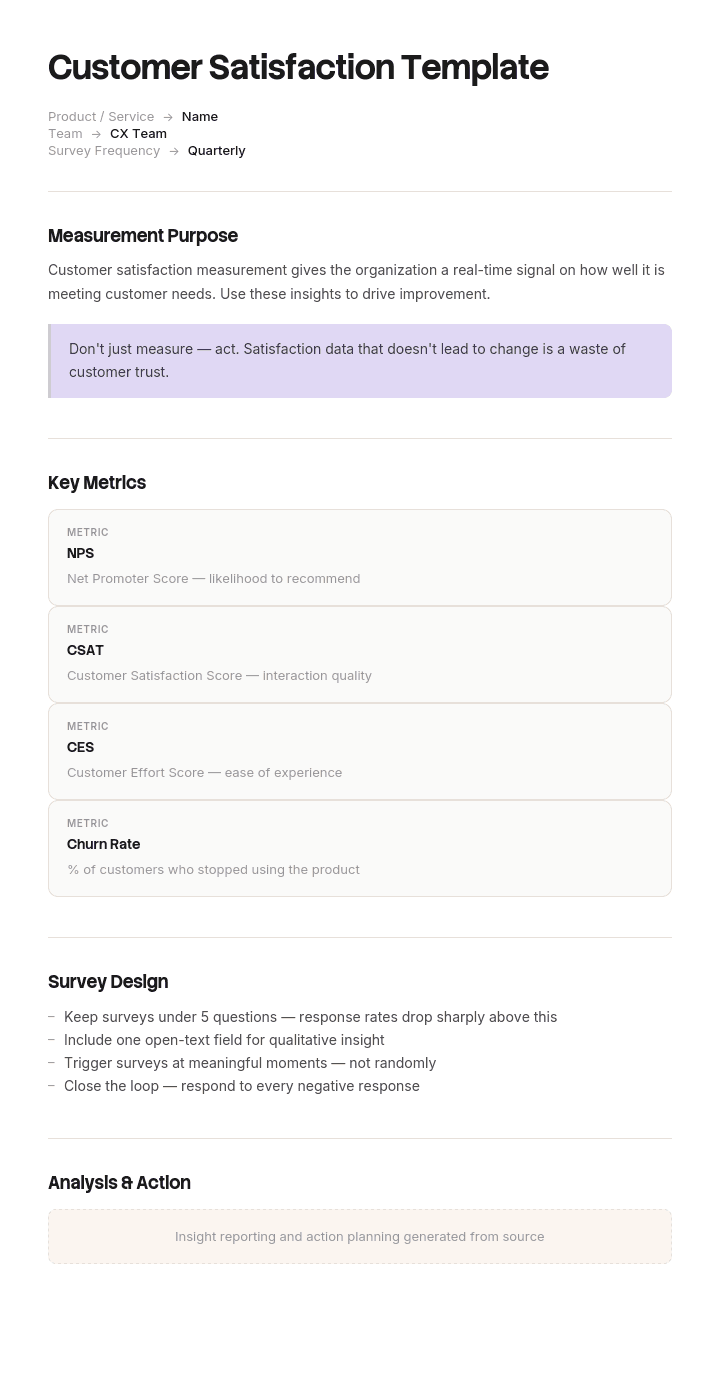
Use this template
What gets measured gets managed - and customer satisfaction is no exception. With Trupeer, you can save hours on CSAT program design by starting with a free customer satisfaction template, customizing it with your brand guidelines, and turning insights into video summaries that drive action across teams.
Most satisfaction surveys measure the wrong thing at the wrong moment and then nobody acts on the result. The score gets reported quarterly, everyone notes it went down two points, and nothing changes.
This template starts from the decision that fixes that: which metric you actually need, because CSAT, NPS and CES answer different questions and are asked at different times. Then the questions, the scoring, and what to do with the answers.
Download the customer satisfaction template
Format | Best for |
|---|---|
Word (.docx) | Editing the questions, emailing as an attachment, pasting into a report |
Printing for a counter, a service visit or an event, plus a fillable version | |
Excel (.xlsx) | Tallying responses and calculating CSAT, NPS and CES automatically |
Google Docs | Collaborative editing before you finalise the questions |
Google Sheets | Live analysis with the scoring formulas built in |
Free, editable, no watermark. If you want the survey hosted online with automatic collection, a survey platform will serve you better than a document. These are for when you need the questionnaire as a file you control.
How to customize this template in Trupeer
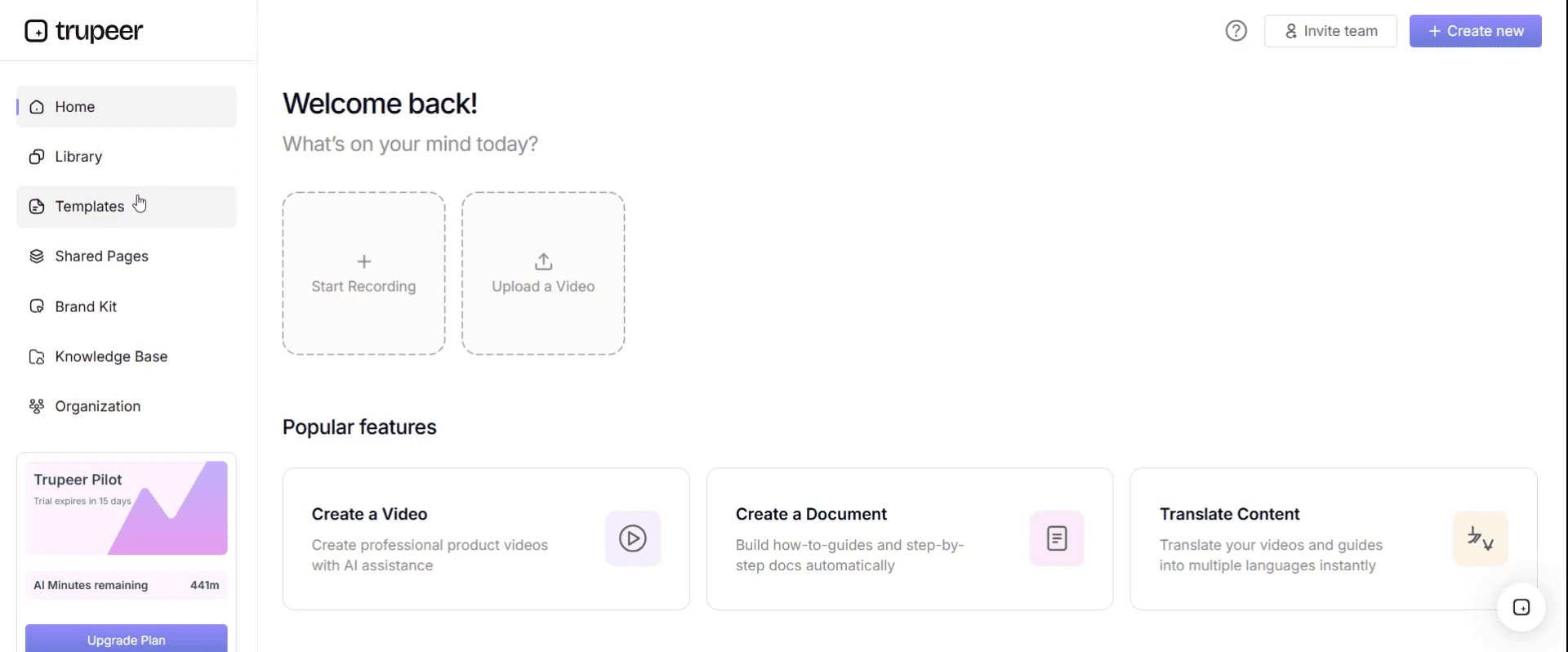
Step 1: Open the Templates Section
Go to the Templates section from the main navigation.
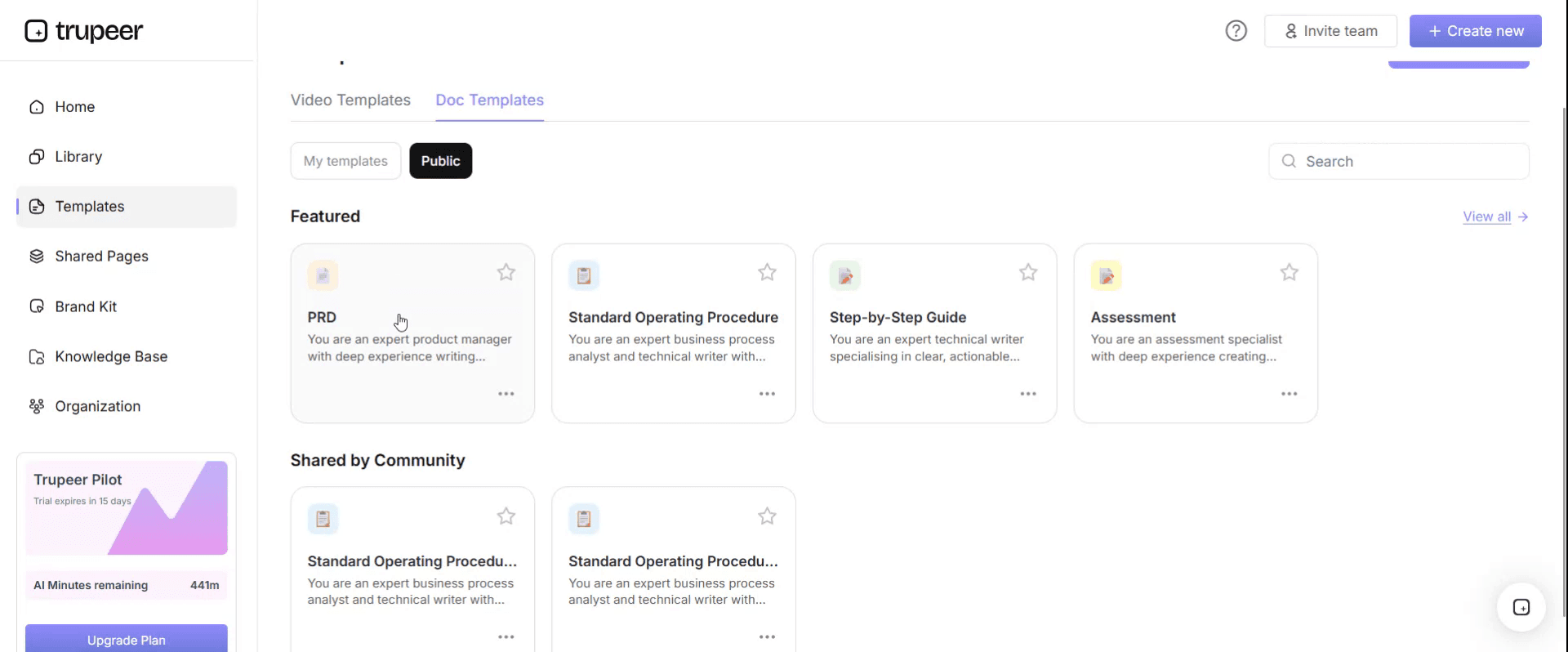
Step 2: Select and Open a Template
Click on any template you want to work with to open it.
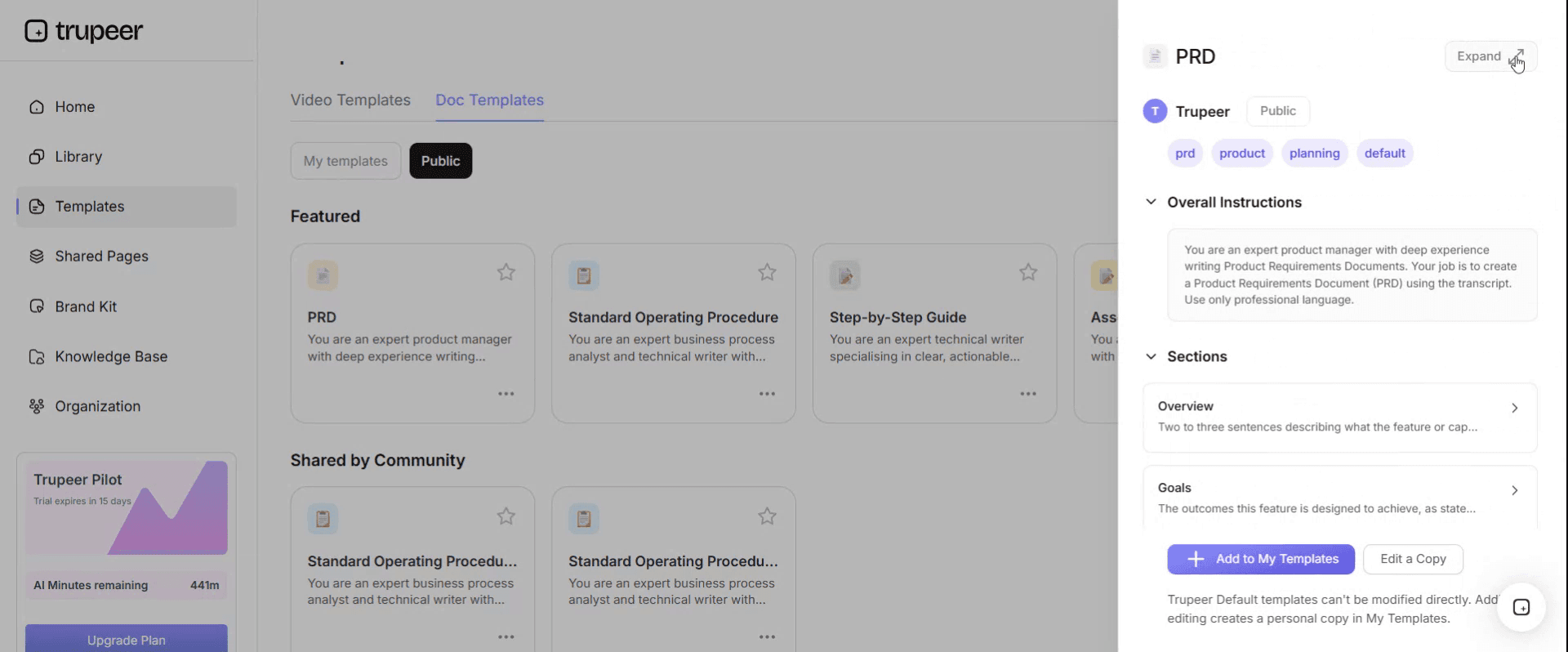
Step 3: Expand the Template View
If needed, expand the template view to see the full layout and details clearly.
Step 4: Edit the Template
Click on Edit to start modifying the selected template.
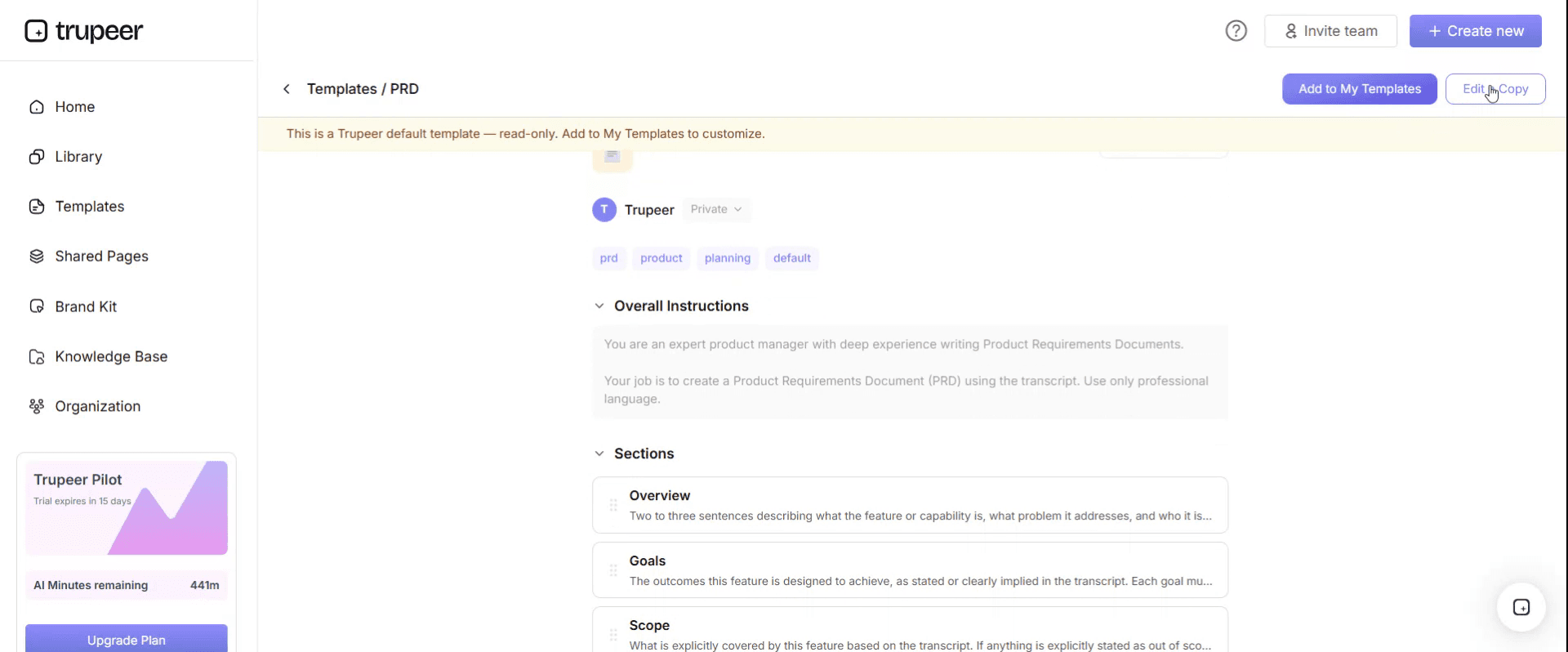
Within the editor, you can:
Add new sections
Define or update formatting rules
Add a logo and adjust its position and related settings
Step 5: Save Your Customized Template
After making all necessary changes, click Save to store the updated template as your own.
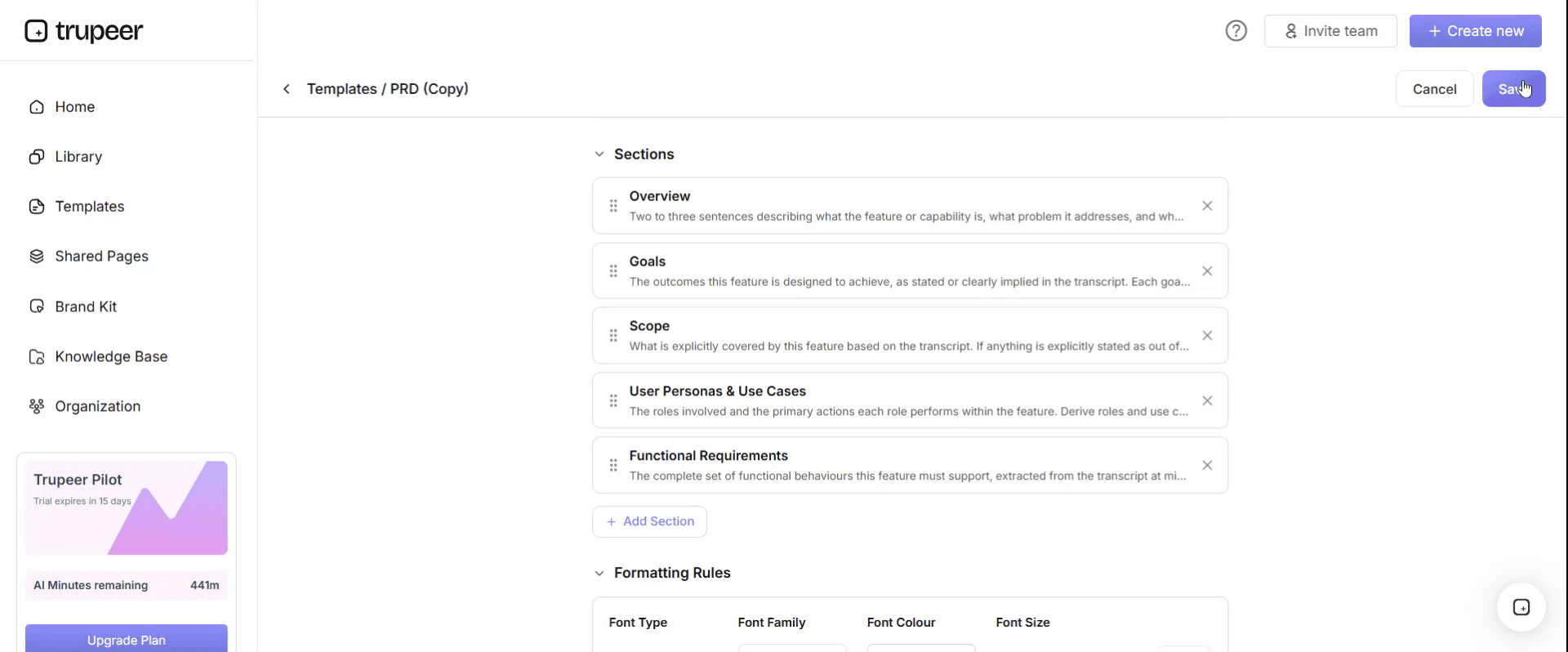
Step 6: Preview and Fine-Tune the Template
When you want to see how your customized template looks, open the Preview.
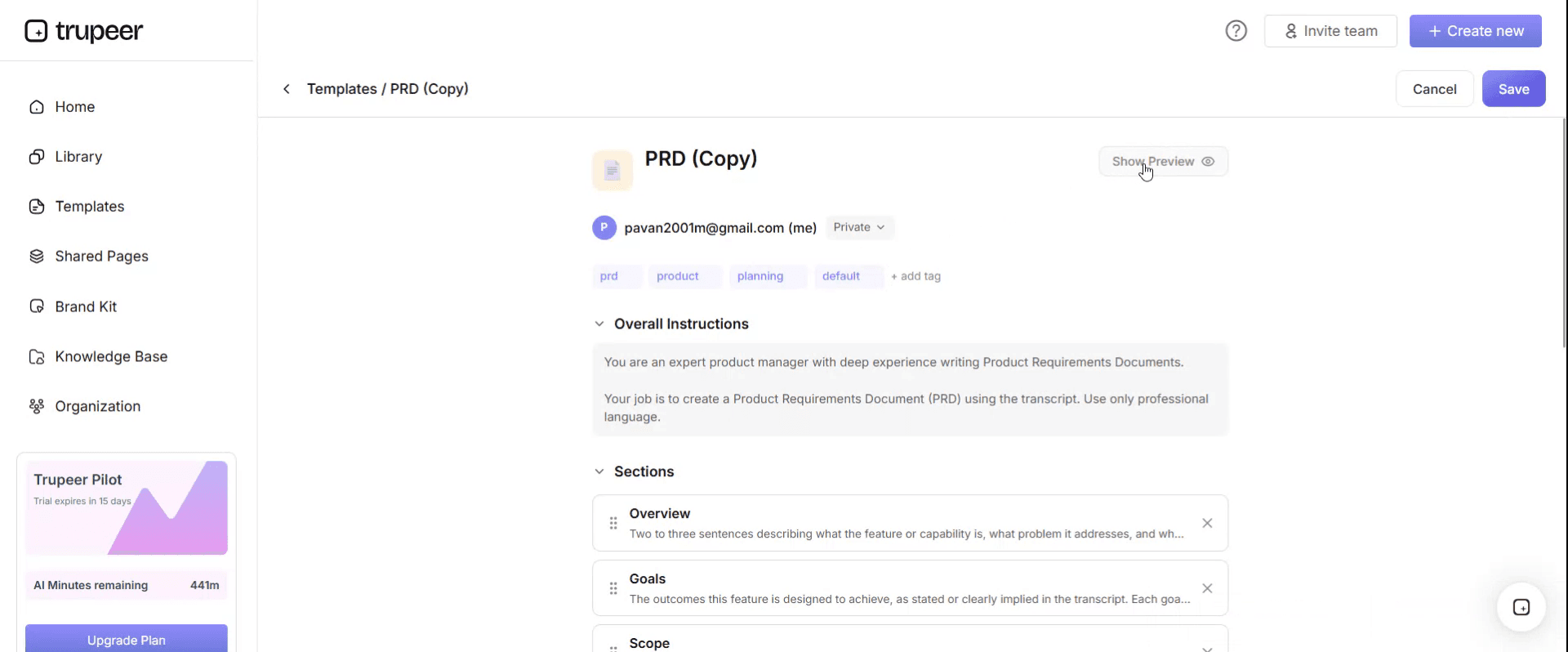
From the preview screen, you can continue to make adjustments directly if needed, ensuring the template appears exactly as you want.
With a customer satisfaction template you can:
Save hours on design: Skip the blank page with a structure built for CSAT programs.
Measure what matters: Built-in sections for CSAT, NPS, CES and qualitative feedback.
Stay on-brand: Apply your logo, fonts and colors using Trupeer's brand kit.
Drive action from insights: Built-in action-planning fields turn feedback into improvement.
Standardize across channels: Use the same template across surveys, support and reviews.
Reach global customers: Translate CSAT surveys into 65+ languages with one click.
Which metric do you need?
The most consequential decision, and the one most teams skip by asking all three at once.
Metric | The question | Measures | Ask it |
|---|---|---|---|
CSAT | How satisfied were you with [specific thing]? | Satisfaction with one interaction or product | Right after the interaction |
NPS | How likely are you to recommend us to a colleague? | Overall relationship and loyalty | Periodically, not after a ticket |
CES | How easy was it to get your issue resolved? | Effort required of the customer | Right after a support or service interaction |
Use CSAT when you want to know whether a specific thing went well. It is the most flexible and the easiest to act on, because the answer points at something concrete.
Use NPS when you want a relationship-level number you can track over time and compare across segments. It is poor at telling you what to fix, which is why it always needs a follow-up question.
Use CES when the customer had to do something and you want to know how hard you made it. In support contexts it predicts loyalty better than satisfaction does, because customers forgive slow more readily than they forgive difficult.
Asking all three in one survey is the most common mistake. It lengthens the survey, drops your response rate, and produces three numbers nobody uses.
CSAT: the question and the maths
The question. How satisfied were you with [the specific thing]?
The scale. Five points: very dissatisfied, dissatisfied, neutral, satisfied, very satisfied. Use five rather than ten. It is easier to answer and the extra granularity of a ten-point scale is noise rather than signal.
The calculation. CSAT is the percentage of respondents choosing the top two options.
CSAT % = (satisfied + very satisfied) ÷ total responses × 100
If 200 people respond and 148 pick satisfied or very satisfied, your CSAT is 74%.
What counts as good varies so much by industry and by what you asked about that benchmarks are close to useless. The only comparison that means anything is your own score over time, on the same question, asked at the same point.
NPS: the question and the maths
The question. On a scale of 0 to 10, how likely are you to recommend us to a friend or colleague?
The groups. 9 to 10 are promoters. 7 to 8 are passives. 0 to 6 are detractors.
The calculation. NPS = % promoters minus % detractors. Passives are excluded from the calculation but still count in the total.
If 200 people respond with 90 promoters, 60 passives and 50 detractors, that is 45% promoters and 25% detractors, giving an NPS of 20. The result is a number between minus 100 and plus 100, not a percentage.
The follow-up question is mandatory. "What is the main reason for your score?" NPS without it gives you a number and no idea what to do. The verbatim answers are worth more than the score.
CES: the question and the maths
The question. How easy was it to get your issue resolved? Or: [Company] made it easy for me to handle my issue.
The scale. Seven points from strongly disagree to strongly agree, or 1 to 7 from very difficult to very easy.
The calculation. Either the average score, or the percentage selecting the top two options, in the same way as CSAT. Pick one and stay consistent.
CES is the most useful of the three for support and service teams because a low score points directly at a process. High effort usually means repeated contact, transfers between agents, or the customer having to explain themselves twice.
The customer satisfaction survey template
Section | Contents |
|---|---|
Introduction | Who is asking, why, how long it takes, and what you will do with it |
The metric question | One of CSAT, NPS or CES |
The reason question | Open text, immediately after the score |
Two to four driver questions | Rated, covering the things you can change |
One open question | What is the one thing we could do better |
Optional identifiers | Name, account, order reference, only if you will act on individual responses |
Close | Thank you, and what happens next |
Seven to ten questions maximum. Response rate falls sharply past that, and the responses you lose are disproportionately from the busy customers whose opinion you most need.
The question bank
Grouped by what you are trying to learn. Pick two to four, not all of them.
Overall satisfaction
How satisfied were you with your overall experience?
How well did we meet your expectations?
How satisfied are you with the value for money?
How likely are you to buy from us again?
Product or service quality
How satisfied are you with the quality of the product?
Does the product do what you expected it to do?
How would you rate the reliability?
How satisfied are you with the range available?
Support and service
How easy was it to get your issue resolved?
How satisfied were you with the response time?
Was your issue resolved the first time you contacted us?
How knowledgeable was the person who helped you?
How satisfied were you with how you were treated?
Onboarding and getting started
How easy was it to get set up?
Did you have the information you needed to get started?
How long did it take before the product was useful to you?
What, if anything, slowed you down?
Delivery and fulfilment
How satisfied were you with the delivery time?
Did your order arrive as described?
How satisfied were you with the condition it arrived in?
How easy was the returns process?
Relationship and account management
How satisfied are you with your account manager?
Do you feel we understand your business?
How satisfied are you with how often we are in contact?
Do you feel we respond to your feedback?
Website and digital experience
How easy was it to find what you were looking for?
How easy was the checkout or booking process?
How would you rate the site on your phone?
Open questions, always include one
What is the one thing we could do better?
What nearly stopped you from buying?
What would make you recommend us to someone else?
Is there anything else you would like us to know?
The open question earns its place every time. Rated questions tell you the score. Open answers tell you why, and they are where every genuinely useful finding comes from.
Filled-in customer satisfaction survey example
How did we do?
Thanks for your recent order. This takes about a minute, and we read every response.
1. How satisfied were you with your overall experience?
Very dissatisfied · Dissatisfied · Neutral · Satisfied · Very satisfied
2. What is the main reason for your score?
[Open text]
3. How satisfied were you with each of the following?
Very dissatisfied | Dissatisfied | Neutral | Satisfied | Very satisfied | |
|---|---|---|---|---|---|
Ease of ordering | ☐ | ☐ | ☐ | ☐ | ☐ |
Delivery time | ☐ | ☐ | ☐ | ☐ | ☐ |
Product quality | ☐ | ☐ | ☐ | ☐ | ☐ |
Value for money | ☐ | ☐ | ☐ | ☐ | ☐ |
4. Did you contact us about this order?
Yes · No
5. If yes, how easy was it to get your issue resolved?
Very difficult · Difficult · Neutral · Easy · Very easy
6. What is the one thing we could do better?
[Open text]
7. May we contact you about your feedback?
Yes · No · Order reference: [ ]
Thank you. If you told us something went wrong and left your order reference, someone will be in touch within two working days.
Seven questions, one metric, one driver grid, two open boxes. The last line matters more than it looks: promising a response and then delivering it is the difference between a survey and a feedback loop.
When to send it
Transactional CSAT or CES: within 24 hours of the interaction, while it is fresh. Past a week the answer is about their general impression, not the event.
Post-delivery: two to three days after receipt, once they have actually used the thing.
Post-onboarding: at the point you consider onboarding complete, not at contract signature.
Relationship NPS: quarterly or twice yearly. More often than that and you are annoying the people you most want to hear from.
Never: immediately after an unresolved complaint, or twice for the same interaction.
Set a suppression rule so nobody receives more than one survey in a defined window, typically thirty to ninety days. Survey fatigue is real and it destroys response rates permanently rather than temporarily.
How to distribute it
Method | Response rate | Best for |
|---|---|---|
Email link | Low to moderate | Transactional surveys at volume |
Email with the first question embedded | Moderate | Anything short, since one click starts it |
In-product prompt | Moderate to high | SaaS, right after the relevant action |
SMS | High, but intrusive | Service and field visits |
Printed form at point of service | Variable | Retail, hospitality, clinics, events |
PDF attachment | Low | B2B accounts, formal reviews |
Asked verbally and recorded | Highest quality, lowest volume | Key accounts, where the conversation matters more than the number |
For B2B relationship feedback, a fifteen-minute conversation with ten accounts will teach you more than a survey sent to two hundred. The survey scales, the conversation explains.
Improving response rates
Keep it under ten questions and say how long it takes, honestly.
Ask soon after the interaction.
Put the first question in the email body so the first click is answering, not opening.
Say what you will do with it, specifically.
Do not ask for anything you already know, such as their name or order number.
Never make an open question mandatory.
Send from a person, not a no-reply address.
Tell them what changed last time you asked. This is the single most effective thing and almost nobody does it.
The analysis sheet
The Excel version does the arithmetic so you do not have to.
Paste responses into the responses tab, one row per respondent.
CSAT, NPS and CES calculate automatically from whichever columns you populated.
Scores break down by segment, product or channel if you fill the optional columns.
A trend tab holds each period's score so you can see movement rather than a single number.
Verbatim answers land in one column, ready for tagging by theme.
Tag the open answers before you look at the score. Three or four themes will account for most of the comments, and those themes are the actionable output. The score is the headline, and the headline is rarely the finding.
Closing the loop
The step that decides whether the survey was worth running.
Respond individually to anyone who reports a problem and left contact details. Within two working days. Nothing else you do with the data matters as much.
Tag the verbatims by theme and count them, so you know whether one loud complaint represents one person or forty.
Pick one theme per period and fix it. Trying to address everything means addressing nothing.
Tell customers what you changed. In the next survey, or in your newsletter. This is what turns a survey into a reason to answer the next one.
Report the themes internally, not just the score. A number in a board pack changes nothing. "Forty-one people said the returns process is confusing" changes something.
A satisfaction programme that measures and never responds trains customers that feedback goes nowhere, and your response rate will decline until the data is worthless.
What to do about detractors
Low scores are the most valuable responses you receive and the ones most often filed.
Contact them individually where you can. A detractor who is contacted, listened to and resolved frequently becomes more loyal than a customer who never had a problem, because they have seen how you behave when something goes wrong.
Look for patterns before you look for causes. If detractors cluster in one product, one region, one channel or one time period, that is the finding. Individual complaints are anecdotes until you count them.
And separate the fixable from the structural. Some detractors want something you will never offer, which is legitimate information about fit rather than a problem to solve.
Survey design rules
One question per question. Anything containing "and" is two.
No leading language. "How would you rate our excellent service" is not a question.
Consistent scale direction throughout, with the negative end on the left every time.
Label every scale point rather than only the ends.
Neutral middle option included, since forcing a choice produces noise.
No jargon or internal terminology.
Optional demographics at the end, never at the start.
Say what happens with the data.
Test it on five people before sending it to five thousand.
Best practices
Pick one metric per survey.
Always pair a score with an open question asking why.
Ask soon after the interaction.
Keep it under ten questions.
Suppress repeat sends within a defined window.
Tag verbatims before reading the score.
Respond individually to reported problems within two working days.
Fix one theme per period.
Tell customers what changed.
Track your own trend rather than external benchmarks.
Common mistakes
Asking CSAT, NPS and CES in the same survey.
Surveying too late, so you measure general impressions rather than the event.
Fifteen questions, then wondering why the response rate is 4%.
No open question, leaving you with numbers and no explanation.
Leading or double-barrelled questions.
Never responding to individual complaints.
Reporting the score without the themes.
Chasing an industry benchmark that was measured differently.
Surveying the same customer repeatedly.
Treating a small sample as representative, particularly when only the angry and the delighted respond.
Changing the question wording and then comparing to last quarter.
Fix what the feedback tells you, then show the team
Open the template in Trupeer AI, apply your brand kit so anything customer-facing looks like you, and edit the questions directly. Setup is in the template guide.
The themes that come out of satisfaction surveys are nearly always process problems: the returns process is confusing, people had to explain themselves twice, setup took too long. Fixing those means changing how the team works, and a revised procedure sent round by email changes very little.
Record the corrected process once and Trupeer AI produces the written procedure and a narrated video walkthrough together, so the fix arrives as something people can follow. Translate it into 65+ languages for distributed service teams, keep the current version in your knowledge base, and use the same recordings for team training. See how teams approach this in customer success.
Record it. Brand it. Translate it. Trupeer it.
Frequently Asked Questions
Is there a free customer satisfaction template in Word?
Yes. The Word version contains the full survey with rating grids and open questions, and every question is editable so you can cut it down to the ones you need. Free download, no sign-up, no watermark.
Is there a customer satisfaction template in Word doc format?
Yes, a .doc version is included alongside .docx for older systems and document libraries.
Is there a free customer satisfaction survey template in Word?
Yes, that is the main Word download on this page. It includes the introduction, the metric question, the driver grid, the open questions and the close, plus the fifty-question bank as a separate section you can pull from.
Is there a free customer satisfaction template in Excel?
Yes, and it does more than hold the questions. The Excel version is the analysis sheet: paste in your responses and it calculates CSAT, NPS and CES automatically, breaks them down by segment, tracks the trend across periods, and gives you a column for tagging verbatim comments by theme.
Is there a free customer satisfaction template in PDF?
Yes, in two versions. A printable one for a counter, a service visit or an event, and a fillable one respondents can complete on screen and return by email.
Is there a customer satisfaction form in Word?
Yes. If you want a short form rather than a full survey, the Word file includes a one-page version with four questions and a comment box, sized to print on a single side.
Can I download a customer satisfaction survey template for free?
Yes. Every format is a free download with no account required, and you can use and adapt them as often as you like.
What is the best free customer satisfaction template?
The one matching how you will collect responses. If you are sending it by email or printing it, take the Word or PDF version. If you already have responses and need to calculate scores, take the Excel sheet. If you want it hosted online with automatic collection and dashboards, a survey platform is a better fit than a document, and there is no point pretending otherwise.
What is a customer satisfaction survey?
A short set of questions asking customers how satisfied they were with a product, service or interaction, usually combining a rated score with an open question asking why. It exists to tell you what to change, which is why the open answers matter more than the number.
What is CSAT and how is it calculated?
Customer Satisfaction Score. Ask how satisfied someone was on a five-point scale, then divide the number choosing satisfied or very satisfied by the total responses and multiply by 100. If 148 of 200 respondents pick the top two options, CSAT is 74%.
What is the difference between CSAT, NPS and CES?
CSAT measures satisfaction with one specific interaction and is asked immediately afterwards. NPS measures overall loyalty by asking how likely someone is to recommend you, and is asked periodically. CES measures how much effort the customer had to expend, and is asked after a support or service interaction. They answer different questions, so pick one per survey.
How is NPS calculated?
Ask how likely someone is to recommend you from 0 to 10. Scores of 9 and 10 are promoters, 7 and 8 are passives, 0 to 6 are detractors. Subtract the percentage of detractors from the percentage of promoters. The result ranges from minus 100 to plus 100 and is a number rather than a percentage.
How many questions should a customer satisfaction survey have?
Seven to ten at most, including at least one open question. Response rates fall sharply beyond that, and the people who abandon a long survey are disproportionately the busy customers whose views you most need.
When should you send a customer satisfaction survey?
Within 24 hours for anything transactional, two to three days after delivery, at the end of onboarding rather than at signature, and quarterly or twice yearly for relationship NPS. Suppress repeat sends within thirty to ninety days so the same customer is not surveyed repeatedly.
What is a good customer satisfaction score?
Benchmarks are less useful than they look, because scores vary enormously by industry and by exactly what was asked. The comparison that means something is your own score over time on an identical question asked at the same point in the journey. If you change the wording, your history stops being comparable.
How do you increase survey response rates?
Keep it short and say how long it takes, ask soon after the interaction, embed the first question in the email, send from a person rather than a no-reply address, and tell people what changed as a result of the last survey. That final one has more effect than everything else combined and is the one almost nobody does.
What should you do with the results?
Respond individually to anyone reporting a problem within two working days, tag the open comments by theme and count them, pick one theme per period to fix, then tell customers what changed. A programme that measures without responding trains people that feedback goes nowhere.
Can I customize this customer satisfaction template?
Yes, every version is fully editable. Swap in questions from the bank, change the scale labels, cut it to four questions, or add your own. In Trupeer AI you can also apply your brand kit so it matches your other customer-facing documents.


