4.8/5
Free Work Breakdown Structure Maker
Simplify complex projects with AI-powered WBS, visualizations, documentation, and video guides.
Get started for free
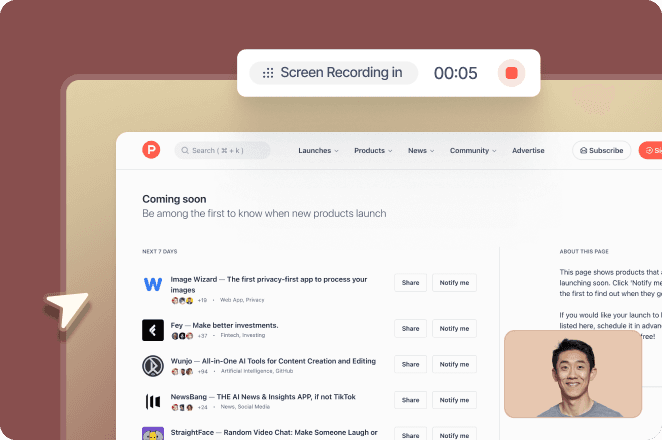
Trupeer’s Work Breakdown Structure (WBS) Maker simplifies project planning by transforming big goals into smaller, manageable tasks. Instead of spending hours manually building a WBS, you can upload your project details or process videos, and Trupeer will automatically generate a structured breakdown.
With AI avatars, subtitles, and multilingual voiceovers, your WBS becomes more than just a chart it’s an interactive learning and execution guide. Teams can visualize the entire project, understand dependencies, and follow instructions step by step.
From software development to corporate training, Trupeer helps businesses, project managers, and educators create WBS documents and videos that are professional, accurate, and easy to share.
What Is a Work Breakdown Structure?
A work breakdown structure, or WBS, is a way of organizing a project by breaking it down into smaller, more manageable parts. At the top sits the final deliverable. Below it, the work is split into major deliverables or phases, and each of those is split again into individual work packages that are small enough to estimate, assign, and track. The goal is simple: make a large, vague project concrete enough that a team knows exactly what has to be produced.
A good WBS follows the 100% rule. Everything below a given item should add up to all of that item's work, with nothing missing and nothing extra. It focuses on deliverables and outcomes rather than activities, which keeps the project scoped around what gets delivered.
Work Breakdown Structure Template: What to Include
Most WBS templates share the same building blocks, so you can reuse one structure across projects:
Project title and final deliverable at the top
Major deliverables or phases as the second level
Work packages under each deliverable, each with a single owner
A unique numbering scheme (1, 1.1, 1.1.1) so every item is easy to reference
An outcome or definition of done for each work package
A template gives you the skeleton. The effort is in describing how each work package actually gets done, which is where most teams lose time.
How to Create a Work Breakdown Structure (Step by Step)
Define the final deliverable or project goal. This is the single box at the top.
Identify the major deliverables or phases that make up that goal.
Break each deliverable into smaller work packages until each is small enough to estimate and assign. A common guideline is the 8/80 rule, where each package is roughly 8 to 80 hours of work.
Apply the 100% rule. The items under each parent should add up to all of its work, no more and no less.
Assign an owner and a clear outcome to every work package.
From Breakdown to Done: Document Every Task with Trupeer
A work breakdown structure tells your team what to do. It does not tell them how to do it. Once your work packages are defined, that is where Trupeer fits in. Record any task once, and Trupeer turns the recording into a clear step-by-step guide, an SOP, or a training video, with screenshots captured automatically and translation into 65+ languages.
So instead of a WBS that stops at a list of tasks, every work package can link to documentation that shows exactly how it gets done. That is especially useful for onboarding, software development handoffs, and operations, where the same tasks are repeated by different people.
Use Cases for Trupeer’s WBS Maker
Project Management
Break down large projects into smaller deliverables for better planning.Employee Training
Turn training modules into step-by-step WBS for structured onboarding.Software Development
Map out development cycles, sprints, and milestones clearly.Manufacturing & Operations
Document assembly, compliance, and quality processes into structured tasks.Education & E-Learning
Teachers can break lessons or courses into structured modules for students.Team Collaboration
Enable clear task ownership and accountability with AI-generated WBS.
Benefits of Using Trupeer’s WBS Maker
Automated WBS Generation
Create structured project breakdowns instantly from details or videos.
AI-Powered Clarity
Add subtitles, narration, and avatars for better explanation and team adoption.
Multi-Format Export
Share your WBS as a visual chart, video walkthrough, or documentation.
How to Create a Work Breakdown Structure with Trupeer
Step 1
Upload a Video
Step 2
Auto-Generate Work Breakdown Structure
Step 3
Customize & Share
Frequently Asked Questions
What is a work breakdown structure?
A work breakdown structure (WBS) is a hierarchical breakdown of a project into smaller, manageable pieces. The top level is the final deliverable, and each level below splits the work into deliverables and then into individual work packages small enough to estimate, assign, and track.
What should a work breakdown structure include?
A typical WBS includes the overall project at Level 1, the major deliverables or phases at Level 2, and the specific work packages at Level 3. Each item has a clear owner and outcome, and the children of any item should add up to 100% of that item's work, no more and no less.
How do I create a work breakdown structure?
Start with the final deliverable, identify the major deliverables or phases, then break each one into smaller work packages until each is small enough to estimate and assign. A common guideline is the 8/80 rule, where each work package is roughly between 8 and 80 hours of effort.
What is the difference between a WBS and a project plan?
A WBS defines what needs to be done by breaking the project into deliverables and tasks. A project plan or Gantt chart adds the when and who, sequencing those tasks over time. The WBS usually comes first and feeds the schedule.
How does Trupeer help with a work breakdown structure?
Trupeer does not draw the WBS chart itself. Its role starts once the breakdown is defined: record any work package once, and Trupeer turns it into a step-by-step guide, SOP, or training video, in 65+ languages, so the people doing the work know exactly how to execute each task.
More Tools