4.8/5
Free Screen Recording for Employee Training
Record once. Train every employee. Save hundreds of hours with screen recordings built for workforce training.
Try for Free

Screen recording for employee training lets you capture on-screen processes, narrate instructions, and distribute polished training content to every employee - new and tenured alike. Build a training library that grows with your organization.
Record software walkthroughs, process demonstrations, and compliance procedures with voiceover and webcam
Create a reusable training library that eliminates repetitive live training sessions
Track completion rates, engagement metrics, and quiz scores per employee
Auto-generate captions and transcripts for accessibility and searchability
Export in LMS-compatible formats or share via link for instant distribution
What Is Screen Recording for Employee Training?
Screen recording for employee training is the practice of capturing your screen - along with audio narration and optional webcam video - to create instructional content that teaches employees how to use software, follow processes, and comply with company policies. It replaces the traditional model of live, instructor-led training sessions that are expensive to schedule, impossible to scale, and inconsistent in quality.
How Does Screen Recording for Employee Training Work?
Getting started with Screen Recording for Employee Training takes just a few minutes.
Step 1: Record or Upload
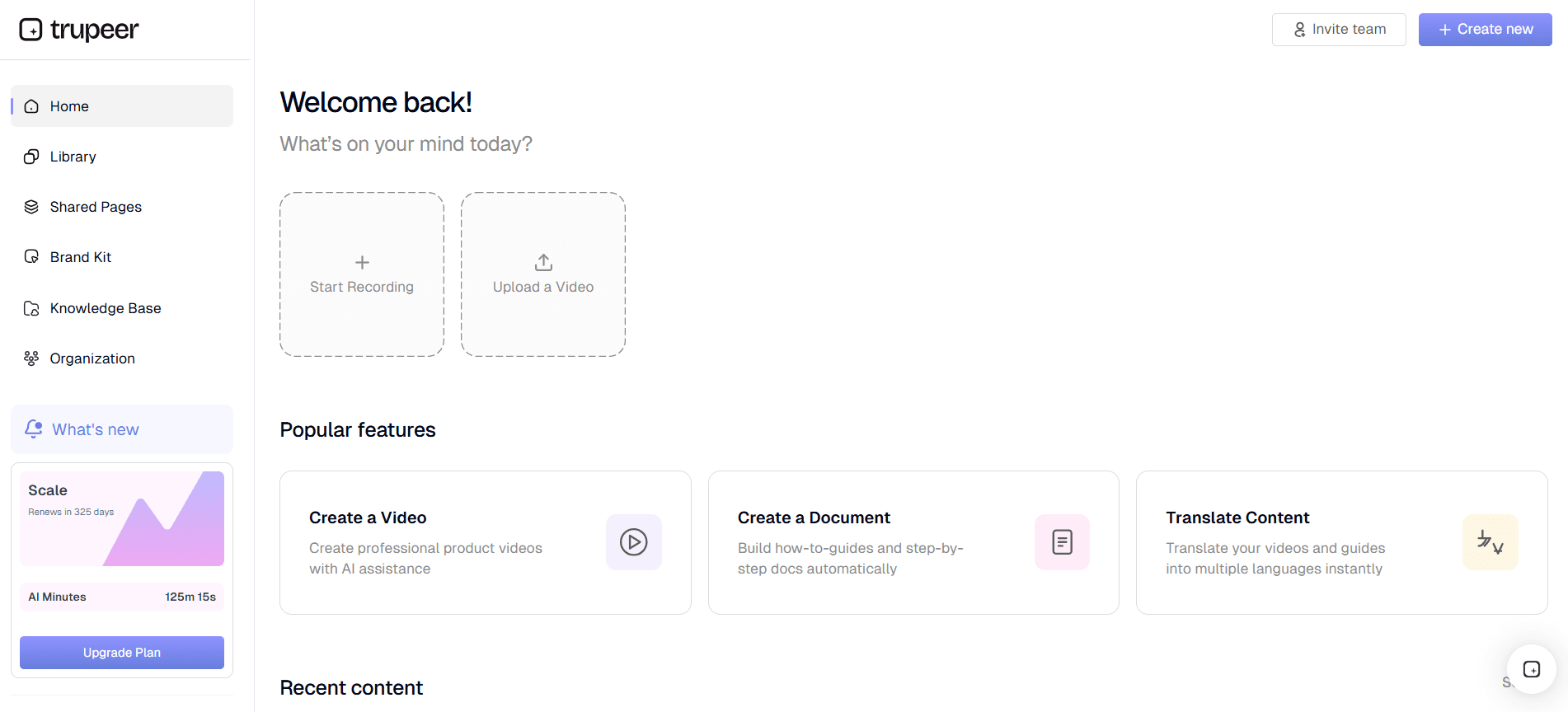
Start a screen recording directly in your browser, or upload an existing video file you want to transform.
Step 2: AI Processing
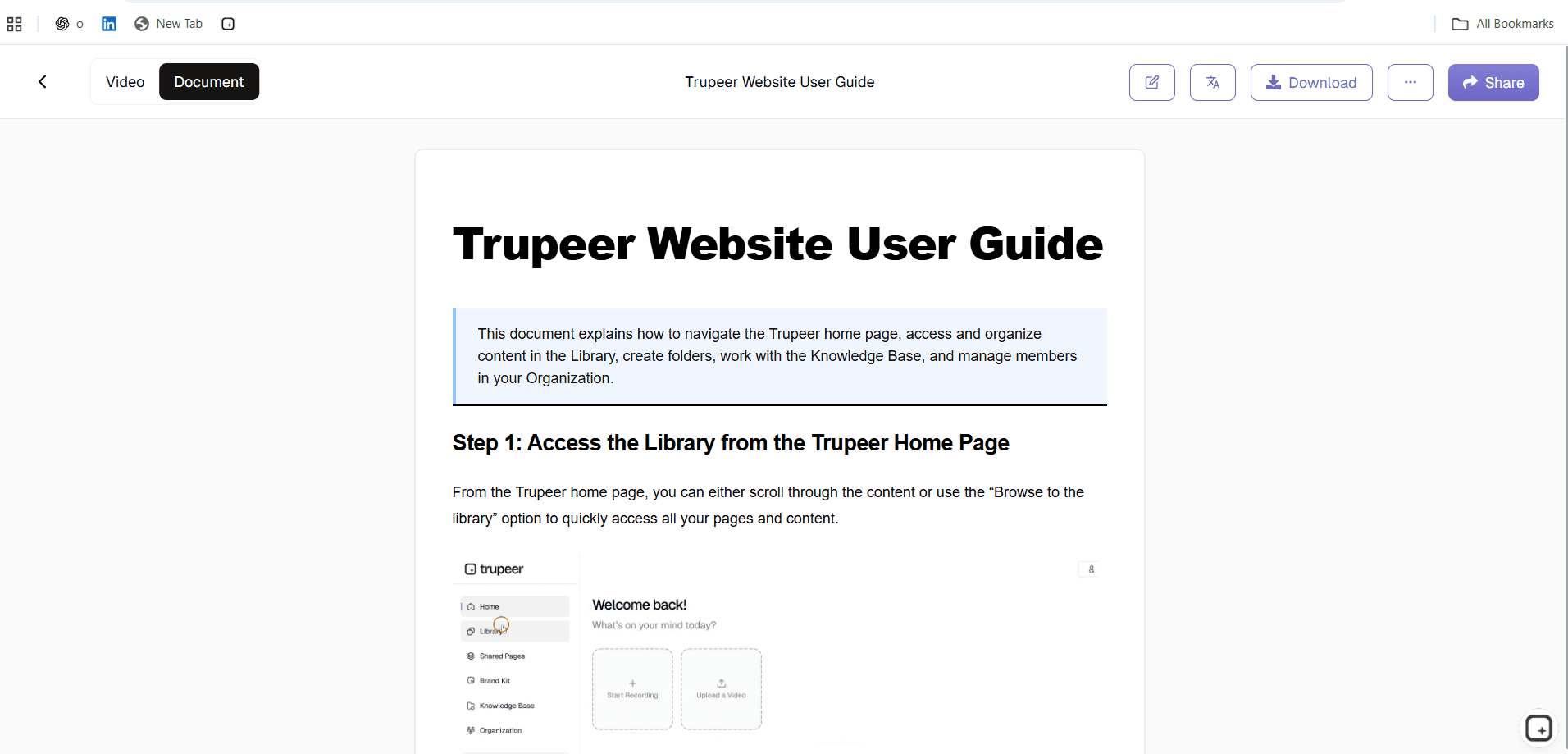
The AI analyzes your recording, removes filler words, adds zoom effects, and generates written documentation automatically.
Step 3: Customize and Share
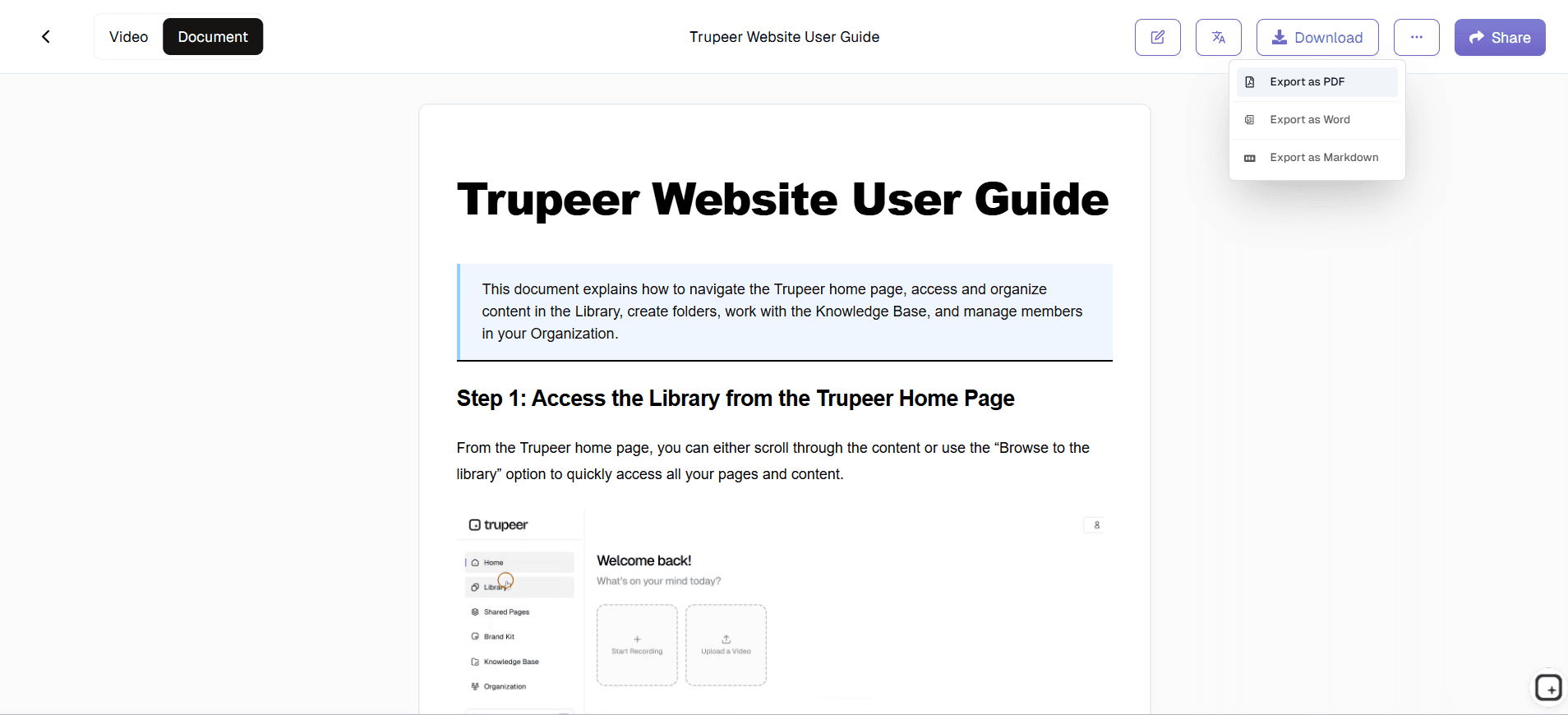
Edit the output, apply your brand kit, and share via link or embed on your website. Updates are just as easy.
Key Features of Screen Recording for Employee Training
Role-Based Training Paths: Create customized training tracks for different roles - sales reps learn the CRM, engineers learn the deployment pipeline, HR learns the applicant tracking system. Each role gets a curated playlist of screen recordings relevant to their daily tools, eliminating the one-size-fits-all approach that wastes learners' time on irrelevant content.
Voiceover with Background Noise Removal: Record narration in any environment - home office, open floor plan, coffee shop - and the built-in noise removal strips out keyboard clicks, air conditioning hum, and ambient conversation.
Version Control for Training Content: When a software update changes the UI or a process step is modified, update just the affected section of your training recording rather than re-recording from scratch. Version history preserves every iteration, so you can roll back if needed and maintain an audit trail of training content evolution.
Centralized Training Library with Search: Store all training recordings in a searchable, organized library. Employees search by keyword, tool name, or topic and instantly find the video and timestamp that answers their question. Tags, categories, and playlists keep the library structured as it grows from dozens to thousands of recordings.
Why Choose Screen Recording for Employee Training?
Eliminate Repetitive Live Sessions: Stop scheduling the same training session every time a new cohort starts. Record once, and let the video handle onboarding for every future employee.
Ensure Consistency Across the Organization: Every employee receives identical instruction - no variation based on which trainer delivered the session, what mood they were in, or which steps they forgot to mention.
Preserve Institutional Knowledge: When a senior employee leaves, their screen-recorded training videos remain. Critical process knowledge stays with the company, not with the individual.
Reduce Time to Productivity: New hires who learn from structured screen recordings reach competence faster than those relying on ad-hoc shadowing and fragmented documentation.
Screen Recording for Internal Teams
1. Internal teams record every process that gets asked about more than twice - from travel reimbursement to Jira ticket creation - building a video FAQ that eliminates repetitive interruptions.
2. Department managers record quarterly process updates as screen recordings, ensuring every team member sees the change demonstrated live rather than reading about it in an email they may never open.
3. Cross-functional teams use screen recordings to train each other on their respective tools - marketing shows sales how to pull campaign reports, finance shows operations how to submit purchase orders.
4. Internal training committees use viewing analytics to identify knowledge gaps across teams, directing focused training investment where it will have the greatest impact. Pair video with written guides from Trupeer's process guide tool.
Screen Recording for SaaS Teams
1. SaaS companies use screen recording to train employees on their own product - ensuring that every team member, from support to sales to engineering, can demonstrate the product confidently.
2. Customer-facing teams receive screen-recorded training on new feature releases before they go live, so they can answer customer questions from day one without scrambling.
3. SaaS onboarding teams create internal training videos that teach new hires the company's specific customer success methodology, complete with screen recordings of actual customer interactions and tool usage.
4. Revenue operations teams record training on sales tools, pipeline management, and forecasting workflows, creating a scalable enablement library that grows with the organization. Capture demos with Trupeer's screen recorder.
Screen Recording for Startups
1. Startups document processes early with screen recordings so that knowledge transfer happens smoothly as the team doubles, triples, and quadruples in size during growth phases.
2. In fast-moving startups where processes change weekly, screen recordings are quick to produce and easy to update - keeping training materials current without dedicated L&D resources.
3. Startup founders record their own training videos for the first employees, establishing culture, expectations, and workflows through authentic, personal content.
4. Cash-strapped startups avoid expensive training platforms by using screen recording software to build a video library hosted on free or low-cost platforms alongside their existing tools.
Screen Recording for Enterprises
1. Enterprises deploy screen-recorded training at scale across tens of thousands of employees, using LMS integration and SCORM-compatible exports to manage distribution, tracking, and certification.
2. Global enterprises create a single set of screen-recorded training content and distribute it with auto-translated captions in dozens of languages, maintaining consistency while respecting localization needs.
3. Regulated industries - finance, healthcare, manufacturing - use screen recording to create auditable training records that satisfy regulatory bodies and internal compliance teams.
4. Enterprise change management teams produce screen-recorded training for every major system transition, ensuring that productivity dips during migration periods are minimized and recovery is fast.
Screen Recording for Remote Teams
1. Remote employees in different time zones access the same screen-recorded training at the time that works best for them, eliminating the scheduling nightmare of coordinating live sessions across continents.
2. Remote managers use screen recordings to deliver personalized coaching - recording a walkthrough of a specific workflow improvement rather than trying to explain it over chat or a hastily scheduled call.
3. Remote onboarding becomes seamless when new hires have a complete library of screen-recorded training waiting for them on day one, covering everything from tool setup to team norms.
4. Distributed teams maintain training consistency despite geographic spread, because the screen-recorded content is identical for an employee in Austin and a contractor in Amsterdam.
Screen Recording for Developers
1. Engineering managers record training on internal frameworks, code review standards, and deployment procedures, creating a developer onboarding experience that reduces the ramp-up burden on senior engineers.
2. Platform teams produce screen-recorded training for internal developer tools, CI/CD pipelines, and infrastructure-as-code workflows - visual guides that complement written runbooks.
3. Security teams record screen-based training on secure coding practices, demonstrating common vulnerabilities and their fixes in the actual codebase rather than abstract examples.
4. Developer productivity teams train engineers on IDE extensions, debugging workflows, and profiling tools using screen recordings that show real-world usage rather than theoretical documentation.
Screen Recording for Onboarding and Support Teams
1. Onboarding teams build multi-week training curricula entirely from screen recordings, with each week's playlist building on the last - from company overview to tool mastery to role-specific deep dives.
2. Support team leads record screen-based training for handling escalated tickets, showing the exact tool usage, communication templates, and decision-making process that leads to resolution.
3. Onboarding managers track new-hire progress through training video completion dashboards, identifying who is on track and who needs additional support before probation reviews.
4. Support quality teams analyze screen recordings of training sessions alongside actual support interactions to evaluate whether training translates into real-world performance. Start your training library with Trupeer's screen recorder.
This screen recorder chrome extension builds on Screenity, originally created by Alyssa X and licensed under the GNU GPLv3, with enhancements developed by the Trupeer team. Source code available here: https://github.com/trupeer-ai/trupeer-chrome-capture.
Key Features
Completion Tracking
Monitor which employees completed training, their quiz scores, and engagement metrics.
Role-Based Paths
Create customized training playlists tailored to specific job roles and departments.
Noise Removal
Built-in audio enhancement strips background noise for professional narration quality.
How It Works
Step 1
Open the relevant application, and outline the key steps.
Step 2
Record your screen walkthrough
Step 3
Edit and Share
Frequently Asked Questions
How does screen recording improve employee training compared to live sessions?
Screen recordings deliver consistent instruction to every employee, eliminate scheduling overhead, and create reusable assets that scale with your organization. Employees can pause, rewind, and rewatch - something impossible in a live session.
Can I track whether employees actually completed their training?
Yes. The platform provides completion tracking at the individual, team, and department level, including time spent watching, quiz scores, and timestamps - ideal for compliance reporting and performance reviews.
How do I handle training content when our software gets updated?
Version control lets you update individual sections of a recording without re-recording from scratch. You can swap out affected clips, re-narrate specific steps, and republish while preserving the training history.
Can I create different training paths for different job roles?
Absolutely. Organize screen recordings into role-specific playlists and learning paths, ensuring each employee receives training relevant to their daily tools and responsibilities without sitting through irrelevant content.
Is this suitable for compliance and regulatory training?
Yes. Embedded quizzes verify comprehension, completion tracking generates audit-ready reports, and version history maintains a documented record of training content and employee participation for regulatory compliance.
More Tools