Use this template
A great training plan is what separates training that drives results from training that fills calendar slots. With Trupeer, you can save hours on training design by starting with a free training plan template, customizing it with your brand guidelines, and turning the plan into video-based training your team will actually engage with.
What is a free training plan template?
A free training plan template is a reusable structure for scheduling training: who is trained, on what, in what order, by when, and how you will know it worked.
It is the schedule rather than the content. What people need to know goes in a training manual. Whether training is the right answer at all is settled by a training needs assessment. This document is the plan for delivering it.
Every published template covers the same fields, and they are the right fields. Topic, audience, method, trainer, date, duration, assessment. The structure is not where training plans go wrong.
They go wrong on ordering, and the ordering decision is made by default in almost every plan.
Format follows use. A free training plan template Excel version suits the schedule itself, which is a grid of people against topics against dates. A free training plan template Word doc suits the narrative around it: objectives, approach, assessment method. A free training plan template PowerPoint layout suits presenting the plan for approval, and a free training plan template PDF is the agreed version.
Training plans are sequenced by curriculum logic
Look at how any induction or role training plan is ordered.
It will start with the general and move to the specific. Company overview, then systems, then products, then processes, then the harder or rarer cases. Foundations first, building up. It is how education is organised, it feels obviously correct, and every training plan template implicitly encourages it by presenting topics as a list to be worked through.
The trouble is that the order in which somebody needs to understand things is not the order in which they will do them.
A new starter is taught complaint handling in week two because it fits logically after the basics. They receive their first real complaint on day seventy. A fraud indicator module is delivered on day three because it is regulatory and gets front loaded. The first case with genuine fraud markers arrives in month four.
Between the learning and the doing sits forgetting, and forgetting is not gradual in a useful way. Content taught once, never practised, and first used ten weeks later is largely gone. Not entirely, which is the misleading part: the person retains enough to recognise the topic and not enough to perform it, so they proceed with confidence and get it wrong.
That produces a pattern most organisations can see in their own data and have never plotted. Error rates by topic correlate with the gap between when a topic was taught and when it was first performed, more strongly than with how difficult the topic is or how well it was delivered.
How to customize this template in Trupeer
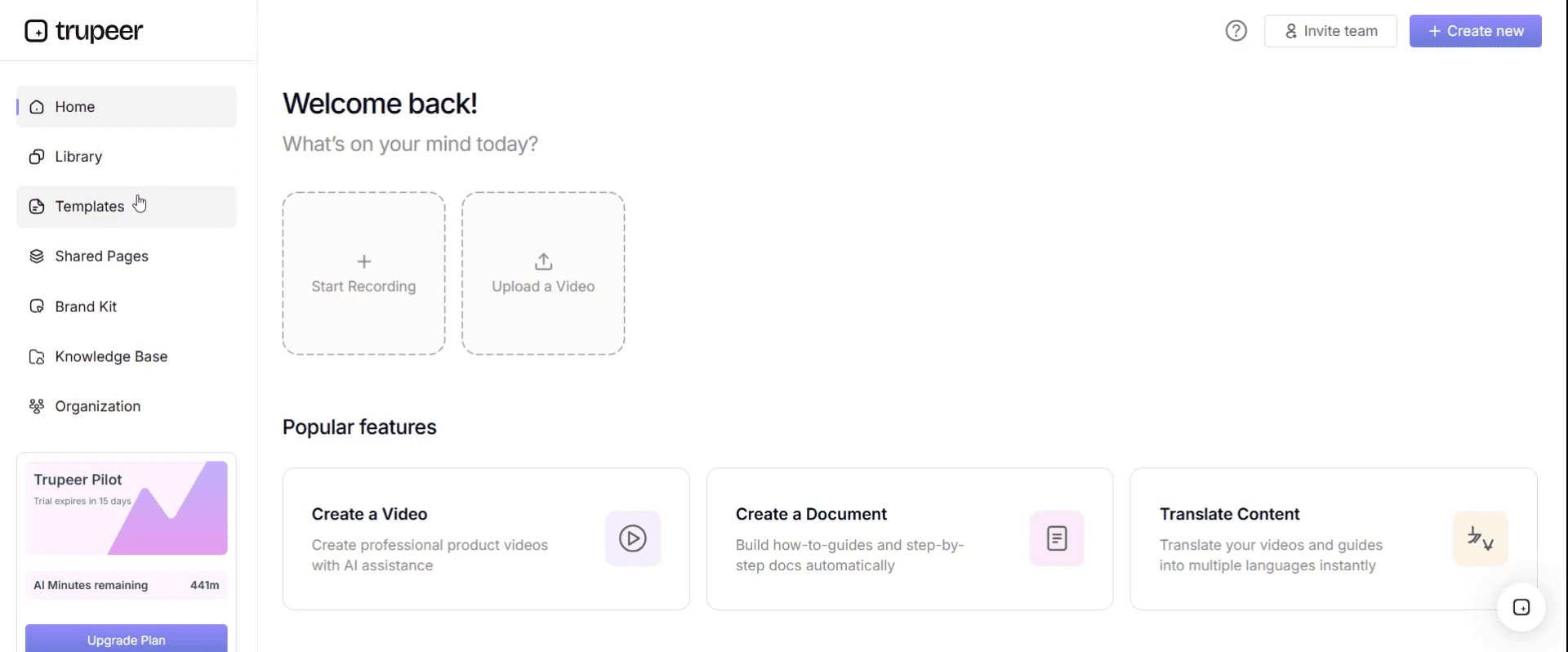
Step 1: Open the Templates Section
Go to the Templates section from the main navigation.
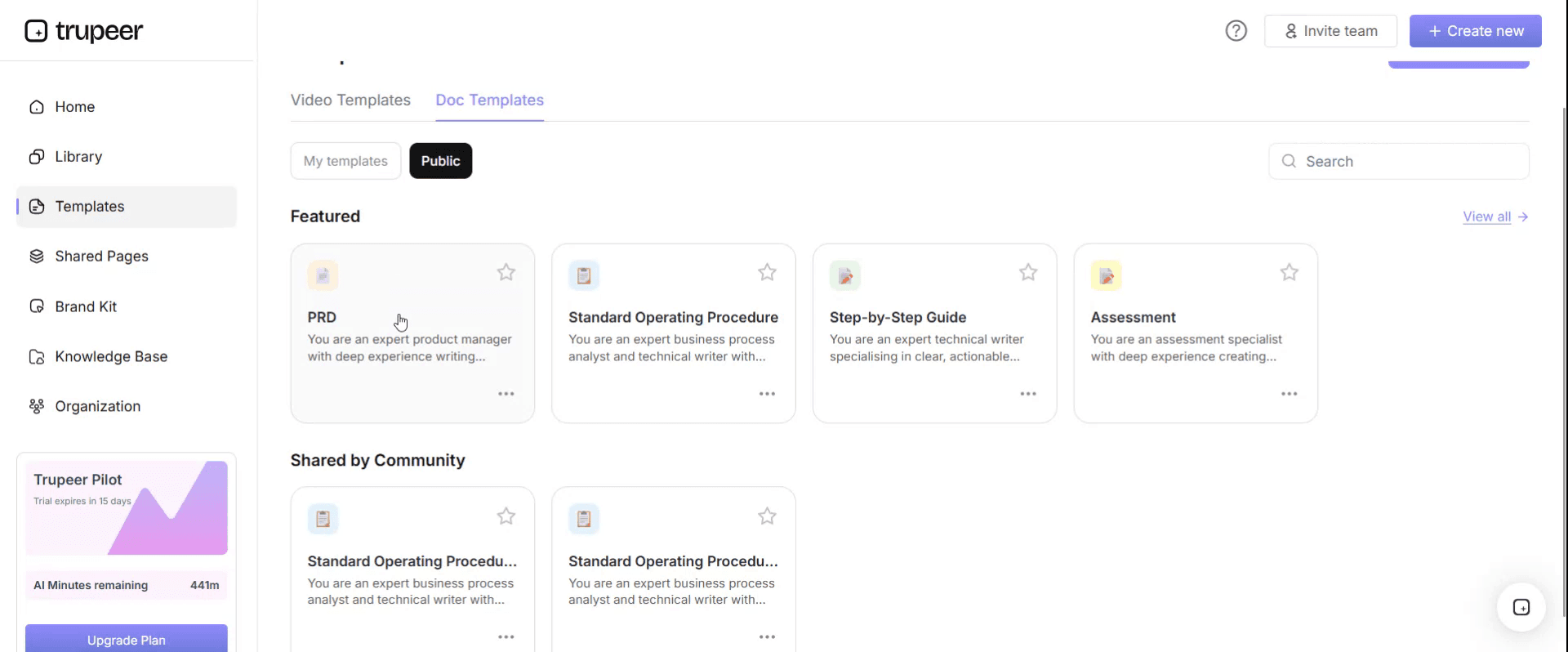
Step 2: Select and Open a Template
Click on any template you want to work with to open it.
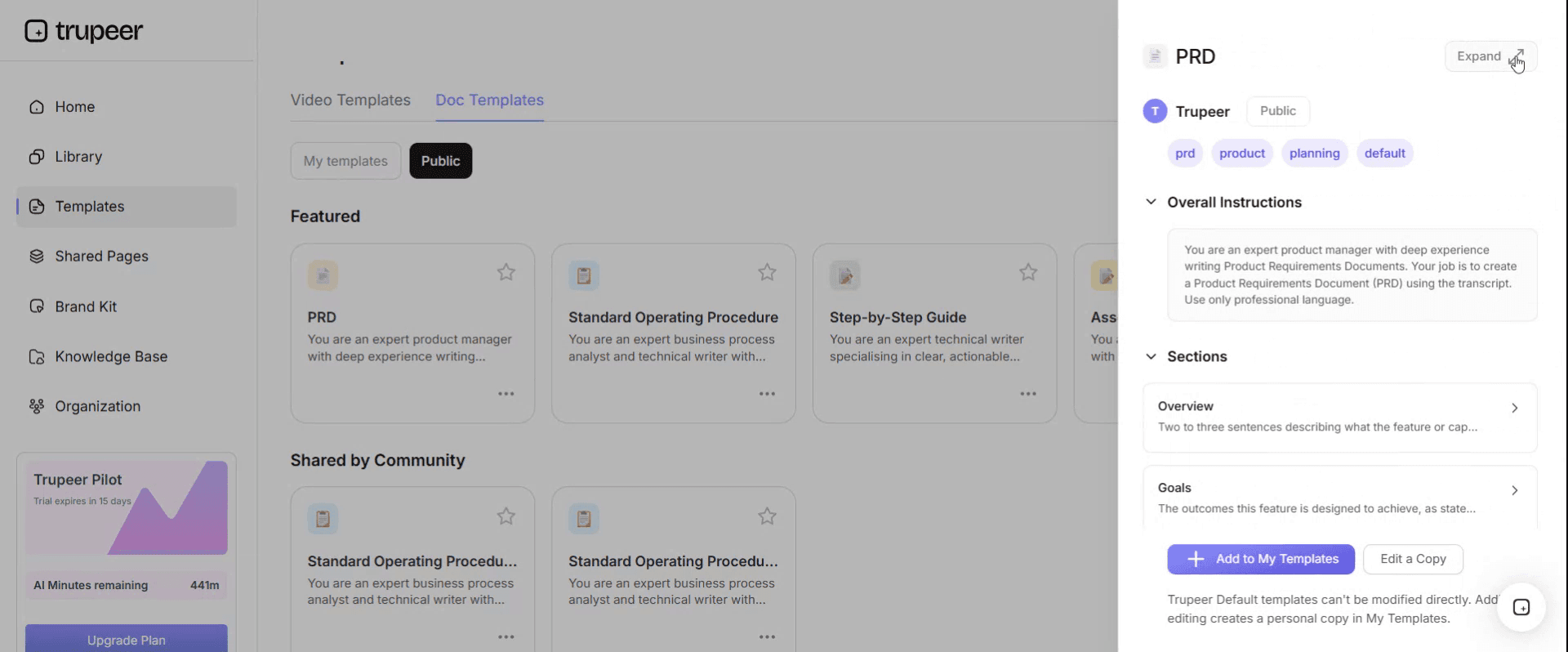
Step 3: Expand the Template View
If needed, expand the template view to see the full layout and details clearly.
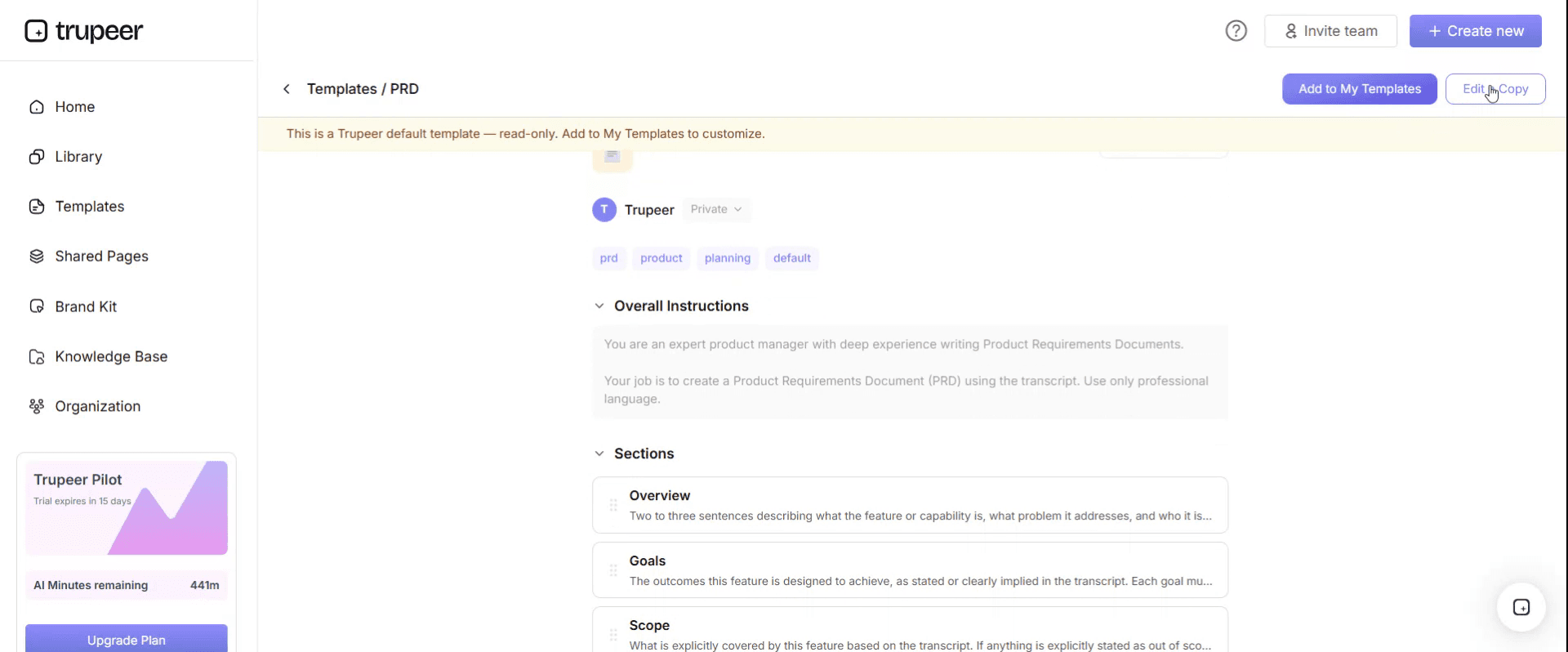
Step 4: Edit the Template
Click on Edit to start modifying the selected template.
Within the editor, you can:
Add new sections
Define or update formatting rules
Add a logo and adjust its position and related settings
Step 5: Save Your Customized Template
After making all necessary changes, click Save to store the updated template as your own.
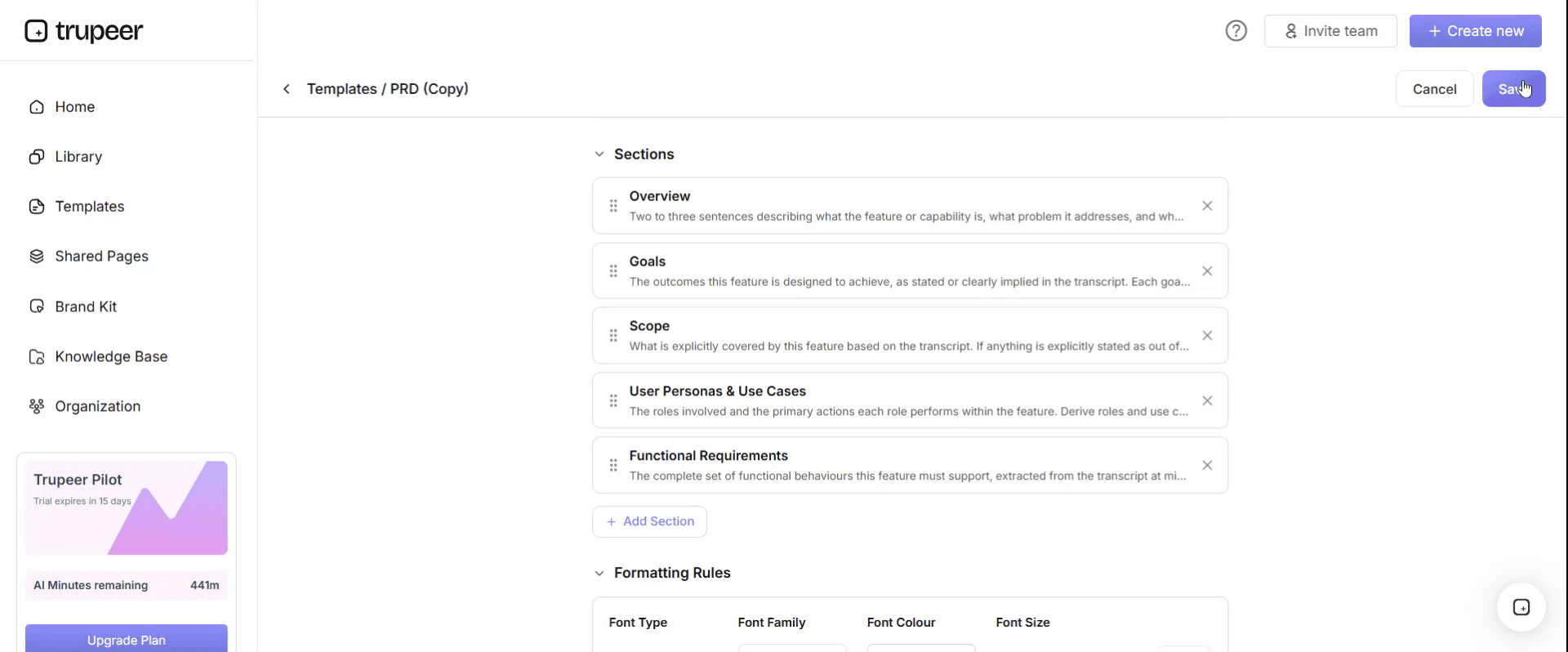
Step 6: Preview and Fine-Tune the Template
When you want to see how your customized template looks, open the Preview.
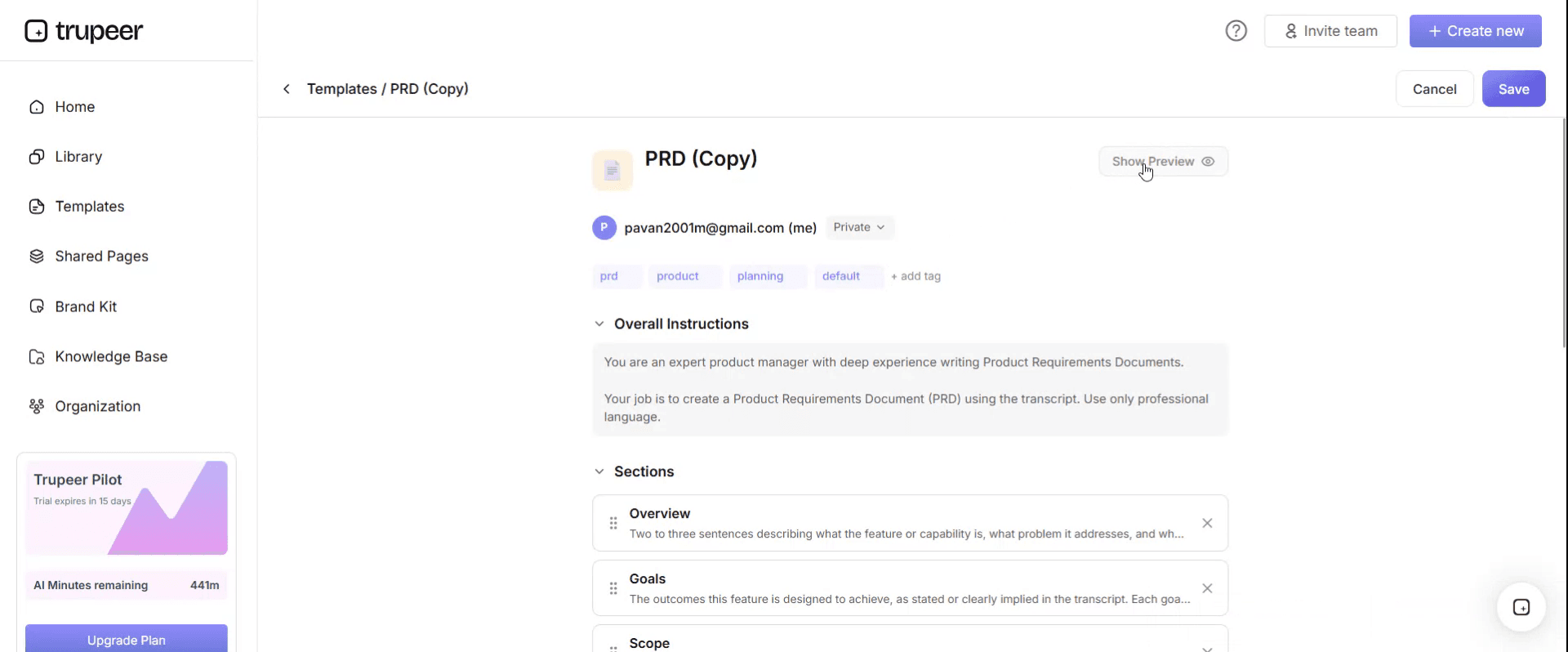
From the preview screen, you can continue to make adjustments directly if needed, ensuring the template appears exactly as you want.
With a training plan template you can:
Save hours on planning: Skip the blank page with a structure used by L&D professionals.
Design with intent: Built-in sections for learning objectives, audience and outcomes ensure training is purposeful.
Stay on-brand: Apply your logo, fonts and colors using Trupeer's brand kit.
Scale training: Use the same plan template for every training initiative.
Measure impact: Built-in metrics fields help you track whether training is actually working.
Reach global learners: Translate training plans and content into 65+ languages with one click.
Sequence by first use
The change is to add one column to the plan and let it drive the order.
For every topic, record when the learner will first perform this for real. Not when it appears in the curriculum. The actual date, or the typical elapsed days from their start.
Then reorder. Anything first performed in week one gets taught in week one. Anything first performed in month three gets taught in month three, not on day four alongside everything else.
Two rules make it work.
Nothing is taught more than about two weeks before first use, unless there is a specific reason. Safety critical content and anything legally required before somebody starts is a legitimate exception, and should be flagged as such rather than treated as the default.
Where the gap cannot be closed, plan the refresher rather than hoping. Some things genuinely must be covered early. In those cases the plan should include a short revisit immediately before first use, which is far cheaper than teaching it properly twice.
Three consequences follow, and all three tend to be welcome.
Classroom time goes down, because a front loaded programme is carrying content nobody can use yet. The overall ramp gets longer on paper and shorter in practice. And new starters report feeling less overwhelmed, which shows up in early attrition.
What a training plan template must contain
Nine components. The third is the one that changes the plan.
Component | What it does |
|---|---|
Who this plan is for | Role, cohort or individual. A plan covering three roles will fit none of them. |
Capability objectives | What they will be able to do, stated as observable actions rather than topics covered. |
First use date per topic | When the learner will first perform this for real. The column that decides the order. |
Sequence and dates | The schedule, ordered by first use rather than by curriculum. |
Method per topic | Classroom, shadowing, self study, on the job, recorded walkthrough. Method should follow the topic rather than the venue. |
Trainer or owner | Who delivers it, and who is accountable if it does not happen. |
Assessment | How you will know they can do it, which is a demonstration rather than a completion tick. |
Learner time required | Hours per week the learner needs, and confirmation their manager has agreed to protect it. |
Review point | When you look at error rates or output by topic, which is how you find out whether the sequencing was right. |
The learner time row is the second most commonly missing. Plans schedule the trainer's availability carefully and assume the learner's time is free, which it is not, and the result is training that gets deferred by operational pressure until the gap between learning and doing widens further.
Free training plan template: the structure to copy
Filled with a real example rather than placeholders. The plan trains new claims handlers at an insurer.
Copy from here.
Who this plan is for. New claims handlers with no prior insurance experience, joining in cohorts of about eight.
Capability objectives. Written as things somebody can be observed doing.
Take a new motor claim to the point of validation. Settle a straightforward claim within authority. Identify when a claim exceeds authority and escalate correctly. Recognise fraud indicators and raise a referral. Handle a complaint to first response standard. Explain a declined claim to a customer.
Sequence, ordered by first use.
Topic | First performed for real | Taught | Method | Assessment |
|---|---|---|---|---|
System navigation and claim intake | Day 2 | Day 1 | Classroom plus live system | Complete three intakes observed |
Standard motor claim, validation | Day 4 | Day 2 to 3 | Classroom, then shadowing | Five claims observed |
Settling within authority | Day 12 | Day 8 | On the job with a coach | Ten settlements reviewed |
Escalation and authority limits | Day 15 | Day 9 | Classroom, half day | Scenario assessment |
Explaining a declined claim | Day 30 | Day 24 | Role play plus call listening | Two calls reviewed |
Complaints, first response | Day 70 typical | Week 6 | Half day, plus live complaints with a coach | Three complaints reviewed |
Fraud indicators and referral | Day 94 typical | Week 10 | Half day, case based | Case set assessment |
Total loss and salvage | Day 120 typical | Week 14 | Half day | Case set assessment |
Regulatory content required before handling any customer contact is delivered on day one regardless of first use, and is flagged as an exception with a scheduled revisit at week six.
Learner time required. Twelve days of formal training across fourteen weeks, plus four hours a week of coached practice from week two. Line manager has confirmed the four hours is protected and will not be released for operational cover without agreement.
Trainer or owner. Weeks one and two delivered by the training team. Everything from week three delivered by the team leader with training team materials. Team leader is accountable for it happening.
Review point. Error rates by topic reviewed at six months for each cohort, specifically comparing topics taught close to first use against those taught early.
Copy to here.
Training plan example: taught in week one, first used on day ninety four
Arncliffe Mutual is a regional insurer of about seven hundred people, hiring around ninety claims handlers a year.
Its induction was a four week classroom programme covering everything a handler needed: systems, products, regulation, claim types, complaints, fraud, total loss. Twenty days of formal training before anybody touched a live claim independently. It was well designed, well delivered and rated highly on feedback forms.
At six months, an error audit produced a pattern nobody had expected.
Complaints handling, taught in week two, first performed on average on day seventy one. Error rate against first response standards: thirty four percent.
Fraud referral, taught on day three because it was regulatory and got front loaded, first genuinely needed on average on day ninety four. Forty one percent of cases with clear indicators were missed.
Standard motor claim validation, taught in week four, first performed on day twenty six. Error rate: eight percent.
The pattern was not difficulty and it was not delivery quality. The same trainers, the same materials, the same cohorts. It was the gap between being taught and doing.
Fraud, taught earliest, performed latest, worst results. Motor validation, taught last, performed soonest, best results.
The resequencing did not add content. Week one was cut back to what somebody uses in their first fortnight: system navigation and claim intake. Complaints moved to a half day in week six, delivered when handlers had actually started receiving them. Fraud moved to week ten. Total loss to week fourteen.
Formal classroom time went from twenty days to twelve, with eight days redistributed across months two to four. The ramp got longer on paper and the training got shorter.
Twelve months on, complaints error rate had gone from thirty four percent to eleven. Fraud misses from forty one percent to fifteen. Time to full productivity fell from around five months to three and a half.
The unexpected result was attrition. Leavers in the first six months went from twenty two percent to fourteen. Exit conversations had consistently mentioned feeling overwhelmed in the first month, which is what twenty days of content about work you have not yet done produces.
Nothing about the training improved. The order changed.
How to create a training plan in six steps
Confirm training is the answer first. A plan built on a needs assessment that never tested its assumption will schedule training for a problem training cannot fix.
Write capability objectives, not topics. Something you can watch somebody do. "Understanding complaints" cannot be assessed; "handle a complaint to first response standard" can.
For each objective, find out when it is first performed for real. Ask the team leaders, or look at case data by tenure. This is the step nobody does and it takes an afternoon.
Order the plan by that date, with a stated exception list for anything legally or safety required earlier.
Book the learner's time and get it protected. Not the trainer's. In writing, with the line manager.
Set a review that looks at performance by topic, so you find out whether the sequencing was right rather than whether the training was enjoyed.
Step three is the whole intervention and it costs almost nothing. The information exists inside your own operation and is usually held informally by supervisors who have never been asked.
Types of training plan
The structure holds and the sequencing question applies to all of them.
Onboarding or induction plan. Where the first use problem is most severe, because everything is taught at once and used over months. The biggest gains from resequencing are here.
Role specific plan. For somebody moving into a defined role. First use dates are usually knowable precisely, which makes this the easiest type to sequence well.
Compliance training plan. Deadlines are externally set and completion has to be evidenced, so the plan is partly a record. Note that where content is legally required before somebody performs a role, first use sequencing does not apply and a scheduled refresher before actual use is the workaround.
Cross training plan. Teaching people a second role for cover. The first use date is unpredictable by definition, which makes this the type where on demand material matters most.
Annual or team development plan. Longer horizon, coarser grain, and closer to a training plan for a group than for an individual. The employee training matrix covers the coverage view across a team.
Individual development plan. For one person's growth rather than their role competence, and driven by their gaps rather than by a standard curriculum. The individual training plan covers it.
Leadership and management development. Long horizon and the first use problem is real but harder to date, since the situations being trained for arrive unpredictably.
Training plan, needs assessment or training manual?
Three documents in sequence, and building them out of order is the most common failure in this area.
A training needs assessment establishes whether there is a gap and whether training is the right remedy. It comes first, and the training needs assessment page covers why most conclude training regardless.
A training plan schedules the delivery. Who, what, when, how assessed. This page.
A training manual is the content itself, and the training manual page covers it.
Organisations frequently build the plan first, because a plan can be produced in a morning and looks like progress. What follows is a calendar of sessions for which somebody writes the material the night before, which is how content ends up organised around the trainer's convenience rather than the learner's use.
Measuring whether it worked
Four measures, and completion is not one of them.
Completion rate. Reaches ninety five percent within two cohorts and tells you nothing about capability. Track it for compliance evidence and do not treat it as a result.
Assessment pass rate at the point of delivery. Useful, and it measures short term retention rather than performance. High pass rates alongside poor performance six months later is exactly the pattern that first use sequencing addresses.
Error or quality rates by topic, by tenure. The measure that matters, and the one that reveals sequencing problems. Arncliffe found their whole answer here.
Time to full productivity. The best single number for a training plan, because it captures everything the plan is for. Define it once and never change the definition.
Break the third measure down by topic rather than reporting an overall error rate. An average hides exactly the pattern you are looking for, which is that some topics are far worse than others for reasons that have nothing to do with how they were taught.
What a free training plan template cannot fix
Training for a problem that is not a training problem. The assessment comes first for a reason.
Learner time that does not exist. A plan requiring four hours a week from somebody with no four hours will slip, and the slippage widens the gap between learning and doing.
Content that has not been written. No free training plan template free download and no free training plan template Word free download supplies the material, and a plan for content that does not yet exist becomes a schedule somebody chases.
Front loading imposed from outside. Where a regulator, a customer or an insurer requires everything covered before somebody starts, sequencing by first use is not available. Plan the refresher instead, and be clear that the requirement is a compliance one rather than a learning one.
Deliver it at the moment of use
Sequencing by first use has an obvious problem, and it is the reason most organisations front load in the first place.
Delivering a half day session in week six, week ten and week fourteen for every cohort is more scheduling than delivering twenty days up front. With ninety hires a year in rolling cohorts, the trainer's calendar becomes the constraint, and the honest response is usually to give up and teach everything at the start.
The way out is that most of what gets front loaded does not need a session at all. It needs to be available at the moment somebody first hits it.
Trupeer AI makes that practical. Somebody performs the task once while recording, and the output is a written step by step walkthrough with screenshots already captured and placed, alongside a video, in your own branding. A handler receiving their first complaint on day seventy opens the walkthrough for complaints, which is four minutes and arrives exactly when it is useful.
Record it. Brand it. Translate it. Trupeer it.
Three consequences follow for training plans specifically. Just in time delivery only works if the material exists on demand, and producing on demand material for forty tasks by hand is why it usually does not. Cross training becomes feasible, because the first use date is unpredictable and on demand material does not need a date. And the same recording serves every cohort, so the cost of a well sequenced plan stops scaling with the number of intakes.
The material sits in your knowledge base and doubles as training for existing staff who have forgotten something they do twice a year. Consistency across your documents is a matter of setting the brand kit once, and setup is covered in the document template setup guide.
Frequently Asked Questions
Is there a free training plan template Excel version?
Excel is the natural format, because a training plan is a grid of people against topics against dates. A free training plan template Excel file lets you sort by date, filter by cohort and see who is behind.
Add one column that no published template includes: when the learner will first perform each topic for real. Sorting the plan by that column rather than by curriculum order is the single change that most improves what people retain.
Is there a training plan template Excel version for tracking a whole team?
Yes, and it is a slightly different document from a plan for one cohort. A training plan template Excel file used across a team becomes a coverage matrix: who has been trained on what, when, and when it expires.
Keep the two separate. A matrix answers who can do what today. A plan answers what happens next and in what order. Combining them produces a grid too dense to schedule from.
Is there a free training plan template Word version?
Word suits the narrative half: objectives, approach, assessment method and the rationale for the sequence. A free training plan template Word file works well for the version that gets approved.
Keep the schedule itself in a spreadsheet and reference it. A plan with dates in a Word table stops being updated within about three weeks, and an out of date plan is worse than none because people work from it.
Is there a free training plan template Word doc version?
Yes, and a free training plan template Word doc file is the same thing under an older extension.
The choice that matters more is whether the document records why topics are in the order they are. A plan with a stated sequencing rationale can be challenged and improved. One with an unexplained order will be inherited unchanged for years.
Is there a free training plan template Word free download?
Widely available, and nearly all of them present topics as a list to be worked through in the order given. A free training plan template Word free download will give you that list and the standard fields.
The addition worth making is the first use column, plus a short exception list for anything that has to be delivered early for legal or safety reasons. Those two changes take ten minutes and are the difference between a curriculum and a plan.
Is there a free training plan template PowerPoint version?
Slides suit presenting the plan for approval, particularly where you need a manager to agree to protect the learner's time. A free training plan template PowerPoint deck works well for the sequence, the time commitment and the assessment approach.
Do not run the plan from it. Dates change, cohorts shift, and a deck that has drifted from the actual schedule is the version people remember.
Is there a free training plan template PDF?
PDF suits the agreed and circulated version, particularly where the plan supports a compliance requirement or a funding claim. Export a free training plan template PDF once agreed, with the date and the review point on it.
Keep the editable source. Training plans change as cohorts move and as first use dates turn out to be different from what supervisors estimated.
Is there a free training plan template free download worth using?
The fields have been stable for years and every published version offers roughly the same ones, so a free training plan template free download saves you an afternoon at most.
Judge any of them on one question. Is there anywhere to record when the learner will first do the thing being taught? None have it, and its absence is why so many plans deliver everything in week one and lose most of it.