Trupeer Blog
Summarise

Imagine you're a technical writer at a fast-growing software company. You're tasked with updating user manuals and product documentation for numerous releases each year. The challenge isn't just the volume, it's the precision and consistency required. Errors could lead to customer frustration or even product misuse. As the stakes rise, so does the pressure to deliver high-quality documentation quickly. According to a recent survey,
73% of technical writers report spending over 60% of their time on manual updates and revisions.
This is where AI comes in. It doesn't just simplify the process, it fundamentally changes how you approach technical writing.
AI transforms technical documentation by automating mundane tasks and enhancing precision. One of the biggest shifts is repurposing: you can now turn documentation into video without a production team. It helps create a smooth, efficient workflow, freeing writers to focus on content quality. The integration of AI tools means you can maintain up-to-date documents with ease. But, like any tool, AI in technical writing comes with its own set of tradeoffs. Understanding these can help you decide the best approach for your specific needs. This shift is not just about reducing workload, it's about enhancing the quality and accessibility of your documentation. For a deeper look, our guide on ai documentation writing tool covers the adjacent playbook.
Why does AI in technical writing matter?
Technical writing is critical for any business that relies on complex systems or products. It ensures users understand how to operate products effectively, which directly impacts customer satisfaction and retention. In sectors like software development, medical devices, or engineering, precise documentation is non-negotiable. Mistakes or unclear instructions can lead to significant operational issues or even safety risks.
The adoption of AI in technical writing addresses these challenges by automating repetitive tasks and improving accuracy. It reduces the time spent on updates and allows writers to focus on crafting clearer, more engaging content. This shift helps businesses maintain competitive advantage by ensuring their documentation is always current and relevant. AI tools can also standardize formats, ensuring consistency across all documents, which is crucial for branding and compliance.
What are the benefits of AI in technical writing?
AI offers tangible improvements in the efficiency and quality of technical documentation. Here are some key benefits:
Increased efficiency. AI tools automate routine tasks like updates and revisions, allowing writers to focus on content creation. This can reduce the time spent on documentation by up to 50%.
Enhanced accuracy. AI algorithms detect inconsistencies and errors, ensuring documents are precise and reliable. This minimizes the risk of user errors due to faulty instructions.
Consistency across documents. AI standardizes formats and language, ensuring a uniform voice and style across all documentation. This is crucial for brand consistency and user experience.
Scalability. AI tools can handle large volumes of documentation with ease, making it simpler to scale as your product offerings grow. A single technical writing example may be replicated across multiple documents with ease.
Improved user engagement. AI-powered interactive elements, such as AI video platforms, enhance user experience by providing dynamic, engaging content.
Cost savings. By reducing the time and resources needed for manual updates, AI tools lower the overall cost of maintaining high-quality documentation.
Which Trupeer features help you enhance AI technical writing?
Trupeer offers a range of features designed to optimize your technical writing process. These capabilities ensure that your documentation is not only accurate but also engaging and easy to maintain.
AI screen recording with auto-zoom and click detection
One of Trupeer's standout features is its AI screen recording, which automatically detects clicks and zooms in on relevant areas. This makes it easier to create detailed visual guides without manual editing. The recordings are precise, ensuring users can follow along without confusion. For technical writers, this means less time spent on editing and more on developing high-quality content. The recordings can be smoothly integrated into documentation, providing a richer, more interactive user experience.
Silent screen recording with automatic AI narration
Trupeer's silent screen recording capability is a big shift for creating tutorial videos. It generates automatic AI narration, removing the need for voice-over artists or audio equipment. This feature is particularly useful for creating quick, consistent, and professional-looking demos or instructional videos. The narration is clear and can be customized to match the tone and style of your brand. This enhances the overall quality of your technical content, making it more accessible to a wider audience.
Automatic SOP generation from any recording
Generating Standard Operating Procedures (SOPs) is often a time-consuming task. Trupeer simplifies this with its auto-generated documentation feature. From any screen recording, you can create comprehensive SOPs that are ready for immediate use. This feature ensures that all procedures are documented accurately and consistently. It reduces the risk of errors and ensures that critical information is always up to date. The generated SOPs can be exported in multiple formats, making them easy to share and distribute.
AI translation into 40+ languages with lip-sync
Trupeer's translation capabilities are a boon for companies operating globally. With AI translation into over 40 languages, your documentation can reach a wider audience without the need for multiple language specialists. The translation includes lip-sync for videos, ensuring a smooth and professional look. This capability is crucial for maintaining consistency and accuracy across different languages, making your content accessible to non-English speaking users. It's an essential feature for any business looking to expand its global footprint.
AI-searchable knowledge base with timestamp deep-links
Trupeer's searchable knowledge base is a powerful tool for managing your technical content. It indexes every recording with timestamp-level deep links, making it easy for users to find specific information quickly. This feature is invaluable for large organizations with extensive documentation. It helps reduce the time users spend searching for information, improving their overall experience and satisfaction. The knowledge base is customizable, allowing you to tailor it to your specific needs and preferences.
How do you transform technical writing step by step with Trupeer?
Step 1: Capture your screen
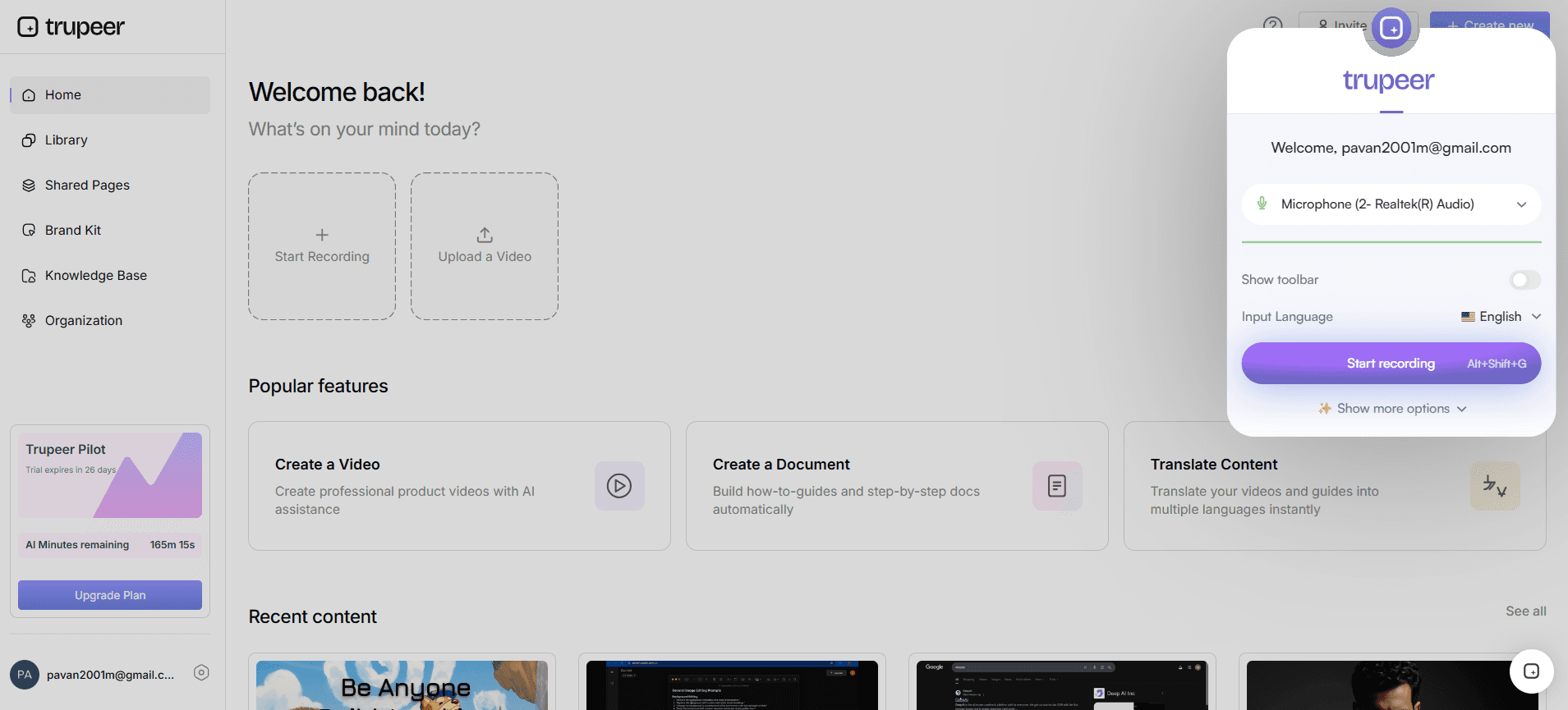
Begin by using Trupeer's browser-based recorder to capture your screen activity. This tool requires no installation, making it convenient to start recording instantly. Simply navigate to the Trupeer dashboard, select the screen recording option, and choose the window or application you want to record. Trupeer's AI screen recording feature will automatically detect clicks and zoom in on important areas. This ensures that the details your users need are highlighted effectively. The process is smooth, and recordings are saved instantly in your library for easy access and editing.
Step 2: Apply automatic AI narration
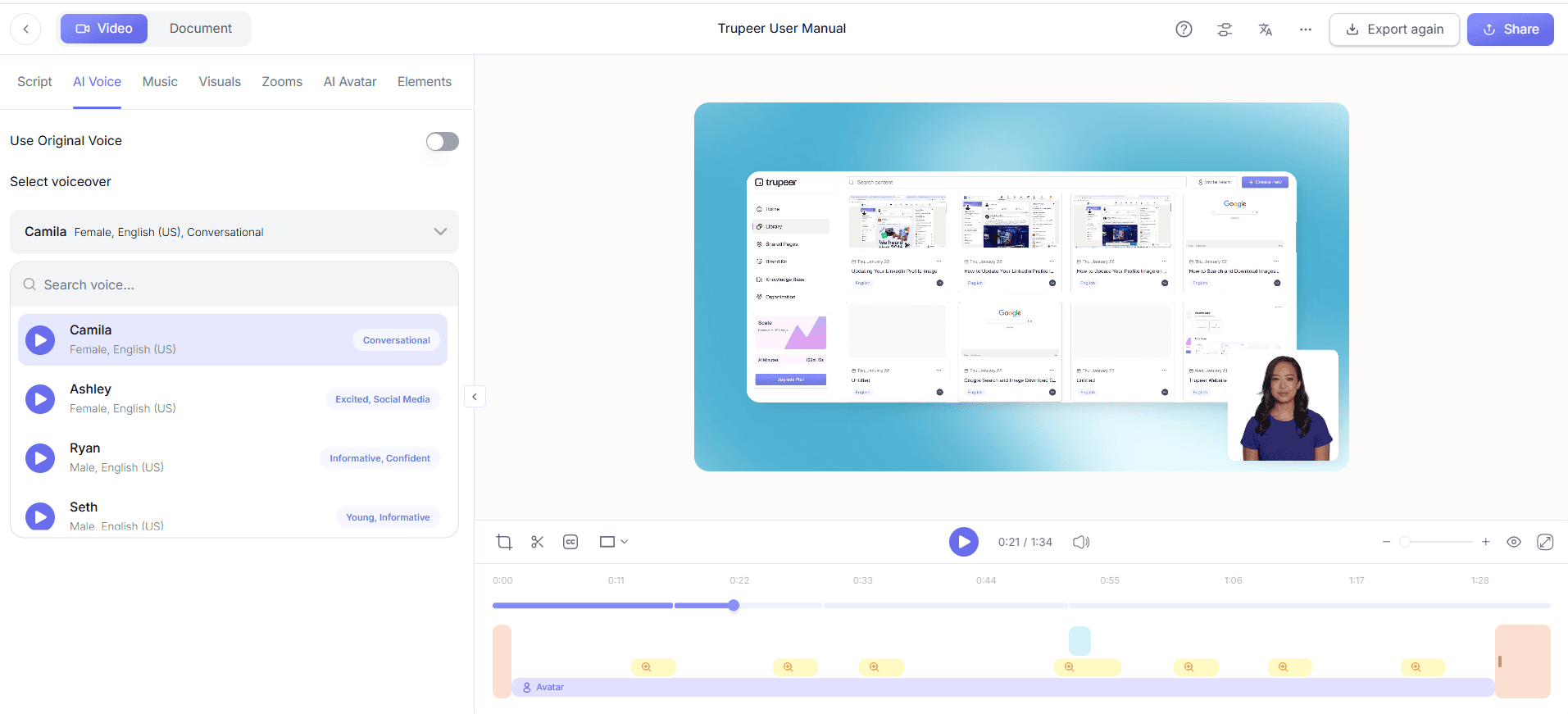
Once your recording is complete, enhance it with Trupeer’s automatic AI narration feature. This capability lets you add professional voiceovers without the need for external recording equipment or voice artists. Simply choose your preferred voice from over 50 natural options and adjust the pace and tone to match your brand's style. This process is quick and can significantly boost the engagement level of your instructional content. The narration is synchronized perfectly with your video, eliminating the need for manual adjustments.
Step 3: Generate SOPs automatically
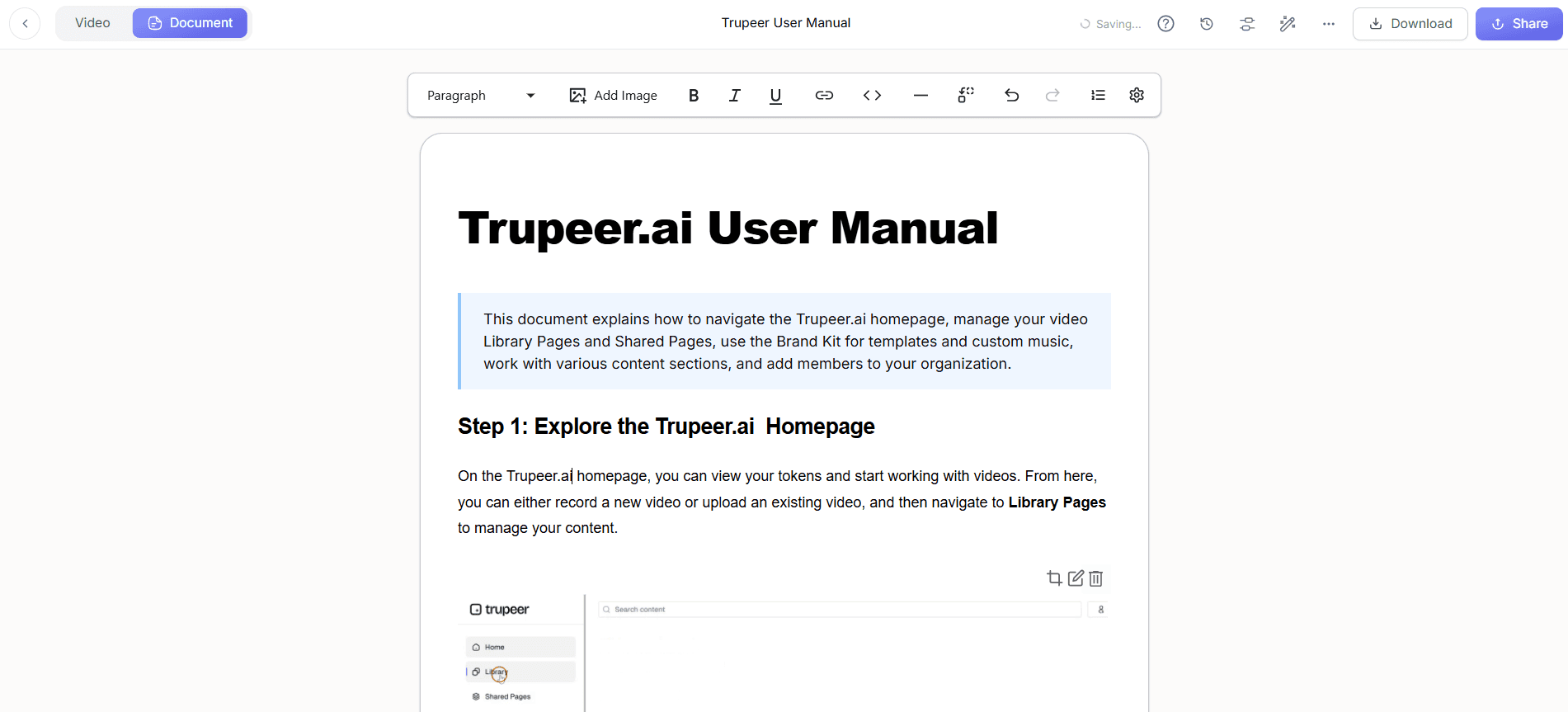
Trupeer excels in creating detailed SOPs from your recordings. Access the automatic SOP generation tool from the dashboard. Select your video, and Trupeer will convert it into a structured, edit-ready document. This feature captures every step shown in your recording, ensuring no detail is missed. The resulting SOP can be exported in multiple formats such as PDF and HTML, making distribution across teams straightforward. This capability is particularly useful for maintaining consistency in operational procedures across different departments.
Step 4: Translate and localize content
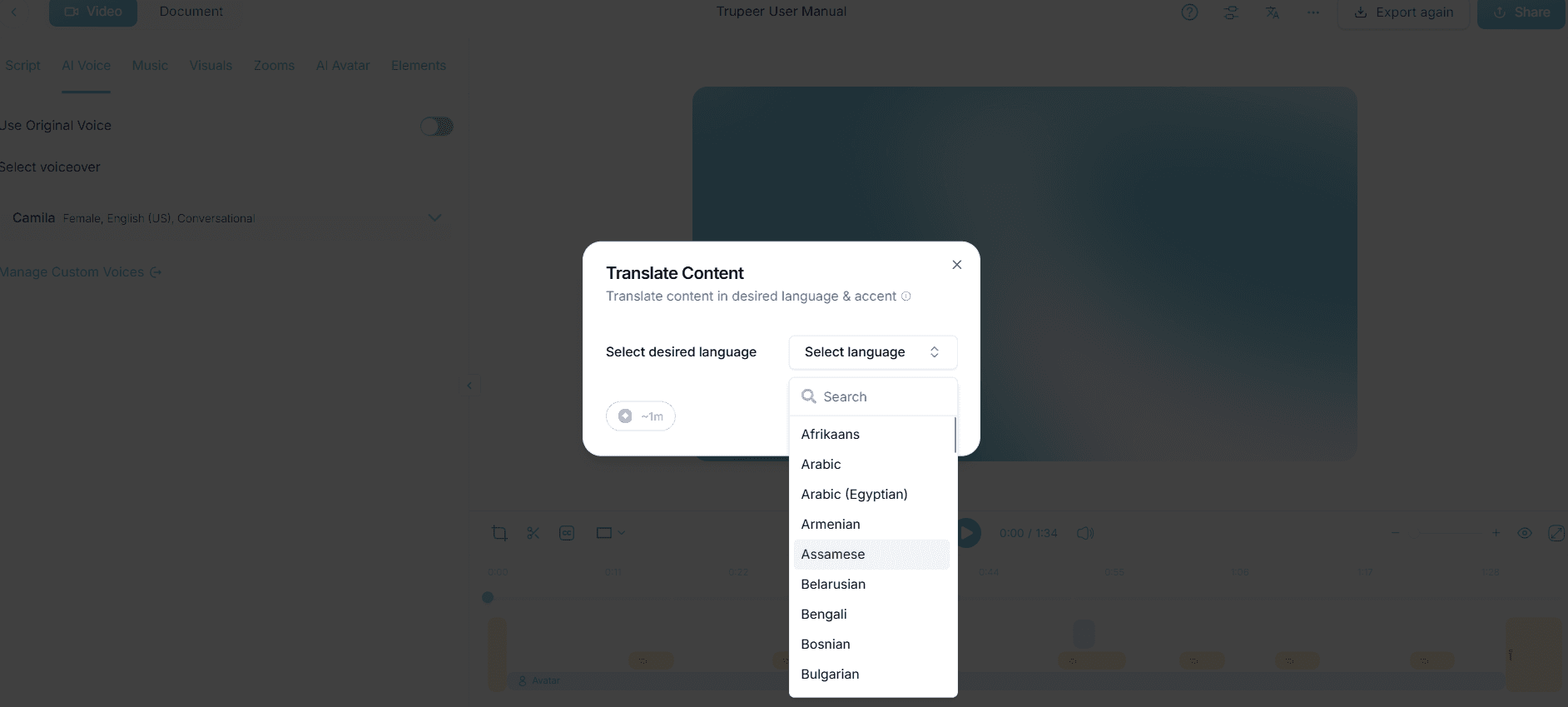
For global teams, translating documentation is crucial. Use Trupeer’s AI translation feature to convert your content into over 40 languages. This process includes lip-sync for videos, ensuring that the translated content feels natural and professional. From the translation dashboard, select your video and the target language. Trupeer handles the rest, providing a polished final product. This feature helps ensure that all users, regardless of language, have access to the same high-quality content, expanding your product’s reach and usability.
Step 5: Create a searchable knowledge base
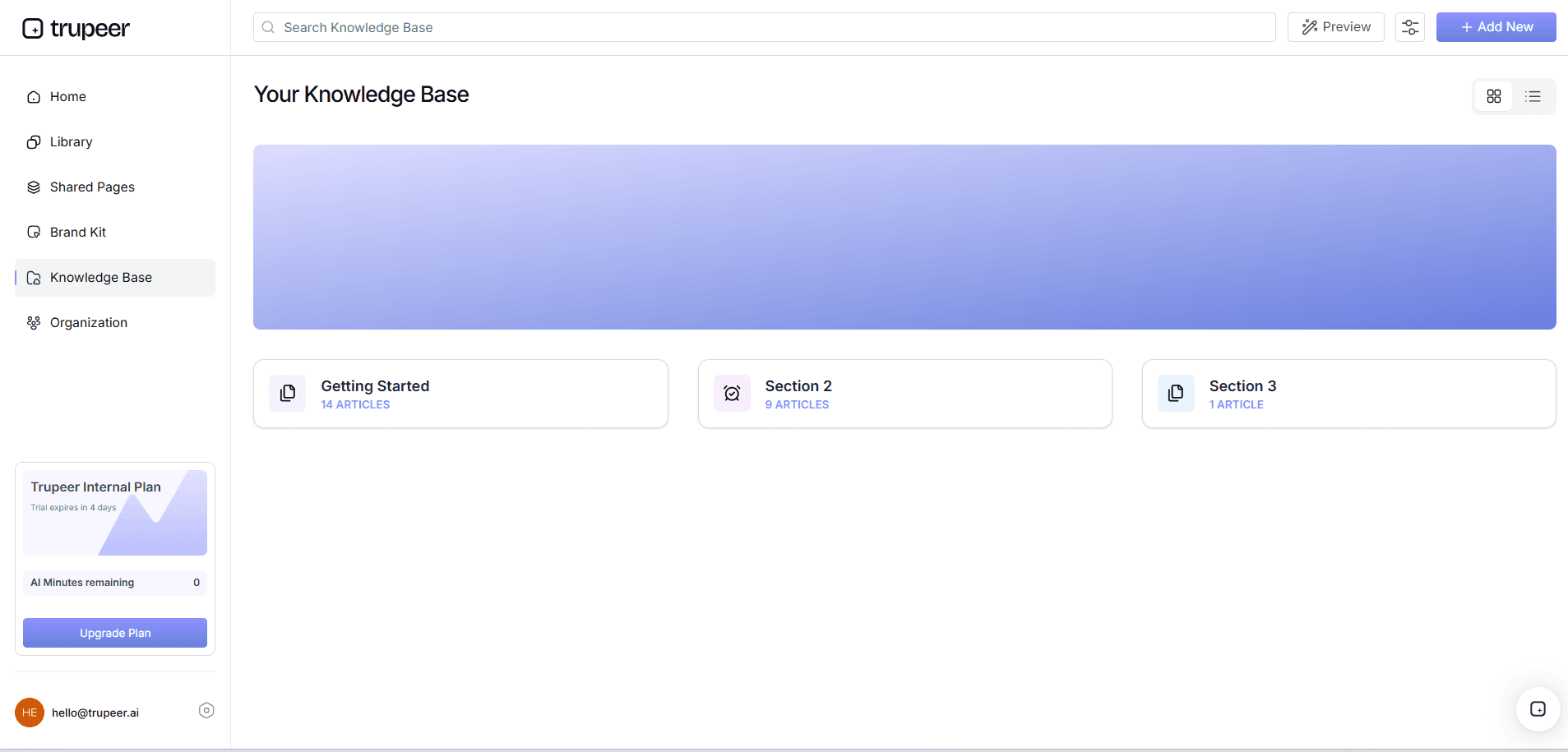
Organize your content by setting up a knowledge base with Trupeer. This searchable repository lets users find specific information quickly, thanks to Trupeer's timestamp deep-linking feature. After uploading your content, configure the knowledge base settings to categorize and tag each entry appropriately. This tool is invaluable for reducing the time users spend searching through documentation, improving user satisfaction significantly. The knowledge base is fully customizable, allowing you to align it with your brand's aesthetic and functional needs.
Step 6: Distribute and track engagement
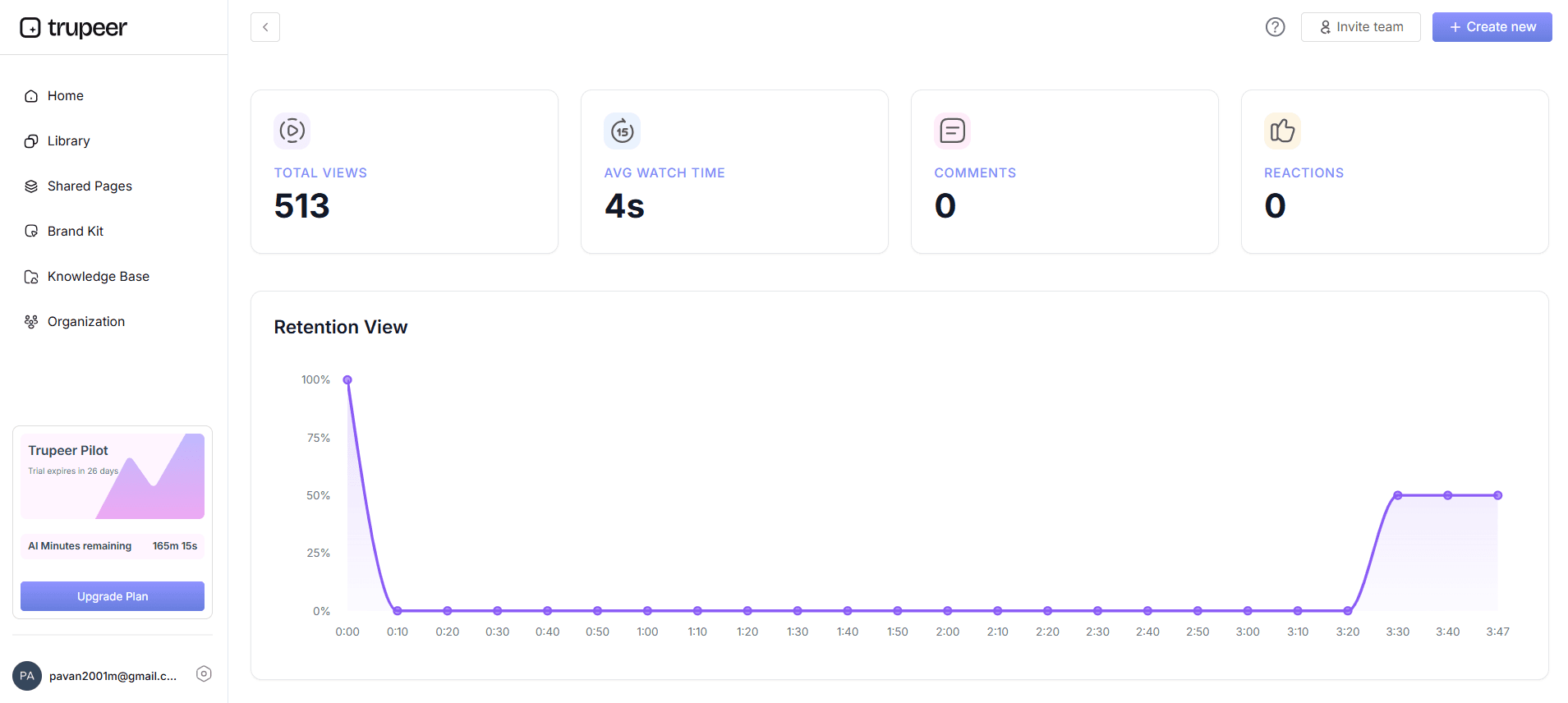
Finally, share your documentation with stakeholders using Trupeer’s distribution features. You can host content on custom domains with SSO, ensuring secure access for your team and clients. also, Trupeer’s viewer engagement analytics provide insights into how your content is consumed. You can track drop-offs and review engagement heatmaps to refine your documentation strategy further. This feedback loop is critical for continuous improvement, helping you adapt and optimize your content based on real user interactions. For those considering alternatives, reviewing a Loom vs Trupeer comparison can provide useful insights.
What tips help you enhance technical writing with AI?
Using AI for technical writing can significantly improve efficiency and quality. Here are some practical tips to maximize these benefits:
use templates. Use Trupeer’s brand kits and templates to maintain a consistent visual style across all documents. This ensures brand cohesion and a professional appearance.
Regularly update content. Take advantage of auto-updating features to keep your documentation current. This reduces manual work and ensures users always have access to the latest information.
Optimize for global audiences. Use the multilingual documentation tool to translate content efficiently, expanding your reach to non-English speaking users.
Engage with visuals. Integrate AI avatars and talking-head videos to make your documentation more engaging and easier to follow.
Standardize processes. Implement SOPs across your team to ensure consistent output and reduce errors. This is especially useful in regulated industries.
Monitor analytics. Use viewer engagement analytics to understand how users interact with your content and make data-driven improvements.
Consider alternatives. Review a Scribe alternative comparison to ensure you're using the best tools for your needs.
Frequently asked questions
How does AI improve technical writing accuracy?
AI improves accuracy by automatically detecting and correcting errors. It uses algorithms to identify inconsistencies and suggest corrections, reducing the likelihood of human error. This capability is particularly beneficial in complex documents where mistakes can have significant repercussions. AI tools also ensure that updates are applied uniformly across all documentation, maintaining consistency in tone and style. This leads to higher-quality documents that are more reliable and easier for users to understand.
What are the challenges of using AI in technical writing?
While AI offers many benefits, it also presents challenges, such as the initial setup and integration with existing systems. Some users may find the learning curve steep, especially if they're not tech-savvy. also, AI tools require regular updates and maintenance to function well. There can also be a reliance on AI-generated content, which may sometimes lack the nuance of human writing. Balancing AI efficiency with human oversight is crucial to maintaining the quality and authenticity of technical documents.
Can AI tools replace human technical writers?
No, AI tools are designed to assist rather than replace human writers. While they automate repetitive tasks and enhance accuracy, the creative and strategic elements of technical writing still require human input. AI can handle data processing and initial drafts, but the refinement, tone, and contextual nuances are best managed by skilled writers. AI tools serve as valuable aids, allowing writers to focus on higher-level tasks and improve the overall quality of their work.
Does AI support multilingual documentation?
Yes, AI supports multilingual documentation by providing translation services in multiple languages. Trupeer, for instance, offers translation into over 40 languages with lip-sync for videos, ensuring that content is accessible to a global audience. This feature allows companies to cater to diverse markets without investing heavily in language specialists. By using AI for translation, businesses can maintain consistency and accuracy across different language versions of their documentation.
Is AI video translation effective for global audiences?
Yes, AI video translation is highly effective for reaching global audiences. It allows businesses to translate video content into multiple languages efficiently and accurately. Trupeer's AI video translation features ensure that both spoken content and on-screen text are translated, maintaining the original video's integrity. This capability is crucial for businesses looking to expand internationally, as it helps bridge language barriers and provide a consistent brand experience worldwide.
Related Blogs