Trupeer Blog
Summarise
Imagine you're tasked with editing a series of audio recordings for an upcoming product launch. Your team is under pressure to deliver high-quality content quickly to meet tight deadlines. Using manual editing processes, cleaning up audio files could take hours or even days. This is where AI audio cleanup shines, offering a powerful solution to reduce time and enhance quality. According to recent studies,
AI-powered tools can cut editing time by up to 80% compared to manual methods.
But does this efficiency come at the cost of quality? Or are there scenarios where manual editing still has the upper hand? This analysis will dive into these questions, providing an honest comparison for businesses and audio professionals who need to decide between AI and manual editing. Whether you’re a project manager, content creator, or audio engineer, understanding these differences could significantly impact your workflow and product quality. For a deeper look, our guide on ai video editing covers the adjacent playbook.
Why does AI audio cleanup vs manual editing matter?
In the business world, audio content is vital. Companies rely on podcasts, webinars, and videos to connect with their audience. The quality of audio in these materials directly affects audience engagement and perception. Poor audio can disengage listeners, while high-quality sound can enhance the overall experience, making the message more impactful. For many businesses, the choice between AI audio cleanup and manual editing isn't just about convenience; it's about maintaining competitive advantage through superior content presentation.
Manual audio editing has been the gold standard for achieving precise, high-quality results. However, it demands significant time and expertise, which not every team can spare. On the other hand, AI audio cleanup offers a fast and increasingly sophisticated alternative. With the ai adoption workflow becoming more widespread, businesses are keen to integrate AI solutions that simplify operations without compromising quality. The stakes are high, particularly for content-driven businesses where fast turnaround times are crucial, and the quality of the audio often determines the success of the content. Thus, understanding the balance between speed and quality in audio editing is fundamental for making informed strategic decisions.
What are the benefits of AI audio cleanup?
AI audio cleanup offers several compelling advantages over traditional manual editing. Here are some key benefits:
Time Efficiency. AI audio tools can significantly reduce editing time, freeing up resources for other tasks. For instance, what might take a skilled editor five hours could be completed by AI in under an hour.
Consistency. AI provides a uniform level of quality across multiple files, ensuring that all audio outputs meet the same standard without human error. This is particularly useful for maintaining brand consistency across large volumes of content.
Cost Savings. By automating the editing process, businesses can save on labor costs associated with manual editing. This allows teams to allocate budget towards other growth-driven initiatives.
Scalability. AI-powered solutions can handle large batches of audio files simultaneously, making them ideal for businesses that produce high volumes of content. This scalability is crucial for companies looking to expand their content output.
Accessibility. AI tools often come with user-friendly interfaces, allowing even those with limited technical skills to achieve professional-quality results. This democratization of technology enables more team members to contribute to content creation.
AI Integration. Many AI audio cleanup tools integrate smoothly with user manual generator platforms, enhancing functionality. This integration can simplify workflows, enabling a smoother transition from editing to distribution.
Storing outputs inside an AI-searchable knowledge base makes every recording findable by topic and timestamp.
Which Trupeer features help you choose between AI and manual audio editing?
Trupeer offers several unique features that enhance audio editing through AI. These capabilities are designed to improve both the speed and quality of your audio content.
AI screen recording with auto-zoom and click detection
This feature allows users to capture video content with precision, automatically adjusting the focus and detecting clicks. The benefit for audio editing is significant, as it ensures that any accompanying audio is synchronized accurately with video actions. This feature is invaluable for tutorials and webinars where timing is crucial. By automatically aligning audio and video, it reduces the need for manual adjustments, saving time and avoiding potential errors.
Silent screen recording with automatic AI narration
With this capability, Trupeer enables users to record screens without audio, then add narration post-capture using AI-generated voices. This is particularly useful when creating instructional content where narration needs to be clear and professional. The AI voiceover can be customized in terms of pace and tone, ensuring that the narration matches the intended mood and brand voice, thus enhancing the overall quality of the presentation.
Automatic filler-word removal ("um", "ah", long pauses)
Trupeer's automated removal of filler words is a big shift for audio editing. This feature cleans up recordings by removing unnecessary pauses and hesitations, resulting in a polished and professional final product. It’s especially useful for live recordings or interviews where natural speech patterns can introduce unwanted fillers. This automatic cleanup process not only improves audio quality but also reduces editing time significantly, making it easier to meet deadlines.
AI voice cloning from a short sample
This modern feature allows users to create a custom AI voiceover that mimics a specific speaker's voice. It’s ideal for projects where maintaining a consistent speaker across multiple videos is important. With just a short sample, Trupeer can generate a voice clone that retains the unique characteristics of the original speaker. This ensures continuity in presentations and branding efforts, crucial for maintaining audience engagement and trust.
Auto chapters and segment detection
Trupeer's ability to automatically detect segments and create chapters is a boon for content organization. It enables users to break down long audio files into manageable parts, making it easier to navigate and edit. This feature is particularly useful for longer webinars or podcasts, where listeners might want to skip to specific sections. By integrating this with a documentation generator, users can create detailed guides that accompany their audio content, enhancing the overall user experience.
Incorporating these Trupeer features can significantly enhance your audio editing process, providing both time savings and quality improvements. However, understanding when and how to apply these features is key to maximizing their benefits.
How do you perform AI audio cleanup vs manual editing step by step with Trupeer?
Step 1: Record Your Screen
Begin by using Trupeer's AI screen recording with auto-zoom and click detection. Navigate to the Trupeer dashboard and select the screen recording option. This feature automatically focuses on the active window and detects clicks, making it ideal for capturing detailed tutorials or presentations. Once you click "Start Recording," Trupeer will begin capturing your screen, ensuring best clarity and precision. This process takes only a few minutes, depending on the length of your session. Once completed, the recorded video and audio are automatically saved to your Trupeer library for further editing.
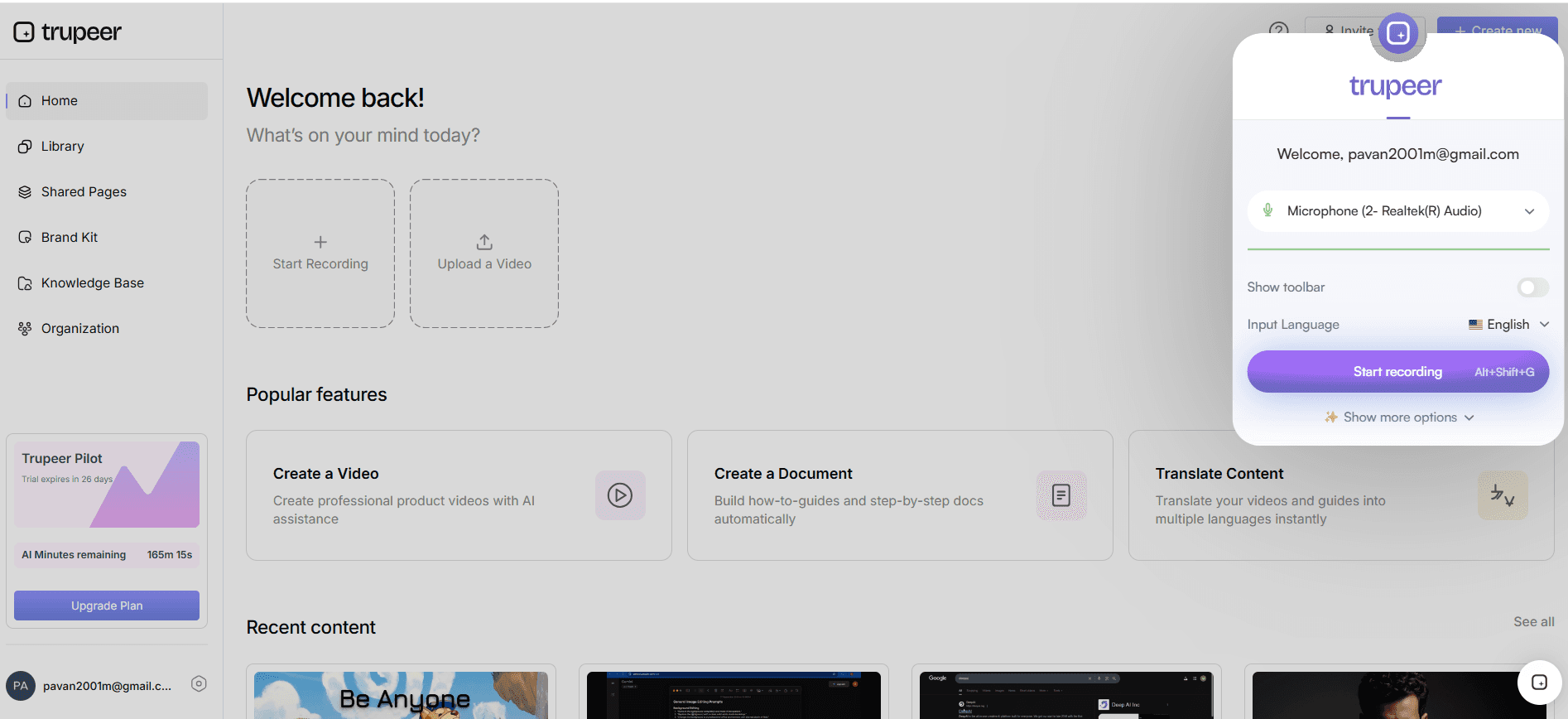
Step 2: Add AI Narration
Next, add narration to your recording using Trupeer's silent screen recording with automatic AI narration. After the screen capture is done, choose the AI voiceover option. Trupeer offers over 65+ natural voice options, allowing you to adjust pace and tone to fit your brand personality. This feature is particularly useful for making your content accessible to a wider audience. The AI-generated narration is added smoothly to your existing video, typically within a few minutes. This removes the need for recording voiceovers manually, saving significant time while maintaining professional quality.
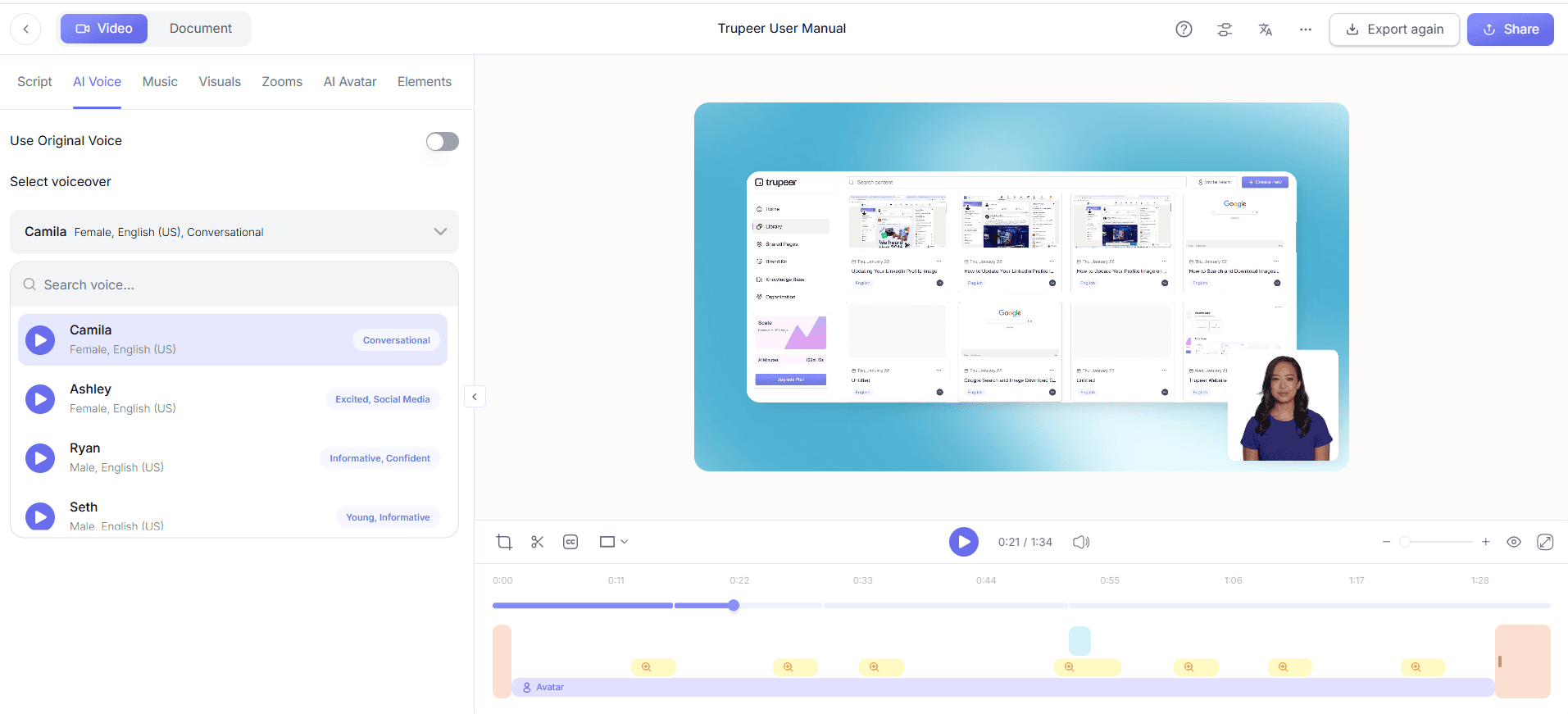
Step 3: Remove Filler Words
Proceed to clean up the audio by using Trupeer's automatic filler-word removal feature. Select the audio file within your project and choose the filler-word removal option. Trupeer then scans for common verbal fillers like "um" and "ah," as well as long pauses, and eliminates them. This automatic process usually takes just a few minutes, delivering a polished and professional sound. This feature is particularly beneficial for live recordings or interviews, where the natural flow of speech can introduce unwanted pauses, ensuring the final audio is clean and engaging.
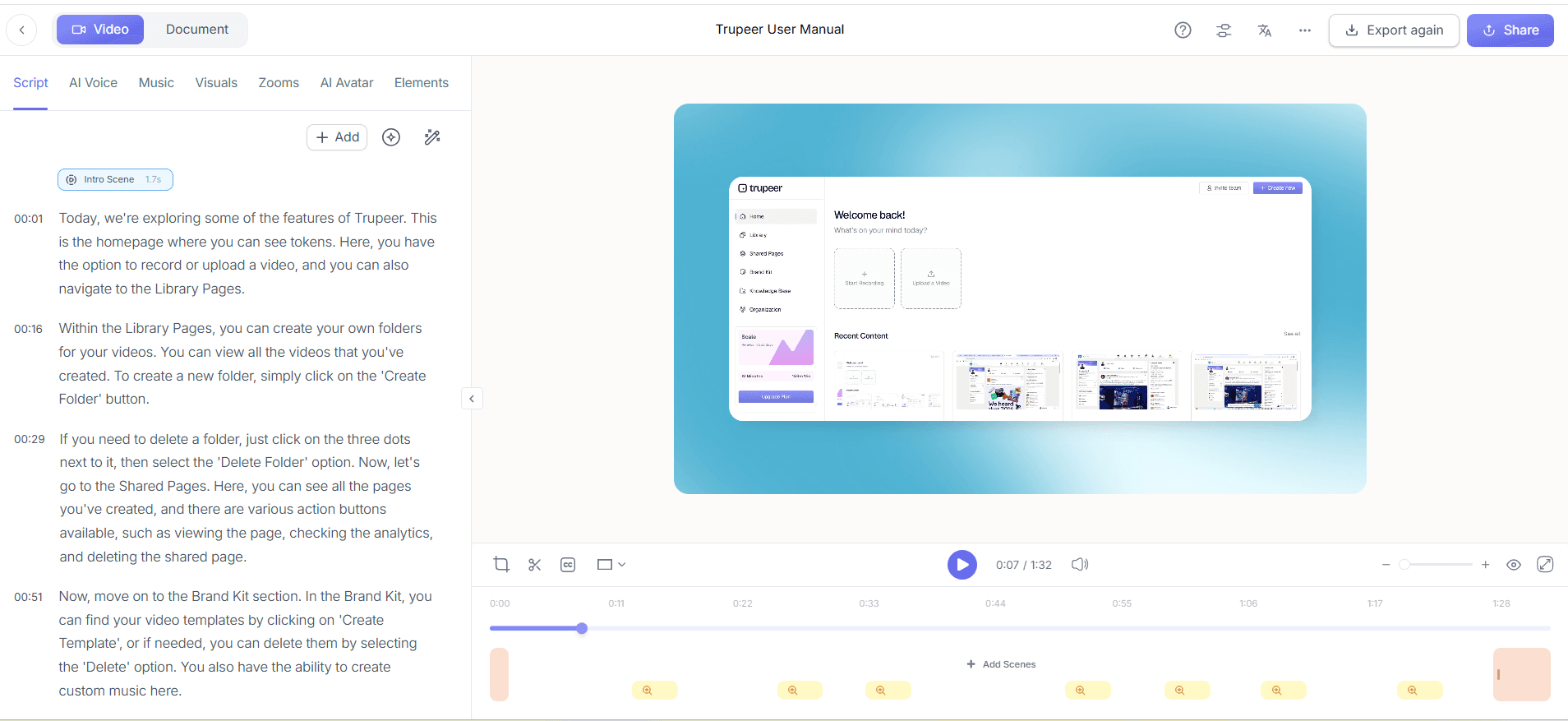
Step 4: Clone a Voice
For projects requiring consistent voice representation, use Trupeer's AI voice cloning. Begin by uploading a short sample of the desired speaker's voice. Trupeer's technology analyzes the sample and creates a digital clone, capturing tonal nuances and unique speech patterns. This cloned voice can then be applied across different projects, ensuring continuity and reducing the need to repeatedly record audio. The voice cloning process is efficient, typically completing in under an hour, making it a powerful tool for maintaining brand consistency across audio content.
Step 5: Edit and Organize with Auto Chapters
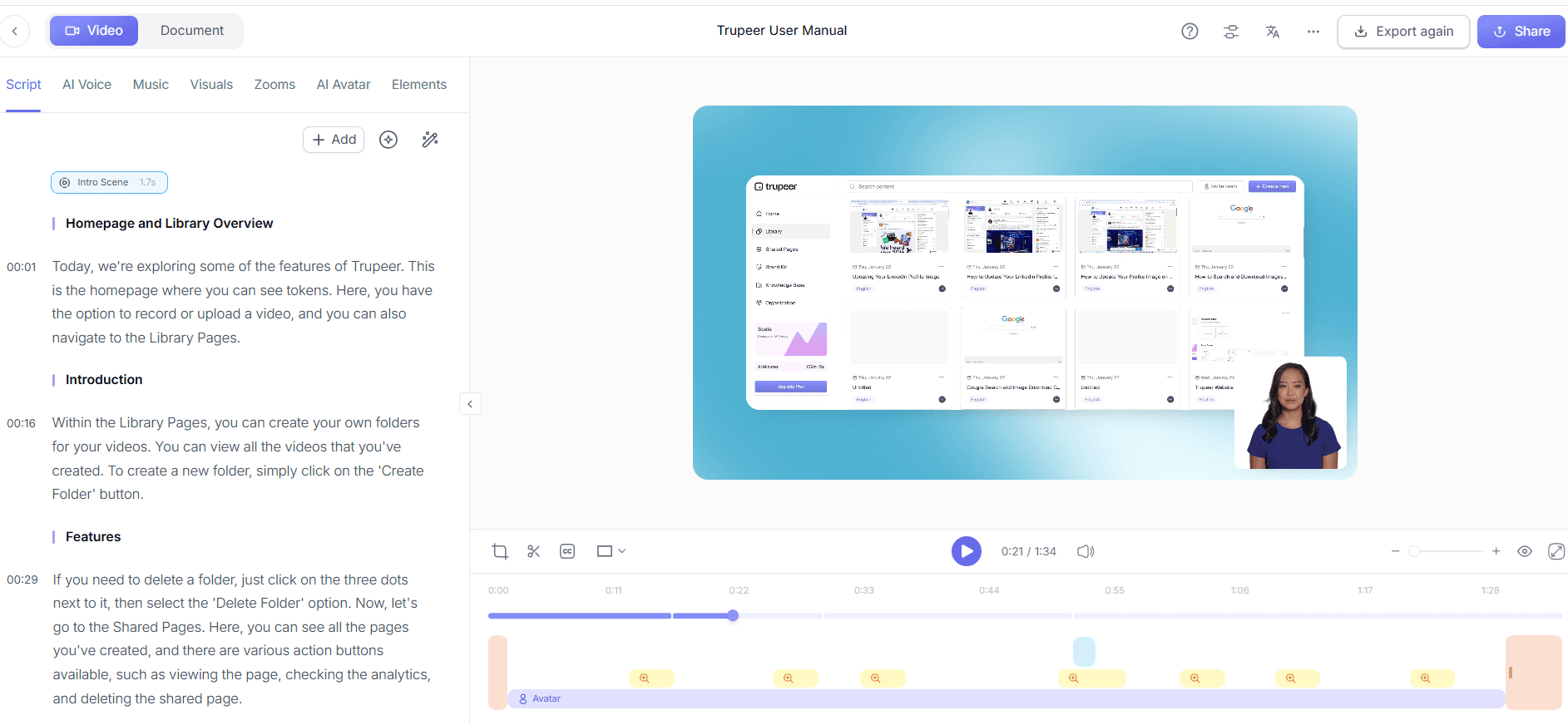
Enhance your content's accessibility by using Trupeer's auto chapters and segment detection. Once your audio is complete, select this option to automatically divide your recording into logical segments or chapters. This feature is especially useful for long-form content such as webinars or podcasts, allowing users to navigate directly to sections of interest. The segment detection process is swift, taking only a few minutes, and it provides a structured overview that improves user engagement and content consumption.
Step 6: Export and Share
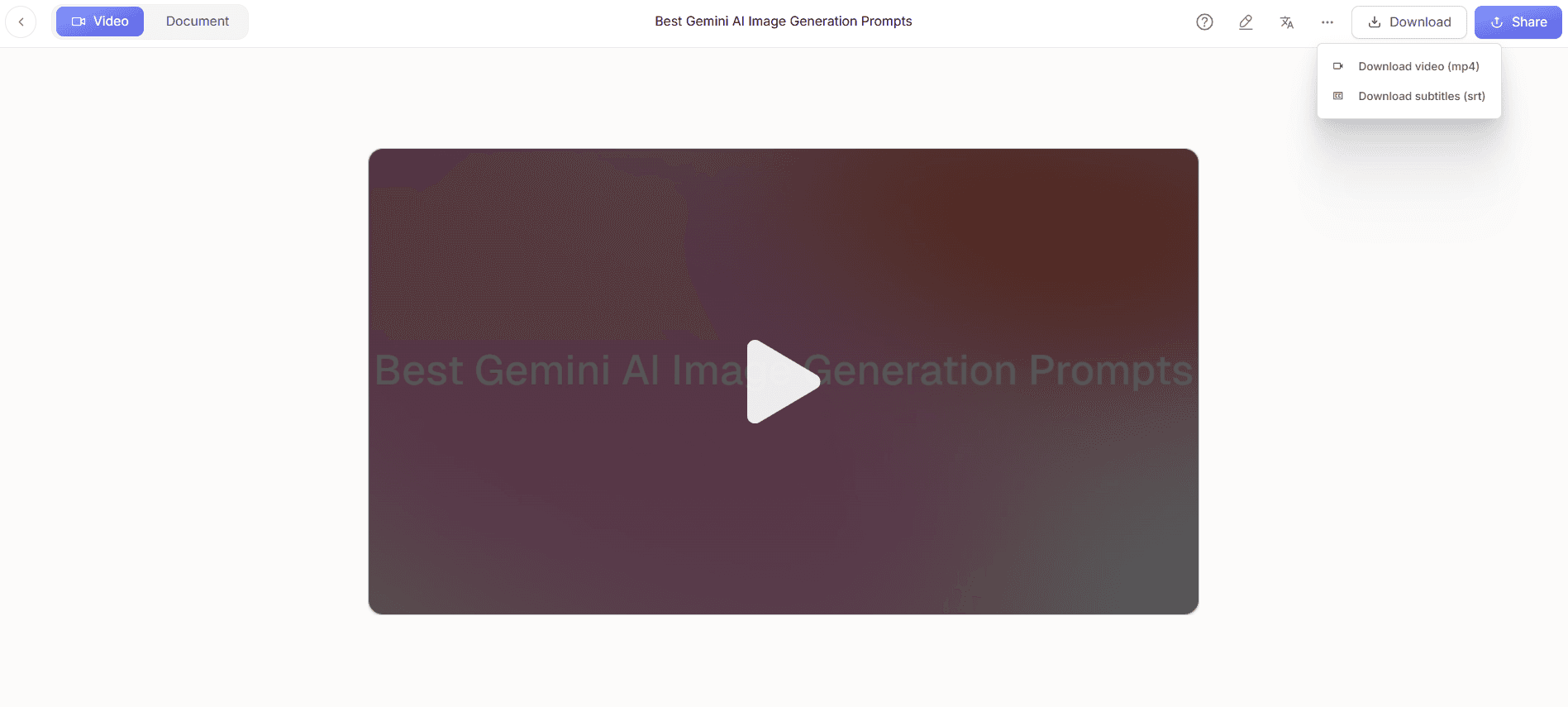
Finally, export your edited audio using Trupeer's multi-format export options. Whether you need MP4, HTML, or PDF, Trupeer allows you to choose the best format for your audience. For instance, if you're working on a collaborative project, exporting in a format compatible with a Loom alternatives for teams can be beneficial. After selecting your preferred format, your content is ready for distribution in just a few clicks. This flexibility ensures that your audio content can be shared smoothly across various platforms, enhancing its reach and impact.
What tips help you optimize AI audio cleanup vs manual editing?
When handling the choice between AI audio cleanup and manual editing, certain strategies can enhance your workflow and results. Here are some practical tips to consider:
Choose the Right Tool. Ensure you're using a tool like Trupeer that aligns with your editing needs. It offers comprehensive features that simplify the editing process.
Standardize Your Workflow. Consistency is key. Develop a standard procedure for all team members to follow, which can be facilitated by a Scribe alternatives for SOPs.
use AI Voice Cloning Wisely. Employ this feature for projects where maintaining a consistent voice is crucial, such as brand videos or client presentations.
Integrate AI Tools with Manual Checks. While AI speeds up the process, a final manual review ensures high quality, catching any nuances AI might miss.
Train Your Team. Familiarize your team with AI tools through workshops or tutorials, ensuring everyone can use these technologies effectively.
use Automatic Features. Use automatic features like filler-word removal to enhance audio clarity and engagement, saving time on manual edits.
Experiment with Different Voices. When using AI narration, test different voices to find the one that best fits your brand's tone and audience preferences.
For global audiences, adding AI video translation extends the same workflow across 40+ languages with lip-sync.
Frequently asked questions
How does AI audio cleanup improve efficiency?
AI audio cleanup significantly reduces the time spent on editing by automating routine tasks such as filler-word removal and voice synchronization. These tasks, which could take hours manually, are completed in minutes with AI. This efficiency allows teams to focus on creating more content or refining other aspects of their projects. The simplified process not only saves time but also reduces the need for extensive technical expertise, making high-quality audio production accessible to a wider range of users.
What are the limitations of AI audio cleanup?
While AI audio cleanup offers speed and convenience, it may not fully replicate the subtle decisions a human editor can make. AI might miss subtleties in tone or context that a skilled editor would catch. also, complex projects with specific artistic requirements might still benefit from manual intervention. Therefore, combining AI editing with a final manual review can ensure both efficiency and quality, addressing the limitations of relying solely on AI tools.
Can Trupeer handle multilingual audio content?
Yes, Trupeer can manage multilingual audio content effectively. Its AI translation into 40+ languages with lip-sync allows users to create content that resonates with diverse audiences. This feature ensures that both the audio and visual elements align accurately across different languages, enhancing the global reach of your content. By offering smooth translations, Trupeer supports businesses looking to expand their audience base internationally, making it a versatile tool for multilingual projects. Teams ship this workflow end-to-end using Trupeer's AI video platform, which turns raw recordings into polished output without an editor.
Does AI audio cleanup affect audio quality?
AI audio cleanup is designed to enhance audio quality by removing unnecessary noise and improving clarity. However, the effectiveness can vary depending on the quality of the original recording and the specific algorithms used. In most cases, AI tools like Trupeer refine the audio to a professional standard, but for critical projects, it's advisable to conduct a thorough review to ensure the final output meets desired quality levels. Balancing AI efficiency with manual oversight ensures best results.
Is manual editing still necessary with AI tools?
Manual editing remains an important aspect of audio production even with advanced AI tools. While AI can handle many routine tasks efficiently, manual editing is essential for creative decisions and quality assurance. For example, projects requiring specific artistic direction or customization may need manual tweaks that AI cannot provide. Thus, combining AI tools with manual skills can offer the best of both worlds, ensuring high-quality results tailored to specific project needs.
Related Blogs