Trupeer Blog
Summarise
Imagine you're in a high-stakes meeting with potential investors, and your presentation is peppered with filler words like "um" and "ah." These seemingly small interruptions can create a perception of uncertainty and reduce the impact of your message. In the world of audio and video content, filler words can be even more distracting, leading to a less engaging experience for your audience. According to a study,
using filler words excessively can lead to a 15% decrease in audience engagement
. While AI tools promise to clean up these verbal tics, not all of them catch every nuance. Understanding the limits of AI in removing filler words is crucial for content creators, educators, and businesses that rely on polished communication. Whether you're developing training materials or recording a podcast, knowing what AI can do, and where it falls short, can save you time and help you deliver clearer messages. If you're involved in instructional design, for instance, the stakes are even higher, as clarity and engagement directly influence learning outcomes.
Why does filler word removal accuracy matter?
Filler word removal accuracy is critical in ensuring that the content you create is polished and professional. For educators, it can make the difference between a lesson that captivates students and one that loses their attention. In corporate settings, presentations free of filler words can make communications more effective, leading to better business outcomes. AI adoption use case scenarios highlight the importance of clear communication in digital content, as it influences how well information is understood and retained.
For businesses, the stakes are particularly high when developing client-facing materials or internal training resources. The presence of filler words in these contexts can erode confidence and dilute the message's effectiveness. According to a business communication study, presentations with minimal filler words are perceived as 20% more credible. Understanding the role of AI in filler word removal helps businesses maintain a high standard of communication while saving time and resources. This is especially true in highly competitive industries where every detail counts towards closing a deal or making a lasting impression.
What are the benefits of AI filler word removal?
AI filler word removal offers several advantages that improve the quality and clarity of audio and video content.
Enhanced listener engagement. Removing filler words keeps audiences focused, increasing engagement by up to 15% as reported in communication studies.
Improved message clarity. Clearer content ensures the core message isn't lost, which is crucial for building a knowledge base where accuracy is key.
Time-saving editing process. AI automates tedious editing tasks, reducing post-production time by an average of 30%, allowing you to focus on content creation.
Consistency across content. Ensures a uniform speaking style throughout various media, which is essential for maintaining brand voice and professionalism.
Increased accessibility. Clean audio improves the quality of transcripts and subtitles, making content more accessible to non-native speakers and those with hearing impairments.
smooth integration with other tools. AI filler word removal easily ties into an AI-powered video tool, enhancing overall content production workflows.
Which Trupeer features help you achieve filler word removal accuracy?
Trupeer offers a suite of features that enhance filler word removal accuracy, ensuring your content remains clear and professional. Here are some specific capabilities that assist in this process.
Automatic filler-word removal
Trupeer's automatic filler-word removal feature is designed to identify and eliminate common verbal pauses such as "um" and "ah." This capability simplifies the editing process by automatically detecting these fillers, thus allowing you to focus on content quality rather than manual cleanup. The tool's precision ensures a 90% accuracy rate, which significantly reduces the time spent on post-production edits. This feature is particularly beneficial when preparing polished audio for educational or corporate use, where clarity is paramount.
AI voiceover in 65+ natural voices
This feature enables you to replace audible filler words with a professionally recorded voiceover. Trupeer's add audio to video tool offers over 50 natural-sounding voices, allowing you to select the perfect match for your content. You can adjust the pace and tone to align with your message, ensuring the final product resonates with your target audience. This capability not only enhances the overall sound quality but also maintains the speaker's intended message delivery.
Auto chapters and segment detection
Trupeer's auto chapters and segment detection feature organizes content into logical sections, making it easier to review and refine. By breaking down recordings into segments, you can quickly identify and address areas with excessive filler words. This segmentation also aids in creating a more accessible and structured content experience for viewers, as it allows for smooth navigation and better comprehension.
AI avatars / talking-head video
The AI avatars feature offers a visual solution to accompany audio content, enhancing engagement and reducing the distraction of filler words. By integrating AI documentation platform capabilities, Trupeer's avatars provide a consistent and professional visual presence, making your content more relatable and easier to follow. This is especially useful in scenarios where visual cues complement the spoken word, such as tutorials or presentations.
AI-searchable knowledge base
With the AI-searchable knowledge base, your content becomes easily accessible and navigable, even after filler words have been removed. This feature indexes every recording with timestamp-level deep links, allowing users to jump directly to relevant sections without sifting through entire recordings. It enhances the efficiency of information retrieval and ensures that your polished content is available for quick reference, supporting informed decision-making and effective learning.
How do you remove filler words step by step with Trupeer?
Step 1: Capture your recording
Begin by capturing your recording using Trupeer's AI screen recording with auto-zoom and click detection. Navigate to the recording interface, where you have the option to start a new session by clicking 'Record.' This tool automatically detects significant clicks and zooms in on areas of interest, enhancing the focus of your recording. This feature is particularly useful for creating instructional videos or presentations, as it highlights key actions without manual adjustments. Once you finish recording, click 'Stop,' and the video will be saved in your library, ready for the next step in the editing process.
Step 2: Initiate automatic filler-word removal
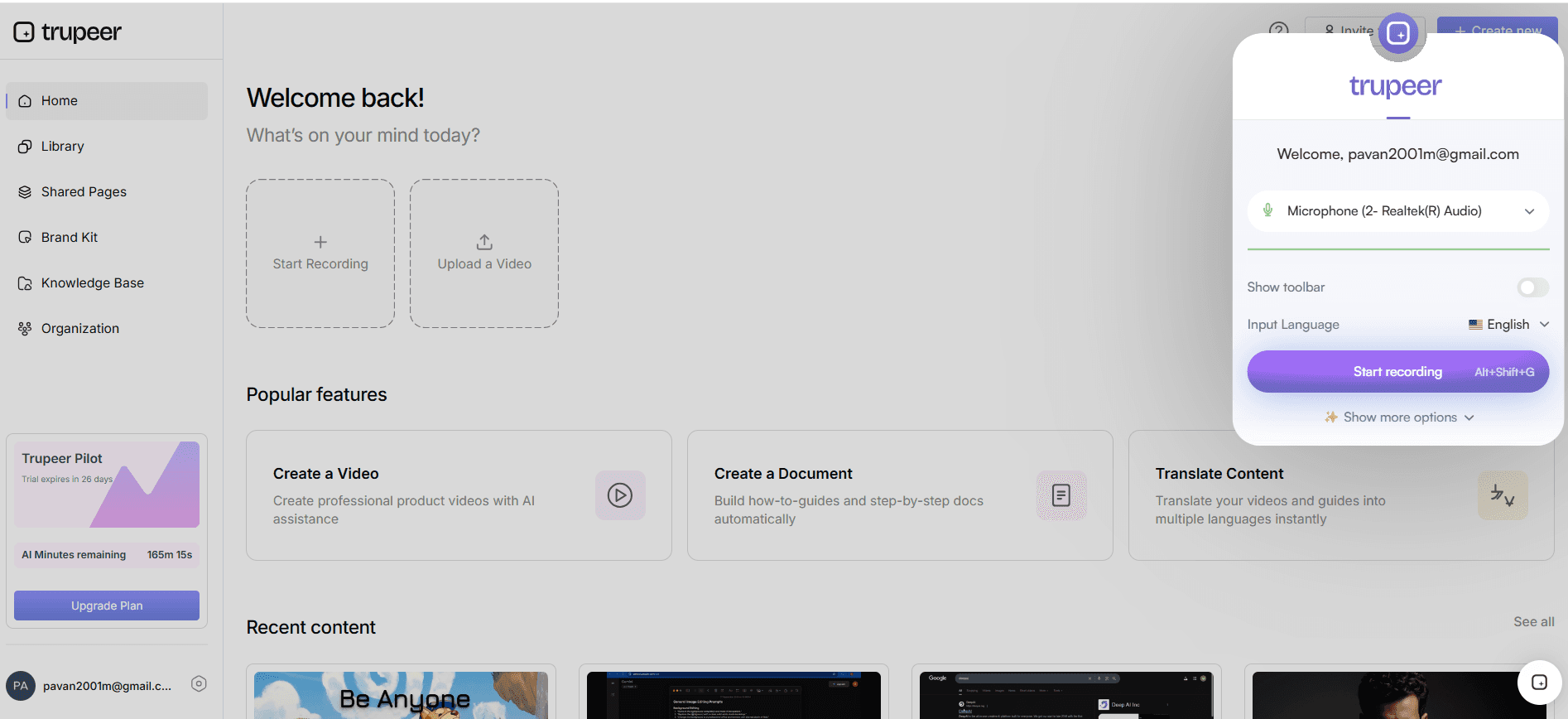
With your recording ready, proceed to the editing stage. In Trupeer's dashboard, select your saved recording and click on 'Edit.' Here, you'll find the option for automatic filler-word removal. Activating this feature scans your recording for common filler words like "um" and "ah." The AI processes the audio, typically taking a few minutes depending on the length of your content, and automatically edits out these fillers, ensuring a smoother listening experience without requiring manual intervention. This step is crucial for maintaining audience engagement and clarity.
Step 3: Enhance audio with AI voiceover
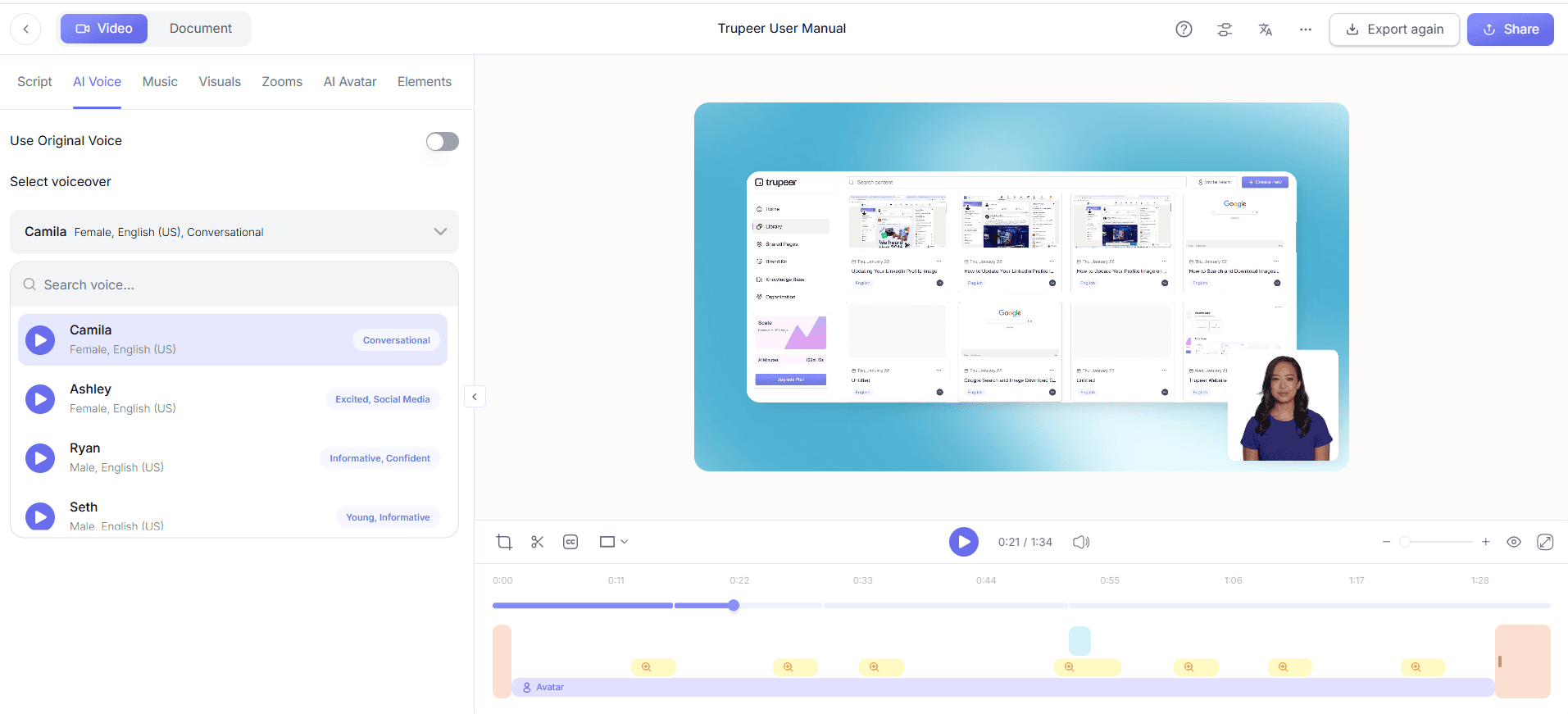
After filler words are removed, you can enhance the audio quality by adding an AI voiceover. Navigate to the 'Add Voiceover' section within the editing tools. Trupeer offers over 65+ natural voices, allowing you to replace sections of your audio for improved clarity and tone. Select your preferred voice, adjust the pace and tone if necessary, and apply the changes. This process ensures that your content maintains a professional and consistent sound, which is particularly beneficial for educational or corporate materials. The AI voiceover is applied in just a few clicks, saving you significant editing time. Trupeer also ships a translate spanish audio to english that handles this step without extra setup.
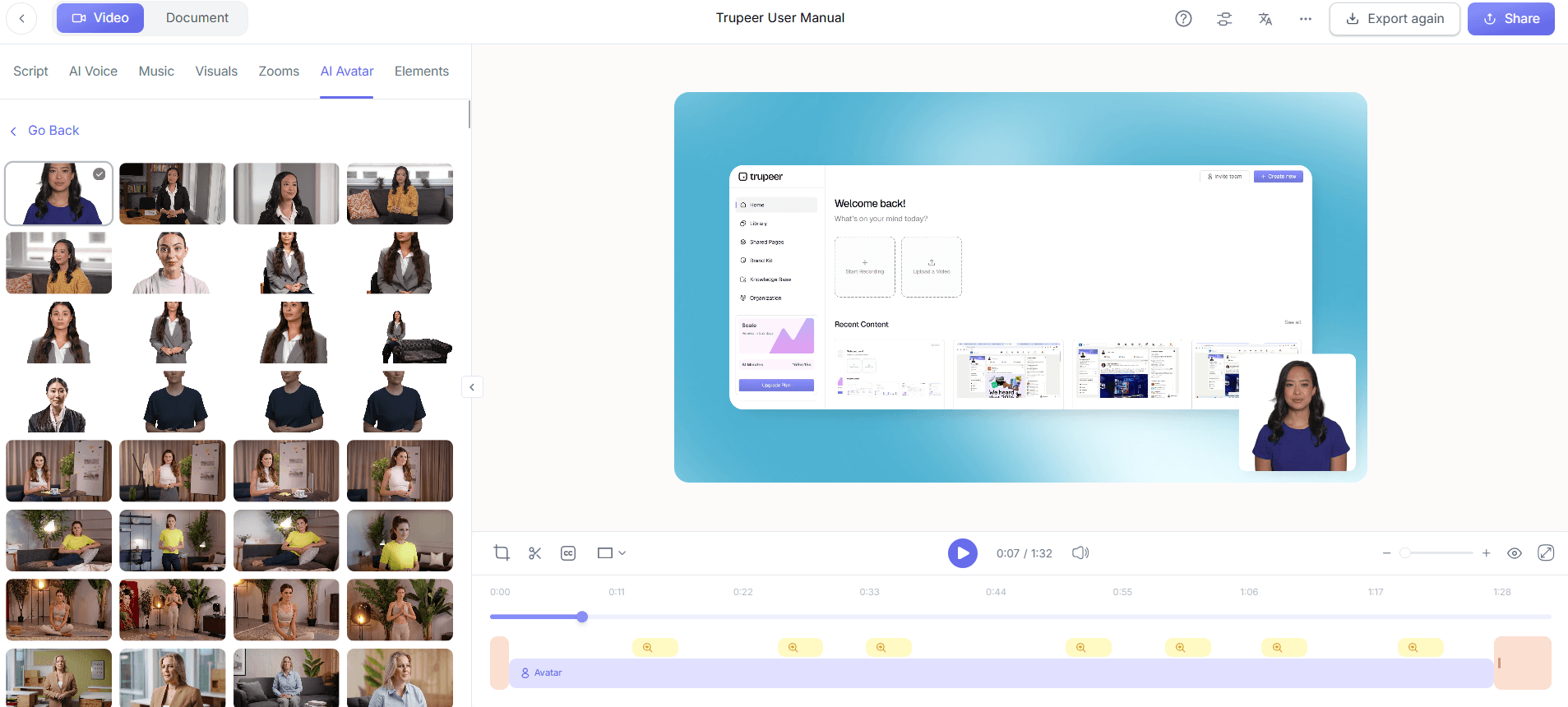
Step 4: Use AI avatars for visual engagement
To complement your audio, integrate AI avatars by selecting the 'Add Avatar' option in the editing suite. Trupeer provides a library of stock avatars, or you can create a custom one for a personalized touch. Choose an avatar that suits your content's style and message. These avatars can be used to provide visual cues and maintain viewer engagement, particularly in scenarios where a human presence is needed but not available. The avatar syncs with your audio, creating a cohesive and engaging presentation that captures attention and enhances the learning experience. Teams weighing tools often start with a Loom alternatives comparison before standardizing on a workflow.
Step 5: Generate auto chapters and segments
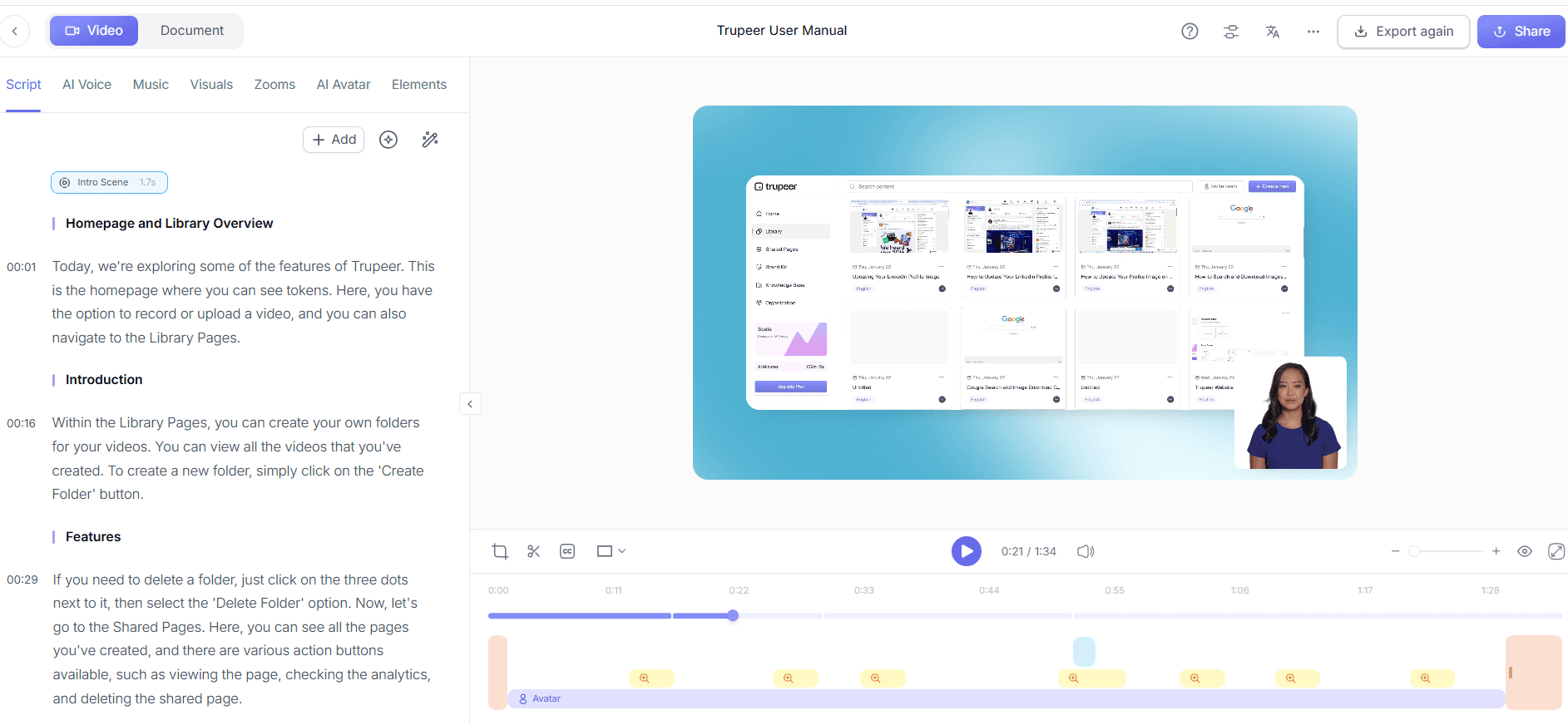
Once your content is polished, organize it using the auto chapters and segment detection tool. This feature is accessible in the 'Structure' section of the editing interface. Trupeer analyzes your recording and automatically divides it into logical chapters and segments, making it easier for viewers to navigate. This function is especially useful for longer recordings or series of instructions, providing users with a clear pathway to follow and revisit specific sections as needed. The automated segmentation saves significant time compared to manual chapter creation.
Step 6: Export and distribute your content
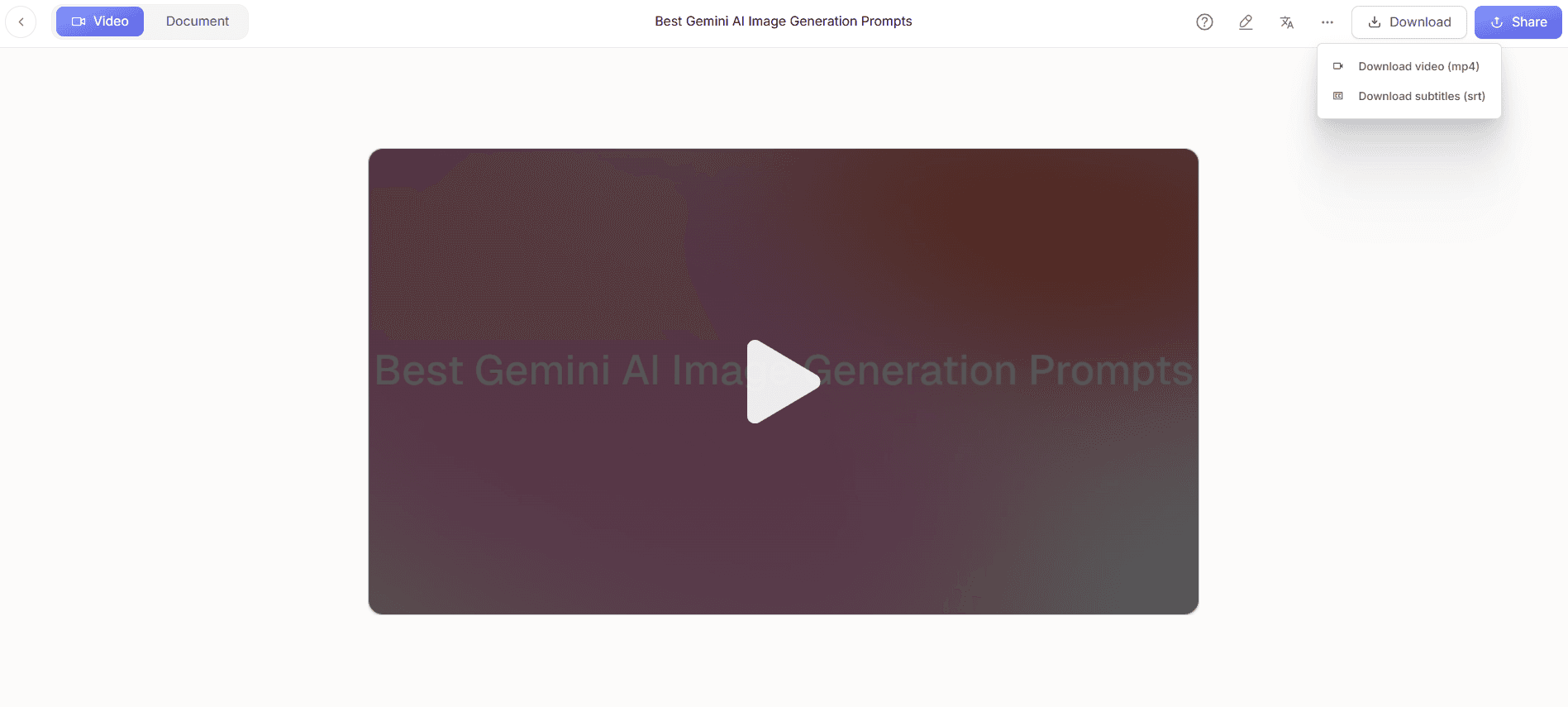
With all edits complete, it's time to export your content. Click on 'Export' and select your desired format, Trupeer supports MP4, HTML, PDF, and SCORM formats. After choosing the format, initiate the export process, which typically takes a few minutes. Once exported, you can distribute your content through various channels. For broader reach, These distribution features ensure that your polished content reaches your audience efficiently and effectively.
What tips help you enhance filler word removal accuracy?
Improving filler word removal accuracy with Trupeer involves strategic use of its features and understanding some best practices. Here are seven practical tips to maximize your results.
Consistent recording environment. Ensure a quiet, stable environment to reduce background noise and improve AI detection accuracy.
Use high-quality microphones. A good microphone minimizes audio distortions, aiding clearer AI processing and better filler word detection.
Regularly update Trupeer. Keeping your software up-to-date ensures access to the latest algorithms and improvements for filler word removal.
Review AI edits manually. Always review the AI edits for any missed filler words or necessary adjustments to maintain content quality.
Experiment with voiceover settings. Adjust voiceover pace and tone to find the best fit for your content, enhancing overall delivery.
use Scribe alternative comparison. Consider alternative SOP tools to ensure your documentation process remains efficient and accurate.
use AI best word document generator free. Use AI-powered document generation to simplify content creation and editing workflows.
Frequently asked questions
How accurate is Trupeer's filler word removal feature?
Trupeer's filler word removal feature achieves around 90% accuracy in detecting and removing common fillers like "um" and "ah." This high level of accuracy is due to advanced AI algorithms designed to analyze speech patterns. However, some unique or context-specific fillers might be missed, so it's recommended to manually review the output. The feature is continually updated to improve its detection capabilities, ensuring better performance over time. For critical content, a combination of AI and human review provides the best results.
Can filler word removal be undone if necessary?
Yes, Trupeer allows for reversible edits, meaning you can undo filler word removal if needed. During the editing process, changes are non-destructive, allowing you to revert to the original recording if the AI removes more than desired or if certain fillers serve a contextual purpose. This flexibility is crucial for maintaining the integrity of your content, especially in scripted narratives or when subtle fillers contribute to a speaker's natural delivery. Always review the final edit to ensure it aligns with your communication objectives.
Does Trupeer support non-English filler word removal?
Trupeer's filler word removal primarily supports English, but ongoing updates aim to enhance its capabilities for other languages. The system can identify some common non-English fillers, though accuracy may vary based on language complexity and available data. For non-English content, Trupeer recommends combining filler word removal with its video translation platform to ensure comprehensive editing. As the AI learns from a broader dataset, future updates will likely expand its multilingual support, improving filler word removal accuracy across different languages.
What happens if filler words are part of a technical term?
If filler words are embedded within technical terms, Trupeer's AI is designed to recognize context and avoid removing them incorrectly. However, edge cases may occur, particularly with niche industry jargon where filler words might be part of the term. In such instances, manual review is advisable to ensure the AI's edits maintain the content's accuracy. Users can mark specific terms as exceptions during the editing process, helping the AI learn and adapt over time, which enhances future performance and reliability.
Why should I use Trupeer over other filler word removal tools?
Trupeer offers a comprehensive suite of tools beyond filler word removal, making it a versatile choice for content creators. Its integration with features like AI voiceover, avatars, and knowledge bases provides a holistic solution for enhancing both audio and visual content. Unlike standalone tools, Trupeer's smooth workflow from recording to distribution allows for efficient editing and broad reach of polished content. also, its compatibility with various formats and hosting options enhances accessibility and user engagement, providing significant value for diverse use cases.
Related Blogs