Trupeer Blog
Summarise
Imagine you're tasked with localizing a massive batch of 100 training videos into five different languages, each around 15 minutes long. It's daunting, but not impossible. With AI translation tools, the logistics of this challenge can be managed more efficiently. The stakes are high. An accurate translation ensures your content resonates globally and maintains your brand's integrity across markets. According to
studies, localized video content can increase user engagement by up to 80%.
This impact on engagement underscores the importance of having an organized workflow to manage such a substantial project. The question isn't whether to localize, but how to do it effectively. This guide aims to lay out the processes and tools necessary for a simplified AI translation workflow, ensuring you're well-equipped to handle similar projects. When SOPs come into the same conversation, a Scribe alternatives comparison helps clarify the scope.
Why does an AI translation workflow for video localization projects matter?
World, businesses increasingly operate across multiple regions and cultures. This means your training videos, product demos, and marketing materials need to speak in the languages of your target audiences. Without a structured AI adoption workflow, your teams could face bottlenecks, miscommunication, and inefficiencies that derail projects. Localization projects are complex and involve many moving parts, from script translation to voiceover synchronization. Each step requires precise coordination.
For businesses scaling globally, the consistency and quality of localized content are non-negotiable. A well-structured AI translation workflow ensures that your messaging remains on-brand and accurate across languages, which directly impacts customer satisfaction and trust. also, it allows for efficient resource allocation, avoiding unnecessary costs and delays. Without this workflow, projects can quickly become chaotic, leading to increased error rates, which can damage your reputation and the perceived quality of your offerings.
What are the benefits of using AI translation workflows for video localization projects?
Implementing AI translation workflows in video localization projects offers several concrete benefits:
Improved Efficiency. AI translation workflows significantly reduce the time spent on manual translations and edits. This enables teams to focus on higher-priority tasks, ultimately shortening project timelines.
Cost Savings. Automating translation and editing processes with AI tools can cut costs by up to 60%. This is due to reduced reliance on human translators for repetitive tasks and decreased time-to-market for localized content.
Consistency Across Languages. An AI video editing tool ensures uniformity in translation and voiceover quality, maintaining brand integrity worldwide.
Scalability. AI-driven workflows can handle large-scale projects effortlessly, whether you’re localizing 10 or 100 videos. This scalability is crucial for businesses aiming to expand rapidly across multiple regions.
Enhanced Viewer Engagement. Localized content that feels native to the audience increases engagement. A video generation platform helps tailor content to cultural nuances without losing the original message.
Reduced Handoff Friction. A single AI-powered video tool lets teams hand off polished walkthroughs without additional editing, simplifying collaboration across departments.
Which Trupeer features help you manage AI translation workflows for video localization projects?
Trupeer offers several features that support effective AI translation workflows. Each feature is designed to tackle specific challenges inherent in video localization projects.
AI translation into 40+ languages with lip-sync
This capability is crucial for ensuring your video content speaks the language of your audience. Trupeer's AI translation doesn't just convert text. It also synchronizes lip movements with dubbed audio, creating a smooth viewing experience. This feature minimizes the need for extensive post-production work, allowing for faster project turnaround. It's particularly beneficial for large-scale projects where consistency and speed are key.
AI dubbing for non-English audiences
Trupeer's AI dubbing feature supports the creation of new audio tracks in over 40 languages. This is ideal for reaching global audiences who prefer content in their native tongue. By automatically generating these tracks, teams can focus on quality control instead of manual recording. This feature helps maintain the original tone and emotion of the content, making it feel as though it was originally produced in that language.
Automatic filler-word removal
Trupeer's editing capabilities include the removal of filler words like "um" and "ah", which can detract from the professionalism of your videos. This feature ensures that translated and dubbed audio maintains clarity and engagement. It also reduces the need for manual audio editing, speeding up the post-production process. For large projects, this can mean the difference between meeting or missing a deadline.
AI voice cloning from a short sample
This feature allows you to create a consistent narrator voice across all videos, regardless of language. By cloning a voice from a short sample, you can maintain the same vocal identity, which is critical for brand consistency. This capability is particularly useful for training videos where the same voice guides users through multiple modules.
AI-searchable knowledge base
Trupeer's AI-searchable knowledge base indexes every recording with timestamp-level deep links, making it easy for your team to find and reference specific segments across different languages. This feature is invaluable for maintaining coherence and ensuring that all translated content aligns with the original material. It supports efficient collaboration and quick access to information, reducing the time spent searching for specific content. ai/knowledge-base">video knowledge base.
How do you manage an AI translation workflow for a 100-video localization project step by step with Trupeer?
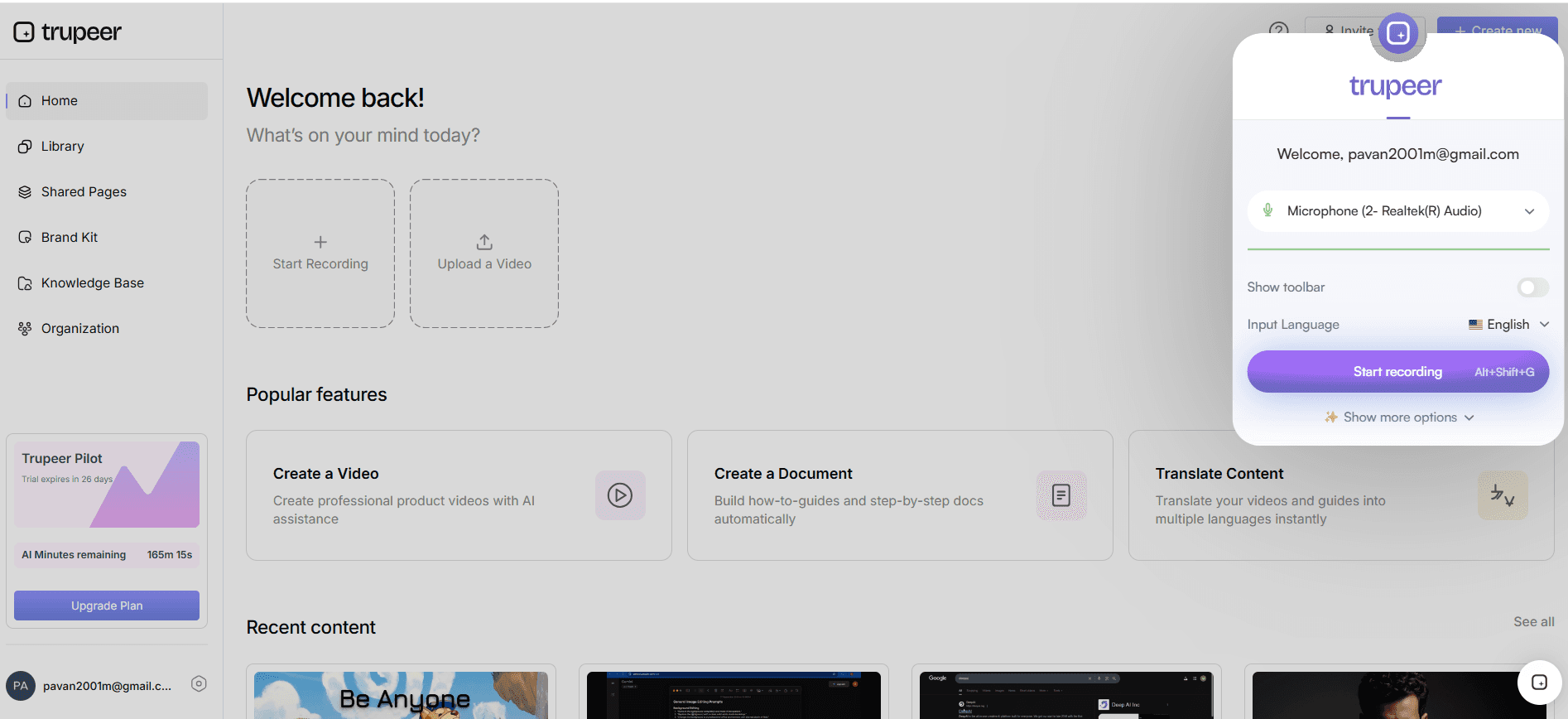
Step 1: Capture and Upload Videos
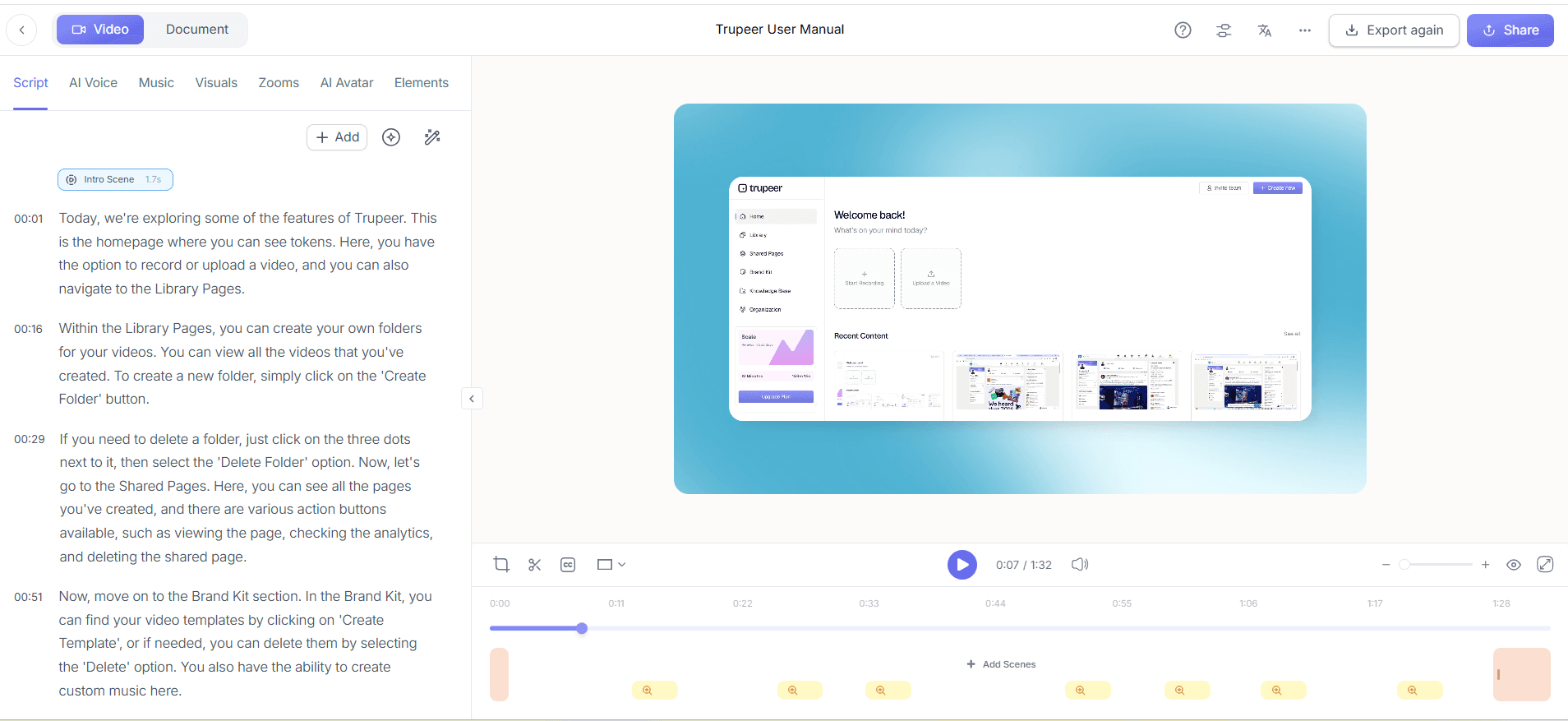
Begin by using Trupeer's browser-based recorder to capture the original video content. This tool requires no installation, allowing you to work directly from your browser, which is particularly useful for recording training sessions or webinars. Once captured, upload the videos to Trupeer's platform. The upload process is straightforward; you simply drag and drop your files into the dashboard. For a project with 100 videos, this step could take several hours depending on your internet speed, but Trupeer's platform is optimized for handling bulk uploads efficiently.
Step 2: Generate AI Voiceovers
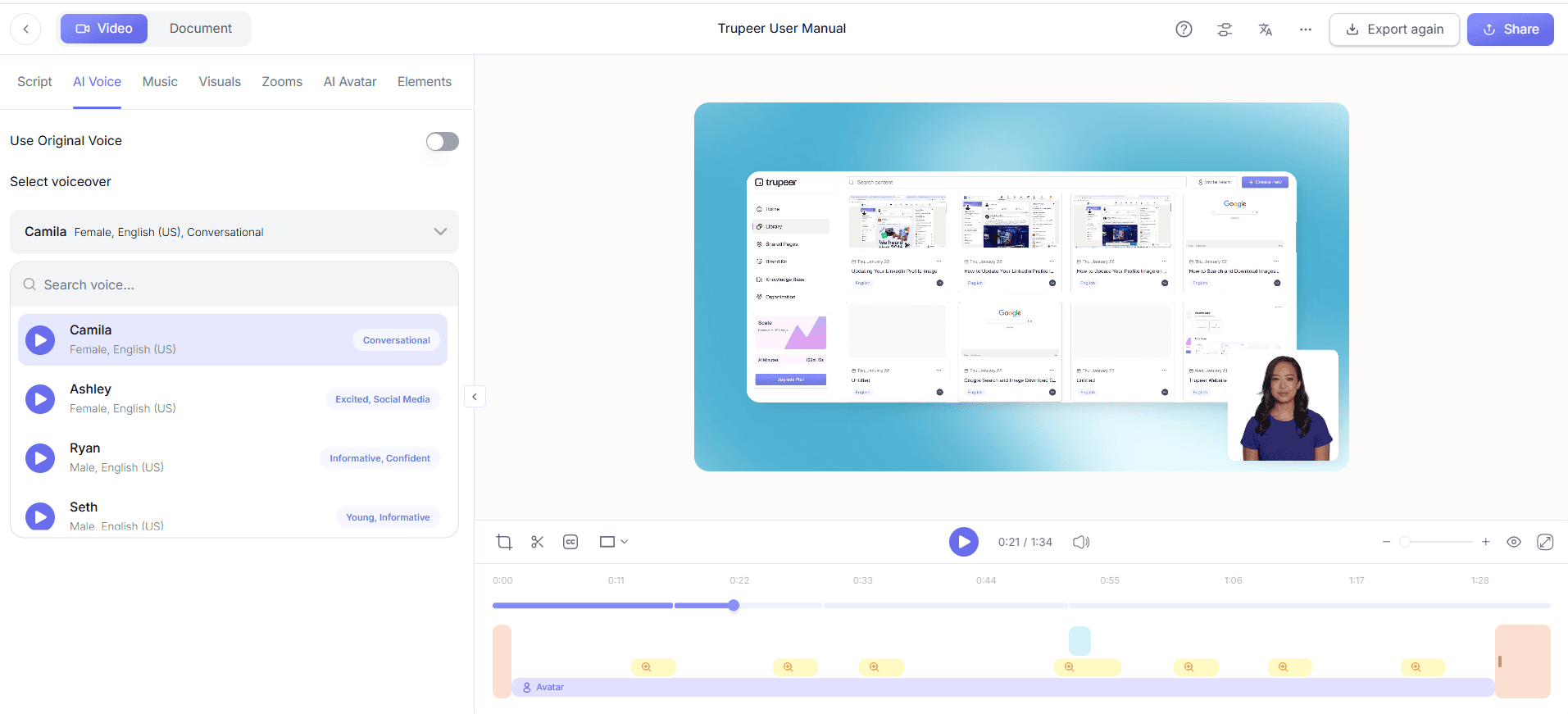
Next, use Trupeer's AI voiceover feature, which offers over 65+ natural voices. This tool allows you to adjust the pace and tone to match the original content's style. To start, select the language and voice settings for each video. Trupeer processes these settings and generates voiceovers in minutes. This step ensures that your video maintains its original tone and emotion, crucial for user engagement. The system can handle multiple videos simultaneously, so for a batch of 100, you can expect to complete this in a few hours.
Step 3: Translate and Sync Audio
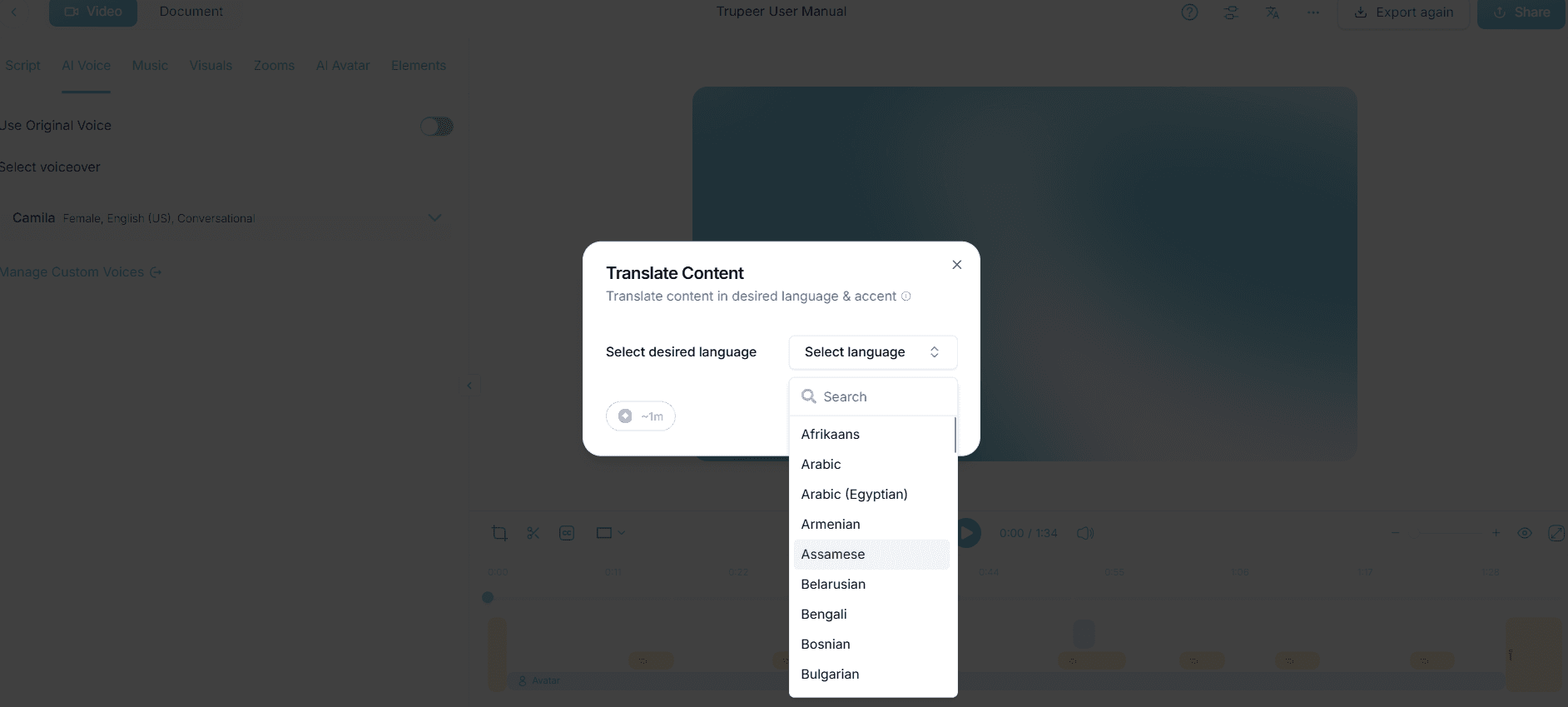
Use Trupeer's AI translation capability to translate video scripts into your chosen languages. This feature supports over 40 languages and includes lip-sync technology, ensuring the dubbed audio matches the original video's mouth movements. After selecting the target languages, initiate the translation process, which is automated and typically takes about 20 minutes per video. For large projects, this step is a big shift, reducing manual translation time significantly while maintaining accuracy and synchronization.
Step 4: Edit with Automatic Filler-Word Removal
Once translations are complete, refine the videos using Trupeer's automatic filler-word removal tool. This feature eliminates unnecessary pauses and filler words, enhancing the video's professionalism and clarity. Access the editing suite from the dashboard, select the videos, and apply the filler-word removal. It usually processes each video within 5 minutes, making it a quick step that significantly improves viewer experience by maintaining a smooth flow of content.
Step 5: Generate and Export Documentation
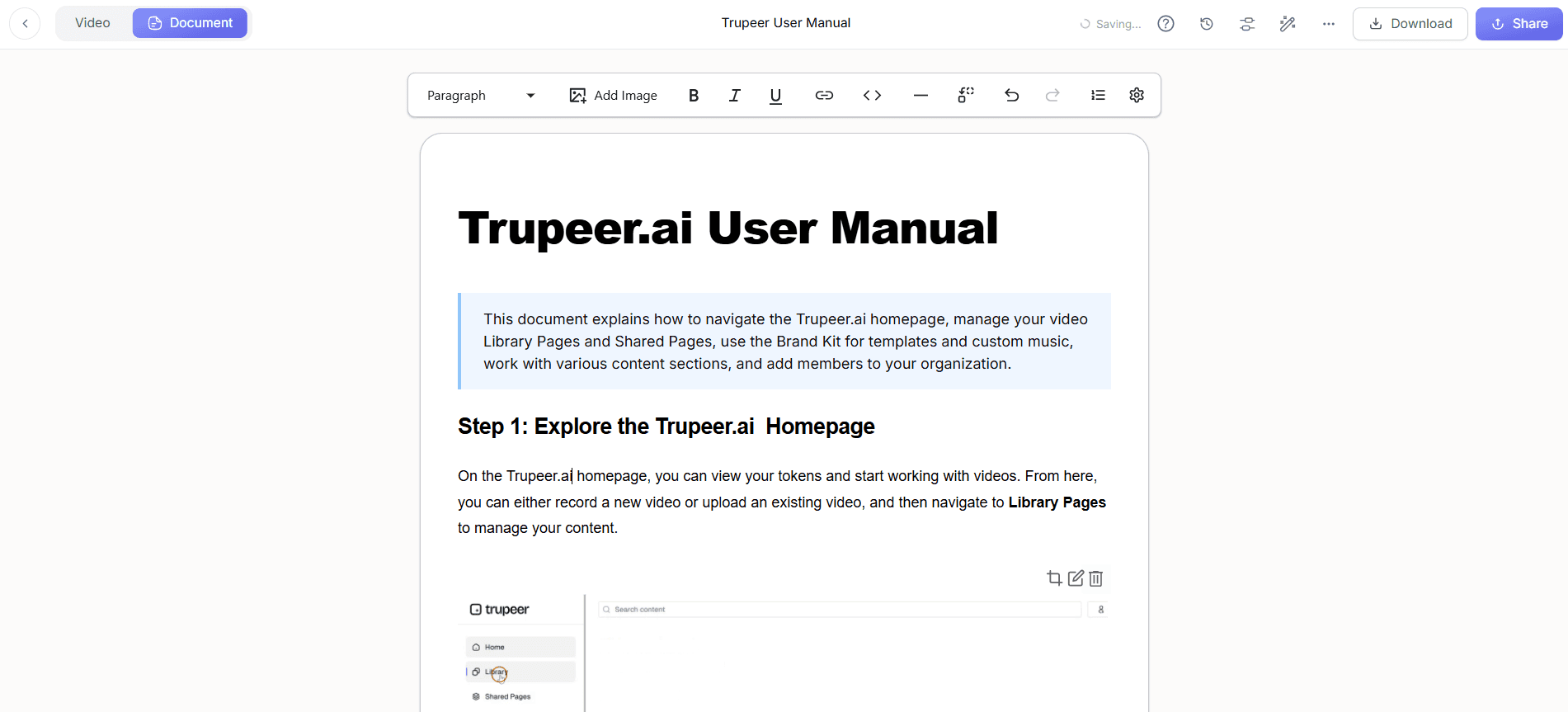
After editing, generate documentation using Trupeer's auto-generated documentation feature. This tool creates SOPs and detailed guides directly from the video content, which are exportable in various formats like PDF and HTML. This documentation is crucial for maintaining consistency across different language versions, especially for training materials. Generating documentation is straightforward; select the completed videos and choose the export format. This process is efficient, with large documents ready in just a few minutes. Teams weighing tools often start with a Loom alternatives comparison before standardizing on a workflow.
Step 6: Distribute and Monitor Engagement
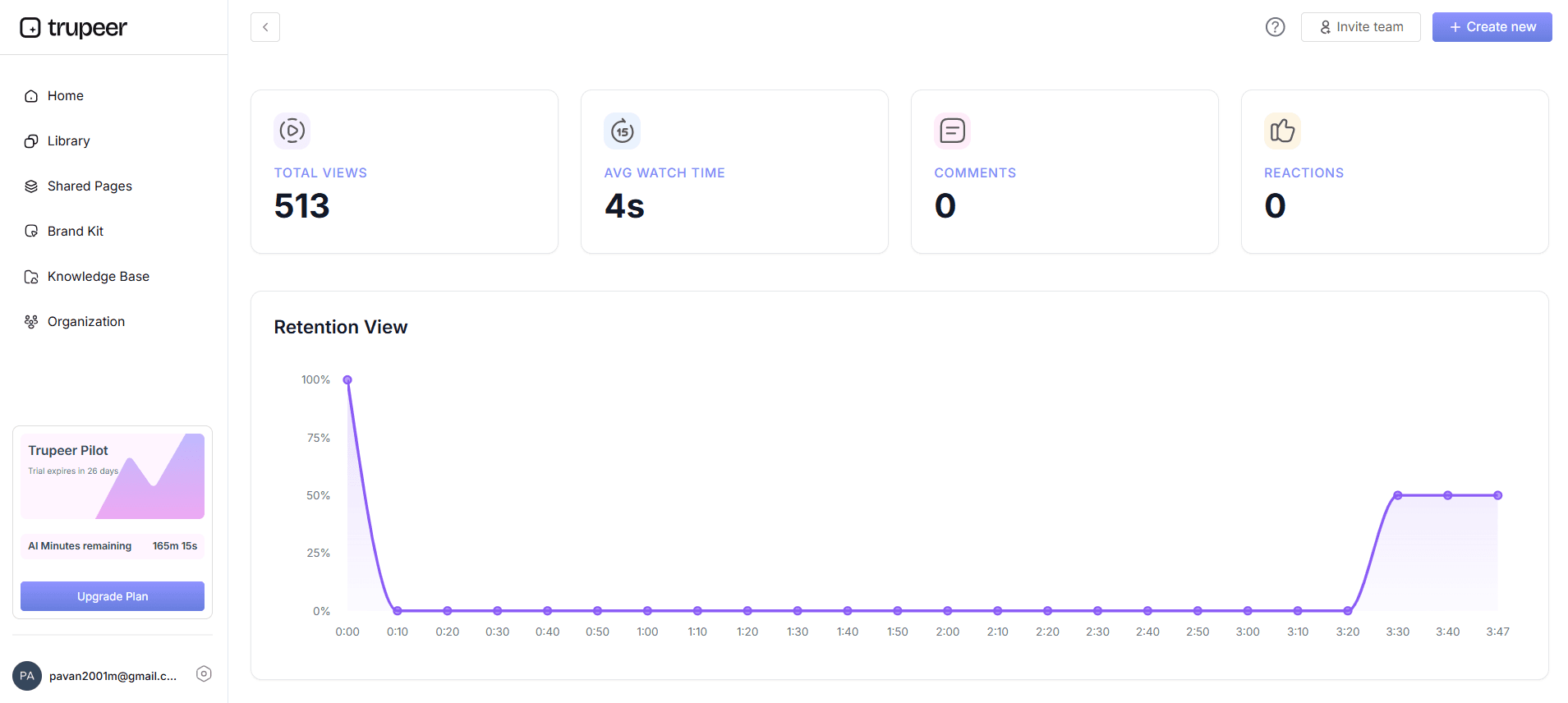
Finally, distribute the videos via Trupeer's AI-searchable knowledge base. This feature allows users to access content with timestamp deep-links, ensuring easy navigation and reference. Share the videos through custom-domain hosting or as embeddable widgets. After distribution, monitor viewer engagement using Trupeer's analytics tools, which provide insights into drop-off rates and heatmaps. This data is invaluable for understanding audience interaction and refining future content strategies. For comprehensive insights, expect initial analytics reports to be available within 24 hours of distribution.
What tips help you manage an AI translation workflow for a 100-video localization project?
Effectively managing a large-scale video localization project requires careful planning and execution. Here are some tactical tips to ensure success:
Plan Your Workflow. Outline each step of the localization process before starting. Use project management tools to keep track of progress and deadlines.
Standardize Formats. Ensure all original videos are in the same format and resolution to simplify the translation and editing process. Consistency minimizes technical issues.
use Batch Processing. Take advantage of Trupeer's ability to handle multiple videos at once. This approach saves time and resources, especially for large projects.
Review Translations. Use native speakers to review AI-generated translations. This step ensures cultural nuances are captured accurately, improving content quality.
use Analytics. Use Trupeer's viewer analytics to identify which languages and topics engage your audience most. This data can guide future content priorities.
Integrate Feedback Loops. Regularly collect feedback from team members and viewers to identify areas for improvement in your workflow.
Stay Updated on Tools. Regularly check for updates or new features in auto video editor tools that can enhance your workflow efficiency and effectiveness.
Frequently asked questions
How does Trupeer handle multiple languages in video localization?
Trupeer supports AI translation into over 40 languages, making it ideal for global localization projects. The platform uses advanced algorithms to ensure translations are accurate and contextually appropriate. also, the lip-sync feature ensures that dubbed audio matches the speaker's mouth movements in the original video. This comprehensive approach helps maintain the video's integrity and viewer engagement across diverse linguistic audiences. ai/translation">AI video translation solutions.
What is the typical timeline for localizing 100 videos with Trupeer?
The timeline for localizing 100 videos depends on several factors, including video length and the number of target languages. Generally, the translation and dubbing process can be completed in a few weeks. Trupeer's batch processing capabilities allow for simultaneous handling of multiple videos, significantly optimizing time. For example, translating and syncing audio for 100 videos might take approximately two weeks, given the automation and efficiency of Trupeer's tools.
Does Trupeer offer support for custom voiceovers?
Yes, Trupeer allows for custom voiceovers through its AI voice cloning feature. This option enables you to create a consistent narrator voice across all video content, preserving the brand's vocal identity. By providing a short voice sample, the AI can generate a cloned voice that maintains tone and style. This feature is particularly beneficial for ensuring that training or corporate videos have a unified auditory experience, enhancing brand consistency and viewer trust.
Can Trupeer's auto-generated documentation be customized?
Absolutely. Trupeer's auto-generated documentation is not only detailed but also customizable. Once generated, you can edit the content to better fit your organization's style and requirements. This flexibility is crucial for businesses that need to tailor their documentation to specific audiences or internal standards. The exportable formats, such as HTML and PDF, further allow for easy distribution and accessibility, ensuring all team members have the necessary resources at their fingertips.
Is user feedback integrated into Trupeer's translation workflow?
Trupeer values user feedback and has integrated mechanisms for incorporating it into the translation workflow. By using analytics and direct feedback channels, teams can continuously refine and improve the localization process. This iterative approach ensures that translations not only meet linguistic standards but also resonate culturally with diverse audiences. Feedback helps identify potential areas for improvement, making the workflow more solid and responsive to user needs.
Related Blogs