Trupeer Blog
Summarise

Imagine you’re leading a team of developers and product managers. Every week, countless hours are wasted creating documentation from scratch, and the lack of consistency leads to miscommunication. A comprehensive documentation template library can change this. By establishing a solid library, your team can reuse templates, ensuring standardized output across all projects. In fact, teams that implement a documentation template library can save up to 30% of their time, redirecting resources to more critical tasks.
Teams using an AI documentation generator can save up to 30% of their time.
This guide is for team leaders, project managers, and anyone involved in documentation who needs a reliable set of templates to simplify their processes.
Why does a documentation template library matter?
Inconsistent documentation can lead to costly misunderstandings and errors. It's a common pain point for teams that rely on accurate communication to deliver projects on time. When documentation is inconsistent, it’s not just confusing, it’s inefficient. Teams spend unnecessary time clarifying information that should be straightforward. This is where a ai adoption use case can help. By implementing a template library, you ensure that all team members are on the same page and can access well-organized, understandable documentation. This is why it pairs well with the ai template generator the documentation and the documentation come from the same source.
Also, standardizing documentation improves onboarding for new team members. When new hires can quickly grasp project details through well-documented templates, they integrate into the team more smoothly and contribute faster. This reduces the time spent on training and increases productivity. Standardization also supports scalability. As your team grows, maintaining consistency in documentation becomes crucial. Without it, the complexity of information increases exponentially, leading to even more inefficiencies and potential project delays.
Finally, a template library supports compliance and audit readiness. Industries like finance and healthcare have stringent documentation requirements. Having a template library ensures that all necessary information is captured consistently and accurately, reducing the risk of non-compliance. For companies looking to scale or enter new markets, this consistency is invaluable, providing a solid foundation for growth and innovation.
What are the benefits of a documentation template library?
A documentation template library offers numerous advantages that extend beyond mere convenience. It enhances productivity, consistency, and quality across various business operations.
Time Savings. Reusing templates cuts down the time spent creating documents from scratch, allowing teams to focus on strategic tasks. This can lead to a 30% increase in productivity.
Consistency Across Outputs. A template library ensures uniformity in documentation style and structure, which reduces errors and miscommunications. This creates a more reliable best documentation software experience.
Enhanced Collaboration. With predefined templates, team members can collaborate more effectively, as everyone operates from the same framework. This minimizes misunderstandings and builds better synergy. This is why it pairs well with the technical documentation template the process and the documentation come from the same source.
Scalability. As teams grow, maintaining consistent documentation becomes challenging. A library provides a scalable solution, ensuring documentation remains manageable and reliable.
Improved Quality Control. Templates help enforce quality standards by embedding best practices into the documentation process. This leads to higher-quality outputs and reduced errors.
simplified Training and Onboarding. New team members can quickly learn company standards and procedures by accessing a centralized template library, reducing training time and improving integration. From there, the project documentation template is a natural next step, since the onboarding is already captured.
Teams ship this workflow end-to-end using Trupeer's AI video platform, which turns raw recordings into polished output without an editor.
Which Trupeer features help you build a reusable documentation template library?
Trupeer offers a suite of features designed to enhance the creation and management of a documentation template library. These features simplify processes and ensure consistency across teams.
Automatic SOP generation from any recording
Trupeer's documentation generator feature allows you to automatically create Standard Operating Procedures from any recording. This capability transforms video content into structured documentation, which is edit-ready and exportable. By using this feature, teams can quickly generate documentation that’s consistent and accurate, saving time and ensuring clarity across different departments.
Auto-updating documentation tied to the underlying recording
Trupeer's auto-updating feature ensures that any changes made to the original recording are automatically reflected in the documentation. This means that your template library remains current without needing constant manual updates. The auto-update capability is crucial for maintaining the integrity of your documentation, especially in fast-paced environments where updates are frequent.
Multi-format export: MP4, HTML, PDF, SCORM
This feature allows you to export documentation in multiple formats, making it accessible for various platforms and use cases. Whether you need a video, a web page, or a PDF, Trupeer has you covered. This flexibility ensures that your documentation can be shared and accessed easily, supporting diverse team needs and preferences.
AI-searchable knowledge base with timestamp deep-links
Trupeer's AI-searchable knowledge base indexes every recording with timestamp-level deep links. This feature allows team members to find the specific information they need quickly, reducing the time spent searching through documentation. It enhances productivity by providing instant access to relevant content, simplifying workflows and decision-making processes.
Collaborative review and approval workflows
Trupeer’s collaborative review workflows ensure that all documentation is vetted and approved before being finalized. This feature supports team collaboration by allowing multiple stakeholders to provide input and feedback, ensuring the final documentation meets all requirements. It reduces the risk of errors and ensures high-quality outputs that align with company standards.
How do you build a reusable documentation template library step by step with Trupeer?
Step 1: Record Your Process
Begin by using Trupeer’s AI screen recording with auto-zoom and click detection. This feature captures your process with precision, highlighting key actions and areas of focus. Open your browser-based recorder, which requires no installation, and start recording your workflow. The auto-zoom ensures that each important click is emphasized, providing clear guidance for future reference. Trupeer automatically detects clicks, which helps in creating concise and informative documentation. Within minutes, you’ll have a solid recording that serves as the foundation for your documentation.
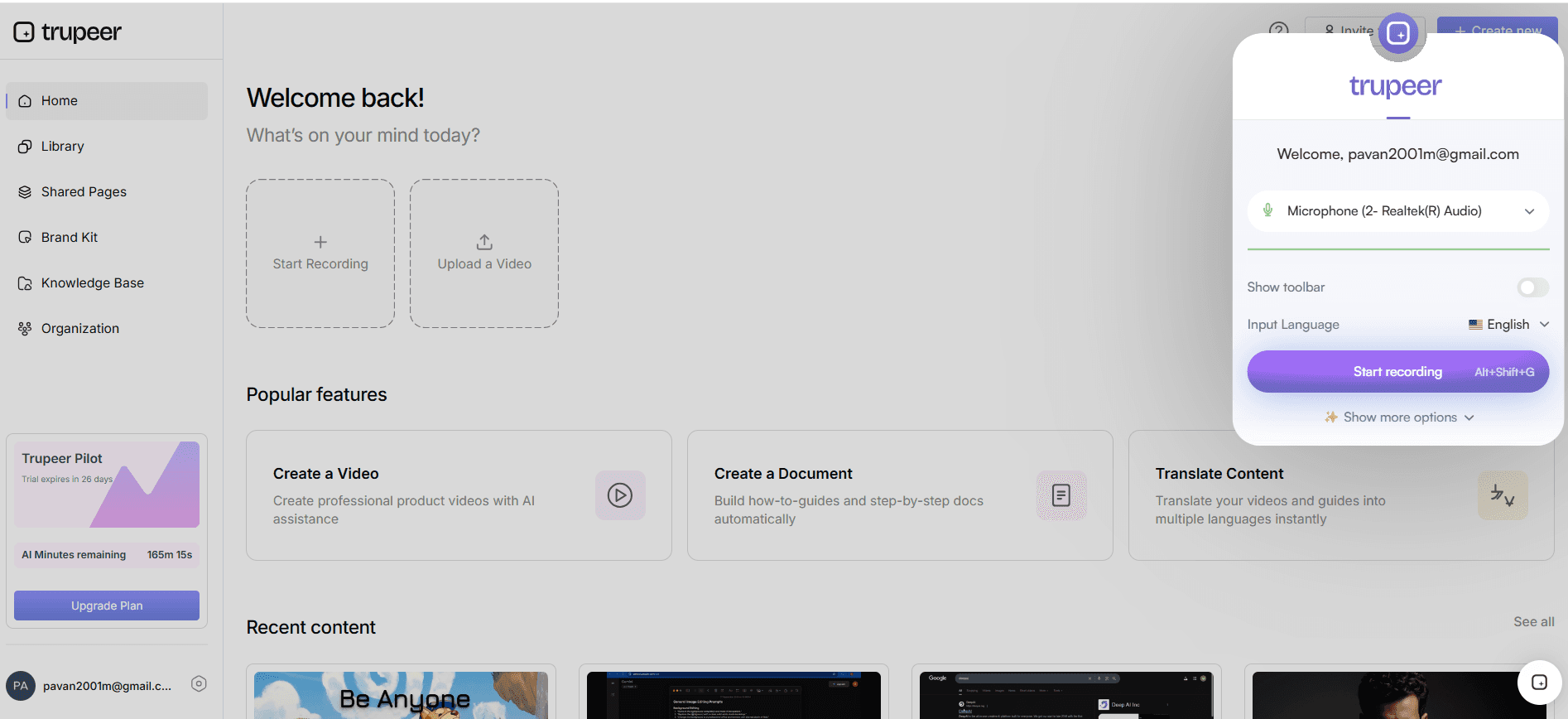
Step 2: Generate Automatic SOP
After capturing the recording, use Trupeer's automatic SOP generation. This feature converts your video into an edit-ready SOP, maintaining the sequence of actions you performed. Simply navigate to the SOP generation option in Trupeer, select your recording, and initiate the conversion. In less than five minutes, Trupeer will produce a detailed SOP document that outlines each step of your recorded process. This automatic generation eliminates manual documentation effort and ensures consistency across your library.
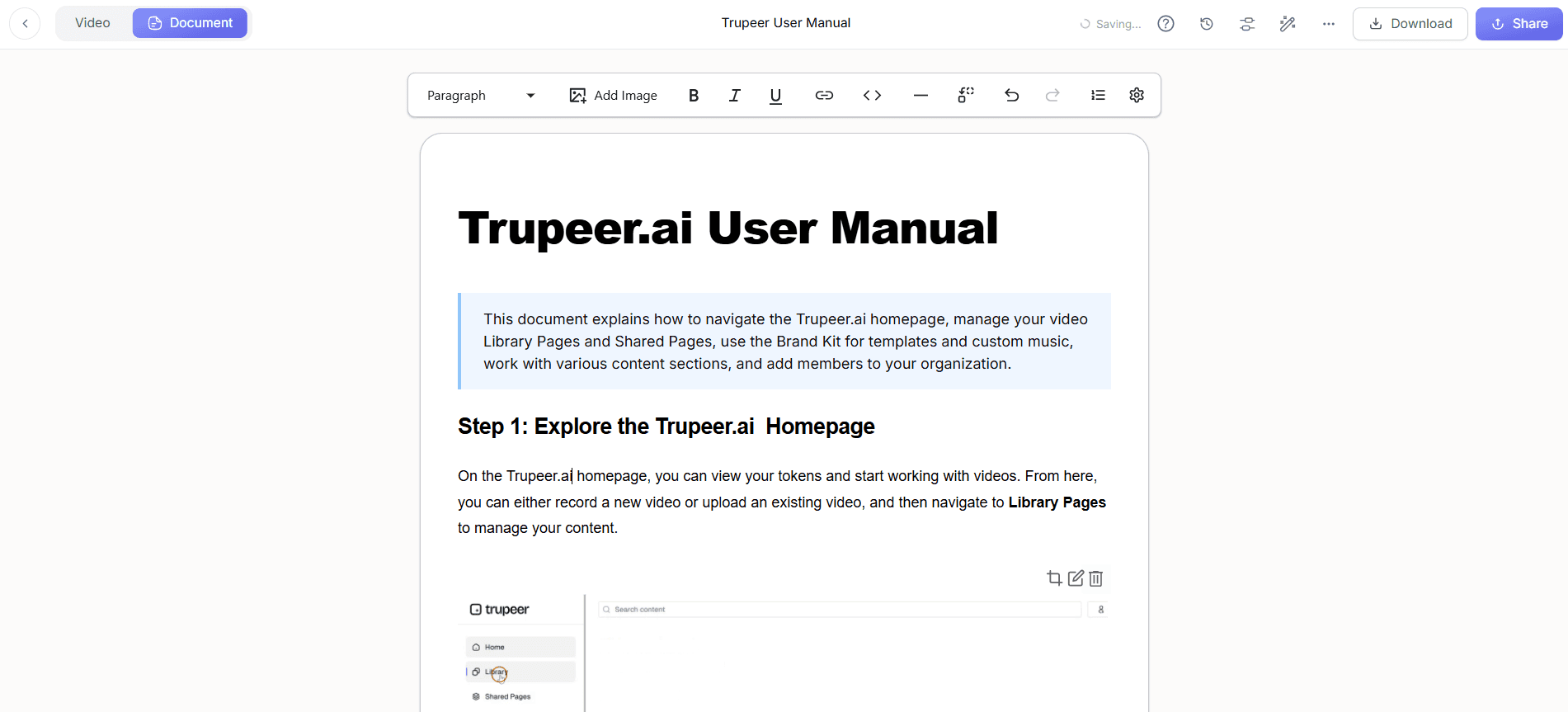
Step 3: Edit and Enhance Documentation
Once your SOP is generated, use Trupeer’s editing and enhancement tools to refine your documentation. Remove filler words such as "um" and "ah" automatically, ensuring a professional tone. Access the editing interface and select the option to eliminate these elements. You can also adjust the pace and tone with AI voiceover in 65+ natural voices. This step ensures that your documentation is not only accurate but also engaging and easy to follow for your team.
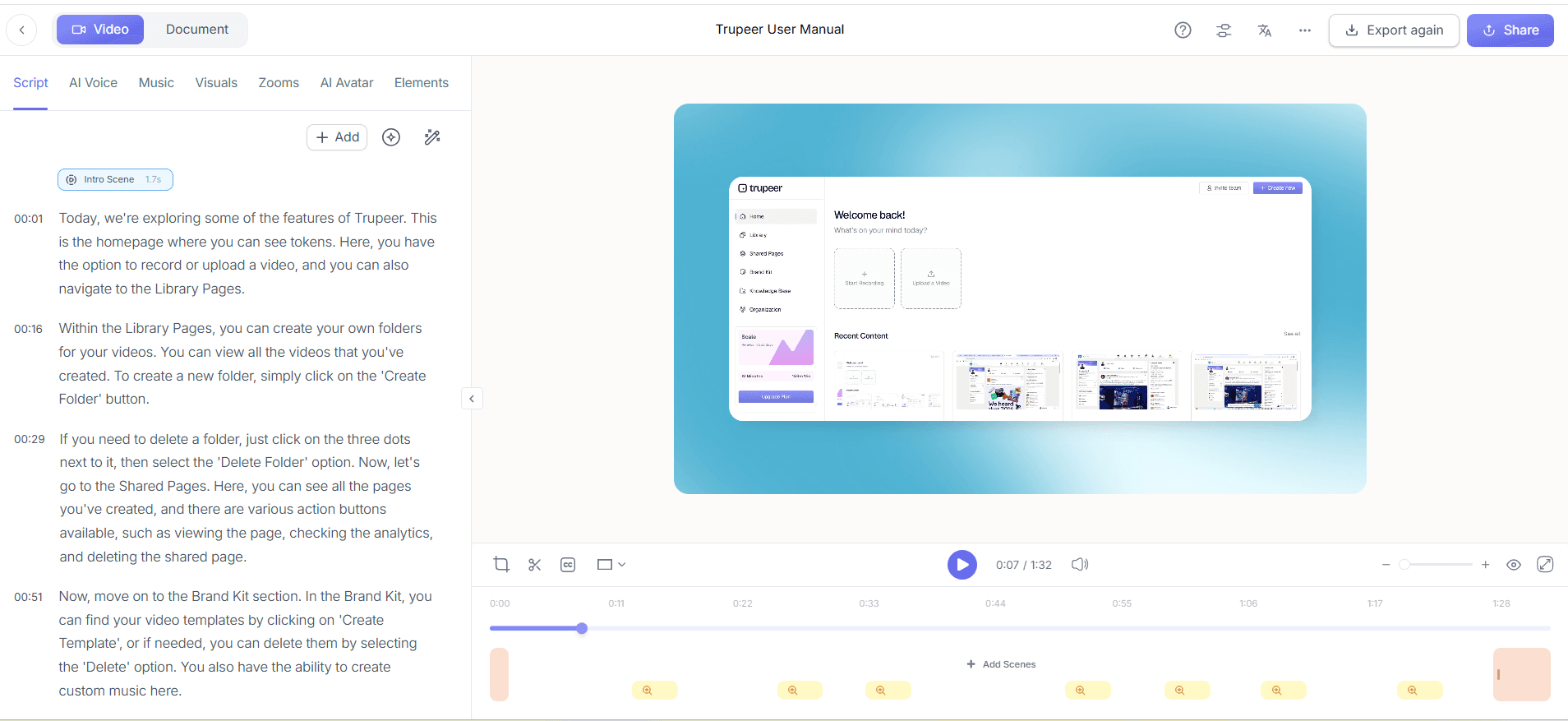
Step 4: Export in Multiple Formats
With your enhanced documentation ready, it’s time to export it in the necessary formats. Trupeer allows you to export your documentation in MP4, HTML, PDF, or SCORM formats. Choose the format that best suits your team’s needs from the export menu. For example, an HTML export is ideal for web-based sharing, while PDF is perfect for offline access. This flexibility ensures that your documentation is accessible in any context, supporting a wide range of distribution needs.
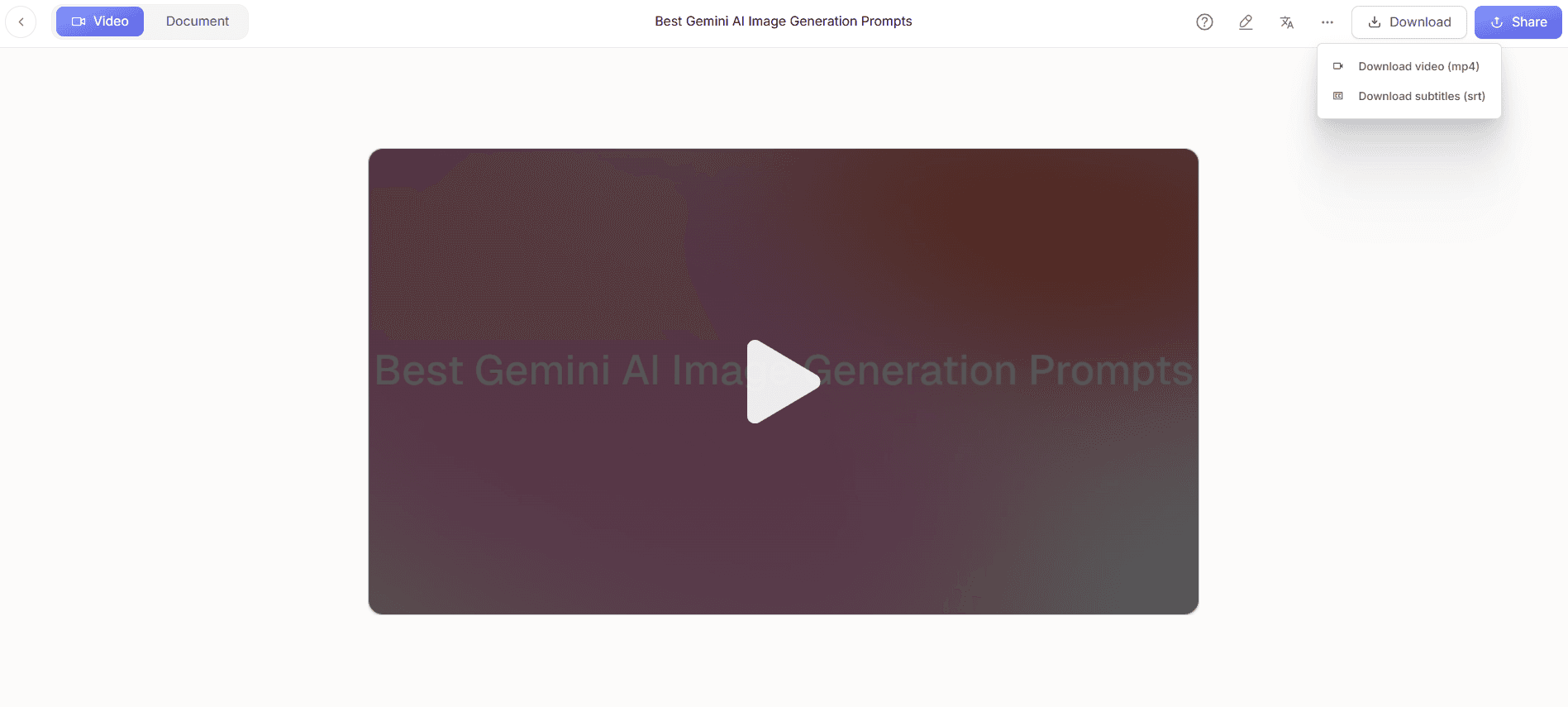
Step 5: Integrate into AI-searchable Knowledge Base
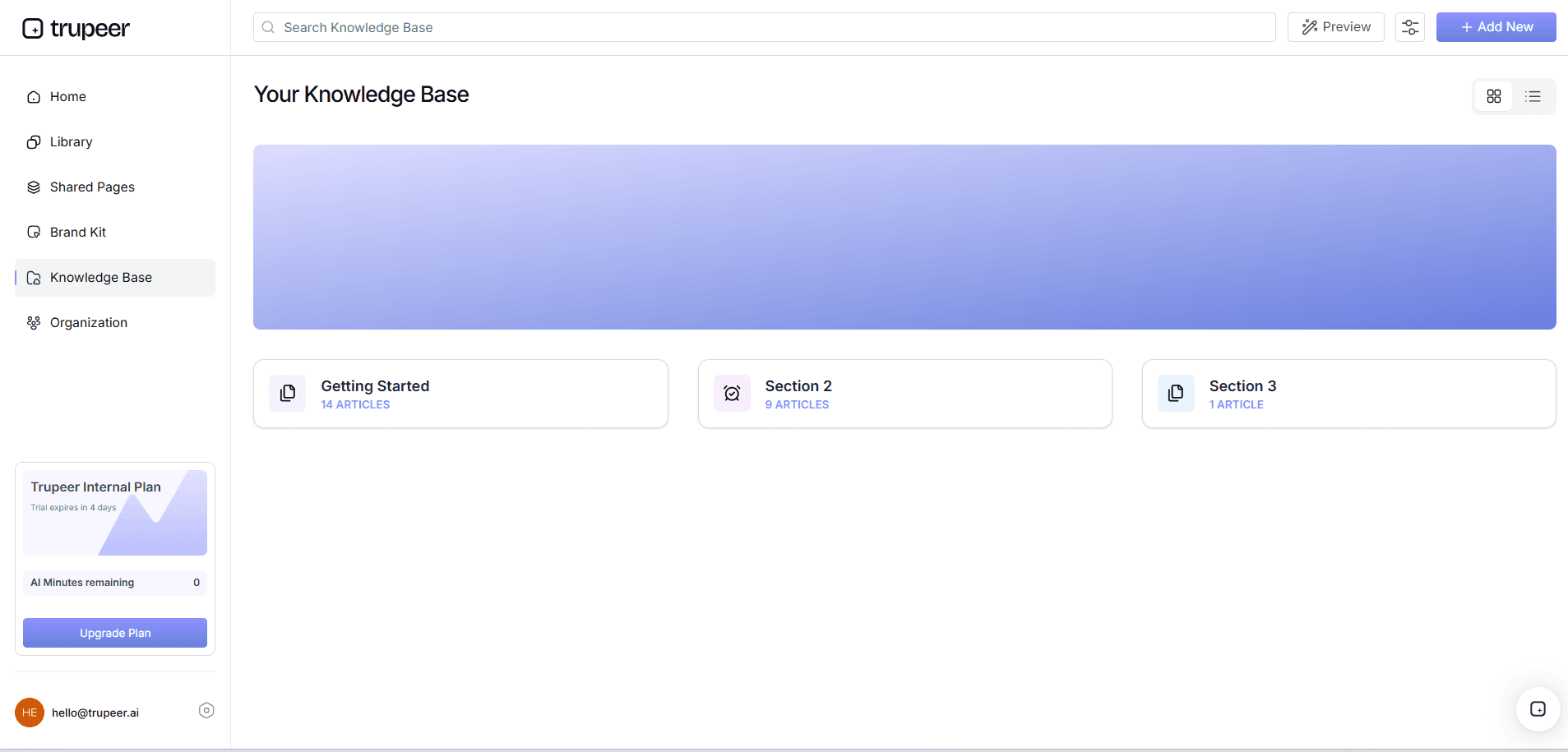
Next, integrate your documentation into Trupeer’s AI-searchable knowledge base. This capability allows your team to easily locate specific information using timestamp deep-links. Go to the knowledge base section, upload your documentation, and configure it with relevant keywords and tags. This integration enables instant access to specific details within your documentation, simplifying the search process and enhancing team productivity. It’s especially useful for large teams that need quick answers. When SOPs come into the same conversation, a Scribe alternatives comparison helps clarify the scope.
Step 6: Set Up Collaborative Review and Approval
Finally, establish a review and approval workflow using Trupeer's collaborative tools. Share your documentation with stakeholders directly from the platform, allowing them to provide feedback and approve content. Navigate to the collaboration section, select your document, and invite reviewers. This process ensures that multiple perspectives are considered, leading to high-quality outputs that meet organizational standards. By involving all necessary parties, you guarantee that your documentation is comprehensive and ready for use.
What tips help you build a reusable documentation template library?
Building a documentation template library requires strategic planning and execution. Here are seven practical tips to help you create a solid and efficient library.
Standardize Template Design. Use a consistent format for all templates to ensure clarity and uniformity across documents. This helps in maintaining professional standards.
Regularly Update Templates. Review and update your templates periodically to incorporate new practices and feedback. This ensures your library remains relevant and effective.
Incorporate Feedback. Encourage team members to provide feedback on template usability. Adjust templates based on this input to enhance their practical value and user-friendliness.
Use Clear Naming Conventions. Implement a straightforward naming system for your templates to make them easily identifiable and accessible for team members.
Train Your Team. Provide training sessions to familiarize your team with the template library and its benefits. This ensures they understand how to use it effectively.
use AI Tools. use AI features like auto-updating documentation to keep your templates current without manual intervention. This automation saves time and reduces errors.
Document Best Practices. Include examples of best practices within your templates to guide users and maintain high standards across all documentation.
Teams weighing tools often start with a Loom alternatives comparison before standardizing on a workflow.
Frequently asked questions
How do you ensure consistency in a documentation template library?
To ensure consistency, start by standardizing the format and style of all templates in your library. Use Trupeer's branding kits and branded templates to maintain uniformity across documents. This approach helps in creating a recognizable and professional look. also, regularly review your templates and update them as needed to reflect any changes in your processes or company standards. This continuous improvement cycle ensures that all documentation remains consistent and up-to-date.
What features of Trupeer aid in building a documentation template library?
Trupeer offers several features that facilitate the creation of a documentation template library. Automatic SOP generation quickly converts recordings into structured documents, while multi-format export options allow you to distribute documentation in various forms such as PDF, HTML, or SCORM. The AI-searchable knowledge base integrates your documentation, making it easy for team members to find specific information. These tools collectively enhance the efficiency and effectiveness of your documentation processes.
Why is an AI-searchable knowledge base important for documentation?
An AI-searchable knowledge base is crucial because it allows team members to quickly locate the information they need. Trupeer’s knowledge base uses timestamp deep-links to provide instant access to specific sections of documentation, saving time and reducing frustration. This feature is particularly useful in large organizations where information is vast and diverse. By enabling quick searches, it improves productivity and ensures that team members can make informed decisions based on accurate and up-to-date information.
Can Trupeer handle multi-language documentation needs?
Yes, Trupeer supports multi-language documentation with its AI translation and dubbing features. These capabilities allow you to translate documentation into over 40 languages, ensuring accessibility for global teams. Trupeer’s video localization tool even provides lip-sync capabilities for video documentation, enhancing the user experience for non-English speaking audiences. This multilingual support is essential for organizations operating in international markets, ensuring that all team members have access to the same information.
Does Trupeer offer any collaborative features for documentation review?
Yes, Trupeer provides collaborative review and approval workflows to facilitate document vetting. Users can share documents with stakeholders directly within the platform, allowing for simplified feedback and approval processes. This feature ensures that all necessary parties can review and contribute to the documentation, leading to higher-quality outputs. By involving multiple perspectives, Trupeer helps teams produce comprehensive and accurate documentation that aligns with organizational goals and standards.
How do you build a documented-process library after a new system launch?
Capture each core workflow in the new system while it is fresh, generate the guide, and index it. Trupeer's documentation software captures the process on screen and produces a searchable, current record for the team.
Related Blogs