Onshore to Offshore Knowledge Transfer: 5 Phases & Checklist
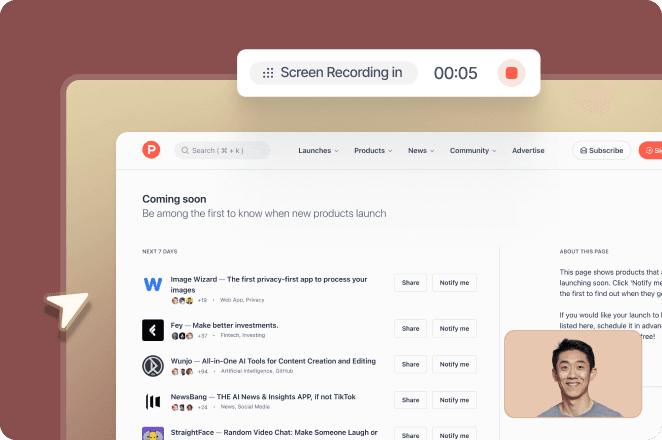
Onshore to offshore knowledge transfer runs in five phases: scoping, primary KT (shadowing), reverse shadowing, parallel run, and cutover with hypercare. Each phase has its own documentation outputs. Skip one, and the next phase overruns.
One constraint shapes all of it. SME time is fixed by the transition plan, but the offshore team's need for that knowledge never ends. The onshore team still has a day job. The receiving team has questions. The cutover date does not move.
The method is the same whether work is moving to a global business services centre, a global capability centre or a BPO partner.
This guide covers the seven steps, the five phases and what each produces, a full KT checklist, and the failure points that lose knowledge even in well-run programmes.
How to do onshore to offshore knowledge transfer: 7 steps
Inventory every process at activity level. Record volume, complexity, systems and the named owner for each.
Find single points of knowledge. These are activities only one person can do. Schedule them first, even out of plan order.
Record primary KT sessions as they happen. Capture the session itself, not notes written afterwards.
Document procedures and exceptions at screen level. Treat exception paths with the same care as the main path.
Run reverse shadowing. The offshore team does the work while the incumbent watches and corrects.
Sign off competency per activity and per person. Count people who can do the work, not sessions delivered.
Cut over with a metric-based hypercare exit. Exit on quality, not on a date.
Steps 2, 3 and 6 are the ones cut first when a programme runs late. They are also the three that decide whether knowledge actually moved.
Start with one process. Record a single KT session in Trupeer and get the SOP, training video and translations back the same day. Start free.
The five phases of onshore to offshore knowledge transfer
Service providers and captive centres use different names, but the sequence is the same.
Phase 1: Due diligence and scoping
Build the process universe: every activity, its volume, complexity, systems, controls and current owner. Volume and complexity drive the FTE model, so errors here spread through the whole transition.
Scope at activity level, not process level. “Accounts payable” is not a scope item. “Non-PO invoice exceptions for the German entity” is. Finer scope exposes the activities only one person knows, which are the risks to retire first.
Output: process universe, FTE model, transition plan, risk register. Start from our transition plan template if you have no house standard.
Phase 2: Primary KT (shadowing)
The offshore team watches the incumbent do the work, usually for two to six weeks.
Cycle length is what plans most often get wrong. A monthly, quarterly or annual process needs a KT window long enough to see at least one full cycle, ideally two. You cannot learn a monthly close in two weeks. If the window is short, treat the first live cycle as part of KT and schedule onshore support for it.
Output: desktop procedures, process maps, screen-level walkthroughs, exception log, question log.
Where Trupeer fits: The incumbent screen-records the session in Trupeer, or uploads the Teams or Zoom recording. Trupeer turns it into a step-by-step SOP with screenshots, a narrated training video, and a searchable entry in your knowledge base. The SME reviews and approves the draft. Nobody writes it up from memory. For BPO-led programmes, the BPO transitions documentation tool packages this workflow for incumbent handovers.
How it works in a shadowing session:
Capture the session. The incumbent screen-records the work in Trupeer as they do it, or you upload the Teams or Zoom recording of the KT call.
Get the draft SOP. Trupeer turns the recording into step-by-step instructions with a screenshot for each step, plus a narrated training video.
Add the exceptions. The SME adds an exception as its own step, right where it happens in the process, so it isn't lost in a side note.
Translate for the offshore site. Generate the SOP and video in the receiving team's working language.
Publish to the knowledge base. The SOP becomes searchable at step level, so the offshore team can find the answer in month eight without rewatching the whole session.
See a real KT session become an SOP in under 10 minutes. Book a demo
Phase 3: Reverse shadowing
Now the offshore team does the work while the incumbent watches and corrects. This is where real gaps appear, because doing a process exposes assumptions that watching hides.
Reverse shadowing is the phase most often squeezed when a programme runs late. That is a false saving. Every gap missed here becomes an escalation after cutover, when the SME who could answer it in thirty seconds has already rolled off.
Output: corrected documentation, a closed question log, signed-off competency per activity and per person.
Where Trupeer fits: Record reverse-shadowing sessions too. The SME's corrections are often worth more than the original walkthrough. Edit the existing SOP with those corrections instead of starting a new document, so there is one governing version. The transitions accelerator shows how this shortens the reverse-shadowing phase.
How it works in a reverse-shadowing session:
Record the session. Capture the offshore analyst doing the work while the SME watches and corrects.
Open the SOP from Phase 2. Work on the same SOP rather than creating a new document.
Apply the corrections. Edit the steps the SME corrected, and add any new exception the session surfaced.
Refresh the outputs. Update the training video and translated versions from the corrected SOP.
Republish and sign off. The onshore process owner approves the updated SOP, which becomes the governing copy for cutover.
Phase 4: Parallel run
Both teams do the work and outputs are reconciled. You pay twice for the same work, so keep parallel runs for processes where errors are costly: financial reporting, regulatory filings, payment runs, customer commitments.
If a full parallel run is not justified, use sampled reconciliation. The offshore team runs the process, and onshore checks a set sample against agreed tolerances.
Output: reconciliation results, defect log, go/no-go decision against pre-agreed criteria.
Phase 5: Cutover, hypercare and steady state
The offshore team takes ownership. Hypercare, usually four to twelve weeks, keeps onshore support on call while metrics are watched closely.
Set the hypercare exit as a metric, not a date. Leaving after six weeks while quality is still below baseline pushes the problem into steady state, where it is harder to fund and escalate.
Output: SLA performance against baseline, closed defect log, signed hypercare exit, and a knowledge base that stays current after the programme team leaves.
Why onshore to offshore knowledge transfer fails, even when it is documented
Most transitions produce plenty of documents. The problem is how those documents get made.
Written after the session, from memory. A receiver writes up what they understood. Steps they found confusing get written vaguely, and vague notes on a confusing step are tomorrow's escalation.
Screen-level detail disappears. “Update the payment terms in the vendor master” skips which of four similar screens, which field, and which error means stop.
Exceptions get treated as edge cases. Process owners describe the happy path. Exceptions drive nearly all escalations.
SME time runs out before the questions do. Most questions arrive after the KT window closes. If the only record is a document, they go back to people who have moved on.
Language is handled last, if at all. Comprehension gaps rarely get reported. They show up later as quality variance nobody can explain.
All five come from one dependency: people reconstructing a session instead of the session being the record.
How Genpact turned recorded sessions into SOPs at scale
Genpact's challenge was a company-wide Workday rollout, not an offshore transition, but the capture problem was the same. Davetta Harper, VP Organizational Change Leader, had to get 140,000 employees in 40 countries ready on a new system.
That meant more than 500 training collaterals across 20 workstreams, in five languages, for teams in Japan, Brazil, Spain, Thailand and China. Building each piece by hand and sending it to human translators would have taken a year.
The team recorded their existing Microsoft Teams process-design sessions and SME walkthroughs, uploaded them to Trupeer, and got back SOPs and demo videos translated into all five languages.
140,000 employees trained
40 countries
3 months to deliver a 12-month programme
5 languages
“We needed to train 140,000 people across 40 countries on a completely new system. Trupeer gave us a way to actually get there.” Davetta Harper, VP Organizational Change Leader, Genpact
Running a transition? See how the Genpact workflow applies to your KT plan. Book a demo
The documentation set an offshore transition needs
Each artefact answers a different question. Missing one leaves a gap the offshore team will hit.
Process map: End-to-end flow, handoffs, systems and controls. Answers “where does this sit?”
Desktop procedure or SOP: Screen-level steps with screenshots. Answers “how do I do this?”
Runbook: Timed, sequenced activities for cyclical work such as month-end close. Answers “what happens when?”
Job aid: A one-task quick reference. Answers “remind me quickly.”
Exception log: Known deviations, their triggers and fixes. Answers “this doesn't match the SOP.”
Escalation matrix: Who to ask, for what, and how fast. Answers “who do I ask?”
Question log: Every KT question and its answer. Becomes the team's real FAQ.
The exception log and question log are skipped most often and carry the most value, because nothing else captures that knowledge. Templates: knowledge transfer plan template, handover document, project handover checklist, runbook template. To produce SOPs across hundreds of processes, see how to create SOPs at scale.
Onshore to offshore knowledge transfer checklist
Before KT starts
Process universe at activity level, with volume and complexity
Named SME for every in-scope activity
Single points of knowledge flagged and scheduled first
Upstream and downstream handoffs mapped
Cycle length checked against the KT window for every process
Competency criteria agreed by both sides
System access ready for the receiving team on day one
Retention agreed for SMEs whose roles are ending
During KT
Sessions recorded as they run, not written up afterwards
SOPs at screen level, with screenshots
Exception paths documented next to the main path
Question log updated daily, with owner and due date
Reverse shadowing scheduled as its own phase
SOPs signed off by the onshore process owner, not only the receiver
Translated versions for sites working in another language
Before cutover
Competency signed off for every activity and named person
All critical and high-priority questions closed
Parallel run or sampled reconciliation passed
Escalation matrix tested, not just circulated
Hypercare exit set as a metric
Documentation owner named for after the programme closes
Baseline quality and SLA definitions agreed
The last item in each list is the one most often skipped. Each is cheap to set up early and expensive to fix later.
Three risks your transition plan probably doesn't show
Onshore attrition during KT. In cost-driven transitions, the people giving KT often know their roles are ending. Retention bonuses help but do not remove the risk. Sequence single points of knowledge first. If an SME leaves in week three, their unique work should already be recorded in week two.
Offshore attrition after cutover. The team trained in KT is not the team running the process 18 months later. If the documents were built for the transition rather than for operations, later cohorts learn by word of mouth and quality drifts. Treat KT output as a permanent asset with a named owner.
Language. Working English covers the happy path and fails where precision matters: exceptions, controls, regulatory steps. For processes with financial or compliance weight, translate the SOPs into the site's working language. Use translation tied to the source SOP, so one edit updates every language. Manual retranslation drifts out of date, and outdated translated SOPs are worse than none because people trust them.
Onshore to offshore knowledge transfer in regulated industries
Banking, insurance, healthcare and life sciences transitions add a constraint. A KT recording that shows customer data, patient records or card details is a new copy of that data in a new system. The recording itself comes into scope for review.
Programmes that handle this well do five things:
Blur or mask sensitive fields at the point of capture, not afterwards
Use test or scrubbed data for demonstrations wherever the process allows
Control access through single sign-on and role-based permissions, so KT material follows the same access rules as the process
Keep data residency aligned to the jurisdictions in scope, which matters when the offshore site sits outside the data's home region
Keep version history, so an auditor can see which procedure applied on a given date
In a regulated transition, the documentation trail is part of the control environment. Trupeer is SOC 2 Type II and ISO 27001 certified and GDPR compliant, with sensitive-data blurring, SSO and data residency options. Details are in the Trust Center.
Governance: who owns what
Knowledge transfer fails quietly when ownership is unclear. A workable split looks like this:
Transition lead: Owns the plan, the risk register and the phase gates. Accountable for the go/no-go decision.
Onshore process owner: Owns the accuracy of what is transferred. Signs off that each SOP matches the process as it is actually done.
Offshore delivery lead: Owns the competency of the receiving team. Signs off that named people can do named activities.
Documentation owner: Owns the SOP set and keeps it current after cutover. This role is often left unassigned, which is why documentation decays.
Business stakeholder: Owns the acceptance criteria and how much disruption is acceptable during hypercare.
Watch the documentation owner. If nobody keeps the SOPs current after the programme closes, they are most accurate on the day the transition ends and get worse from there.
How to measure whether the transfer worked
Sessions delivered against sessions planned measures activity, not outcome. Track these instead:
Competency sign-off rate: Share of activities with a named, assessed owner offshore. The only KT metric that reflects capability.
Question log burn-down: New questions per week. A flat or rising line late in KT means the transfer is not converging.
Escalations back to onshore: The clearest post-cutover signal. Each one is knowledge that didn't transfer.
Quality against the pre-transition baseline: Only meaningful on the same definition used before.
Documentation coverage: Share of activities with a current, reviewed SOP. Not the same as documents produced.
New-joiner time to proficiency: The month-12 test. If a new hire still needs a person to explain the process, the documents failed.
Common transition models and what they mean for KT
Lift and shift: Move the process as it is and improve it later. It is the fastest route to cutover, and the documentation load is highest, because every existing workaround has to be captured faithfully.
Phased or wave-based: Move in waves by process, entity or geography. Lower risk and a longer timeline. Later waves reuse the documentation patterns set in earlier ones.
Transform then transfer: Redesign the process onshore, then move the new version. The cleanest end state and the highest risk, because the offshore team learns a process nobody has run in production yet.
Train the trainer: Transfer to a small offshore core team, who then train everyone else. Light on SME time, and only as good as what the core team documents.
Train the trainer is where recorded sessions pay off most. Second-generation training is only as good as the record the core team was given.
Capture it once, keep it after cutover
Onshore to offshore knowledge transfer comes down to one imbalance: SME time is fixed, and the need for their knowledge is not. Three habits manage it. Record the session instead of rebuilding it. Document exceptions as carefully as the happy path. Give the documentation an owner after the programme ends, because the transition finishes and the process does not.
Record your next KT session. Get the SOP today. Upload a Teams or Zoom recording and get a step-by-step SOP, a training video and translations. Start free or book a demo.
Related reading
Frequently Asked Questions
What is offshore knowledge transfer?
It is the structured handover of the ability to run a process, from an onshore incumbent team to an offshore or captive delivery centre, within a fixed transition window. It usually runs through scoping, shadowing, reverse shadowing, an optional parallel run, and hypercare before the offshore team takes full ownership.
What is the best way to transfer knowledge from onshore to offshore?
Record KT sessions as they happen instead of writing them up afterwards, and schedule the activities only one person knows first. Then document exceptions at screen level, run reverse shadowing, and sign off competency per activity and per person before cutover.
What should an offshore knowledge transfer plan include?
An activity-level process inventory with volumes, a named SME per activity, single points of knowledge scheduled first, KT windows sized to each process's cycle length, agreed competency criteria, dedicated reverse-shadowing dates, a metric-based hypercare exit, and a named documentation owner after the programme closes.
How long does knowledge transfer take in an offshore transition?
It depends on cycle length more than process count. Daily transactional work can move in two to four weeks. Monthly or quarterly processes need six to twelve weeks, so the team sees at least one full cycle.
What is reverse shadowing in knowledge transfer?
Reverse shadowing is the phase where the offshore team does the work while the onshore SME watches and corrects. It surfaces gaps that observation hides. Record these sessions, because the corrections are often more valuable than the original walkthrough.
What are the biggest risks in onshore to offshore knowledge transfer?
Knowledge held by one person, KT windows shorter than the process cycle, compressed reverse shadowing, and documentation that nobody owns after cutover. Language gaps at offshore sites are a fifth risk that most plans leave out.
Can AI help with offshore knowledge transfer?
Yes. Tools like Trupeer turn recorded KT sessions from Teams, Zoom or a screen recording into step-by-step SOPs with screenshots, training videos and translations. That removes the write-up-from-memory step where most knowledge is lost. Genpact used this approach to train 140,000 employees in 40 countries in three months.
How do you measure whether a knowledge transfer worked?
Track competency sign-off rate, question log burn-down, escalations back to onshore after cutover, and quality against the pre-transition baseline. The strongest long-term test is how fast a new joiner reaches proficiency twelve months later.
Is recording KT sessions compliant in regulated transitions?
It can be, if the recording is treated as in-scope data. Blur sensitive fields at capture, use scrubbed data for demos where possible, control access through SSO and roles, align data residency to the jurisdictions involved, and keep version history for auditors. Trupeer is SOC 2 Type II and ISO 27001 certified and GDPR compliant.