4.8/5
Free Operations Process Documentation Software
The operations process documentation software ops teams use to ship cross-functional SOPs, handoff procedures, approval flows, and policy walkthroughs as video plus written documentation, from one screen recording.
Start Ops Docs Free
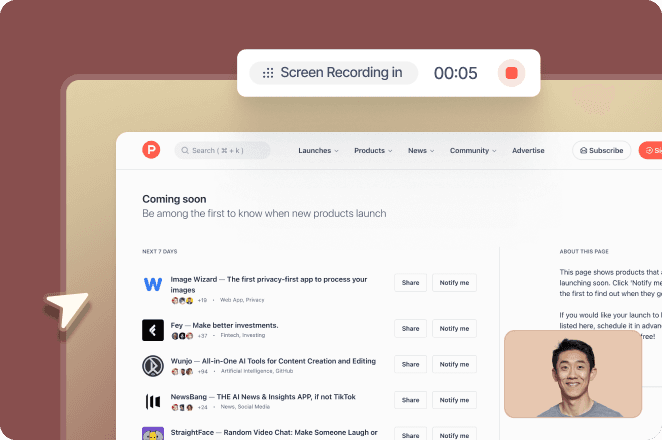
Trupeer AI is the operations process documentation software for ops teams writing the cross-functional procedures that don't belong to any other function: the month-end close, the vendor onboarding flow, the deal handoff from sales to customer success, the people-ops onboarding sequence, the procurement approval routing. An ops manager, RevOps analyst, finance ops lead, or process improvement specialist records the screen walking through the actual procedure, and Trupeer AI generates a video plus written process documentation page together. Output drops into Confluence, Notion, SharePoint, Process Street, Trainual, or wherever the ops team currently keeps its documentation. Most ops teams own more processes than any single person can document, since the writing time per SOP traditionally takes a half-day per procedure, and that production cost is why ops documentation libraries usually trail the actual procedures by two quarters or more.
Generates operations process documentation (video plus written SOP together) from one screen recording or AI avatar script.
Built for cross-functional ops work: finance procedures, RevOps handoffs, people ops flows, procurement, supply chain, customer success ops.
Output drops into Confluence, Notion, SharePoint, Process Street, Trainual, or any process documentation system the ops team already uses.
Translation across 65+ languages for ops procedures that span regional offices.
Re-record one changed step when the process changes. Both video and written SOP update together.
What this operations process documentation software produces
An ops manager, RevOps lead, finance ops analyst, or people ops specialist opens the tool and starts a screen recording. They walk through the actual procedure: the month-end close in NetSuite, the new vendor approval flow in Coupa, the deal handoff from Salesforce to Gainsight, the new-hire onboarding sequence across Rippling and Confluence. Trupeer AI handles post-production. Filler words and "let me find that file" moments go, zoom and cursor effects highlight the field the next ops person needs to fill, the approval button to click, or the report to export, and a draft video plus a draft written process documentation page arrive in the editor together.
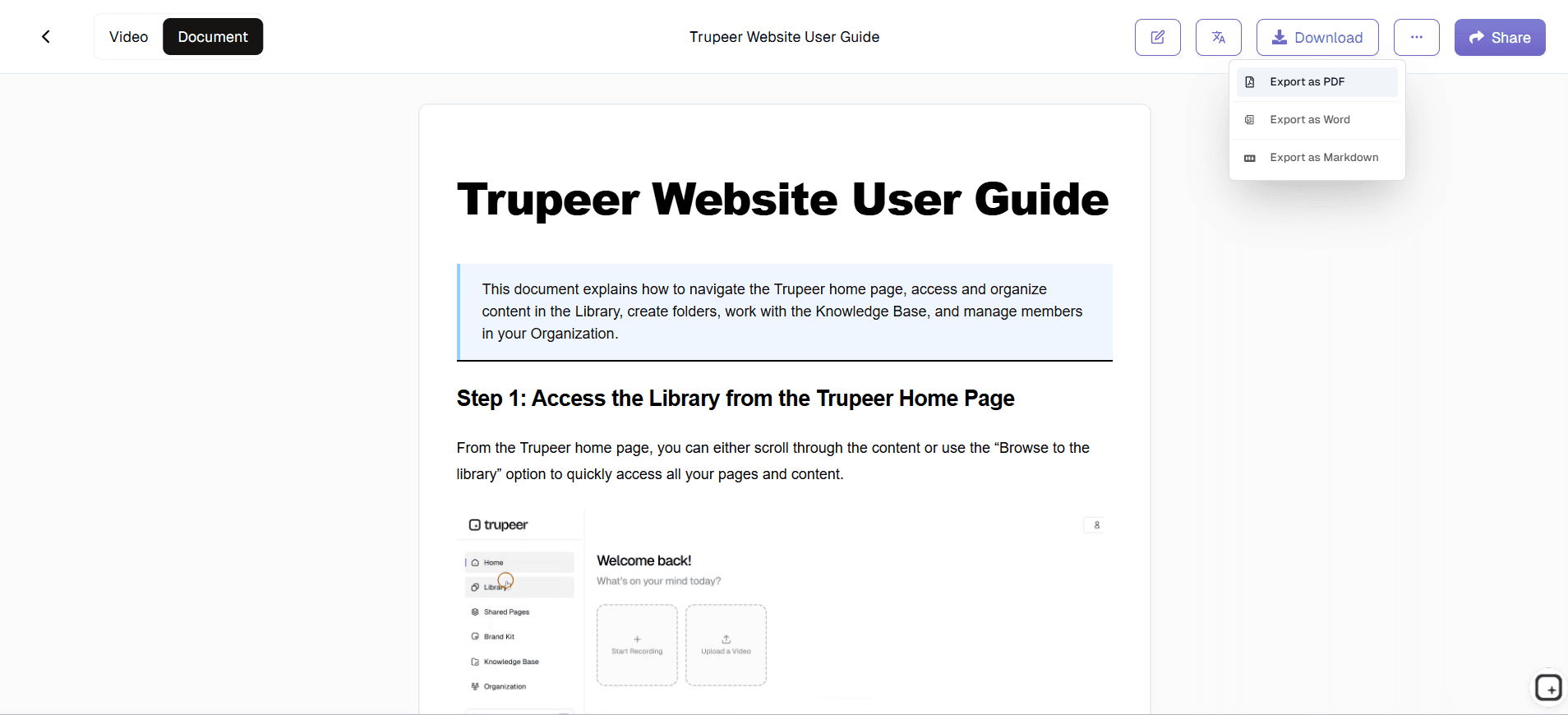
Video output is MP4. Document output is PDF or Word with screenshots and numbered steps inline. Both formats upload directly into the ops team's existing process documentation system, whether that's Confluence, Notion, SharePoint, Trainual, Process Street, or just the company-wide Google Drive. The Shared Page link wraps both formats together for posting in the ops team's Slack channel, pinning to the cross-functional process channel, or sharing with the partners and vendors who participate in the process. Brand kits apply consistent styling across the ops documentation library, and the custom glossary handles the dozens of internal acronyms (RevRec, AR aging, deal pod, CSAT cohort) that every ops function has. Compared to a general-purpose process documentation tool, this approach pairs video walkthroughs with the written business process documentation in one job, which is the format business process operations actually consume in practice.
How the operations process documentation software works in three steps
Three steps cover the production flow. The tool doesn't replace the workflow execution tool that runs the live process, and doesn't replace the BPM tool that models it. It produces the walkthrough content that explains how to actually do the procedure.
Step 1: Record the procedure walkthrough or use an AI avatar
Start a screen recording in the browser, on the corporate laptop where the ops person already runs the procedure. Walk through the actual workflow: the close, the approval, the handoff, the routing, whatever needs documenting. Or skip the recording entirely: type a script and pick an AI avatar to deliver the content as a talking-head video (useful for ops policy training or executive-narrated process overviews where no one wants to sit on camera). The AI works on whatever was recorded.
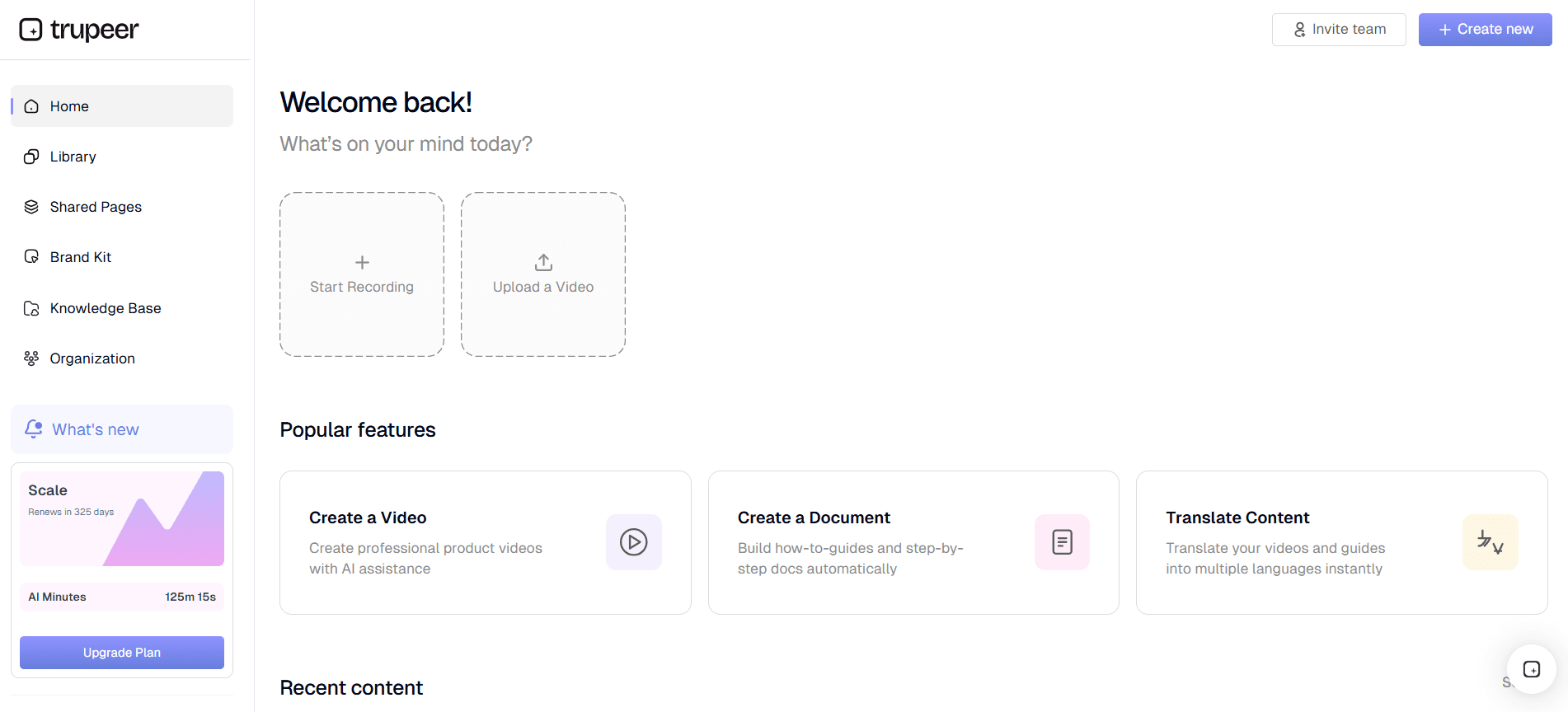
Step 2: Trupeer AI generates the video and written process documentation
Post-production runs automatically. Filler words get removed. Zoom and cursor effects highlight the fields, buttons, and screen regions that matter in the procedure. A draft video and a draft written process documentation page arrive in the editor together, with screenshots and numbered steps inline. The custom glossary catches internal system names, ops-specific acronyms, and process step names before they get transcribed wrong.
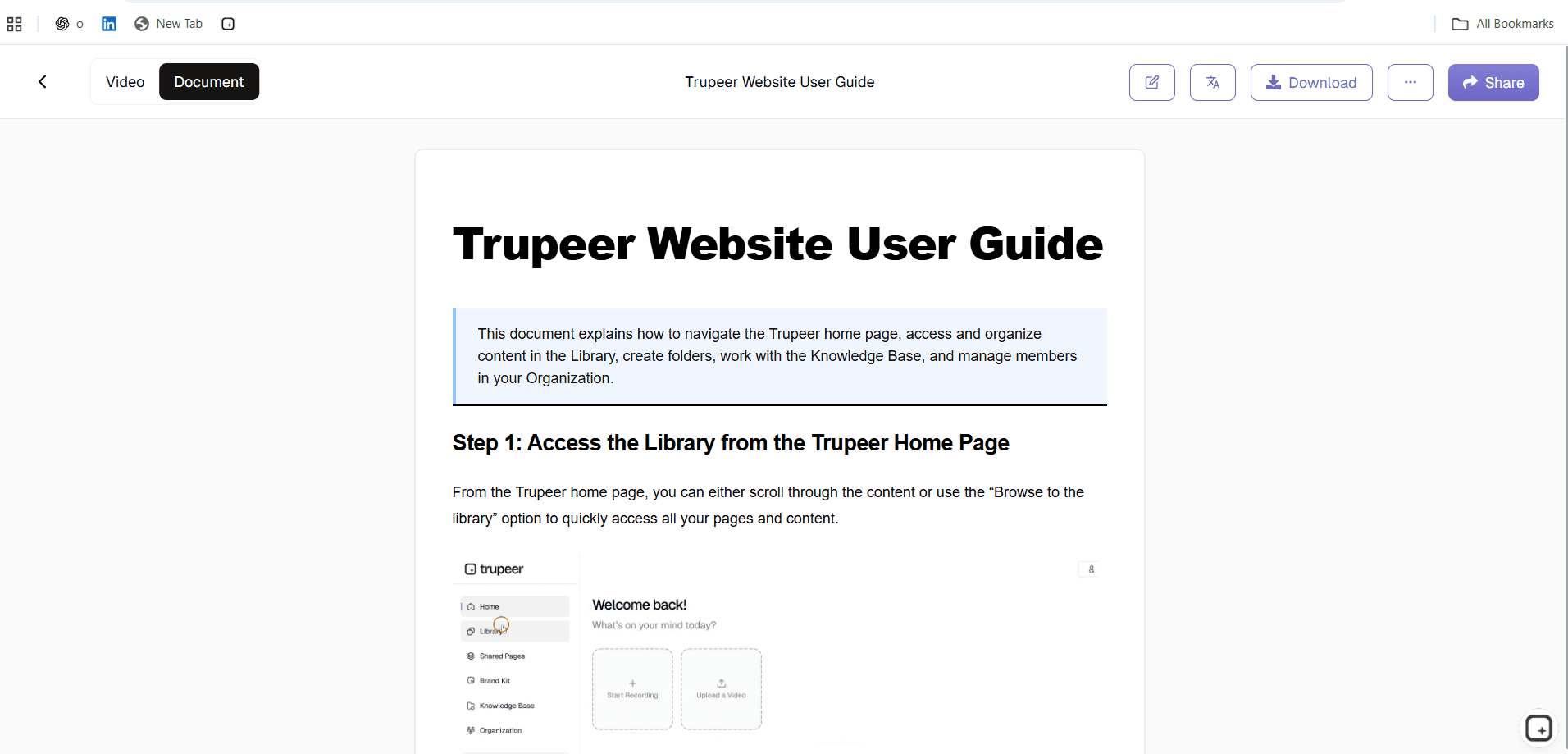
Step 3: Brand, restrict visibility, ship
Apply the brand kit so process documentation matches the rest of the ops library's look and feel. Configure Knowledge Base visibility (organization-only for internal procedures, selected domains for partner-facing processes, invite-only for highly restricted procedures like financial close). Then ship via Shared Page link, paste the PDF into Confluence or Notion, upload to Process Street or Trainual, or attach the MP4 to a SharePoint page.
Who runs ops process documentation at this volume
The person who runs ops process documentation is usually a head of operations, a director of business operations, a chief of staff, a process improvement manager, or whichever ops generalist got tasked with "document what we actually do" after the last audit, headcount change, or post-mortem. They have a backlog of procedures across multiple functions: finance procedures that only the controller knows, RevOps handoffs that only the senior analyst remembers, people-ops flows the HR business partner has done from memory for three years, procurement approval paths that change every time a new vendor signs up. They open Trupeer when typing up SOPs manually in Confluence is physically too slow for the volume the business actually needs.
Around them, individual ops functions document their own procedures in the same workspace. Finance ops handles AR/AP procedures, expense policy walkthroughs, and the monthly and quarterly close. RevOps handles deal-flow procedures, lead routing rules, and the handoff between sales and customer success. People ops handles onboarding sequences, offboarding checklists, and the performance review cycle. Marketing ops handles campaign launch procedures, lead scoring rules, and the MQL/SQL handoff. Customer success ops handles the renewal flow, health scoring procedures, and escalation paths. Production analytics in the admin view show which ops functions are shipping process documentation at what pace, useful for the head of ops planning capacity.
Operations process documentation content types this handles
The operations process documentation content types that come up most often: cross-functional handoff procedures (sales-to-CS, marketing-to-sales, recruiting-to-people-ops), close and reporting procedures (monthly close, quarterly business review prep, annual planning cycle), approval and routing procedures (vendor approval, expense approval, contract review), onboarding and offboarding flows (new hire access provisioning, employee separation checklist, new manager onboarding), and policy walkthroughs (the travel and expense policy, the procurement policy, the customer escalation policy). Trupeer AI handles all of these from the same recording-to-document flow. The format adjusts to the audience: a finance ops SOP wants numbered steps with system screenshots, an executive-facing process overview wants the higher-level video walkthrough, a partner-facing process wants both with selective visibility.
For ops teams running documentation programs across many functions concurrently, the platform's value compounds. A single ops manager working with Trupeer can produce the per-procedure output that previously required a dedicated business analyst or a rotating documentation responsibility across the ops team. Across a typical ops function with 10 to 30 active procedures spanning finance, RevOps, people ops, and customer success ops, the per-SOP production time drops from one to two days down to one to two hours. This is where operations process management starts to feel different: instead of producing a single operations SOP at a time, the team is shipping operations SOPs and standard operating procedure walkthroughs across the entire ops function in parallel, with operations workflow documentation showing how the procedures actually run rather than only what they're supposed to be. Pairing this operations process documentation software with the Trupeer AI SOP builder and the process guide generator covers both standalone SOPs and the broader process guide library.
Where Trupeer fits next to workflow execution tools and BPM platforms
Trupeer AI is not a workflow execution platform. Process Street, Pipefy, Tallyfy, Kissflow, and Pneumatic execute processes as live workflows with task assignments, status tracking, due dates, and conditional logic. Trupeer AI documents the procedure those workflow tools execute but doesn't execute the workflow itself. The two often work together: the ops team uses Process Street or Tallyfy to run the actual process and uses Trupeer to produce the video walkthrough and written SOP that explain how the process works, including the parts that happen outside the workflow tool.
Trupeer AI is also not a business process management (BPM) platform or a process modeling tool. Camunda, IBM BPM, Appian, Pega, Bizagi, and Lucidchart handle BPMN diagramming and process orchestration. Trupeer AI handles the human-recorded walkthrough that explains how to actually perform a process, which is the layer most BPM deployments leave understaffed. The ops team uses BPMN tools for formal process modeling and uses Trupeer to produce the walkthrough content that helps people actually follow the modeled process. The combination works in practice: BPMN provides the visual model and the orchestration, Trupeer provides the explainer content that gets ops people from "I see the model" to "I can actually do this step."
Translation, updates, and the multi-office ops function
Ops process documentation rots fast because the underlying procedures change every quarter as systems are upgraded, vendors are swapped, and policies are updated. A new ERP rollout breaks the close runbook, a vendor contract renegotiation changes the approval routing, a re-org changes who handles which step. Most ops teams handle this by quietly letting the docs drift and answering the same questions on Slack each time someone hits the outdated SOP. Trupeer AI handles updates by re-recording just the changed step. The AI re-processes only that segment, both the video and the written process documentation update in place, and the next ops person to look at the procedure sees the current version.
For ops functions spread across regional offices, translation closes the language gap that usually limits how broadly an SOP actually gets used. The same procedure reaches finance ops teams in Madrid in Spanish, RevOps teams in São Paulo in Portuguese, people ops teams in Tokyo in Japanese, and procurement teams in Berlin in German, from one source recording, in the same release cycle. Translation applies to both the video voiceover and the written process documentation, with brand kit, glossary, and on-screen text carried through. For broader internal documentation work that goes beyond ops procedures specifically, the internal documentation platform covers cross-team documentation across HR, IT, engineering, and ops in one workspace.
Why ops teams use Trupeer AI for operations process documentation
Video plus written process documentation in one pass
One recording (or one AI avatar script) generates both an MP4 procedure walkthrough and a written ops SOP with screenshots and numbered steps, from the same source recording.
Built for cross-functional ops work
Designed for the cross-functional procedures ops teams own: finance close procedures, RevOps handoffs, people ops flows, marketing ops campaign launches, procurement approvals. One workspace serves every ops function.
Drops into Confluence, Notion, Process Street, Trainual
MP4 and PDF formats upload into whichever process documentation system the ops team already runs. Trupeer produces the content. The existing system hosts it.
Document ops procedures in three steps
Step 1
Record the procedure walkthrough or type a script for an AI avatar
Step 2
Trupeer AI generates the video and written process documentation
Step 3
Brand, set visibility, ship to Confluence, Process Street, or Shared Page
Frequently Asked Questions
Is the operations process documentation software free to use?
Yes for the core flow. Record an ops procedure walkthrough or use an AI avatar, generate the video plus written process documentation, share via Shared Page link. Paid tiers add brand kits, custom voice cloning, AI avatars from the full catalog, team workspaces, translation across 65+ languages, knowledge base visibility controls, and production analytics. Pricing details on the pricing page.
Does Trupeer integrate with Process Street, Pipefy, or Tallyfy?
Not natively via API. Trupeer AI exports the operations process documentation as PDF or Word and the procedure video as MP4, which the ops team uploads to Process Street, Pipefy, Tallyfy, or whatever workflow execution tool the team uses. The Shared Page option also generates an embed link that drops into any of those tools as an inline player. Trupeer doesn't push content directly into workflow execution systems and doesn't sync task data back from them.
Can Trupeer execute the process as a workflow with task assignments?
No. Trupeer AI documents procedures; it doesn't execute them. Workflow execution tools like Process Street, Pipefy, Tallyfy, Kissflow, and Pneumatic handle task assignments, due dates, conditional logic, and live process orchestration. Trupeer AI produces the walkthrough video and written SOP that explains how the process works. The two typically run together: the workflow tool executes the process, Trupeer documents how to do each step.
Can Trupeer generate BPMN diagrams or process maps?
No. BPMN diagramming and process modeling tools like Camunda, IBM BPM, Appian, Pega, Bizagi, and Lucidchart handle that work. Trupeer AI handles the recorded walkthrough that explains how to actually perform a process, which is the layer most BPMN deployments leave understaffed. Ops teams typically use BPMN tools for formal process modeling and Trupeer for the human-recorded walkthrough content.
Can we translate process documentation into multiple languages?
Yes. Translation covers 65+ languages and applies to both the video voiceover and the written process documentation in the same job. An ops function with teams in Madrid, São Paulo, Tokyo, and Berlin can ship the same procedure in Spanish, Portuguese, Japanese, and German from one source recording. Brand kit, glossary, and on-screen text carry through translation.
More Tools