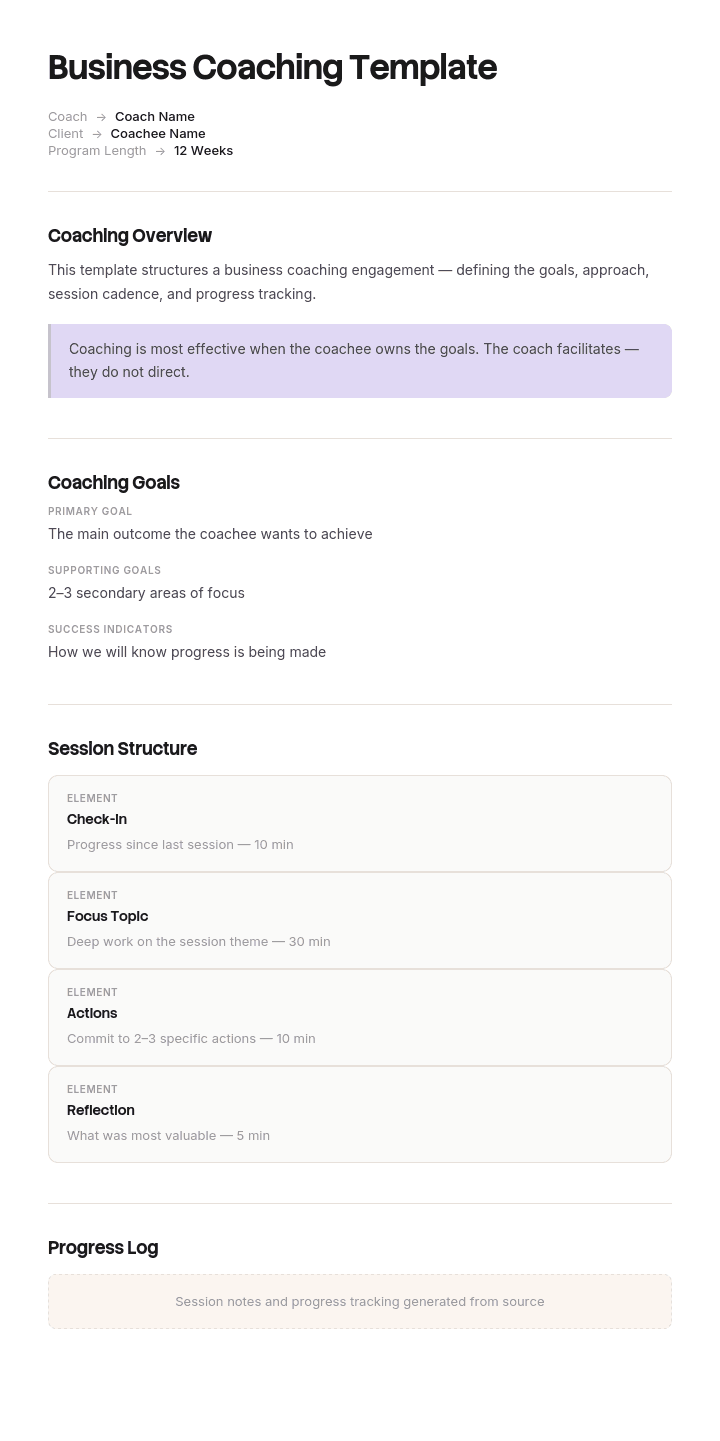
Use this template
Great business coaching delivers measurable change - and great structure makes it possible. With Trupeer, you can save hours on coaching documentation by starting with a free business coaching template, customizing it with your brand identity, and turning coaching plans into video summaries clients can revisit between sessions.
The difference between coaching and a supportive chat is what's written down at the end. Coaching produces a specific commitment, owned by the person being coached, reviewed at the next session.
This free business coaching template captures that. It's structured on the GROW model, which is the most widely used coaching framework, and it works for a manager coaching a direct report as well as a professional coach with a client.
Download the business coaching template
Format | Best for |
|---|---|
Word (.docx) | Session notes you type during or after the conversation |
Printing for in-person sessions, or sharing a completed record | |
Google Docs | Shared with the person being coached, so both can see commitments |
Excel (.xlsx) | Tracking goals and progress across many sessions or coachees |
Free download, editable, no watermark.
The coaching session template
Field | Enter |
|---|---|
Coachee and coach | Names |
Session number and date | 4 of 8, [date] |
Focus for this session | Agreed in the first two minutes, by the coachee |
Goal | What they want to be different, in their words |
Reality | What's actually happening now, with specifics |
Options | What they could do, generated by them |
Will | What they commit to, by when |
Obstacles named | What might stop it, and their plan for that |
Support needed | From you, or from anyone else |
Review at next session | The specific thing you'll ask about |
Next session date | Booked before this one ends |
The Will row is the only mandatory one. A session that doesn't produce a commitment hasn't finished, and the most common coaching failure is a good conversation with no line in that box.
How to customize this template in Trupeer
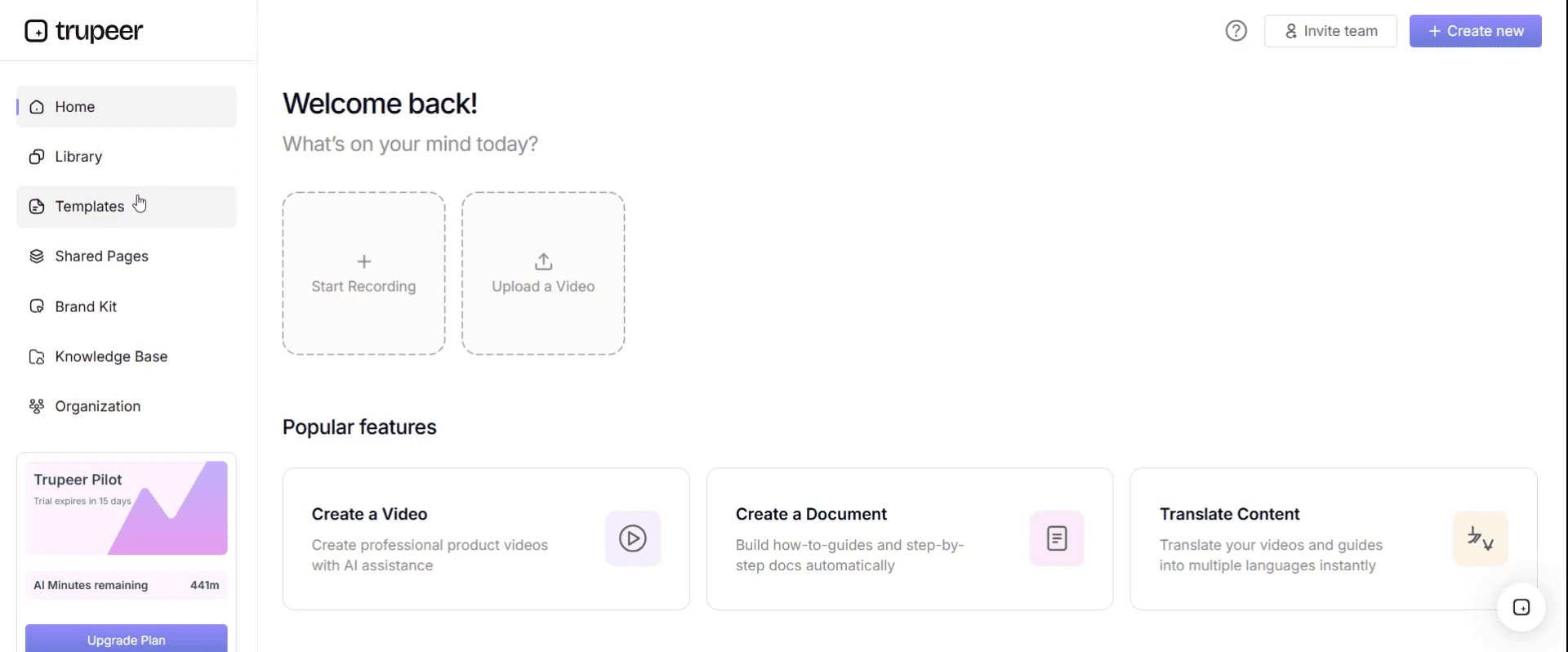
Step 1: Open the Templates Section
Go to the Templates section from the main navigation.
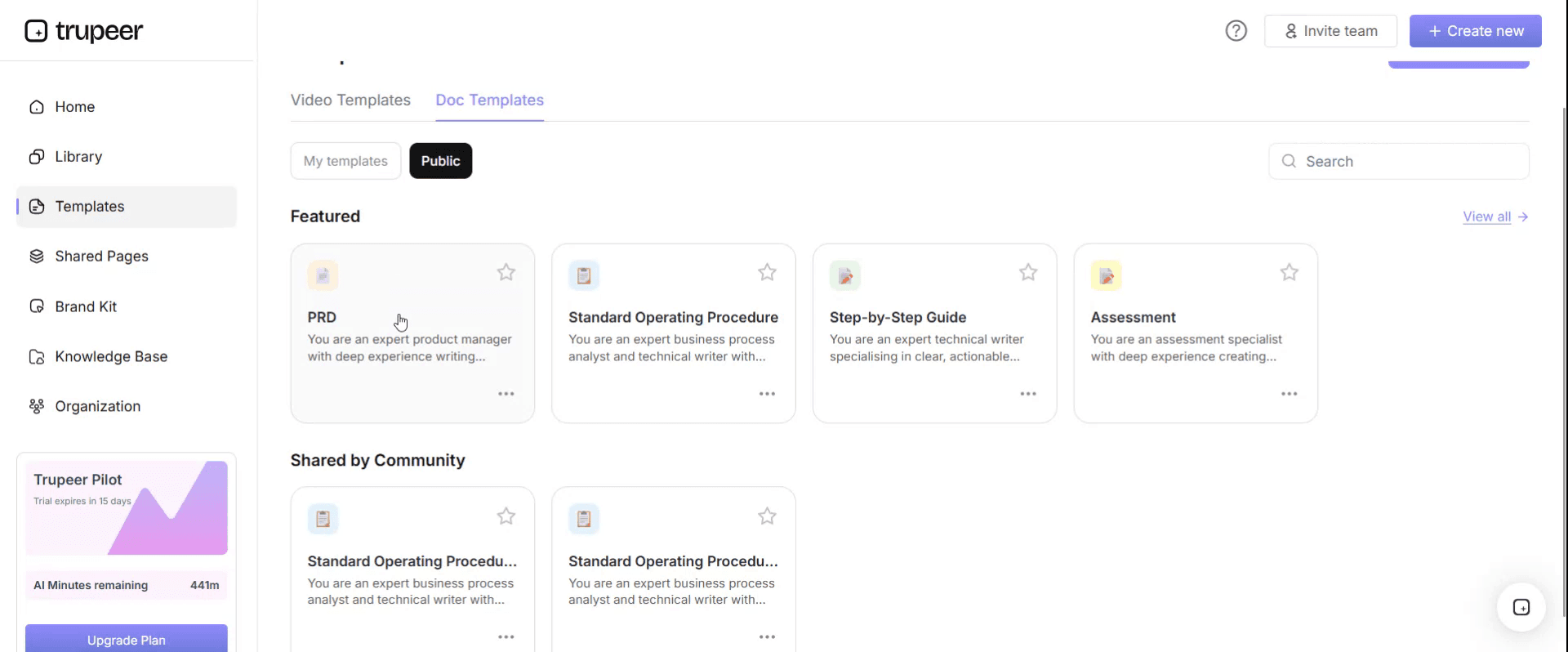
Step 2: Select and Open a Template
Click on any template you want to work with to open it.
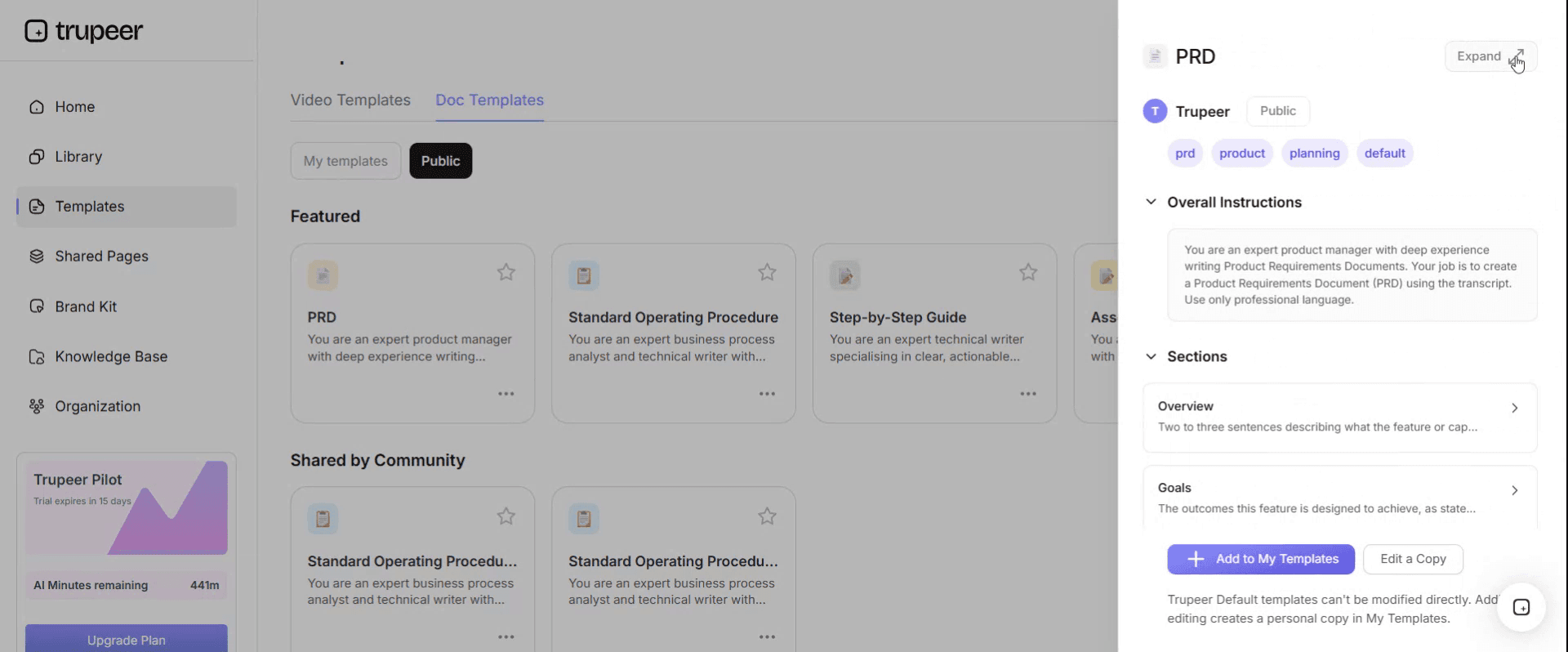
Step 3: Expand the Template View
If needed, expand the template view to see the full layout and details clearly.
Step 4: Edit the Template
Click on Edit to start modifying the selected template.
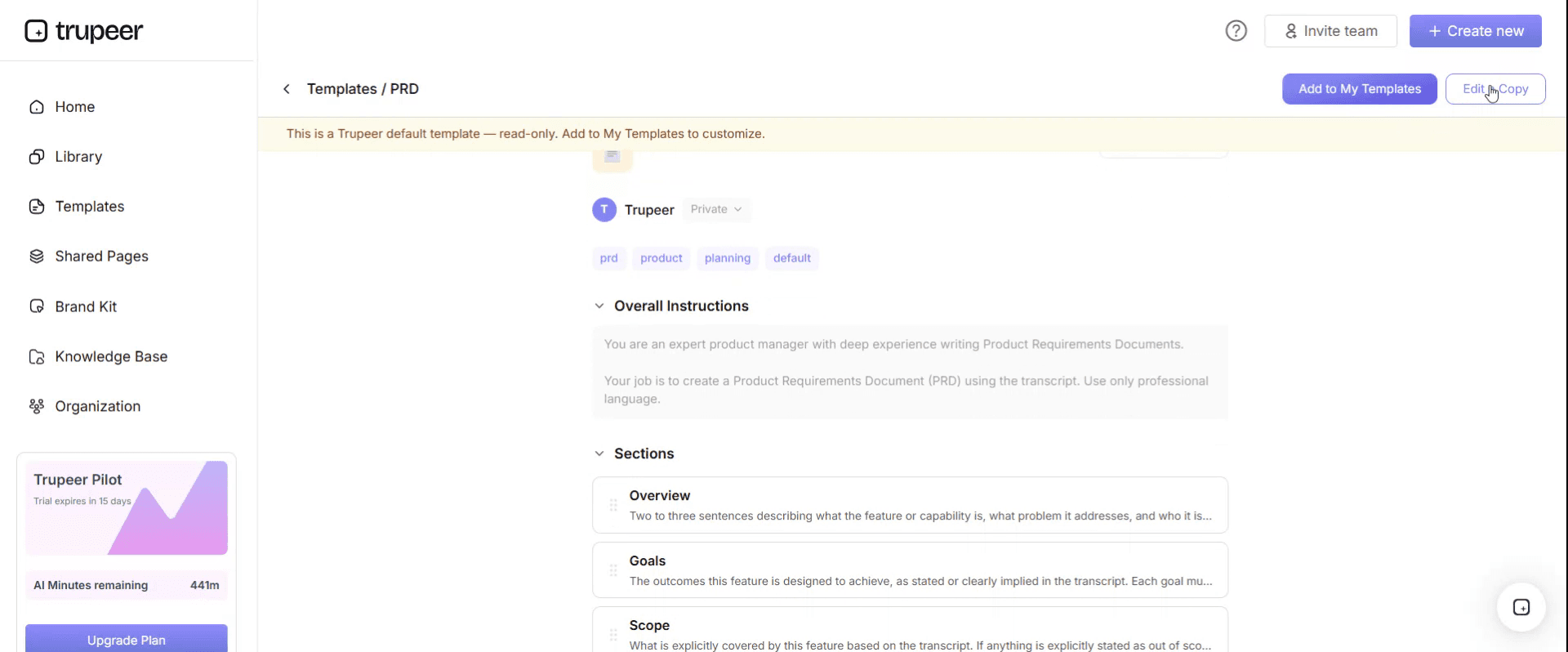
Within the editor, you can:
Add new sections
Define or update formatting rules
Add a logo and adjust its position and related settings
Step 5: Save Your Customized Template
After making all necessary changes, click Save to store the updated template as your own.
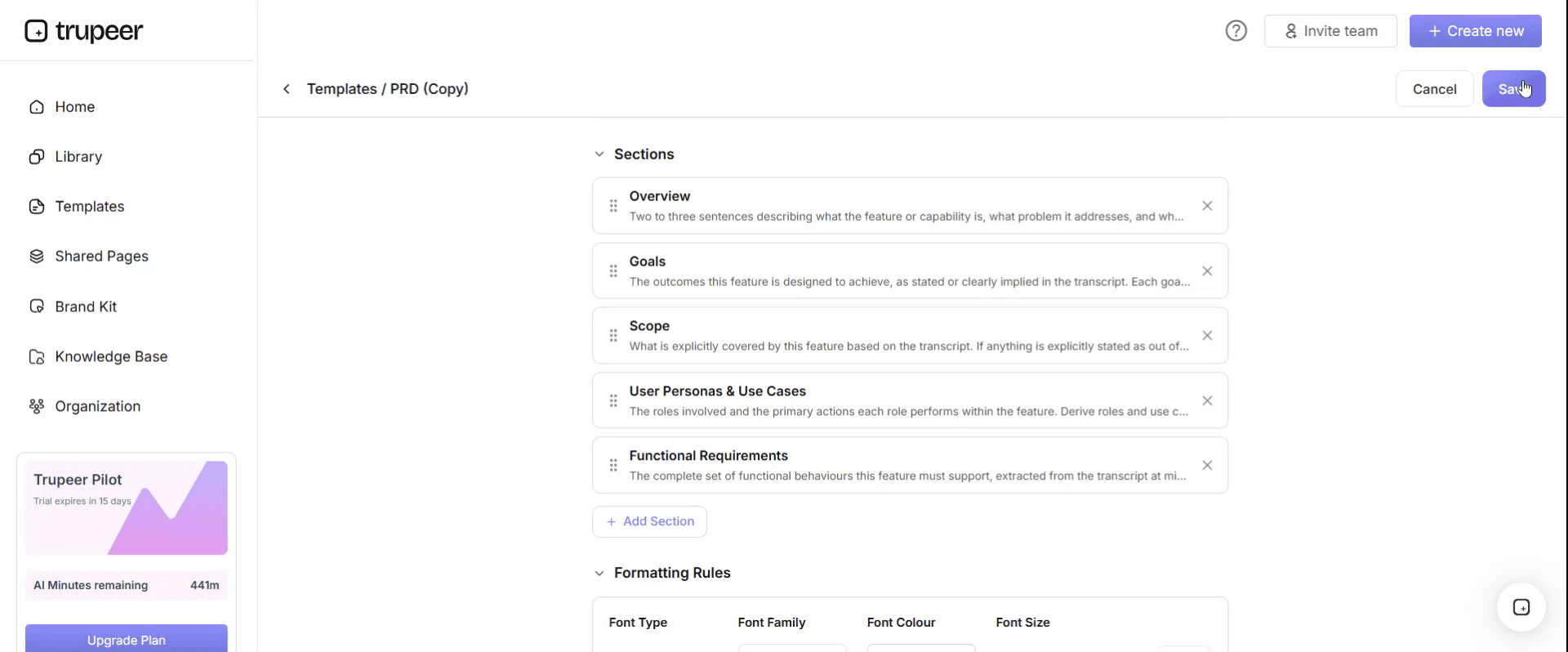
Step 6: Preview and Fine-Tune the Template
When you want to see how your customized template looks, open the Preview.
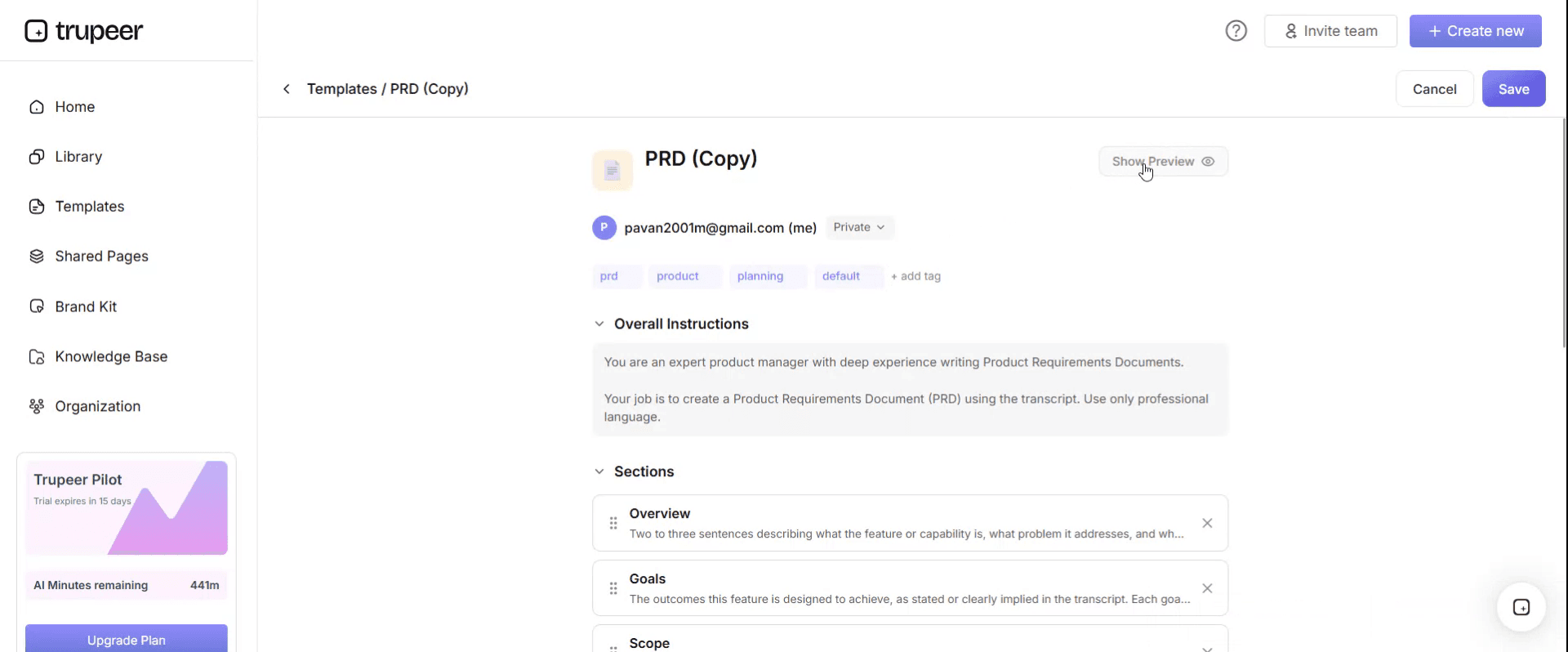
From the preview screen, you can continue to make adjustments directly if needed, ensuring the template appears exactly as you want.
With a business coaching template you can:
Save hours on prep: Skip the blank page with a structure built for coaching engagements.
Drive better outcomes: Built-in fields for goals, actions and accountability keep coaching focused.
Stay on-brand: Apply your logo, fonts and colors using Trupeer's brand kit.
Engage clients between sessions: Send video recaps to keep coaching top of mind.
Standardize your coaching practice: Use the same template for every client.
Reach global clients: Translate coaching materials into 65+ languages with one click.
The GROW model, and how to use each section
GROW is four stages. The discipline is staying in each one long enough rather than jumping to solutions.
Goal
What does the coachee want from this session, and from the broader work? Get it specific and in their words. "I want to be better at delegating" becomes "I want to stop reviewing every piece of work my team produces."
If you write the goal for them, you've stopped coaching.
Reality
What's happening now. This is the stage people rush, and rushing it is why coaching produces obvious advice. Ask what they've already tried. Ask for a specific recent example rather than a general pattern. Ask what happened the last time.
The useful question here is usually "what makes that hard?" rather than "why don't you just...".
Options
What could they do. Plural, and generated by them. The rule that makes this work: they offer three before you offer one. If you supply the first option, they'll evaluate yours instead of thinking.
If they're genuinely stuck, ask what someone they admire would do, or what they'd advise a colleague in the same position.
Will
What they will do, by when. Specific enough that you'd both agree at the next session whether it happened. "Have the conversation with Sam before Friday" works. "Work on communicating better" doesn't.
Then ask how confident they are, one to ten. Anything below seven means the commitment is too big, and shrinking it now is better than reviewing a failure in two weeks.
Filled-in coaching session example
Coachee: Team lead, six months into the role. Session: 3 of 8.
Focus: Delegation.
Goal. "I want to stop being the bottleneck. Everything comes through me and I'm reviewing work I don't need to see."
Reality. Reviews every client deliverable before it goes out, roughly fifteen a week, about six hours. Has redone parts of two in the last month. Team has stopped proposing changes because they expect them to be overruled. Tried a checklist once and abandoned it after a fortnight because a deliverable went out with an error.
Options. Their three: stop reviewing work for the two most experienced people entirely; review a sample rather than everything; build a quality checklist the team owns instead of one they wrote. My one, offered fourth: have someone else do the reviewing for a month and coach them through it.
Will. Stop reviewing all work from the two senior team members from Monday. Tell both directly, explaining why, before Friday. Track what actually goes wrong for two weeks rather than what they fear will.
Obstacles named. "I'll want to check anyway." Plan: no access to the shared drafts folder for those two, so checking takes a deliberate step.
Support needed. Wants me to ask about it at the next session even if they don't raise it.
Confidence: 8 of 10.
Review at next session: What actually went wrong in two weeks, and how it compared to what they expected.
Notice the commitment is smaller than the goal. That's correct. The goal is the destination and the Will is the next step.
The coaching programme template
Individual sessions sit inside an arc. A six or eight session programme usually runs like this.
Stage | Session | Purpose | Output |
|---|---|---|---|
Intake | 0 | Agree the goals, the confidentiality boundaries and how you'll work | Coaching agreement, development goals |
Early | 1 to 2 | Establish trust, get specific about reality | Two or three working goals |
Working | 3 to 5 | The bulk of the change, commitment by commitment | Commitments made and reviewed each session |
Mid-point review | After 4 | Honest check on whether this is working | Adjusted goals, or a decision to change focus |
Consolidation | 6 to 7 | Making new behaviour durable rather than effortful | Habits, systems, support in place |
Close | 8 | What changed, what's next, how they'll continue alone | Written summary, self-directed plan |
The mid-point review is the stage most programmes skip. It's the only structured chance to say the work isn't landing, and skipping it means an ineffective programme runs to completion anyway.
What a coaching template should include
Names and session number. Sounds trivial, matters when you're reviewing progress across eight sessions.
The focus, set by the coachee. Whoever sets the agenda owns the session.
The four GROW sections, with room to write in their words rather than your summary.
A dated commitment. The one non-negotiable field.
Obstacles, named by them, with a plan for each.
A confidence rating. The fastest way to spot a commitment that won't survive the week.
What you'll review next time. So the next session opens with accountability rather than small talk.
The next session date. Booked before this one ends, or the programme drifts.
Confidentiality note. Particularly where a manager is coaching a direct report and performance discussions are separate.
Coaching templates for managers vs professional coaches
Both use the same session structure. What differs is the context around it.
Manager coaching a report | Professional coach with a client | |
|---|---|---|
Relationship | You also set their objectives and review their performance | No authority over them |
Confidentiality | Limited, and must be stated honestly upfront | Contractual and near-total |
Frequency | Often fortnightly, alongside one-to-ones | Weekly or monthly, scheduled |
Risk | Slipping from coaching into instructing | Losing the thread across long gaps |
Also needs | Separation from performance conversations | Coaching agreement, intake form, invoicing |
If you're a manager, the discipline is resisting the urge to solve. You almost always know the answer, and giving it converts a coaching session into a delegation conversation. The moment you say "what I'd do is", the session has ended.
If you're running a coaching practice, you need documents beyond the session record: a coaching agreement, an intake questionnaire, a progress report and a business plan for the practice itself. The session template is one piece of that.
Types of coaching templates
Template | Use it for | Key fields |
|---|---|---|
Coaching session template | The individual conversation | GROW sections, commitment, review point |
Coaching plan template | The programme arc across sessions | Goals, session schedule, milestones |
Employee coaching template | Manager coaching a direct report | Development area, commitment, confidentiality note |
Coaching action plan template | Turning coaching goals into dated steps | Action, owner, deadline, support needed |
Leadership coaching template | Senior and executive development | Stakeholder feedback, 360 themes, behavioural goals |
Performance coaching template | Closing a specific performance gap | Expected standard, current performance, support |
Coaching intake form | First session with a new coachee | Background, goals, what they've tried, success criteria |
Coaching agreement | Professional coaching engagements | Scope, confidentiality, cancellation, fees |
Progress report template | Reporting to a sponsor or HR | Goals, progress, themes, no session detail |
Coaching business plan | Running a coaching practice | Services, pricing, marketing, financials |
How to run a coaching session
Let them set the focus. First two minutes. "What would be most useful to work on today?"
Open with the last commitment. Did it happen? If not, what got in the way? Skipping this teaches them commitments are optional.
Stay in Reality longer than feels comfortable. Ask for a specific recent example. Most rushed coaching happens here.
Make them generate three options before you offer one. Count them silently if you have to.
Get one dated commitment. Then check confidence, and shrink it if it's under seven.
Name the obstacle and the plan for it. "What might stop this?"
Agree what you'll ask about next time. Say it out loud.
Book the next session before this one ends.
Write it up within a day. Send it to them, so the record is shared rather than yours.
Best practices
Sixty percent of the talking should be theirs. If it isn't, you're advising.
Ask, don't tell, even when you know. Especially when you know.
Silence is a technique. Count to five before filling a pause. The thing they say next is usually the real answer.
Keep performance conversations separate. Same person, different meeting, stated clearly.
Write commitments in their words. Your paraphrase loses the specific thing they meant.
Be honest at the mid-point. If it isn't working, say so and change the approach.
Share the notes. Coaching records the coachee can't see undermine the trust the whole thing depends on.
Common mistakes
No written commitment. The single most common failure. Nice conversation, nothing changes.
Solving it for them. Fast, satisfying, and it teaches dependence.
Skipping the review of the last commitment. Signals it didn't matter.
Goals set by the coach. They'll comply rather than commit.
Commitments too big. A confidence rating below seven predicts failure and is easy to check.
Blurring coaching and performance management. Makes honest conversation impossible.
No next date. Programmes fade rather than finish.
Keeping notes the coachee never sees. Corrosive to trust and rarely necessary.
Record the session, not just the notes
Open the template in Trupeer AI, apply your brand kit so coaching materials match your other L&D documents, and edit any section directly. Setup is in the template guide.
Where this helps most is scaling coaching across managers. Training every team lead to coach well is slow, and written guidance on asking rather than telling rarely changes behaviour. Record a demonstration session once and Trupeer AI produces the written guide and a narrated video walkthrough together, so managers see what a good Reality stage sounds like rather than reading about it. Translate it into 65+ languages for international teams, and keep the set in your knowledge base as part of manager training.
Record it. Brand it. Translate it. Trupeer it.
Frequently Asked Questions
What is a business coaching template?
A structured document for recording a coaching session: the goal, the current situation, the options considered, and the commitment made. It keeps sessions consistent and makes progress across a programme visible, rather than relying on memory.
Is there a business coaching template in Word?
Yes. Word is the format most coaches and managers use, because you type notes during or immediately after the session. It's also available in PDF, Google Docs and Excel.
Is the business coaching template free?
Yes. Free to download and use, fully editable, no watermark and no account needed.
Is there a business coaching template PDF?
Yes. The PDF version prints cleanly for in-person sessions, and works as the shared record you send to the coachee afterwards.
Can I download the business coaching template for free?
Yes. All four formats are free downloads with no sign-up. Use them for as many coachees and sessions as you need.
Do you have coaching class banners, advertisements or design templates?
No, and it's worth being clear about it. These are document templates for running coaching sessions and programmes. If you're looking for posters, banners, flyers or advertisement designs for a coaching business or coaching classes, a design tool like Canva is the right choice. If you need a website template for a coaching practice, that's a theme rather than a document. What we cover is the coaching work itself: sessions, plans, development goals and the video walkthroughs that go with them.
What is the GROW coaching model?
A four-stage structure for a coaching conversation: Goal, what they want; Reality, what's actually happening; Options, what they could do; and Will, what they commit to. It's the most widely used coaching framework because it keeps the conversation moving toward a decision rather than circling the problem.
What should be in a coaching session template?
Names and session number, the focus set by the coachee, the four GROW sections, a dated commitment, obstacles they've named, support needed, a confidence rating, what you'll review next time, and the next session date.
How long should a coaching session be?
Forty-five to sixty minutes for most business coaching. Thirty can work for a manager coaching fortnightly on a narrow topic. Beyond ninety minutes, quality drops for both people.
How many coaching sessions does a programme need?
Six to eight is typical for a defined development goal, with a mid-point review after the fourth. Fewer than four rarely changes behaviour. More than twelve without a review usually means the goal was never specific enough.
Can a manager coach their own direct report?
Yes, and it's one of the highest-leverage things a manager can do, with two conditions. Be honest about the limits of confidentiality, since you also review their performance. And keep coaching sessions separate from performance conversations, so the coaching one stays safe to be honest in.
What's the difference between coaching and mentoring?
Coaching helps someone find their own answers through questions, and the coach doesn't need to have done the job. Mentoring shares the mentor's experience and advice, and does depend on having done something similar. Most useful relationships contain both, but confusing them is why coaching sessions turn into advice.
How do I track coaching progress across sessions?
Use the Excel version, one row per session with the goal, commitment and whether it happened. The pattern across six sessions tells you more than any single conversation, particularly whether commitments are consistently being made and not kept, which points to the commitments being too large.
Can I customize this coaching template?
Yes. All versions are fully editable. Adapt the sections to your own framework if you don't use GROW. In Trupeer AI you can also apply your brand kit so coaching materials match the rest of your L&D content.
Related templates

Understand how work happens.
Carry it into your next transition.
Start Free Trial
Book a Demo
Resources

