Trupeer Blog
Summarise

Instructional design is no longer just a buzzword in the corporate world; it's an essential component of effective learning and development (L&D) strategies. With the integration of AI, instructional design has evolved to become more efficient and impactful. Imagine having the ability to create personalized learning experiences at scale while cutting down on development time. That's the promise AI brings to the table. According to a recent survey,
over 60% of L&D professionals reported increased learner engagement and retention rates after incorporating AI in their instructional design processes.
For teams charged with delivering training that meets diverse learner needs, AI isn't just an option, it's a competitive necessity. Embracing these technologies can redefine how your team approaches learning content creation, making it more agile and responsive to the fast-changing demands of the workplace. If you're intrigued by how AI can transform your instructional design efforts, you're in the right place to explore its practical applications.
Why does AI for instructional design matter?
In the area of L&D, the stakes are high. Companies are increasingly turning to advanced technologies to stay ahead in a competitive landscape. Traditional methods of instructional design often fall short in meeting the dynamic needs of today's learners. Manual content creation is time-consuming and seldom scalable, creating bottlenecks that impede rapid deployment. In this context, AI adoption becomes more than just a technological upgrade, it's a strategic imperative. By using AI, organizations can analyze learner data in real-time, enabling more informed decisions about content development and delivery. The same manual can feed straight into the ai study guide maker, so you're not putting it together separately.
Also, AI allows for the customization of learning experiences to fit individual needs. This personalization is crucial for increasing learner engagement and retention, key metrics that directly impact business outcomes. For L&D teams, the challenge is to not only create content but to ensure that it is effective and aligns with organizational goals. AI can help align training programs with measurable objectives, ensuring that the skills developed are relevant and valuable. This capability transforms AI from a tool into a partner in achieving strategic L&D goals, making it indispensable training environments.
What are the benefits of using AI for instructional design?
AI offers numerous benefits for instructional design, turning what was once a laborious process into an efficient, data-driven operation. Here are some key advantages:
Enhanced Scalability. AI enables the creation of learning content that can easily be scaled across an organization. This is particularly beneficial for large companies needing consistent training materials.
Personalized Learning Experiences. AI algorithms analyze user data to tailor content to individual learner needs, improving engagement and effectiveness. This level of personalization would be impossible to achieve manually.
Reduced Development Time. AI tools automate repetitive tasks such as content formatting and basic editing, allowing instructional designers to focus on strategic tasks. This efficiency can significantly reduce the time to deploy new training modules.
Data-Driven Insights. AI provides valuable analytics on learner performance and engagement, allowing L&D teams to continuously improve content and instructional strategies. This feedback loop is essential for creating instructional design certificates that are both relevant and effective.
Multimodal Content Creation. AI supports various formats such as video, text, and interactive simulations, providing a richer learning experience. This versatility is crucial for addressing different learning styles and preferences.
Improved Content Accessibility. AI can automatically translate and localize content, making training materials accessible to a global audience. This feature is especially vital for multinational companies aiming for a consistent learner experience.
Teams ship this workflow end-to-end using Trupeer's AI video platform, which turns raw recordings into polished output without an editor.
Which Trupeer features help you implement AI for instructional design?
Trupeer offers a suite of features that make it an ideal partner for L&D teams looking to use AI for instructional design. Each feature is designed to simplify and enhance different aspects of the instructional design process.
AI screen recording with auto-zoom and click detection
Trupeer's AI screen recording capability changes the way instructional designers capture content. With auto-zoom and click detection, the software identifies and emphasizes key actions on the screen, ensuring that learners focus on essential information. This feature minimizes the need for post-production editing, saving valuable time. The intuitive interface allows you to capture complex processes effortlessly, ensuring that your instructional videos are both informative and engaging.
AI voiceover in 65+ natural voices, adjustable pace and tone
Trupeer's voiceover capabilities offer a wide range of natural voices that can be customized for pace and tone. This flexibility allows instructional designers to create content that aligns with the intended mood and audience preferences. Whether you're creating an engaging promotional video or a detailed training module, the voiceover feature ensures your message is communicated clearly and effectively. With its broad language support, this tool is invaluable for creating localized content that resonates with global audiences.
Automatic SOP generation from any recording
Trupeer's feature for automatic SOP generation simplifies the creation of standard operating procedures from video content. After capturing a screen recording, the software generates an editable SOP document that can be easily exported in various formats. This automation not only speeds up the documentation process but also ensures consistency and accuracy. The auto-generated documentation is particularly useful for onboarding new employees or training existing staff on updated processes.
AI-searchable knowledge base with timestamp deep-links
A searchable knowledge base is crucial for maximizing the value of your instructional content. Trupeer offers an AI-searchable knowledge base that indexes every recording with timestamp-level deep links. This feature enables learners to find specific information quickly, enhancing the learning experience and improving content retention. The deep-linking capability is especially useful for large organizations with extensive training libraries, ensuring that valuable information is always accessible.
AI translation into 65+ languages with lip-sync
Trupeer's translation feature supports over 40 languages, ensuring your content is accessible to a global audience. The tool not only translates the text but also syncs the audio with the video, providing a smooth viewing experience. This capability is essential for multinational companies looking to maintain consistency in their training programs while catering to diverse linguistic needs. With instructional video creation software built-in, Trupeer makes it easy to create and distribute localized content.
How do you use AI for instructional design step by step with Trupeer?
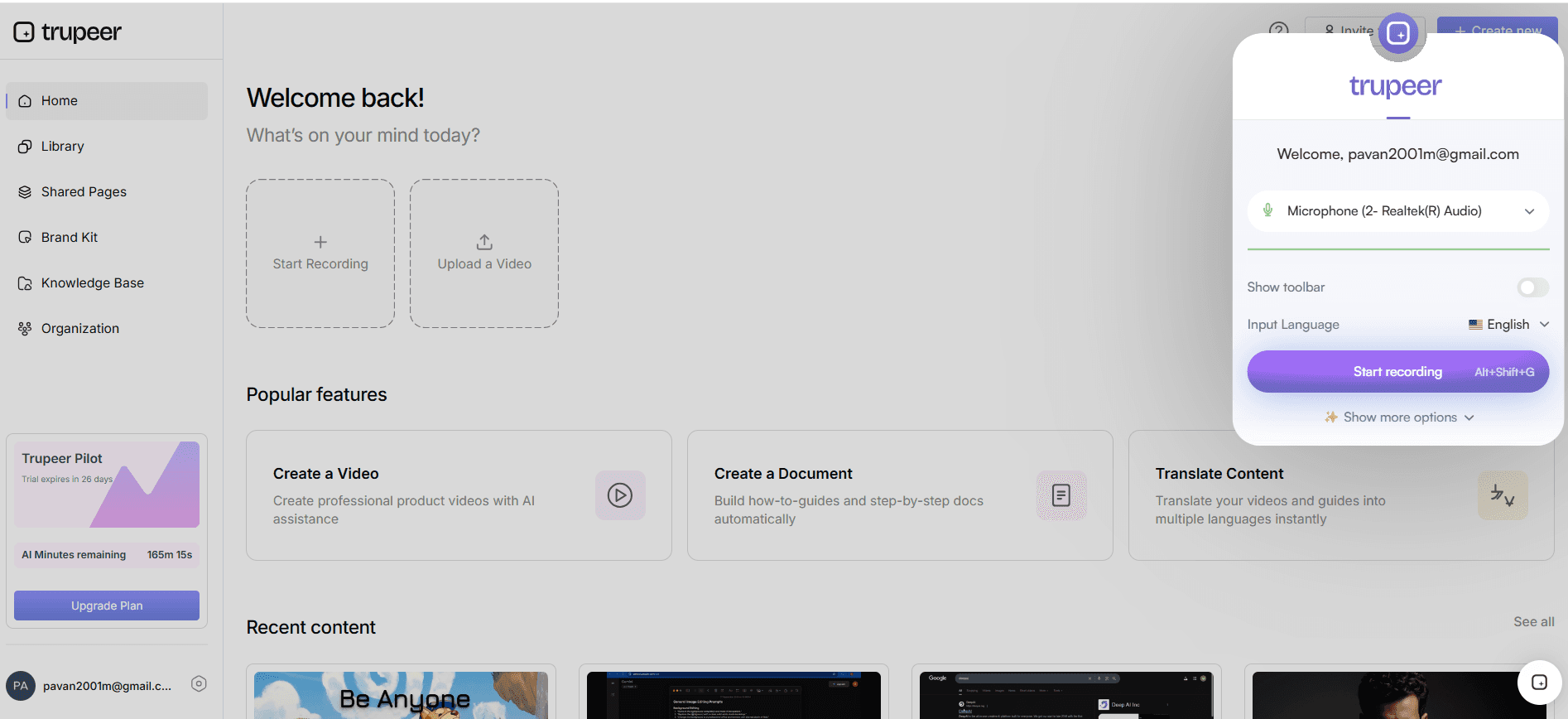
Step 1: Capture the Initial Screens
Start by opening the Trupeer desktop app or browser-based recorder. Select the option for AI screen recording with auto-zoom and click detection. This feature will automatically highlight important actions, such as mouse clicks and key presses, ensuring that critical steps are emphasized. Begin your recording by clicking “Start,” and proceed through the workflow you want to capture. Trupeer intelligently focuses on areas of interest without requiring manual adjustments. Once finished, click “Stop,” and your recording is instantly processed for further editing. The entire capture process takes just a few minutes, simplifying what used to be a time-intensive task. Teams weighing tools often start with a Loom alternatives comparison before standardizing on a workflow.
Step 2: Add AI Voiceover
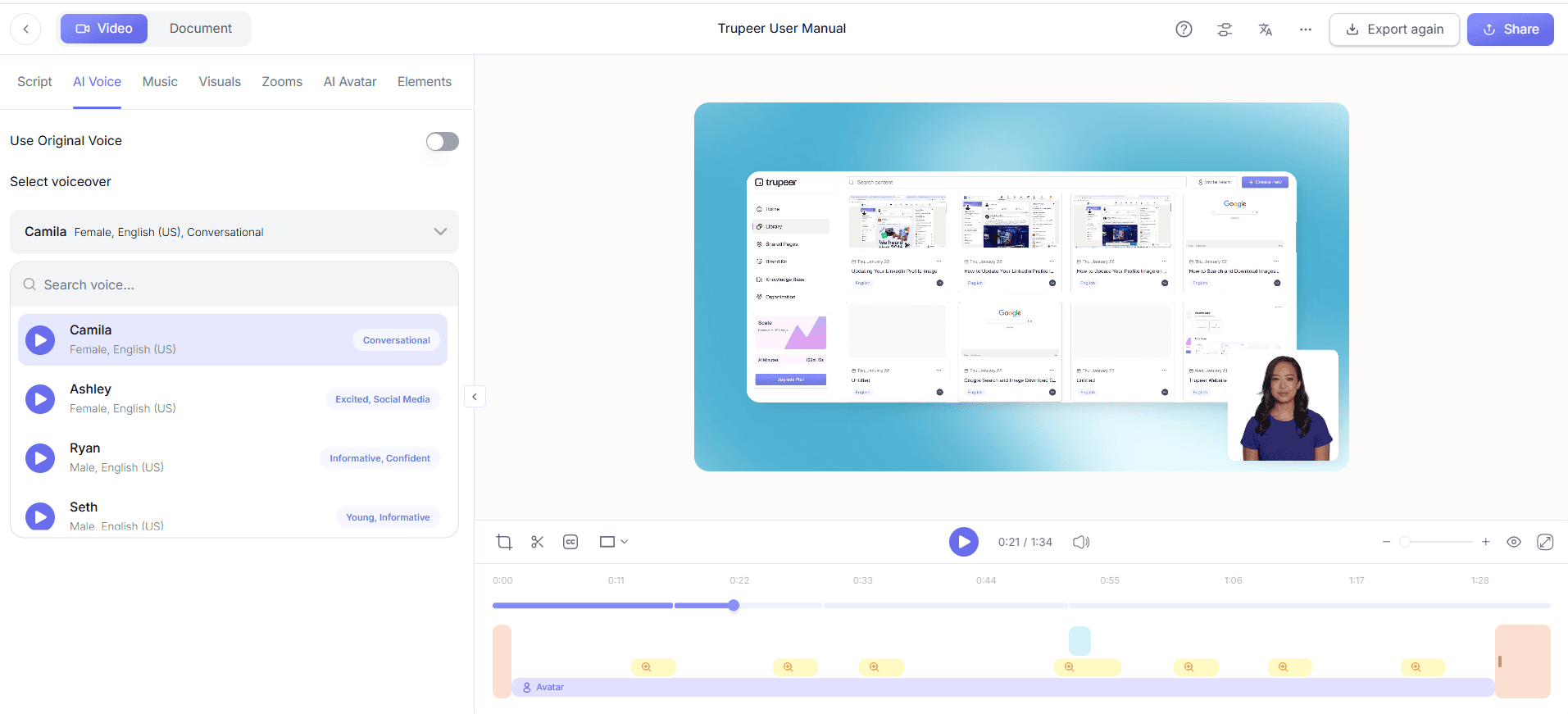
After capturing your video, navigate to the editing menu and select “Add Voiceover.” Trupeer offers AI voiceover in 65+ natural voices, allowing you to choose the one that best fits your audience. Adjust the pace and tone settings to match the mood of your instructional content. Trupeer’s voiceover generation is quick, typically taking under two minutes. This feature ensures your video is not only visually engaging but also audibly clear, making complex instructions easier to follow. Be mindful to preview the entire voiceover to catch any mismatches in timing or inflection before finalizing your video.
Step 3: Generate SOPs Automatically
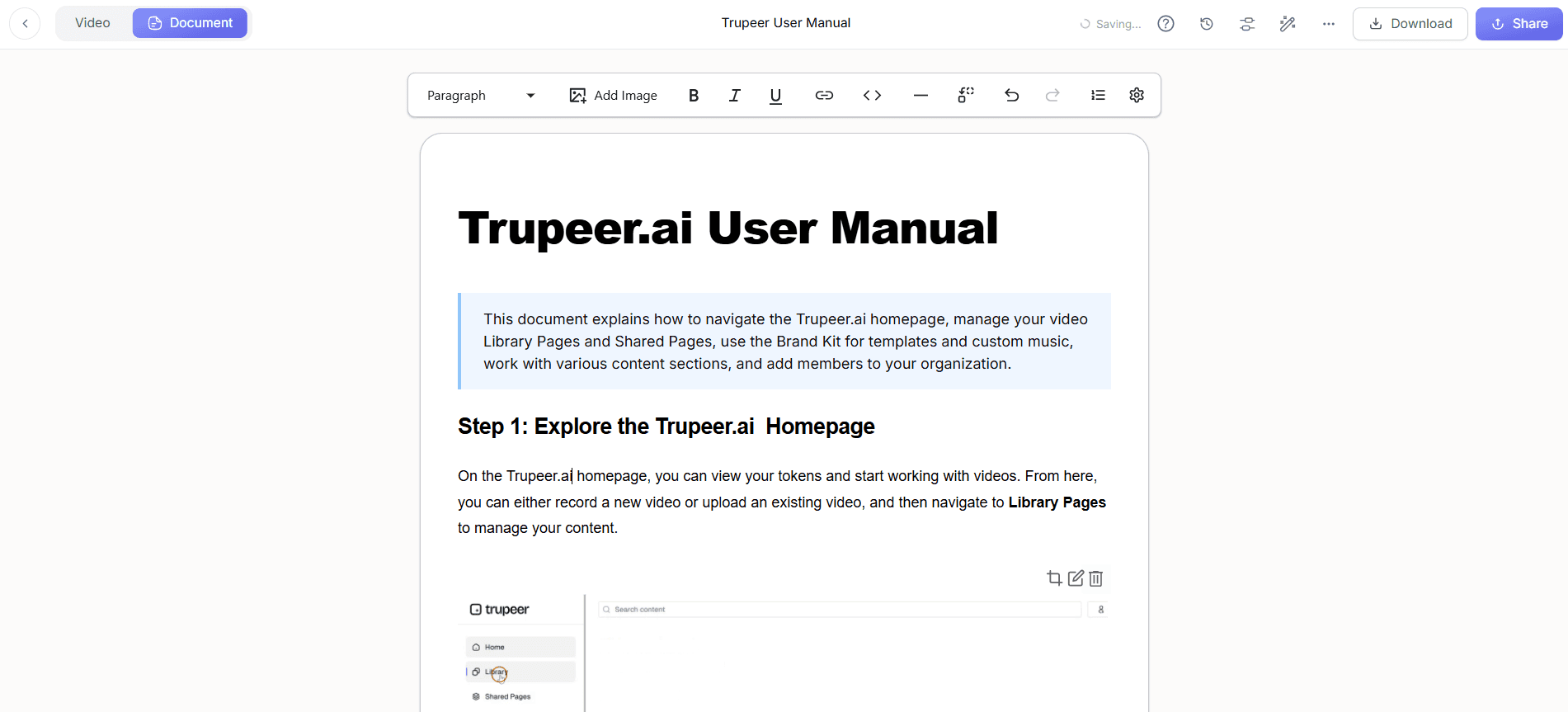
With your video finalized, click on “Generate SOP” to create a standard operating procedure document directly from your recording. Trupeer translates your video into an editable document that outlines each step in detail. This feature is perfect for creating training manuals or onboarding guides. The SOP generation process usually takes less than a minute and produces documents that can be exported in formats like PDF, HTML, or SCORM. Ensure the SOP matches the video’s steps accurately, especially in complex workflows where precision is critical.
Step 4: Translate for Global Teams
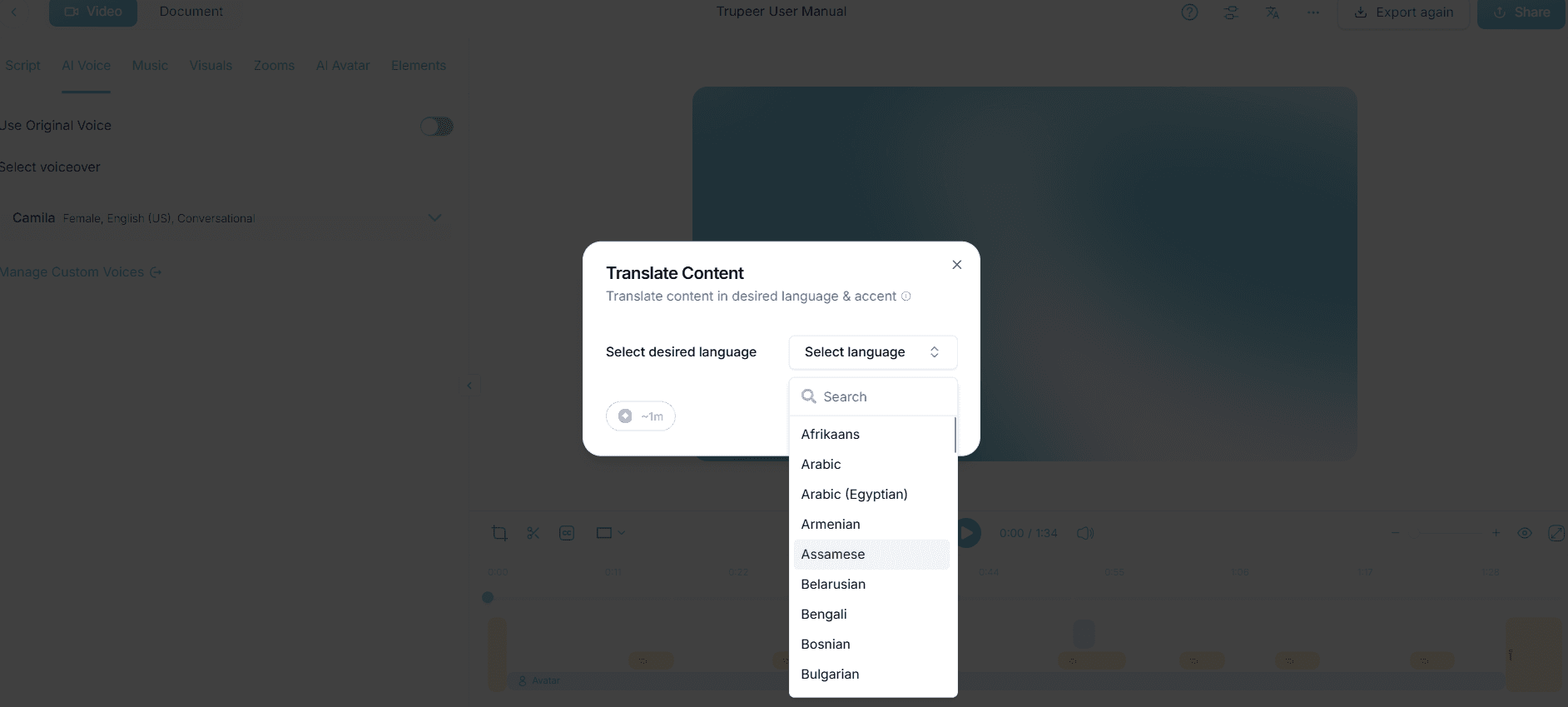
Go to the translation settings if you need your instructional content in multiple languages. Trupeer supports AI translation into over 40 languages, complete with lip-sync capabilities. Select your target languages and initiate the translation process. The tool not only translates text but also synchronizes the translated audio with the video, ensuring a smooth user experience. This step is particularly useful for multinational teams and can be completed in under five minutes per language. Always review the translated content to ensure cultural nuances are appropriately addressed.
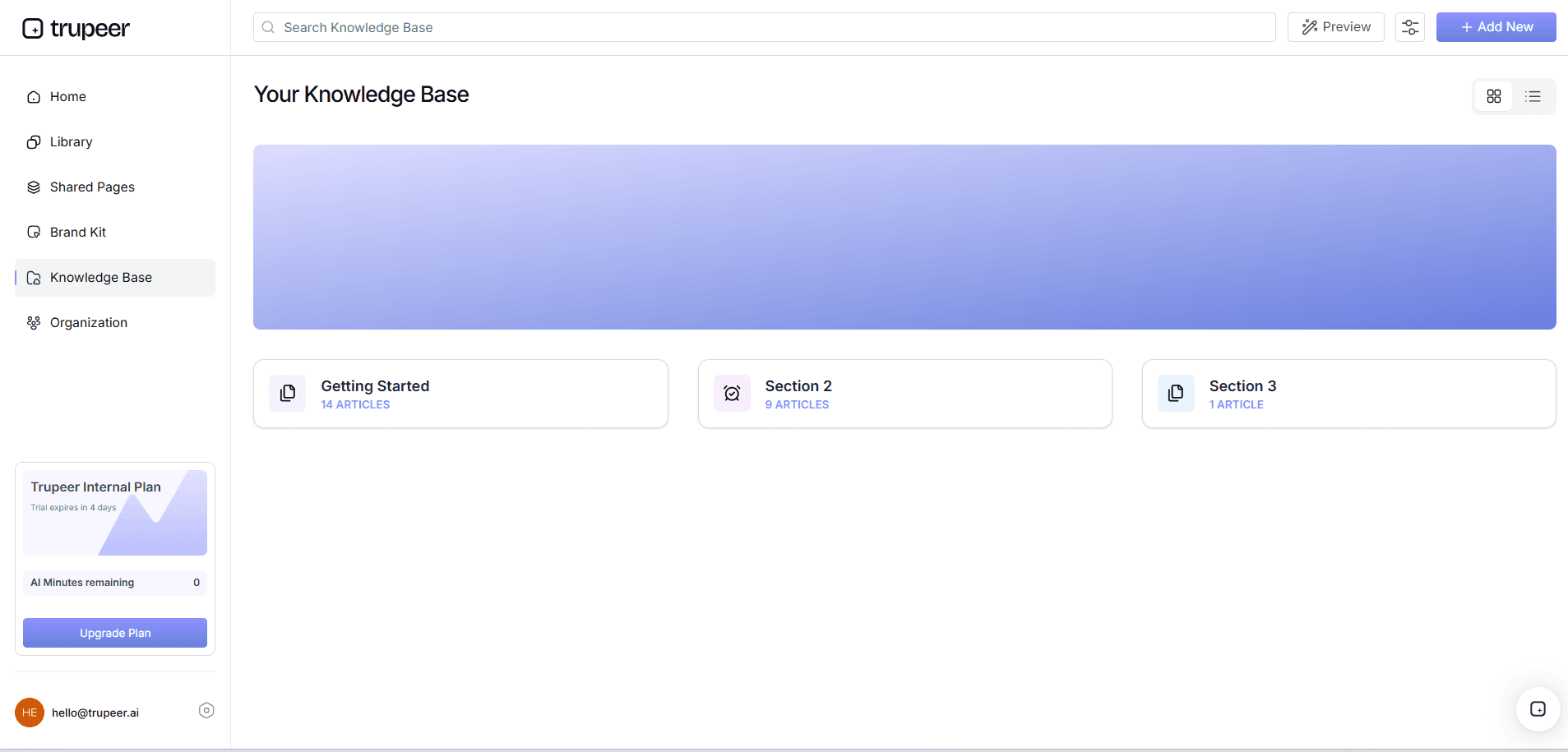
Step 5: Build a Knowledge Base
To maximize the reach of your instructional content, use Trupeer’s AI-searchable knowledge base feature. Upload your video to the platform, and it will automatically index the content with timestamp deep-links. This allows learners to jump directly to specific sections or topics within the video. Setting up a knowledge base is straightforward and can be done by clicking “Create Knowledge Base” in the platform. The indexing process takes just minutes, making your instructional videos easily navigable and accessible to all users.
Step 6: Analyze Engagement Metrics
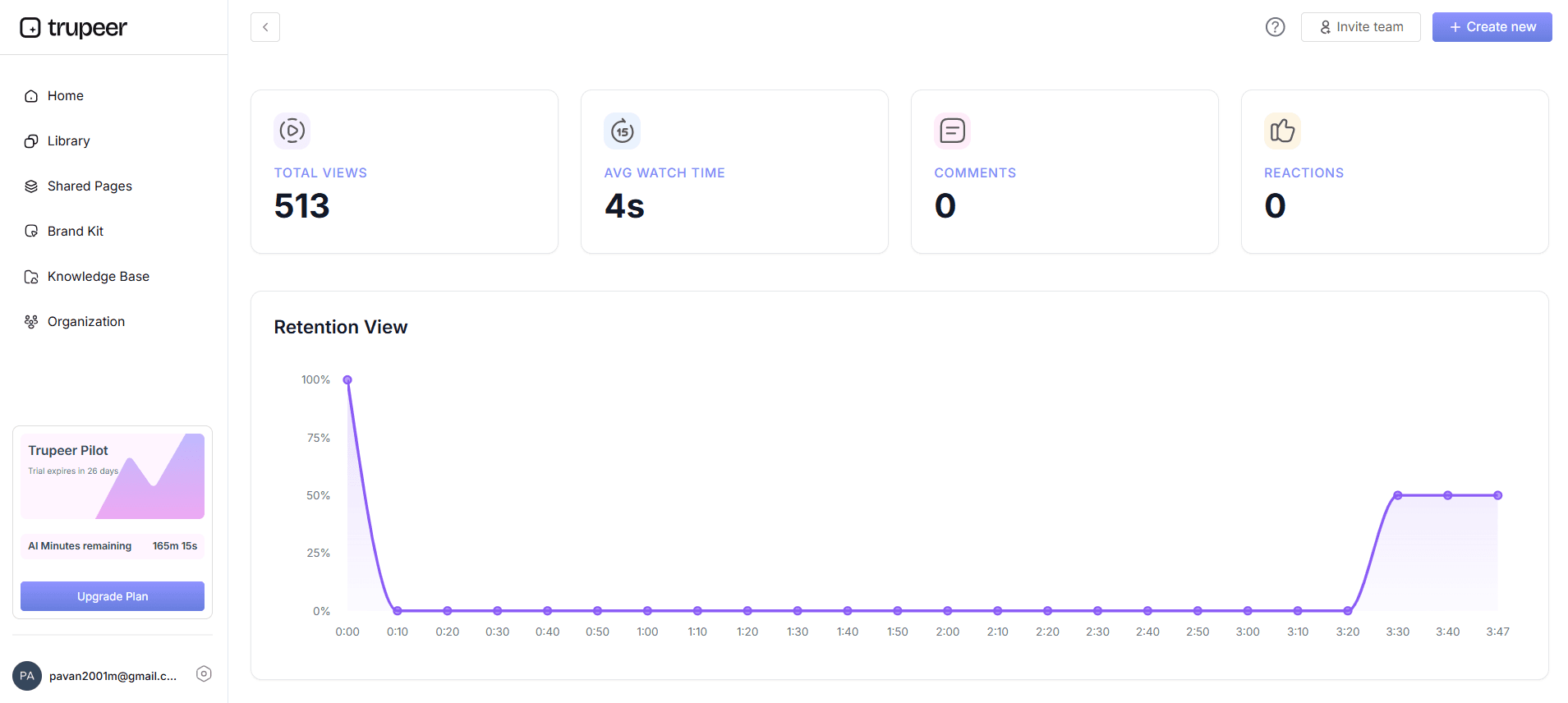
Once your content is live, it’s crucial to measure its effectiveness. Trupeer provides viewer engagement analytics, including drop-off rates and heatmaps. Access these metrics by selecting “View Analytics” for any uploaded video. These insights will reveal which parts of your content capture the most attention and where viewers lose interest. This data is invaluable for refining future instructional materials, ensuring they are engaging and effective. Regularly review these analytics to adjust your content strategy in real-time, optimizing for better outcomes. Trupeer also ships a digital guide maker that handles this step without extra setup.
What tips help you use AI for instructional design?
Implementing AI in instructional design can seem daunting, but with a few strategic approaches, you can make the process smoother and more effective. Here are some practical tips to consider:
Start with a clear plan. Define the objectives and key outcomes for your instructional content before beginning production. This clarity will guide your AI tool choices effectively.
use diverse formats. Use AI to create a mix of videos, documents, and interactive elements, catering to different learning preferences and enhancing engagement.
Regularly update content. AI tools make it easy to refresh and update existing materials, keeping your training programs relevant and accurate over time.
Test with a pilot group. Before a full-scale rollout, test your AI-generated instructional content with a small group to gather feedback and make necessary adjustments.
Focus on user experience. Consider the learner's journey through your content, ensuring that navigation and format are intuitive and user-friendly.
Use analytics for improvement. Continuously monitor engagement metrics to refine your approach, ensuring your instructional design remains effective and impactful.
Standardize your tools. Choose a consistent set of AI tools for your instructional design to maintain quality and simplify the production process. For alternatives, consider a Scribe alternative comparison to make informed decisions.
Frequently asked questions
How can AI improve instructional design?
AI enhances instructional design by automating repetitive tasks, personalizing learning experiences, and providing data-driven insights. It simplifies content creation, allowing designers to focus on strategic elements like learning objectives and user engagement. AI tools can also analyze learner data to tailor content, improving outcomes and satisfaction. For instance, AI-powered platforms can automatically adjust the complexity of training materials based on user performance. This adaptability ensures that learners are neither bored nor overwhelmed, optimizing the educational experience.
What AI tools are best for instructional design?
Several AI tools are suited for instructional design, each offering unique capabilities. Trupeer stands out with its comprehensive suite, including AI screen recording, voiceover, and SOP generation. Other tools like Articulate 360 and Adobe Captivate are also popular for creating interactive e-learning modules. The choice depends on your specific needs, whether you require solid analytics, multimedia support, or extensive language translation options. Evaluating these factors will help you select the right toolset for your instructional design projects.
Can AI replace human instructional designers?
No, AI cannot replace human instructional designers; rather, it complements their skills. While AI automates mundane tasks and provides valuable analytics, creative and strategic elements like content vision, empathy, and subtle understanding of learner needs require human intervention. Designers use AI to enhance efficiency, allowing more focus on crafting meaningful learning experiences. AI tools handle large data sets and repetitive processes, freeing up human designers to innovate and personalize content for diverse audiences.
Why is AI translation important in instructional design?
AI translation ensures that instructional content reaches a global audience by breaking down language barriers. It's crucial for multinational organizations that need consistent training across different regions. AI translation tools offer speed and accuracy, automatically adjusting audio and text to align with the original content. This feature reduces the time and cost associated with traditional translation methods. For a comprehensive solution, platforms like Trupeer provide a video translation platform with lip-sync capabilities to maintain video presentation integrity.
Is AI viable for small L&D teams?
Yes, AI is viable for small L&D teams. It offers scalable solutions that can be tailored to fit any size operation. Small teams benefit from AI’s ability to automate routine tasks, freeing up resources for strategic planning and personalized content creation. This scalability makes AI an attractive option for smaller teams looking to enhance their instructional design capabilities without significant investment. With AI, even limited resources can produce high-quality, impactful training materials that meet organizational goals efficiently.
Related Blogs