Trupeer Blog
Summarise
Imagine a seasoned technician with 30 years of experience retiring next month. They've been a cornerstone of your manufacturing operations, holding valuable tribal knowledge that's never been documented. Losing such insight could cost your company significantly in efficiency and quality. In fact, studies show that companies can lose up to 42% of their knowledge base when experienced personnel leave without a proper knowledge transfer strategy. This scenario is all too common in the manufacturing industry, where tacit knowledge, skills and know-how acquired through years of experience, resides in the minds of veteran employees. Without a solid strategy to capture and transfer this knowledge, operational continuity is at risk, and the cost of training new employees skyrockets. To address this, many manufacturing and operations teams are turning to technology solutions that blend AI with traditional documentation practices. A reliable technology adoption strategy can make all the difference, ensuring that critical knowledge is not only captured but also accessible and actionable for current and future team members. This is exactly where onshore to offshore knowledge transfer becomes useful and it's the kind of content Trupeer can generate directly from a simple screen recording. This is exactly where knowledge transfer for departing employees becomes useful — and it's the kind of content Trupeer can generate directly from a simple screen recording.
Why does tribal knowledge transfer in manufacturing and operations matter?
Tribal knowledge transfer is crucial in manufacturing and operations because it directly impacts productivity, quality, and safety. When experienced workers retire or leave, they often take decades of unwritten knowledge with them. This tacit knowledge includes subtle operational tactics, problem-solving techniques, and a deep understanding of machinery that isn't covered in standard training manuals. Without effective transfer strategies, companies face increased downtime, higher defect rates, and longer training periods for new hires. The stakes are high because, in the fast-paced world of manufacturing, every minute of downtime can cost thousands of dollars. Ensuring that this valuable knowledge is successfully transferred can save significant resources and maintain operational efficiency.
The impact of not having a proper strategy is felt across all levels of an organization. Managers struggle to maintain production targets, HR faces higher turnover costs, and new employees often feel overwhelmed without the guidance previously provided by seasoned workers. The operations workflow becomes inefficient, leading to potential bottlenecks and missed deadlines. also, as manufacturing processes become more automated, the need for skilled oversight becomes even more critical. Tribal knowledge transfer ensures that human expertise complements technological advancements, creating a harmonious and efficient production environment. The ability to smoothly integrate this knowledge into everyday operations can be the difference between thriving and merely surviving in a competitive market.
What are the benefits of effective tribal knowledge transfer in manufacturing?
Implementing a solid tribal knowledge transfer strategy in manufacturing offers numerous advantages. These benefits are not only measurable but also critical for long-term success.
Reduced downtime. By capturing and distributing critical operational knowledge, teams can quickly resolve issues without waiting for specific personnel, leading to a decrease in production delays.
Improved training efficiency. New hires ramp up faster with access to curated insights from seasoned employees, reducing the learning curve and increasing productivity.
Enhanced product quality. Consistent knowledge transfer ensures that best practices are followed, improving the overall quality of the products and reducing defect rates.
Cost savings. By minimizing the loss of expertise, companies save on recruitment and training expenses. This also lowers the risk of costly operational errors.
Better employee engagement. Employees feel valued when their knowledge is recognized and shared, leading to higher job satisfaction and retention rates.
Operational resilience. An AI-powered video tool helps maintain continuous operations even when key employees are unavailable, ensuring that processes are not disrupted.
Trupeer also ships a online knowledge base software teams customers that handles this step without extra setup.
Which Trupeer features help you transfer tribal knowledge effectively?
Trupeer offers a range of capabilities specifically designed to facilitate the transfer of tribal knowledge in manufacturing and operations. Each feature is tailored to address different aspects of this complex process.
AI screen recording with auto-zoom and click detection
This feature allows you to capture detailed operational processes in real-time, which is crucial for documenting tacit knowledge. The AI screen recording automatically highlights key actions, such as clicks and movements, ensuring that every critical step is clearly documented. This is particularly useful for complex machinery operations where visual cues are essential. By using AI documentation platform, you can create comprehensive guides that are easy for others to follow, reducing the burden on trainers and ensuring consistency in training materials.
Automatic SOP generation from any recording
Trupeer's ability to automatically generate Standard Operating Procedures (SOPs) from recorded sessions simplifies documentation efforts significantly. As recordings are made, the system converts them into edit-ready SOPs, saving time and ensuring accuracy. This feature is invaluable for operations teams who need to update procedures regularly without starting from scratch. The video knowledge base further enhances accessibility, allowing team members to search for specific SOPs easily.
AI voiceover in 65+ natural voices
When transferring tribal knowledge, the clarity of communication is paramount. Trupeer's AI voiceover capability offers customizable narration in multiple languages and tones, making it easier for international teams to understand complex instructions. This feature supports knowledge base software teams customers, enabling you to reach a broader audience without language barriers. It ensures that your knowledge transfer materials are engaging and accessible to all team members.
AI-searchable knowledge base with timestamp deep-links
Trupeer's searchable knowledge base significantly enhances the accessibility of captured knowledge. By indexing recordings with timestamp-level deep links, team members can quickly locate specific information without sifting through entire videos. This capability is especially valuable for operations teams that require quick access to solutions during production. The knowledge base software teams customers tool is designed to integrate smoothly with your existing systems, ensuring that valuable insights are always at your fingertips.
Viewer engagement analytics, drop-off, and heatmaps
Understanding how team members interact with the knowledge transfer materials is crucial for continuous improvement. Trupeer provides detailed analytics on viewer engagement, allowing you to see where employees drop off or struggle. This data helps refine training content and delivery methods, ensuring that the materials are effective. By using this feedback, you can create more video generation platform tailored to the needs of your team, ultimately improving the overall efficiency of your knowledge transfer strategy.
How do you transfer tribal knowledge step by step with Trupeer?
Step 1: Capture the Process
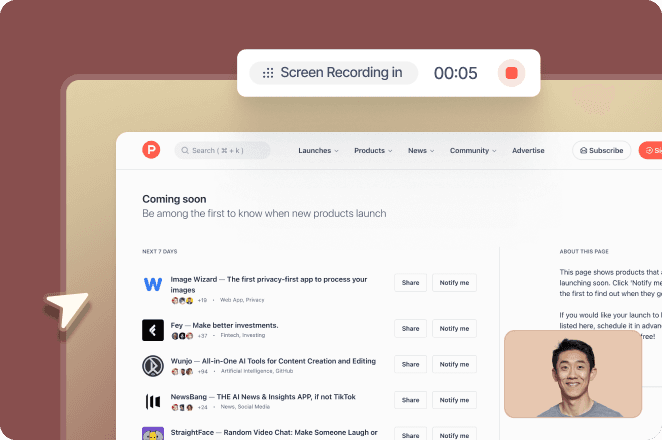
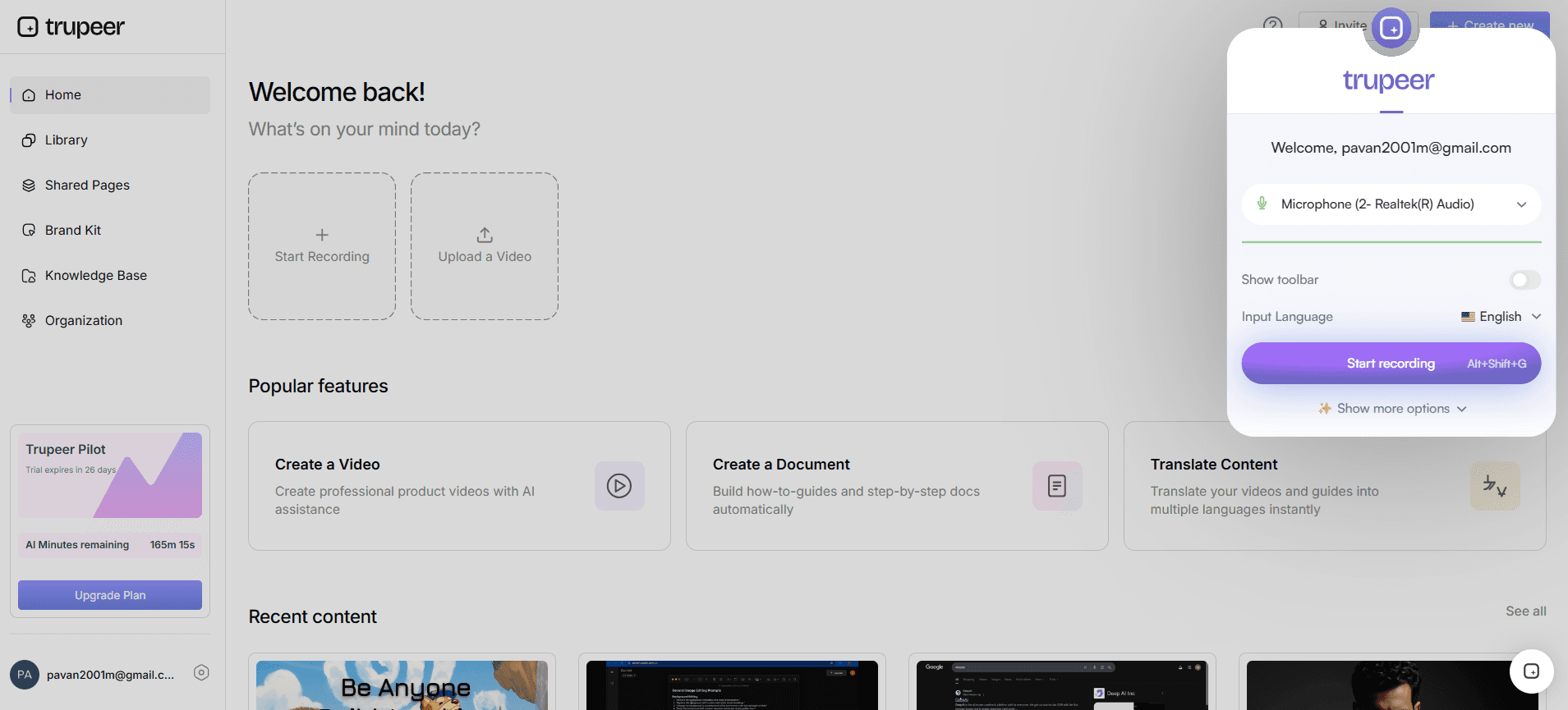
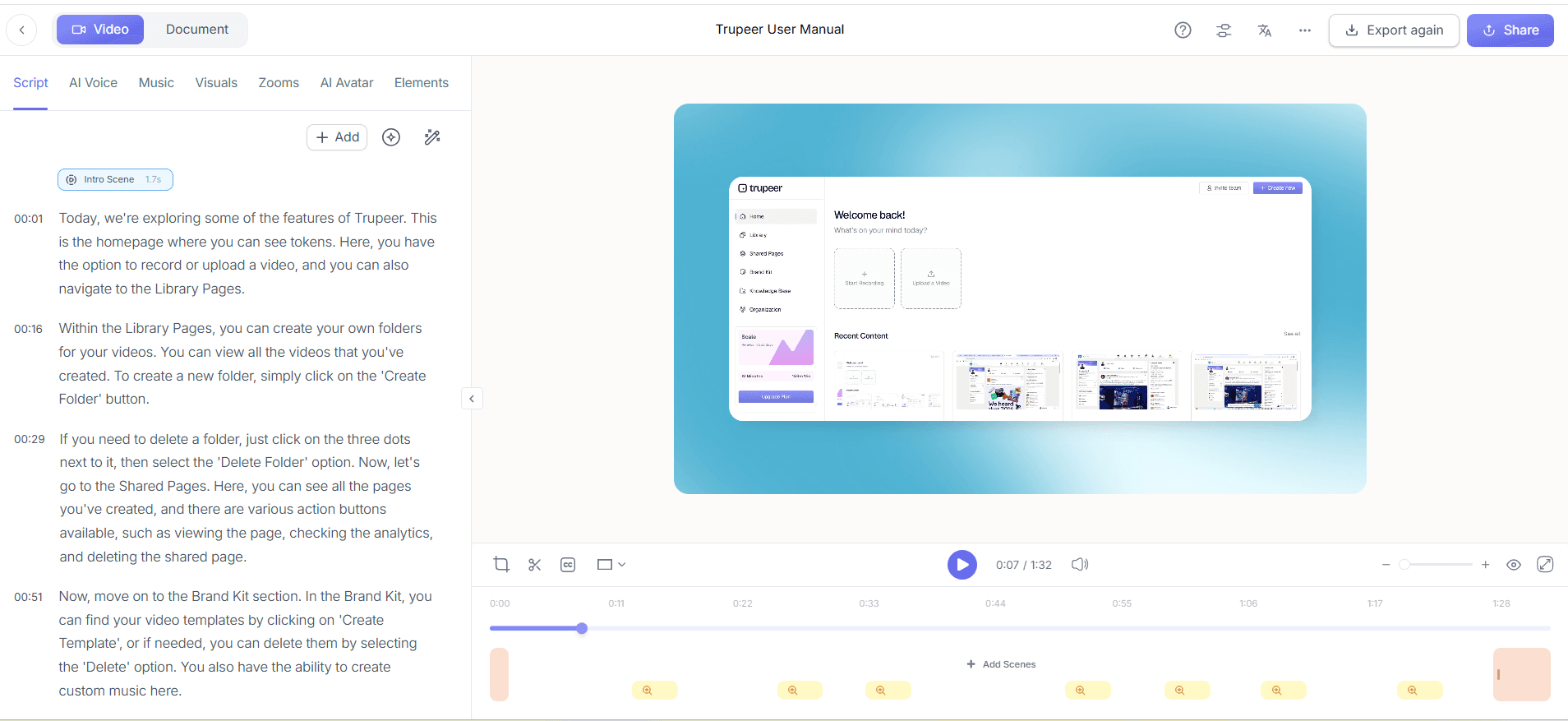
Begin by using Trupeer's AI screen recording with auto-zoom and click detection. Launch the browser-based recorder, which requires no installation, making it quick and easy to start. As you record, the AI focuses on key actions, automatically zooming in on areas of interest, such as button clicks or detailed visual processes. This ensures that nothing is missed and that the recording clearly highlights critical steps. A typical session might take 30 to 60 minutes, depending on the complexity of the operation being documented. If your recording includes long pauses, the AI will edit these out, providing a concise and focused video.
Step 2: Generate SOPs Automatically
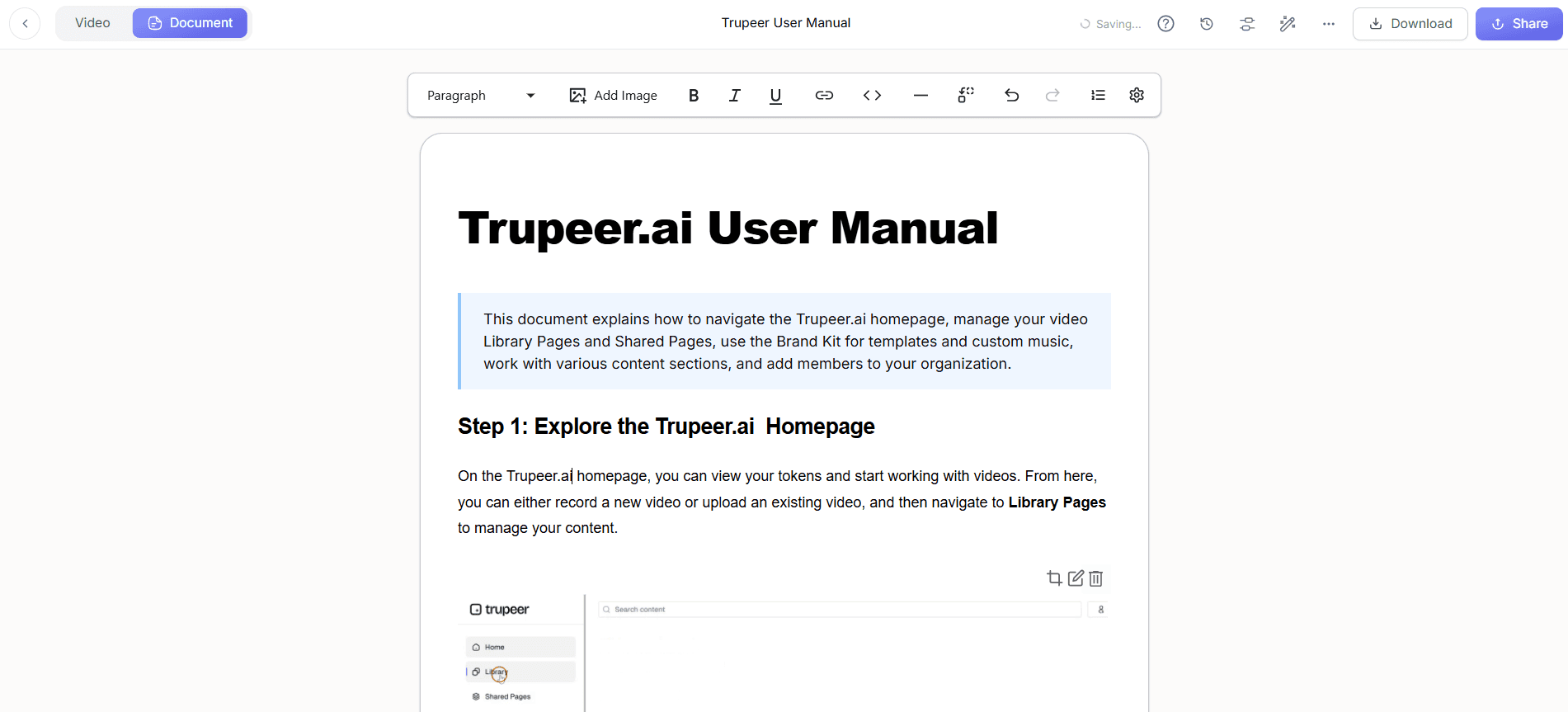
Once the recording is complete, Trupeer's automatic SOP generation feature comes into play. This capability converts the recorded session into an editable SOP document. To do this, simply click on "Generate SOP" from the recording dashboard. The system processes the video and extracts key action points, organizing them into a structured format. This process typically takes just a few minutes, allowing you to quickly review and make any necessary edits. The resulting SOP can be exported in multiple formats, such as PDF or HTML, ensuring it fits smoothly into your existing documentation practices.
Step 3: Add Narration and Dubbing
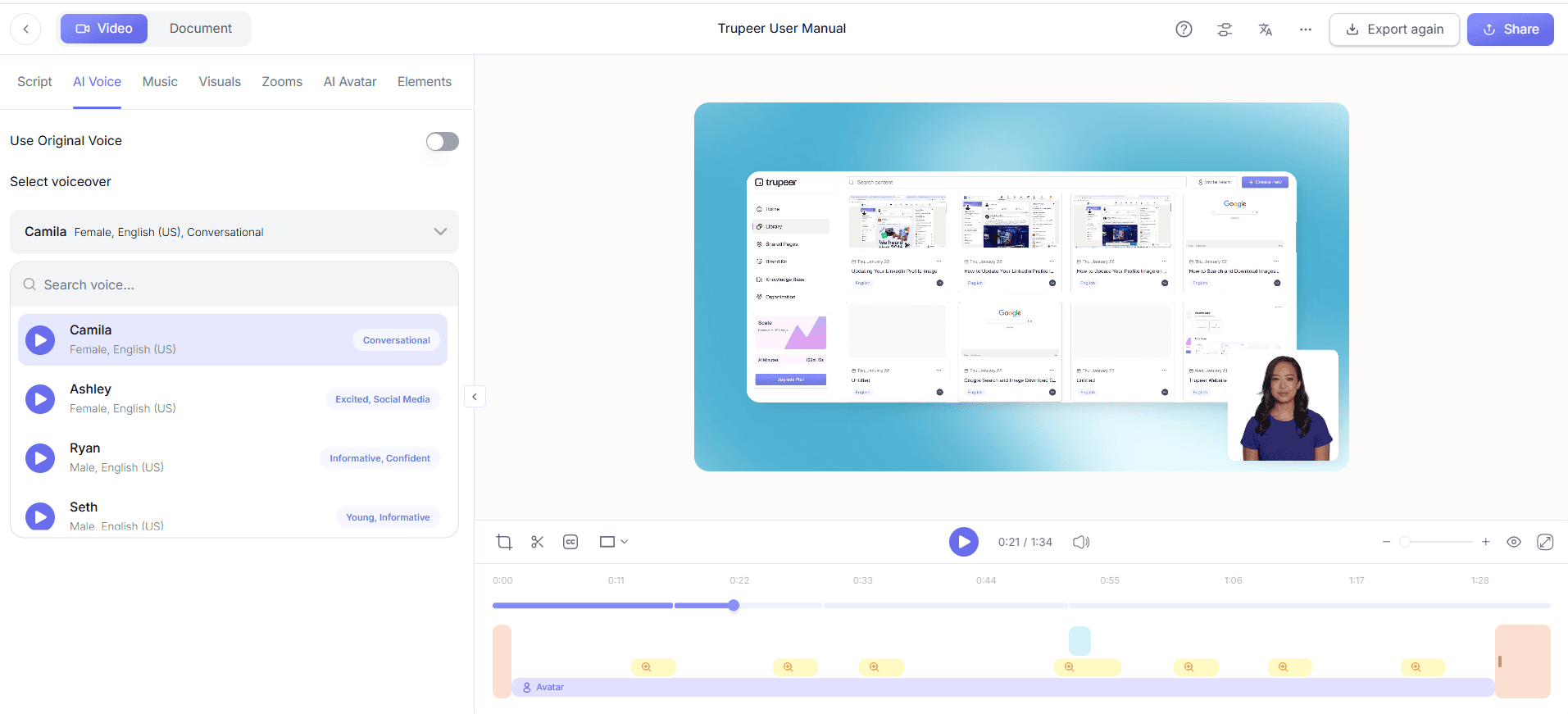
Enhance the understanding of your recordings by adding AI voiceover. Trupeer offers over 65+ natural voices with adjustable pace and tone. Select "Add Voiceover" from the editing options. You can choose a voice that best matches your audience's preferences or even clone a voice from a short sample for consistency. If your team is multinational, This ensures that the tribal knowledge is accessible regardless of the viewer's language, making it a versatile tool for global teams. Teams weighing tools often start with a Loom alternatives comparison before standardizing on a workflow.
Step 4: Organize in a Knowledge Base
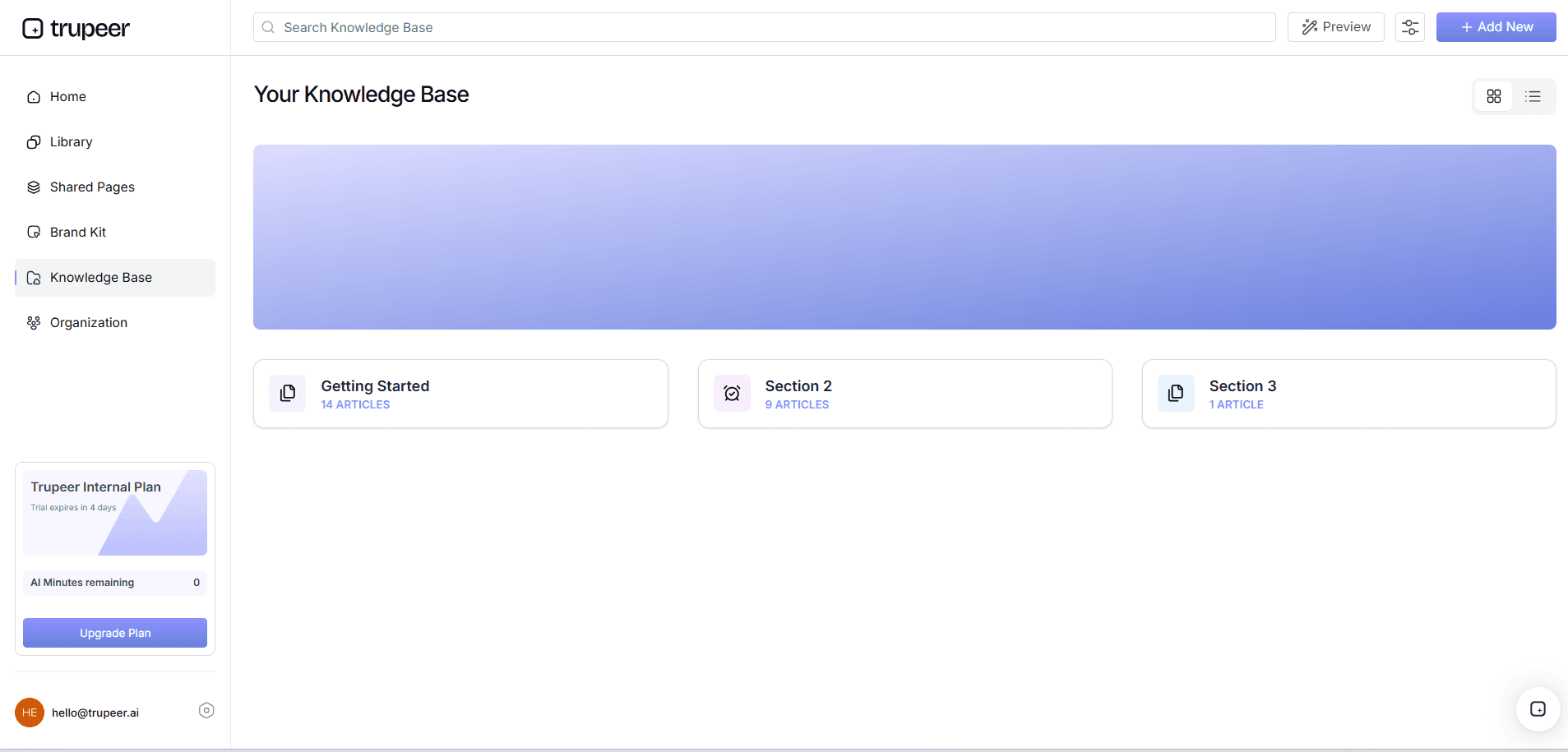
Next, store your content in Trupeer's AI-searchable knowledge base. After finalizing your SOPs and videos, upload them to the knowledge base by clicking "Upload to Knowledge Base" in your Trupeer dashboard. The AI indexes each recording, creating timestamp deep links for quick navigation. This feature allows team members to search for specific processes and jump directly to the relevant part of a video. By organizing content this way, you ensure that valuable insights are easily retrievable, reducing the time spent searching for information and increasing operational efficiency.
Step 5: Review and Collaborate
Use Trupeer's collaborative review and approval workflows to ensure accuracy and completeness. Share the generated SOPs and videos with your team using the "Share for Review" feature. Collaborators can add comments, suggest edits, and approve changes directly within the platform. Set deadlines for each review stage to keep the process on track. This collaborative approach not only enhances the quality of the documentation but also builds a culture of continuous improvement, as team members contribute their insights and expertise.
Step 6: Measure Engagement and Iterate
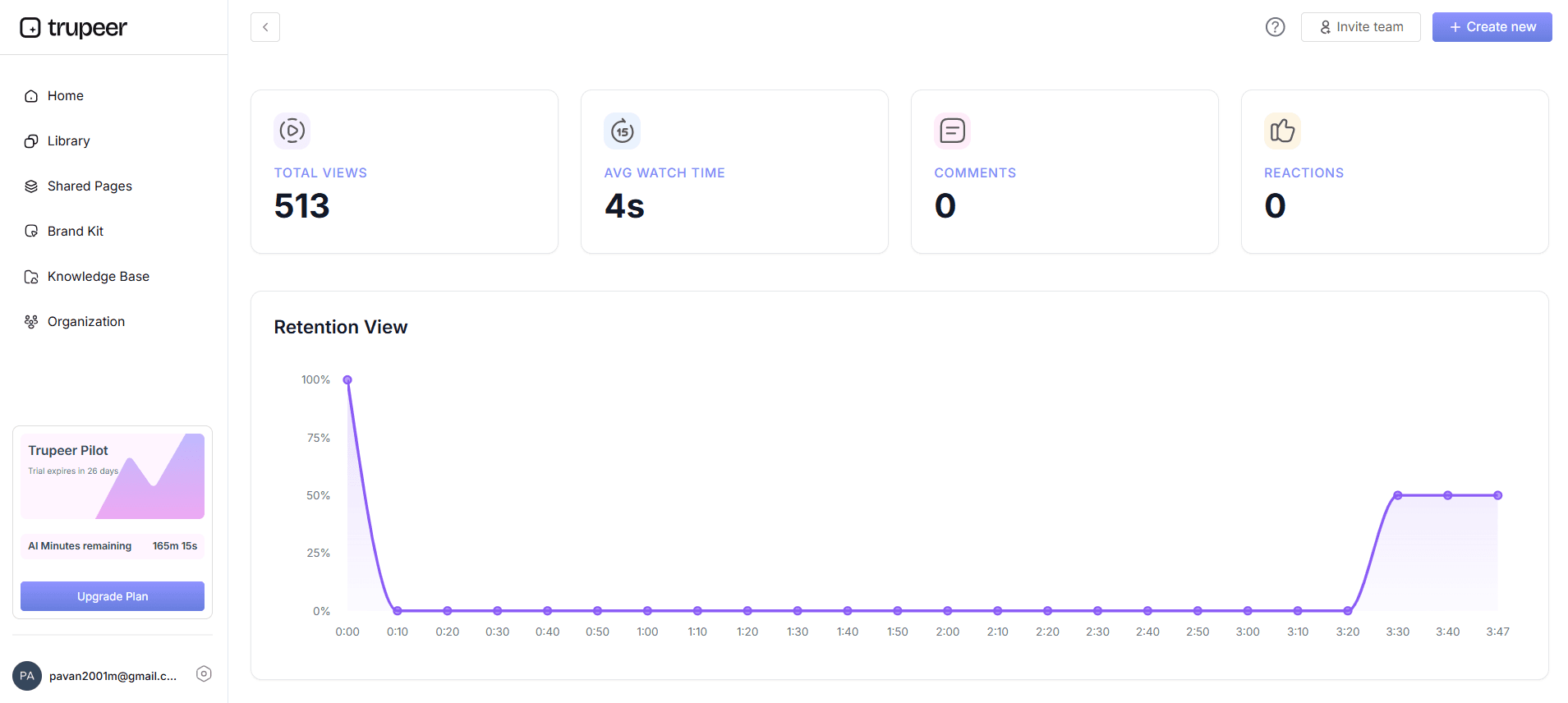
Finally, use Trupeer's viewer engagement analytics to refine your knowledge transfer strategy. Access detailed metrics such as viewer drop-off rates and heatmaps by clicking on "Analytics" for each video. These insights reveal how team members interact with the content, highlighting areas that may require additional clarification or emphasis. Use this data to make informed adjustments to your training materials, ensuring they're as effective and engaging as possible. By regularly iterating based on engagement metrics, you can enhance the overall impact of your tribal knowledge transfer efforts.
What tips help you effectively transfer tribal knowledge?
Transferring tribal knowledge effectively requires strategic planning and execution. Here are some practical tips to enhance your approach and ensure that critical insights are preserved and shared efficiently within your manufacturing and operations teams.
Start early. Begin the knowledge capture process well before experienced employees leave to allow ample time for thorough documentation.
Use visual aids. Incorporate videos and diagrams in your documentation to make complex processes easier to understand and follow.
Standardize formats. Use consistent templates and formats across all documentation to ensure clarity and ease of use, using a Scribe alternative comparison.
Encourage collaboration. Involve multiple team members in the documentation process to capture diverse perspectives and insights.
Regularly update materials. Schedule periodic reviews to ensure that all documentation remains current and relevant as processes evolve.
Promote accessibility. Ensure that all team members can easily access the knowledge base, using a knowledge base generator for simplified access.
Incorporate feedback. Use feedback from team members to continuously improve the quality and effectiveness of your tribal knowledge transfer efforts.
Frequently asked questions
How can I ensure the accuracy of tribal knowledge documentation?
To ensure accuracy, involve experienced employees in the review process. Use Trupeer's collaborative review feature to gather feedback and make necessary adjustments. By sharing drafts with team members, you can incorporate their insights and verify the information. Regular updates and reviews also help maintain accuracy, ensuring that the documentation reflects current practices. also, using tools like Trupeer's AI capabilities for capturing and processing knowledge helps standardize information, reducing the likelihood of errors. By combining human expertise with advanced technology, you can create reliable and precise documentation.
What are the challenges of tribal knowledge transfer?
One major challenge is the tacit nature of tribal knowledge, which is often unrecorded and resides in the minds of experienced employees. This makes it difficult to articulate and document. Another challenge is resistance from employees who may be unwilling to share their knowledge due to fear of redundancy or job security concerns. also, the lack of standardized processes for capturing and sharing this knowledge can lead to inconsistencies. Overcoming these challenges requires a strategic approach, using technology like Trupeer to facilitate documentation and building a culture that values knowledge sharing.
Why is AI valuable in tribal knowledge transfer?
AI enhances tribal knowledge transfer by automating the capture, organization, and retrieval of information, making it accessible and actionable. Features like AI screen recording and auto-generated SOPs simplify the documentation process, saving time and ensuring consistency. AI's ability to translate and dub content into multiple languages also broadens the reach of the knowledge transfer. also, AI video translation tools provide real-time analytics, offering insights into how team members engage with the content. This data-driven approach enables continuous improvement, ensuring that the knowledge transfer remains effective and relevant.
Can Trupeer integrate with other tools we use?
Yes, Trupeer is designed to integrate smoothly with various tools and platforms commonly used in manufacturing and operations. Its compatibility with existing systems allows for the smooth transfer of data and documents. Whether you're using ERP systems, project management software, or other digital tools, Trupeer's flexible architecture supports integration efforts. This ensures that the knowledge captured and organized within Trupeer can be easily accessed and used across different platforms, enhancing the overall efficiency and effectiveness of your operations.
What role does culture play in tribal knowledge transfer?
Culture plays a critical role in tribal knowledge transfer, as it influences employees' willingness to share and document their knowledge. A culture that values and rewards knowledge sharing encourages employees to contribute their insights and experiences. Leadership support is also crucial, as it sets the tone for the organization's approach to knowledge management. By building an environment where collaboration and continuous learning are prioritized, companies can overcome barriers to knowledge sharing. Recognizing employees' contributions to the knowledge base further reinforces the importance of this practice, ensuring its integration into daily operations.