Trupeer Blog
Summarise
Global enterprises often face the challenge of training teams spread across different countries and languages. If your source content is already written, you can create training videos from existing documents and then translate them. Imagine a multinational corporation launching a new software tool that requires simultaneous training for employees in 15 countries, each with their native language. Crafting training videos that cater to such a diverse audience is no small feat. For instance, a single training video that covers the essentials in English has to be adapted into French, Spanish, Mandarin, and more, ensuring that every team member comprehends the material effectively. This is where a simplified workflow for training videos becomes crucial.
With the right tools, one can significantly reduce the time and resources typically spent on creating separate videos for each language. A modern video production process can transform a single master recording into training content available in 15+ languages. This approach doesn't just save time; it ensures consistency across the board, from the Americas to Asia. As enterprises continue to expand globally, the ability to swiftly produce multilingual training videos becomes a competitive advantage.
Global enterprises can save up to 50% on training costs by adopting a multilingual video strategy.
For organizations aiming to maintain uniformity in training while respecting language diversity, adopting a multilingual video strategy is the way forward. Enterprises need a solution that not only supports multiple languages but also ensures that the quality and message remain intact across all platforms. This guide will explore why creating multilingual training videos matters, the benefits it brings, and the features of Trupeer that make this task efficient.
Why does creating multilingual training videos for global enterprise teams matter?
Creating multilingual training videos matters because global enterprises operate in diverse linguistic environments, where a one-size-fits-all approach to communication doesn't work. Imagine a scenario where a new compliance protocol needs to be rolled out across offices in different countries. If employees can't fully understand the training material due to language barriers, the risk of non-compliance increases, potentially leading to costly fines or operational setbacks.
Also, language is more than just a means of communication; it's a critical element of cultural competence and employee engagement. When training materials are available in an employee's native language, it enhances understanding and retention of the information. This boosts employee confidence and competence, leading to improved performance and productivity. Such an approach also demonstrates respect for cultural diversity, reinforcing the company's commitment to inclusion. Trupeer also ships a enterprise training video software that handles this step without extra setup.
Also, multilingual training videos can significantly lower costs associated with in-person training sessions, travel, and logistics. By using a centralized training videos workflow that caters to different languages, enterprises can ensure consistent messaging and branding across all regions. This consistency is crucial for maintaining a unified corporate identity while still respecting local nuances. In a world where businesses are increasingly global, the ability to deliver effective training in multiple languages is not just beneficial; it's essential.
What are the benefits of multilingual training videos?
Multilingual training videos offer a host of benefits that can transform the training experience for global teams.
Enhanced comprehension. Training materials in an employee’s native language improve understanding, reducing errors and increasing compliance.
Cost efficiency. Using a training video production process to convert a single master recording into multiple languages saves on development costs and resources.
Consistency in messaging. By using a centralized video generation platform, companies ensure uniformity in training content, which helps maintain brand identity globally.
Increased engagement. Employees are more likely to engage with and retain information that's presented in a language they're comfortable with, leading to better performance.
Faster onboarding. Multilingual videos allow new hires to learn at their own pace in their preferred language, speeding up the onboarding process.
Cultural inclusivity. Offering training in multiple languages shows respect for cultural diversity and builds an inclusive work environment.
Which Trupeer features help you create multilingual training videos?
Trupeer offers a range of features that simplify the process of creating multilingual training videos, ensuring content is both accessible and consistent.
AI screen recording with auto-zoom and click detection
This feature allows you to create precise and focused recordings by automatically zooming in on areas of interest and detecting clicks. This ensures that the viewer's attention is directed exactly where it needs to be, which is crucial when translating content for different cultures. The clarity of the recording minimizes misunderstandings, making it easier to overlay different languages without altering the core message. This capability is essential for producing high-quality training videos that meet the needs of a global audience.
AI voiceover in 65+ natural voices, adjustable pace and tone
Trupeer's AI voiceover feature supports over 65+ natural voices, allowing you to adjust pace and tone to suit different languages and cultural expectations. This feature is vital for creating multilingual training videos as it provides the flexibility to tailor the audio to the preferences of various audiences. The voiceover can mimic the nuances of native speakers, enhancing the authenticity of the training material. This capability ensures that the translated content resonates with all viewers, maintaining engagement levels across the board.
AI translation into 65+ languages with lip-sync
Trupeer's AI translation feature enables smooth conversion of training videos into over 40 languages while maintaining lip-sync accuracy. This level of precision is critical when producing multilingual training content, as it ensures that the visual and audio elements remain synchronized, preserving the integrity of the message. By delivering accurate translations with synchronized lip movements, Trupeer helps you meet the diverse linguistic needs of global teams without sacrificing video quality.
Auto chapters and segment detection
This feature enhances the usability of training videos by automatically detecting chapters and segments, making it easier for viewers to navigate the content. This is particularly useful in multilingual settings where employees may want to revisit specific sections for clarity. The segmentation ensures that users can quickly access the parts of the video that are most relevant to them, facilitating a more personalized and efficient learning experience. Trupeer's video knowledge base further enhances this capability by making videos searchable, allowing users to find the exact information they need quickly.
AI avatars / talking-head video with HeyGen integration
The ability to use AI avatars, including custom options with HeyGen integration, adds a personal touch to training videos. This feature allows for the creation of dynamic talking-head videos that can be easily adapted into different languages. Avatars can be customized to reflect diverse cultural backgrounds, enhancing the relatability of the content. This personalization is crucial in multilingual training, as it helps maintain viewer engagement and makes the training material more approachable. Trupeer's AI create training videos in minutes tool simplifies this process, enabling quick and efficient video production.
How do you create multilingual training videos step by step with Trupeer?
Step 1: Record the Initial Training Video
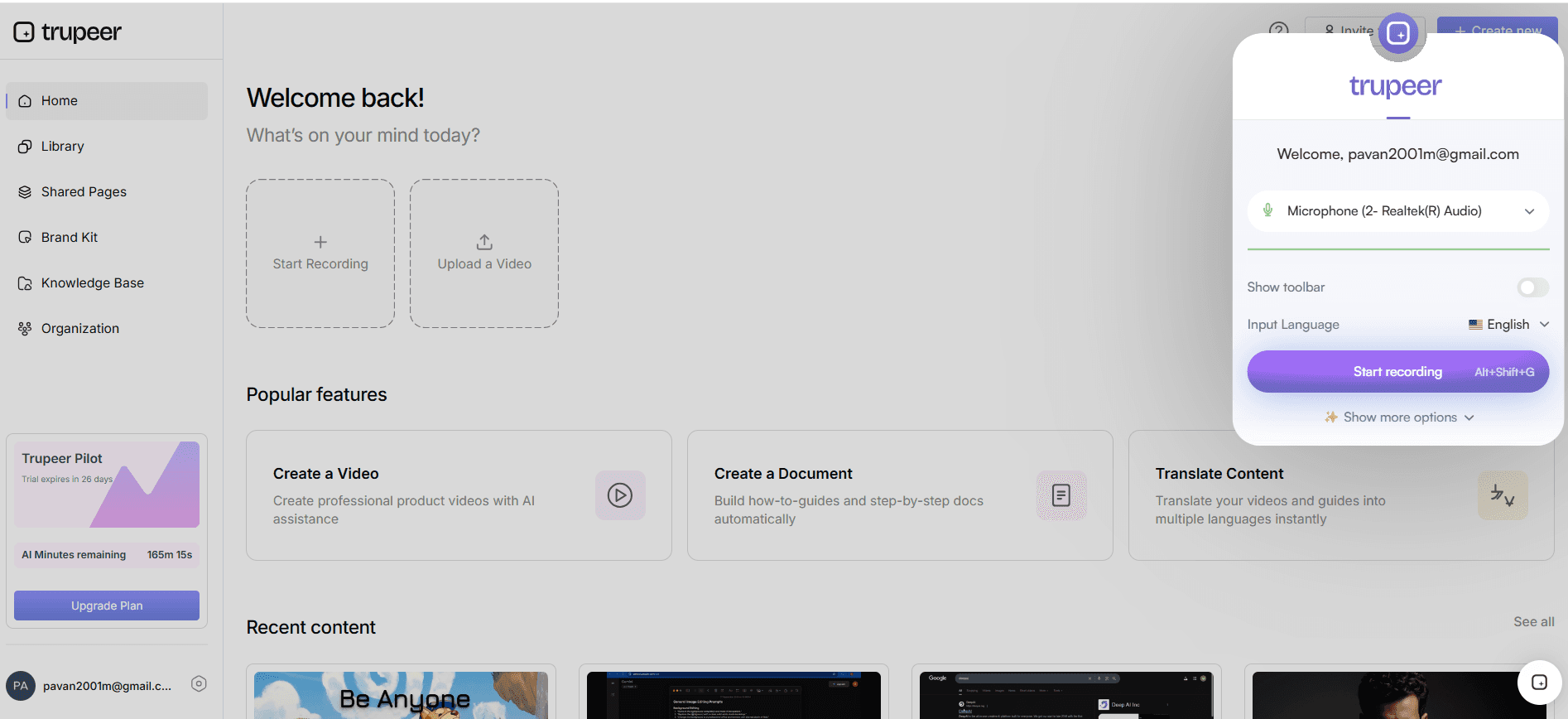
Begin by using Trupeer’s AI screen recording with auto-zoom and click detection. This feature ensures your video remains focused on the key elements you want to highlight. Launch the browser-based recorder, which requires no installation, and start capturing your training session. As you navigate through the content, Trupeer automatically zooms in on areas of interest and detects clicks, which is vital for maintaining viewer engagement. Once recorded, the video is ready for the next stage in just a few minutes. This process is efficient and ensures that your master video is clear and concise, setting a solid foundation for multilingual adaptation.
Step 2: Remove Filler Words and Improve Clarity
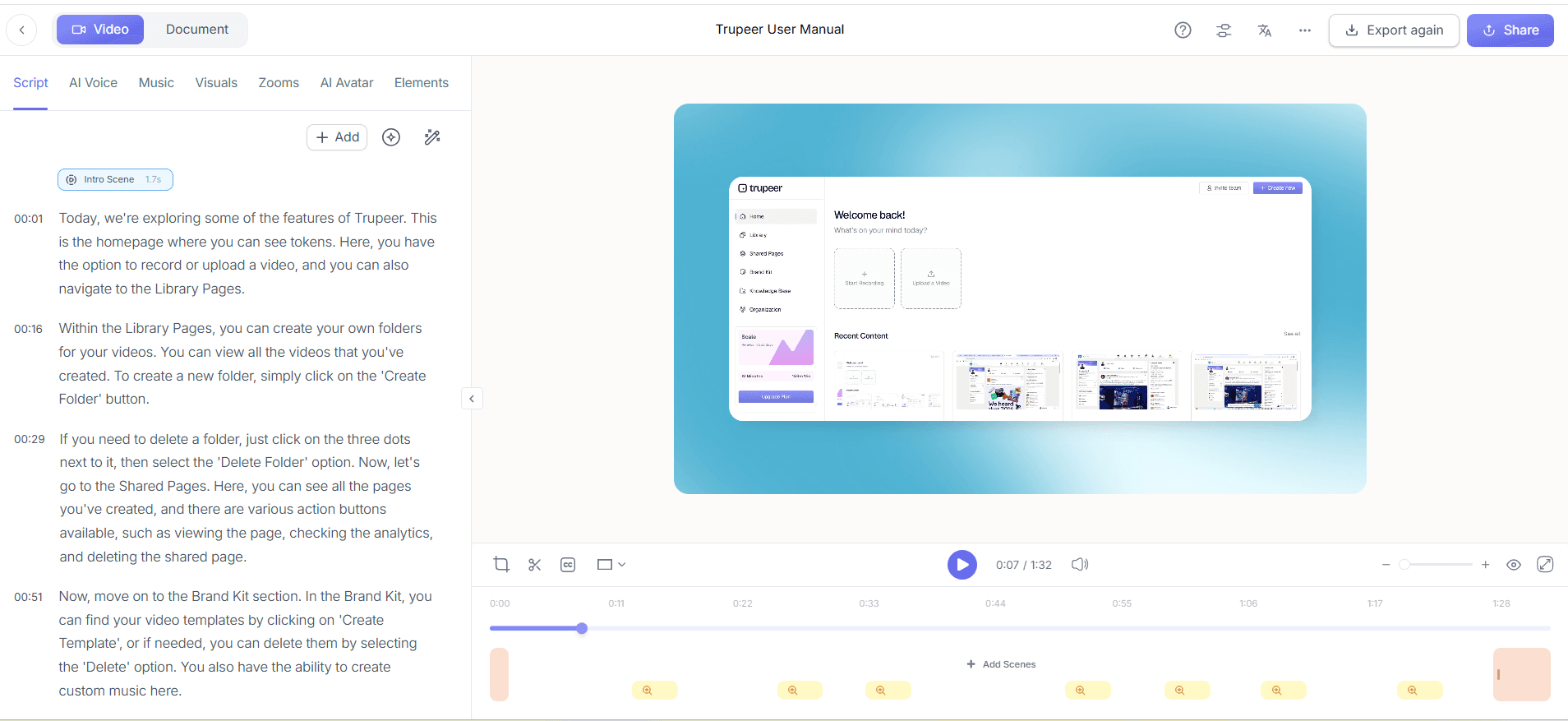
Once your video is recorded, enhance its clarity by using Trupeer’s automatic filler-word removal feature. This AI-driven tool identifies and eliminates unnecessary words like "um" and "ah," as well as long pauses. Simply upload your video into Trupeer’s platform, and it will process the content, removing distractions to create a polished final version. This step not only improves the video's professional quality but also makes it easier to translate, as the cleaner script is more straightforward for both voiceover and text translation. The processing takes just a few minutes, ensuring quick turnaround times. Teams weighing tools often start with a Loom alternatives comparison before standardizing on a workflow.
Step 3: Translate Video into Multiple Languages
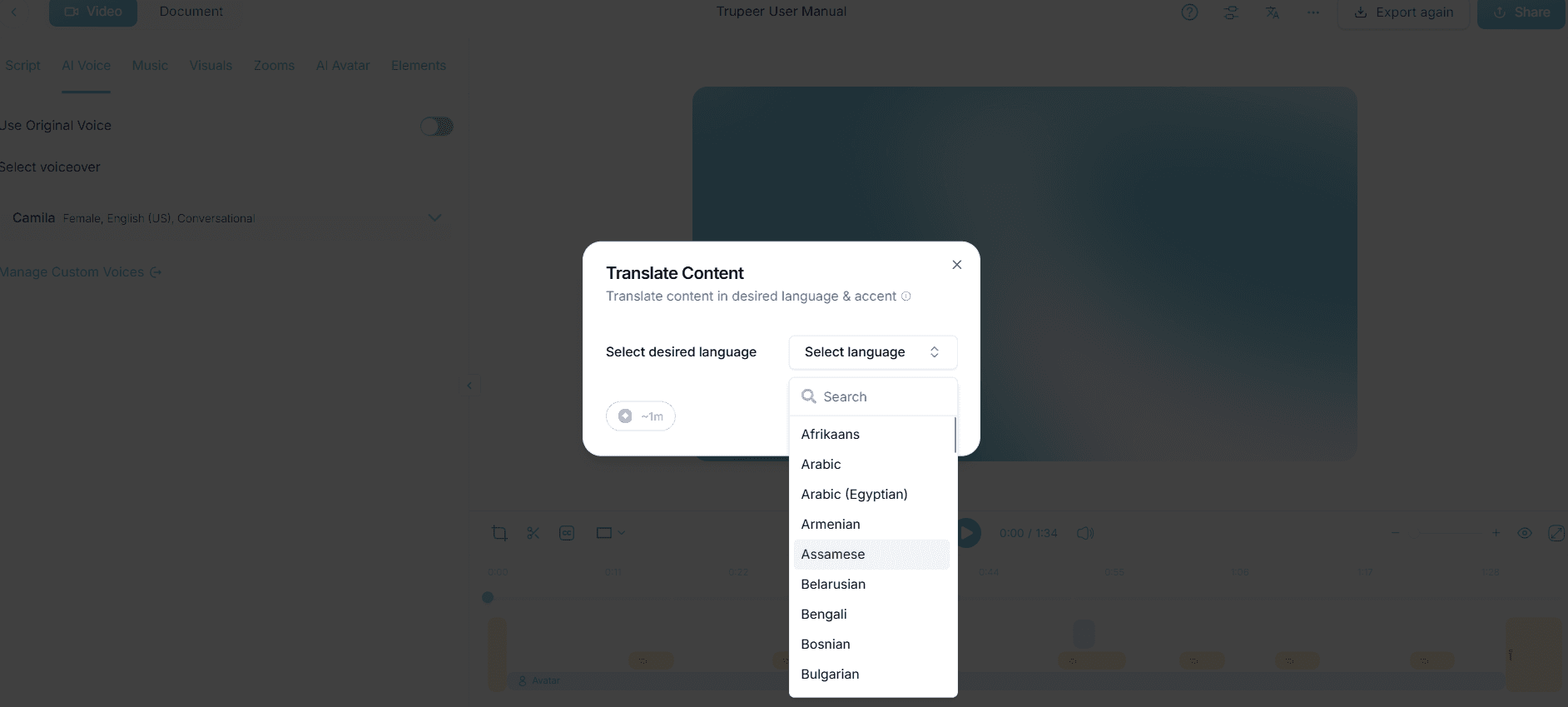
With the polished video ready, use Trupeer’s AI translation to convert it into over 40 languages. This feature includes lip-sync capabilities to ensure that the dubbed audio matches the speaker's mouth movements. Select the desired languages in the Trupeer interface and initiate the translation process. The platform provides accurate translations, maintaining the video's integrity across languages. This step is crucial for reaching a global audience, as it allows you to offer the same high-quality training content to all employees, regardless of their language. The translation process is typically completed within an hour, depending on the video length.
Step 4: Add AI Voiceovers
Next, incorporate AI voiceovers using Trupeer’s library of 65+ natural voices. You can adjust the pace and tone to fit each language’s nuances, ensuring the voiceover feels authentic and relatable. Select your preferred voice options within the Trupeer dashboard, align them with the translated text, and apply these settings to the video. This capability is particularly beneficial for maintaining engagement across different cultures, as it respects linguistic preferences. The AI voiceover process is swift, usually taking less than 30 minutes, and results in a professional-quality audio track that complements the video.
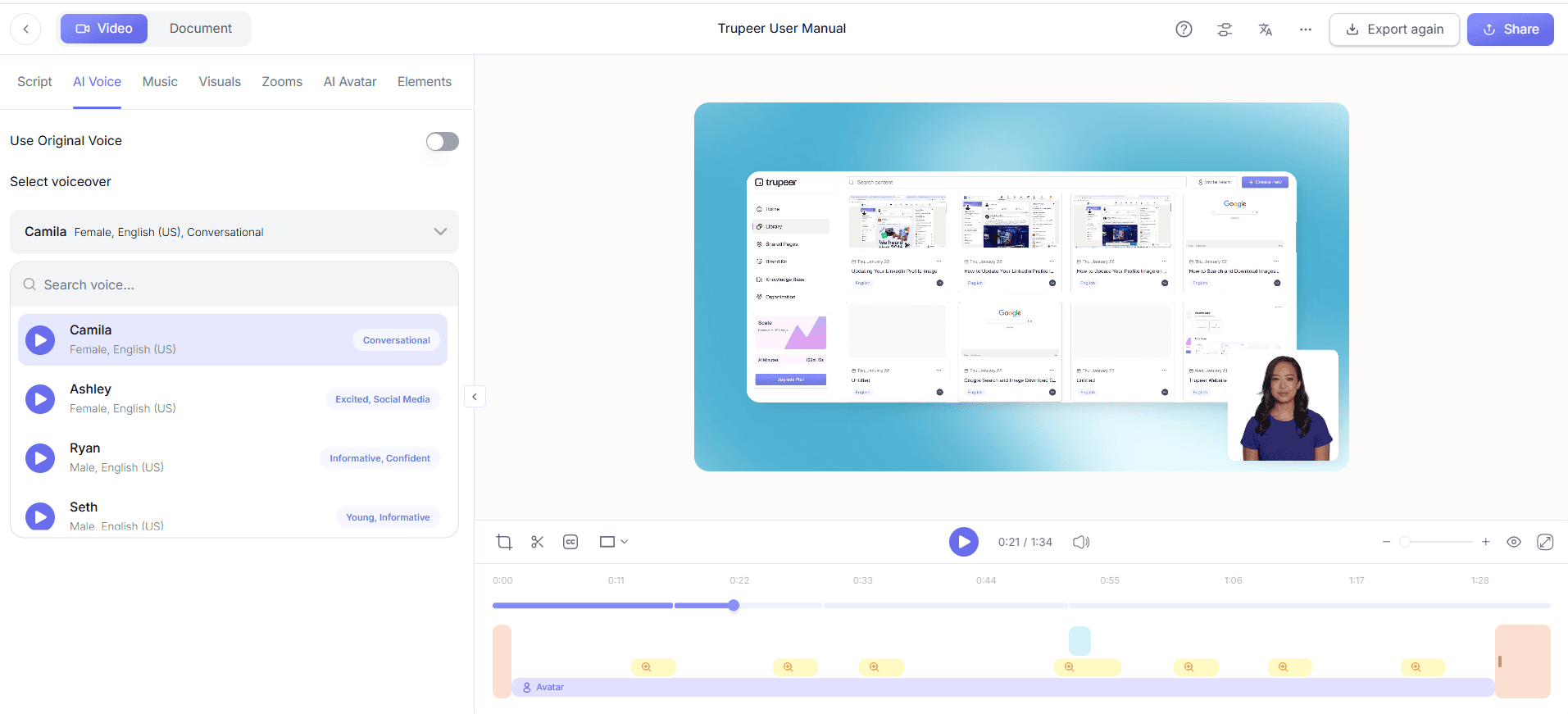
Step 5: Generate Auto Chapters and Segments
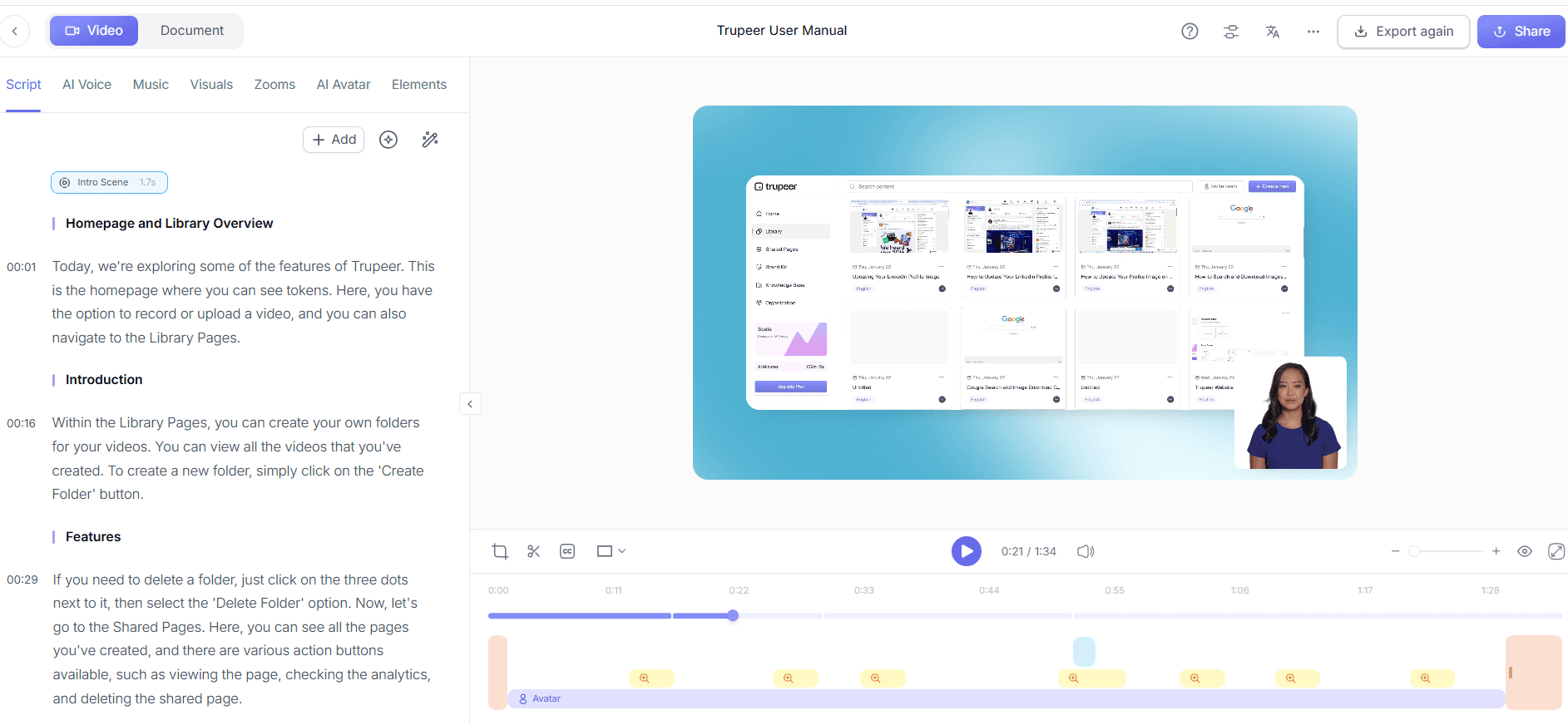
Enhance your video’s usability with Trupeer’s auto chapters and segment detection. This feature automatically breaks down your video into key sections, making it easier for viewers to navigate through the content. After the voiceover is added, access the video editing section in Trupeer, and activate the auto-detection feature. The platform will analyze the video, creating a structured outline with clickable chapters. This organization is essential for multilingual audiences, who can quickly find and review specific information pertinent to their needs. The segmentation process is automated and completes in minutes.
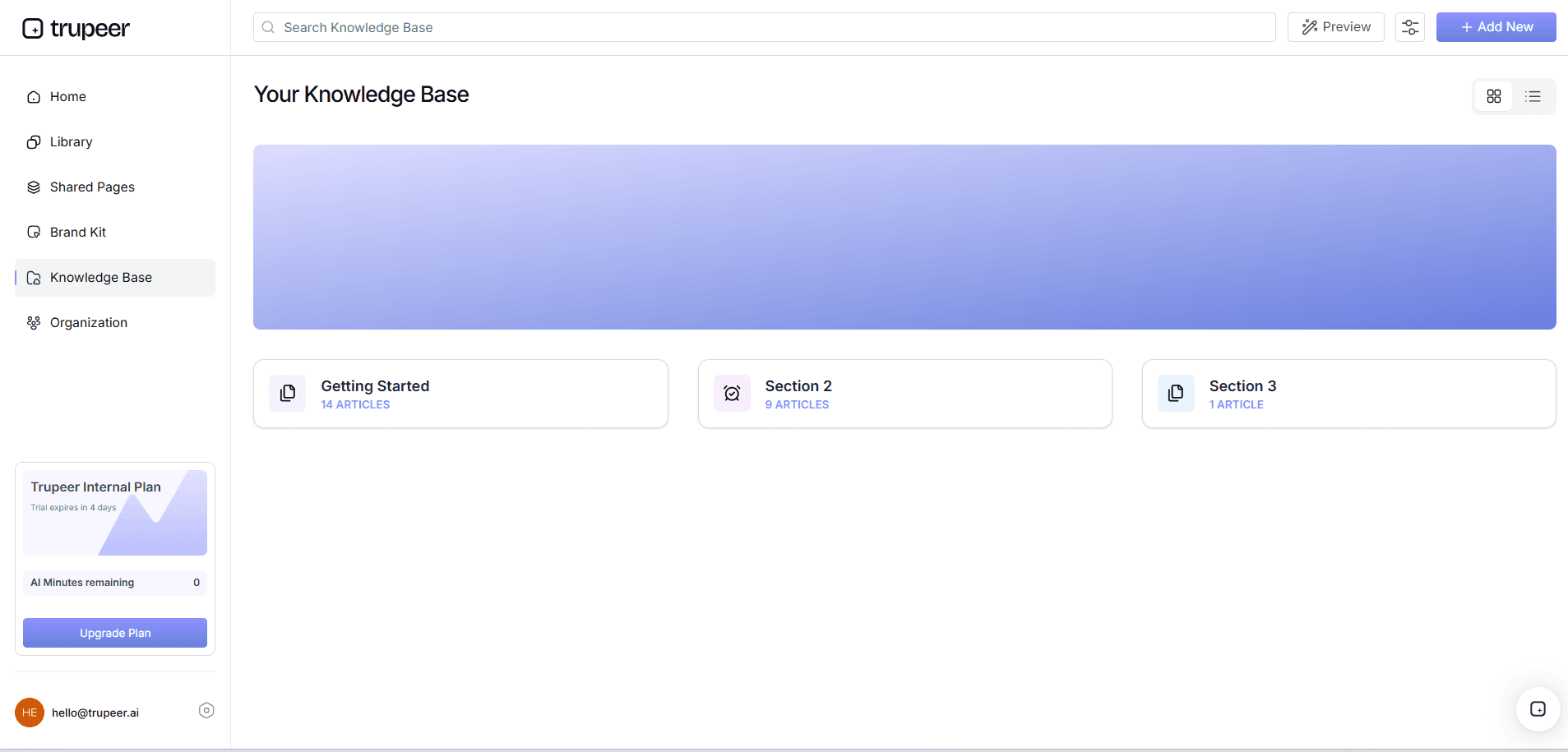
Step 6: Distribute via Trupeer’s Knowledge Base
Finally, use Trupeer’s AI-searchable knowledge base to distribute your multilingual training videos. Upload the finished videos to the platform, where they become part of a searchable library with timestamp-level deep links. Employees can easily access the videos through a custom-domain hosting with SSO, ensuring secure and simplified access. This distribution method is particularly effective for global teams, as it allows for quick retrieval of specific training content. With the knowledge base, employees can engage with the training material at their convenience, promoting continuous learning and skill development. Many teams pair this with a documentation platform that generates written guides from the same recording, so the pitch and the how-to stay in sync.
What tips help you create multilingual training videos?
Creating effective multilingual training videos requires attention to detail and strategic planning. Here are some tips to ensure your videos resonate with a global audience.
Incorporate cultural context. Ensure that the translated content respects cultural nuances and local customs, which enhances relatability.
Use consistent terminology. Maintain uniformity in terms used across different languages to avoid confusion and ensure clarity.
use AI tools. Use an enterprise training video platform to automate translation and voiceover processes for efficiency.
Test with native speakers. Before finalizing, have native speakers review the videos to catch potential translation errors or cultural missteps.
Keep design simple. Use clear visuals and text that are easy to understand, avoiding clutter that can distract from the main message.
Regularly update content. Ensure your training materials remain current by revisiting and revising them as necessary.
Track engagement metrics. Use analytics to identify how different audiences interact with your videos and adjust accordingly.
When SOPs come into the same conversation, a Scribe alternatives comparison helps clarify the scope.
Frequently asked questions
How do I ensure accurate translations in training videos?
Ensuring accurate translations starts with a clear and concise script. Use Trupeer’s AI translation, which supports over 40 languages and includes lip-sync capabilities to maintain message integrity. also, testing with native speakers before finalizing the video can help catch errors. This approach ensures that the translated content is both accurate and culturally appropriate, enhancing the video's effectiveness across different languages.
What is the best way to distribute multilingual training videos?
Using Trupeer’s AI-searchable knowledge base is one of the most effective ways to distribute multilingual training videos. This platform allows you to host videos securely with custom-domain and SSO access. The knowledge base makes videos easy to find with timestamp-level deep links, ensuring that employees can quickly locate and access the training materials they need. This method supports both centralized and decentralized learning environments.
Can Trupeer handle video localization for different regions?
Yes, Trupeer can handle video localization effectively. Its AI translation feature supports over 40 languages, allowing for comprehensive localization that includes cultural nuances and local dialects. This ensures that the training videos are not only in the correct language but also culturally relevant, which enhances engagement and understanding. This makes Trupeer an ideal video localization tool for global enterprises.
Why is using AI voiceover beneficial for multilingual videos?
AI voiceover is beneficial because it offers consistency and quality across different languages. With Trupeer, you can choose from over 65+ natural voices, adjusting pace and tone for authenticity. This helps maintain a professional quality in audio across all versions of your training videos. AI voiceover also speeds up the production process, reducing the time needed to create multilingual content from weeks to days.
Does Trupeer offer analytics to track video performance?
Yes, Trupeer provides comprehensive viewer engagement analytics, including drop-off rates and heatmaps. These insights help you understand how audiences interact with your training videos, allowing you to make informed decisions to enhance content and engagement strategies. Analytics can reveal which sections of the video are most engaging, helping you refine future training materials for better impact.
Related Blogs