Trupeer Blog
Summarise
Imagine a scenario where a new user signs up for your SaaS platform and feels overwhelmed by the interface. They have questions about getting started and handling the features, leading them to flood your customer support with queries. This is a common occurrence for many businesses that rely heavily on intuitive user experiences. The stakes are high, as inefficient onboarding and support processes can lead to customer churn and increased operational costs.
In fact, a
recent study shows that businesses using in-app how-to videos have seen a 30% reduction in support tickets
, directly impacting customer satisfaction and retention. If you're aiming to simplify support and enhance user experience, integrating in-app how-to videos is a strategic move. Whether you're a product manager looking to enhance the onboarding process or a customer success lead aiming to improve user engagement, this approach is relevant to you. Similar to how customer onboarding videos prove beneficial, in-app how-to videos can transform your customer support landscape.
Why do in-app how-to videos matter?
In-app how-to videos are critical in addressing the common business problem of high support ticket volumes and user dissatisfaction. When users encounter challenges within an application, their immediate reaction is often to seek assistance. This can lead to a backlog of support tickets, increased wait times, and a frustrated user base. For SaaS companies, this problem is exacerbated by the frequency of software updates and new feature rollouts, which can confuse users and lead to a surge in support queries. Storing outputs inside an AI-searchable knowledge base makes every recording findable by topic and timestamp.
By implementing in-app how-to videos, businesses can preemptively address user confusion and reduce dependency on direct support channels. These videos serve as a bridge, providing users with immediate, visual guidance that is both understandable and engaging. The result is a significant reduction in support tickets, freeing up the customer support team to focus on more complex issues. This not only enhances user experience but also contributes to operational efficiency. As seen in the instructional videos use case, companies that adopt this strategy can improve user satisfaction and reduce churn rates.
What are the benefits of in-app how-to videos?
In-app how-to videos offer a range of benefits that can positively impact both users and businesses. By embedding these videos within your application, you can achieve several key outcomes:
Reduced support ticket volume. In-app videos provide users with immediate answers, decreasing the need for support tickets. This leads to a more efficient support team and happier users.
Improved user engagement. Videos engage users more effectively than text-based instructions. By offering visual guidance, you can increase user interaction and retention rates.
Faster onboarding. New users can quickly understand how to use your product through videos, speeding up the onboarding process and increasing initial satisfaction. This can be enhanced by using an AI-powered video tool.
Consistent messaging. Videos ensure that all users receive the same message, reducing the risk of misinterpretation. This consistency is crucial for maintaining brand integrity.
Scalable training solution. Videos can be easily updated and scaled across different user groups, making them a sustainable solution for training and support. A video generation platform offers scalable options.
Enhanced product adoption. Users are more likely to explore and adopt new features when guided by videos, leading to increased product utilization and satisfaction.
Which Trupeer features help you create in-app how-to videos?
Trupeer offers a suite of features tailored to creating effective in-app how-to videos. Each capability is designed to enhance the video creation process, making it smooth and impactful for your users.
AI screen recording with auto-zoom and click detection
Trupeer's AI screen recording capabilities allow you to capture high-quality videos with minimal effort. The auto-zoom feature ensures that important on-screen elements are highlighted, while click detection provides a clear view of user interactions. This results in videos that are both informative and engaging. The simplicity of this tool means you can quickly record and share tutorials without needing extensive editing skills. For teams looking to create training videos in minutes, this feature is invaluable.
AI voiceover in 65+ natural voices, adjustable pace and tone
Adding a professional voiceover to your videos can significantly enhance their impact. Trupeer's AI voiceover feature offers over 65+ natural voices, allowing you to select the one that best suits your brand's tone. You can adjust the pace and tone to match the video's content, ensuring clarity and engagement. This feature helps in delivering a consistent message across all your videos, crucial for maintaining brand voice and improving user understanding.
Auto chapters and segment detection
With Trupeer, creating structured and easily navigable videos is straightforward. The auto chapters and segment detection feature automatically identifies key sections of your video, allowing users to jump directly to the content they need. This is especially beneficial for longer videos, as it saves users time and enhances their viewing experience. It also allows for easier updates and modifications, ensuring your content remains relevant and up-to-date.
AI avatars / talking-head video (stock library + custom)
Personalize your how-to videos with Trupeer's AI avatars. Whether you choose from the stock library or create a custom avatar, this feature adds a human touch to your videos. Avatars can engage users more effectively, making the content more relatable and memorable. This is particularly useful for explaining complex processes or introducing new concepts, as the visual representation of a guide can make the information more accessible.
Embeddable video widgets for in-app guidance
Trupeer's embeddable video widgets enable you to place how-to videos directly within your application. This smooth integration means users can access guidance exactly where they need it, reducing friction and enhancing their experience. By embedding videos at critical user touchpoints, you can provide context-specific assistance, greatly improving user success rates. This feature is ideal for SaaS products that undergo frequent updates and require ongoing user education.
How do you create in-app how-to videos step by step with Trupeer?
Step 1: Capture the Screen
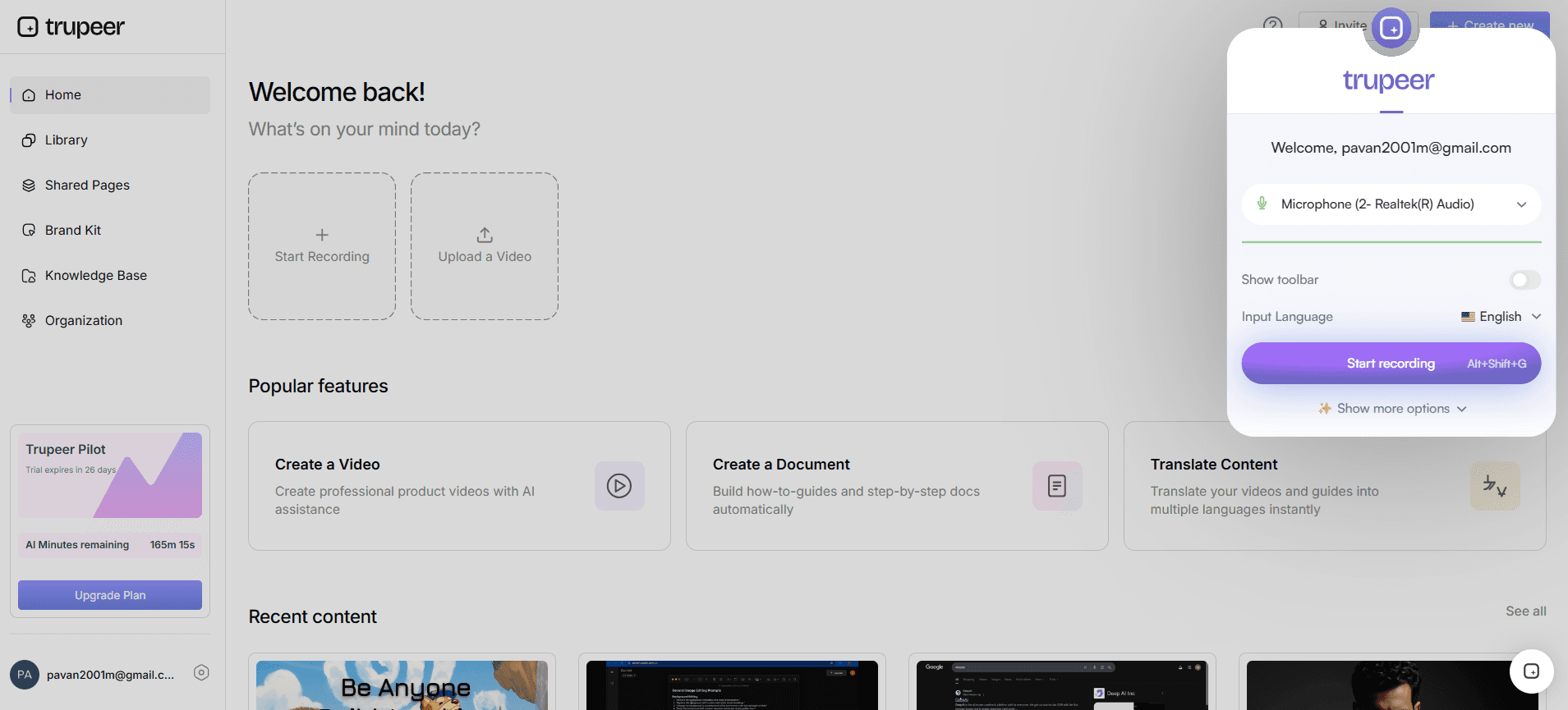
Begin by launching Trupeer's browser-based recorder, which requires no installation. Click on the "Start Recording" button. As you navigate through your application, Trupeer's AI screen recording feature will automatically zoom in on important areas and detect clicks. This ensures that your video captures all the essential actions clearly. The recording process is smooth and can handle sessions up to 60 minutes, accommodating even complex workflows. If you make a mistake, simply pause and resume the recording without starting over, saving time and effort.
Step 2: Add AI Narration
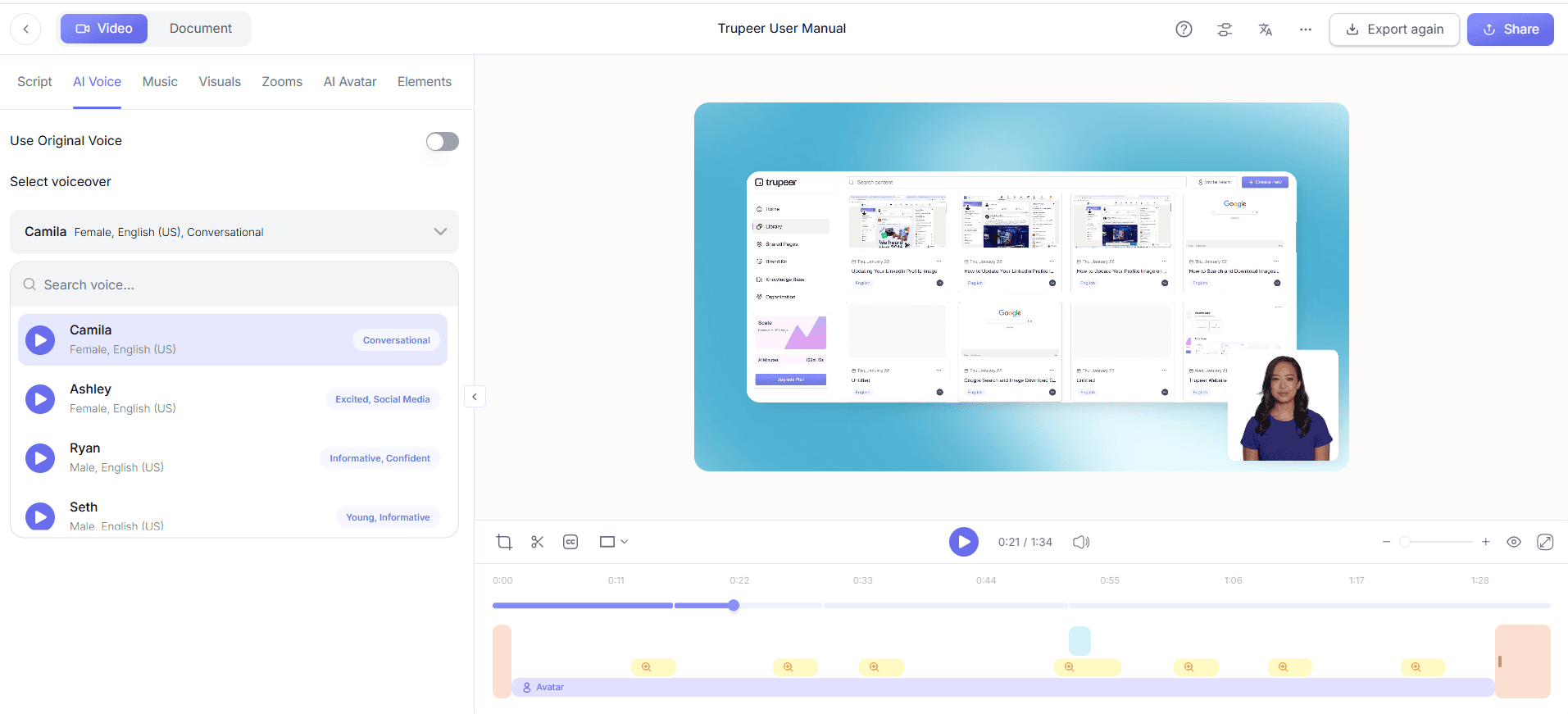
After capturing your screen, enhance the video with automatic AI narration. Trupeer's tool provides over 65+ natural voice options. Select a voice that matches your brand's tone and adjust the pace to suit the video content. This narration adds clarity and professionalism, making it easier for users to follow along. Click "Apply Narration" and Trupeer will synchronize it with your video timeline, ensuring smooth integration. This step is quick, usually taking less than five minutes to complete.
Step 3: Edit and Polish
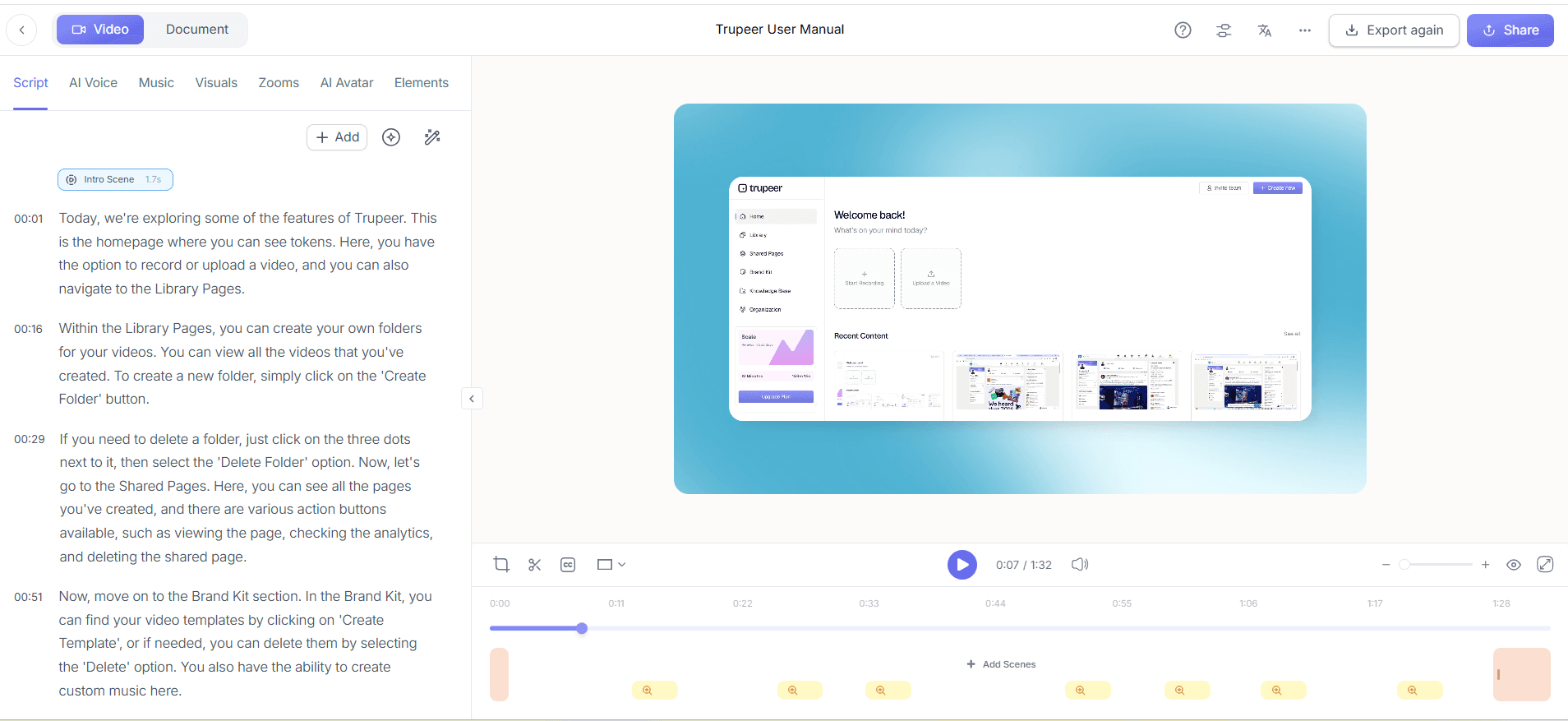
Next, use Trupeer's editing capabilities to refine your video. Start by removing any filler words or long pauses with a single click, thanks to Trupeer's automatic filler-word removal feature. This makes the video concise and engaging. You can also add branded templates from Trupeer's brand kits to maintain visual consistency. This editing phase is efficient, typically taking 10-15 minutes, and results in a polished, professional video ready for distribution.
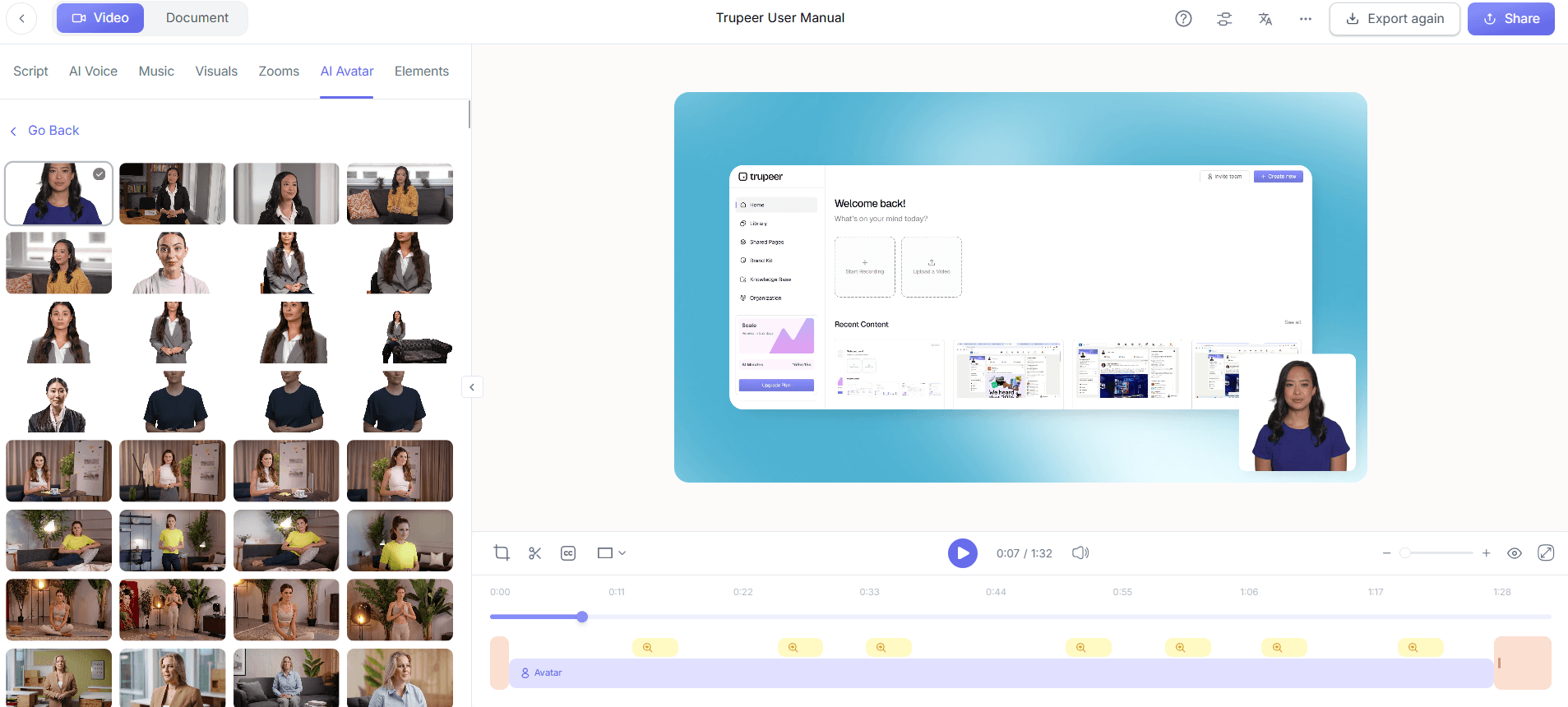
Step 4: Create Custom Avatars
Enhance your video with a personal touch by adding AI avatars. Use Trupeer's integration with HeyGen to create custom avatars that align with your brand. Simply upload a short sample or select from the stock library, and your avatar will be ready to guide users through the video. This feature is particularly useful for adding a human element to digital instructions. It typically takes about 10 minutes to integrate an avatar into your video.
Step 5: Generate Documentation
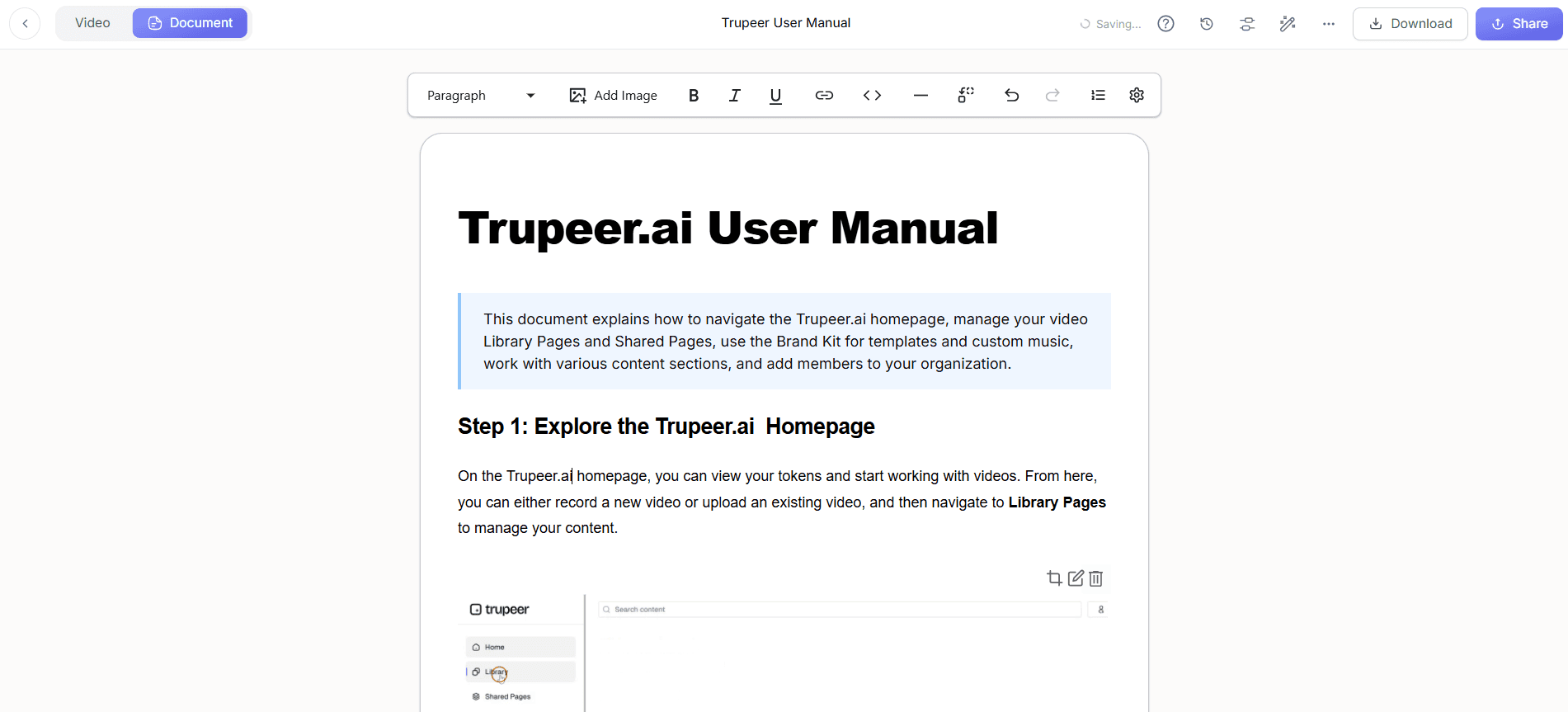
Once your video is polished, generate accompanying documentation. Trupeer's automatic SOP generation feature creates edit-ready documents that summarize the video content. Click on "Generate Documentation" and Trupeer will produce a detailed, exportable SOP in formats like HTML and PDF. This documentation is tied to the video, ensuring it updates automatically with any changes. This step is invaluable for teams needing consistent and up-to-date support materials.
Step 6: Embed and Distribute
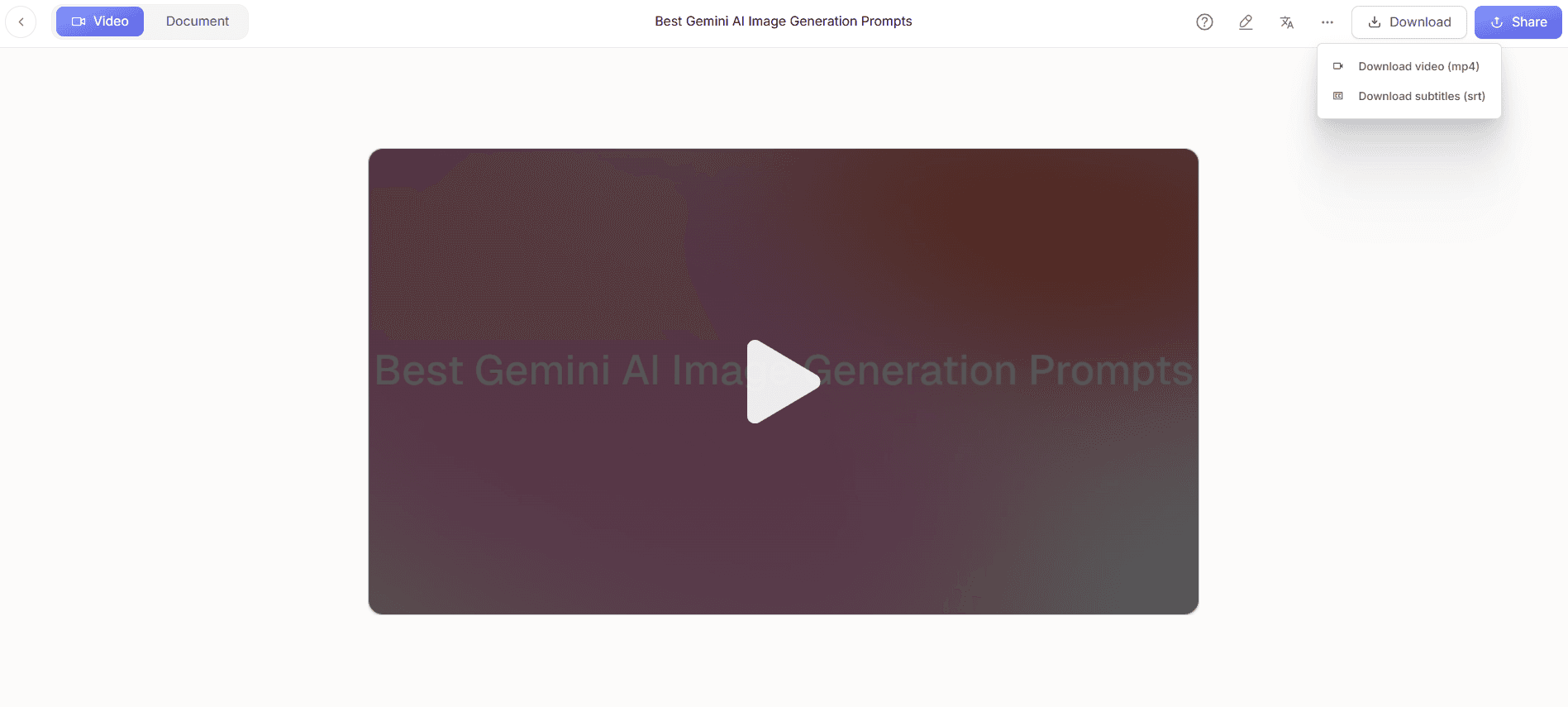
Finally, embed the video into your application using Trupeer's embeddable video widgets. Navigate to the "Distribution" tab and select "Embed Video." Copy the generated code and paste it into your app at key user touchpoints. This ensures users can access guidance exactly where they need it, enhancing their experience and reducing support queries. The distribution process is straightforward and typically takes less than five minutes per video. For wider reach, consider hosting on a custom domain with SSO for smooth access.
What tips help you create in-app how-to videos?
Creating effective in-app how-to videos requires strategic planning and execution. Here are some tips to ensure your videos are engaging and effective:
Keep it concise. Aim for videos that are 2-3 minutes long to maintain user attention and avoid information overload.
Focus on key actions. Highlight the most critical steps users need to take, rather than covering every possible feature or scenario.
Use consistent branding. Apply brand kits to ensure your videos align with your company's visual and tonal standards, reinforcing brand recognition.
Test across devices. Ensure your videos display correctly on different devices and browser configurations to avoid user frustration.
Provide clear call-to-actions. End each video with a clear action for users, such as where to find more resources or how to contact support.
Gather user feedback. Use analytics to track viewer engagement and collect feedback to refine future videos.
Standardize with AI tools. use tools like Scribe alternatives for SOPs to ensure consistent video quality and instructional approach.
Teams weighing tools often start with a Loom alternatives comparison before standardizing on a workflow.
Frequently asked questions
How can I ensure my in-app videos are effective?
To ensure effectiveness, focus on clarity and relevance. Start by identifying the key tasks users struggle with and create videos that address these directly. Use Trupeer's features like auto-zoom and AI narration to enhance understanding. Regularly update your content to reflect software changes and gather user feedback to make improvements. Monitoring engagement analytics can also indicate areas for refinement.
What type of content should in-app how-to videos cover?
In-app how-to videos should focus on common user tasks and workflows. Cover areas like account setup, feature navigation, and problem-solving steps. Highlight any unique features of your product that might need extra explanation. Keep the content concise and directly related to user needs to maintain engagement. Ensuring that each video serves a clear purpose will make them more valuable to users.
Why is it important to integrate videos directly into the app?
Integrating videos directly into the app ensures users have immediate access to help when they need it. This reduces the need for them to leave the app to find support, leading to a smoother user experience. Embedded videos can significantly decrease the number of support queries and increase user satisfaction. It also allows for context-specific guidance, making the support more relevant and timely.
Can Trupeer help with video localization for international users?
Yes, Trupeer supports video localization through AI translation and dubbing features. This allows you to offer your how-to videos in over 40 languages, catering to a global audience. The AI video translation capabilities ensure lip-sync and accurate translation, making it easier for international users to understand your content. This expands your reach and enhances user engagement across different regions.
Does using in-app how-to videos lead to measurable improvements in user satisfaction?
Yes, implementing in-app how-to videos can lead to measurable improvements in user satisfaction. By providing immediate, visual guidance, users can resolve issues without waiting for support responses, leading to a better experience. Analytics tools can track changes in support ticket volumes and user feedback, providing quantifiable metrics of success. The decrease in support queries and enhanced user understanding are clear indicators of increased satisfaction.
Related Blogs