Trupeer Blog
Summarise
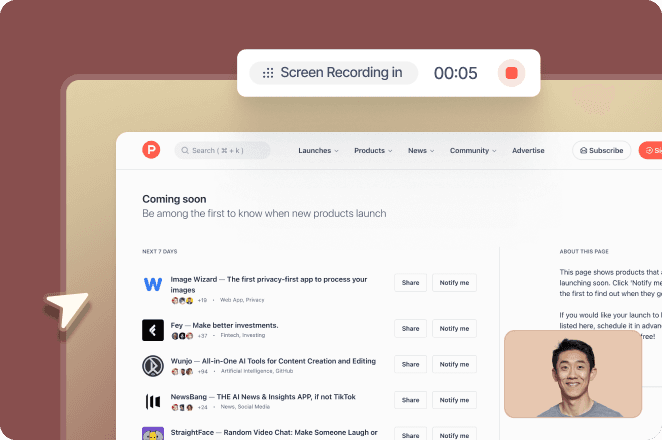
Government service portals are essential in ensuring citizens can access public services efficiently. Yet, handling these digital platforms isn't always intuitive for everyone. This is where how-to videos come in, providing step-by-step guidance that can significantly enhance user experience. Imagine a citizen trying to renew their driver's license online but getting lost in a maze of options and forms. A simple, well-crafted tutorial video can demystify this process, saving time and reducing frustration.
According to a 2025 study, 68% of users prefer video content for learning how to use online services, citing clarity and ease of understanding.
The challenge, however, is creating videos that comply with accessibility and multilingual requirements, ensuring all citizens can benefit. This guide aims to address these challenges and provide practical solutions for creating effective tutorial videos for government service portals. To explore other aspects of creating instructional content, visit our detailed guide on how to create instructional videos.
Why does creating how-to videos for government service portals matter?
Creating how-to videos for government service portals is crucial because these portals must serve a diverse population with varying levels of digital literacy. Citizens rely on these portals to access vital services, such as applying for permits, paying taxes, or accessing healthcare benefits. Without clear guidance, users can easily become frustrated, leading to increased support calls and dissatisfaction. For government agencies, this means higher operational costs and a potential loss of trust from the public. also, as governments aim to make services available to all citizens, these videos must also address accessibility concerns, such as providing content for users with visual or hearing impairments.
Another important aspect is the multilingual nature of most government populations. In countries like the United States, where over 350 languages are spoken, providing resources only in English can alienate a significant portion of the population. By creating videos that are accessible and multilingual, government agencies not only comply with legal requirements but also promote inclusivity, ensuring every citizen has equal access to services. The implementation of instructional videos in these portals can simplify processes, reduce errors, and build a more user-friendly interface.
What are the benefits of creating how-to videos for government service portals?
Creating how-to videos for government service portals offers numerous benefits that can enhance user experience and operational efficiency.
Improved User Engagement. Videos are inherently more engaging than text, holding user attention and making the learning process more enjoyable. This often leads to higher completion rates for online tasks.
Reduced Support Costs. By providing clear video instructions, the need for live support is reduced, allowing government agencies to save on operational costs associated with call centers and help desks.
Increased Accessibility. Videos can be made accessible to those with disabilities by incorporating captions, audio descriptions, and sign language. This ensures compliance with accessibility laws and broadens the reach of government services.
Multilingual Support. With AI translation tools, videos can be easily translated into multiple languages, making services more inclusive. This creates effective video SOPs that cater to diverse populations.
Consistent Messaging. Videos ensure that all users receive the same information, reducing the risk of miscommunication and errors. This consistency is vital for maintaining trust and reliability in government services.
Enhanced User Retention. By using an AI video platform, users are more likely to remember the steps involved in using a service, leading to higher satisfaction and return use.
Which Trupeer features help you create how-to videos for government service portals?
Trupeer offers a suite of features specifically designed to simplify the creation of how-to videos for government service portals, ensuring they are accessible, multilingual, and engaging.
AI screen recording with auto-zoom and click detection
This feature simplifies the recording process by automatically focusing on relevant screen areas and highlighting user interactions. When creating a tutorial for a government service portal, clear visibility of each step is crucial. The auto-zoom feature ensures that users can see exactly what's happening on the screen. Click detection highlights user actions, such as clicking buttons or entering data, making it easier for viewers to follow along. By automating these tasks, Trupeer reduces the time and effort required to produce professional-quality tutorial videos.
AI translation into 40+ languages with lip-sync
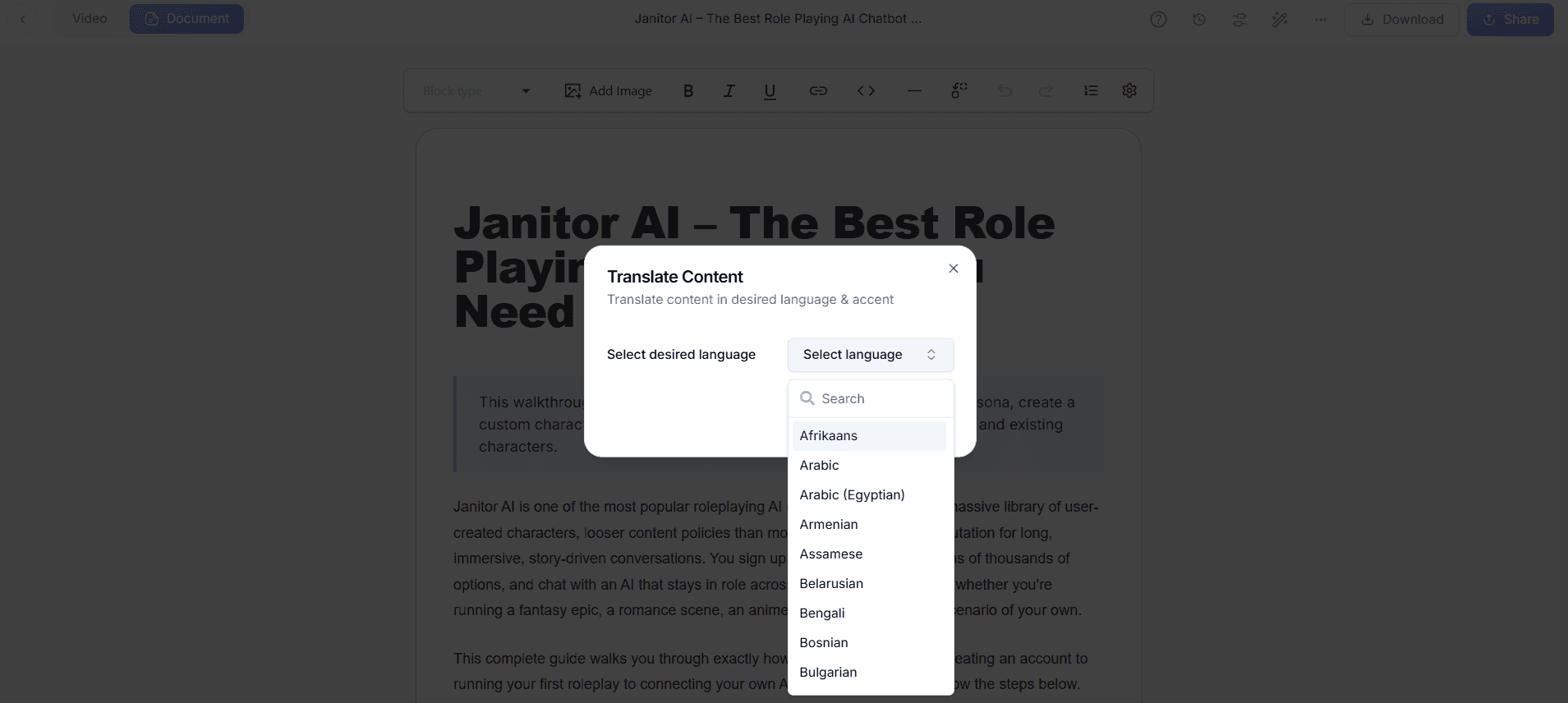
Language barriers can prevent citizens from accessing essential services. Trupeer's AI translation feature ensures that your how-to videos reach a wider audience by translating content into over 40 languages. The lip-sync capability aligns dubbed audio with the speaker's mouth movements, providing a smooth viewing experience. This is essential for ensuring that non-English speakers receive the same quality of information as English speakers. By using Trupeer's video localization tool, government agencies can create more inclusive content that meets the needs of diverse populations.
AI voiceover in 65+ natural voices, adjustable pace and tone
The quality of narration can significantly impact how well viewers understand video content. Trupeer offers over 65+ natural voices with adjustable pace and tone, allowing creators to customize the voiceover to match the video's context. Whether you need a calm, reassuring tone for elderly users or a more energetic delivery for younger audiences, Trupeer provides the flexibility to adapt. This feature ensures that your tutorial videos are not only informative but also engaging and easy to follow.
Automatic SOP generation from any recording
Standard Operating Procedures (SOPs) are essential for documenting processes and ensuring consistency. Trupeer's documentation generator automatically creates SOPs from video recordings, saving time and effort. These SOPs are edit-ready and exportable, making it easy to update and share documentation as processes change. This feature is particularly valuable for government agencies, where procedures often evolve and require regular updates.
AI-searchable knowledge base with timestamp deep-links
Trupeer's searchable knowledge base indexes every recording with timestamp-level deep links, making it easier for users to find specific information. This feature is invaluable for government service portals, where users may only need to review a particular part of a tutorial. By providing direct access to relevant sections, users can quickly find the information they need without watching an entire video. This not only improves user satisfaction but also reduces the time spent on support queries.
How do you create how-to videos for government service portals step by step with Trupeer?
Step 1: Set up your recording environment
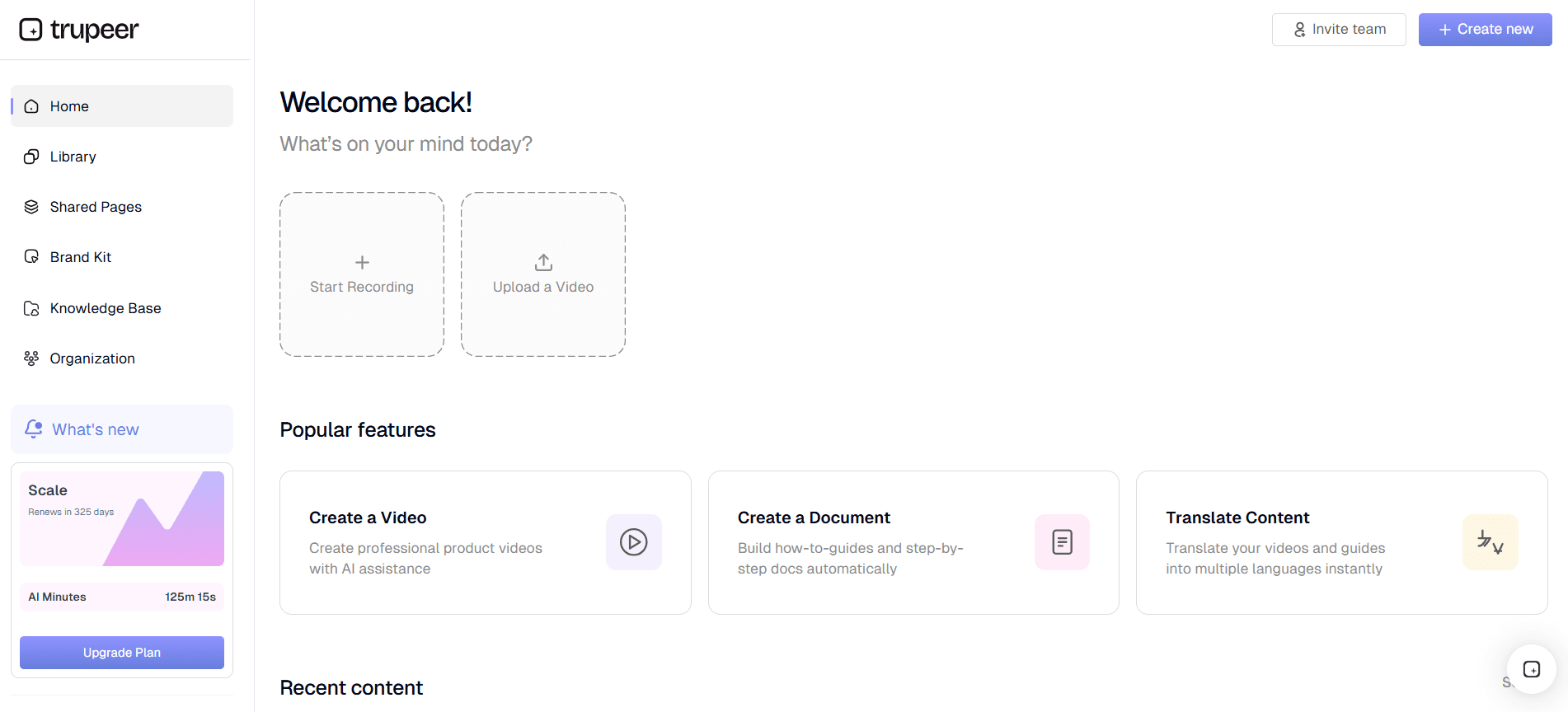
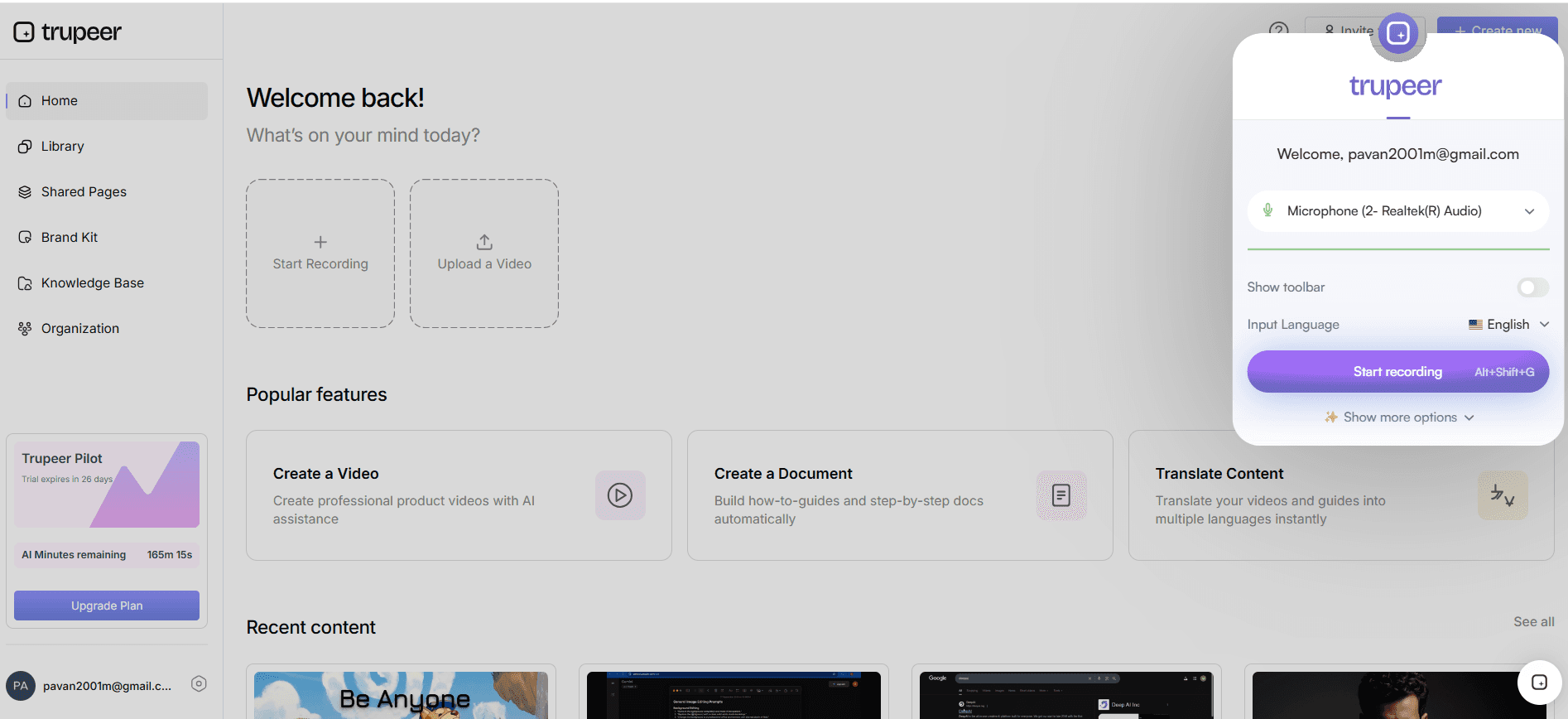
Before you start recording, prepare your environment to ensure clarity. Open the government service portal you wish to create a tutorial for. With Trupeer's browser-based recorder, there's no need to download additional software. Simply log in to your Trupeer account, select the screen recording option, and choose AI screen recording with auto-zoom and click detection. This setting automatically highlights and zooms into the critical parts of the interface that require user attention. The setup process takes just a few minutes, allowing you to focus on delivering a clear and engaging tutorial.
Step 2: Record your tutorial
Begin recording by clicking the 'Start Recording' button. As you navigate through the portal, Trupeer's silent screen recording feature captures every action. This includes mouse clicks and keystrokes, which are automatically detected and highlighted. The AI auto-zoom ensures important elements are in focus. If you make a mistake, don't worry, Trupeer allows you to pause and resume the recording as needed. This flexibility ensures that your final product is polished and professional without unnecessary retakes.
Step 3: Edit your video content
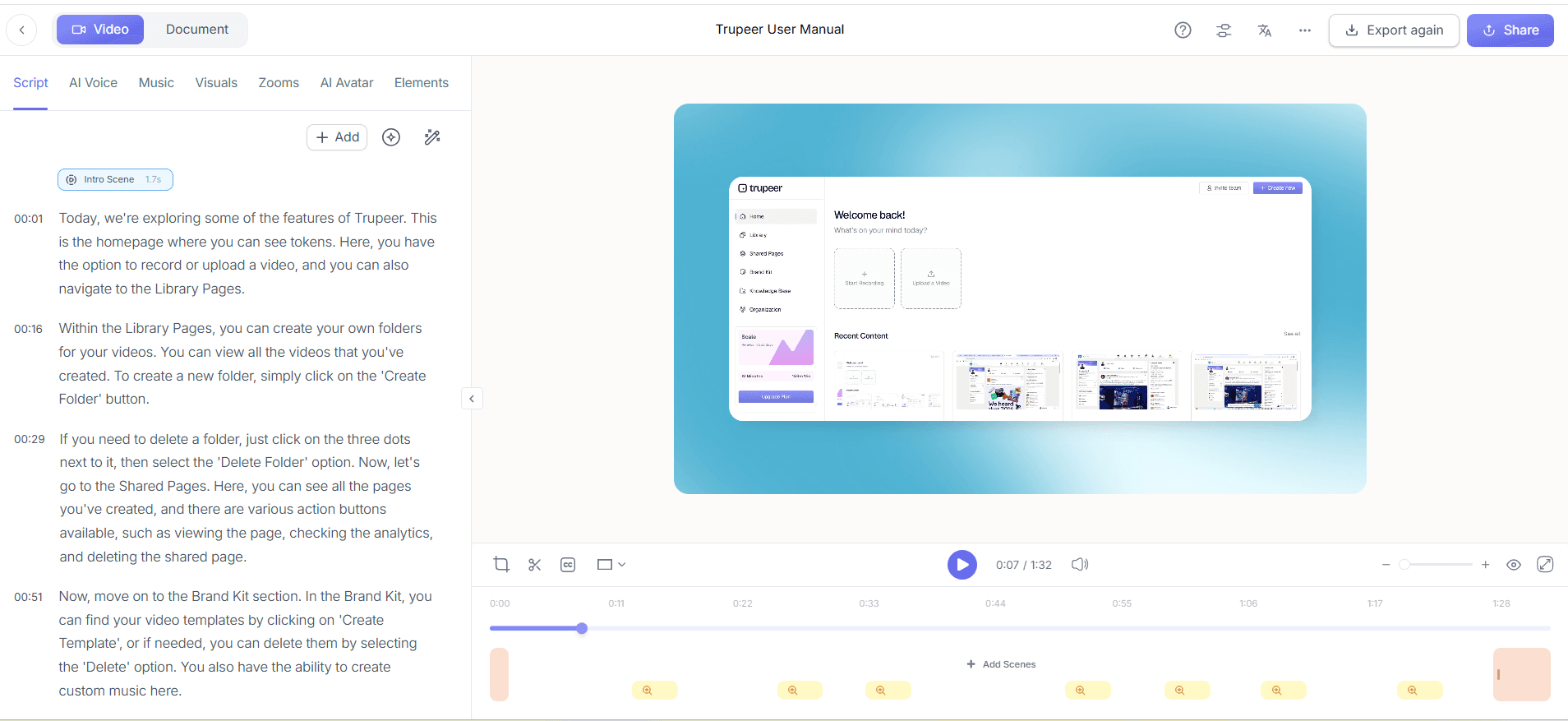
Once your recording is complete, move to the editing phase. Trupeer provides automatic filler-word removal, eliminating unnecessary "ums" and "ahs" for a cleaner presentation. Use the AI voiceover feature to add narration in any of the 65+ natural voices available. Adjust the pace and tone to suit your audience, whether it's a calm, instructional voice or a more dynamic one for engaging content. This step typically takes around 10-15 minutes, depending on the video's length and complexity.
Step 4: Localize your content
To make your video accessible to a wider audience, use Trupeer's AI translation feature. Translate the content into over 40 languages, ensuring that non-English speakers can also benefit. The AI dubbing automatically syncs the translated audio with the original video, providing a smooth viewing experience. This step is crucial for government service portals catering to multilingual populations, and it can be completed in less than 30 minutes for a standard 5-minute video.
Step 5: Generate and export SOPs
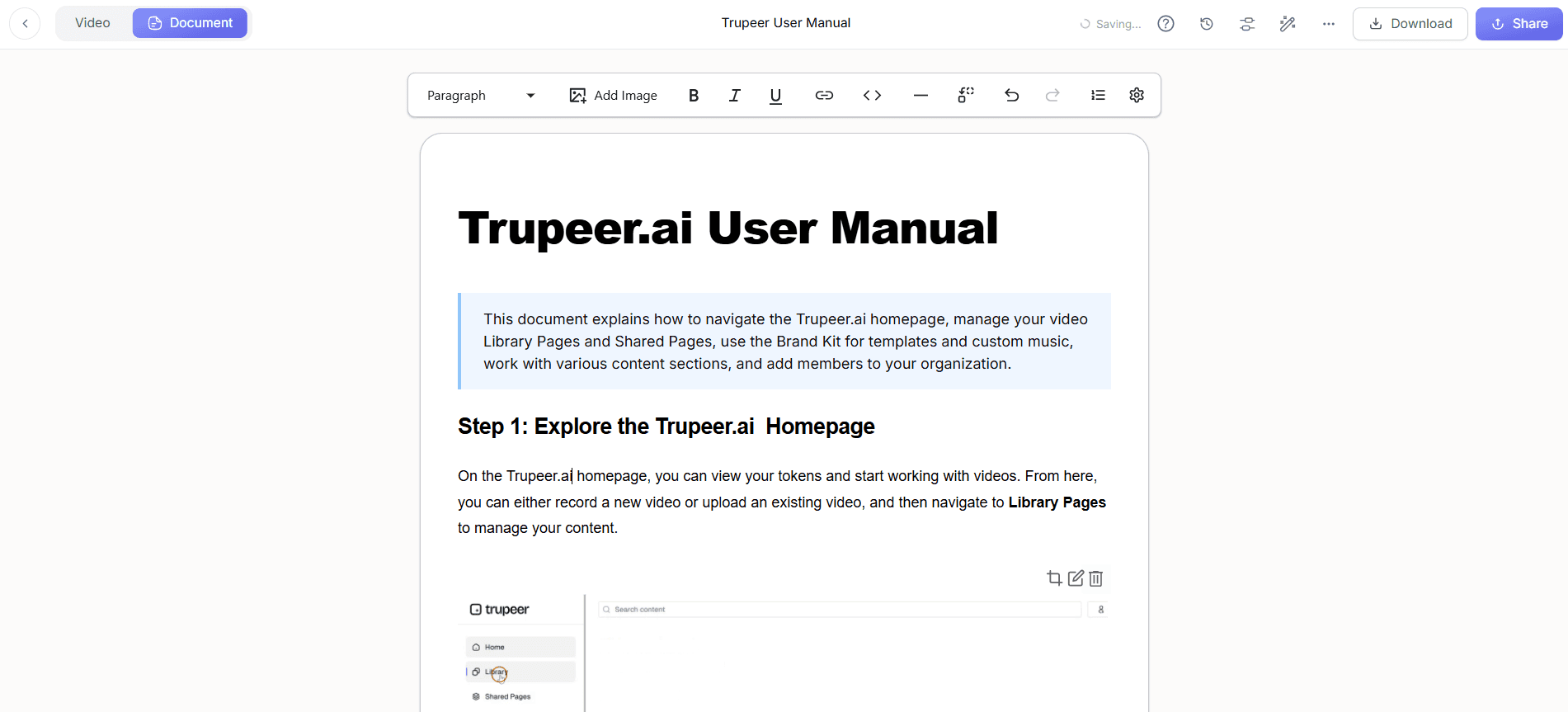
After finalizing your video, generate an SOP for documentation purposes. Trupeer's automatic SOP generation feature creates a detailed, edit-ready document based on your video. This document can be exported in various formats, such as PDF or HTML, for easy sharing and archiving. This step is particularly beneficial when updates are necessary, as the documentation tied to the recording can be easily modified and redistributed. Expect this process to take around 10 minutes.
Step 6: Distribute and host your video
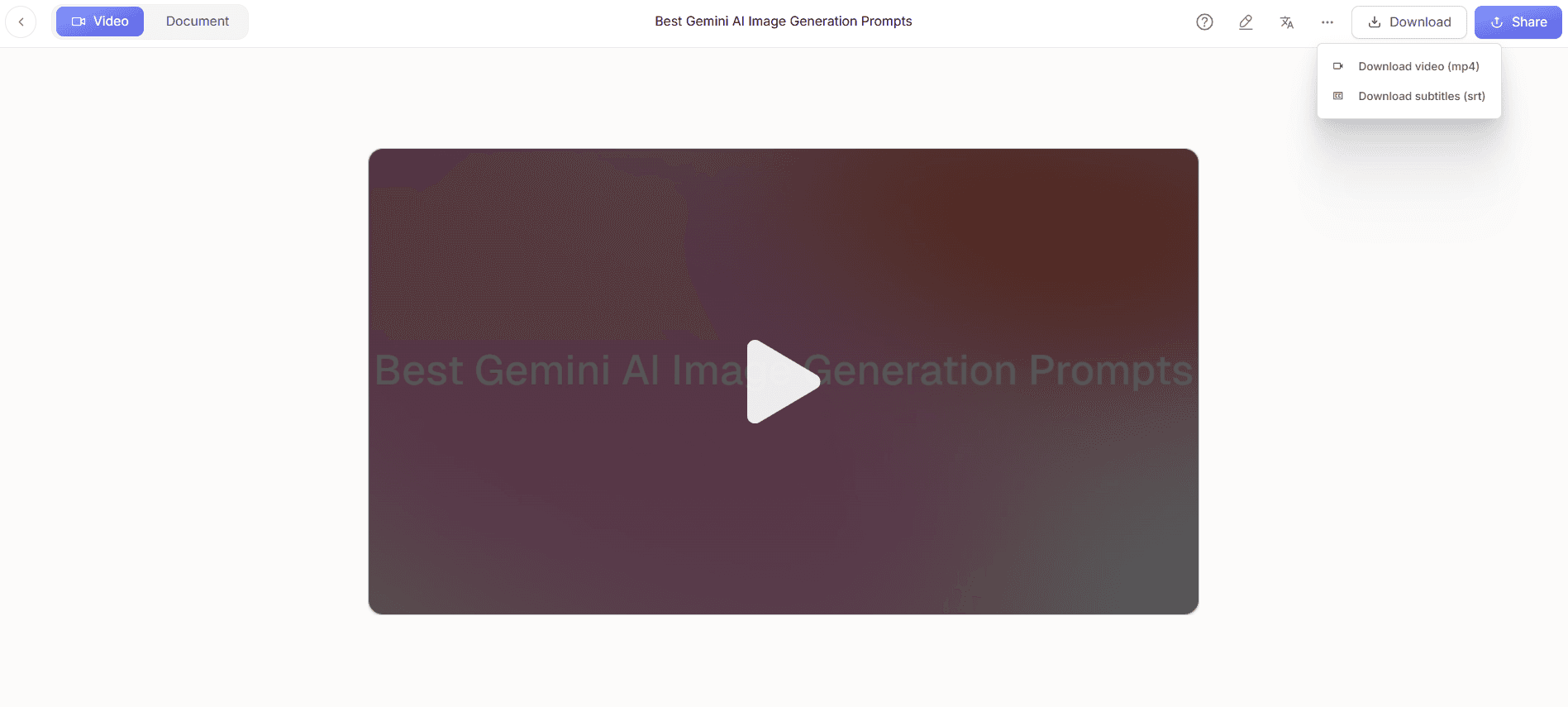
Finally, distribute your video through Trupeer's AI-searchable knowledge base. Host the video on a custom domain with SSO integration, ensuring secure access for users. The video can also be embedded as a widget within the service portal, providing in-app guidance. This distribution method allows users to access tutorials directly where they need them most. If you're comparing distribution features, see our Loom alternative comparison for more insights.
What tips help you create how-to videos for government service portals?
Creating an effective how-to video for government service portals requires attention to detail and a focus on user needs. Here are some tips to enhance the quality and impact of your videos.
Understand your audience. Know who your users are and tailor the content to their level of expertise. For example, use simple language for general public tutorials.
Keep it concise. Aim for brevity in your videos. Users are more likely to watch a short, focused video than a lengthy one. This is where a tutorial video maker can help simplify content.
Use clear visuals. Ensure that all on-screen elements are visible and easy to understand. Use Trupeer's auto-zoom to highlight important areas.
Incorporate feedback. After releasing your video, gather user feedback to identify areas for improvement and make necessary adjustments.
Test across devices. Ensure your video works well on different devices and browsers, catering to users accessing the portal from various platforms.
Maintain consistency. Use brand kits and branded templates to ensure a uniform visual style across all videos. This builds trust and recognition.
Keep accessibility in mind. Use captions and transcripts to make your videos accessible to users with disabilities, enhancing inclusivity.
When SOPs come into the same conversation, a Scribe alternatives comparison helps clarify the scope.
Frequently asked questions
How do you ensure videos are accessible to all users?
Accessibility is achieved by incorporating features like closed captions, sign language interpretation, and audio descriptions. Trupeer's AI capabilities allow for automatic generation of captions and translations, making videos accessible to users with disabilities and non-English speakers. By adhering to accessibility standards such as WCAG, you can ensure your videos meet legal requirements and provide equal access to all users. Testing videos with diverse user groups can also identify and address potential accessibility challenges.
What tools can help create multilingual support videos?
Trupeer's AI translation and dubbing tools are ideal for creating multilingual support videos. They allow you to translate content into over 40 languages with accurate lip-syncing, ensuring a smooth viewing experience. This is crucial for government portals serving diverse populations. Using such tools, you can easily expand your video's reach and ensure that all citizens, regardless of their language, have access to the same information. This approach not only enhances inclusivity but also improves user experience and satisfaction.
Why are brand kits and templates important in video production?
Brand kits and templates ensure consistency across all video content, which is vital for maintaining a professional appearance and building trust with your audience. They help standardize colors, fonts, and logos, creating a cohesive visual identity. This consistency is particularly important for government portals, where maintaining public trust is crucial. By using Trupeer's brand kits, you can ensure that every video adheres to your organization's branding guidelines, reinforcing your brand's recognition and reliability.
Can Trupeer integrate with existing government systems?
Yes, Trupeer can integrate with existing government systems through its various capabilities. For instance, the custom-domain hosting with SSO ensures secure and smooth access for authorized users. also, the AI-searchable knowledge base can be linked directly to existing portals, providing easy access to video content. This integration allows government agencies to enhance their service delivery without overhauling their current infrastructure, making it a practical solution for modernizing service portals efficiently.
Does video localization affect the quality of the content?
No, video localization with Trupeer maintains high-quality content while ensuring it is accessible to a wider audience. The AI dubbing and translation features are designed to preserve the integrity of the original content, providing accurate translations and smooth integration with the video. Using a solid video localization tool, you can ensure that the tone, pace, and message remain consistent across different languages, enhancing user engagement and satisfaction. This process is simplified to prevent quality loss during localization.
Related Blogs