4.8/5
Free Manufacturing SOP Software
Turn how the job is actually done into clear, visual standard operating procedures and work instructions, in minutes and in 65+ languages.
Get started for free
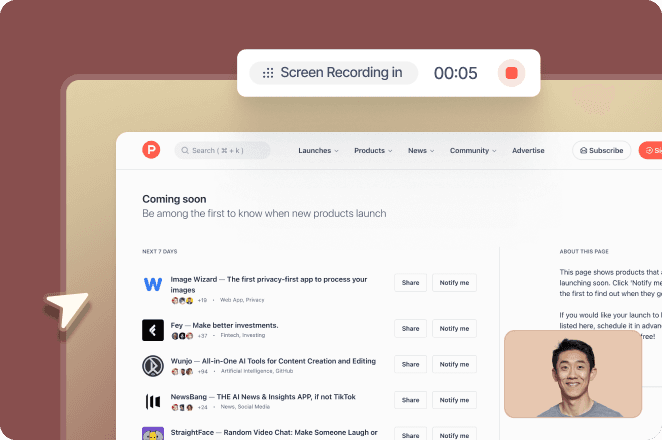
Manufacturing SOP software turns the way an experienced operator performs a task into a clear, repeatable standard operating procedure, without anyone stopping to write it up by hand. With Trupeer, you record the process, on screen for system and data tasks or by uploading existing footage of the line, and the platform generates a structured SOP with captioned screenshots and ordered steps. The procedure is built from how the work is actually done, which is exactly what a good work instruction needs to be.
On a production floor, inconsistency is expensive. When the same job is run three different ways across three shifts, quality drifts, scrap goes up, and new operators learn by watching whoever is nearby. Clear work instructions fix that, but only if they are quick to produce and easy to keep current as lines and equipment change, which is the problem this software is built to solve.
How to Use the Manufacturing SOP Software
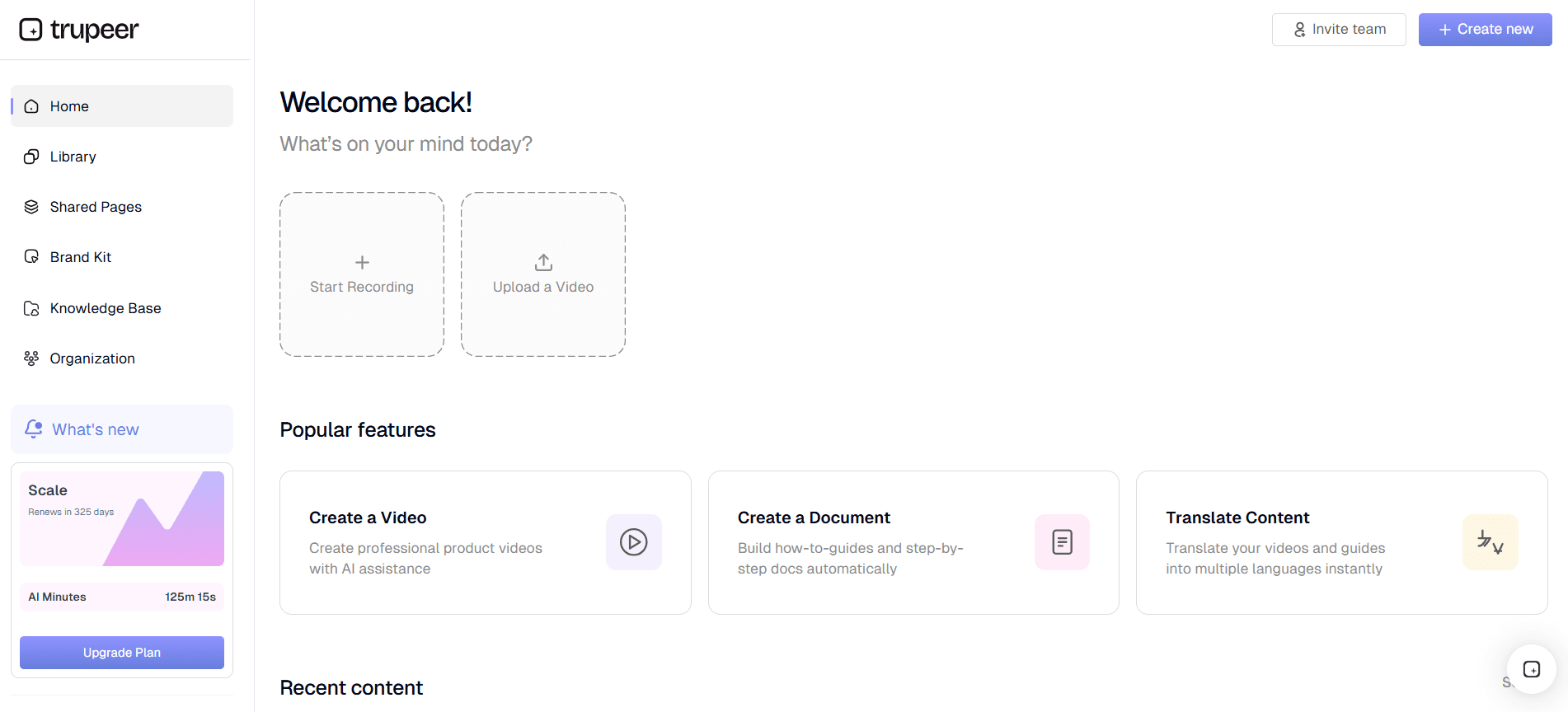
The tool fits how production, quality, and training teams already work, with almost no learning curve. Trupeer's screen recorder captures system tasks, you can upload footage of physical steps, and the AI handles the structuring, writing, and formatting across three steps.
Step 1: Record or Upload the Process
Record the task on screen as it is performed, or upload an existing video of the line or workstation, narrating the checks and settings as you go. Either way, this is the only manual step the documentation needs.
Step 2: Generate the SOP and Steps
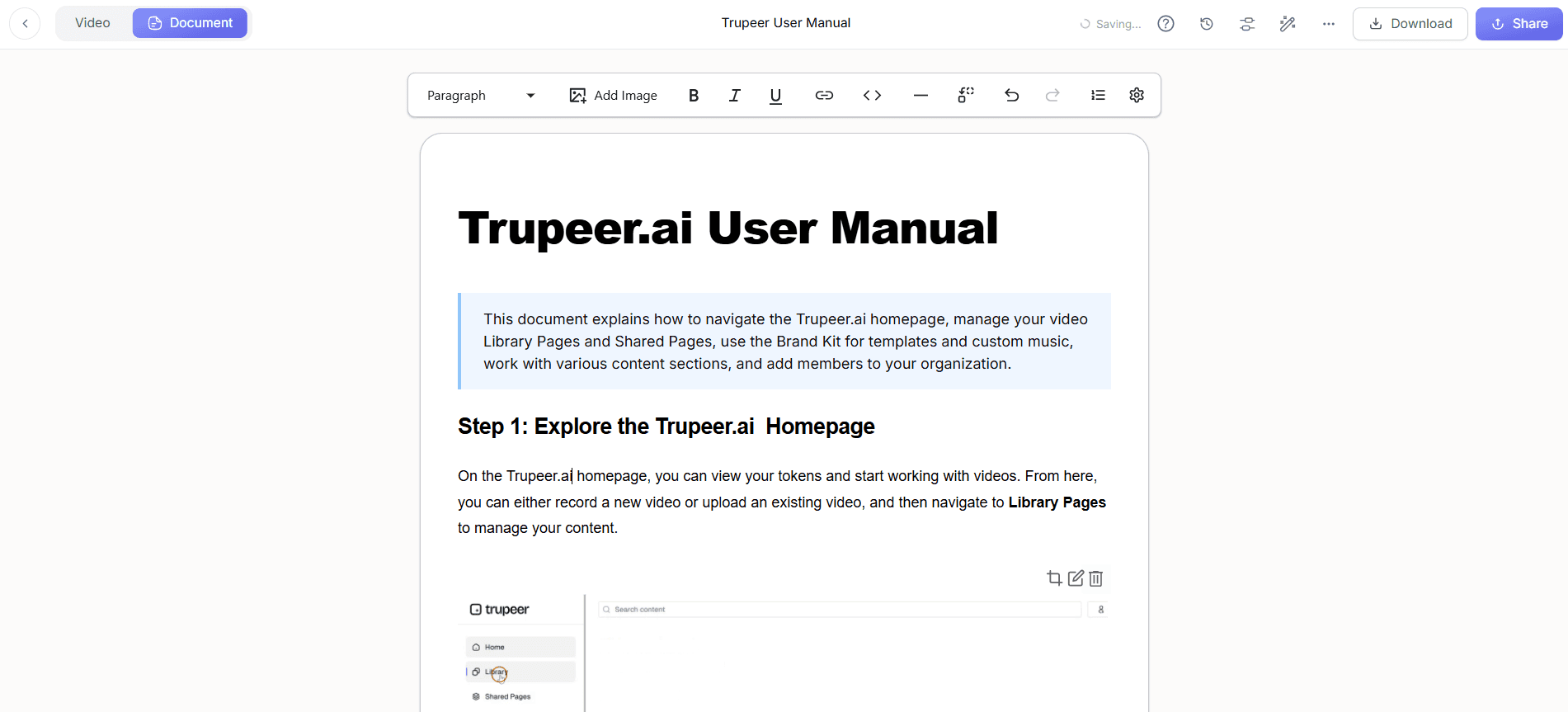
Once the recording is in, the tool processes it automatically. It summarises the session, captures captioned screenshots at each action, and writes a clean numbered sequence, producing a draft you can publish as a step-by-step work instruction or a formal SOP.
Step 3: Review, Translate, and Roll Out to the Floor
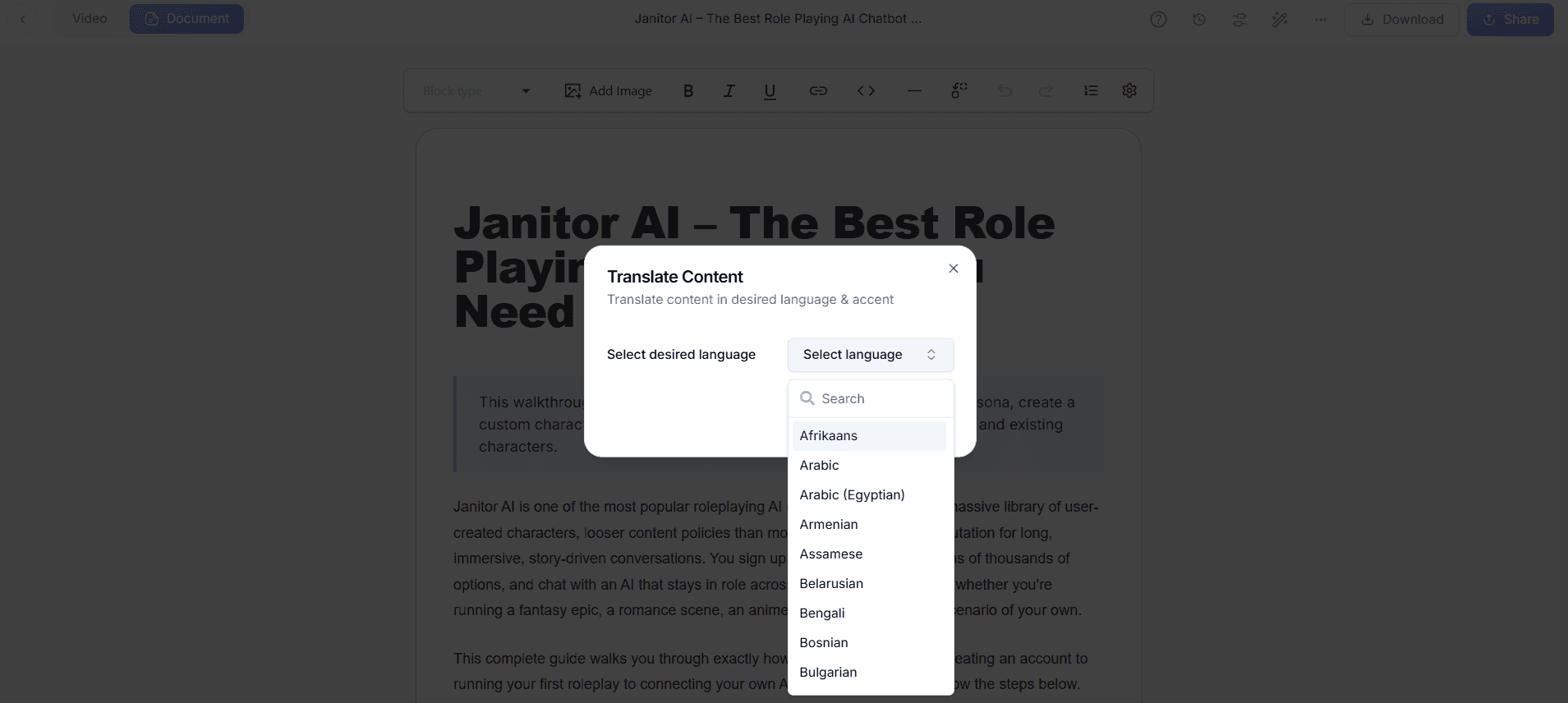
The generated document is fully editable, so you can add tolerances, quality checks, and safety notes, and reorder steps. Translate it into 65+ languages for a multilingual workforce, set who can see it, and share a single link so every shift and line works from the same standard. Because the document stays linked to the recording, an operator can jump to the exact moment a step is shown.
Key Features of the Manufacturing SOP Software
The tool packs capture, AI writing, translation, and a controlled library into one platform, so the procedures your floor runs on become clear, consistent work instructions instead of documents nobody updates.
SOPs and Work Instructions From a Recording: Record a screen task or upload footage of the line, and the AI breaks it into ordered steps with captioned screenshots of exactly what happens. Everything stays editable, so you can add tolerances, settings, and quality checks before the SOP is approved.
Visual, Step-by-Step Format: Operators follow captioned images and short steps rather than dense paragraphs, which is how digital work instructions are meant to read on the floor. A visual SOP is faster to follow and far less likely to be skimmed or misread.
Consistent Operator Training: Turn the same capture into training material so every operator is trained to the identical method, not a local habit. One source feeds both the posted work instruction and the training walkthrough.
Multi-Language for the Floor: Translate procedures and narration into 65+ languages so a multilingual workforce reads the same standard in their own language. A single master stays the source rather than a separate copy per site or shift.
Controlled, Organized Library: Keep procedures in folders and workspaces with roles such as Workspace Admin and Editor and visibility settings, so the right teams see the right SOPs. The output becomes a searchable library rather than a shared drive nobody trusts.
Always Current: When a line, tool, or setting changes, re-record only the affected segment, regenerate the steps, and re-translate, so the work instruction keeps matching the job. Low-cost updates are what keep SOPs from going stale the moment the process moves.
Why Use Manufacturing SOP Software?
Manually written SOPs are slow to create, quick to go out of date, and hard for operators to follow, which is how variation creeps onto the floor. Generating them from recordings keeps work instructions clear, consistent, and far faster to maintain.
Reduce Variation Across Shifts and Lines: When every operator works from the same visual standard, the job is run the same way regardless of who is on shift. Consistency cuts scrap and rework and makes quality predictable rather than person-dependent.
Onboard Operators Faster: New hires learn from a clear, visual work instruction and linked video instead of shadowing whoever is free. Ramp time drops, and the experienced operator stays on the line instead of training all day.
Capture Tribal Knowledge: The way your best operators run a tricky changeover or setup becomes a documented procedure, so the method is no longer locked in one person’s head. If they retire or move, the knowledge stays on the floor.
Create and Update SOPs Faster: Recording replaces hours of writing and screenshotting, so a work instruction is mostly drafted by the time the run ends. Teams keep the SOP backlog under control instead of letting documentation fall behind production.
Support Quality and Audits: Consistent, current procedures that match how the work is performed make quality reviews and customer audits far smoother. You can show a clear standard for each job rather than scrambling to update documents before a visit.
Who Should Use the Manufacturing SOP Software?
The tool is valuable for any team that defines, runs, or improves how work is done on the floor, from a single plant to a multi-site operation.
Production and Operations Teams: Document setups, changeovers, and routine tasks so every shift runs the job the same way. Keep the standard in front of operators at the point of work rather than in a binder nobody opens.
Quality Teams: Maintain current, consistent procedures and quality checks that match how the work is actually performed. Tie each SOP to its recording so reviews are grounded in the real method.
Training and L&D on the Floor: Build operator training from the same captures used for the SOPs and host it as a searchable knowledge base the floor can reach. Update one master and both the training and the work instruction stay aligned.
Continuous Improvement and Lean Teams: Capture standard work, then re-record when a kaizen changes the method, so the standard never lags the improvement. Documentation keeps pace with the change instead of undoing it.
EHS and Safety Teams: Document safe operating steps and lockout procedures clearly and visually, and keep them current as equipment changes. Translate them so every worker understands the safe method in their own language.
Best Practices for Manufacturing SOP Software
A little structure makes the output stronger, helping the AI produce a cleaner first draft and keeping the SOP library trusted on the floor.
Capture One Task Per SOP: Keep each recording to a single end-to-end task so the resulting work instruction stays focused and easy to follow. Single-purpose SOPs are also far easier to update when one step or setting changes.
Narrate the Why and the Checks: Explain settings, tolerances, quality checks, and what to do when something is out of spec, so the document captures the standard and not just the motions. The narration feeds both the written steps and the voiceover.
Favor Visuals Over Walls of Text: Lean on the captioned screenshots and short steps the tool generates, since operators follow visual instructions far more reliably than paragraphs. A clear image beats a long description at the workstation.
Keep One Master, Translate Per Site: Maintain a single approved master and translate it for each location, rather than letting sites write their own versions. This keeps the same standard everywhere and makes updates a single edit.
Review After Every Line Change: When equipment, tooling, or the process changes, re-record the affected segment and regenerate the steps right away. Treat each SOP as a living standard with an owner, not a document that is correct only at launch.
Explore Related Tools
Key benefits for manufacturing teams
SOPs from a recording
Record a screen task or upload line footage and Trupeer produces a structured SOP with captioned screenshots and ordered steps.
Visual work instructions
Operators follow captioned images and short steps rather than dense text, so the standard is easy to follow at the workstation.
Consistent across shifts
One translated master keeps every shift and line working from the same standard, so quality stops depending on who is working.
How to create manufacturing SOPs with Trupeer
Stap 1
Record or upload the process
Stap 2
AI generates the SOP and steps
Stap 3
Review, translate, and roll out
Veelgestelde vragen
What is manufacturing SOP software?
It is software that helps manufacturers create and maintain standard operating procedures and work instructions. With Trupeer, you record or upload how a task is performed and the tool generates a structured SOP with captioned screenshots and ordered steps, so the standard matches how the work is actually done.
Can it document both software tasks and physical line work?
Yes. You can record on-screen system and data tasks directly, or upload existing video footage of a workstation or line, and Trupeer generates a step-by-step document from either. That covers both the digital procedures and the physical steps a manufacturing SOP needs.
What is the difference between an SOP and a work instruction?
An SOP describes the overall procedure and who does what, while a work instruction is the detailed, step-by-step how-to for a specific task. Trupeer can produce both from a recording, since it generates a clear sequence of steps with screenshots that works as either.
How do SOPs stay current as the line changes?
When a process, tool, or setting changes, you re-record only the affected segment, regenerate the steps, and re-translate, so the work instruction keeps matching the job. Quick updates mean SOPs stay current instead of going stale after the next line change.
Who uses manufacturing SOP software?
Production and operations teams, quality teams, training and L&D, continuous improvement and lean teams, and EHS and safety functions. Anyone who defines, runs, or improves how work is done on the floor and needs a clear, current standard.
Meer tools