Use this template
Clear safety work instructions are what stop preventable incidents from happening. With Trupeer, you can save hours on safety documentation by starting with a free safety work instructions template, customizing it with your brand guidelines, and turning safety instructions into video walkthroughs every worker watches before starting the task.
What is a free safety work instructions template?
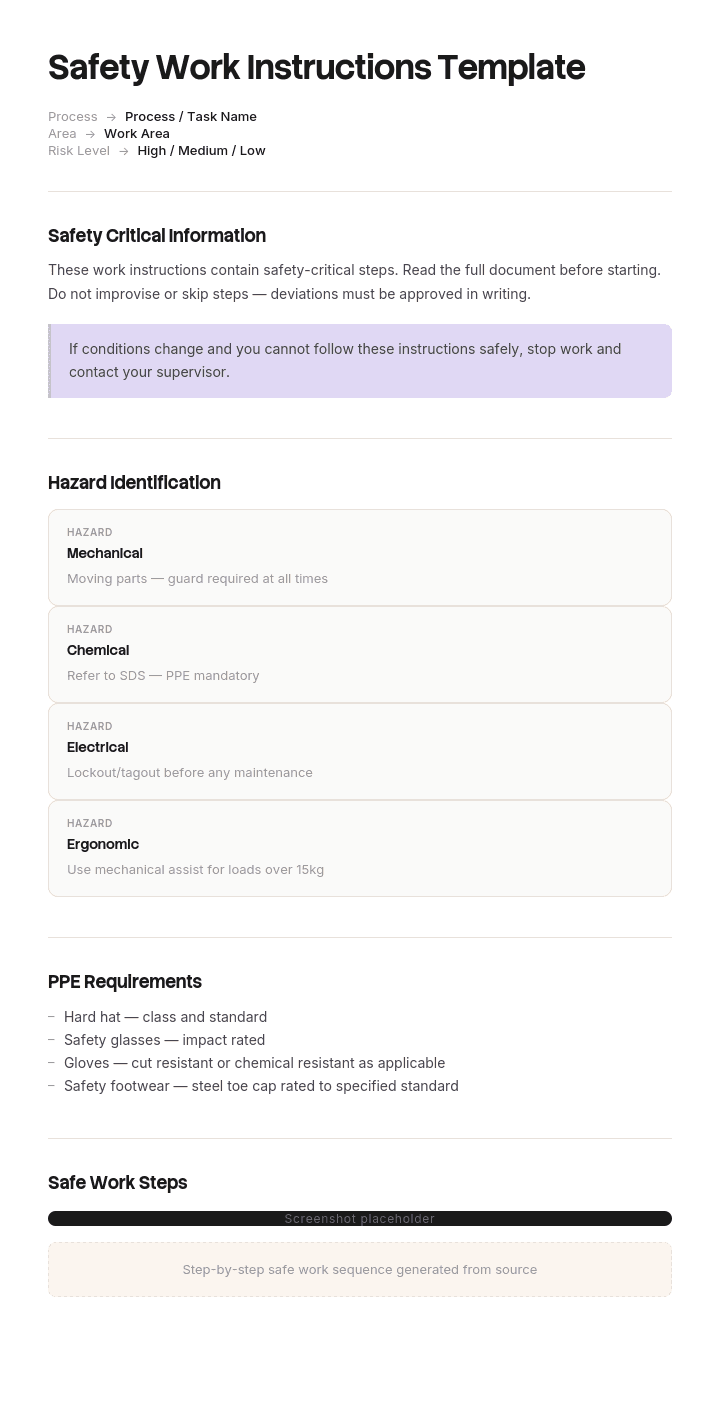
A free safety work instructions template is a reusable structure for setting out how a specific task is performed safely: the steps, the hazards at each step, and the controls that make each hazard acceptable.
It differs from an ordinary work instruction in two ways that matter. The controls are the point rather than a section, and the document is evidence. In most jurisdictions an employer has a legal duty to provide information, instruction, training and supervision, and a safe work instruction is one of the things produced when somebody asks how that duty was met.
Both of those change how it should be written. A document that will be read by a regulator after an incident needs version control, dates, and a traceable link from each hazard to the control that addresses it.
An important note before anything else. This page describes document structure and is not legal advice, does not constitute a risk assessment, and does not replace the health and safety legislation applying where you operate. Safe work instructions must be prepared and reviewed by a competent person, sit underneath a proper risk assessment, and comply with your local regulator's requirements. Where anything on this page conflicts with those, they govern.
Format follows use. A work instruction template Word free download suits drafting, approval and the printed copy at the workstation, and a work instructions template Word file is the same thing. A standard work instructions template Excel version suits the step and control table. A PDF is the issued and controlled copy.
Why safety work instructions default to PPE
Take any safety work instruction and read only the controls. Count how many are some form of personal protective equipment, and how many are an instruction to be careful.
In most documents it is nearly all of them. Wear gloves. Wear eye protection. Wear steel toe boots. Take care. Be aware of your surroundings. Ensure the area is clear.
There is a straightforward reason, and it is not indifference. PPE is the only control a person writing a document can implement by writing it down. Specifying gloves costs a sentence. Specifying an interlock costs a purchase order, an engineer, downtime and somebody's approval.
So the document quietly becomes a record of the controls that were available to its author rather than the controls the hazard requires. Everyone involved acts reasonably, the instruction is issued, briefed and signed, and the hazard is exactly as dangerous as it was before anything was written.
The second reason is that behavioural controls read well. "Take care when clearing the blockage" sounds responsible. It transfers the entire burden of the hazard onto the attention of the person doing the task, at the moment they are most rushed, and it provides nothing when their attention lapses. Attention is not a control. It is a hope with a professional tone.
How to customize this template in Trupeer
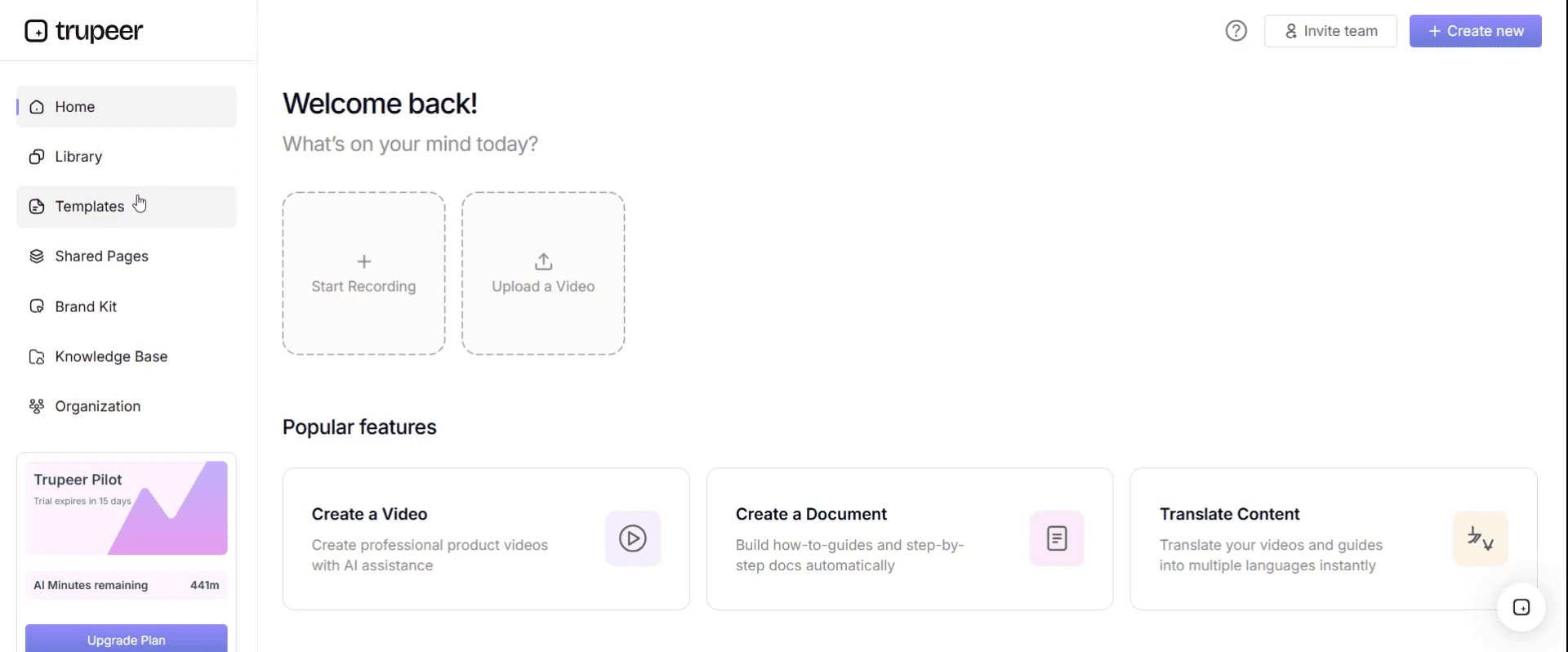
Step 1: Open the Templates Section
Go to the Templates section from the main navigation.
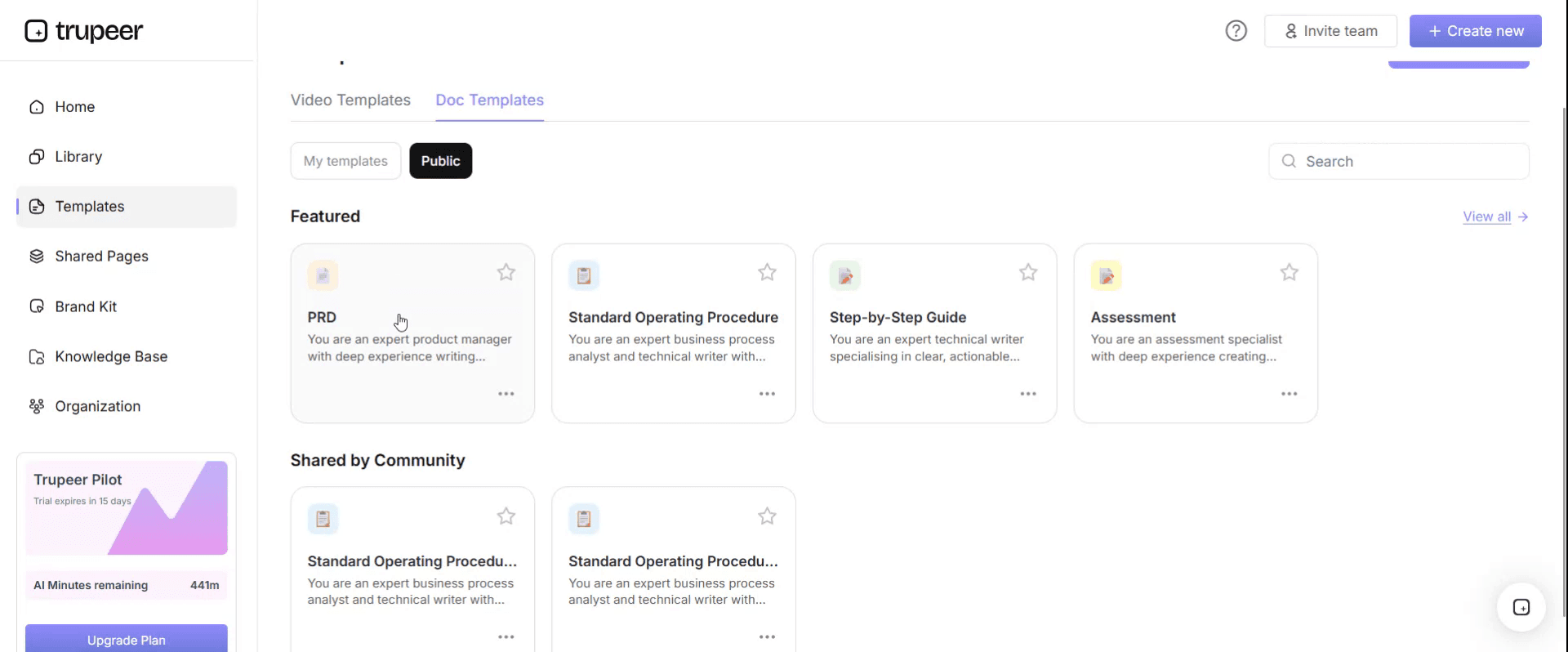
Step 2: Select and Open a Template
Click on any template you want to work with to open it.
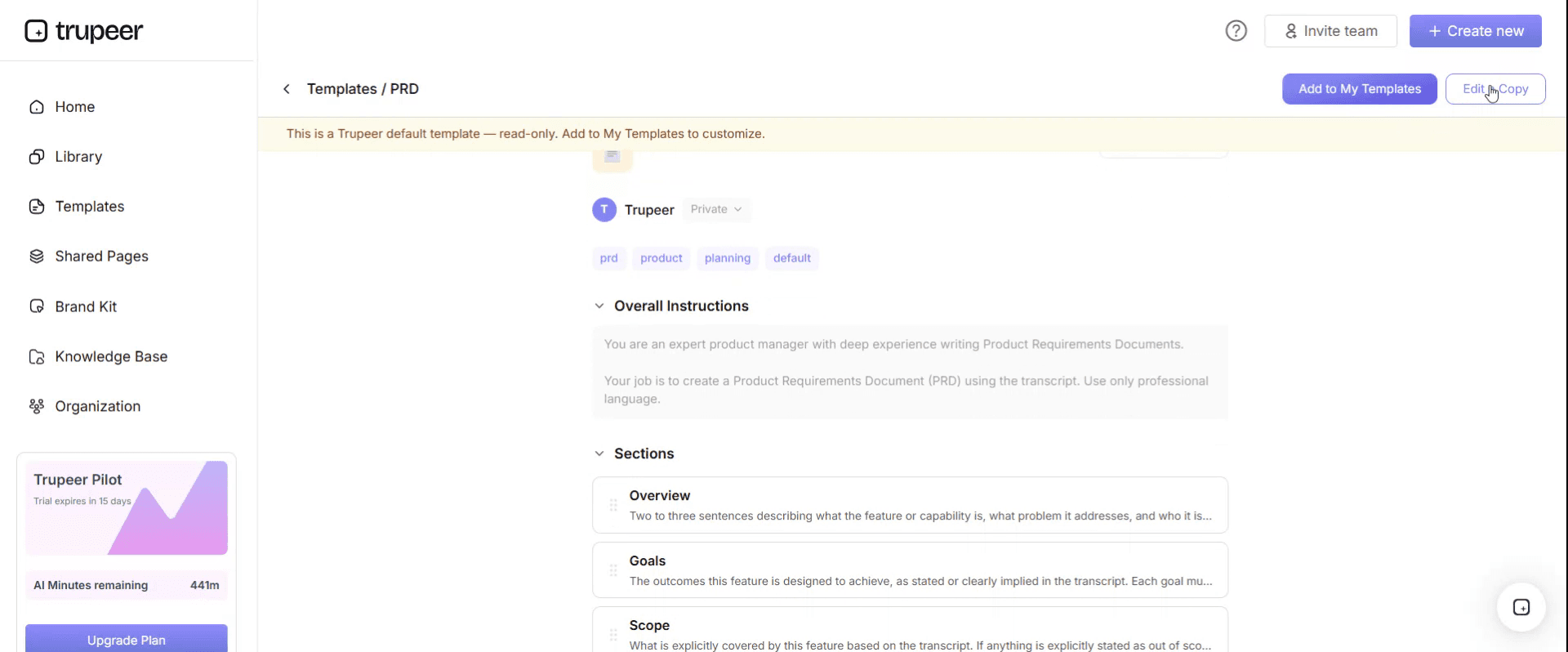
Step 3: Expand the Template View
If needed, expand the template view to see the full layout and details clearly.

Step 4: Edit the Template
Click on Edit to start modifying the selected template.
Within the editor, you can:
Add new sections
Define or update formatting rules
Add a logo and adjust its position and related settings
Step 5: Save Your Customized Template
After making all necessary changes, click Save to store the updated template as your own.
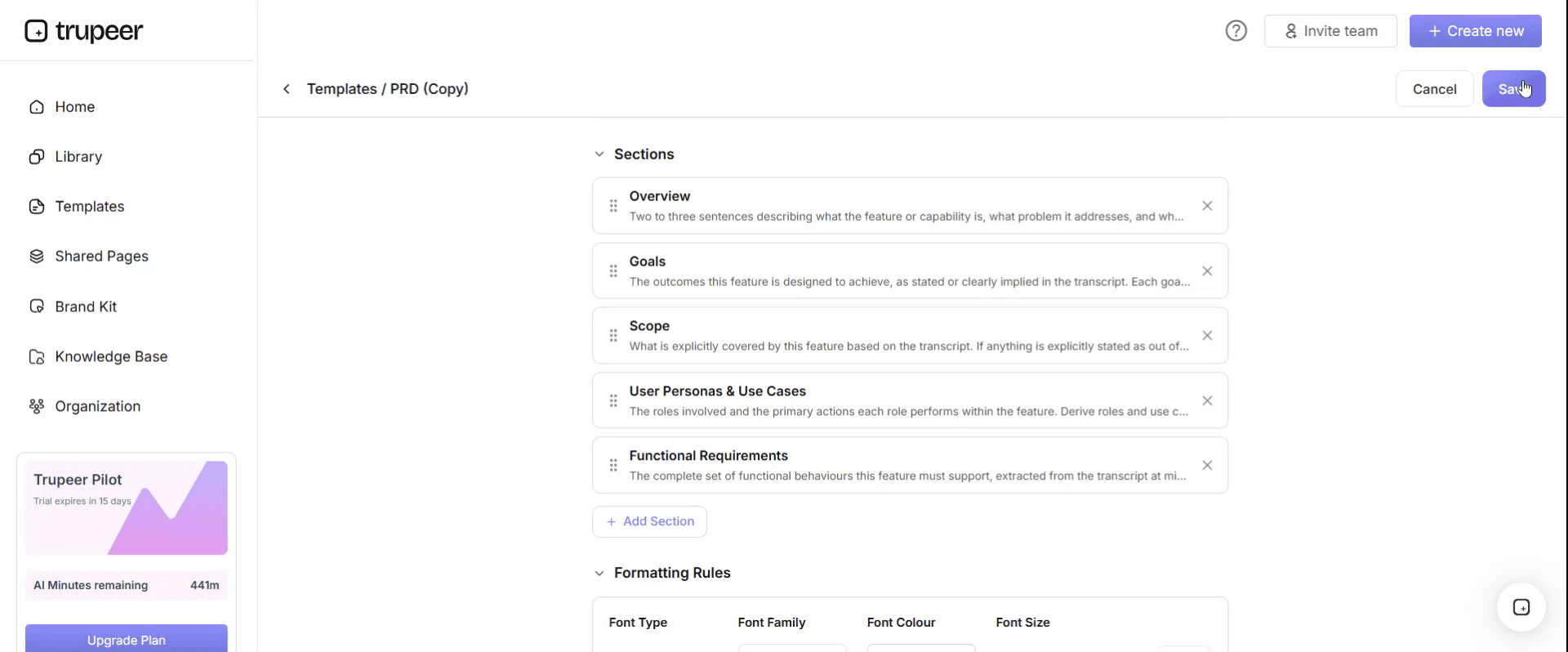
Step 6: Preview and Fine-Tune the Template
When you want to see how your customized template looks, open the Preview.
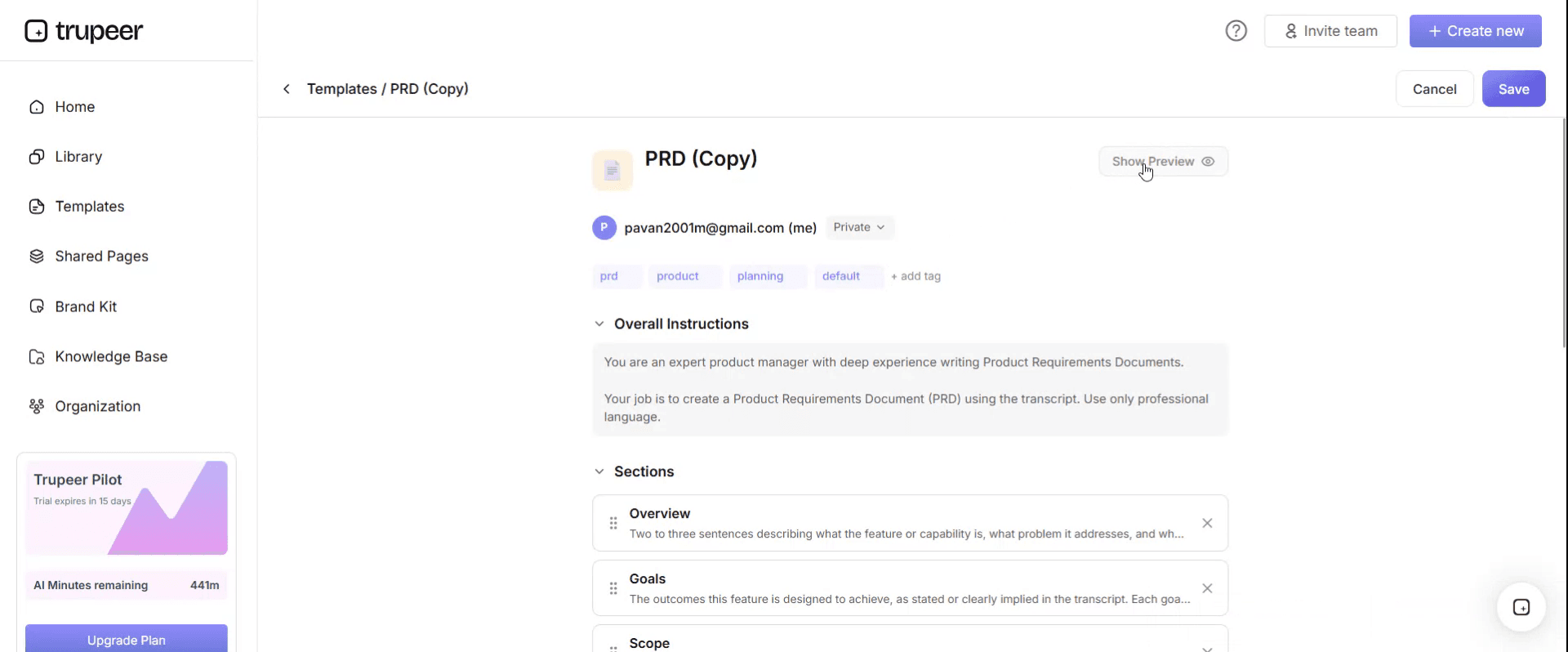
From the preview screen, you can continue to make adjustments directly if needed, ensuring the template appears exactly as you want.
With a safety work instructions template you can:
Save hours on documentation: Skip the blank page with a structure built for safety procedures.
Prevent incidents: Built-in hazard, control and PPE sections drive safe practice.
Stay on-brand: Apply your logo, fonts and colors using Trupeer's brand kit.
Train every worker: Pair instructions with video walkthroughs - perfect for safety toolbox talks.
Stay compliant: Aligned with OSHA, ISO 45001 and similar safety standards.
Reach global teams: Translate safety instructions into 65+ languages with one click.
The controls column and the hierarchy of control
The hierarchy of control is standard across safety regimes and is under applied in written instructions almost everywhere. Ordered from most to least effective:
Elimination. Remove the hazard. Do not do the task, or change the process so it is unnecessary.
Substitution. Replace it with something less hazardous. A different chemical, a lighter component, a lower pressure.
Engineering controls. Physical change. Guards, interlocks, isolation points, extraction, barriers, mechanical handling.
Administrative controls. Change how people work. Procedures, permits, training, rotation, signage, restricted access.
Personal protective equipment. Protect the person if the hazard reaches them. The last line, never the only line.
The design change is to put the level in the document. Every step gets a hazard, a control, and the level of that control. Three columns instead of a warning box.
Two things happen when you do this, and both are the point.
The document becomes auditable at a glance. Anyone can read down the level column and see whether the instruction controls anything. A column reading PPE, PPE, administrative, PPE tells you what you are looking at in four seconds.
And it forces the question upward. Writing "PPE" next to a hazard, in a column that has four better options above it, is uncomfortable in a way that writing "wear gloves" in a warning box is not. That discomfort is the mechanism. It produces the conversation about whether a guard is possible, which is a conversation that otherwise never starts because nothing in the document prompts it.
PPE remains legitimate. It is the correct control for residual risk after higher controls are applied. It is not a correct control for a hazard that could be engineered out and has not been.
What a safety work instruction template must contain
Ten components. The step table carries the safety content and the rest carries the evidence.
Component | What it does |
|---|---|
Task and scope | What this covers and explicitly what it does not. Adjacent tasks with different hazards need their own instruction. |
Linked risk assessment | Reference and version. The instruction implements the assessment and does not replace it. |
Competence required | Who is permitted to perform this task, what training or authorisation, and how that is verified. |
Preconditions | Isolation, permits, area clear, equipment checked, second person present. |
Equipment and PPE | Listed once, specified precisely. Gloves is not a specification. Cut resistant to a stated level is. |
Step table | Step, action, hazard at this step, control, level of control. |
Emergency actions | What to do if it goes wrong. Stop method, first aid location, who to call, at what number. |
Review triggers | Change of equipment, process, substance or personnel, and after any incident or near miss. |
Version and approval | Version, date, author, and the competent person who approved it. |
Briefing record | Who has been briefed, when, and by whom. |
The competence row is the one most often missing and the one a regulator asks about early. A perfect instruction handed to somebody not authorised to do the task is not a defence.
Free safety work instructions template: the structure to copy
Filled with a real example rather than placeholders. The task is clearing and cleaning the cutter block on a woodworking moulding machine.
Copy from here.
Task. Cutter block cleaning, four head moulder, machine 6. Does not cover cutter changes, blade sharpening or electrical maintenance, each of which has its own instruction.
Risk assessment. RA-014 version 5, dated 3 February. This instruction implements it.
Competence. Authorised machine operators only, with recorded moulder training and current lock off authorisation. Verified against the training register before the task is allocated.
Preconditions. Machine isolated at the local isolator and locked off with the operator's own lock and tag. Isolation verified by attempting to start. Cutter block stationary and confirmed by sight. Second person aware the task is in progress.
Equipment and PPE. Cut resistant gloves to the specified level. Eye protection to the specified standard. Own padlock and tag. Cleaning tool, not hands, for compacted resin.
Step table.
# | Action | Hazard at this step | Control | Level |
|---|---|---|---|---|
1 | Stop machine at operator panel | None | None required | Not applicable |
2 | Isolate at local isolator, apply own lock and tag | Restart by another person while hands are inside | Lockable isolator, one key held by the operator. Isolator installed for this purpose. | Engineering |
3 | Attempt restart at panel to prove isolation | False belief that isolation worked | Proving step is mandatory and is a separate numbered step, not part of step 2 | Administrative |
4 | Wait for cutter block to stop, confirm by sight | Stored rotational energy after power removal | Machine fitted with brake. Guard interlock prevents access until rotation ceases. | Engineering |
5 | Open access guard | Contact with cutting edges | Interlocked guard, cannot open while rotating | Engineering |
6 | Remove waste with cleaning tool | Laceration from stationary cutting edges | Cleaning tool keeps hands away from edges. Cut resistant gloves as residual protection. | Engineering then PPE |
7 | Inspect for damage, do not attempt repair | Undetected damaged tooling used in production | Damaged tooling tagged out and reported, machine not returned to service | Administrative |
8 | Close guard, remove own lock, restart | Startup with a person still at the machine | Only the person who applied the lock removes it. Visual check of the area before restart. | Administrative |
Emergency actions. Emergency stop locations at both ends of the machine. First aid point in the north corridor. Report any injury or near miss immediately to the shift supervisor.
Review triggers. Any change to the machine, guarding, tooling or cleaning materials. Any incident or near miss on this or a similar machine. Any change to the linked risk assessment. Otherwise annually.
Approval. Version 4, 3 February. Written by production engineering. Approved by the Health and Safety Manager as competent person.
Briefing record. Name, date, briefed by, signature. Held with the training records.
Copy to here.
Note the level column. Four engineering controls, three administrative, one PPE and that one is residual. That is what a controlled task looks like, and it is visibly different from an instruction whose column reads PPE eight times.
Safety work instruction example: twelve steps and no isolation
Redhurst Joinery, a timber components manufacturer of about ninety five people, had a safe work instruction for cleaning the cutter block on a moulding machine.
The document was not neglected. Twelve numbered steps, a warning box at the front, reviewed within the last year, signed by a manager, and briefed to every operator with a signed attendance record. The company could produce all of it.
The controls it specified were gloves, eye protection, and taking care.
The hazard was that the machine could start while somebody's hands were inside it. Nothing in twelve steps required isolation or lock off, because the instruction had been written by someone describing how the task was done rather than analysing what could go wrong.
An operator was cleaning the cutter block when a colleague at the panel cleared what he believed was a fault. The machine started. The operator sustained a severe hand injury, required three surgeries, and did not return to that role.
The investigation was uncomfortable precisely because the paperwork was in order. There was an instruction. It was current. It had been briefed and signed. What the company could not produce was any control above the bottom of the hierarchy for a hazard that plainly required isolation. Gloves do not address a machine starting.
The prosecution and the fine followed from that gap rather than from any absence of documentation.
What Redhurst did afterwards is the part worth taking. They added one column to every safe work instruction they held, recording the level of each control, and then read the column.
Across thirty four instructions, seventy one percent of controls were PPE or behavioural.
Rewriting them produced nineteen engineering changes. Eleven of those cost under a thousand pounds each: lockable isolators fitted where there had been none, two guards reinstated, an interlock repaired that had been bypassed for two years and noted by nobody because no document ever asked about it.
The expensive discovery was not that controls were missing. It was that the documents had never contained a question that would have revealed it.
How to write a safety work instruction in six steps
Start from the risk assessment, not the task. The assessment identifies the hazards. The instruction implements the controls. Writing the instruction first produces a description of current practice with hazards inferred backwards from it.
Break the task into steps small enough that each has its own hazard profile. This is where a step-by-step instructions template Word layout helps and a prose procedure does not, because prose hides where one action ends and the next begins. A step covering three actions hides the hazard of the middle one.
Name the hazard at each step in physical terms. Contact with rotating cutter. Fall from height. Inhalation of dust. Not "risk of injury", which names a consequence rather than a mechanism.
Choose the control, then record its level. Ask elimination first, and work down. Recording the level is what makes the reaching-for-PPE visible.
Put each warning immediately before the step it concerns. Covered below.
Have it approved by a competent person and briefed before use. Approval by somebody who cannot assess the hazard is a signature rather than a control.
Step four is the whole method. Everything else is structure around it.
Where warnings go, and why the front page is the wrong place
Almost every safety document collects its warnings into a box at the beginning.
It is the wrong place. A person is following step eleven when the hazard arises, and by then the front page has been read once, at the start, when nothing was happening. Information delivered before it is relevant is information delivered to somebody who has no reason to retain it.
Warnings belong immediately before the step they apply to, in the flow of the document, where they interrupt at the moment of relevance. The front of the document carries what must be true before starting, which is a different thing: preconditions, competence, isolation, permits.
Three practical rules follow. Distinguish visually between what will hurt you and what will damage the equipment, because merging them trains people to skim both. Say what the harm is rather than only that harm is possible, since a specific consequence is remembered and a general caution is not. And keep them rare enough to mean something, because an instruction with a warning on every step has effectively none.
Safety work instruction, SWMS, JSA or risk assessment?
Four documents that overlap, with names varying by jurisdiction, and the distinctions carry legal weight.
A risk assessment identifies hazards, evaluates risk and determines controls. It is the analytical document and in most regimes it is a legal requirement in its own right. Everything else implements it.
A safe work method statement or job safety analysis breaks a task into steps and sets out hazards and controls per step. In some jurisdictions, notably Australia, a SWMS is mandatory for specified high risk construction work and its required content is defined in law.
A safety work instruction is the operational document a worker follows. It contains the controls and the sequence, written to be used at the point of work rather than filed.
A permit to work authorises a specific instance of a task at a specific time, and is a control in itself rather than a description.
The common error is producing one document and treating it as all four. A SWMS is not a risk assessment. An instruction is not a permit. Where your regulator specifies content or format for any of these, that specification governs and nothing on this page substitutes for it. If you are unsure which you are legally required to hold, ask a qualified safety practitioner rather than a template site.
Work instruction template with pictures: showing the hazard
Images earn their place in safety documents more clearly than anywhere else, because hazards are frequently easier to recognise than to describe.
A work instruction template with pictures should show three things. The correct end state, so the reader knows what right looks like. The location of controls, isolators and emergency stops, annotated on a photograph of the actual machine rather than a generic diagram. And the specific access point or component being referred to, where naming it in words would be ambiguous.
A work instructions example PDF published by a regulator is the best guide to how much visual detail is expected. Do not photograph the hazard being encountered, and do not use images of unsafe practice as illustrations even labelled as such. They get remembered as instructions.
Keep images beside their step, annotate them directly, and date them. An out of date photograph in a safety document is worse than none, because it carries the authority of evidence while showing a guard that was removed eighteen months ago.
The practical obstacle is production and maintenance, which is covered further down.
Briefing, sign on and keeping the record
The instruction is not the control. The briefing is, and the record is what demonstrates it happened.
Keep it simple and keep it. Who was briefed, on what version, on what date, by whom, with a signature. Held with training records rather than in the document itself, so that a reissued instruction does not orphan the history.
Rebrief when the version changes materially. A typographical correction does not require it. A changed control always does, and the record should make clear which version each person was briefed on, because "we briefed everyone" is not an answer to "on which version".
New starters, contractors, agency workers and anyone returning after long absence need briefing before the task rather than during it. This is the group most commonly missed and the group most commonly injured.
What a free safety work instructions template cannot fix
A hazard that has not been assessed. The instruction implements the risk assessment. Without one, the document is a description of current practice with the word safety on it.
Controls nobody has funded. Writing "guard fitted" does not fit a guard. If the control is not in place, the instruction is inaccurate and issuing it creates exposure rather than reducing it.
A culture where stopping is discouraged. Every safety instruction implicitly depends on somebody being willing to stop. If stopping is treated as a failure, the document describes what would happen in a workplace other than yours.
Hazards a generic template cannot know. No work instruction template free download contains your hazards, and no free step-by-step instructions template Word file will identify them, because identification is an assessment carried out on your equipment by a competent person.
Bypassed controls nobody reports. Redhurst's interlock had been bypassed for two years. No free safety work instructions template detects that. Physical verification does, which is why review triggers should include somebody checking that the controls named in the document are actually present and working.
Show the task rather than describing it
Safety instructions carry the widest gap between what a document can describe and what a person needs to see, and the highest cost when that gap is not closed.
Producing genuinely visual instructions by hand is the obstacle. Photographing each step, annotating the isolator and the guard, placing images beside the right steps, and redoing it when a machine is replaced is days of work per instruction. Which is why most safety instructions that were meant to be visual are text with a generic photograph at the top.
Trupeer AI removes that cost. Somebody performs the task once while recording, and the output is a written step by step walkthrough with images already captured and placed, alongside a video, in your own branding. The written document is what is issued and signed. The video is what a new starter watches during briefing, which is when it matters, and it shows the isolator rather than describing where it is.
Record it. Brand it. Translate it. Trupeer it.
Two things follow that matter here more than on most documents. Where a workforce includes people whose first language is not the language of the workplace, the same recording produces the same instruction in each language, so the briefing is genuinely the same briefing rather than a translation of uncertain accuracy. And when a machine or a control changes, re-recording is faster than re-photographing, which is what decides whether the document is current on the day it is needed.
Recorded briefings sit in your knowledge base with the version they belong to, and double as training material for new starters and contractors. Non safety task detail belongs in the general work instructions. Consistency with your other documents is a matter of setting the brand kit once, and setup is covered in the document template setup guide.
Frequently Asked Questions
Is there a work instruction template Word free download for safety tasks?
Word suits safety instructions, because they are approved, versioned, printed and signed, and all of that fits document workflows. A work instruction template Word free download will give you a workable skeleton.
Check one thing before adopting it. See whether the step table has a column for the control and a column for its level in the hierarchy. Almost no general template does, and adding those two columns is the difference between a safety instruction and an ordinary instruction with a warning box.
Is there a free work instructions template Word version with hazards included?
Most do not include them, which is the central weakness of using a general template for safety work. A work instructions template Word file typically gives you step number, action and notes.
Add three columns: hazard at this step, control, and level of control. Then read the level column down the page. If it says PPE most of the way down, the document needs work before it is issued rather than better formatting.
Is there a standard work instructions template Excel version?
Excel suits the step and control table well, and a standard work instructions template Excel file lets you filter every instruction you hold by level of control, which is exactly the audit that reveals a reliance on PPE.
Standard work in the lean sense assumes repeated work by trained operators and is a different tradition from safety documentation. Borrow the table structure and keep the safety content, including the linked risk assessment reference and the briefing record, which lean standard work does not carry.
Is there a free step-by-step instructions template Word version?
Yes, and the structure above pastes into one. Build the step-by-step instructions template Word file with one action per numbered step, and split anything containing "and", since a compound step hides whichever hazard belongs to the second half.
The one adaptation a free step-by-step instructions template Word download always needs for safety use is warnings placed immediately before their step rather than gathered at the front, where they are read once by somebody who is not yet doing anything.
Is there a work instruction template with pictures?
Templates leave space for images. The difficulty is never the space, it is producing and maintaining them.
For safety work, show the correct end state, annotate the actual isolators, guards and emergency stops on photographs of the real equipment, and date every image. Do not illustrate unsafe practice, even labelled as such, because it gets remembered as instruction rather than as warning.
Where can I find a work instructions example PDF?
Regulators, universities and large employers publish real ones, and a work instructions example PDF from a safety regulator is considerably more useful than a commercial template, because it reflects what that regulator expects to see.
Read them for the controls rather than the layout. Layout transfers from anywhere. What is worth studying is how a well written instruction handles isolation, competence and the point at which a worker is expected to stop.
Is there a work instruction template free download that covers safety properly?
A work instruction template free download gives you structure, and structure is the part that takes ten minutes. What no template can supply is your hazard identification, which comes from a risk assessment carried out by a competent person for your specific equipment and workplace.
If you adopt one, add the hazard, control and level columns, the linked risk assessment reference, the competence requirement and the briefing record. Those five additions are what make it a safety document rather than a procedure with warnings.
What is the difference between a safety work instruction and a risk assessment?
A risk assessment identifies hazards, evaluates the risk and decides the controls. It is analytical, it is a legal requirement in most jurisdictions, and it is not written to be followed at the point of work.
A safety work instruction implements those controls as a sequence somebody can perform. One informs the other and neither substitutes for it. If your organisation holds instructions but no assessments, that is a compliance gap to raise with a qualified safety practitioner rather than a documentation gap to solve with a template.

