Trupeer Blog
Summarise
Imagine hiring a new team member, but they never set foot in your office, never meet their colleagues in person, and never experience the traditional onboarding process. This scenario is becoming increasingly common as more companies embrace remote-first policies. The stakes are high: without effective onboarding, new hires might feel disconnected, leading to decreased productivity and higher turnover. According to a recent study, remote employees are 60% more likely to leave within their first year if they aren't adequately onboarded.
Remote employees are 60% more likely to leave within their first year if not adequately onboarded.
The solution? A strategic approach to remote onboarding that uses video to bridge the gap between geographical distances and create a cohesive, engaging introduction to the company.
For those in HR and team management, developing a top video based employee onboarding strategy is essential for ensuring that your distributed teams are as integrated and productive as their in-office counterparts. A well-executed video strategy can effectively communicate company culture, provide necessary training, and establish connections among team members who might never meet face to face.
Why does remote employee onboarding video strategy matter?
Building a remote employee onboarding video strategy is crucial for various reasons. First, it helps create a sense of belonging and community among distributed teams. When new employees don't have the chance to connect in person, a well-crafted video onboarding program can simulate the personal touch of traditional onboarding. This is particularly important for companies aiming to maintain a cohesive culture across different time zones and locations.
Also, the business implications are significant. Effective onboarding directly impacts employee retention and productivity. Without the right onboarding, remote employees might struggle to understand their roles, leading to slower ramp-up times and potential disengagement. HR managers and team leaders are under pressure to ensure that new hires are not only trained but also feel part of the team from day one. Implementing a video strategy tailored to employee onboarding workflow can address these challenges by providing consistent, scalable, and engaging training materials.
What are the benefits of a remote onboarding video strategy?
A remote onboarding video strategy offers several advantages that can enhance the onboarding process for distributed teams. Here are some key benefits:
Consistent training experience. Video ensures every new hire receives the same high-quality onboarding content, reducing discrepancies that occur with live training. This consistency leads to a more uniform understanding of company policies and procedures.
Scalability. Once created, video content can be reused for multiple onboarding sessions without additional costs, making it ideal for growing companies. A top video based employee onboarding approach supports this scalability.
Engagement and retention. Videos are often more engaging than text-based materials, helping new employees retain information better. Studies show that viewers remember 95% of a message when watched in a video compared to 10% when reading it in text.
Flexibility in learning. New hires can access video content at their convenience, allowing them to learn at their own pace. This flexibility is especially beneficial for global teams spread across different time zones.
Reduced training costs. A video-based approach can lower the cost of live training sessions and the need for repeated in-person training, saving time and resources. An AI video platform can facilitate this process.
Improved onboarding metrics. Video platforms often provide analytics that help HR measure engagement and retention, allowing adjustments to be made to improve the onboarding process continually.
Which Trupeer features help you create a remote onboarding video strategy?
Trupeer offers several features that are particularly useful for crafting an effective remote onboarding video strategy. These capabilities ensure that your onboarding content is engaging, consistent, and easy to update.
AI screen recording with auto-zoom and click detection
This feature allows you to create detailed instructional videos that automatically highlight important actions and areas on the screen. For distributed teams, employee training video software can demonstrate complex tasks clearly, ensuring that new hires understand their roles and responsibilities right from the start. The auto-zoom functionality ensures that nothing is missed, and click detection highlights crucial steps.
Silent screen recording with automatic AI narration
With this tool, you can capture screen activities silently and then add AI-generated narration later. This capability is ideal for creating content without the need for a quiet recording environment. The AI narration feature offers a selection of 65+ natural voices, which can be adjusted for pace and tone, ensuring the messaging aligns with your company culture. This flexibility makes it easier to produce professional-quality videos quickly.
AI avatars / talking-head video
Using AI avatars in your onboarding videos adds a personal touch, making the content more relatable and engaging for new hires. Trupeer integrates with HeyGen for custom avatars, allowing you to tailor the visual experience to match your brand identity. This feature can help bridge the gap for remote employees who might never meet their colleagues in person, building a sense of connection through personalized, visually appealing content.
Automatic SOP generation from any recording
Trupeer's ability to automatically generate Standard Operating Procedures (SOPs) from video recordings is a big shift for maintaining consistency across training materials. This feature ensures all documentation is aligned with the video content, making it easier for new employees to follow along. The auto-generated documentation is ready to be edited and exported in multiple formats, ensuring accessibility and ease of use.
AI-searchable knowledge base with timestamp deep-links
Trupeer's searchable knowledge base allows new hires to find specific information quickly, even within lengthy video content. Timestamps and deep-links make it easy to navigate directly to relevant sections, enhancing the learning experience by reducing time spent searching for information. This feature supports a more efficient onboarding process, as employees can access a comprehensive video knowledge base whenever needed.
How do you implement a remote employee onboarding video strategy step by step with Trupeer?
Step 1: Capture Training Content
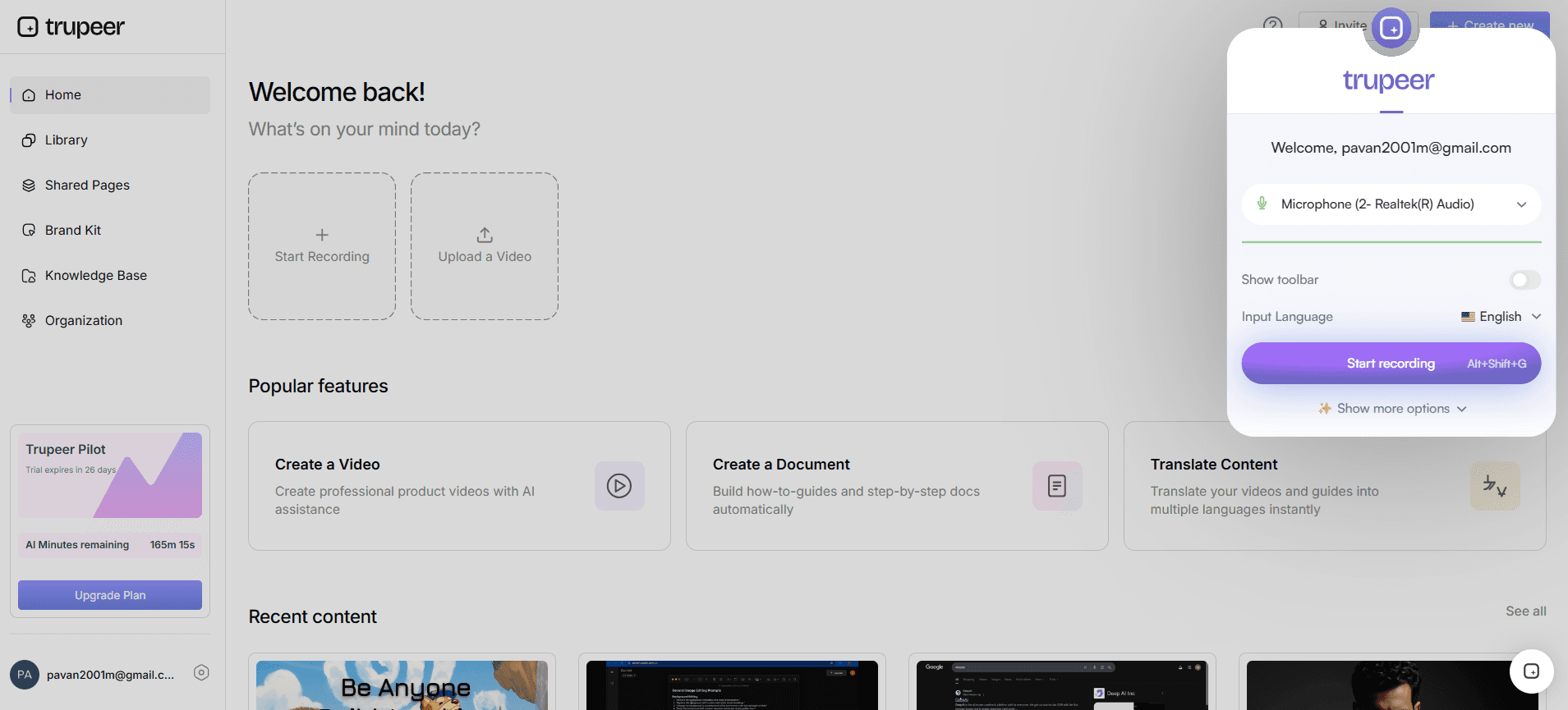
Begin by using Trupeer's AI screen recording with auto-zoom and click detection to capture the necessary training content. Open the Trupeer browser-based recorder and select the screen area you wish to record. The auto-zoom feature ensures that key actions and details are highlighted, making the content clear and comprehensible. As you navigate through the training material, Trupeer automatically detects clicks to emphasize important steps. This process usually takes as long as your training session, plus a few minutes for setup. Be mindful of potential distractions during recording as they can detract from the video's focus. Teams weighing tools often start with a Loom alternatives comparison before standardizing on a workflow.
Step 2: Add Narration
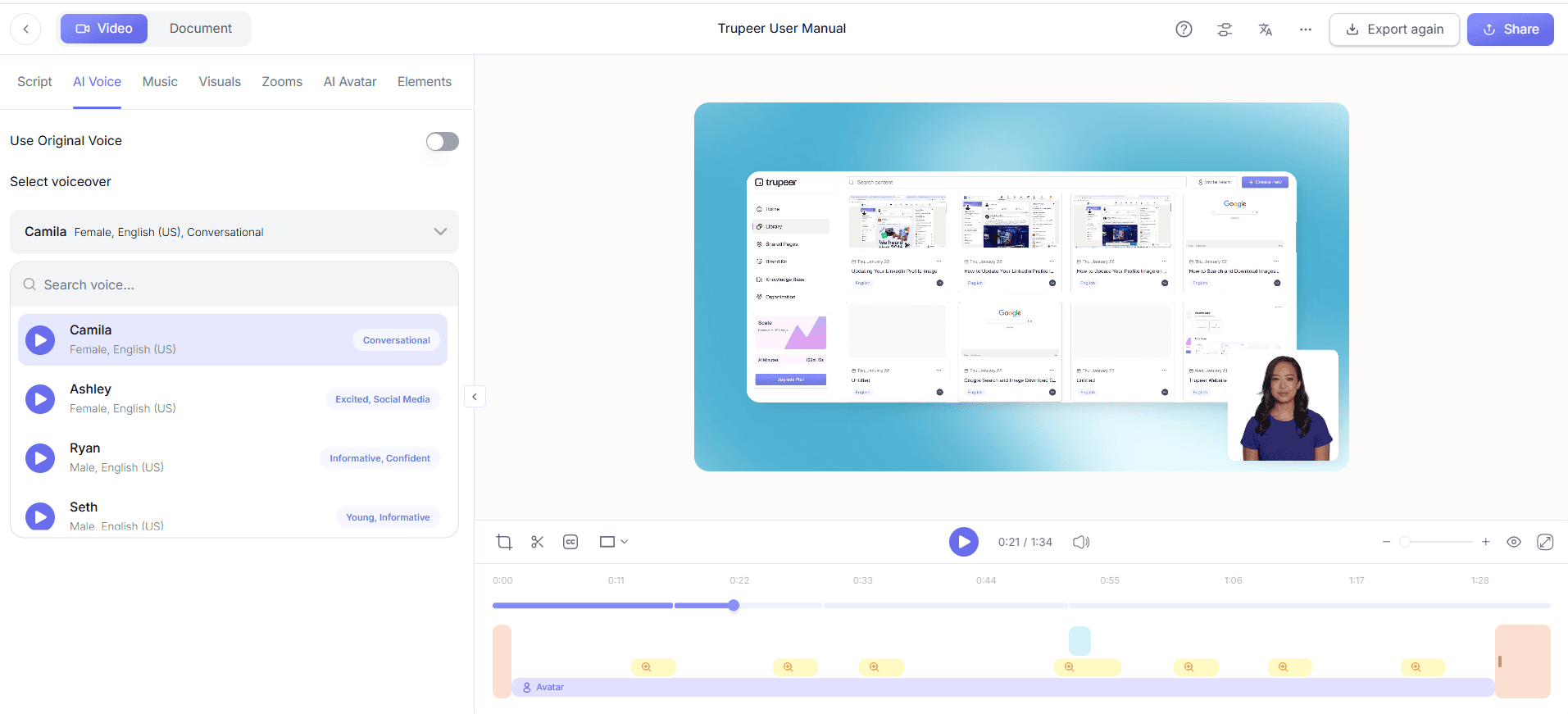
Once your screen recording is complete, enhance it using Trupeer's silent screen recording with automatic AI narration. Upload your recorded session to the Trupeer platform, then select the AI voiceover option. Choose from over 65+ natural voices and adjust pace and tone to suit your company’s style. This feature not only adds a professional touch but also ensures that the narration is consistent across all videos. The narration process takes just a few minutes, depending on the video length. If you notice any mispronunciations, you can easily adjust the text input for accuracy.
Step 3: Create Engaging Visuals
To make your video more engaging, incorporate AI avatars using Trupeer's talking-head video feature. Access the avatar library and select a stock or custom avatar that aligns with your brand identity. This step personalizes the video, making it more relatable and engaging for new employees. Setting up an avatar takes about 10 minutes, and integrating it into your video is straightforward with Trupeer’s intuitive interface. Ensure the avatar's appearance and expressions match the tone of your content to maintain consistency.
Step 4: Generate SOPs
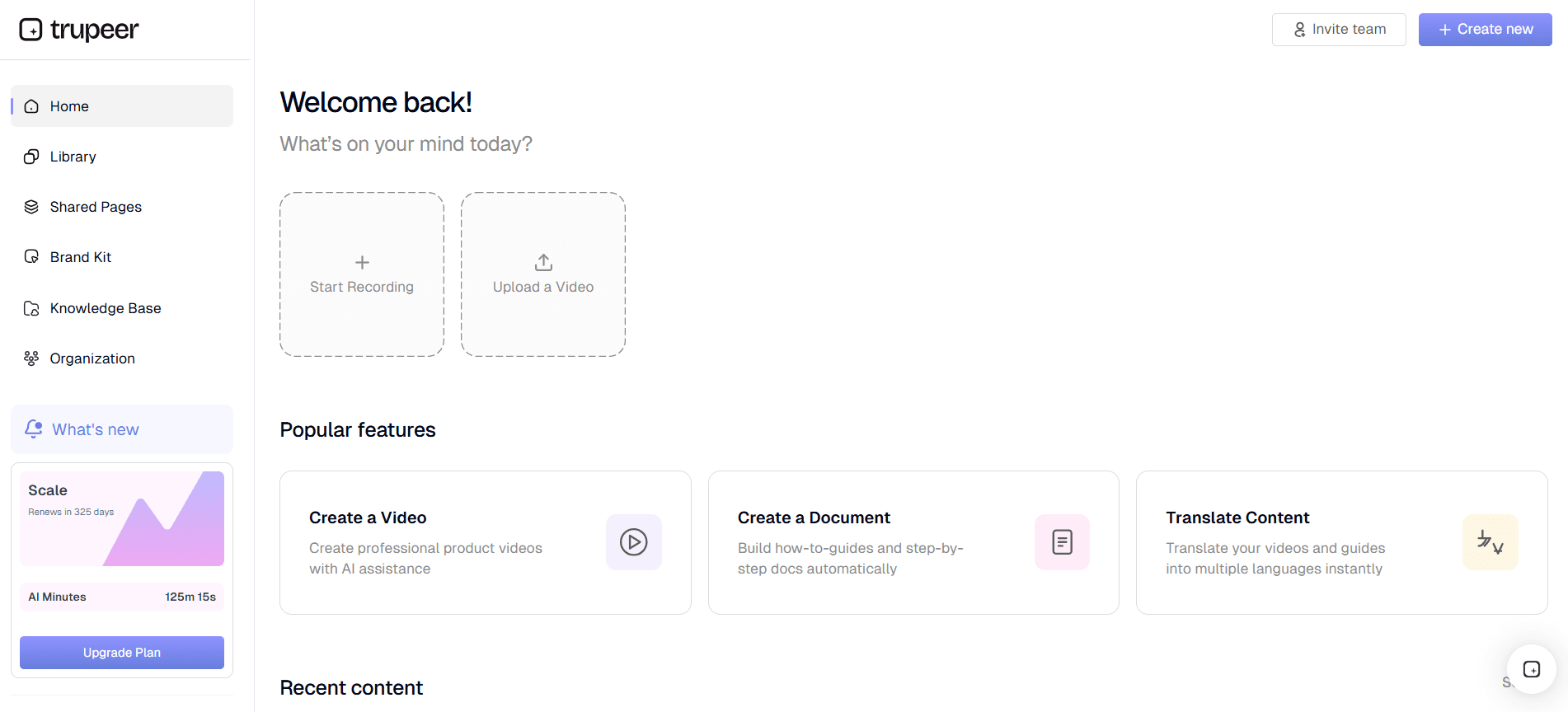
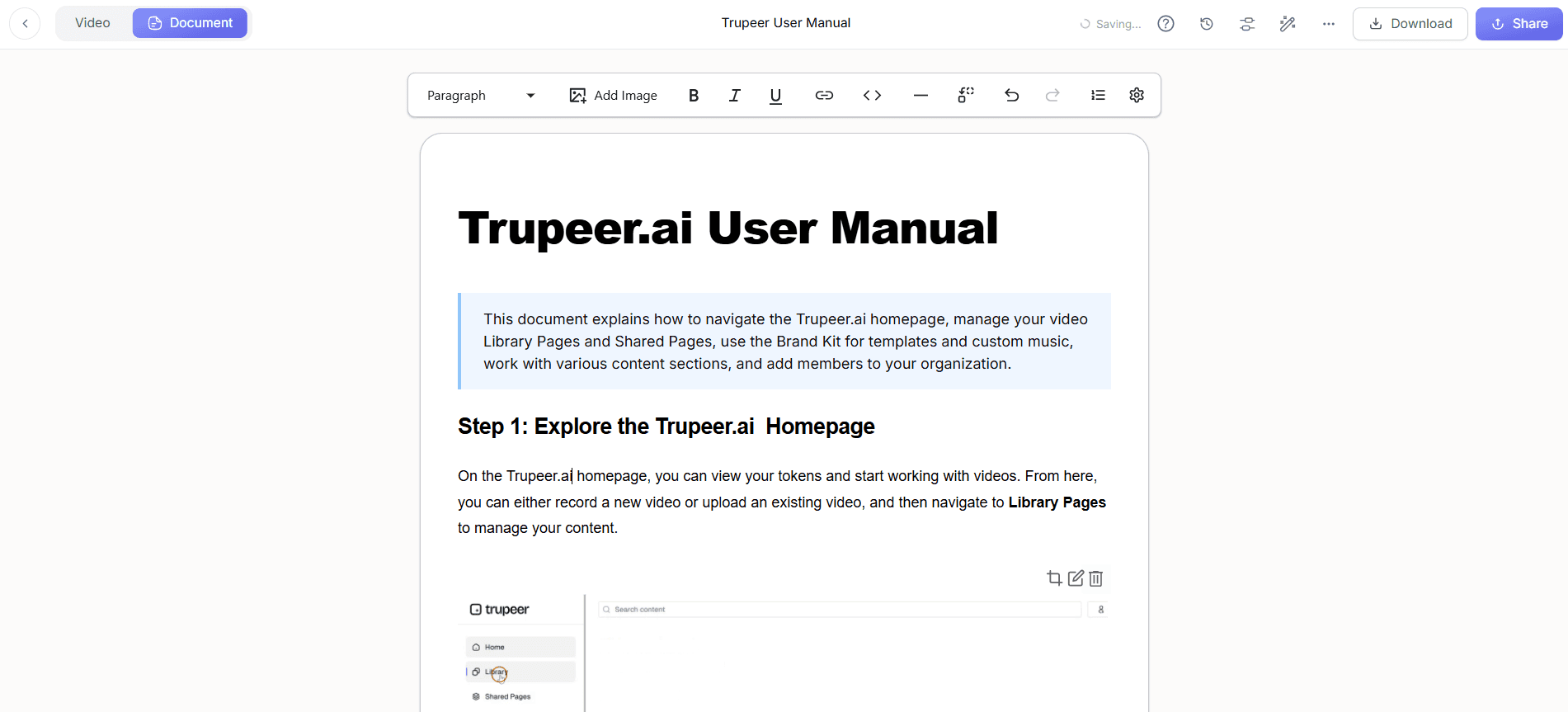
After finalizing your video content, use Trupeer's automatic SOP generation from your recording. Navigate to the documentation section, and let Trupeer convert your video into a comprehensive SOP document. This feature ensures that all instructions are documented and easily accessible, providing new hires with a text reference to accompany their video learning. The SOP generation takes about five minutes, and the document is ready for export in formats like MP4, HTML, PDF, or SCORM. Review the SOP for any discrepancies before distribution.
Step 5: Distribute Content
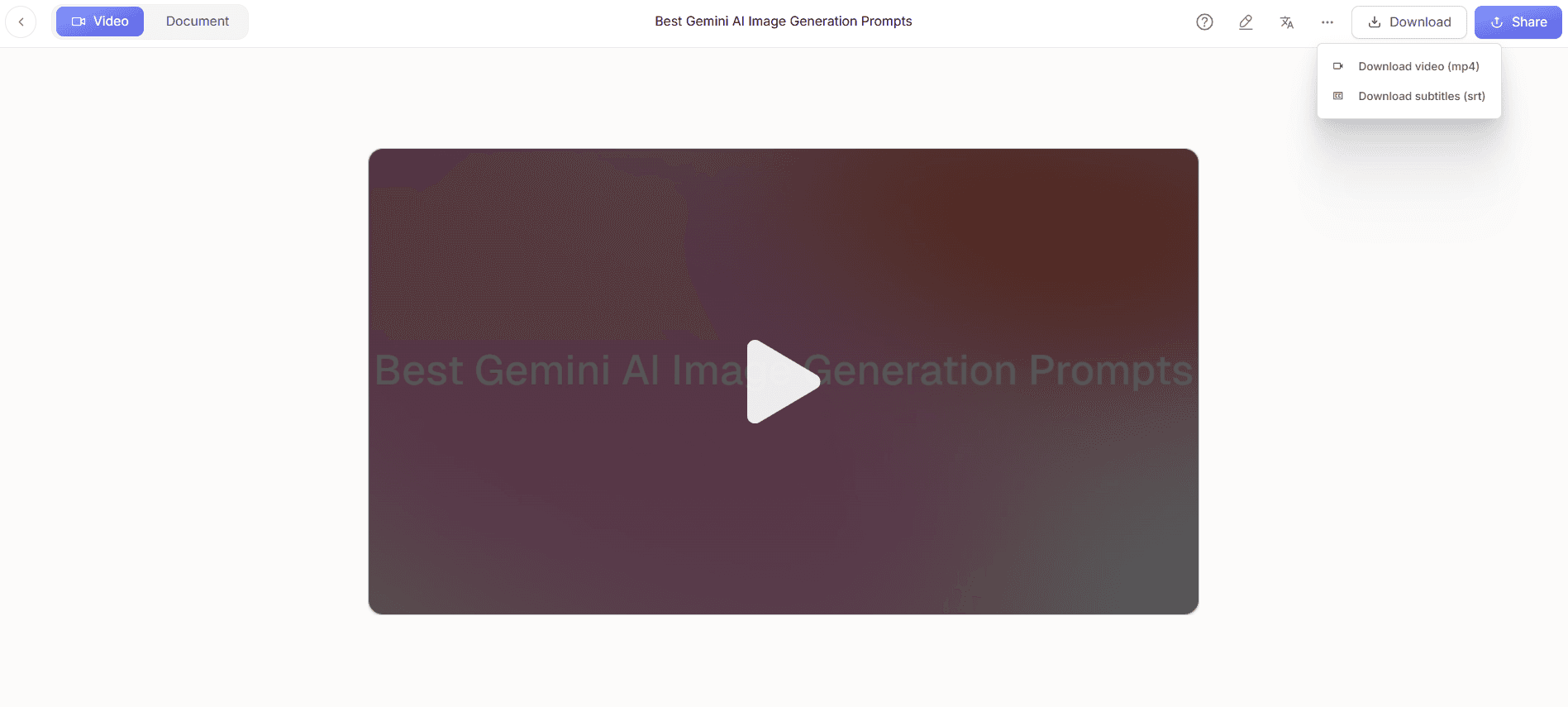
Next, distribute your training materials using Trupeer's AI-searchable knowledge base with timestamp deep-links. Upload the completed video and accompanying SOP to the knowledge base. This enables new hires to search and access specific sections quickly, improving their learning efficiency. Distribution is instantaneous once uploaded, and you can set permissions to ensure only relevant parties access the material. Keep in mind that regular updates might be necessary as processes evolve, which Trupeer's platform supports smoothly.
Step 6: Analyze Engagement
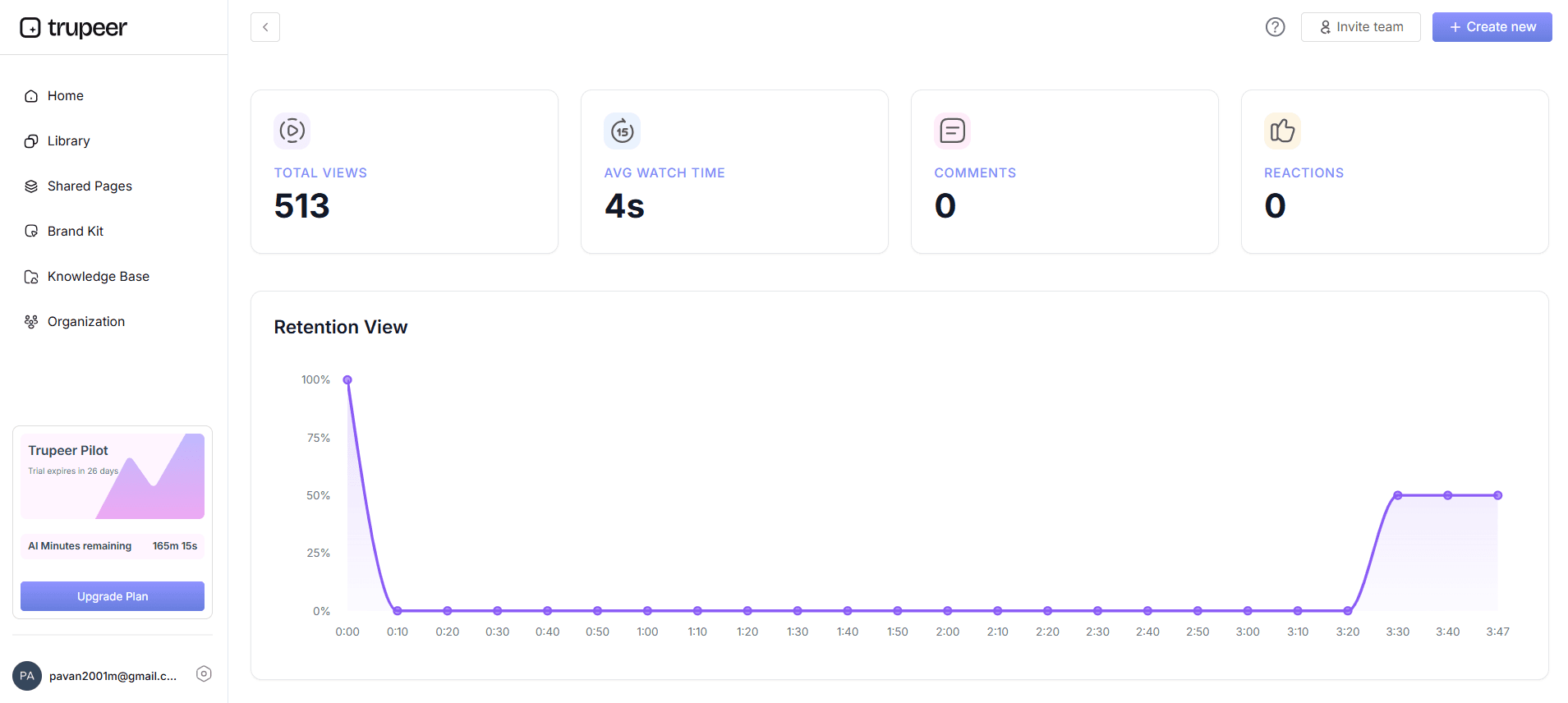
Finally, assess the effectiveness of your onboarding videos by using Trupeer's viewer engagement analytics. Access detailed reports on video performance, including viewer drop-off points and heatmaps. These insights help you understand which sections are most engaging and where improvements are needed. Analytics are available in real-time, allowing for prompt adjustments to content. If you notice high drop-off rates, consider revising those segments to retain viewer interest.
What tips help you create an effective remote employee onboarding video strategy?
Implementing a successful remote onboarding strategy involves attention to detail and continuous improvement. Here are some tips to optimize your video strategy for distributed teams:
Prioritize clarity. Use concise language and clear visuals to ensure your message is easily understood. Avoid jargon that might confuse new hires.
Standardize formats. Consistency in video format helps maintain a professional look across all materials. A collaborative video editing software for teams can assist with this.
Incorporate feedback. Regularly gather input from new hires to identify areas for improvement in your videos. This feedback loop can help refine content over time.
Stay updated. Regularly review and update your video content to reflect any changes in company policy or procedure. This ensures that all training remains relevant.
Engage with visuals. Use engaging visuals like avatars to keep videos interesting and relatable. This approach can improve retention and engagement.
Break content into segments. Divide long videos into shorter, digestible segments to prevent information overload. This makes it easier for employees to absorb and retain knowledge.
use analytics. Use analytics to track engagement and make data-driven decisions on content adjustments. This helps ensure your videos meet their intended purpose.
When SOPs come into the same conversation, a Scribe alternatives comparison helps clarify the scope.
Frequently asked questions
How can video improve remote onboarding efficiency?
Video can drastically improve remote onboarding efficiency by providing consistent and engaging content that is easy for new hires to access and understand. Unlike text-based materials, videos can demonstrate complex processes visually, which aids in comprehension and retention. also, video content can be reused and scaled across multiple onboarding sessions, reducing the need for repeated live training. This efficiency saves time and resources while ensuring all employees receive the same level of training and information.
What should be included in a remote onboarding video?
Remote onboarding videos should include an introduction to the company culture, detailed role responsibilities, and essential procedures. It’s important to cover compliance information, tools, and resources available to new hires. Including segments on team introductions and communication protocols can also help new employees feel more connected to their peers. By integrating these elements, onboarding videos provide a comprehensive overview that prepares new hires effectively for their roles.
Why is AI narration beneficial for onboarding videos?
AI narration is beneficial for onboarding videos because it offers a consistent and professional audio experience. Human narrators might have fluctuations in tone or speed, but AI can maintain uniformity across all content. This consistency enhances understanding and ensures that the message aligns with company standards. also, AI narration can be quickly adjusted and customized to suit different languages or dialects, making it an ideal tool for global companies with diverse teams.
Can Trupeer handle multilingual onboarding needs?
Yes, Trupeer can effectively handle multilingual onboarding needs thanks to its AI translation and dubbing capabilities. You can translate content into over 40 languages, ensuring that non-English speaking employees receive the same quality of training. This feature is particularly useful for companies operating in multiple countries, as it allows for the smooth integration of AI video translation into their onboarding process, enhancing accessibility and understanding for all team members.
Does video onboarding replace traditional methods completely?
No, video onboarding does not completely replace traditional methods but rather complements them. While videos provide consistency and scalability, they might not address every aspect of the onboarding process. Interactive elements, such as Q&A sessions or one-on-one meetings, are still valuable for addressing individual concerns and building relationships. A balanced approach that combines video content with personal interactions tends to yield the best results, ensuring new hires feel supported and integrated into the team.
Related Blogs