Trupeer Blog
Summarise
Imagine you're a key player in a post-merger scenario, tasked with integrating two companies' operations into one simplified entity. The stakes are high; maintaining operational continuity while maximizing the value of the newly merged company is crucial. The merger includes a complex mix of technologies, processes, and cultures. Each organization has developed unique ways of doing things, and capturing these processes is no small feat.
According to a McKinsey report, 70% of mergers fail to achieve their intended synergies due to inadequate integration processes.
This highlights the necessity of an effective knowledge transfer strategy.
In this complex environment, you need tools that can smoothly capture, document, and share the wealth of knowledge residing in both organizations. Using comprehensive process mapping tools is essential to ensure that nothing gets lost in translation. This process is critical for stakeholders, including operations leaders, HR managers, and IT teams, who all play critical roles in the success of the merger. The right tools can help you not only document existing processes but also identify best practices from both organizations, creating a roadmap for the future.
Why does post-merger knowledge transfer matter?
Post-merger knowledge transfer is crucial for the smooth integration of two previously independent organizations. It’s not just about combining assets; it’s about merging cultures, technologies, and most importantly, operational processes. When two companies come together, they bring along their distinct methods and workflows. Without an effective strategy for capturing and transferring this knowledge, you risk losing valuable insights and expertise that can take years to rebuild.
From an operations perspective, the failure to effectively transfer knowledge can lead to inefficiencies, redundancies, and decreased productivity. For instance, if one company has a superior inventory management system, but that process isn't captured and shared, the merged entity might miss out on significant cost savings. HR departments face challenges too, as they need to align policies and practices. IT teams must integrate systems without disrupting service. Each of these stakeholders needs access to the right information to make informed decisions, and that’s where structured knowledge transfer becomes invaluable.
What are the benefits of post-merger knowledge transfer?
Effective post-merger knowledge transfer offers numerous benefits that can make or break the success of the merger. Capturing and sharing knowledge ensures continuity and opens up new synergies.
Preserve critical know-how. By using the best screen capture software, you can document key processes and retain vital knowledge that might otherwise be lost during the merger.
Improve decision-making. An AI video platform allows executives to compare processes efficiently, leading to better strategic decisions.
Enhance employee alignment. Sharing documented processes helps align employees from both organizations, building a unified culture and improving collaboration.
Reduce duplication of efforts. By capturing and analyzing existing processes, you can eliminate redundancies and ensure resources are used efficiently.
Accelerate integration timelines. A structured approach to knowledge transfer speeds up the integration process, allowing the merged entity to realize synergies faster.
Minimize operational disruptions. Documented processes serve as a reference point, reducing the risk of disruptions during the transition period.
Which Trupeer features help you capture post-merger knowledge?
Trupeer offers a range of features designed to facilitate the smooth capture and transfer of knowledge during a merger. These tools help you maintain operational wisdom while integrating two companies.
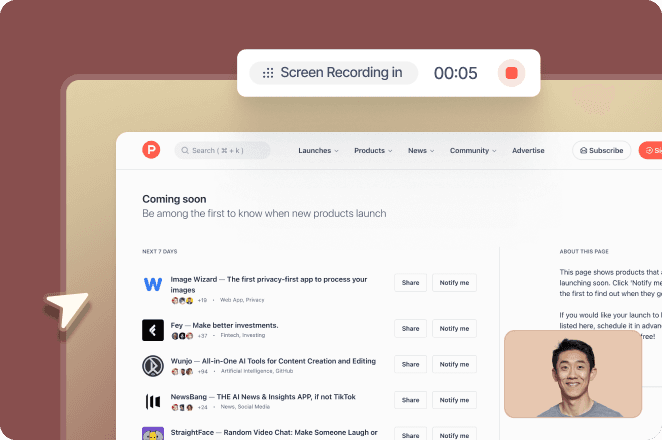
AI screen recording with auto-zoom and click detection
This feature allows you to capture the nuances of each company’s processes in real-time. By using Trupeer’s AI-powered recorder, you can record every step with precision, ensuring nothing is missed. The auto-zoom and click detection highlight key actions, making it easier for viewers to understand complex workflows. This is particularly beneficial when documenting detailed procedures, as it provides a clear visual aid that can be referenced later. It’s ideal for capturing intricate tasks that require a lot of detail, such as software operations or technical procedures.
Automatic SOP generation from any recording
Trupeer's AI documentation platform can automatically generate Standard Operating Procedures (SOPs) from any recording. This feature saves time and ensures consistency across documentation. Once a process is recorded, Trupeer can transcribe and format it into a ready-to-edit SOP, making it easy to share and standardize across the merged entity. This automation reduces manual effort, allowing teams to focus on higher-value tasks while ensuring that critical processes are accurately captured and documented.
AI voiceover in 65+ natural voices
With Trupeer’s AI voiceover capability, you can add narration to your recordings in over 65+ natural voices. This feature is particularly useful for creating engaging and informative process documentation. You can adjust the pace and tone to match the context, ensuring that the information is conveyed effectively. Whether you’re documenting a sales process or an IT procedure, this feature helps maintain attention and improve understanding, making it easier for employees from both companies to absorb and apply new information.
AI-searchable knowledge base with timestamp deep-links
Trupeer’s AI-searchable knowledge base indexes every recording with timestamp-level deep links. This makes it easy to find and reference specific parts of a process quickly. Whether you’re a team leader looking for specific steps in a workflow or an employee needing clarification, this feature allows you to jump directly to relevant parts of a recording. It enhances accessibility and knowledge sharing, ensuring that valuable insights are always within reach.
AI translation into 40+ languages with lip-sync
Language barriers can hinder effective knowledge transfer in a multinational merger. Trupeer’s AI translation feature supports over 40 languages and includes lip-sync capabilities. This ensures that process documentation is accessible to all employees, regardless of their native language. By providing accurate translations, this feature enhances communication and collaboration across diverse teams, enabling a smoother integration process. It’s particularly beneficial for companies with a global footprint, ensuring that everyone is on the same page.
How do you capture post-merger knowledge transfer step by step with Trupeer?
Step 1: Record Key Processes
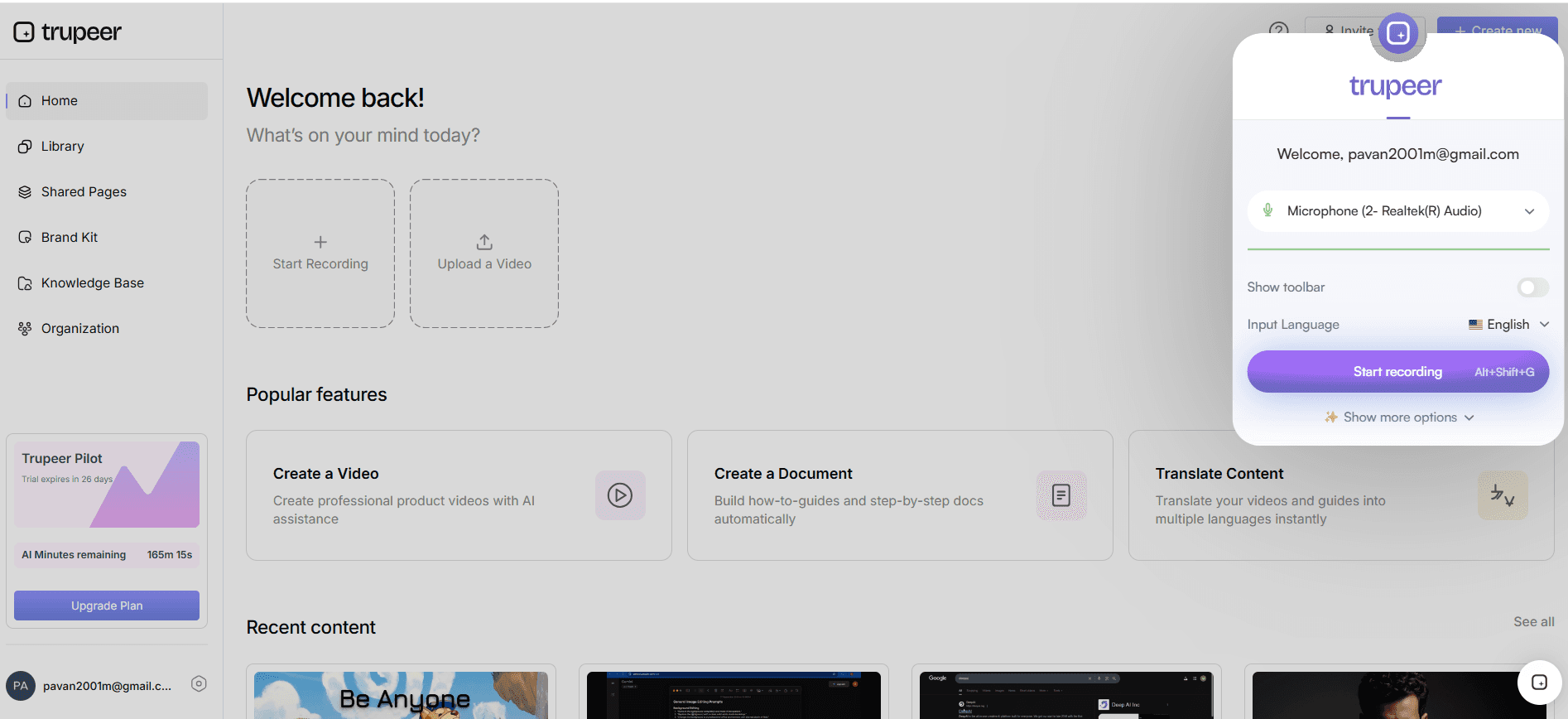
Start by using Trupeer's browser-based recorder, which requires no installation, to capture essential processes from both companies. Open the recorder from your browser, select the screen or application you need to document, and initiate the recording. The AI screen recording with auto-zoom and click detection will automatically highlight critical actions, ensuring clarity in complex workflows. Each recording session can last up to an hour, accommodating even the most detailed processes. If any interruptions occur, the recorder allows you to pause and resume smoothly. This step ensures all procedures are documented accurately, serving as a foundation for the subsequent integration steps.
Step 2: Generate Standard Operating Procedures (SOPs)
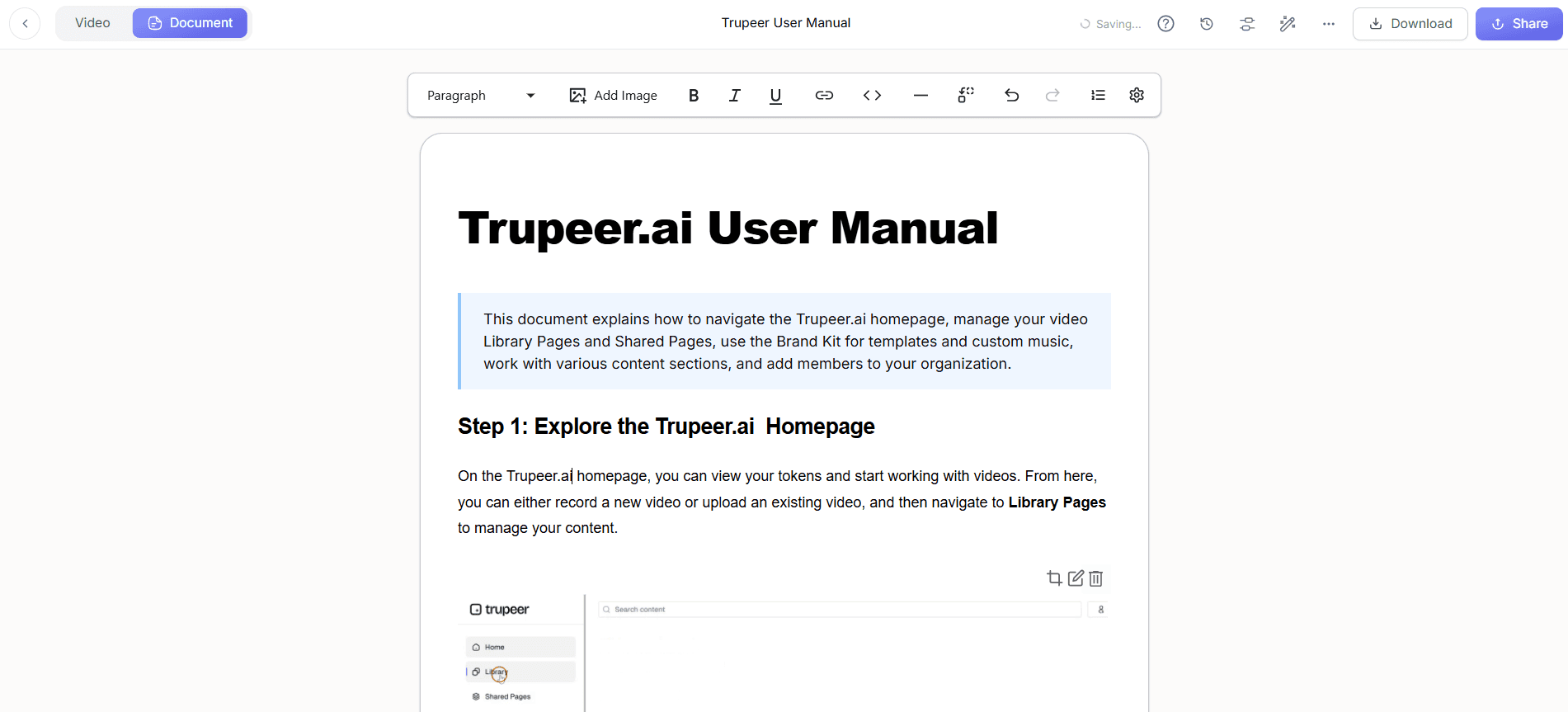
Once the recordings are complete, use Trupeer's automatic SOP generation feature. Navigate to the recording library, select the desired video, and choose the SOP generation option. Trupeer will transcribe the recording, automatically formatting it into a structured SOP document. This process usually takes a few minutes, depending on the length of the video. The generated SOP is edit-ready, allowing you to make any necessary adjustments before final approval. This step transforms raw video data into actionable documents, simplifying the transfer of knowledge across the merged entity. Teams weighing tools often start with a Loom alternatives comparison before standardizing on a workflow.
Step 3: Edit and Enhance Your Recordings
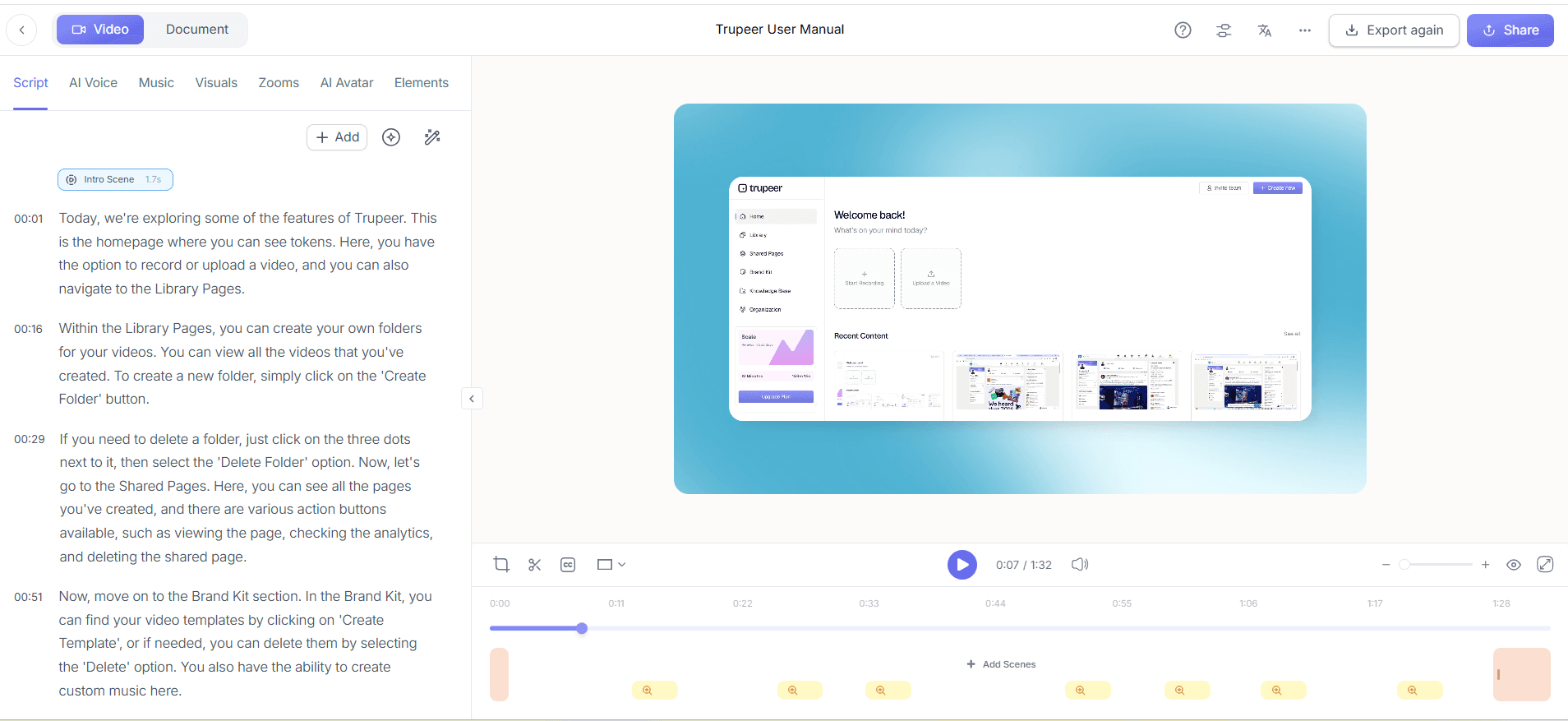
After generating SOPs, enhance the recordings using Trupeer's AI-driven editing tools. Access the editing suite within the platform and use features like automatic filler-word removal and AI voiceover adjustments. These tools refine the recordings by removing unnecessary pauses and adding professional narration, improving viewer engagement. The AI voiceover supports 65+ natural voices, enabling you to choose one that best suits your audience. This step is critical for maintaining a high standard of communication, ensuring that all stakeholders receive polished and professional documentation.
Step 4: Localize Content for Global Teams
Trupeer facilitates smooth content localization, crucial for companies with international teams. Use the AI translation feature to convert your recordings into over 40 languages. Select the translation option for each video, and Trupeer will generate subtitles and dubbed audio tracks, ensuring cultural and linguistic accuracy. The process is completed within minutes, depending on the video length. This step ensures that all employees, regardless of their language, can access and understand the documentation, building a unified global workforce.
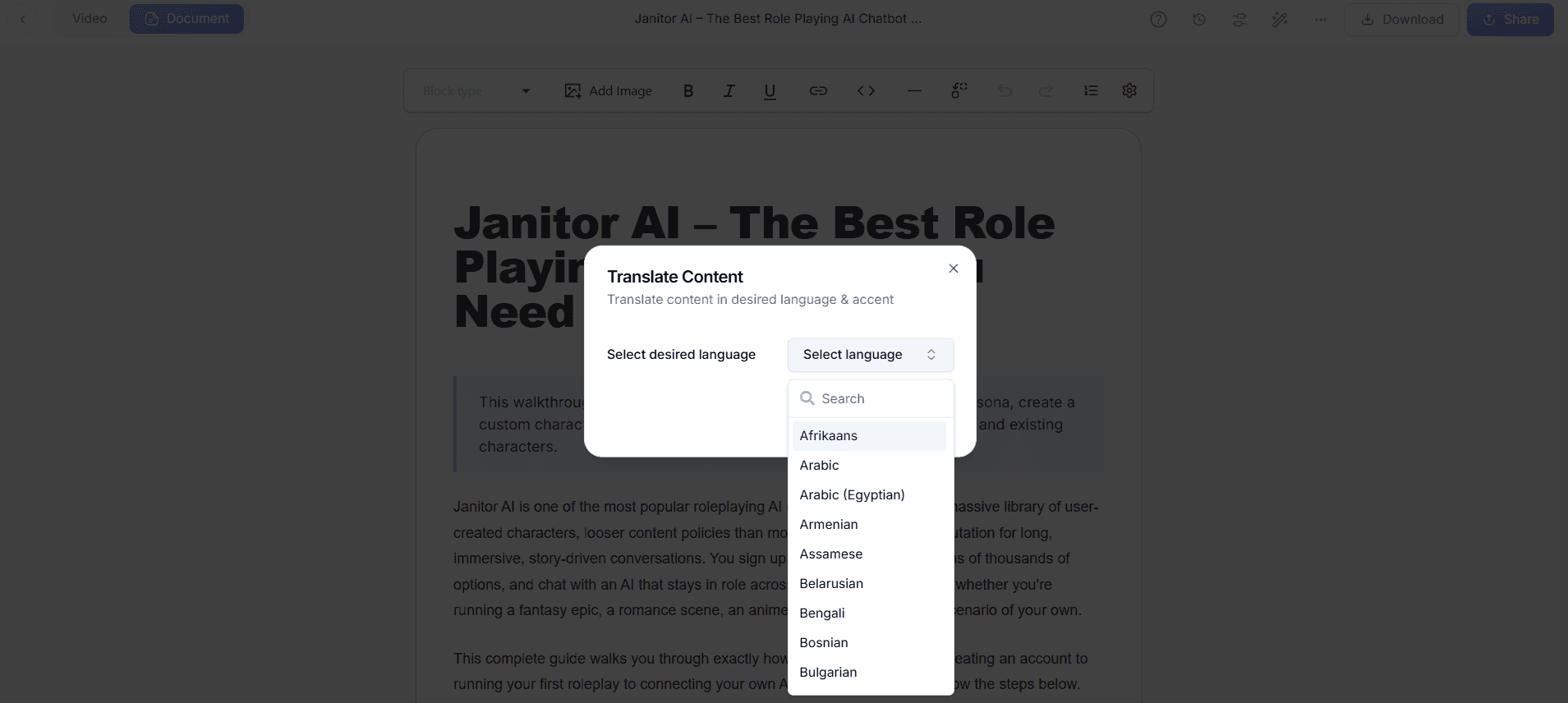
Step 5: Build a Searchable Knowledge Base
To organize the captured knowledge, use Trupeer’s knowledge base generator. Upload your recordings and SOPs to the platform, where they're indexed with timestamp deep-links. This enables users to search for specific terms and jump directly to relevant sections of the content. The knowledge base can be customized into shared pages or client-facing portals, enhancing accessibility for all team members. This step creates a centralized repository of information, crucial for efficient knowledge sharing and retrieval.
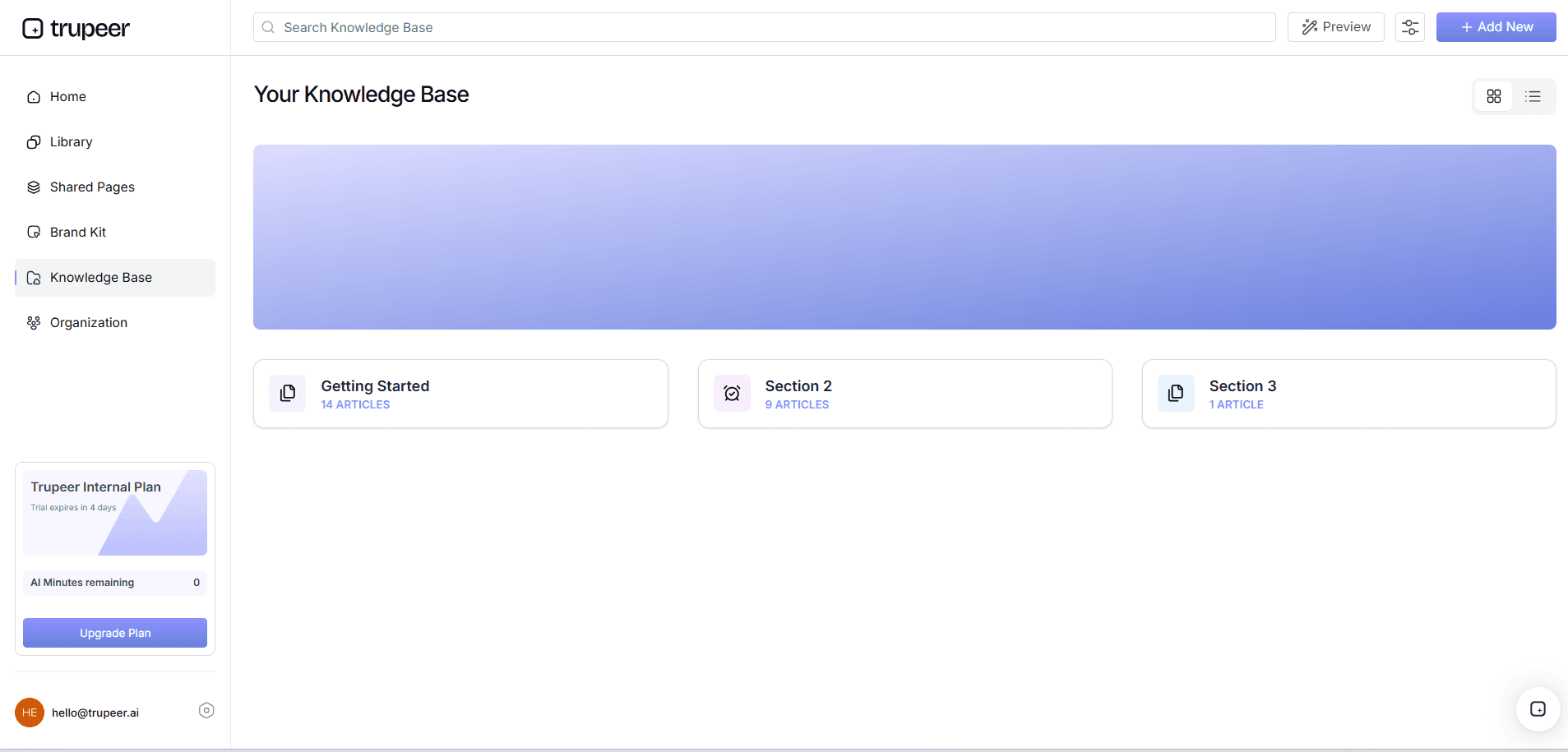
Step 6: Monitor Engagement and Iterate
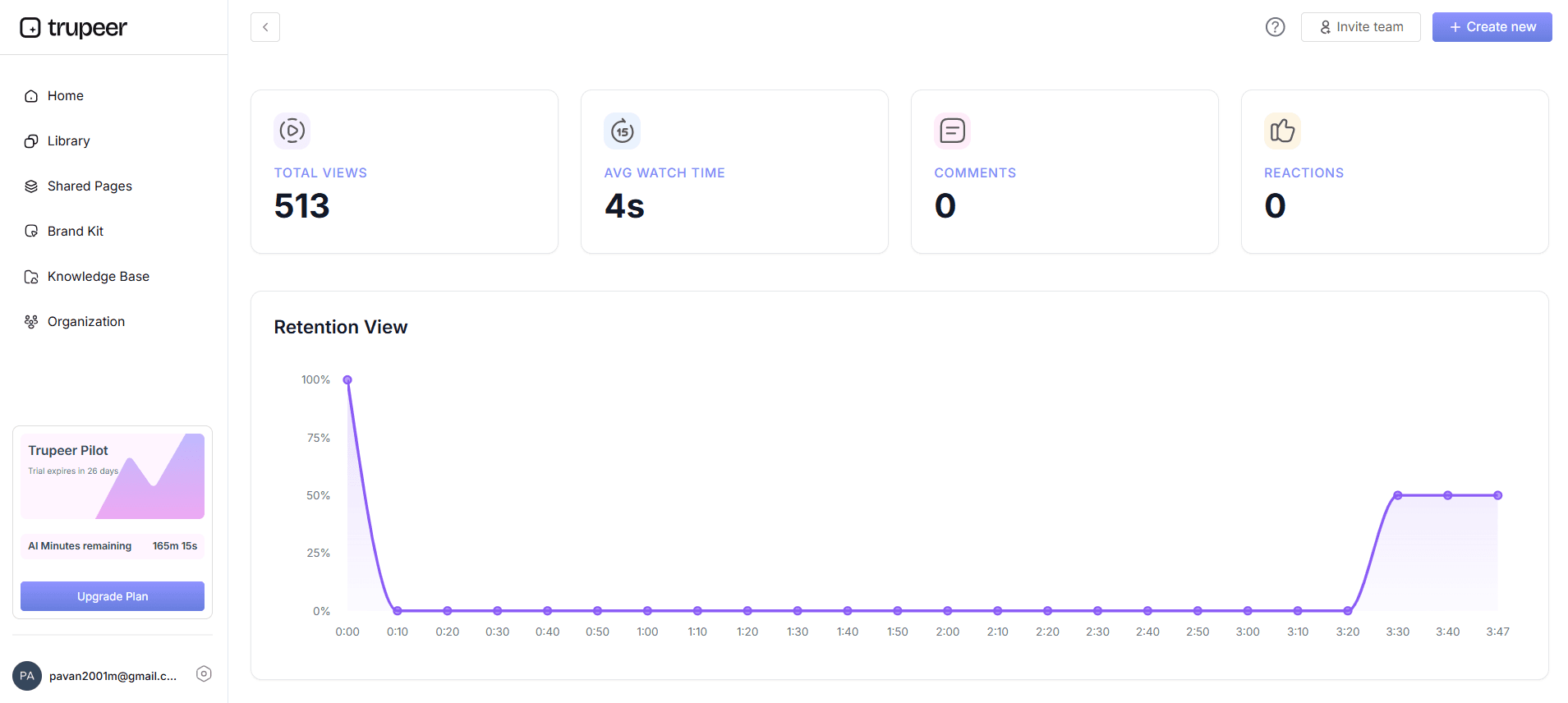
Finally, use Trupeer’s viewer engagement analytics to track how employees interact with the content. Access the analytics dashboard to review metrics such as view counts, drop-off rates, and heatmaps. This data helps identify which areas of the recordings are most engaging or where viewers lose interest. Use these insights to refine and improve your documentation process. If a particular section shows high drop-off, consider re-recording with enhanced clarity or additional context. This iterative process ensures that the knowledge transfer remains effective and continually aligns with organizational needs.
What tips help you capture post-merger knowledge transfer?
Successfully capturing post-merger knowledge transfer requires strategic planning and execution. The following tips provide practical advice to enhance your documentation process, ensuring that valuable insights are preserved and accessible across the merged entity.
Engage with stakeholders early. Involve key personnel from both companies in the process to ensure all critical knowledge is captured.
Use a consistent format. Standardize the format of your recordings and SOPs to facilitate easier comparison and integration of processes.
Set clear objectives. Define what you want to achieve with each recording session to maintain focus and efficiency.
use AI tools. Incorporate AI-driven features like Trupeer’s software process generator to automate and simplify the capture process.
Regularly update documentation. Continually revise your SOPs and knowledge base to reflect any changes or improvements in processes.
Ensure accessibility. Make sure all documentation is easily accessible to employees, using tools like Trupeer’s Scribe alternative comparison for optimized distribution.
Encourage feedback. Solicit feedback from users to identify areas for improvement and ensure the documentation meets their needs.
Frequently asked questions
How can companies ensure effective knowledge transfer post-merger?
Effective knowledge transfer post-merger involves structured documentation and the use of advanced tools like Trupeer. Start by capturing key processes using AI screen recording, then generate SOPs automatically. Localize content for global teams and build a searchable knowledge base to organize the information. Regularly update documents based on feedback and engagement analytics to ensure the material remains relevant. These steps help preserve valuable organizational knowledge, facilitating a smoother integration process.
What tools can assist in post-merger knowledge transfer?
Trupeer offers a comprehensive suite of tools specifically designed for post-merger knowledge transfer. These include AI screen recording, automatic SOP generation, and a knowledge base generator. also, features like AI translation and voiceover enhance accessibility and engagement. These tools simplify the documentation process, reduce manual effort, and ensure consistency across the newly merged entity. using such technologies effectively bridges the gap between the two organizations, leading to a successful merger.
Why is localization important in post-merger integrations?
Localization ensures that all employees, regardless of their language, can access and understand critical documentation. In a merger involving multinational teams, language barriers can impede effective communication and collaboration. Trupeer's AI video translation feature supports over 40 languages, providing accurate translations and lip-sync capabilities. This makes content accessible to a diverse workforce, building a unified organizational culture and enabling smooth integration across global teams.
Can AI improve the speed of knowledge transfer?
Yes, AI can significantly improve the speed of knowledge transfer by automating many aspects of the documentation process. Trupeer’s AI tools can quickly generate SOPs from recordings, translate content into multiple languages, and create a searchable knowledge base. These capabilities reduce the time and effort required to capture and disseminate information, allowing teams to focus on strategic integration tasks. By accelerating knowledge transfer, AI enables the merged entity to realize synergies faster and more effectively.
Does Trupeer support collaboration during the integration process?
Trupeer supports collaboration through features like shared pages, client-facing portals, and engagement analytics. These tools allow teams to access and review documentation collectively, providing a platform for collaborative feedback and approval workflows. Analytics offer insights into how content is being used, helping teams identify areas for improvement. Overall, Trupeer facilitates a collaborative environment where stakeholders can work together to ensure a successful post-merger integration.