Trupeer Blog
Summarise
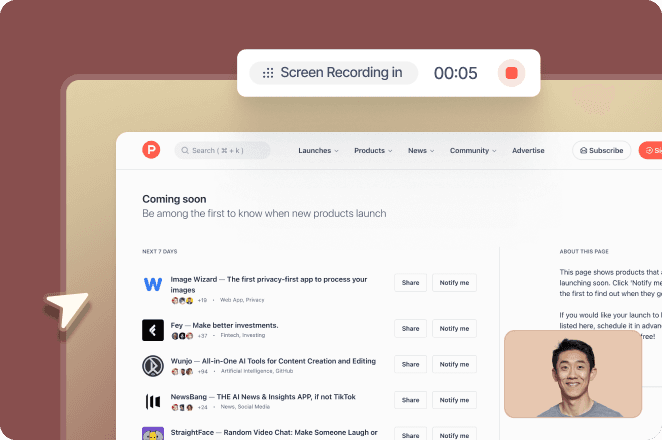
In manufacturing, precise instructions are crucial. They ensure that each product meets quality standards and that processes are efficient. But traditional written work instructions often fall short. They're hard to follow and can lead to misinterpretations. This is where process videos come in. By using actual recordings from the shop floor, you can transform the way work instructions are created and understood. A study showed that using video as a medium can improve retention by up to 95% compared to reading text. This means that workers are more likely to follow procedures accurately, reducing errors and increasing productivity. If you're looking to create instructional video content that translates complex processes into easy-to-understand instructions, you're setting your team up for success.
Why does creating manufacturing work instructions from process videos matter?
The manufacturing industry is increasingly complex, with a need for rapid adaptation to new technologies and processes. Traditional documentation methods struggle to keep pace. This lag can lead to inefficiencies and errors. For shop-floor workers, clarity and precision are vital. When instructions are vague or misinterpreted, it can result in costly mistakes. Process videos offer a visual and dynamic method of communication that text alone can't match. This is why it pairs well with the process control plan the documentation and the documentation come from the same source.
For example, consider a scenario where a new machine is introduced on the production line. Text-based instructions detailing its operation could span pages, leaving workers overwhelmed and confused. In contrast, a video showing the machine in action, with step-by-step instructions, offers a clearer, more concise learning experience. This approach not only helps workers perform their tasks more accurately but also accelerates their training and onboarding process. When you integrate these videos into an operations workflow, you create a smooth transition from learning to application, minimizing downtime and maximizing efficiency.
What are the benefits of using process video documentation for manufacturing work instructions?
Using process videos for work instructions offers several tangible benefits that can transform manufacturing operations.
Improved comprehension and retention. Videos provide visual and auditory cues that enhance understanding. This is especially beneficial for complex processes, where a create effective video sops can simplify learning.
Reduced training time. Videos allow new employees to learn at their own pace, revisiting sections as needed. This reduces the overall time required to get them up to speed, saving both time and resources.
Consistent documentation. A single AI video platform ensures that all instructions are standardized, eliminating variations that can arise from different trainers or instructors.
Enhanced collaboration. Teams can review and discuss video instructions more effectively, allowing for feedback and improvements. This collaborative approach leads to better process optimization.
Real-time updates. Videos can be easily updated to reflect changes in processes or equipment. This ensures that all team members have access to the most current information without the need for lengthy revision cycles.
Increased engagement. Videos are more engaging than text, which can help maintain the attention of the workforce and improve overall job satisfaction and performance.
Which Trupeer features help you create manufacturing work instructions from process videos?
Trupeer offers a suite of features specifically designed to enhance the creation and distribution of manufacturing work instructions through process videos.
AI screen recording with auto-zoom and click detection
This feature allows you to capture detailed process videos without missing key actions. The auto-zoom function ensures that important details are highlighted, while click detection keeps track of every action. This makes it easier to create clear and focused work instructions. By using Trupeer's work instructions generator, you can transform these recordings into comprehensive guides that are easy to follow.
Automatic SOP generation from any recording
Trupeer's capability to automatically generate standard operating procedures (SOPs) from video recordings is a big shift. This feature converts your process videos into editable and exportable documents, simplifying the documentation process. With the AI documentation platform, you can ensure that your SOPs are always up-to-date and aligned with the latest processes.
AI voiceover in 65+ natural voices
Adding a voiceover to your process videos can significantly enhance understanding. Trupeer's AI voiceover feature provides over 50 natural-sounding voices, allowing you to choose the perfect tone and pace for your audience. This feature helps bridge language barriers and ensures clarity, making the documentation more accessible to a diverse workforce.
AI-searchable knowledge base
Trupeer allows you to create an AI-searchable knowledge base from your process videos. This means that team members can quickly find the exact information they need, right when they need it. With timestamp deep-links, locating specific sections of a video is simplified, reducing the time spent searching for information.
AI translation into 65+ languages with lip-sync
Manufacturing often involves teams from various linguistic backgrounds. Trupeer's AI translation feature with lip-sync ensures that your process videos are accessible in over 40 languages, complete with synchronized lip movement. This capability broadens the reach of your documentation, ensuring that language is no barrier to understanding critical work instructions.
How do you create manufacturing work instructions from process videos step by step with Trupeer?
Step 1: Record the Process
Begin by using Trupeer's AI screen recording feature. This tool captures all actions on your screen with auto-zoom and click detection, ensuring every detail is documented. Open the Trupeer application, select "Record Screen," and choose the area you want to capture. The software will automatically zoom in on key actions, such as button presses or detailed maneuvers, highlighting them for clarity. This recording process typically takes the duration of your task, with no additional setup time. In case of any missed details, the auto-zoom feature compensates by focusing on critical areas, ensuring nothing essential is overlooked.
Step 2: Edit and Enhance the Recording
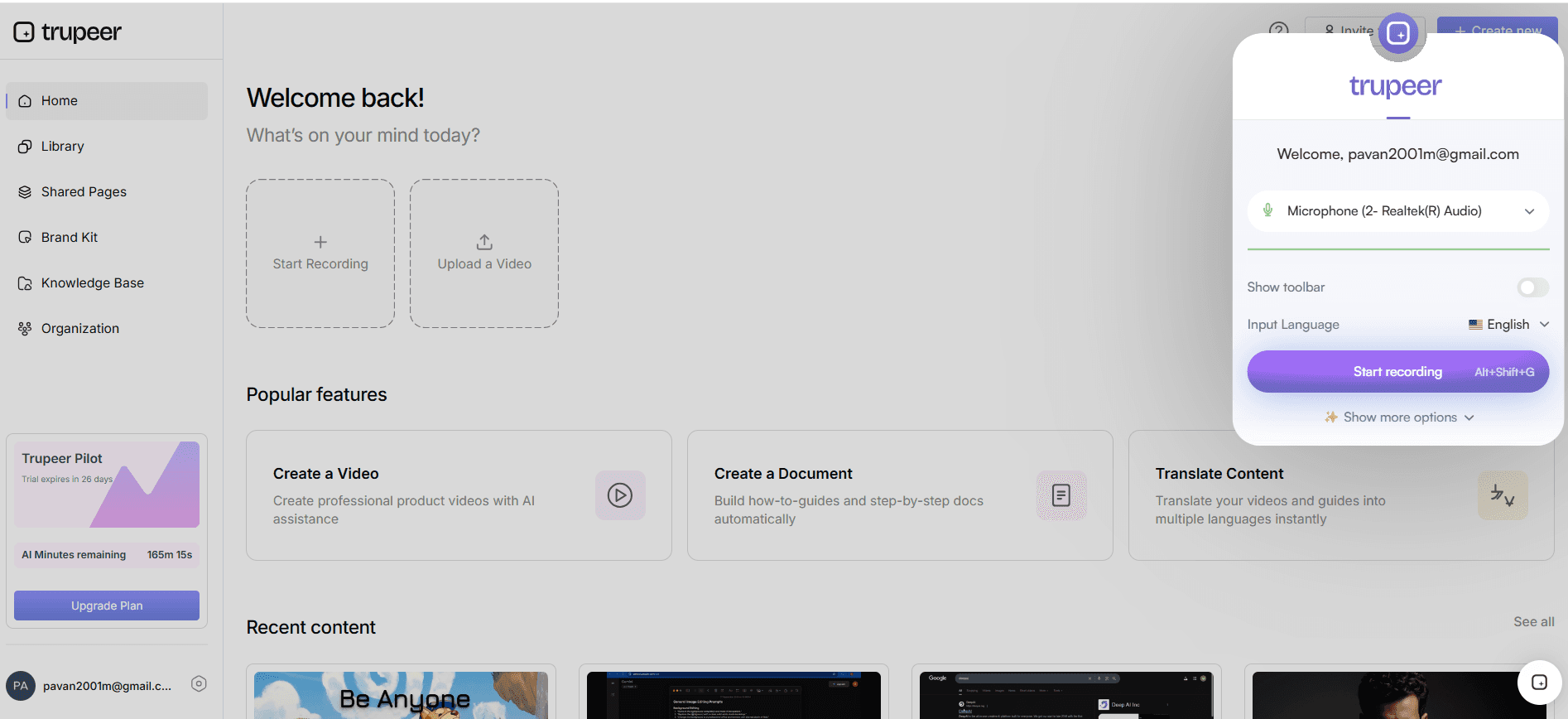
After capturing the process, enhance your recording using Trupeer's editing capabilities. Access the recorded video and use features like automatic filler-word removal and AI voiceover. Click on the "Edit" option, and apply filters to remove unnecessary pauses and words like "um" or "ah." You can add an AI voiceover by selecting from over 65+ natural voices, adjusting pace and tone for clarity. These edits refine your video, making it more professional and easier to follow without requiring extensive video editing skills.
Step 3: Generate Work Instructions
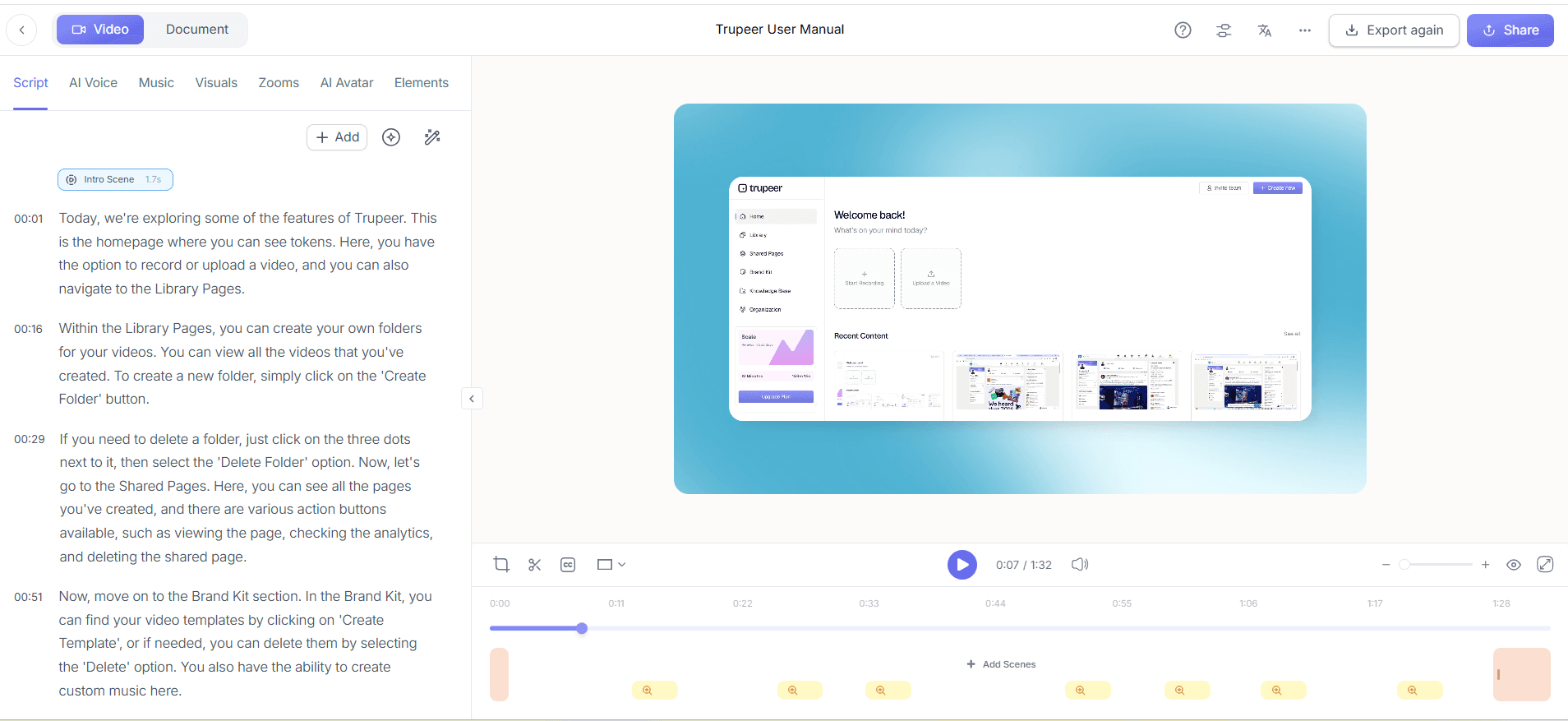
With your video ready, generate work instructions using Trupeer's automatic SOP generation feature. Navigate to the "Documentation" tab, and click "Generate SOP." Trupeer converts your video into a structured document, highlighting each step captured in the recording. This process takes only a few minutes and results in an edit-ready document that you can export in multiple formats, such as PDF or HTML. The auto-generated SOP includes visual cues and text descriptions, ensuring comprehensive coverage of the process.
Step 4: Translate and Localize
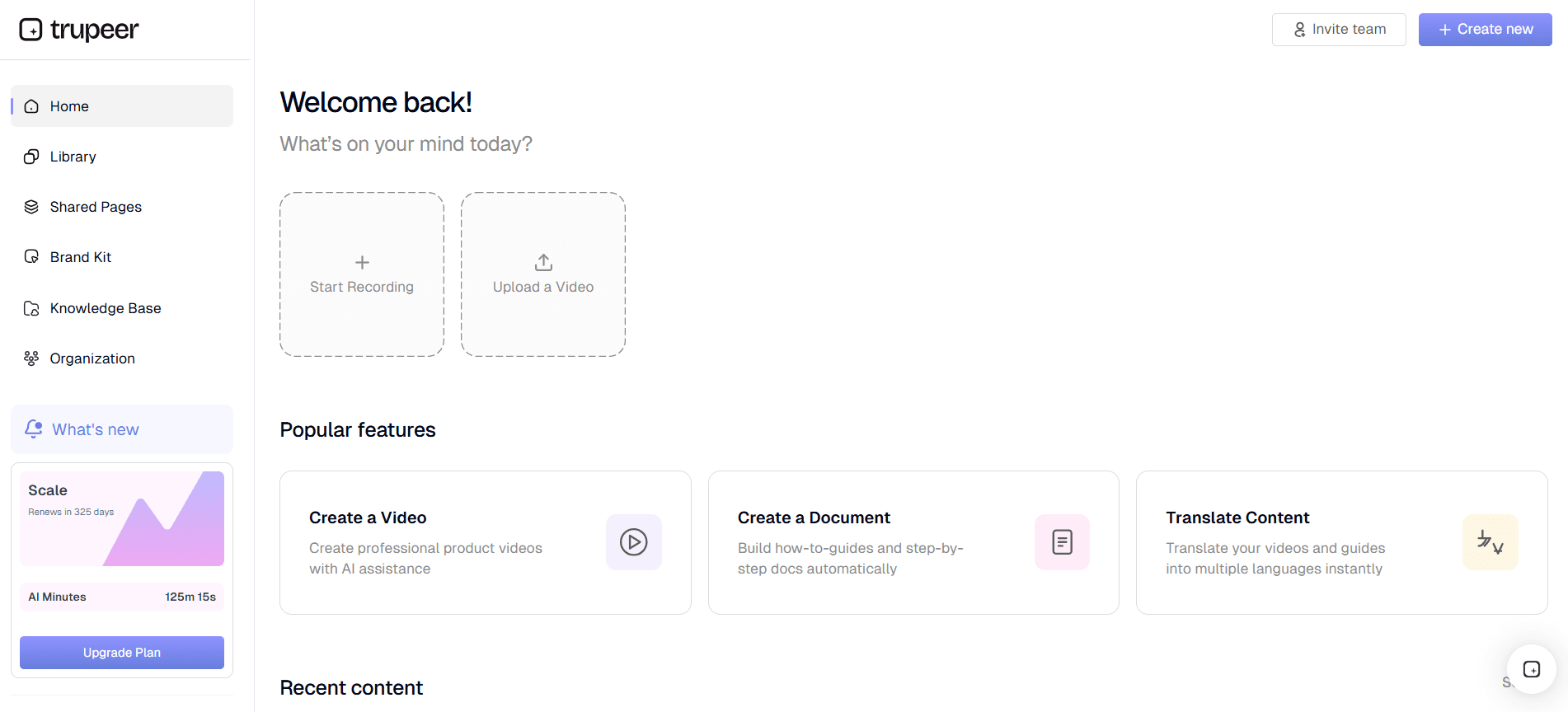
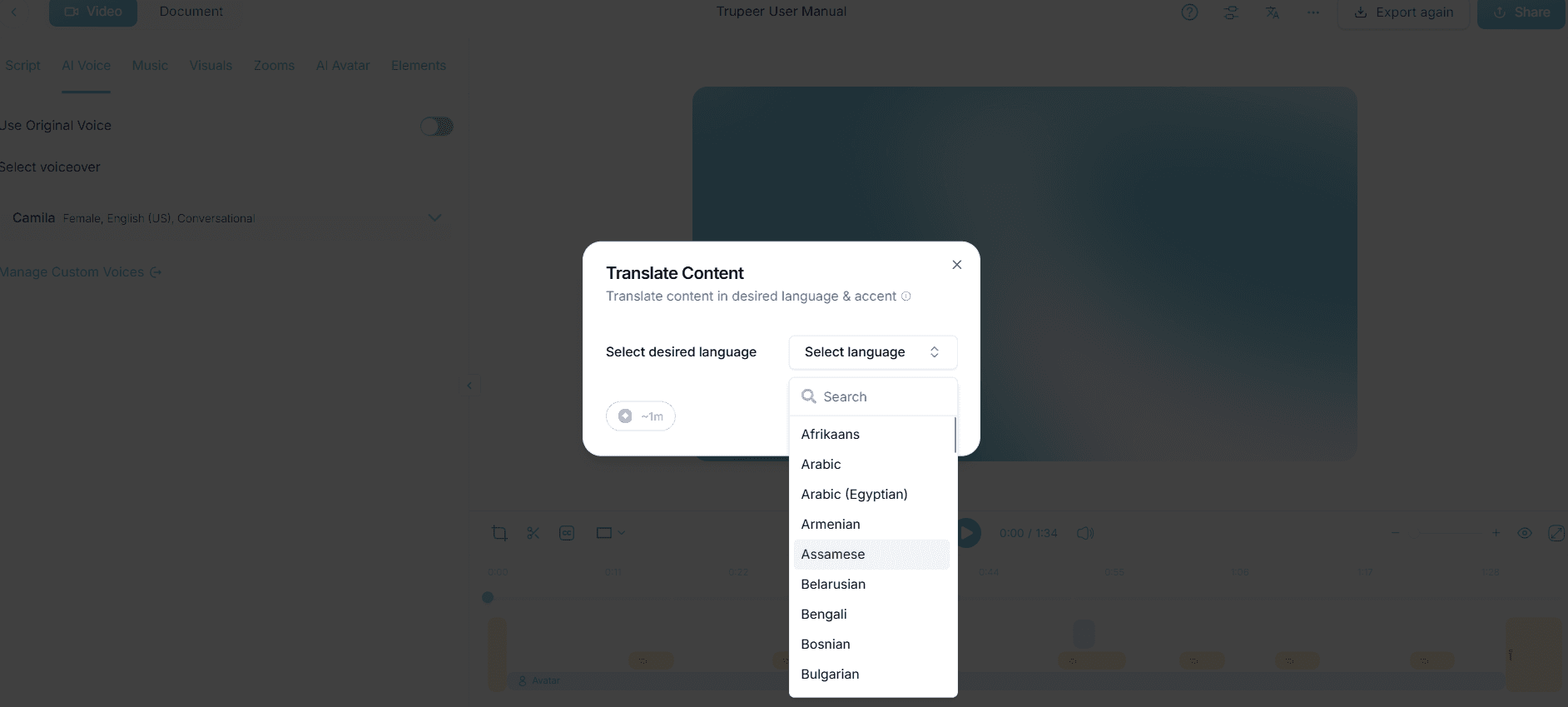
To make your instructions accessible to a diverse workforce, use Trupeer's AI translation feature. Select the "Translate" option from the video settings, and choose from over 40 languages. Trupeer not only translates the text but also synchronizes lip movements in the video, providing a smooth viewing experience. This process is quick, typically less than ten minutes for a standard-length video, and ensures that language barriers don't hinder understanding of the work instructions.
Step 5: Distribute via Knowledge Base
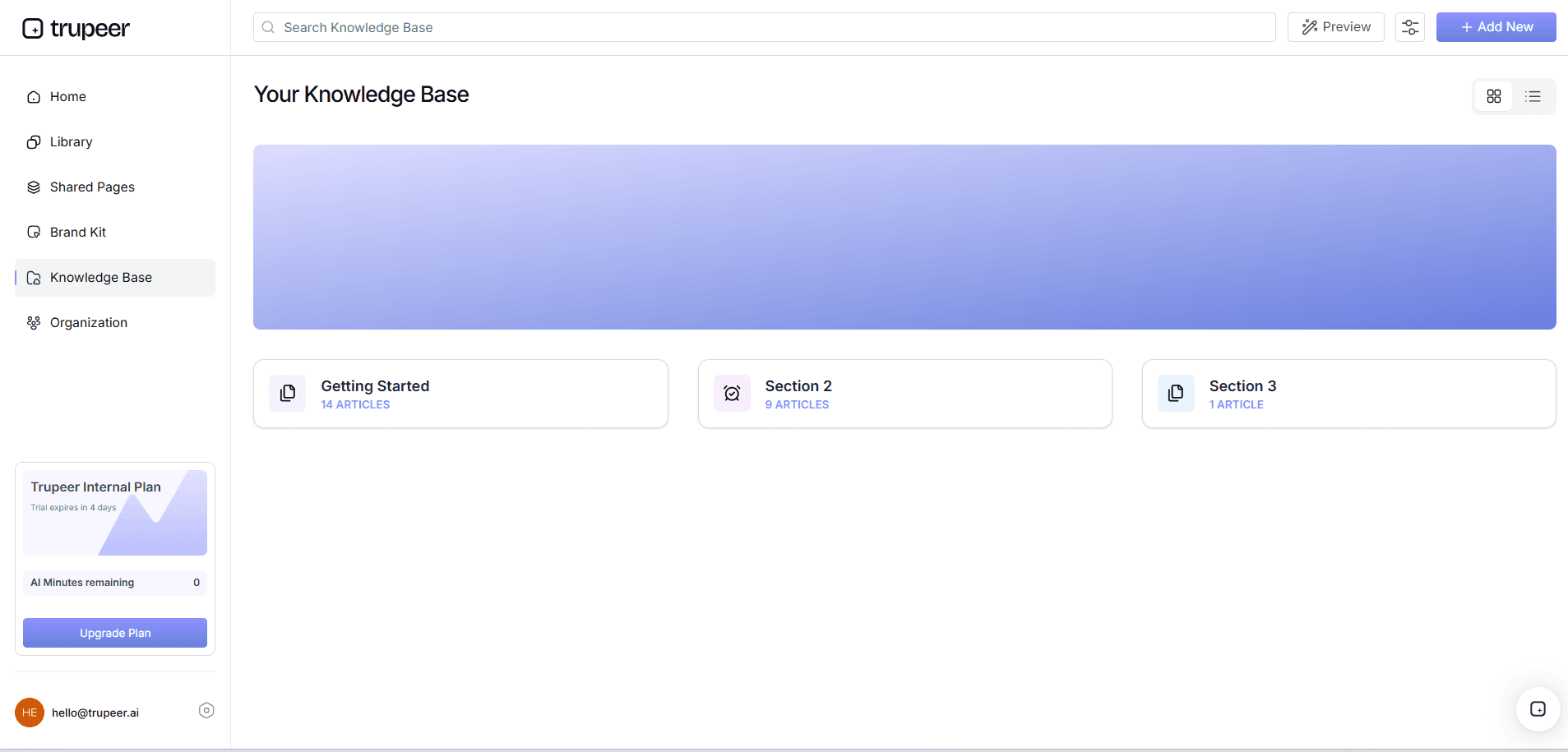
Once your instructions are ready, distribute them using Trupeer's AI-searchable knowledge base. Upload the video and accompanying documents to the platform, which indexes the content with timestamp-level deep links. This makes it easy for team members to find specific sections quickly. Click "Upload to Knowledge Base" and select your video. The platform will handle the indexing, usually within minutes, providing a centralized location for all your instructional content accessible to your team. Teams weighing tools often start with a Loom alternatives comparison before standardizing on a workflow.
Step 6: Monitor and Update
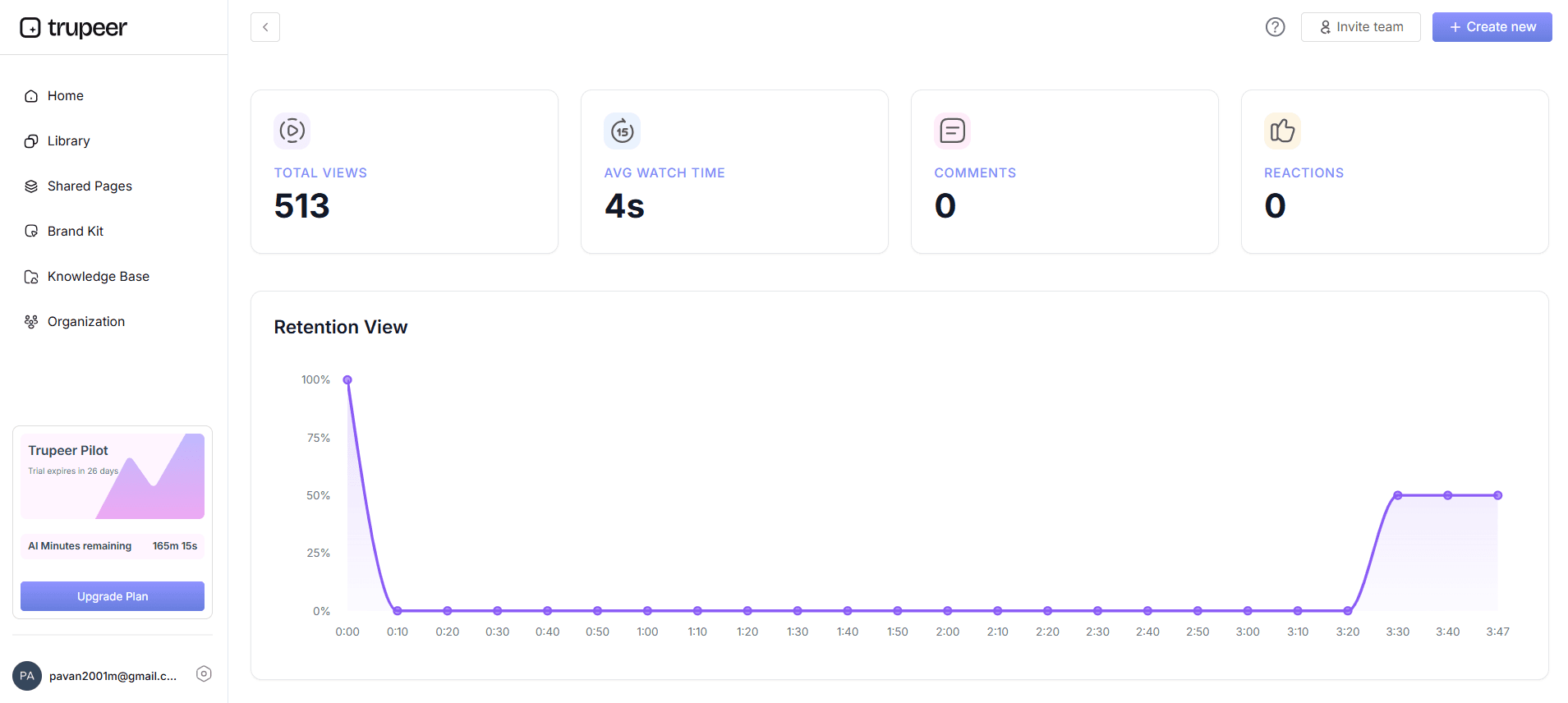
Finally, use Trupeer's collaborative review and approval workflows to monitor the effectiveness of your instructions. Engage with team members to gather feedback and make necessary updates. Set up alerts for when a video has been viewed or when it's time for review, ensuring instructions remain current. Use the "Feedback" tab to compile suggestions and implement improvements. This ongoing process ensures your work instructions evolve with your manufacturing processes, maintaining their relevance and accuracy.
What tips help you create manufacturing work instructions from process videos?
Creating effective work instructions from process videos involves strategic planning and execution. Here are some tips to optimize your efforts and ensure clarity and utility in your documentation.
Plan your recording. Outline the process steps before recording to ensure you capture all necessary details efficiently.
Use consistent terminology. Ensure all spoken and written instructions use the same terminology to avoid confusion.
Segment videos logically. Break down long processes into shorter, manageable segments to ease understanding and retention.
Focus on key actions. Highlight critical tasks within the video to draw attention to important steps.
use visual aids. Incorporate graphics or overlays to emphasize complex actions or instructions.
Review with stakeholders. Gather feedback from those involved in the process to ensure accuracy and comprehensiveness.
Standardize formats. Use a create process guides in seconds tool so all instructions follow a consistent template and style.
For global audiences, adding AI video translation extends the same workflow across 40+ languages with lip-sync.
Frequently asked questions
How do I ensure my work instructions are always up-to-date?
To keep your work instructions current, use Trupeer's auto-updating documentation feature. This tool links your instructions to the original recordings, updating them automatically with any changes made to the videos. Regularly review your processes and update recordings as needed. This ensures that any procedural changes are reflected promptly in the documentation, minimizing the risk of outdated instructions causing errors on the shop floor.
What is the best way to distribute work instructions to a global team?
For global distribution, Trupeer's AI translation and dubbing capabilities are ideal. Translate your instructions into over 40 languages, complete with synchronized lip movements for video content. Use the AI-searchable knowledge base to host the translated content, allowing team members worldwide to access instructions easily. This approach ensures that language barriers are minimized, and all team members have access to the same high-quality instructions, regardless of their location.
Why should I use video instead of traditional text for work instructions?
Video instructions provide a visual and auditory learning experience that enhances comprehension and retention. They allow workers to see the process in action, which can be more informative than reading text. Videos also cater to different learning styles, accommodating visual and auditory learners. This makes it easier for employees to understand and execute complex tasks, reducing the likelihood of errors and increasing overall efficiency in manufacturing operations.
Can Trupeer help with compliance and regulatory documentation?
Yes, Trupeer can assist with compliance and regulatory documentation through its SOP generation and multi-format export features. By capturing detailed process videos and converting them into structured documents, Trupeer ensures that all necessary compliance elements are documented accurately. Export your instructions in formats like PDF and SCORM, which are widely accepted in compliance audits. This comprehensive documentation approach helps ensure your manufacturing processes meet industry standards.
Does Trupeer support integration with other systems?
Trupeer supports integration with various AI agents, including Claude, through its MCP integration. This allows you to query your video library directly within other systems, enhancing accessibility and utility. For example, team members can ask for specific process instructions, and the integration will retrieve the relevant video segment. This smooth integration facilitates efficient information sharing across platforms, bolstering your documentation ecosystem. When SOPs come into the same conversation, a Scribe alternatives comparison helps clarify the scope.