Trupeer Blog
Summarise
Imagine you're tasked with managing vast amounts of video content for your company. Each video holds valuable insights, and your goal is to make these accessible and actionable through AI. Two approaches stand out: MCP (Multi-Channel Publishing) and RAG (Retrieval-Augmented Generation). Both methods promise to integrate AI with video content effectively, but they have distinct differences. Choosing the right approach isn't just about technology, it's about aligning with your business goals and ensuring that your team's time and resources are used wisely. According to recent industry reports,
companies that effectively integrate AI into video content management can see up to a 30% increase in operational efficiency within the first year.
Understanding how each approach works and fits into your workflow is crucial. Whether you're in a customer success role or a content strategist, making the right choice impacts how your teams access, interpret, and use video data. how these approaches can transform video content into a strategic asset. Teams weighing tools often start with a Loom alternatives comparison before standardizing on a workflow.
Why does connecting video content to AI matter?
Landscape, video content is more than just a communication tool; it's a repository of knowledge and a driver of engagement. For businesses handling extensive video libraries, the challenge lies in making this content searchable, actionable, and integrated with broader AI systems. This is where connecting video content to AI becomes crucial. By doing so, businesses can open up new levels of efficiency and insight. For example, customer support teams can drastically reduce resolution times by quickly accessing video tutorials that address specific issues. A customer success workflow enhanced by AI can lead to higher satisfaction rates.
Also, in industries like education and corporate training, AI integration with video content allows for personalized learning experiences. This is achieved by analyzing viewer engagement and adapting content delivery accordingly. The implications for productivity are significant. Video content that's easily searchable and indexed by AI means employees spend less time sifting through irrelevant information and more time applying insights. This not only boosts individual productivity but also enhances team collaboration and decision-making. For stakeholders, the ability to use AI for video content translates to better-informed strategies and a competitive edge in the market.
What are the benefits of connecting video content to AI?
Integrating AI with video content offers several compelling benefits that can transform how businesses operate and engage with their audiences.
Enhanced searchability. AI algorithms can index video content, making it searchable by keywords or topics. This capability allows teams to quickly find specific content without manually sifting through hours of footage.
Improved viewer engagement. By analyzing how viewers interact with video content, AI can suggest improvements or changes to enhance engagement. This leads to more effective content that resonates with audiences.
Efficiency in content creation. AI-driven tools can automate the editing process, significantly reducing the time and effort required to produce professional-quality videos. This is particularly valuable for video prospecting, where timely and polished presentations are essential.
Personalized learning experiences. AI can tailor video content based on viewer behavior and preferences, offering personalized learning paths in educational and training settings.
Scalability. AI enables businesses to manage and scale their video content libraries efficiently. Whether it's through automated organization or AI-driven enhancements, companies can handle larger volumes of content without additional resources.
Data-driven insights. AI provides valuable analytics on viewer behavior and content performance, helping businesses optimize their strategies and improve ROI. An AI video platform can deliver these insights smoothly.
Which Trupeer features help you connect video content to AI?
Trupeer offers a suite of features designed to integrate AI effectively with your video content, enhancing accessibility, engagement, and productivity.
AI screen recording with auto-zoom and click detection
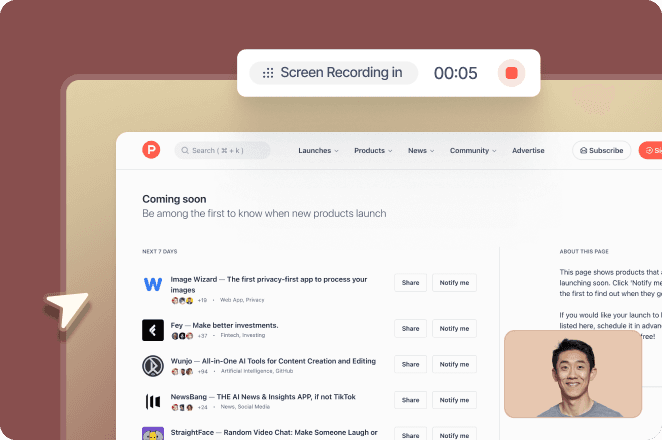
This feature allows users to create detailed video demonstrations without manual adjustments. The AI automatically zooms in on active areas of the screen, ensuring clarity and focus. This capability is invaluable for tutorial videos and product demonstrations, where clear visibility of actions is crucial. The automatic click detection further enhances viewer comprehension by highlighting interactions in real-time. By using Trupeer's video trimmer, you can refine these recordings, ensuring they are concise and effective.
AI voiceover in 65+ natural voices, adjustable pace and tone
Trupeer’s AI voiceover feature offers high-quality narration options that enhance video content professionalism. With over 65+ natural voices and adjustable settings, you can tailor the audio to match the intended audience and context. This flexibility ensures that your videos maintain a consistent tone that aligns with your brand identity. For companies aiming to reach a global audience, this feature supports auto-generated documentation in multiple languages, further expanding your reach.
AI avatars / talking-head video (stock library + custom)
The integration of AI avatars transforms static content into engaging videos. Trupeer provides a library of stock avatars and the ability to create custom ones, adding a personal touch to your videos. This feature is particularly useful in training and onboarding scenarios, where human-like interaction can enhance engagement and retention. By incorporating avatars, businesses can deliver content that feels interactive and dynamic, capturing viewers’ attention more effectively.
AI-searchable knowledge base with timestamp deep-links
Trupeer’s video knowledge base allows users to access specific video segments easily. By using timestamp deep-links, viewers can jump directly to relevant parts of a video, saving time and improving efficiency. This is especially beneficial for training and support teams that need to provide quick solutions. The searchable knowledge base ensures that all video content is easily accessible, enhancing the value of your video library.
MCP integration so Claude and other AI agents can query your video library
Trupeer’s MCP integration enables smooth querying of your video library by AI agents like Claude. This integration means that AI can pull relevant video content based on specific queries, facilitating efficient information retrieval. For businesses, this capability translates to faster access to critical insights and the ability to use video data in decision-making processes. The integration with Claude and similar agents ensures that your video content is not just stored but actively contributes to your operational goals.
How do you connect video content to AI step by step with Trupeer?
Step 1: Record Your Video
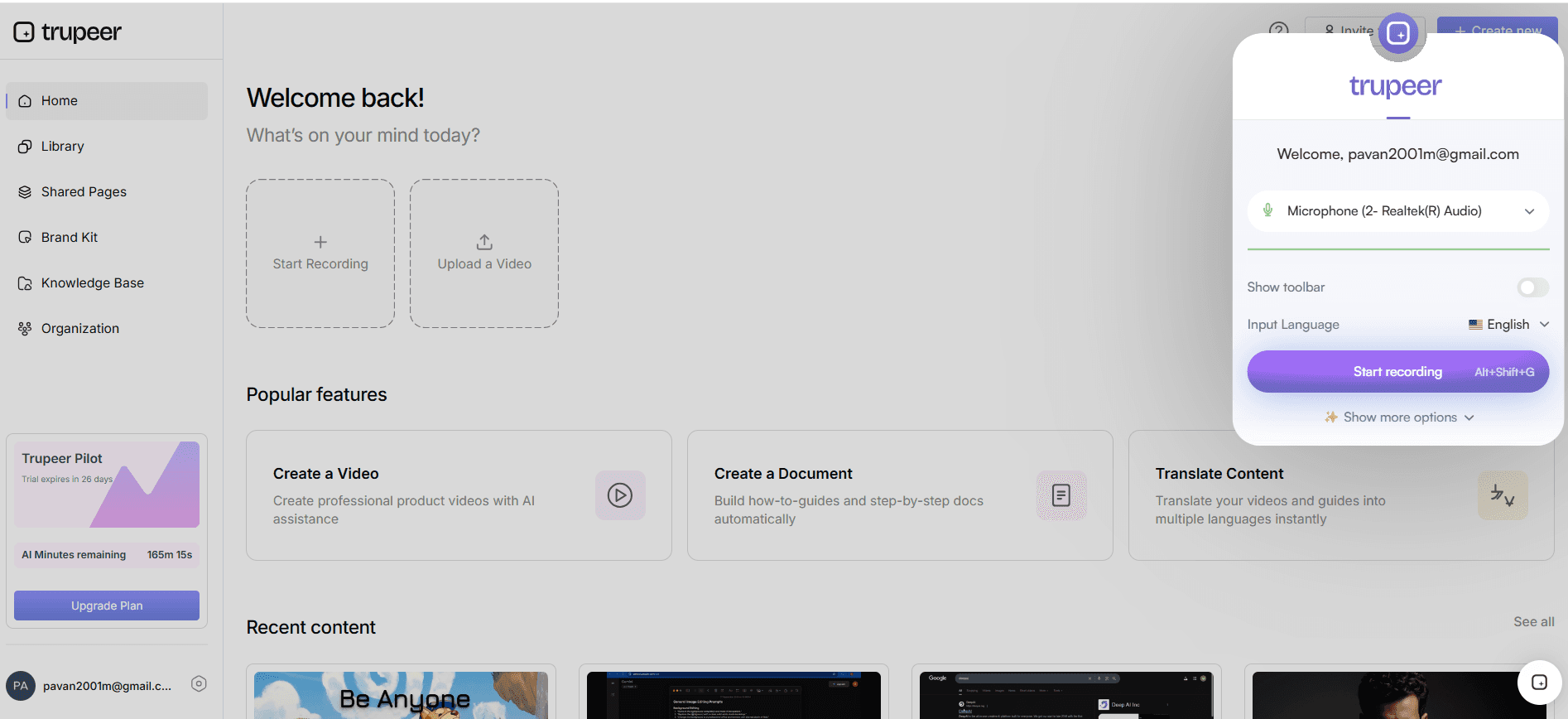
Begin by using Trupeer's browser-based recorder to capture your video content. This tool requires no installation and is accessible directly via your web browser, making it convenient and quick to start recording. Simply click the “Record” button, and Trupeer will automatically zoom and detect clicks as you navigate through your presentation or demonstration. This feature ensures that key actions are highlighted, enhancing viewer comprehension. The recording process is efficient, typically taking as long as the video itself, plus a few minutes for processing and saving the file.
Step 2: Enhance with AI Voiceover
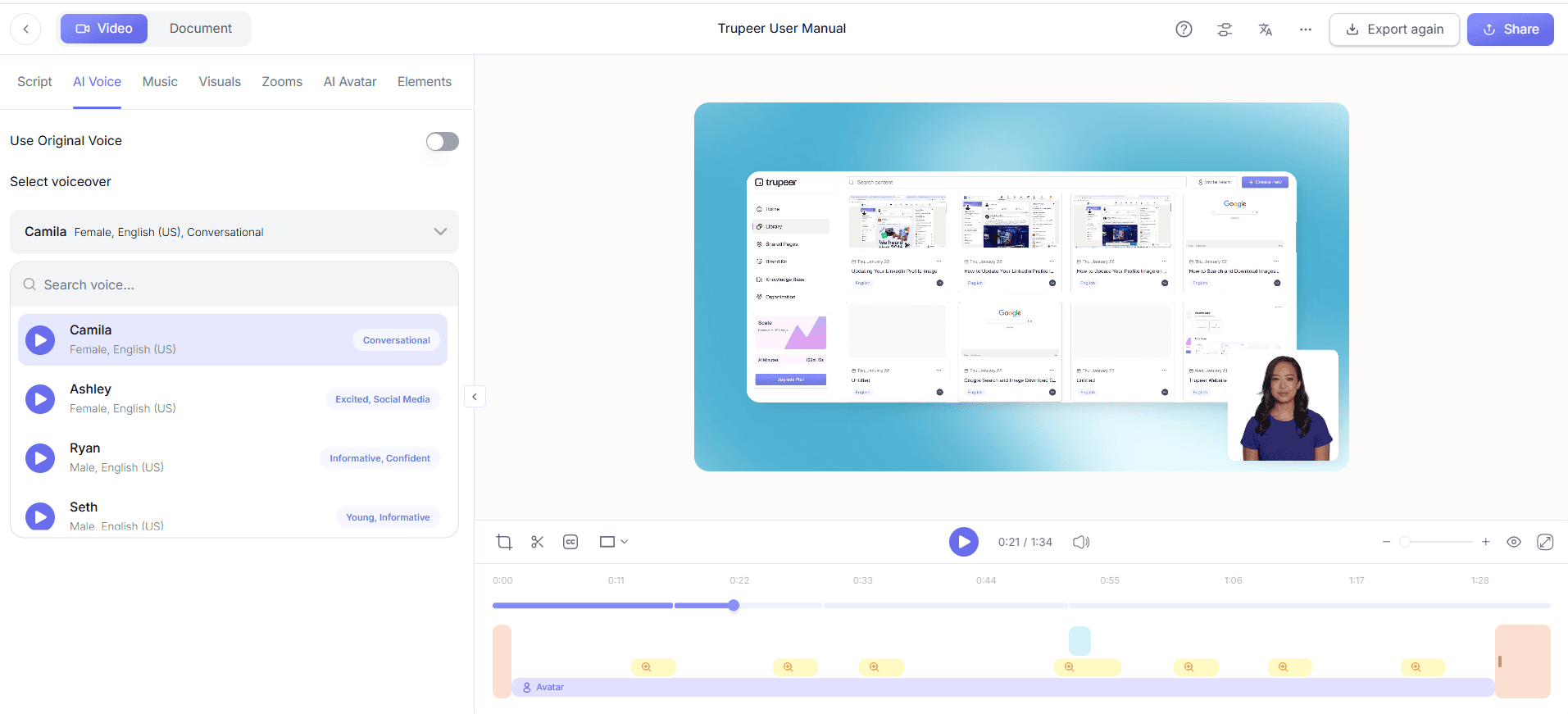
Once your video is recorded, enhance it with Trupeer's AI voiceover capabilities. Navigate to the editing section, where you can select from over 65+ natural voices. Adjust the pace and tone to suit your audience. For example, a fast-paced voice might be ideal for tech-savvy viewers, while a slower, more deliberate tone could benefit training videos. After selecting your preferences, click "Apply Voiceover" and let Trupeer process the audio, which usually takes a few minutes to integrate fully with your video.
Step 3: Add AI Avatars
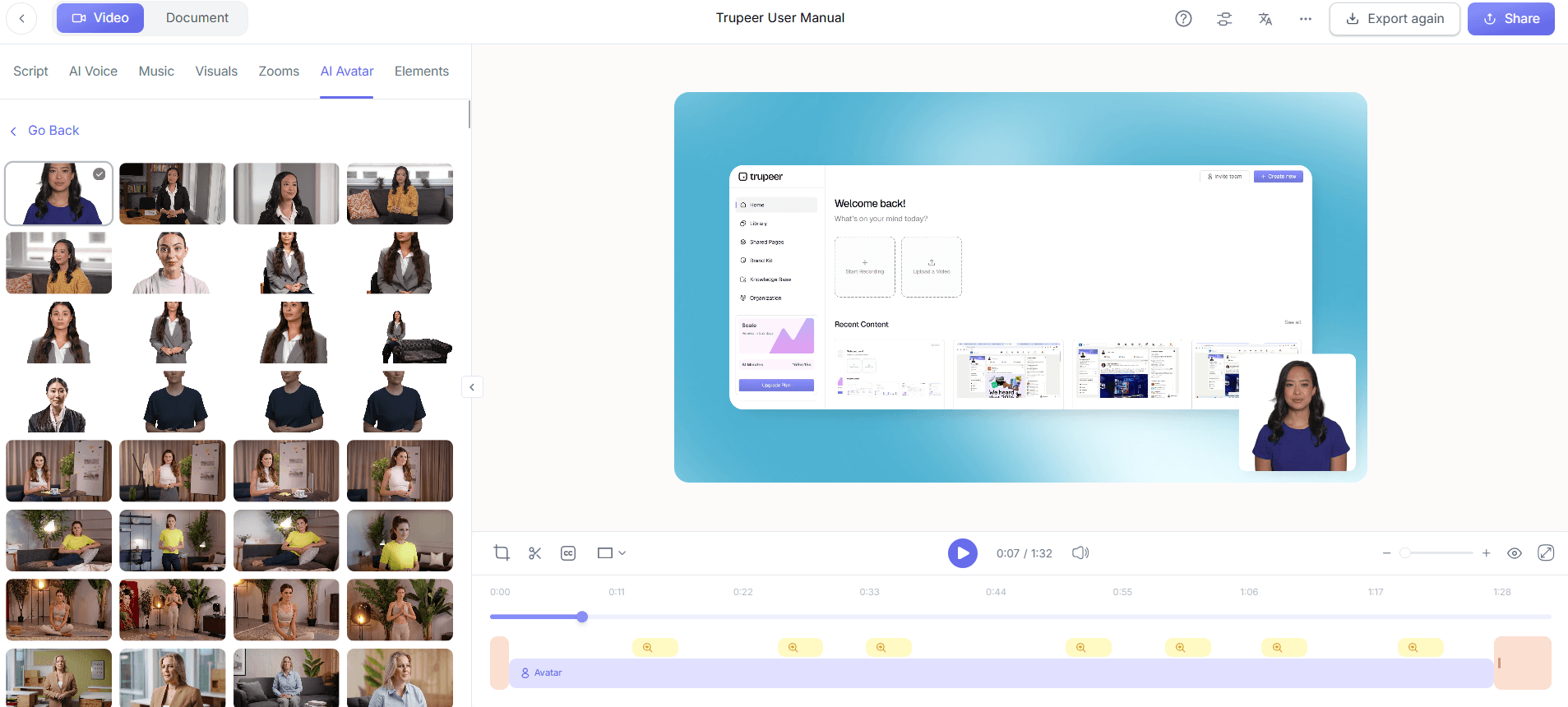
Incorporate AI avatars to make your videos more engaging. Access Trupeer’s library of stock avatars or create custom ones to match your brand's persona. Click on "Add Avatar" in the editing tools and choose your preferred avatar. Position the avatar on the screen where it'll guide viewers through the content. This step is crucial for making tutorials or training sessions more interactive. Avatars can be animated to speak the voiceover or remain static, depending on your preference. The process is straightforward, taking about 10 minutes.
Step 4: Create Auto Chapters
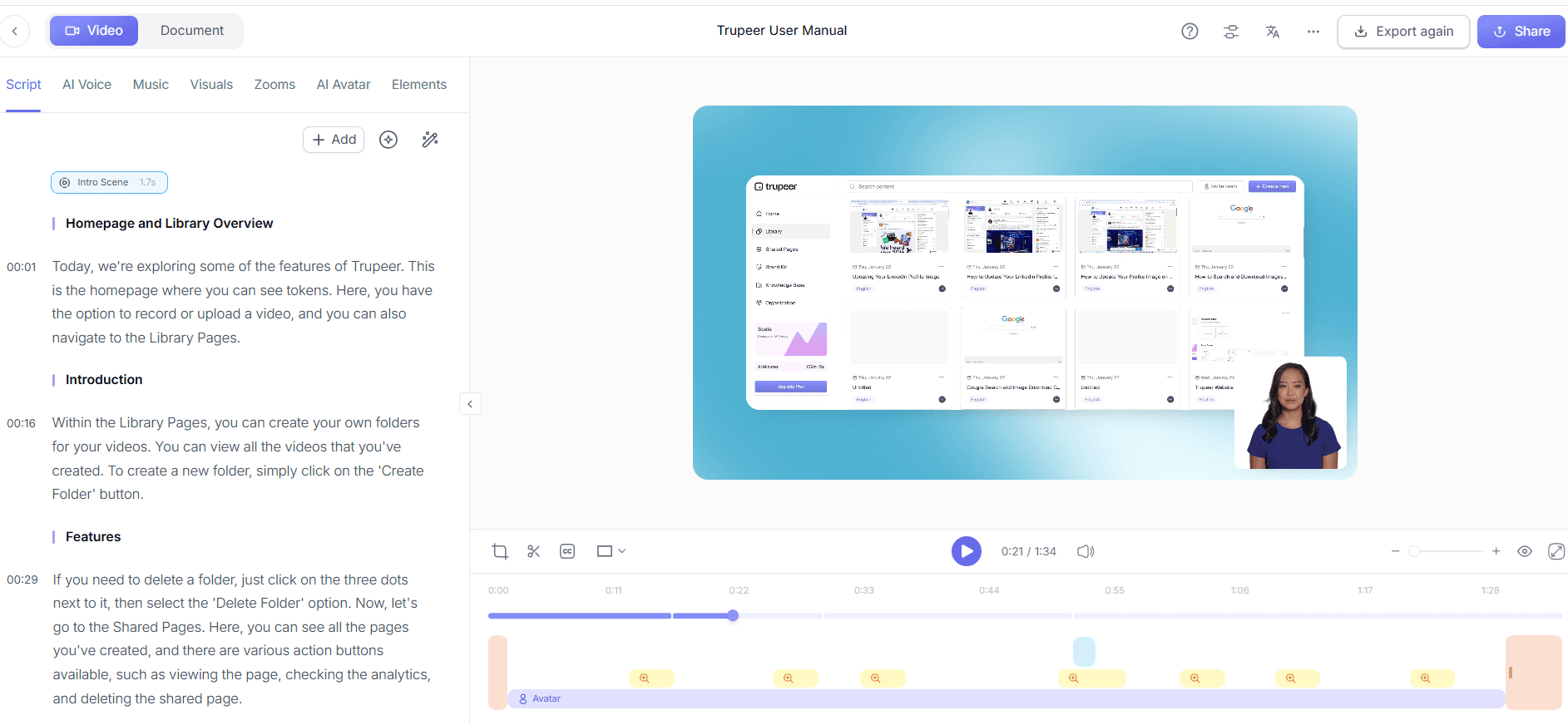
Enhance video navigation by generating auto chapters. Trupeer’s AI analyzes your video and segments it into logical chapters automatically. This feature is particularly useful for lengthy videos where viewers may want to skip to specific sections. After your video is uploaded, click on "Generate Chapters" and let Trupeer do the work. It takes a few minutes, depending on the video's length, and provides a clickable chapter list that allows for easy navigation. For a deeper look, our guide on ai video editing covers the adjacent playbook.
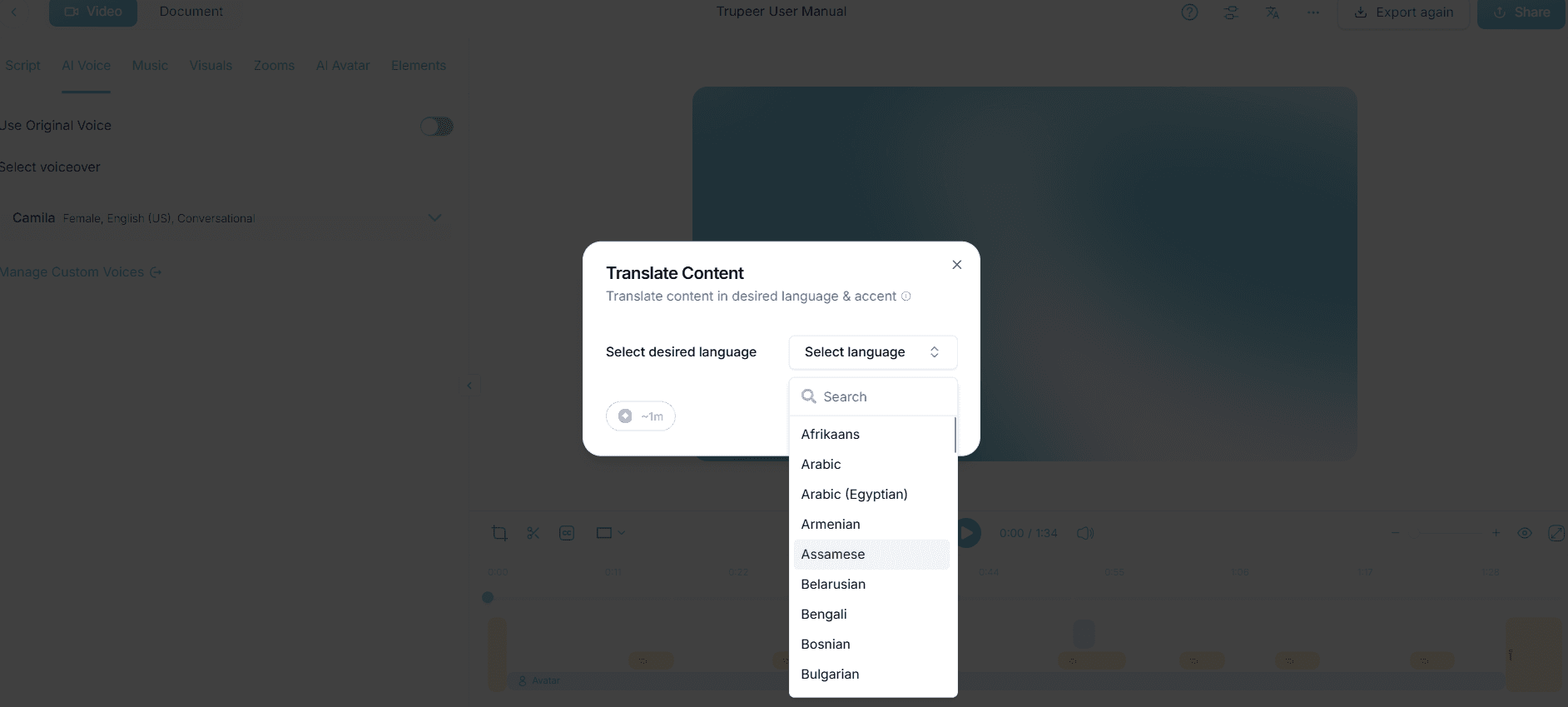
Step 5: Translate and Dub
For multilingual audiences, use Trupeer's AI translation and dubbing features. First, select "Translate" from the post-production tools. Choose from over 40 languages, and Trupeer will not only translate the text but also sync the new language to the video. If dubbing is needed, select "Dub" and choose the appropriate voice settings. This process is invaluable for global training or customer support videos. The translation and dubbing integration typically completes within 15 to 30 minutes, depending on the video length and complexity.
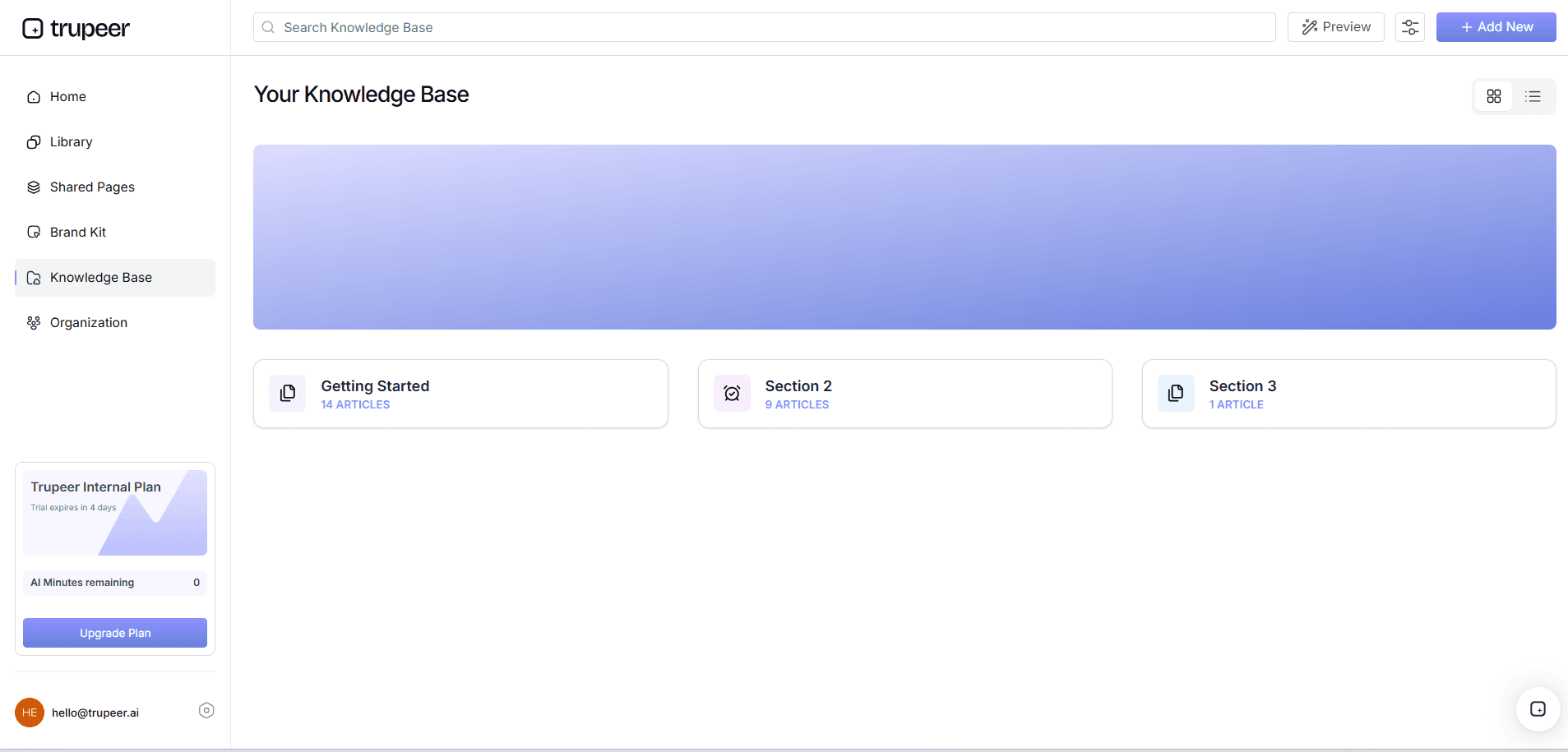
Step 6: Distribute via Knowledge Base
Finally, distribute your video content using Trupeer’s AI-searchable knowledge base. Upload your video, and the AI will index it with timestamp deep-links. This feature allows viewers to search for specific terms and jump directly to those moments within the video. It’s particularly useful for customer support teams needing quick access to information. Once indexed, the knowledge base is available instantly, providing an efficient way to manage and share video content. This setup is a one-time process, with updates automatically reflected as new videos are added.
What tips help you connect video content to AI?
Optimizing your video content integration with AI requires strategic planning and execution. Here are some practical tips to enhance your workflow and outcomes.
Plan Your Content. Before recording, outline key points and objectives to ensure your video is focused and concise. This preparation aids in clearer AI indexing.
use Auto-Editing Tools. Use an auto video editor tool to quickly polish your video. These tools can save significant time and ensure professional quality.
Standardize Avatars. Consistent use of avatars across videos builds brand recognition and viewer familiarity, enhancing engagement.
Test Language Options. For multilingual content, test translations and dubbing with native speakers to ensure accuracy and cultural relevance.
Use Analytics. Regularly review analytics to understand viewer behavior and refine content strategies. This data-driven approach drives continuous improvement.
Update Regularly. Keep your video content and associated AI metadata up to date. Regular updates ensure your knowledge base remains relevant and useful.
Evaluate Alternatives. Consider Scribe alternatives for SOPs to ensure you're using the most efficient tools for your needs.
Frequently asked questions
How does MCP differ from RAG in AI video integration?
MCP focuses on distributing content across multiple channels, ensuring consistent delivery and accessibility, while RAG enhances AI's ability to generate responses based on video content by retrieving relevant segments. MCP is ideal for businesses needing broad content dissemination, while RAG suits those prioritizing AI-driven insights from their video libraries. Each approach has its unique strengths, and the choice depends on your business needs. Understanding these differences helps in deciding which method aligns with your operational goals.
What are the limitations of using MCP for video content?
MCP can sometimes lead to redundancy if not managed properly, as it focuses on multi-channel distribution without deep AI integration for content analysis. This may result in duplicated content across platforms, potentially confusing for users. also, MCP requires a solid strategy to maintain brand consistency across channels. For companies looking to gain deeper insights from their video content, RAG might be a better fit as it uses AI for more refined content analysis and retrieval.
Can Trupeer be used with RAG for video content?
Yes, Trupeer can effectively integrate with RAG systems to enhance video content analysis. This combination allows AI to retrieve and use specific video segments for generating more context-aware responses. By using Trupeer's advanced indexing and AI capabilities, businesses can maximize the benefits of RAG, ensuring that their video libraries contribute valuable insights to AI processes. This integration supports more dynamic and responsive AI applications, particularly useful in customer support and training environments.
Why should businesses This feature is essential for global businesses aiming to engage with diverse markets. Trupeer's video localization tool provides smooth translation and dubbing, ensuring that language barriers don't hinder communication. By using AI translation, companies can enhance customer experience and expand their market reach, contributing to increased engagement and revenue opportunities.
Does RAG offer better scalability than MCP for growing video libraries?
RAG provides better scalability for growing video libraries due to its ability to enhance AI's retrieval and generation capabilities. As your video library expands, RAG efficiently accesses and uses relevant content, making it more adaptable to evolving business needs. This approach ensures that your AI systems remain responsive and effective, even as the volume of content increases. In contrast, MCP may require more manual oversight to manage content distribution across multiple channels, which can become cumbersome as the library grows.
Related Blogs