Trupeer Blog
Summarise
In a bustling IT department, the sheer volume of information can quickly become overwhelming. Teams struggle to maintain an organized repository of knowledge that’s easy to access and update. An effective IT knowledge base can be a big shift, helping simplify operations and enhance productivity. However, gaining leadership buy-in often hinges on demonstrating the return on investment (ROI). For instance, a recent survey revealed that organizations with a well-maintained knowledge base can reduce support costs by up to 25%. But to capture leadership's attention, you need clear metrics that justify the investment.
Understanding what makes a knowledge base one of the most valuable tools in your IT toolkit is essential. Your IT team doesn’t just need a place to store information; they need a dynamic system that evolves with your business. The stakes are high, and proving ROI means showing direct impacts on cost reduction, efficiency, and employee satisfaction. Let’s explore how tracking the right metrics can not only prove ROI but also highlight the transformative potential of your IT knowledge base.
Why do IT knowledge base metrics matter?
IT knowledge base metrics are crucial because they provide tangible evidence of the system’s impact on your organization. Often, IT departments are viewed as cost centers rather than value generators. By capturing and analyzing specific metrics, you can shift this perception. Metrics help highlight how a knowledge base can reduce operational costs, improve employee productivity, and enhance customer satisfaction. It’s not just about maintaining a repository of information; it’s about using that information to drive business outcomes.
Without proper metrics, IT leaders may struggle to make a compelling business case for continued investment in their knowledge base systems. Metrics provide the concrete data needed to justify budget allocations and strategic decisions. This is especially important when presenting to senior leadership who may not fully understand the intricacies of IT operations. Tying knowledge base performance to key business outcomes like decreased customer resolution times or increased first-contact resolutions can make the difference. Understanding the customer success use case helps to articulate these benefits clearly, ensuring leadership sees the value in continued investment.
What are the benefits of tracking IT knowledge base metrics?
Tracking IT knowledge base metrics offers a multitude of benefits, each of which contributes to a stronger business case for your organization’s investment in knowledge management.
Improved operational efficiency. By identifying and tracking metrics related to search success rates and page views, you can optimize your knowledge base to ensure it meets the needs of your users. This results in a more efficient workflow and reduced time spent searching for information.
Enhanced customer satisfaction. Metrics that track user satisfaction and resolution times can help you identify areas for improvement. A well-maintained knowledge base can lead to faster problem resolution, boosting customer satisfaction scores.
Cost reduction. Monitoring metrics such as deflection rates can reveal how much your knowledge base is reducing the need for direct support interactions. This translates to significant cost savings as fewer support tickets mean lower operational costs.
Increased employee productivity. By tracking how often and how effectively your staff uses the knowledge base, you can identify training needs and content gaps. This ensures employees spend less time searching for information and more time on productive tasks.
Scalable knowledge management. As your organization grows, a knowledge base that scales efficiently is crucial. By measuring metrics related to content updates and usage trends, you can ensure your system supports growth without sacrificing performance.
Data-driven decision making. Using analytics from your knowledge base, like those found in best knowledge base examples, provides actionable insights. This enables your team to make informed decisions about content updates and system improvements.
When SOPs come into the same conversation, a Scribe alternatives comparison helps clarify the scope.
Which Trupeer features help you demonstrate IT knowledge base ROI?
Trupeer offers several features specifically designed to help you track and demonstrate the ROI of your IT knowledge base. These features not only enhance the functionality of your system but also provide the tools you need to present compelling evidence to leadership.
Viewer engagement analytics, drop-off, and heatmaps
Trupeer's viewer engagement analytics provide deep insights into how users interact with your knowledge base content. You can track engagement metrics such as average view duration, drop-off points, and heatmaps to understand which content is most effective. This data helps you refine your content strategy, ensuring your knowledge base remains relevant and engaging. With these insights, you can directly link content performance to user satisfaction and operational efficiency.
AI-searchable knowledge base with timestamp deep-links
One of Trupeer’s standout features is its AI-searchable knowledge base. This feature allows users to quickly locate specific information within video content using timestamped deep-links. By offering precise navigation, you enhance user experience and improve efficiency, which are critical factors in demonstrating ROI. This capability ensures that users can find the information they need without sifting through irrelevant content, directly impacting productivity and user satisfaction.
Automatic SOP generation from any recording
Trupeer's ability to generate automatic SOPs from video recordings is a big shift for IT departments. This feature turns complex processes into easily understandable documentation, reducing the time spent on manual SOP creation. With auto-generated documentation, you ensure consistency and accuracy across all procedures, which is essential for maintaining quality and efficiency. This directly supports ROI by decreasing the time and resources needed to create and update procedural documentation.
Viewer engagement analytics, drop-off, and heatmaps
Trupeer provides detailed viewer engagement analytics that track how users interact with your knowledge base content. You can monitor metrics like average view duration, drop-off points, and user engagement heatmaps. These analytics help you refine your content strategy, ensuring it remains relevant and engaging. By linking content performance to user satisfaction, you can present compelling evidence of your knowledge base's ROI. This data-driven approach supports strategic decision-making and highlights the value of your investment to leadership.
AI avatars / talking-head video (stock library + custom)
Adding a personal touch to your knowledge base content can significantly enhance engagement. Trupeer's AI avatars allow you to create personalized video content without the need for on-camera talent. By using avatars, you can maintain a consistent brand presence and increase viewer retention. This feature is particularly useful for knowledge base generator tools, providing dynamic and engaging content that keeps users returning. Demonstrating increased engagement through these metrics is a solid way to prove ROI.
How do you track IT knowledge base metrics step by step with Trupeer?
Step 1: Capture the Initial Data
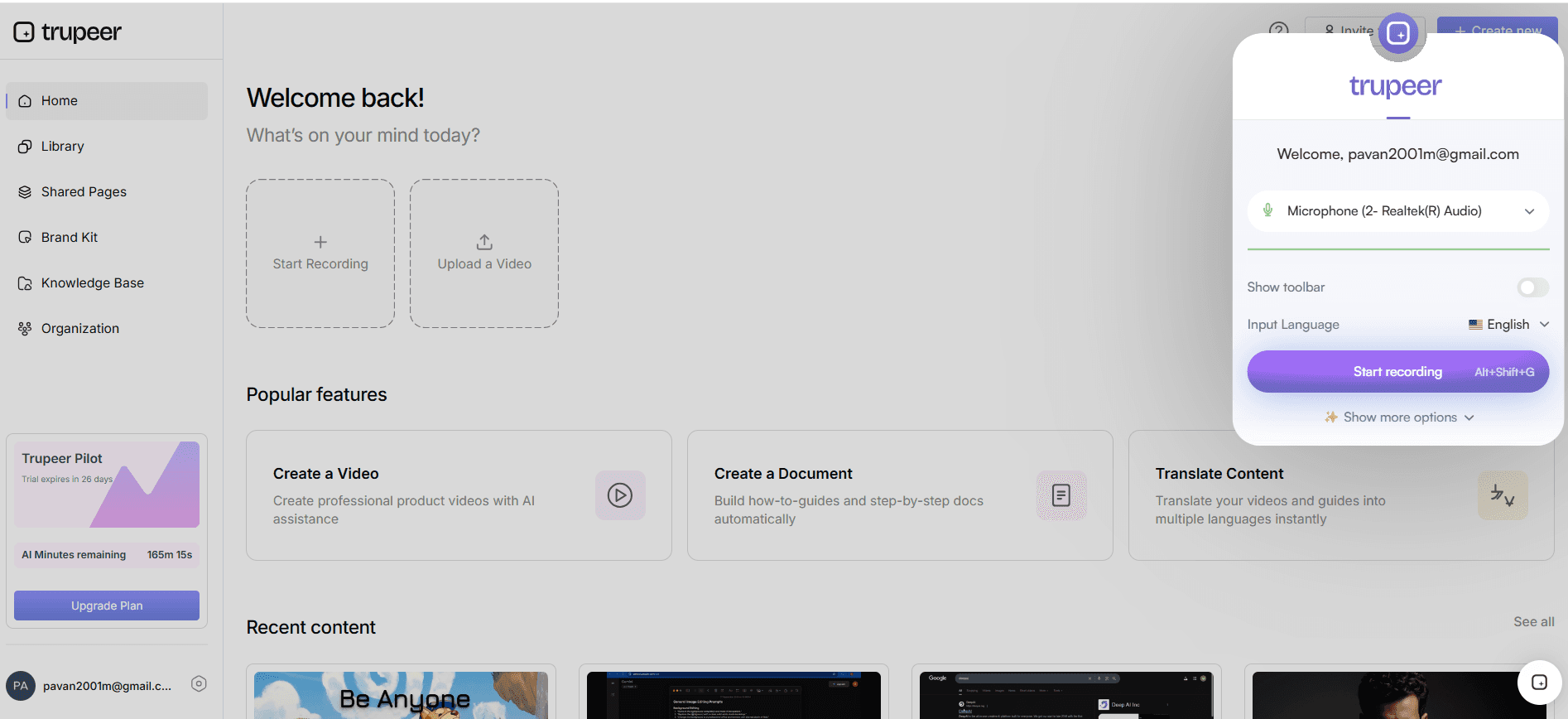
Begin your process by using Trupeer's AI screen recording with auto-zoom and click detection. This feature allows you to smoothly capture user interactions and behaviors within your knowledge base. Open the Trupeer tool via the browser-based recorder, which requires no installation, and start recording. As users navigate through the knowledge base, Trupeer automatically detects clicks and zooms in on significant actions. This detailed recording can be crucial for understanding user engagement patterns and identifying areas for improvement. Each session captured is stored in your Trupeer library, ready for further analysis.
Step 2: Analyze Viewer Engagement Analytics
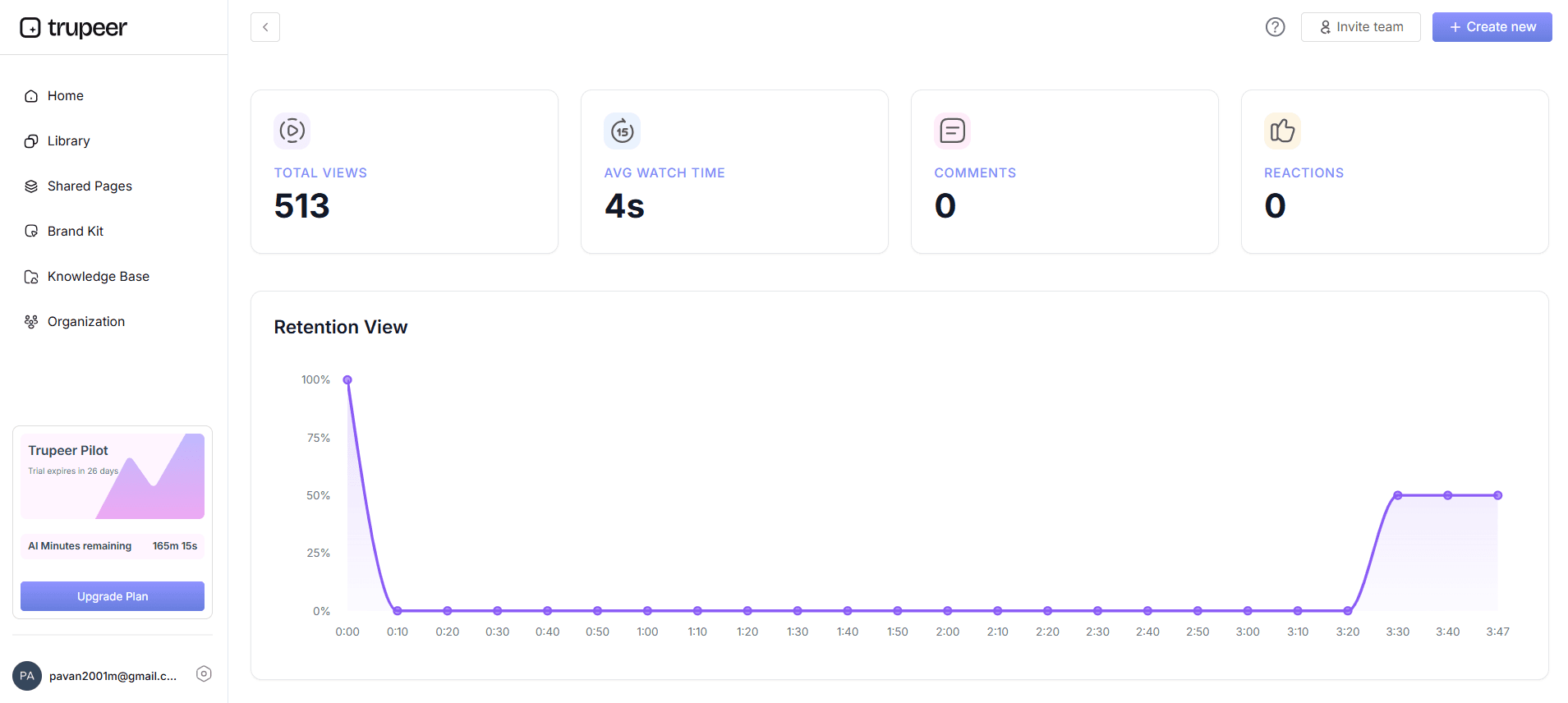
Once your data is captured, navigate to Trupeer's analytics dashboard to review viewer engagement metrics. This includes heatmaps, drop-off points, and average view durations. Click on the analytics tab within your Trupeer dashboard to access these insights. The dashboard displays which sections of your knowledge base are most engaging and where users tend to drop off. This step is vital as it helps you pinpoint content that needs improvement or further promotion. The analytics can be refreshed in real-time, offering up-to-date insights, which is crucial for dynamic environments.
Step 3: Generate and Export Automatic SOPs
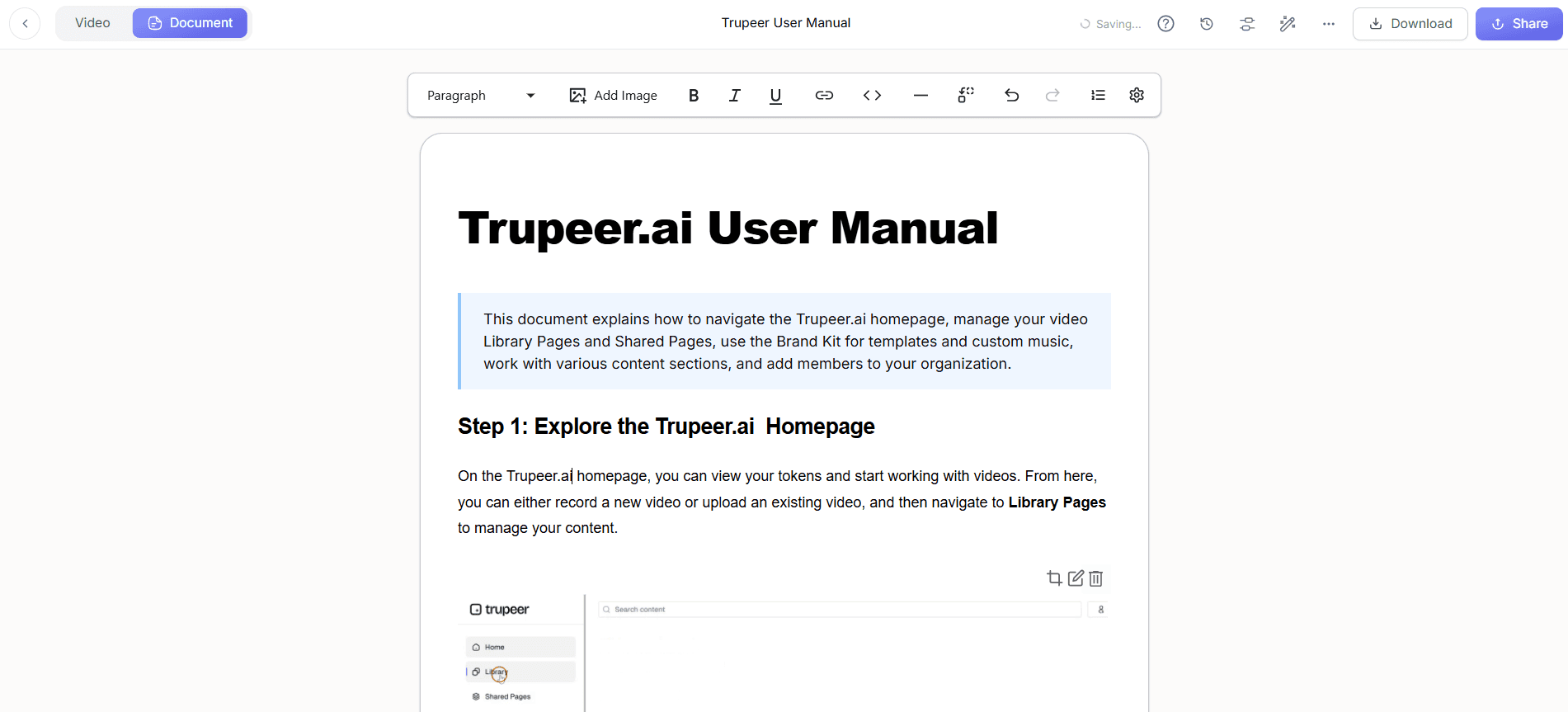
Trupeer enables you to transform captured recordings into Standard Operating Procedures (SOPs) effortlessly. From your dashboard, select the recording you wish to convert and click on the 'Generate SOP' option. Trupeer's AI then compiles an edit-ready SOP document that you can export in formats such as PDF or HTML. This feature is particularly useful for documenting frequently asked questions or common troubleshooting steps. The automatic generation ensures consistency and accuracy, saving your team significant time compared to manual SOP creation.
Step 4: Implement Multi-format Export Options
To ensure your knowledge base's accessibility, use Trupeer's multi-format export options. Within the Trupeer interface, select any recording or SOP and choose your preferred export format, including MP4, PDF, or SCORM, by clicking the export button. This flexibility ensures that your content is accessible in the format that best suits your users' needs, whether for internal training or external client access. Exporting in different formats also allows you to integrate knowledge base content into other platforms or learning management systems smoothly.
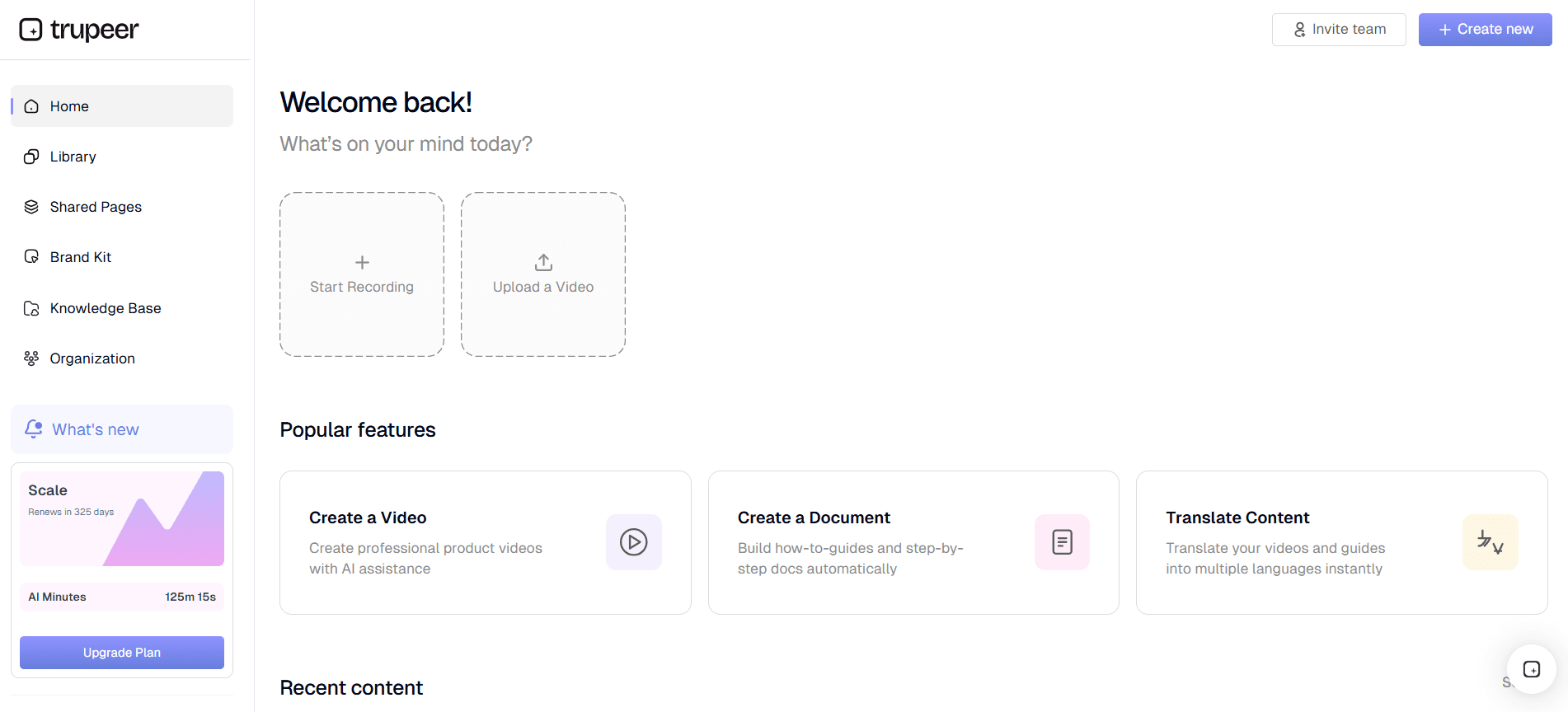
Step 5: use AI-Searchable Knowledge Base
Enhance user accessibility by making your knowledge base AI-searchable. Use Trupeer’s internal knowledge base wiki software to index every recording with timestamp-level deep links. This feature allows users to search for specific topics or keywords, directing them to the exact moment in the recording where the issue is addressed. To implement this, simply enable the AI-searchable feature in your Trupeer settings. This capability significantly reduces the time users spend searching for information and enhances the overall efficiency of your knowledge base.
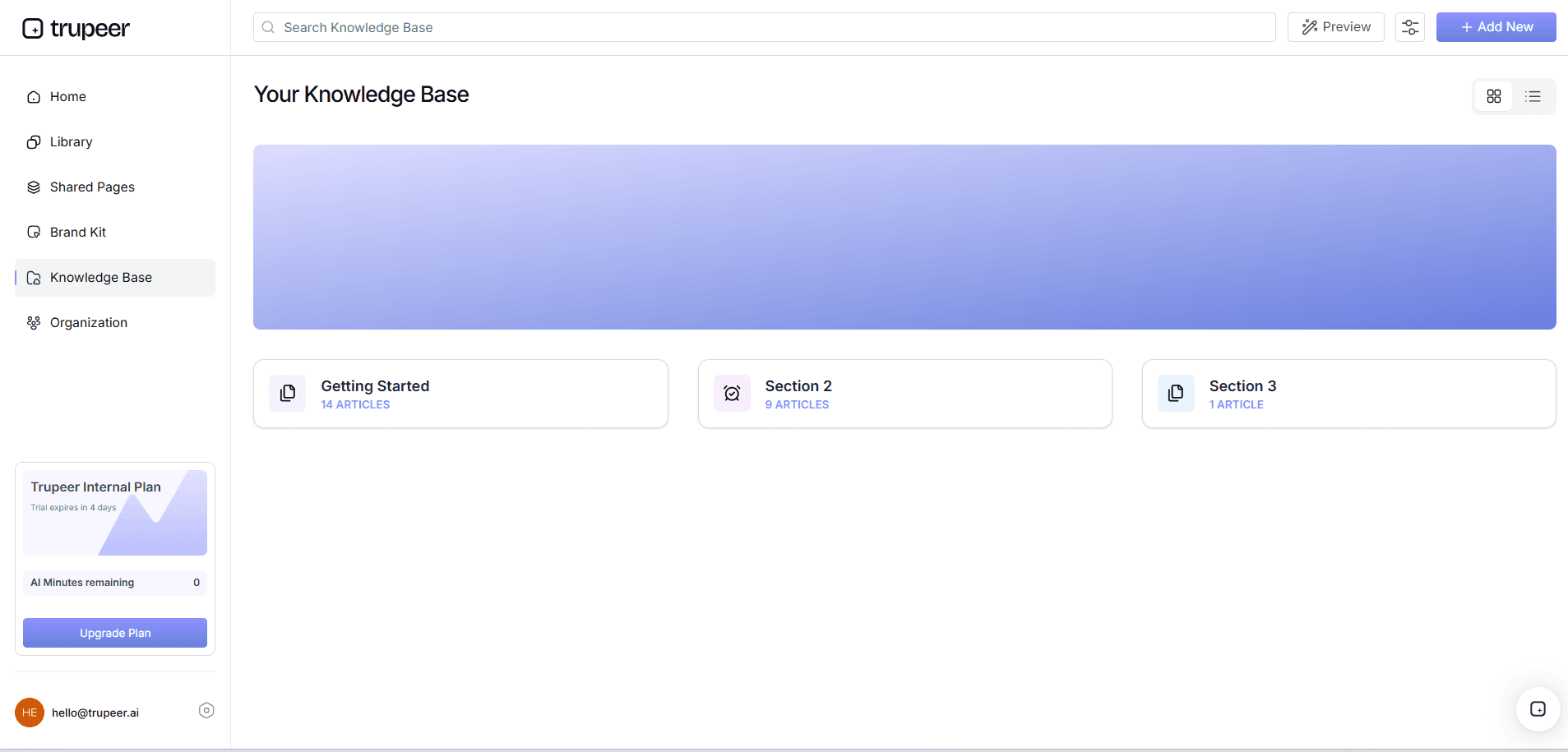
Step 6: Monitor and Adjust Based on Feedback
Finally, continuously monitor user feedback and make necessary adjustments to your knowledge base. Trupeer facilitates collaborative review and approval workflows, which are integral for gathering team input. Set up feedback loops by inviting colleagues to review content and provide suggestions directly within the Trupeer platform. This step ensures that your knowledge base remains up-to-date and relevant, responding to evolving user needs and organizational changes. Regular adjustments based on feedback help maintain high user engagement and satisfaction, demonstrating the ongoing value of your knowledge base investment.
What tips help you track IT knowledge base metrics?
Optimizing your IT knowledge base metrics involves more than just implementation; it requires strategic enhancements and ongoing maintenance. Here are some practical tips to ensure you're getting the most out of your metrics tracking:
Regularly update content. Ensure your knowledge base content is current and reflects the latest processes and information. This practice keeps users engaged and minimizes misinformation.
Encourage user feedback. Actively solicit feedback from users to identify content gaps and areas needing improvement, enhancing the knowledge base’s relevance and effectiveness.
use analytics tools. use Trupeer's built-in analytics to track key performance indicators consistently. This data-driven approach helps in refining content strategies based on real user interactions.
Train your team. Ensure your team understands how to use the knowledge base effectively, providing training sessions to maximize the tool’s potential and enhance productivity.
Prioritize accessibility. Make your knowledge base easily accessible, ensuring it’s available across various devices and platforms for smooth user experience.
Standardize your presentation. Use templates and branding tools within Trupeer to maintain a consistent look and feel, which helps in reinforcing your brand identity.
Continuously improve. Regularly review your metrics and user feedback to make informed adjustments, ensuring your knowledge base evolves with organizational needs.
Teams weighing tools often start with a Loom alternatives comparison before standardizing on a workflow.
Teams ship this workflow end-to-end using Trupeer's AI video platform, which turns raw recordings into polished output without an editor.
Frequently asked questions
How do I measure the ROI of my IT knowledge base?
Measuring the ROI of your IT knowledge base involves tracking specific metrics such as cost savings, user engagement, and resolution times. Start by calculating the reduction in support tickets and the time saved on issue resolution. Use Trupeer's analytics to monitor viewer engagement and identify content that effectively reduces support demand. Comparing these metrics against the costs associated with maintaining the knowledge base provides a clear picture of ROI. This comprehensive approach ensures you capture both direct and indirect benefits, supporting a strong business case for continued investment.
What metrics should I focus on for my knowledge base?
Focus on metrics that align with your organizational goals, such as search success rate, average time to resolution, and user satisfaction scores. Search success rate indicates how effectively users can find information, while average time to resolution measures the speed of problem-solving. User satisfaction scores help gauge the overall impact of the knowledge base on customer experience. Trupeer's tools can track these metrics, providing detailed insights into your knowledge base's performance and areas for improvement, ensuring alignment with business objectives.
Why is an AI-searchable knowledge base important?
An AI-searchable knowledge base enhances user experience by enabling quick access to specific information. This feature allows users to find content using natural language queries, significantly reducing the time spent searching. Trupeer's AI capabilities index content with timestamp-level deep links, providing precise navigation. By improving accessibility and efficiency, an AI-searchable knowledge base supports higher user satisfaction and productivity, key factors in demonstrating ROI. Implementing this feature ensures that your knowledge base remains a valuable resource for both employees and customers.
Can Trupeer help with knowledge base localization?
Yes, Trupeer offers AI translation into 40+ languages with lip-sync, making it easy to localize your knowledge base content for diverse audiences. This capability ensures that non-English speaking users can access information in their preferred language, enhancing global accessibility. Trupeer’s video localization tool can also dub content, providing a smooth experience for international users. By expanding your knowledge base’s reach, you enhance its value and demonstrate its ROI across different markets, supporting business growth and customer satisfaction globally.
What should I include in my knowledge base to maximize its effectiveness?
To maximize effectiveness, your knowledge base should include comprehensive SOPs, troubleshooting guides, and FAQs that address common user queries. Incorporate multimedia elements like videos and images to enhance understanding and engagement. Trupeer’s AI avatars and video capabilities can enrich content, making it more accessible and engaging. Regularly update content based on user feedback and usage analytics to ensure it remains relevant. This strategy not only improves user satisfaction but also demonstrates the knowledge base’s ROI by effectively reducing support demand and improving efficiency.
Related Blogs