Trupeer Blog
Summarise
Imagine you're part of a team responsible for simplifying operations in a large organization. You've spent the last few weeks conducting interviews with key stakeholders to capture how they perform their tasks. These interviews are rich in detail, revealing the subtle ways people actually do their jobs. But now you're faced with a mountain of audio recordings, each filled with valuable insights about your workflows. The challenge is turning these into actionable process documentation without starting from scratch.
According to a report, 60% of companies say they struggle with converting verbal knowledge into formal documentation.
This task is crucial for ensuring consistency and accuracy across your organization, but how do you get there efficiently? This guide will walk you through transforming your stakeholder interview recordings into polished process documentation. Teams weighing tools often start with a Loom alternatives comparison before standardizing on a workflow.
Why does turning stakeholder interview recordings into process documentation matter?
Turning stakeholder interviews into formal process documentation is a critical task in any organization. These interviews capture the real-world processes that employees use daily, which are often undocumented yet essential for smooth operations. When employees leave or roles change, the lack of formal documentation can lead to significant disruptions. For instance, a new team member might spend weeks trying to understand a process that could've been explained in a well-documented Standard Operating Procedure (SOP).
Also, process documentation serves as a foundation for continuous improvement. By documenting current practices, you can identify inefficiencies and areas for optimization. This is especially important in operations workflows where even small improvements can lead to significant cost savings. Without proper documentation, these opportunities for improvement might remain hidden, lost in the verbal exchanges of stakeholder interviews. The stakes are high, and getting this right can make the difference between a well-oiled machine and operational chaos.
What are the benefits of transforming stakeholder interviews into process documentation?
Turning stakeholder interviews into process documentation offers several benefits that can significantly impact an organization. Here are a few key advantages:
Consistency Across Teams. When processes are documented, everyone follows the same guidelines, reducing variability and errors. Consistency is crucial for maintaining quality and meeting compliance standards.
Efficient Onboarding. New hires can quickly get up to speed with documented processes, reducing training time. This not only saves time but also ensures that new team members are productive sooner.
Improved Process Transparency. Documenting processes makes it easier to identify bottlenecks and inefficiencies. This transparency allows teams to optimize workflows and improve overall productivity.
Knowledge Retention. Documented processes ensure that critical knowledge isn't lost when employees leave. This is vital for maintaining operational continuity and avoiding knowledge gaps.
Facilitated Compliance. Many industries require stringent process documentation for regulatory compliance. Having detailed SOPs helps meet these requirements and avoid potential legal issues.
Scalability. As your organization grows, documented processes allow you to scale operations smoothly. This reduces the risk of operational disruptions and supports sustainable growth.
For a deeper look, our guide on process mapping tools covers the adjacent playbook.
Teams ship this workflow end-to-end using Trupeer's AI video platform, which turns raw recordings into polished output without an editor.
Which Trupeer features help you turn stakeholder interview recordings into process documentation?
Trupeer offers several features that make converting stakeholder interviews into process documentation straightforward and efficient. These capabilities are designed to simplify the capture, editing, and distribution of information, ensuring that your documentation is accurate and accessible.
AI screen recording with auto-zoom and click detection
This feature allows you to capture on-screen actions during stakeholder interviews with precision. The auto-zoom functionality highlights important areas of the screen, ensuring that every crucial detail is captured. Click detection provides context, as it highlights every click made during the recording. This is especially useful for creating process documentation, as it visually represents the steps discussed in the interviews. The result is a clear, visual guide that complements the verbal insights gained from the interviews.
Automatic SOP generation from any recording
Trupeer's automatic SOP generation capability turns recorded interviews into draft SOPs instantly. This feature analyzes the recorded content and extracts key points to create a structured document that's ready for review and editing. It saves hours of manual transcription and organization work, allowing teams to focus on refining the content rather than starting from scratch. The generated SOPs can be exported in multiple formats such as HTML and PDF, making them easy to share and integrate into existing documentation systems. For those interested in a solid AI documentation platform, this feature is incredibly valuable.
AI voice cloning from a short sample
With Trupeer's AI voice cloning, you can create a consistent and natural-sounding voiceover for your process documentation videos. By using a short sample of the stakeholder's voice, the system generates voiceovers that match the original speaker’s tone and style. This is particularly useful for creating training videos that maintain the authenticity of the interviews. Whether it's for internal training or client-facing materials, voice cloning ensures that your documentation retains its original context and tone.
AI-searchable knowledge base
Once you've transformed your interviews into documentation and videos, organizing this information is crucial. Trupeer's AI-searchable knowledge base allows you to store and index all your content, making it easily accessible through search. Each recording is tagged with timestamp-level deep links, allowing users to jump directly to relevant sections. This makes it simple for team members to find the information they need without sifting through entire recordings, enhancing efficiency and productivity.
Multi-format export: MP4, HTML, PDF, SCORM
Trupeer supports exporting your processed documentation in various formats. Whether you need a video walkthrough in MP4, a comprehensive HTML guide, a printable PDF, or a SCORM package for your LMS, Trupeer covers all bases. This flexibility ensures that your documentation can be shared and accessed in the format that best suits your audience's needs. Whether it's for internal distribution or client presentations, having multiple export options simplifies the dissemination of information.
How do you turn stakeholder interview recordings into process documentation step by step with Trupeer?
Step 1: Capture the Interview
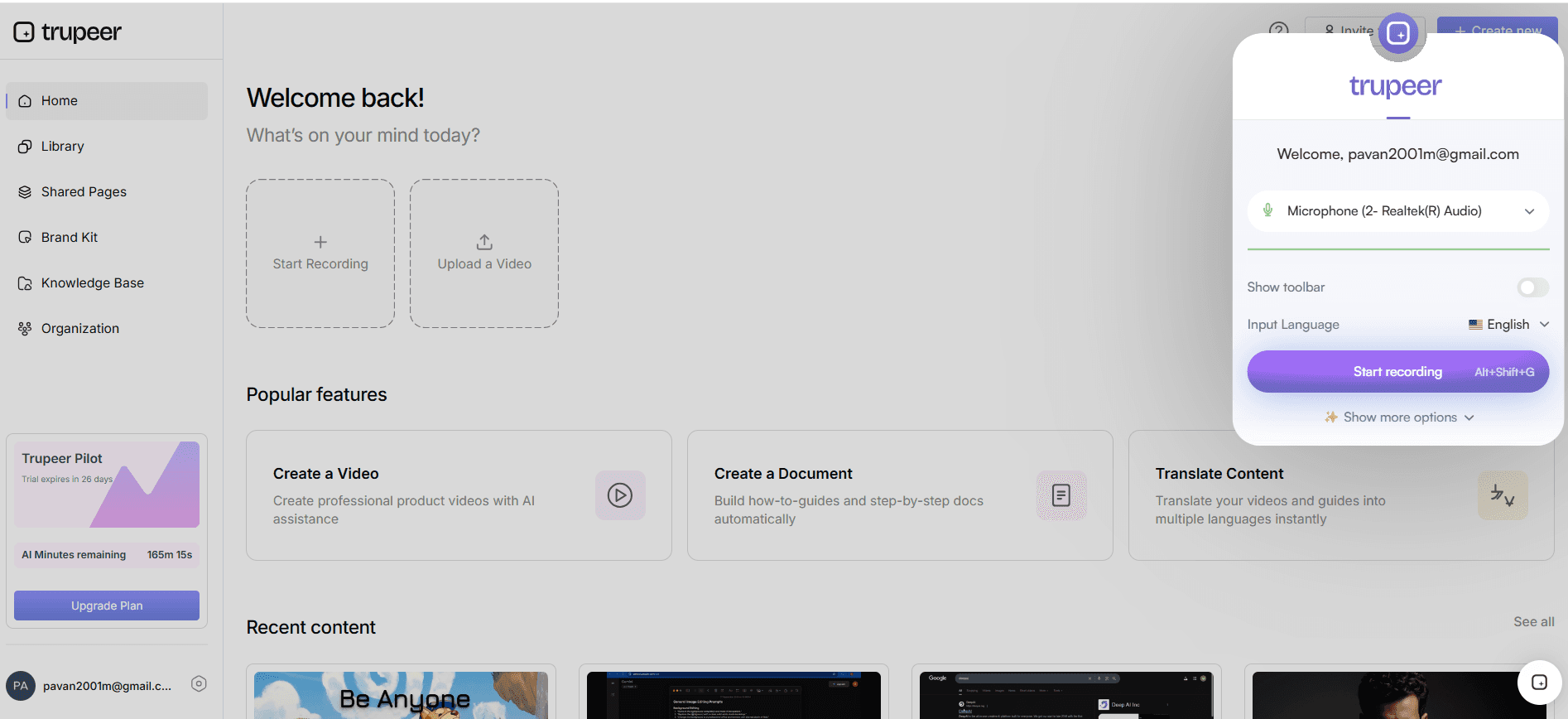
Start by using Trupeer's AI screen recording with auto-zoom and click detection to capture the stakeholder interview. Open the Trupeer browser-based recorder, which requires no installation, and begin recording. As the interview progresses, the auto-zoom feature highlights important areas of focus, and click detection marks critical actions. This ensures that all essential details are captured clearly. Recording typically takes as long as the interview itself, but the precision tools ensure nothing is missed. Once completed, the recording is automatically saved in your Trupeer library, ready for the next steps.
Step 2: Generate a Draft SOP
With the recording in your library, use Trupeer's automatic SOP generation feature. Navigate to the recording and select the "Generate SOP" option. Trupeer's AI analyzes the content, extracting key steps and information to create an initial draft SOP. This process takes just a few minutes, producing a document that's edit-ready. The generated SOP is structured with headers and bullet points, offering a clear framework that you can refine further. This saves significant time compared to manual transcription and structuring. For a deeper look, our guide on ai documentation generator covers the adjacent playbook.
Step 3: Edit and Refine the SOP
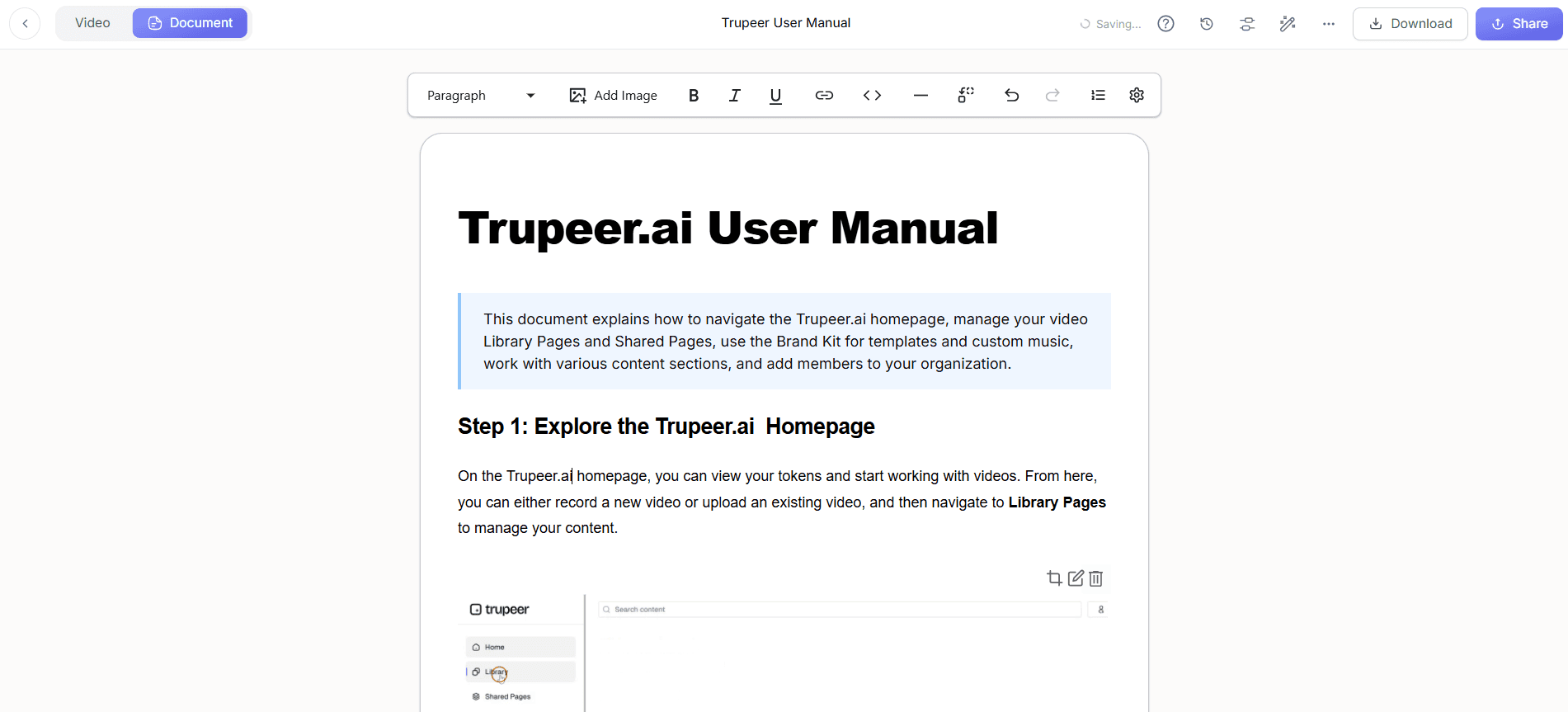
After generating the draft SOP, review and edit the content using Trupeer's editing tools. You can adjust headings, add notes, and refine language to ensure clarity and accuracy. The AI voiceover feature, which supports 65+ natural voices, can add a professional touch to any accompanying video documentation. This is the stage where you ensure the SOP aligns with organizational standards. Depending on the complexity of the process, this step can take anywhere from 30 minutes to a couple of hours.
Step 4: Enhance with AI Avatars
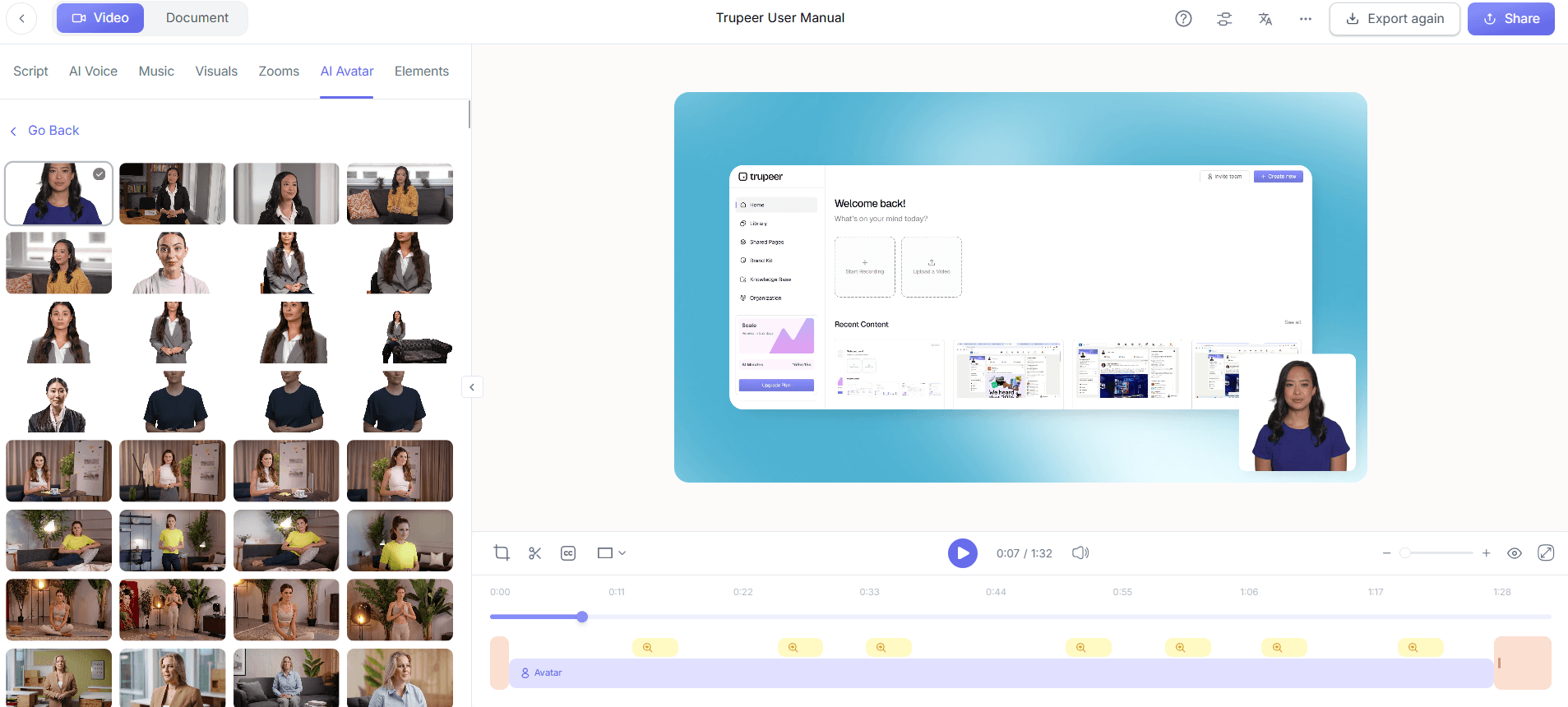
To make the documentation more engaging, consider adding AI avatars through Trupeer's integration with HeyGen. Select from a stock library or upload a custom avatar to guide viewers through the SOP. This is particularly useful for training materials, as visual guides enhance understanding and retention. Implementing avatars is straightforward, choose your avatar, assign it to segments of the SOP, and let Trupeer handle the rest. This step adds a layer of interactivity to your documentation, making it more accessible and memorable.
Step 5: Translate and Localize
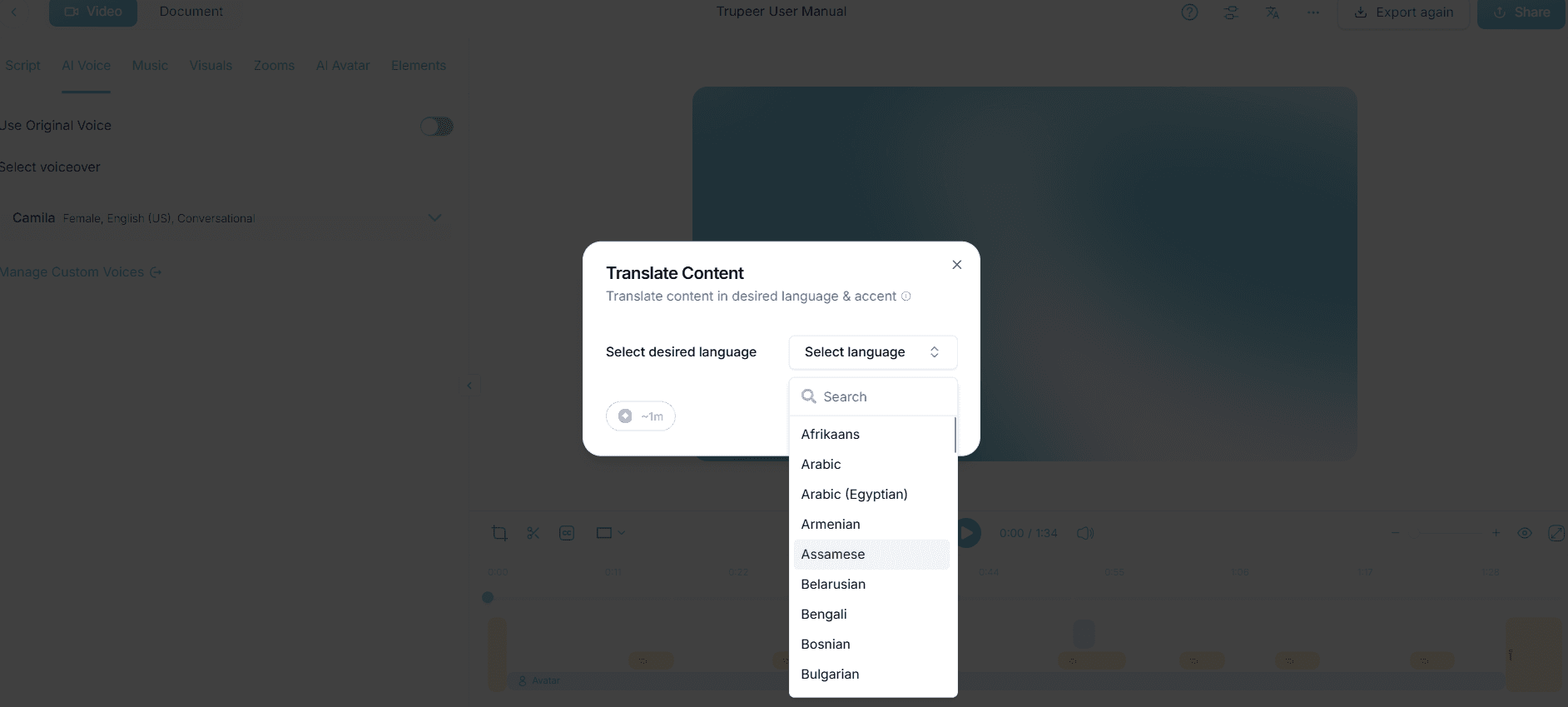
If your organization operates internationally, use Trupeer's AI translation and dubbing capabilities. Access the translation feature and select the desired languages for your SOP. Trupeer supports over 40 languages, ensuring your documentation is accessible to a global audience. The AI dubbing feature can also create synchronized voiceovers for non-English audiences, maintaining the original pacing and intent. This step, while optional, can be crucial for organizations looking to maintain consistency across different regions.
Step 6: Distribute and Monitor Engagement
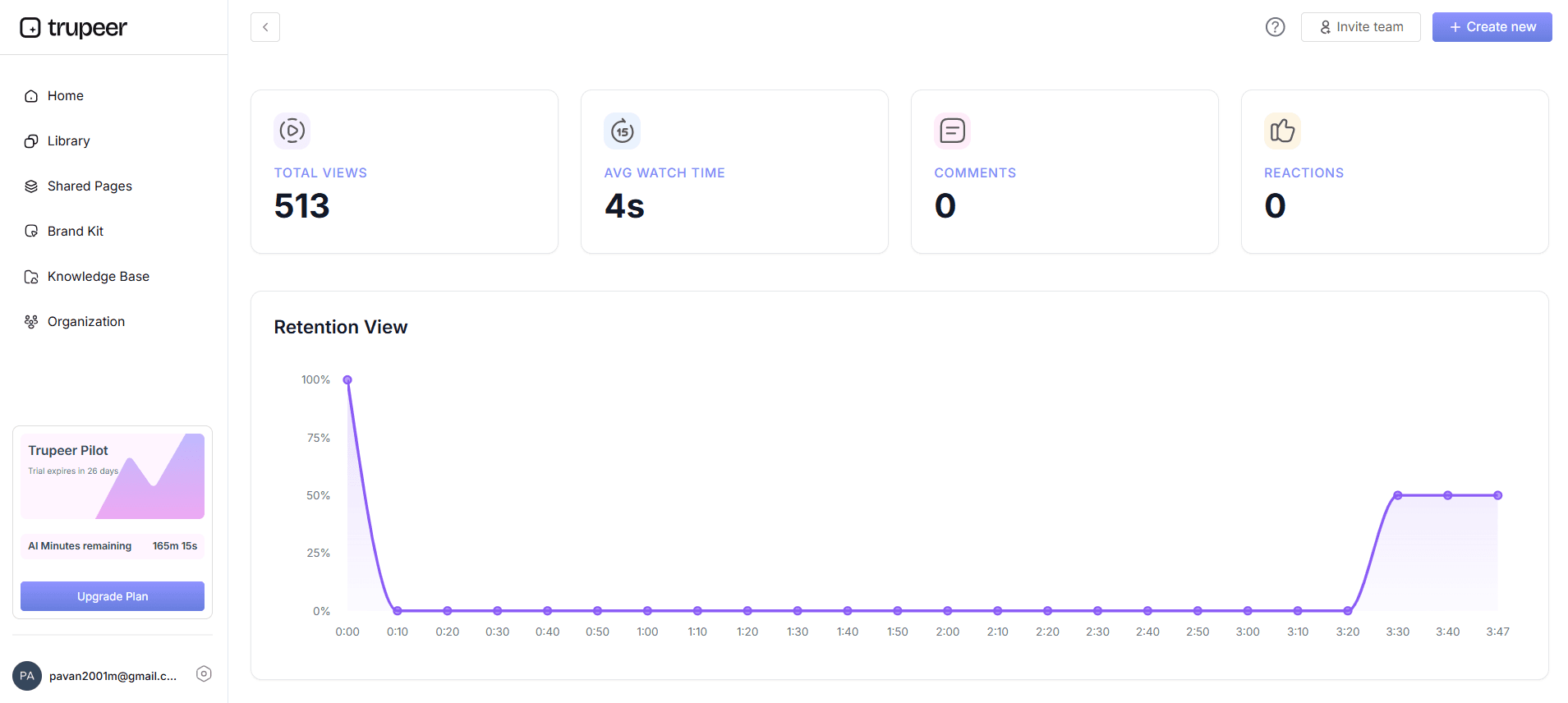
Once your documentation is finalized, distribute it using Trupeer's AI-searchable knowledge base. Upload your SOP and related materials to the platform, where they become indexed and searchable. Team members can easily find and reference specific sections through timestamp deep-links. also, use Trupeer's viewer engagement analytics to monitor how your documentation is accessed and used. This data offers insights into which parts of the SOP are most engaged with, allowing for continuous improvement. Typically, setup and monitoring take about 30 minutes, but the insights are invaluable for refining processes.
What tips help you turn stakeholder interview recordings into process documentation?
Converting stakeholder interviews into effective process documentation takes strategy and precision. Following a few key tips can enhance the quality and impact of your final documents. Here are some practical suggestions:
Choose the Right Recording Tool. Use a reliable tool like Trupeer's step by step process documentation tool to ensure high-quality captures with essential features like auto-zoom.
Standardize Your Format. Establish a consistent format for your SOPs to ensure uniformity across different documents. This makes them easier to follow and maintain.
Engage Stakeholders in Review. Involve key stakeholders in reviewing the draft SOPs to ensure accuracy and completeness. Their insights can provide valuable context and corrections.
use AI Tools for Efficiency. use AI features for translation and voiceover to save time and enhance the reach of your documentation.
Monitor Usage and Feedback. Use engagement analytics to understand how SOPs are used and gather feedback to refine them for better clarity and effectiveness.
Regularly Update Documentation. Processes evolve, and so should your documentation. Schedule regular reviews to keep SOPs current and relevant.
Explore Alternatives for Comparison. Compare different tools, such as Scribe alternatives for SOPs, to find the best fit for your needs.
Frequently asked questions
How can I ensure accuracy in the generated SOPs?
The key to accuracy in generated SOPs is the initial quality of the recordings. Start with a clear and detailed recording using Trupeer's AI screen recording capabilities. Once the draft SOP is generated, involve stakeholders in the review process to verify the content. Editing and refining the draft using Trupeer's intuitive tools further ensure that the SOP is accurate and comprehensive. Regular updates and stakeholder feedback also help maintain the quality of the documentation over time.
What formats can I export my process documentation to?
Trupeer offers a range of export options to suit different needs. You can export your process documentation as MP4 videos, HTML documents, PDFs, or SCORM packages for integration with learning management systems. This flexibility allows you to distribute documentation in the most accessible format for your audience. Whether for internal training, compliance, or client presentations, having multiple formats ensures that your documentation is versatile and widely usable.
Why are AI tools beneficial for process documentation?
AI tools simplify the creation and maintenance of process documentation by automating repetitive tasks and enhancing content quality. Trupeer's AI capabilities, such as voice cloning and translation, save time and reduce the risk of errors. They also enhance the accessibility of documentation by supporting multiple languages and formats. These tools enable teams to focus on refining content rather than getting bogged down by manual tasks, improving efficiency and effectiveness.
Does Trupeer support team collaboration on SOPs?
Yes, Trupeer supports collaborative workflows with features like shared pages and client-facing portals. Team members can work together to review, edit, and approve process documentation. The platform's collaborative review and approval workflows make it easy for teams to iterate on SOPs, ensuring they are accurate and align with organizational standards. This collaborative capability builds a more inclusive documentation process, incorporating diverse insights and expertise.
Can Trupeer help with multilingual documentation?
Trupeer is equipped to handle multilingual documentation needs. Its AI translation and dubbing capabilities allow you to translate SOPs into over 40 languages. This ensures that your documentation is accessible to a global workforce, maintaining consistency across regions. The platform also supports lip-sync for dubbed content, which is invaluable for creating engaging, localized video content. For more on this, explore Trupeer's AI video translation features.