Trupeer Blog
Summarise
Imagine you're managing a customer support team that fields hundreds of inquiries weekly. Each interaction represents a chance to build trust, but also a risk of failure if your team can't find the right information quickly. With your knowledge base (KB) as the central repository of information, its search accuracy becomes crucial. If employees struggle to locate precise answers, it leads to wasted time and potential customer dissatisfaction. In fact, studies suggest that
70% of employees waste up to an hour a day looking for information
they can't find easily. This inefficiency can erode customer trust and increase operational costs. This article is for customer support managers, IT leaders, and knowledge management professionals who need to enhance the efficiency and effectiveness of their knowledge base. If you're aiming to understand how to measure and improve search accuracy, you're in the right place. Discover the nuances of search metrics and the strategies that can raise your knowledge base to become an indispensable tool for your team. Teams weighing tools often start with a Loom alternatives comparison before standardizing on a workflow.
Why does measuring knowledge base search accuracy matter?
For businesses that rely on providing timely and accurate information, the stakes are high. Inadequate search functionality in a knowledge base can lead to prolonged resolution times, increased frustration for both employees and customers, and ultimately, a decline in customer satisfaction. When employees can't find information quickly, it impacts their productivity and can result in poor customer experiences. This is especially critical in customer success workflows, where every second counts in resolving issues or answering queries.
Also, the efficiency of your knowledge base directly influences the bottom line. Inefficient search capabilities can lead to increased operational costs, as employees spend more time searching for information rather than engaging in productive tasks. This inefficiency can also affect team morale, as staff become frustrated with tools that should simplify their work but instead become a source of stress. By measuring and improving search accuracy, companies can ensure that their teams are equipped with the right tools to deliver excellent service, so enhancing overall business performance and customer satisfaction.
What are the benefits of improving knowledge base search accuracy?
Enhancing your knowledge base search accuracy offers several tangible benefits that can significantly impact your organization's efficiency and effectiveness.
Increased Productivity. When employees find information quickly, they can resolve customer issues faster, freeing up time for other tasks and improving overall productivity.
Improved Customer Satisfaction. Accurate and speedy responses to inquiries enhance customer satisfaction, leading to increased loyalty and positive word-of-mouth.
Reduced Operational Costs. A more efficient knowledge base reduces the time and resources spent on searching for information, resulting in lower operational costs.
Enhanced Decision Making. Access to accurate information enables better decision-making, allowing teams to respond to challenges more effectively.
simplified Training and Onboarding. A well-organized knowledge base simplifies training and onboarding, reducing the time it takes for new employees to become productive members of the team.
Better Knowledge Retention. With a reliable system in place, important knowledge is captured and retained, reducing the risk of information loss when employees leave the company.
For a deeper look, our guide on best knowledge base examples covers the adjacent playbook.
When SOPs come into the same conversation, a Scribe alternatives comparison helps clarify the scope.
Which Trupeer features help you measure and improve knowledge base search accuracy?
Trupeer offers a suite of capabilities designed to enhance the effectiveness of your knowledge base. These features not only help you measure search accuracy but also continuously improve it.
AI-searchable knowledge base
Trupeer's AI-searchable knowledge base indexes every recording with timestamp-level deep links. This feature ensures that users can quickly navigate to the exact point in a video where the relevant information is discussed. By providing precise search results, it reduces the time spent sifting through irrelevant content, enhancing the overall efficiency of your knowledge base.
Automatic SOP generation
The AI documentation platform within Trupeer automates the creation of Standard Operating Procedures (SOPs) from any recording. This capability ensures that all processes are consistently documented, making it easier for teams to find and follow procedures. With auto-generated documentation, you maintain consistency and accuracy across all your SOPs, which directly impacts search accuracy.
Viewer engagement analytics
Understanding how users interact with your knowledge base is crucial for improving search accuracy. Trupeer's viewer engagement analytics provide insights into how users engage with content, where they drop off, and which sections are most frequently accessed. This data helps identify areas for improvement in content organization and delivery, ultimately enhancing the search experience.
AI translation and dubbing
For organizations with multilingual teams, Trupeer offers AI video translation capabilities, translating content into 40+ languages with lip-sync. This ensures that search accuracy is not compromised by language barriers, allowing users to find information regardless of their preferred language. The AI dubbing feature further enhances accessibility for non-English speakers.
Automatic filler-word removal
Clarity is key to effective search functionality. Trupeer's automatic filler-word removal ensures that recorded content is concise and to the point. By eliminating unnecessary words and long pauses, the AI-enhanced content becomes more straightforward and easier to search, improving the overall accuracy of search results within your knowledge base.
How do you measure and improve knowledge base search accuracy step by step with Trupeer?
Step 1: Capture Content
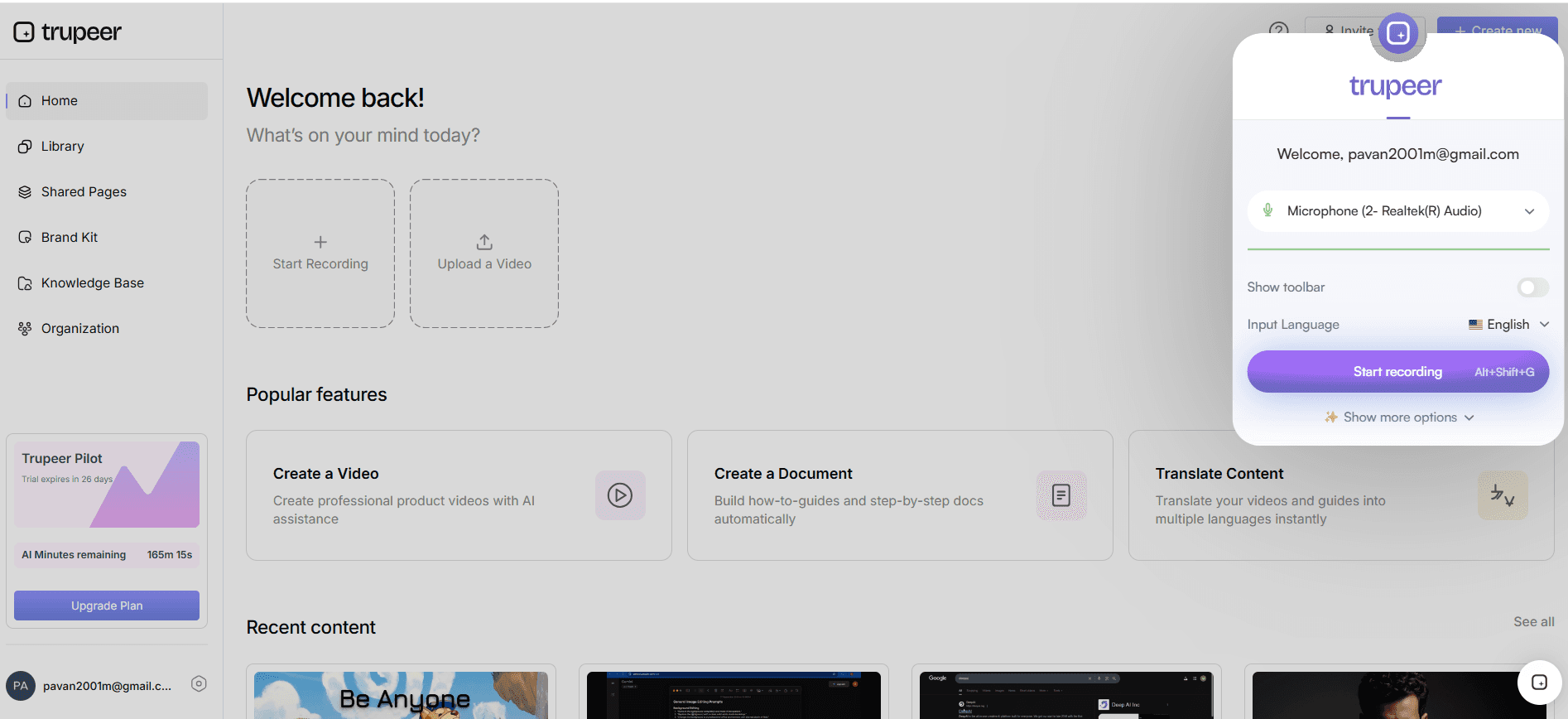
Begin by using Trupeer's AI screen recording with auto-zoom and click detection. This feature allows you to capture detailed video walkthroughs without missing crucial interactions. Simply open the Trupeer recorder on your desktop or browser-based version and select the area of your screen to record. As you navigate through your processes, the AI will automatically zoom in on significant actions, such as clicks or menu selections, ensuring that every important detail is captured. This step takes only as long as your process, and the auto-zoom ensures no crucial information is overlooked. Once the recording is complete, save it within the platform for further enhancement and documentation.
Step 2: Edit and Enhance
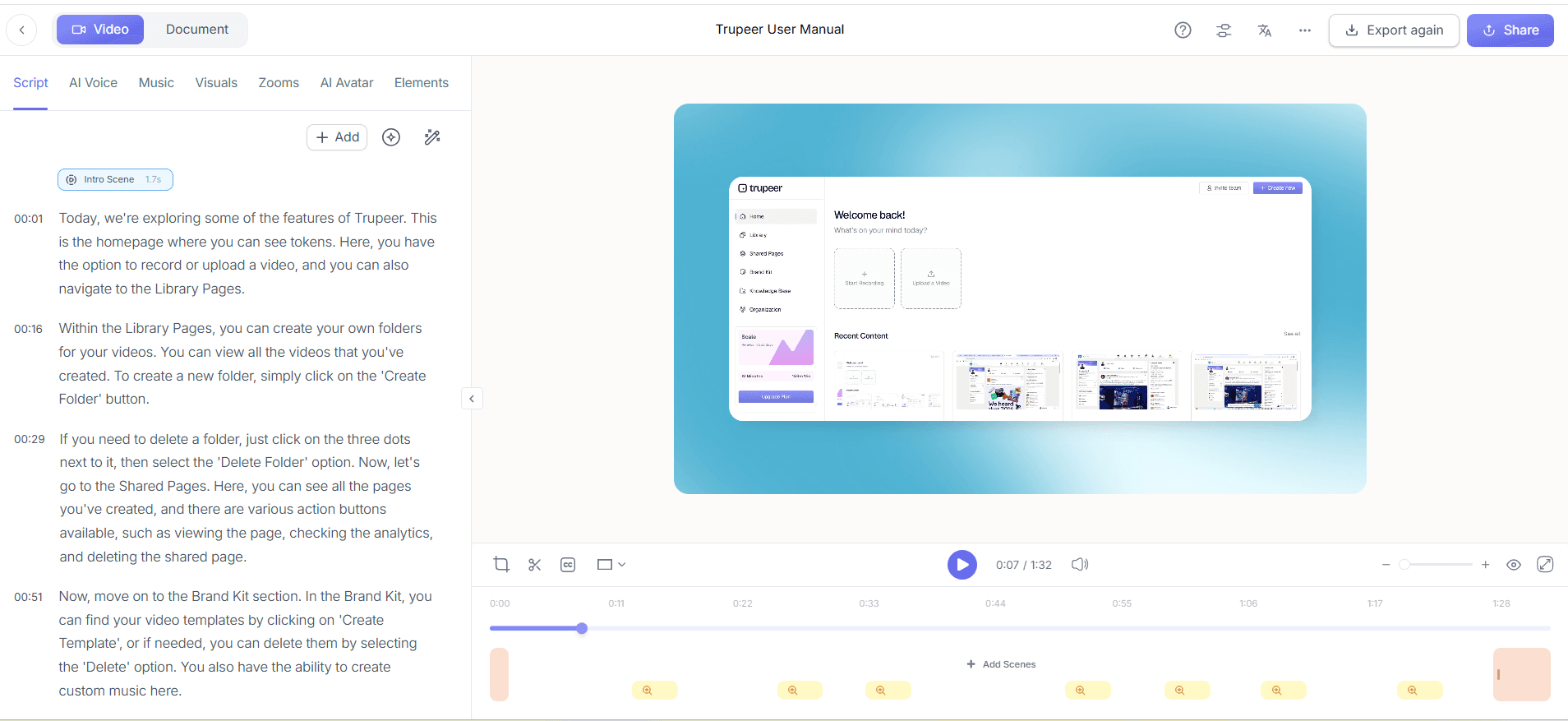
Next, enhance your captured content using Trupeer's automatic filler-word removal. This feature refines your recordings by eliminating unnecessary words and pauses, creating a clean and concise video. Access the editing tools within Trupeer, select your recording, and apply the filler-word removal with a single click. Trupeer processes the video quickly, often in less than a minute, and produces a polished version that is much easier for users to follow. This step is crucial for ensuring that your content remains focused and highly relevant, so improving the subsequent search accuracy of your knowledge base.
Step 3: Generate Documentation
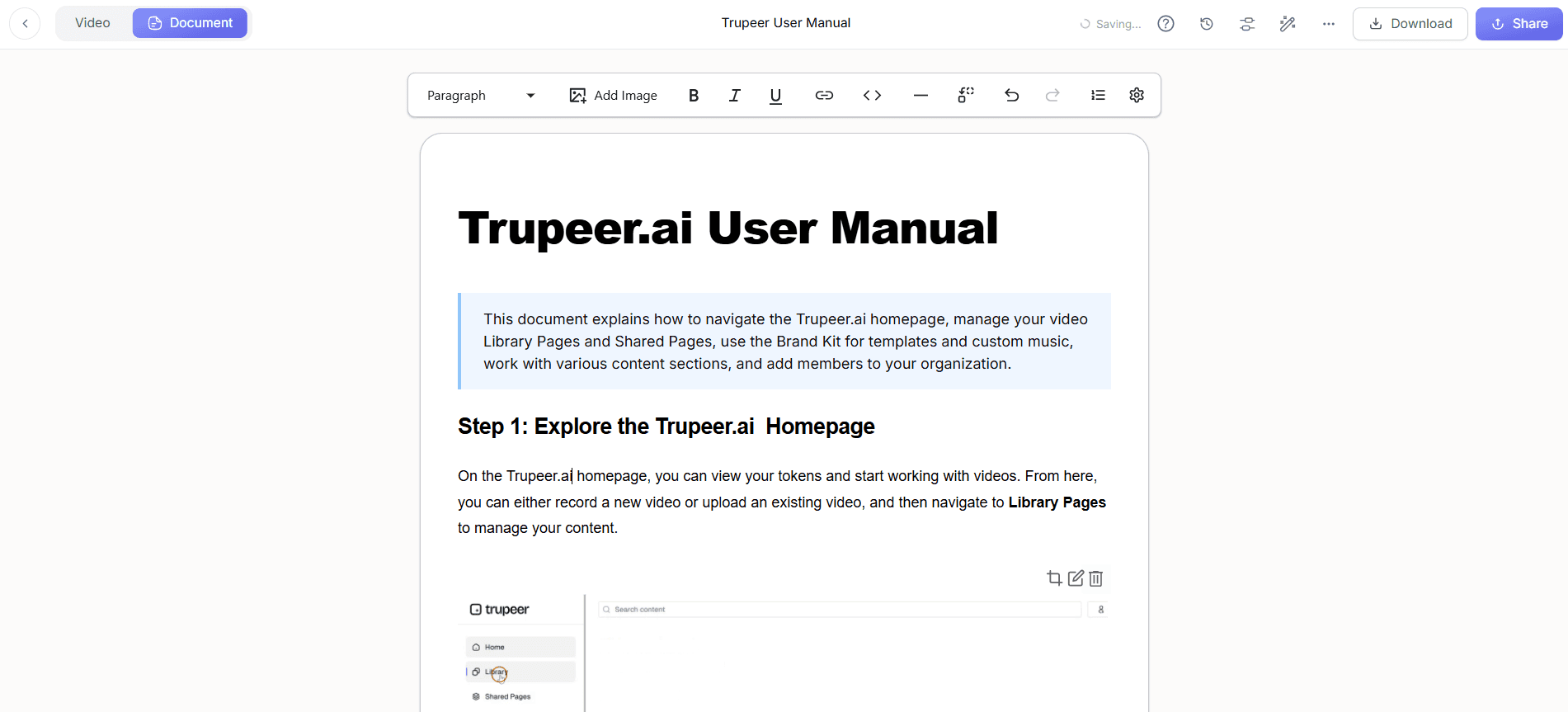
Use Trupeer's automatic SOP generation from recordings to create clear and comprehensive documentation. After cleaning up your video, use the auto-generated documentation feature to convert your recording into an editable SOP. This is done by selecting the video and choosing the "Generate SOP" option. The AI quickly analyzes the recording and outputs a draft SOP that highlights key steps and actions. This process usually takes a few minutes, depending on video length. The resulting document is ready for review and can be exported in multiple formats, such as HTML or PDF, ensuring accessibility across platforms.
Step 4: Translate and Localize
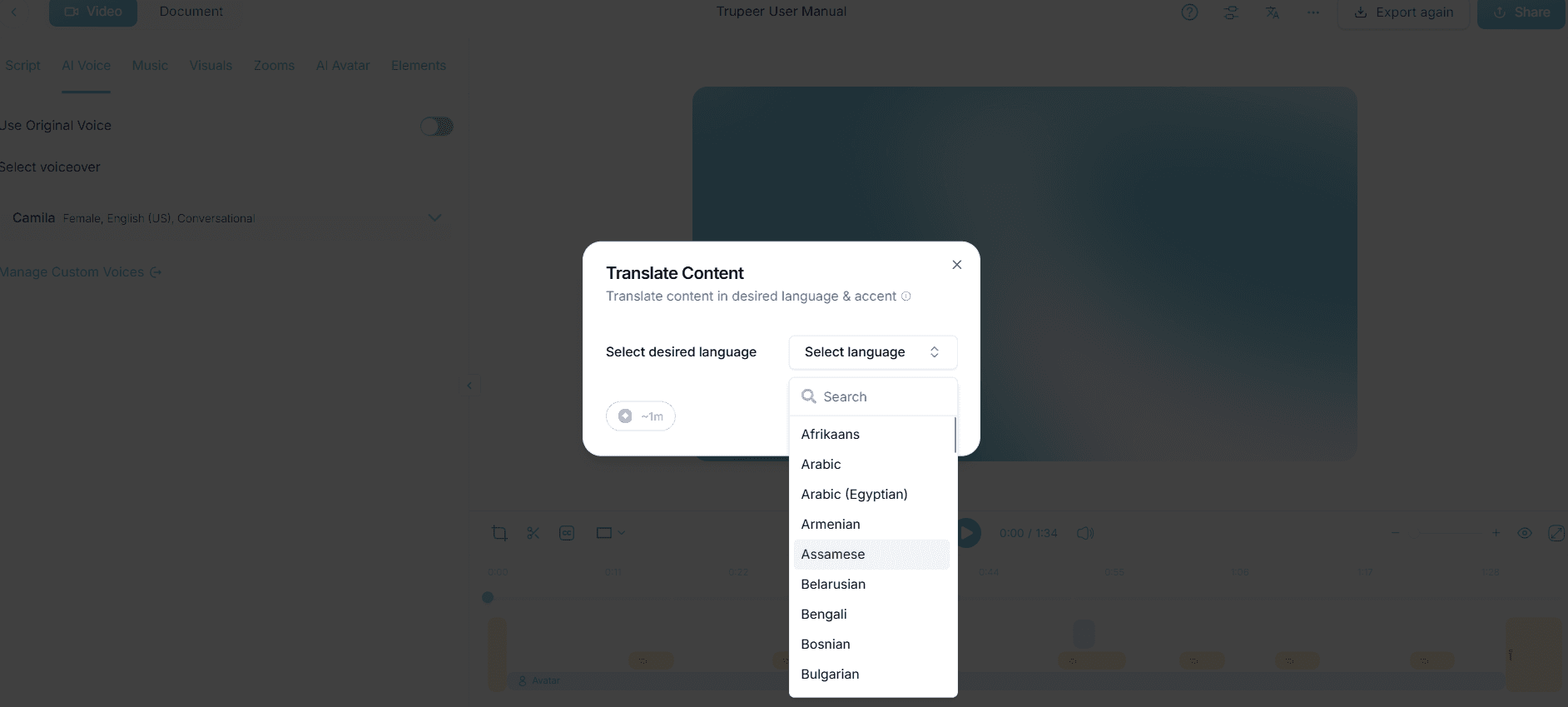
For multilingual teams or global audiences, Trupeer's AI translation into 40+ languages with lip-sync is invaluable. Select your video and choose the desired language for translation. The AI handles both textual and vocal translations, maintaining the video's original context and flow. This step ensures that all users can access and understand the content, regardless of language preferences. The translation process is relatively swift, often completing within minutes, and the lip-sync feature ensures that dubbed videos appear natural, further enhancing user comprehension and satisfaction. For a deeper look, our guide on knowledge base one covers the adjacent playbook.
Step 5: Distribute the Content
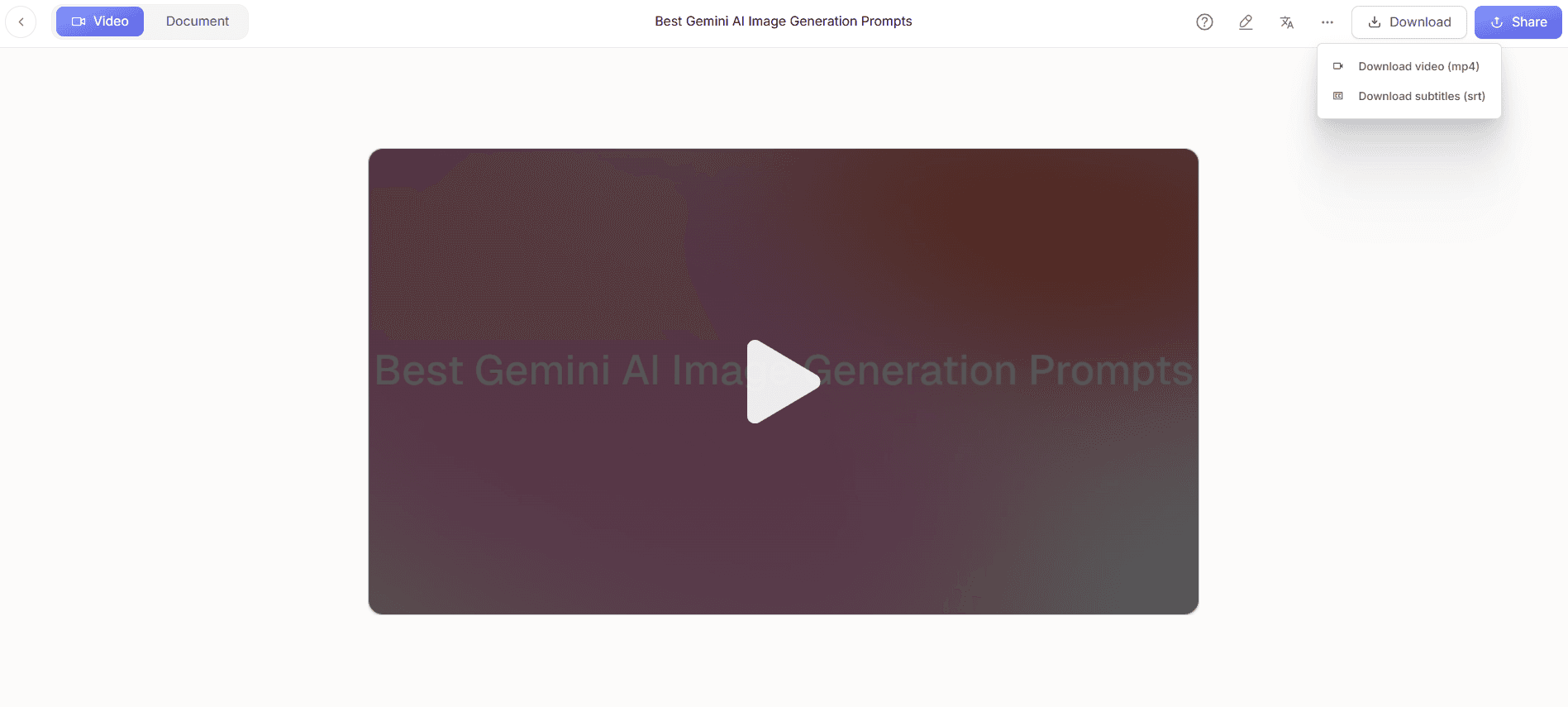
Once your content is ready, use Trupeer's custom-domain hosting with SSO for secure distribution. Upload your enhanced and translated videos to the Trupeer platform, and configure your custom domain settings. This step allows you to control access through Single Sign-On, providing a smooth experience for users accessing your knowledge base. The platform supports shared pages and client-facing portals, making it easy to share content with both internal teams and external clients. With embeddable video widgets, you can also offer in-app guidance, ensuring users find the right information at the right time.
Step 6: Analyze and Iterate
Finally, use Trupeer's viewer engagement analytics to measure the effectiveness of your knowledge base. Monitor metrics such as video views, engagement rates, and drop-off points to gain insights into user behavior. Access these analytics through the Trupeer dashboard, and review the data regularly to identify areas for improvement. For instance, if a particular section of your knowledge base shows high drop-off rates, consider revisiting the content to ensure clarity and relevance. This iterative process is crucial for maintaining and improving search accuracy over time, ensuring your knowledge base continues to meet user needs effectively.
What tips help you measure and improve knowledge base search accuracy?
Improving knowledge base search accuracy involves both strategic planning and tactical execution. Here are seven actionable tips to enhance your knowledge base's effectiveness and ensure users can find the information they need quickly and accurately.
Standardize Content Format. Keep all content consistent in style and structure to make it easier to search and navigate. Use templates to maintain uniformity.
use Keywords Effectively. Incorporate relevant keywords into your content to improve search engine indexing and user search results.
Regularly Update Content. Ensure your knowledge base content is current and accurate by scheduling regular reviews and updates.
use User Feedback. Collect and analyze user feedback to identify areas of improvement in your knowledge base.
Integrate with Other Tools. Use a knowledge base software teams customers tool to connect your knowledge base with other systems for enhanced functionality.
Implement Search Analytics. Use analytics tools to track search queries and results, identifying patterns and optimizing content accordingly.
Optimize for Mobile. Ensure your knowledge base is mobile-friendly, allowing users to access information on the go.
Teams ship this workflow end-to-end using Trupeer's AI video platform, which turns raw recordings into polished output without an editor.
Frequently asked questions
How can I measure the search accuracy of my knowledge base?
Measuring search accuracy involves tracking user interactions with your knowledge base. Implement analytics tools to monitor search queries, results, and engagement metrics. By analyzing this data, you can identify which queries return relevant results and which do not, providing insight into areas that need improvement. Regularly review these metrics to ensure your content aligns with user needs and expectations, so enhancing the overall search experience.
What tools can help improve knowledge base search accuracy?
Several tools can enhance search accuracy, including AI-driven search platforms like Trupeer. These tools use advanced algorithms to index content more effectively, ensuring that users receive relevant results. also, integrating tools that provide analytics and feedback can help you continuously refine your knowledge base. By using such technologies, you can maintain a high level of search accuracy and ensure your information is easily accessible to users.
Why is it important to localize knowledge base content?
Localizing knowledge base content ensures accessibility for non-English speaking users, which is crucial for global businesses. By translating content into multiple languages, you enhance user experience and satisfaction, as users can access information in their preferred language. Localization also helps maintain consistency in branding and messaging across different regions, contributing to a cohesive global presence and better engagement with diverse audiences.
Can I automate the creation of documentation from video content?
Yes, Trupeer offers capabilities to automatically generate documentation from video content. This feature analyzes your videos and creates structured, editable documents that capture key processes and steps. Automation saves time and ensures consistency across documentation, making it easier for users to understand and follow procedures. This functionality is especially valuable for organizations looking to maintain up-to-date and accurate documentation without manual intervention.
Does Trupeer support AI-driven search for video content?
Yes, Trupeer supports AI-driven search capabilities for video content through its video knowledge base. This feature indexes videos with timestamp-level precision, allowing users to find specific information quickly. The AI-driven search enhances the user experience by providing accurate and relevant results, reducing the time spent searching for information and improving overall productivity within the organization.
Related Blogs