Trupeer Blog
Summarise

Imagine you're leading a product team that just finished a major update. You need to communicate these changes clearly to your stakeholders, but writing release notes from scratch can be time-consuming and prone to errors. This is where using recordings for release notes and product update documentation can make a difference. A staggering
70% of users rely on release notes
to understand new features and improvements. So, it's vital to make these notes accurate and comprehensive. By using recordings, you not only save time but also ensure that every detail is captured as it appears in the product. This approach is especially beneficial for product managers, technical writers, and customer support teams who need to keep everyone in the loop without the hassle of starting from a blank page. For teams seeking efficient ways to communicate updates, considering tools that enhance product video creation can simplify the process significantly.
Why does creating release notes and product update documentation from recordings matter?
Creating release notes and product update documentation from recordings matters because it addresses the common challenges faced by product teams. These challenges include ensuring accuracy in documentation, maintaining consistency across updates, and reducing the time spent in manually writing notes. When a new feature is rolled out, it's critical for the development team, marketing, and customer support to have a unified understanding of what's been released. This alignment is crucial for internal communications and customer interactions.
In the fast-paced world of product development, keeping documentation updated is often neglected, leading to inconsistencies. When teams rely on recordings, there's a direct link between what's demonstrated in the video and what's communicated in the written notes. This not only enhances transparency but also builds trust with users who expect detailed explanations of new features. also, incorporating recordings into your operations workflow can significantly improve efficiency by reducing redundancy and ensuring that every stakeholder has access to the same material at the same time. This method is particularly advantageous for agile teams where quick iterations and updates are the norm, allowing them to focus more on development and less on documentation overhead.
What are the benefits of creating release notes and product update documentation from recordings?
Using recordings to create release notes and product update documentation offers several distinct advantages.
Increased Accuracy. By using recordings, you ensure that every detail of the update is captured precisely as it happens, reducing the risk of misinterpretation.
Time Efficiency. This method significantly reduces the time spent on manual documentation, allowing teams to focus more on productive tasks. A single create instructional video approach can save hours of writing.
Enhanced Consistency. Recordings provide a uniform reference that ensures consistency across all documentation, so updates are communicated clearly and correctly.
Comprehensive Coverage. With recordings, every aspect of the update is covered, ensuring nothing important is left out. This is especially beneficial for complex updates where details matter.
Improved Stakeholder Communication. Sharing recordings with stakeholders offers a more engaging way to understand updates, enhancing their ability to provide feedback and make informed decisions.
Accessibility and Scalability. Using an AI video platform to manage these recordings ensures that all stakeholders have easy access to the information they need, when they need it, supporting scalable communication as your team grows.
Which Trupeer features help you create release notes and product update documentation from recordings?
Trupeer offers a suite of features that simplify the process of creating release notes and product update documentation from recordings. some of these capabilities.
AI Screen Recording with Auto-Zoom and Click Detection
This feature captures every interaction on your screen, automatically zooming into areas of interest and detecting clicks. This means you can create detailed recordings that highlight exactly how new features work. It's particularly useful for demonstrating complex workflows where user interactions are key. The auto-zoom ensures that viewers never miss critical details, making it easier to translate these recordings into comprehensive documentation. By simplifying the recording process, you can focus on what's important: the content of your release notes.
Silent Screen Recording with Automatic AI Narration
Trupeer's silent screen recording capability automatically overlays AI-generated narration, bringing your recordings to life without the need for manual voiceovers. This feature is perfect for creating engaging product update documentation that explains what's happening on-screen in real-time. It saves considerable time and effort, as you don't need to record audio separately. The AI narration is customizable, allowing you to adjust pacing and tone to match your brand's voice, ensuring that your documentation is both informative and on-brand.
Automatic SOP Generation from Any Recording
Turn your recordings into structured standard operating procedures (SOPs) with ease. Trupeer's AI documentation platform generates editable SOPs directly from your recordings, which can be exported in multiple formats. This feature is ideal for teams needing to create detailed, step-by-step guides quickly. It eliminates the need for manual transcription and formatting, enabling you to produce polished, professional documentation with minimal effort. By using this auto-generated documentation, you ensure consistency and accuracy in every document.
AI Voiceover in 65+ Natural Voices
With Trupeer, you can transform your recordings into compelling narratives using AI voiceovers in over 65+ natural voices. This capability allows you to create multilingual documentation by providing voiceovers in different languages, making your release notes accessible to a global audience. Adjust the pace and tone to suit different audiences, ensuring that your message is conveyed clearly and effectively. This feature is particularly beneficial for reaching international markets without the need for extensive translation resources.
AI-Searchable Knowledge Base with Timestamp Deep-Links
Trupeer's AI-searchable knowledge base helps you organize and retrieve your recordings efficiently. Each recording is indexed with timestamp-level deep links, allowing team members to jump directly to the relevant sections. This capability supports easier navigation through extensive documentation, ensuring that users can quickly find the information they need without sifting through entire recordings. By integrating this knowledge base, you enhance the usability and accessibility of your product update documentation.
AI Tool to Create and Update Product Documentation
Through Trupeer's AI tool create update product documentation tool, you can easily keep your documentation up to date with the latest product changes. This tool helps you generate and maintain documentation that reflects the current state of your product, automatically updating it as new recordings are added. It ensures that your release notes are always relevant and accurate, reducing the risk of outdated information circulating among your teams or customers.
How do you create release notes and product update documentation step by step with Trupeer?
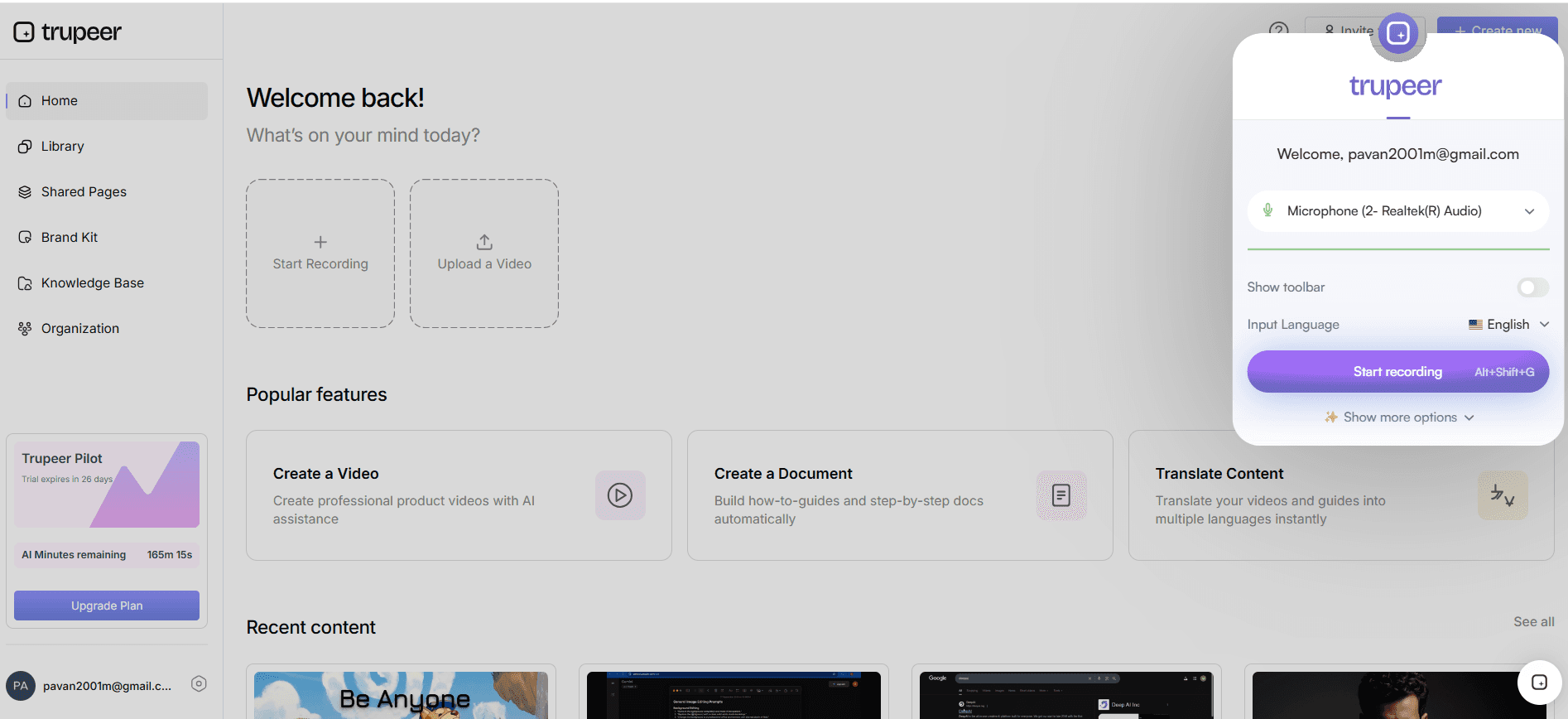
Step 1: Capture the Feature with AI Screen Recording
Begin by using Trupeer's AI Screen Recording with auto-zoom and click detection. Open the feature you want to document and start recording through the Trupeer desktop app or browser-based recorder. As you navigate through the feature, Trupeer automatically zooms into areas of interest and highlights your clicks. This ensures every interaction is captured in detail. The recording process is smooth and takes just as long as the feature walkthrough itself. In case you miss any step, you can easily re-record that section without starting over, ensuring you capture the most accurate representation of the feature.
Step 2: Add AI Voiceover for Clarity
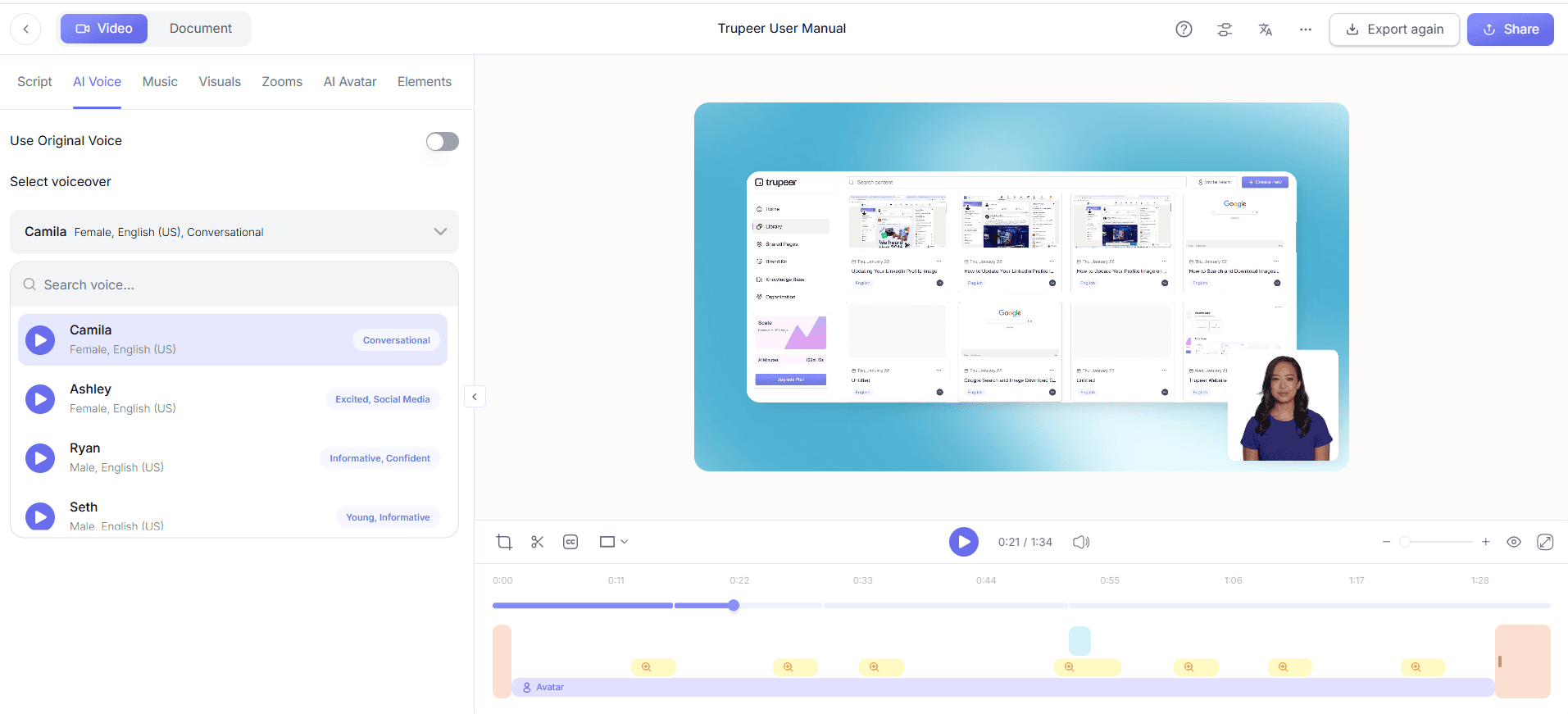
Once you've recorded the feature, enhance the video with Trupeer's AI voiceover. Choose from over 65+ natural voices and customize the pace and tone to match your audience's preferences. This step takes just a few minutes, as Trupeer automatically syncs the voiceover with your video. If the feature involves complex interactions, consider slowing down the narration for clarity. The AI-generated narration not only makes the documentation more engaging but also ensures that viewers fully comprehend each step of the feature demonstration.
Step 3: Generate an SOP from the Recording
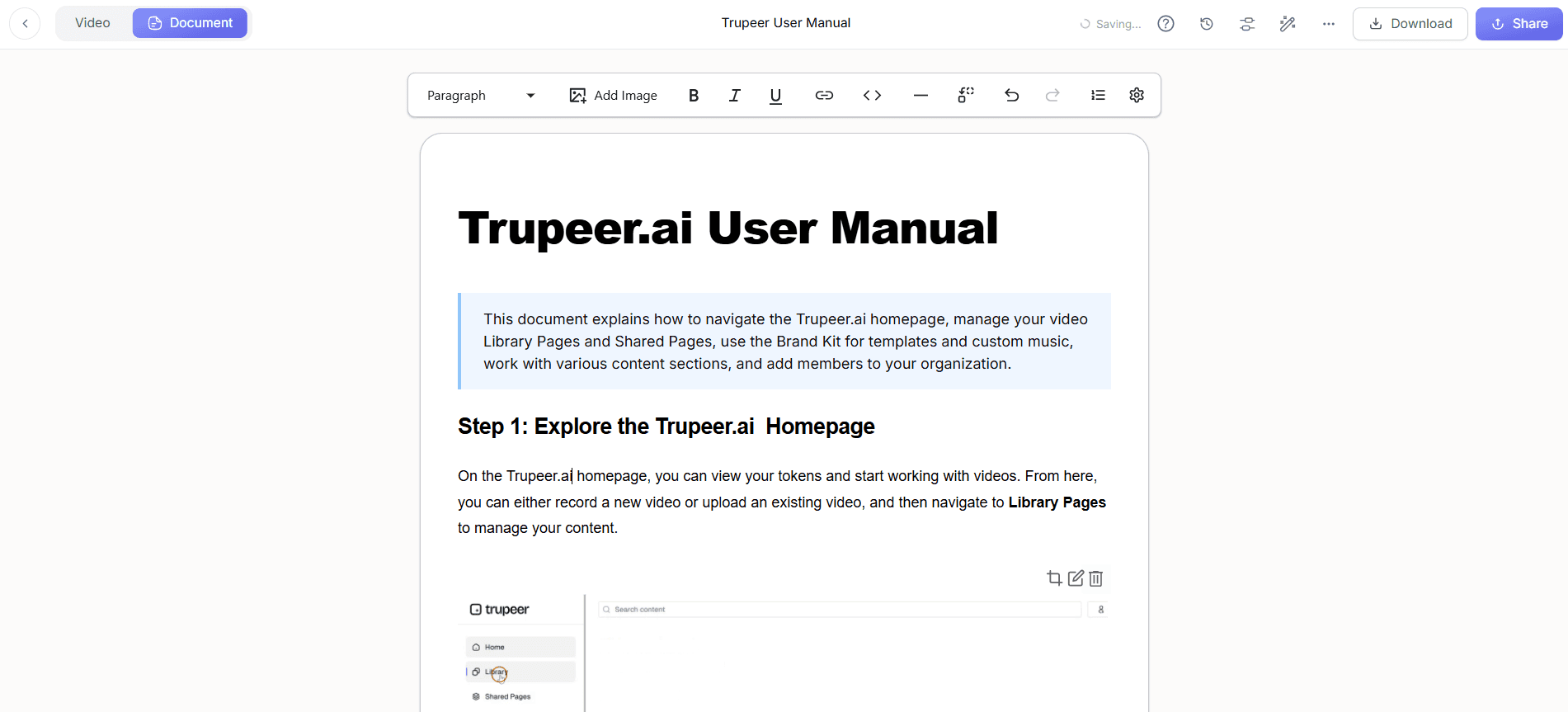
Next, use Trupeer's automatic SOP generation feature. This transforms your recording into an edit-ready, structured document. Access the feature in the Trupeer dashboard, select your recording, and click "Generate SOP." The platform analyzes the video and produces a step-by-step guide that you can export in formats like PDF or HTML. This process is efficient, taking only a few minutes. It's particularly useful for creating comprehensive documentation without the manual effort of writing each step, ensuring consistency and accuracy in your release notes.
Step 4: Localize the Content for a Global Audience
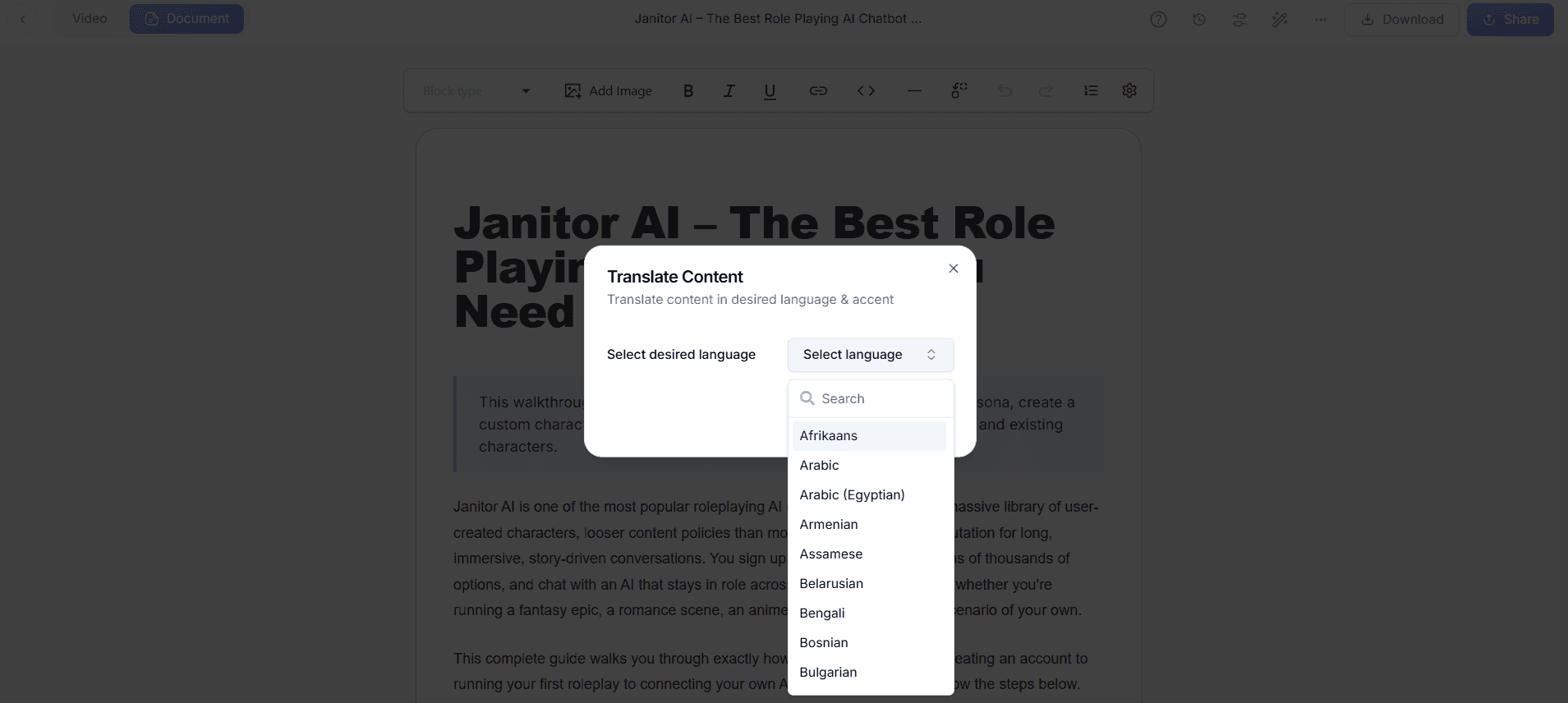
To reach a wider audience, use Trupeer's AI translation and dubbing capabilities. This feature translates your documentation into over 40 languages and provides lip-synced dubbing for non-English-speaking users. To start, select "Translate" in the dashboard, choose the target languages, and let Trupeer handle the rest. The translation process is quick, typically taking only a few minutes per language. This ensures your release notes and product updates are accessible to international users, enhancing the global reach and usability of your product.
Step 5: Create an AI-Searchable Knowledge Base Entry
Integrate your documentation into Trupeer's AI-searchable knowledge base. This feature indexes your recording with timestamp-level deep links, making it easy for users to find specific information quickly. In the Trupeer dashboard, select your recording and choose the "Add to Knowledge Base" option. This process only takes a few moments and significantly enhances the discoverability of your documentation. Users can navigate directly to the parts of the recording that interest them, reducing the time spent searching for information and increasing efficiency. Teams weighing tools often start with a Loom alternatives comparison before standardizing on a workflow.
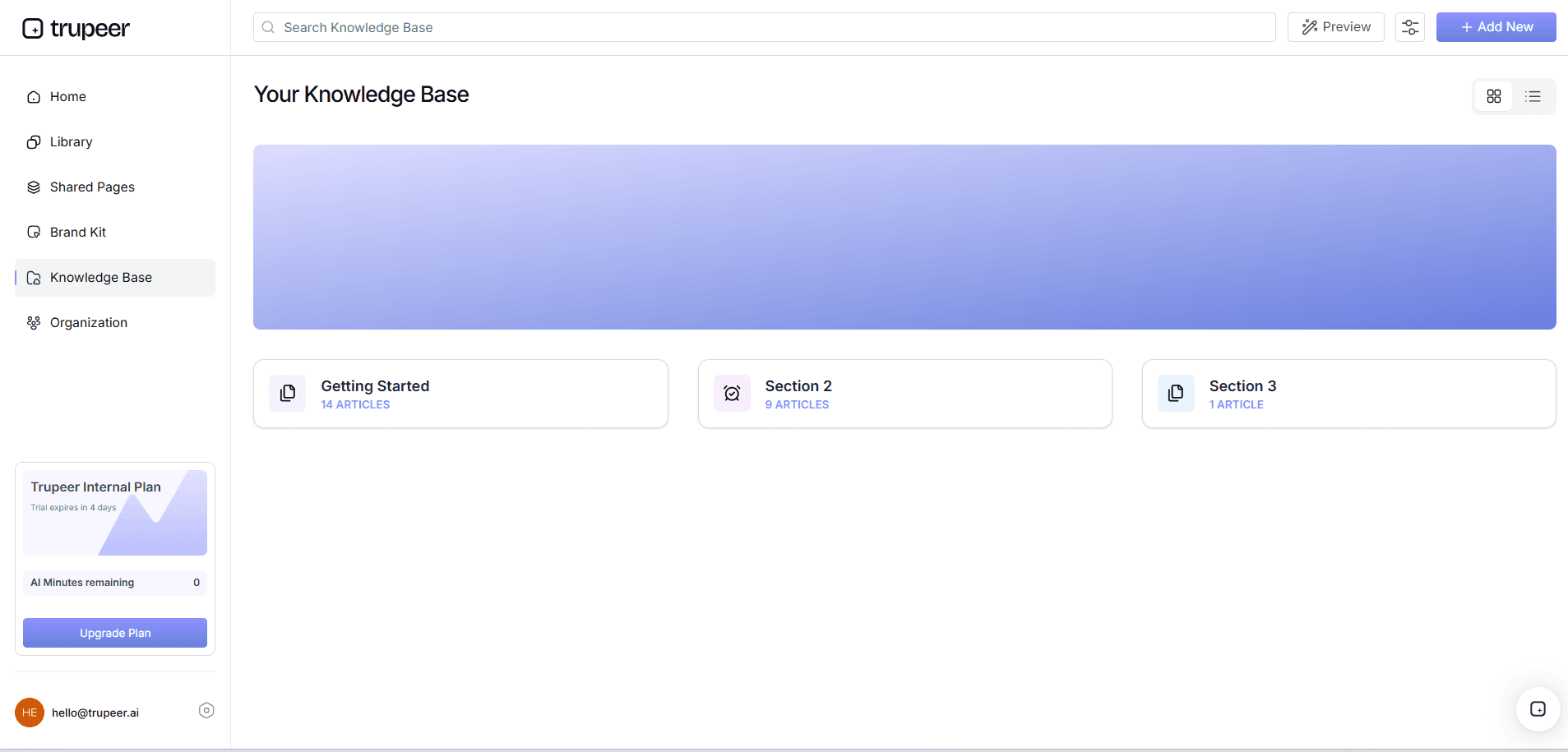
Step 6: Distribute via Shared Portals and Embeddable Widgets
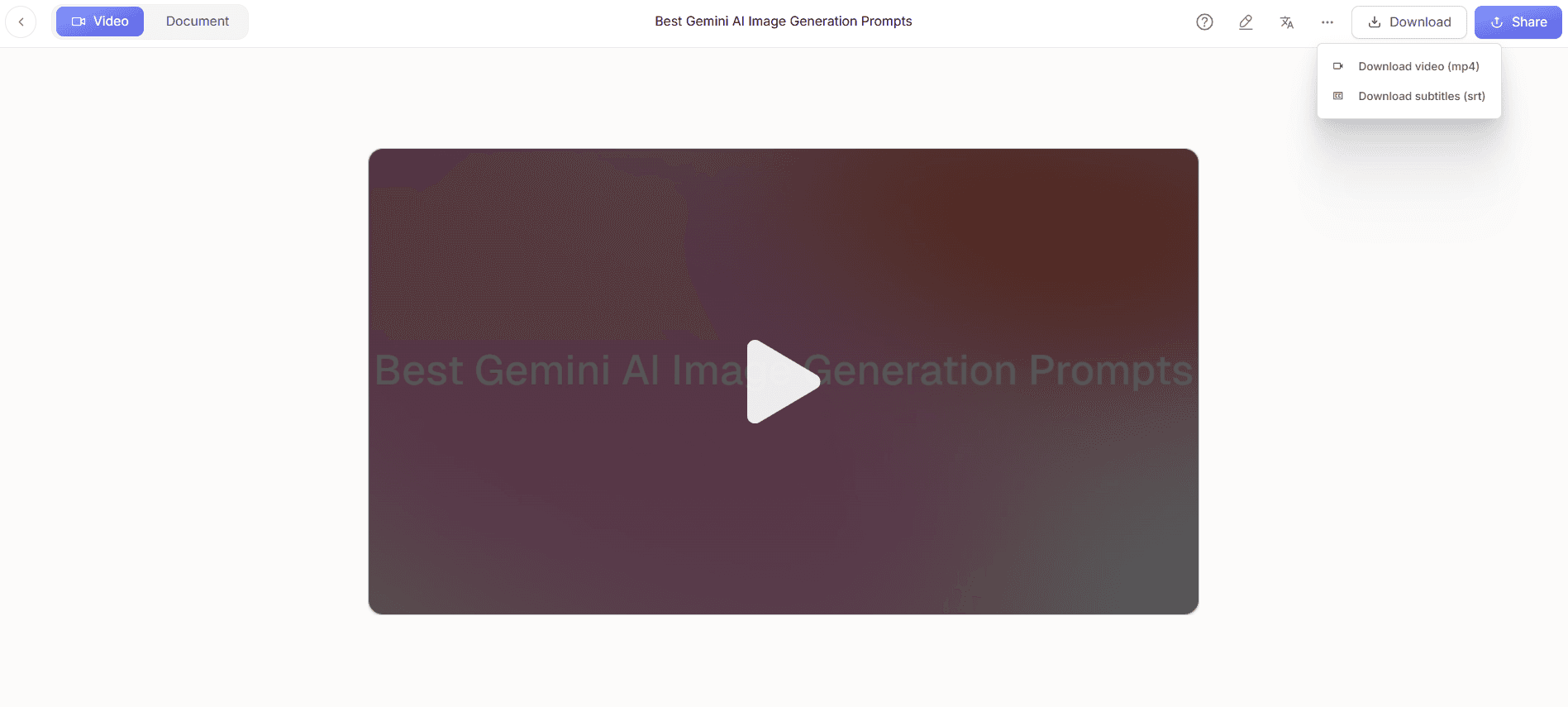
Finally, distribute your product update documentation using Trupeer's shared pages and embeddable video widgets. Create a custom client-facing portal by selecting the "Share" option in the Trupeer dashboard. Customize the portal with your branding, and distribute the link to stakeholders. Alternatively, embed the video widget directly into your application for in-app guidance. This approach ensures that your documentation is easily accessible, enhancing user engagement and reducing support queries. The setup is straightforward and can be completed in under 30 minutes, providing a scalable solution for sharing updates.
What tips help you create release notes and product update documentation from recordings?
While using recordings to create release notes and product update documentation offers numerous advantages, a few strategic tips can further optimize the process. Here are some practical suggestions to get the most out of this approach.
Plan Your Recording. Before you start, outline the key features and steps you need to capture. This preparation ensures that your recording session is efficient and covers all necessary details.
Use Consistent Branding. Apply your brand kits and templates in Trupeer to maintain a consistent visual style across all documentation. This professionalism enhances the perceived quality of your updates.
use AI Avatars. Use Trupeer's AI avatars to present your updates in a more engaging way. This approach can make your documentation feel more personal and relatable to your audience.
Standardize Your Process. Develop a standard operating procedure for creating and distributing release notes. This consistency simplifies future documentation efforts and ensures quality control.
Regularly Update Your Documentation. Use Trupeer's auto-updating feature to keep your documentation current. As your product evolves, this feature ensures that all materials reflect the latest changes.
use Collaborative Workflows. Engage your team in the documentation process with Trupeer's collaborative review features. This feedback loop can improve the accuracy and completeness of your release notes.
Explore Alternatives. Occasionally review a Scribe alternative comparison to ensure you’re using the best tools for your needs.
Frequently asked questions
How can recordings improve the accuracy of release notes?
Recordings capture features exactly as they appear, ensuring that all details are accurately documented. By using recordings, you eliminate the guesswork and potential errors that come with manual note-taking. This method provides a visual reference that can be revisited at any time, ensuring that all stakeholders have a precise understanding of the updates. also, the ability to replay recordings allows teams to verify the details, further enhancing the accuracy of the release notes.
What tools does Trupeer offer for creating release notes?
Trupeer offers several tools designed to simplify the creation of release notes. These include AI screen recording, automatic SOP generation, and AI voiceover capabilities. Each tool is designed to simplify the documentation process, ensuring that every feature and update is captured clearly and efficiently. By using these tools, teams can produce polished, comprehensive release notes with minimal effort. The platform also supports translation and dubbing, making it easier to reach a global audience with your product updates.
Why is AI voiceover beneficial for release notes?
AI voiceover adds clarity and engagement to your release notes by providing an auditory explanation of the updates. This feature allows users to absorb information more effectively, catering to different learning styles. It also saves time, as you don't need to manually record narration. Trupeer's AI voiceover supports multiple languages, broadening your reach to international audiences. By making your release notes more accessible and engaging, you enhance the overall user experience and comprehension of the product updates.
Can Trupeer handle multilingual release note documentation?
Yes, Trupeer supports multilingual documentation through its AI translation and dubbing features. You can translate your release notes into over 40 languages, complete with lip-synced dubbing for non-English audiences. This capability ensures that your product updates are accessible to a diverse user base, enhancing customer satisfaction and engagement. By providing multilingual support, Trupeer helps you expand your market reach and cater to users in different regions, making your documentation more inclusive. For global audiences, adding AI video translation extends the same workflow across 40+ languages with lip-sync.
Does Trupeer offer analytics for release note engagement?
Yes, Trupeer provides viewer engagement analytics, including drop-off rates and heatmaps. These insights help you understand how users interact with your release notes, enabling you to refine your documentation strategy. By analyzing engagement data, you can identify which sections of your notes are most effective and which may need improvement. This feedback loop allows for continuous optimization of your release notes, ensuring they meet the needs of your audience. using these analytics can significantly enhance the impact and effectiveness of your product update documentation.
How big should an SOP library be, and how often should it update?
Freshness matters more than size, so a lean, current library beats a huge one nobody trusts. With Trupeer's process documentation template, one recording becomes a documented guide you can refresh in a single click.