Trupeer Blog
Summarise
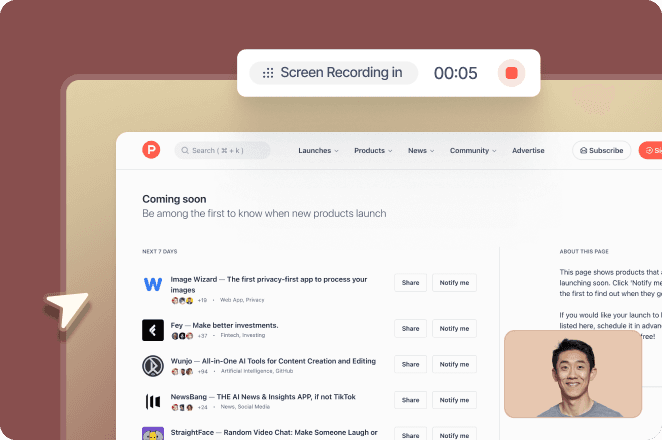
Picture this: You’ve just completed a killer demo of your latest software product. The client is impressed, but now they’re asking for a detailed technical specification document. You might feel a bit overwhelmed, right? But what if you could convert that demo recording into a comprehensive technical spec document without starting from scratch? This isn’t just a dream scenario. By capturing every detail in the demo, you can create a technical spec that reflects the product’s real-world functionality. According to industry data,
80% of product teams struggle to align their documentation with their actual product capabilities.
That’s a significant gap that affects project timelines and client satisfaction.
Creating a technical spec from a demo recording isn’t just about convenience. It’s about accuracy and efficiency, ensuring every stakeholder from developers to marketers is on the same page. This process is ideal for product managers, technical writers, and anyone involved in product development who needs to provide precise documentation to clients or internal teams. With modern tools like Trupeer.ai, you can not only repurpose demo videos into valuable assets but also automate the conversion of these recordings into detailed technical specifications. Let’s explore why this method matters, and how it can change your documentation process.
Why does creating a technical specification document from a demo recording matter?
In the fast-paced world of software development, delivering accurate and up-to-date documentation is crucial. A technical specification document serves as a blueprint for developers, a guide for marketers, and a point of reference for clients. However, creating this document from scratch can be time-consuming and error-prone. This is where converting a demo recording into a technical spec becomes invaluable. By capturing the nuances of the demo, you ensure that the document reflects the true capabilities and features of the product. This alignment is essential for maintaining consistency across all aspects of product development and marketing.
Also, the operations workflow within a company can significantly benefit from this approach. With a demo recording, all stakeholders have a single source of truth. Developers can see exactly how a feature is supposed to work, while sales and marketing teams can understand the product’s value proposition in real terms. This reduces miscommunication and ensures that everyone is working towards the same goals. By converting demo recordings into technical specs, you’re not just documenting the product but also bridging the gap between different teams, building better collaboration and efficiency.
What are the benefits of creating a technical specification document from a demo recording?
Transforming a demo recording into a technical specification document offers several key advantages that can enhance your documentation process.
Increased accuracy. By using the demo recording as a source, you capture every detail as it was presented, reducing the risk of errors in the documentation. This ensures that the technical spec accurately reflects the product’s capabilities.
Time savings. Creating a technical spec from scratch can be labor-intensive. By converting a demo, you significantly cut down on documentation time, allowing your team to focus on other critical tasks.
Improved team alignment. With a consistent reference point from the demo, all team members, from developers to marketers, are aligned on the product’s features and functionality. This minimizes miscommunication and enhances collaboration.
Enhanced client transparency. Providing a technical spec based on a demo offers clients a clear and honest representation of what they can expect, building trust and reducing the chances of unmet expectations.
simplified updates. As the product evolves, you can easily update the technical spec by revisiting the demo recording, ensuring the document remains current. This is particularly useful for create guide processes where accuracy is key.
Cost efficiency. By reducing the time and effort required to create documentation, you save resources that can be allocated to other areas of product development, enhancing overall project cost efficiency with a reliable video generation platform.
Which Trupeer features help you create a technical specification document from a demo recording?
Trupeer offers a suite of powerful tools specifically designed to facilitate the conversion of demo recordings into technical specification documents. Here are some of the key features that make this process smooth and effective.
Automatic SOP generation from any recording
Trupeer’s capability to automatically generate Standard Operating Procedures (SOPs) from recordings is a big shift for technical documentation. Once you’ve recorded a demo, Trupeer can convert it into an edit-ready SOP, capturing every click and detail presented. This feature ensures that nothing is missed, and you can export the document in various formats like MP4, HTML, or PDF. The AI documentation platform ensures that the SOP is not only accurate but also easy to update as the product evolves.
AI screen recording with auto-zoom and click detection
This feature ensures that every important detail in your demo is captured with precision. The AI-powered auto-zoom highlights key interactions, while click detection ensures every user action is documented. This is crucial when you’re converting a demo into a technical spec, as it guarantees that all functionalities are accurately represented. Trupeer's technical design document generator integrates these recordings into a comprehensive document, making the process efficient and precise.
Silent screen recording with automatic AI narration
Sometimes, demos need to be presented without background noise or conversation. Trupeer’s silent screen recording feature captures the demo while adding AI-generated narration. This ensures that the documented demo is clear and professional. The AI narration can be customized in over 65+ natural voices, providing a personalized touch to your technical spec document.
Auto-updating documentation tied to the underlying recording
This feature is particularly beneficial when your product is in continuous development. As your demo recording is linked to the documentation, any updates made to the product can be easily reflected in the spec document. This eliminates the need for manual updates and ensures that all stakeholders have access to the most current information. The video knowledge base is an invaluable resource in maintaining up-to-date documentation.
AI-searchable knowledge base with timestamp deep-links
Trupeer’s AI-searchable knowledge base is a powerful tool for accessing specific parts of a demo. With timestamp deep-links, users can jump directly to relevant sections of the recording, making it easier to find and document specific features or functionalities. This enhances the efficiency of creating a technical specification document, ensuring that all necessary details are easily accessible. The product demo video recording editing tool ensures that your documentation process is simplified and effective.
How do you create a technical specification document from a demo recording step by step with Trupeer?
Step 1: Capture your demo
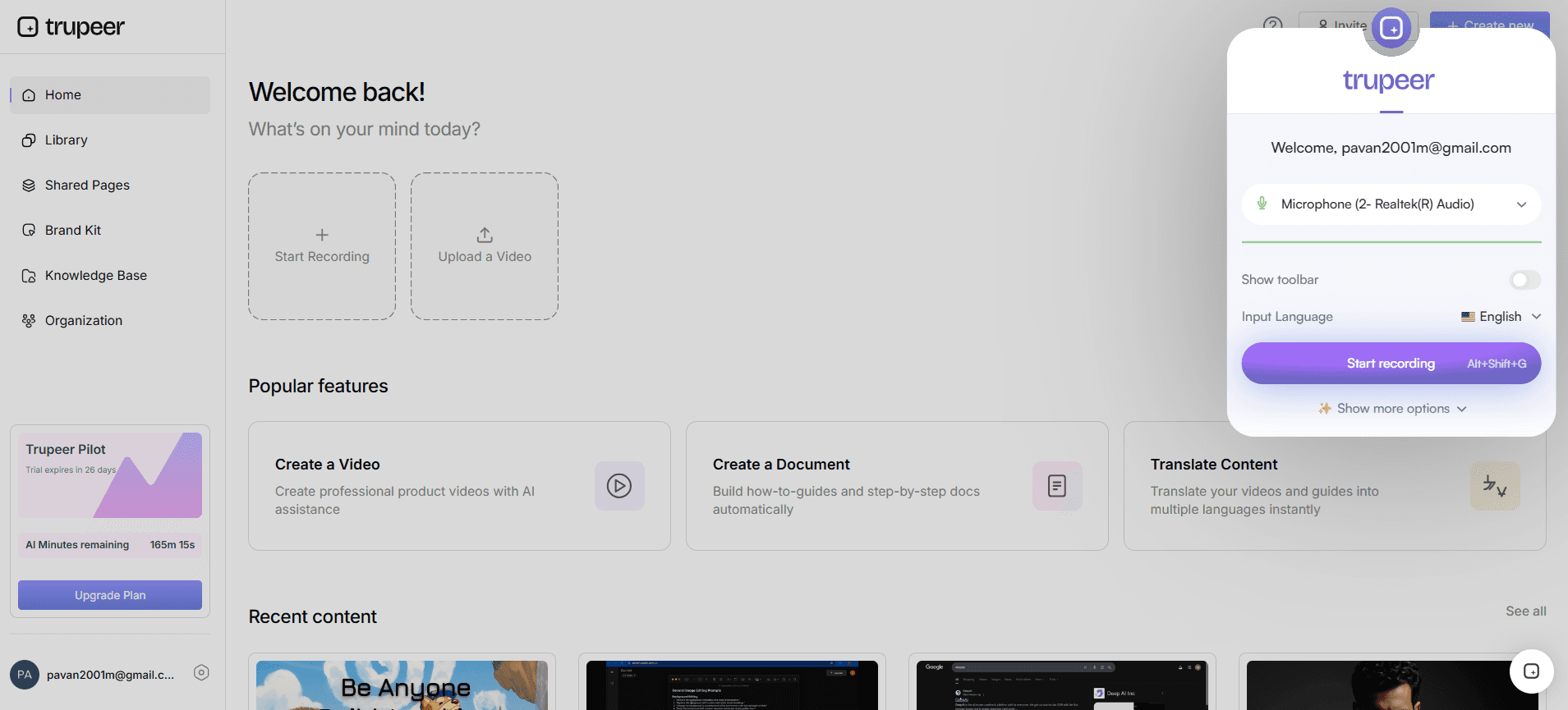
Begin by recording your software demo using Trupeer’s AI screen recording with auto-zoom and click detection. This feature ensures every interaction is highlighted, capturing precise details essential for a technical spec. Open the Trupeer browser-based recorder, hit ‘Record,’ and walk through your demo. As you navigate through your software, Trupeer will automatically zoom on areas of interest and detect clicks. This recording process usually takes the length of your demo, typically around 20-30 minutes. Ensure your demo is comprehensive, as this forms the foundation of your spec document.
Step 2: Edit and enhance the recording
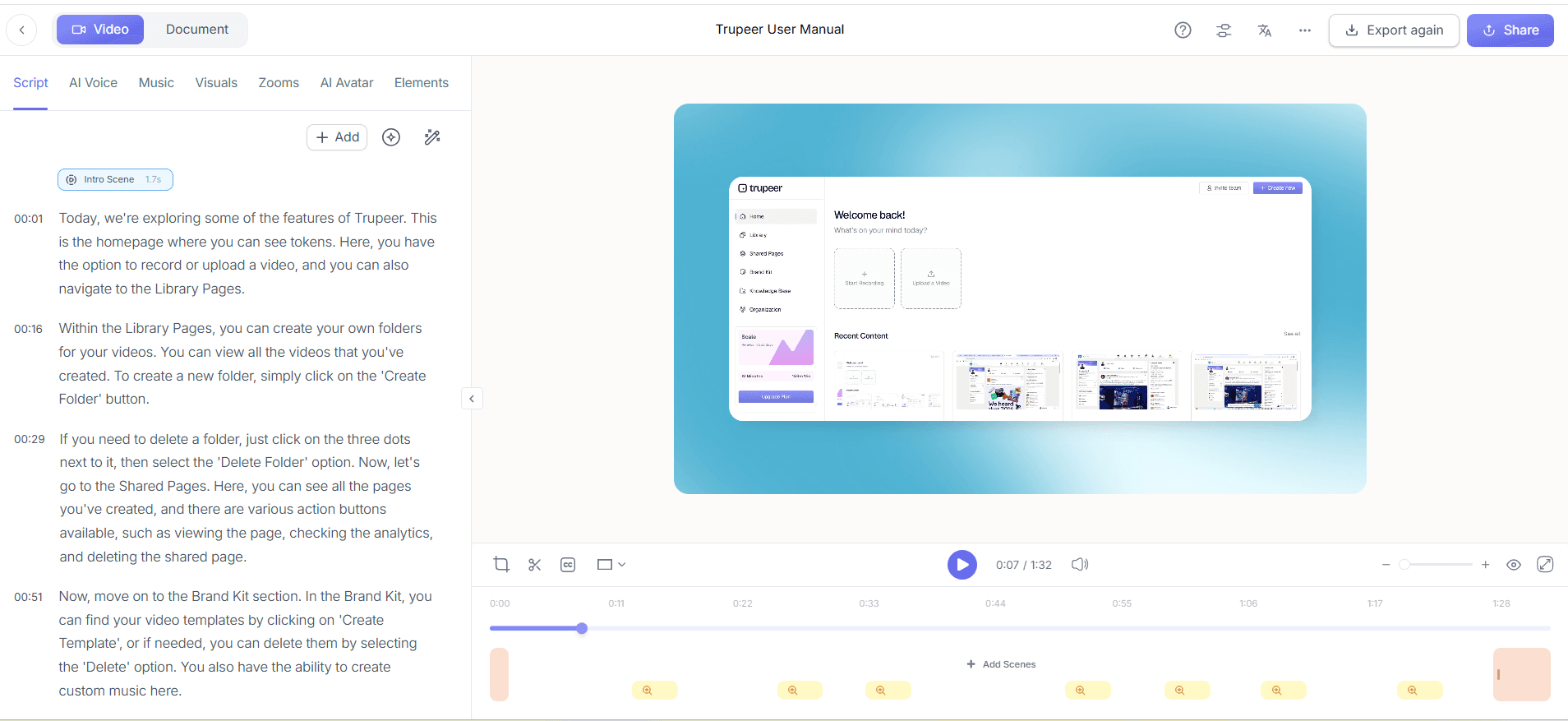
Once your recording is complete, use Trupeer’s editing and enhancement tools to refine the captured demo. Remove any filler words like “um” or “ah” to keep the recording professional. You can also add AI voiceover or clone your voice for a natural narration using Trupeer’s AI voiceover capability. This process helps in maintaining clarity and enhancing the overall quality of the demo. The editing typically takes 15-20 minutes, depending on the length and complexity of the recording. Ensure that all enhancements align with the key features you want to highlight in the technical spec.
Step 3: Generate the SOP
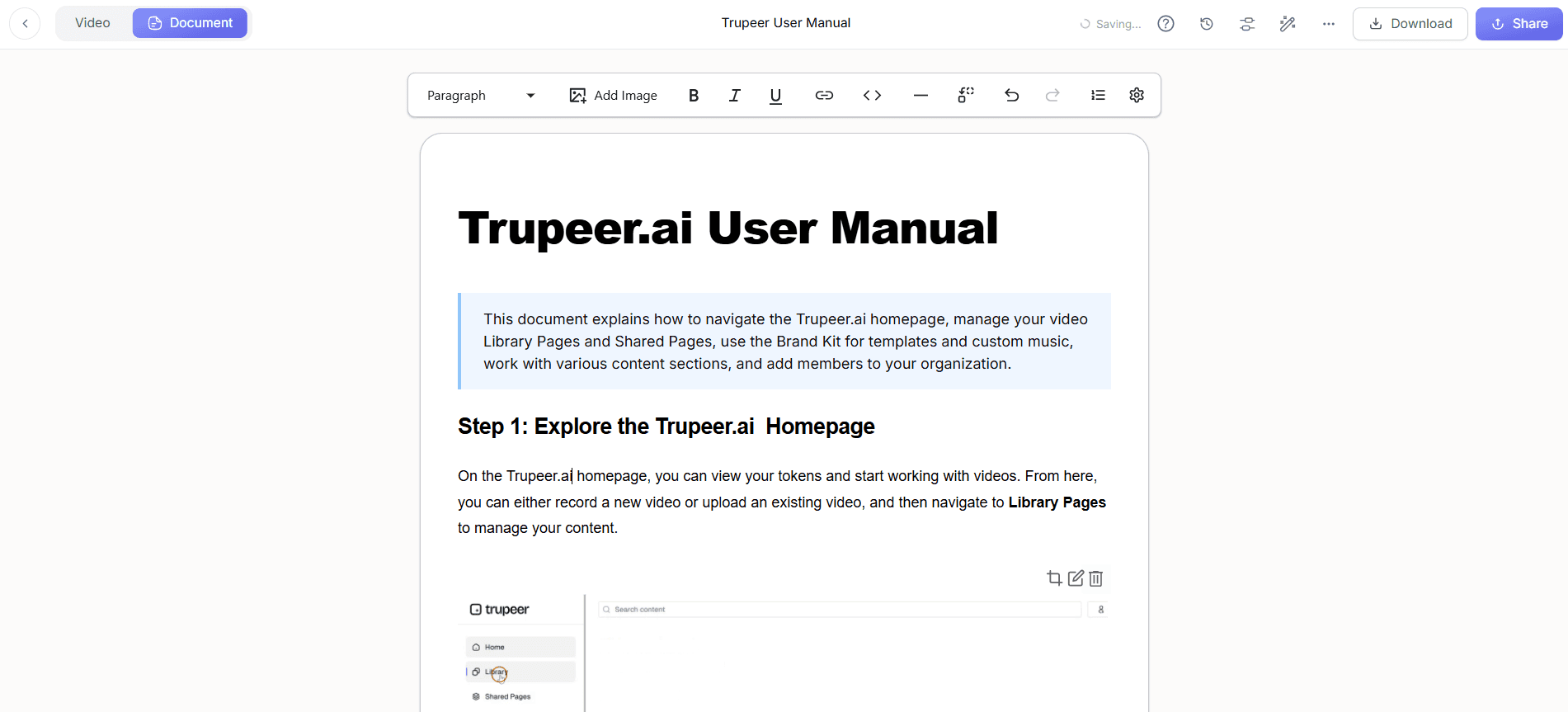
With the refined recording ready, proceed to generate the Standard Operating Procedure (SOP) using Trupeer’s automatic SOP generation feature. Click on ‘Generate SOP’ in the Trupeer dashboard and select your edited demo. Trupeer will automatically convert the video into an SOP document, capturing every detail and interaction. The software generates an edit-ready document in formats like HTML or PDF within minutes. Review the SOP to ensure all critical elements are included and that it accurately reflects the demo’s content.
Step 4: Export the technical specification document
After verifying the SOP, export it as your technical specification document. Trupeer supports multi-format export, allowing you to choose from formats such as PDF, HTML, or SCORM based on your audience’s needs. This flexibility ensures that the document is compatible with various platforms and easily accessible to stakeholders. The export process is quick, taking only a few seconds once the format is selected. Ensure the final document is clear and structured, ready to be shared with your team or clients.
Step 5: Update documentation as needed
One of Trupeer’s strengths is its ability to auto-update documentation tied to the underlying recording. As your product evolves, revisit the original demo recording in Trupeer and make necessary updates. Trupeer will automatically reflect these changes in the technical spec document. This feature is essential for maintaining accurate and current documentation throughout the product lifecycle. Updates can be done in real-time, minimizing downtime and ensuring that all stakeholders have the latest information. When SOPs come into the same conversation, a Scribe alternatives comparison helps clarify the scope.
Step 6: Distribute via knowledge base
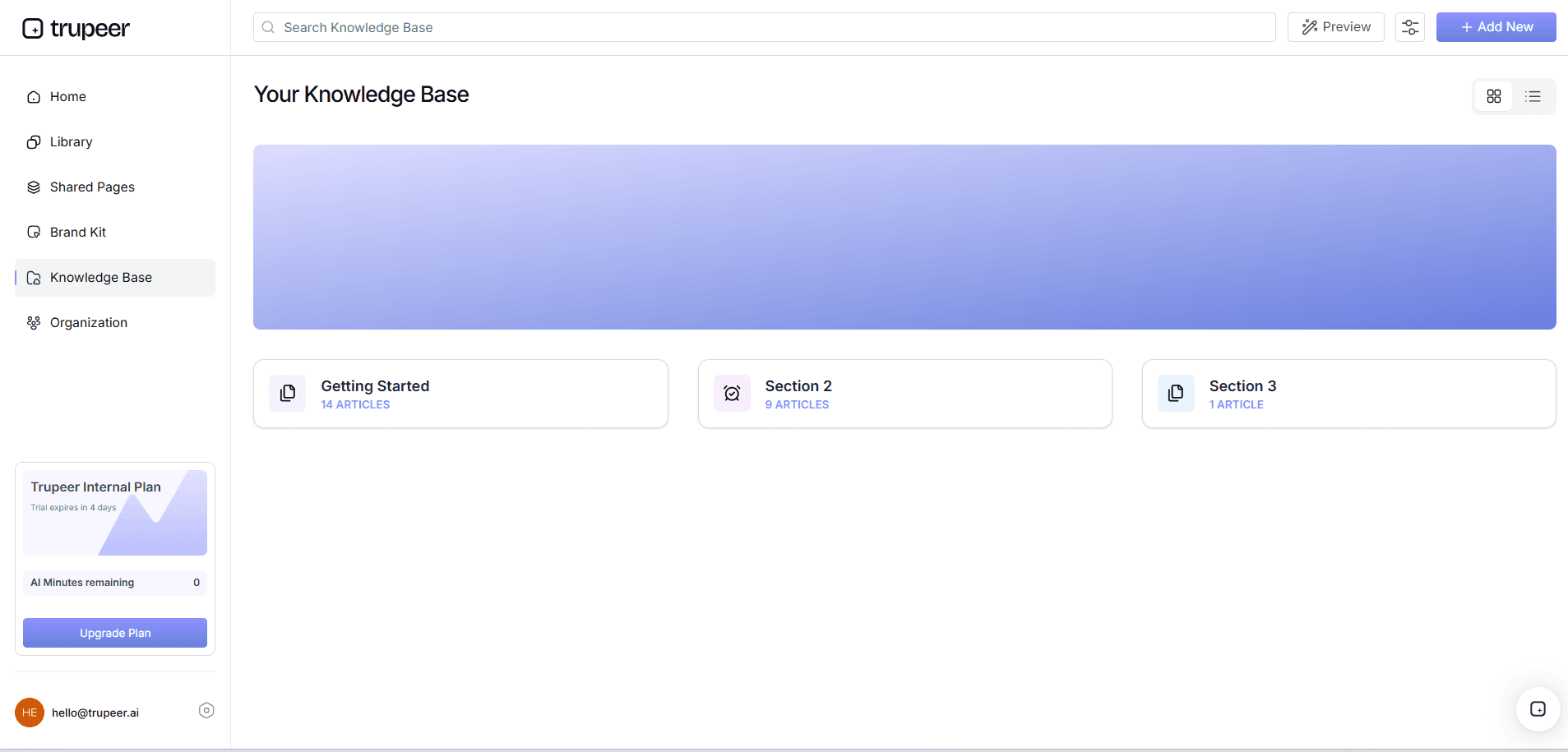
Finally, distribute your technical spec document using Trupeer’s AI-searchable knowledge base. Upload the document and create timestamped deep-links to specific sections of the demo. This feature allows team members and clients to quickly access relevant parts of the document, enhancing usability and comprehension. The distribution process is straightforward, and the knowledge base can be customized to fit your organization’s branding. This ensures that your technical spec is not only comprehensive but also easily accessible to those who need it.
What tips help you create a technical specification document from a demo recording?
Creating a technical specification document from a demo recording can be simplified and efficient with the right approach. Here are some tactical tips to help you make the most of this process.
Plan your demo thoroughly. Before recording, outline the key features and functionalities you want to highlight to ensure a comprehensive demo.
Maintain clarity in narration. Use Trupeer’s AI voiceover to ensure your narration is clear and professional, which aids in understanding the demo’s content.
use editing tools. Remove unnecessary filler words and pauses using Trupeer’s editing features to keep the recording concise and focused.
Standardize your documentation format. Choose a format that is easily accessible to all stakeholders, ensuring consistency in how information is presented.
use timestamp deep-links. Enhance user navigation by creating direct links to specific parts of the demo within the knowledge base.
Keep your documentation updated. Regularly revisit and update the demo recording and technical spec to reflect the latest product developments.
Consider team feedback. Share the draft document with your team for feedback to ensure it meets all technical and user requirements, enhancing its accuracy and relevance.
Teams weighing tools often start with a Loom alternatives comparison before standardizing on a workflow.
Frequently asked questions
How does Trupeer ensure the accuracy of technical spec documents?
Trupeer ensures accuracy by capturing every detail of a demo through its AI screen recording with auto-zoom and click detection. This comprehensive capture allows for precise documentation of all interactions and functionalities. The generated SOP reflects the demo’s content accurately, minimizing the risk of errors. By using auto-updating documentation, any changes in the product can be smoothly integrated into the spec document, ensuring it remains current and reliable across all stages of product development.
Can I update the technical spec document if the demo changes?
Yes, Trupeer allows for easy updates to technical spec documents. The documentation is tied to the original demo recording, so any changes made to the product can be reflected in the document. This feature ensures that the technical spec remains accurate and up-to-date, providing stakeholders with the latest information. By revisiting the demo in Trupeer, you can make necessary updates quickly, maintaining the integrity and relevance of the documentation.
What formats can I export the technical spec document in?
Trupeer supports multi-format export options, allowing you to export the technical spec document in formats such as PDF, HTML, and SCORM. This flexibility ensures that the document is compatible with various platforms and can be easily shared with different stakeholders. Choosing the appropriate format depends on your audience’s needs, but Trupeer’s options ensure accessibility and usability across different contexts.
Is Trupeer suitable for all types of software demos?
Trupeer is designed to handle a wide range of software demos, from simple applications to complex systems. Its AI-driven capabilities, such as screen recording and voiceover, make it adaptable to various demo types. Whether you’re showcasing a new feature or demonstrating a comprehensive software solution, Trupeer’s tools can capture and document the demo effectively. The platform’s flexibility ensures that it meets the needs of different industries and product complexities.
Does Trupeer support multilingual documentation?
Yes, Trupeer supports multilingual documentation through its AI translation and dubbing features. This capability allows you to translate the technical spec document into over 40 languages, ensuring accessibility for global audiences. The platform also offers lip-sync and dubbing for non-English audiences, enhancing the reach and comprehensibility of your documentation. With AI video translation, Trupeer ensures that your technical specs are understood by a diverse, international audience.