Trupeer Blog
Summarise
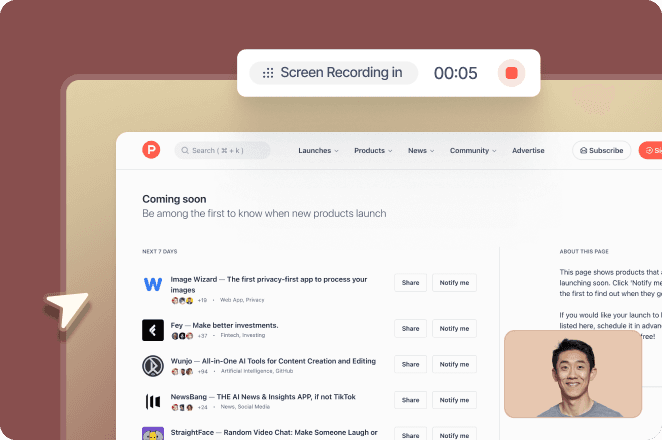
Imagine this: Your IT service desk team is inundated with repetitive queries. Each ticket is a time-sink, draining resources and slowing down resolutions. A chaotic cycle where valuable time is lost, and team efficiency suffers. The solution? An internal knowledge base that's not only searchable but video-integrated, transforming how your team accesses and shares information. The stakes are high.
According to a study, 40% of a service desk agent's time is spent handling repetitive queries.
With a well-structured knowledge base, you can cut resolution time by up to 50% and improve service quality. This guide is tailored for IT managers, service desk leads, and team members who want to simplify their workflows and enhance productivity. For more insights, check out some best knowledge base examples that illustrate different approaches.
Why does building a searchable internal knowledge base for IT service desk teams matter?
IT service desk teams face an uphill battle with efficiency. Without a centralized repository, information is scattered across emails, documents, and disparate systems. This fragmentation leads to delays as agents hunt for solutions, increasing resolution times and frustrating both staff and users. In a typical scenario, an agent might spend 15 minutes searching for a solution that could be resolved in 5 minutes with the right resources at hand. The impact of these inefficiencies extends beyond just time. It affects overall team morale and user satisfaction. Agents become overwhelmed with repetitive queries, leading to burnout and disengagement. Users, on the other hand, experience delays in solving their issues, which can lead to dissatisfaction and a loss of trust in IT support. A well-designed knowledge base addresses these issues by centralizing information, making it easily accessible and significantly reducing search times.
Also, the lack of a structured knowledge base can lead to inconsistent service delivery. Different agents might provide varied solutions to the same problem, causing confusion and inefficiency. A knowledge base standardizes information dissemination, ensuring that all team members have access to the same, up-to-date information. This consistency is crucial for maintaining high service standards and achieving customer success. By implementing a searchable knowledge base, teams can simplify their operations and provide a cohesive customer success workflow that enhances overall service delivery. For more on improving service delivery, explore our customer success use case.
What are the benefits of a searchable internal knowledge base for IT service desk teams?
Implementing a searchable internal knowledge base offers numerous benefits that directly impact the efficiency and quality of IT service desk operations.
Faster Resolution Times. By providing instant access to solutions, a knowledge base reduces the time agents spend searching for answers, leading to quicker ticket resolutions.
Consistent Information Delivery. A centralized repository ensures all agents provide the same information, which enhances service quality and user trust.
Reduced Training Time. New hires can quickly get up to speed by accessing the same resources and information as seasoned agents, accelerating their learning curve.
Improved Self-Service Options. Users can resolve common issues on their own, reducing the volume of tickets and freeing up agents to tackle more complex problems. For more on this, explore our guide on knowledge base one.
Enhanced Team Collaboration. A shared platform for knowledge builds collaboration among team members, allowing for the exchange of ideas and solutions.
Cost Savings. By reducing the time spent on repetitive tasks and lowering the number of incoming tickets, a knowledge base can lead to significant cost reductions. Interested in enhancing your service desk with AI? Consider an AI video platform for better integration.
Which Trupeer features help you build a searchable internal knowledge base?
Trupeer offers a range of features specifically designed to enhance the creation and management of a searchable internal knowledge base, making it an invaluable tool for IT service desk teams.
AI-searchable knowledge base
Trupeer's AI-searchable knowledge base indexes every recording with timestamp-level deep links, allowing for quick and precise access to information. This feature ensures that agents can find the exact moment in a video that addresses their query, eliminating the need to watch entire recordings. This efficiency not only saves time but also enhances the user experience by providing targeted information rapidly.
Automatic SOP generation
With Trupeer, creating standard operating procedures is automated. The platform generates auto-generated documentation from any recording, which is edit-ready and exportable. This capability is crucial for maintaining up-to-date SOPs within your knowledge base, ensuring consistency and accuracy across the board. Agents can rely on these standardized documents to deliver consistent and high-quality service.
AI voiceover and avatars
Trupeer's AI voiceover in 65+ natural voices, along with AI avatars, provides a professional touch to your knowledge base videos. The AI voiceover is adjustable in pace and tone, making it adaptable to different content types and audience preferences. This feature adds a layer of engagement, making the learning process more interactive and appealing. With internal knowledge base wiki software tool, you can enhance video content with realistic avatars, further enriching the user experience.
Auto-updating documentation
This feature ties documentation directly to the underlying video content. As the recordings are updated, the associated documentation is automatically refreshed, ensuring that the knowledge base always reflects the most current information. This minimizes the risk of outdated procedures being referenced by agents, maintaining the integrity and reliability of your knowledge base.
Viewer engagement analytics
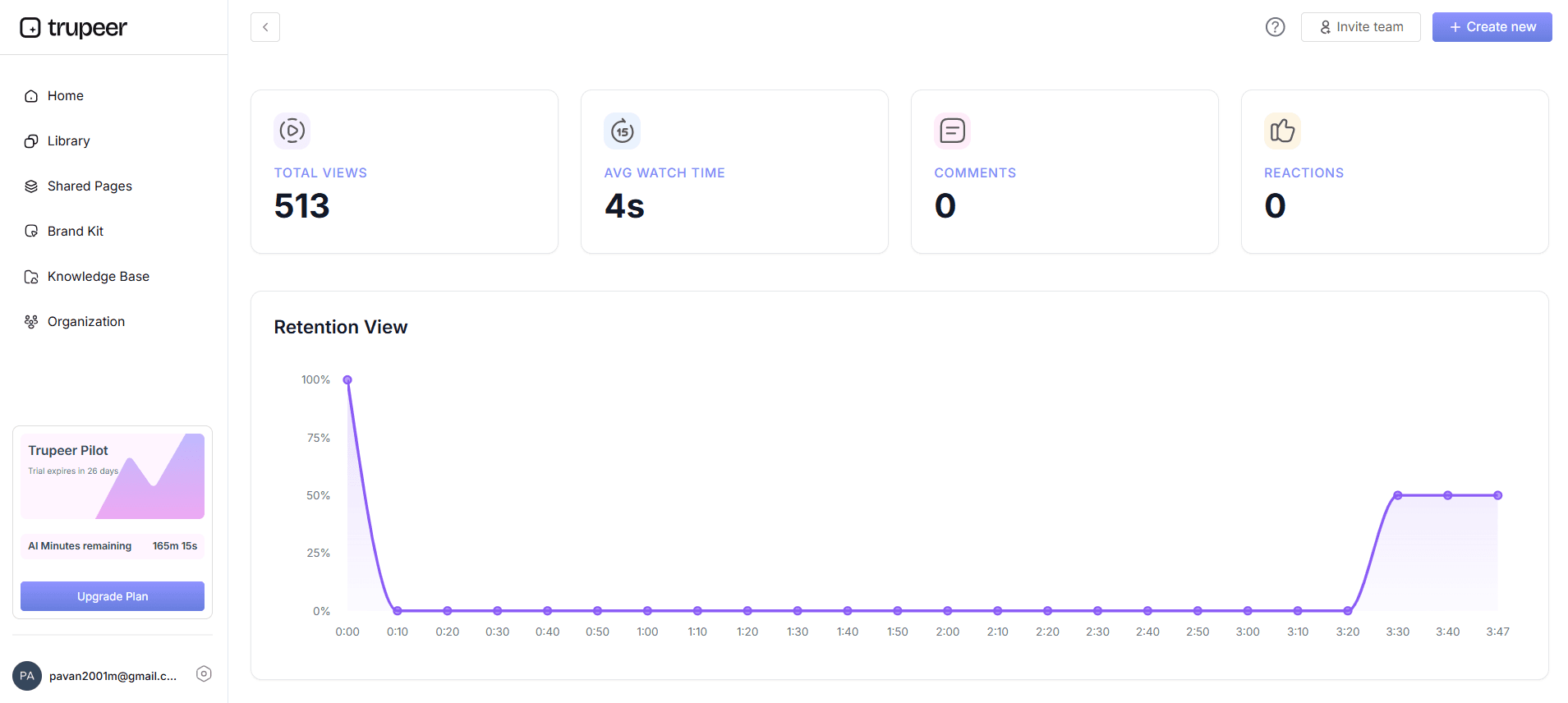
Trupeer provides detailed analytics on viewer engagement, such as drop-off rates and heatmaps. This data is invaluable for understanding how your team interacts with the knowledge base and identifying areas for improvement. By analyzing these metrics, you can tailor content to better meet the needs of your team, enhancing the effectiveness of your knowledge base.
How do you build a searchable internal knowledge base for IT service desk teams step by step with Trupeer?
Step 1: Record Your Screen
Begin by capturing your screen using Trupeer's browser-based recorder. This tool requires no installation, making it accessible and easy to use on any device. Navigate to the Trupeer platform, select the screen recording option, and choose your recording preferences. Trupeer's AI screen recording with auto-zoom and click detection ensures that critical actions and details are highlighted, which is crucial for creating comprehensive knowledge base content. The recording is saved directly to your Trupeer library, ready for editing. This process typically takes a few minutes, depending on the length of the session, and ensures high-quality video content for your knowledge base.
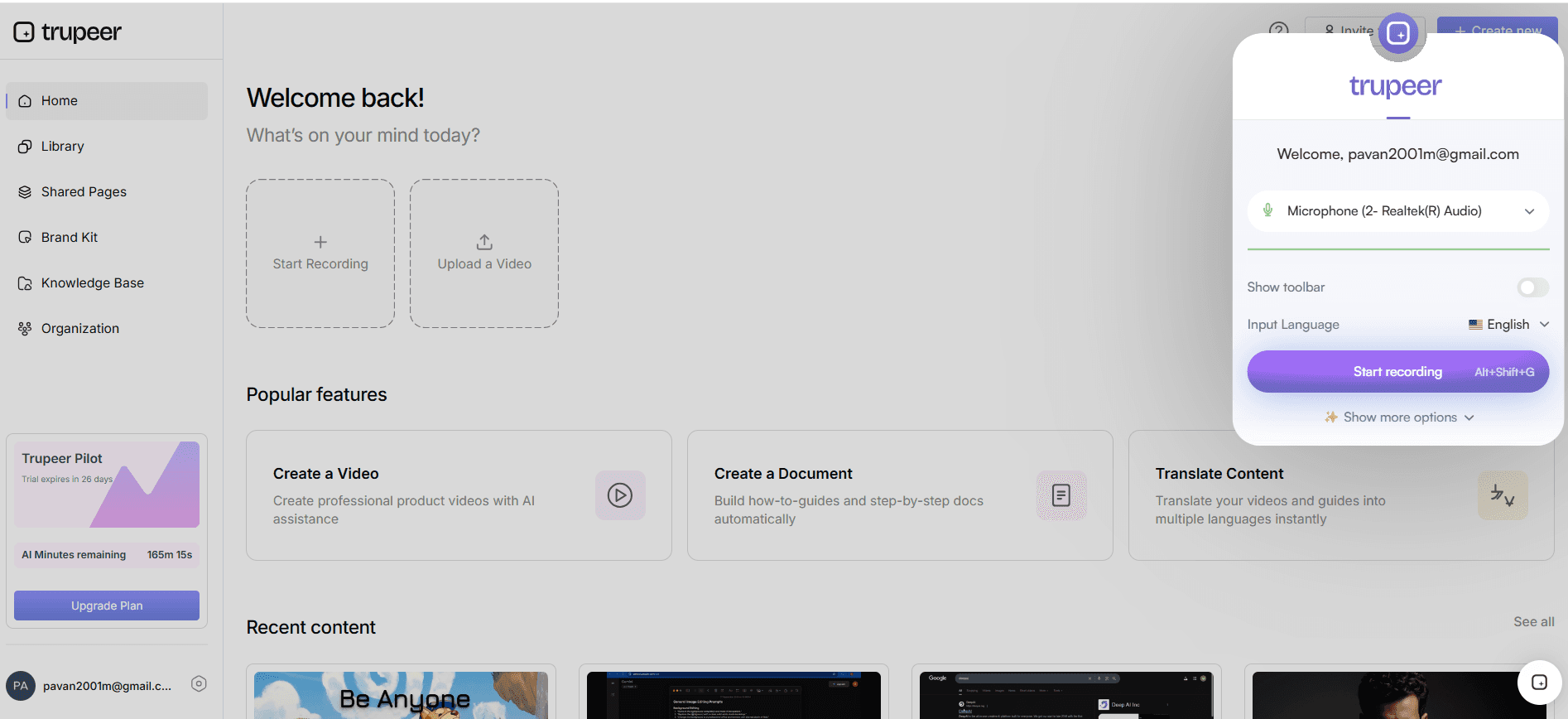
Step 2: Edit and Enhance the Recording
After recording, enhance the video using Trupeer's editing tools. First, use the automatic filler-word removal feature to clean up any unnecessary speech like "um" or "ah." This improves the video's clarity and professionalism. Next, apply AI voiceover in one of 65+ natural voices to add narration to your video. Adjust the pace and tone to match your desired delivery style. This step usually takes about 10-15 minutes, depending on the complexity of the edits. Trupeer's AI technology ensures that the enhancements are smooth, producing a polished final product that's ready for your knowledge base. When SOPs come into the same conversation, a Scribe alternatives comparison helps clarify the scope.
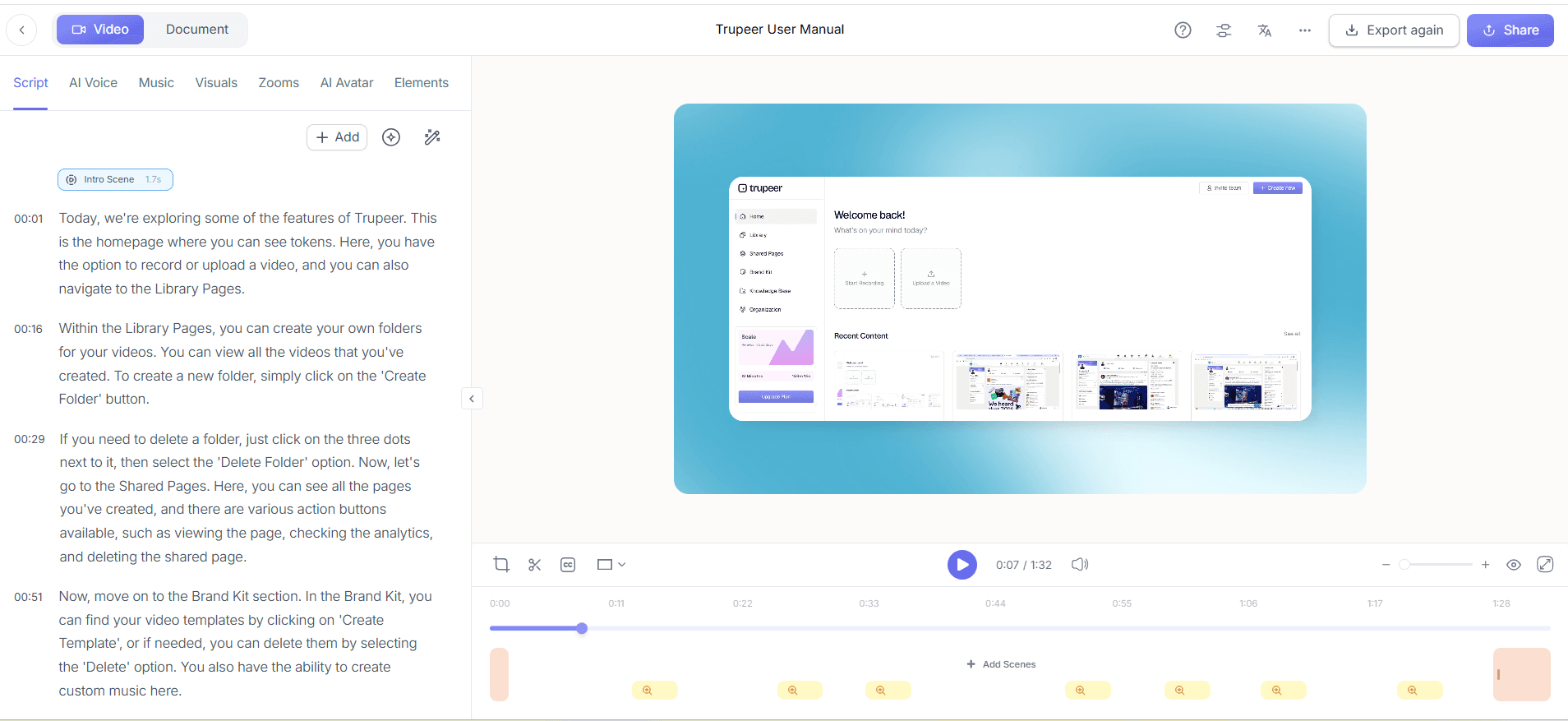
Step 3: Generate SOPs
With the enhanced video ready, generate an SOP using Trupeer's automatic SOP generation. This feature creates a detailed, edit-ready document based on your recording. Simply select the video from your library, and Trupeer's AI will produce a comprehensive procedure document. This document can be exported in multiple formats such as HTML, PDF, or SCORM. The process takes just a few minutes and provides a structured text complement to your video, ensuring that your team has both visual and textual resources in your knowledge base.
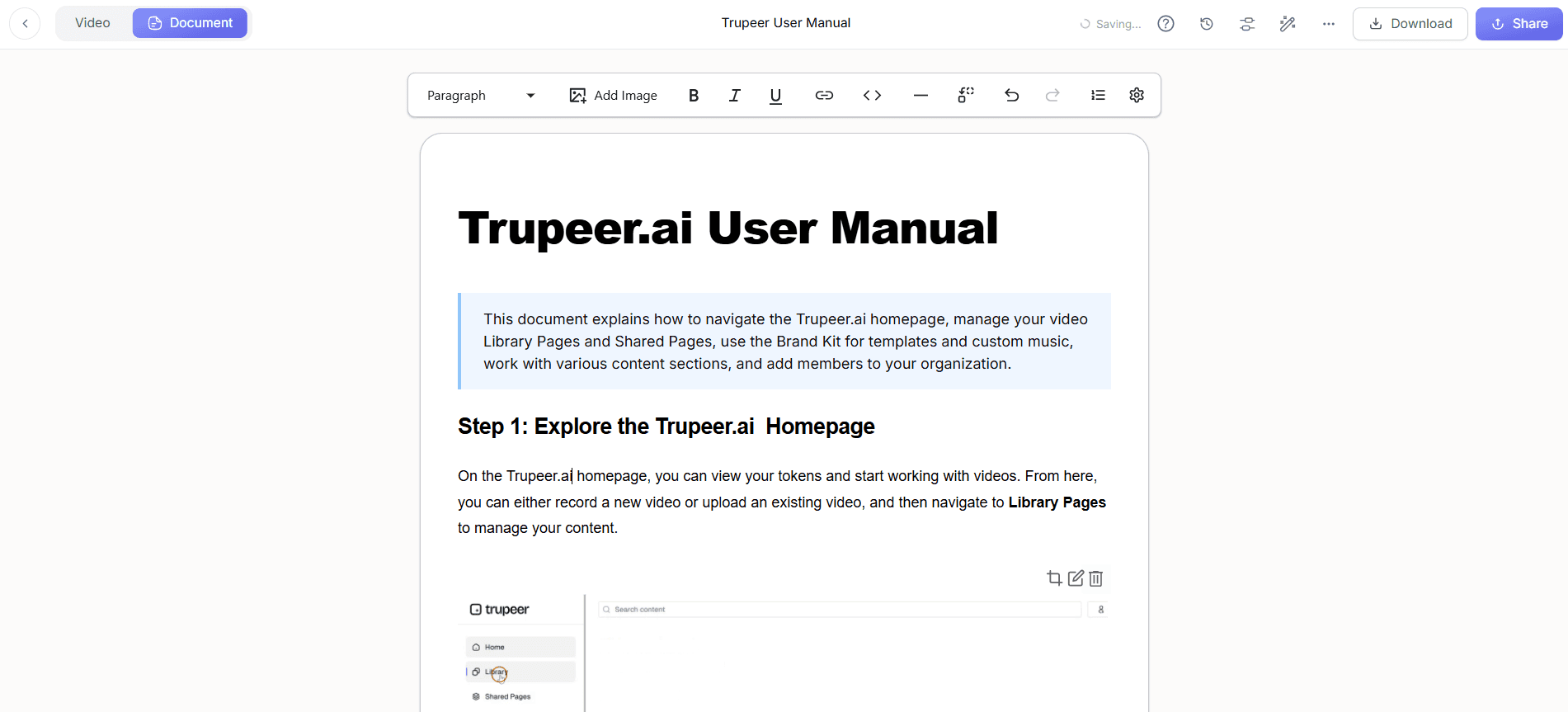
Step 4: Localize Your Content
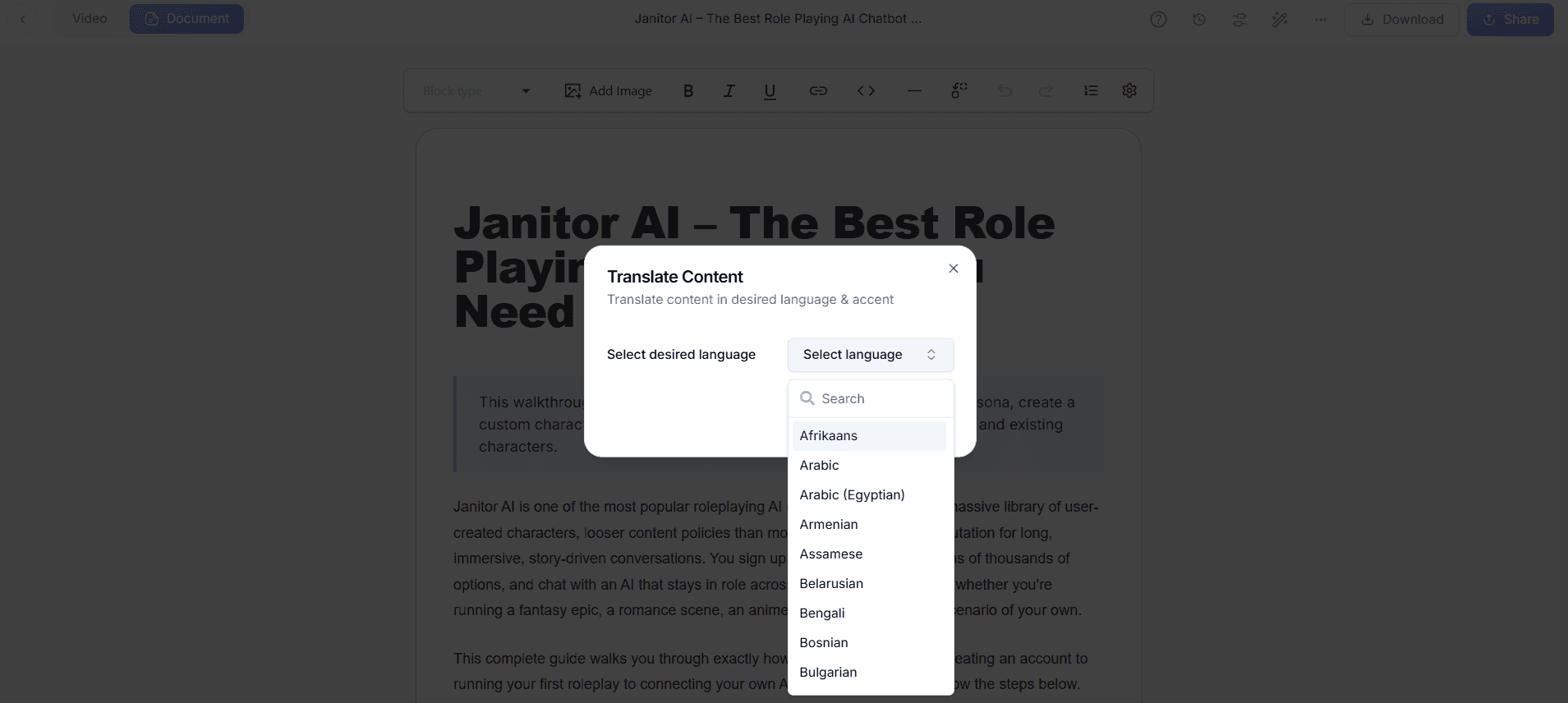
Expand your knowledge base’s reach by localizing your content. Trupeer's AI translation capability can convert your video into over 40 languages with lip-sync accuracy. Select the translation option from the video settings, choose the desired languages, and let Trupeer's AI handle the rest. This feature is particularly useful for global teams, ensuring that all members can access and understand the content. The translation process typically takes about 10 minutes per language, depending on video length. This step ensures your knowledge base is inclusive and accessible to diverse audiences.
Step 5: Distribute and Embed
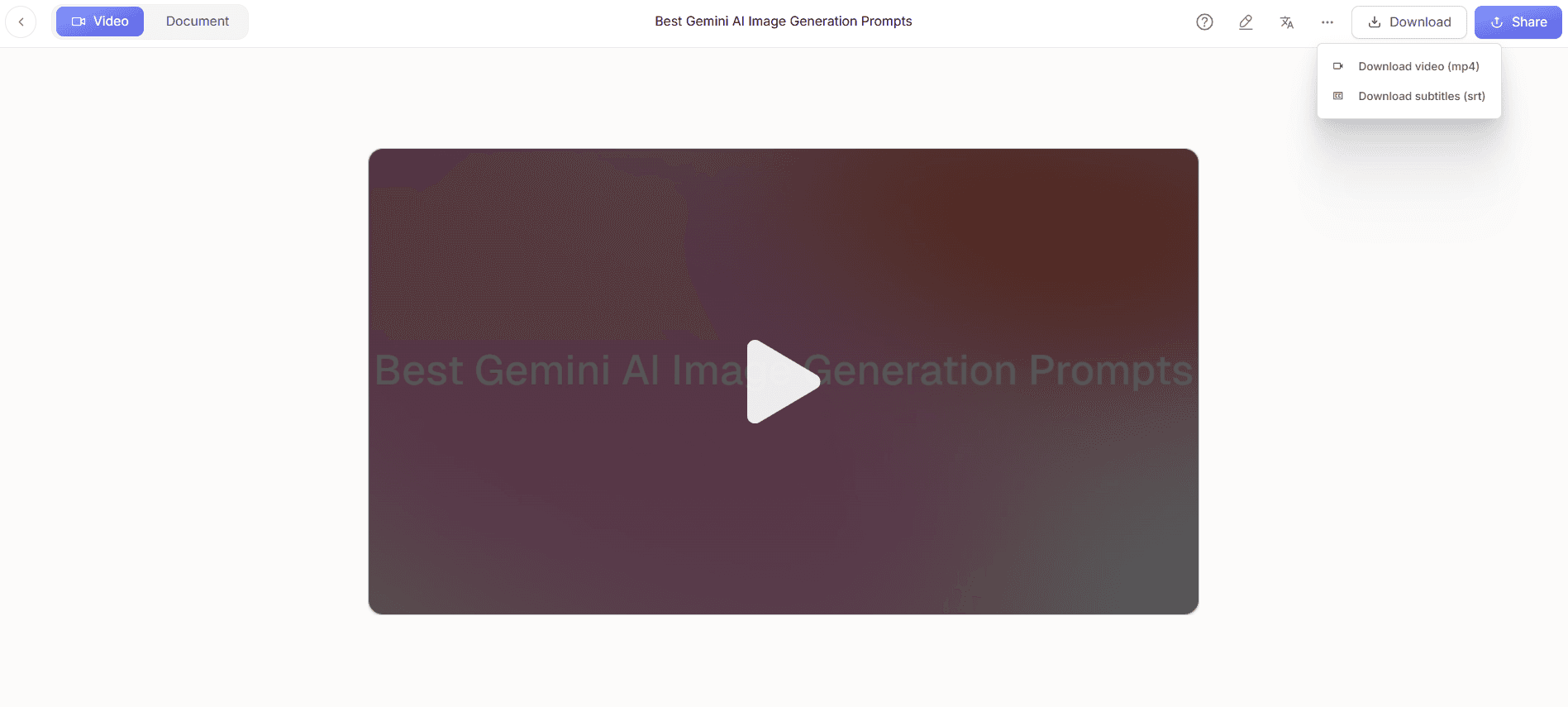
Once your content is ready, distribute it across your platforms. Trupeer offers custom-domain hosting with SSO for easy access control. Embed video widgets directly into your existing IT systems or intranet for smooth integration. Simply copy the embed code provided by Trupeer and paste it where needed. You can also create shared pages for client-facing portals if necessary. This ensures that the knowledge base is readily available and integrated into your team's workflow, enhancing accessibility and usage.
Step 6: Analyze Engagement
Finally, monitor how your team interacts with the knowledge base using Trupeer's viewer engagement analytics. Access detailed reports on viewer drop-off rates and heatmaps to understand which parts of the video are most engaging or where viewers lose interest. This data helps you refine your content strategy and improve future videos. The analysis dashboard is easy to navigate and provides valuable insights within minutes, allowing you to make informed decisions to enhance your knowledge base continually. Trupeer also ships a online knowledge base software teams customers that handles this step without extra setup.
What tips help you build a searchable internal knowledge base for IT service desk teams?
Building an effective knowledge base requires strategic planning and execution. These tips will guide you in creating a solid and efficient system that meets the needs of your IT service desk team.
Standardize Documentation. Ensure consistency by using templates for all documents and videos. This approach simplifies content creation and maintains uniformity across the knowledge base.
Regularly Update Content. Schedule regular reviews to ensure that information stays current and relevant. Outdated content can lead to confusion and inefficiencies.
Incorporate Feedback. Actively solicit input from team members to improve content quality. Their firsthand experience can highlight areas for enhancement.
use Analytics. use viewer engagement data to understand what works and what doesn’t. This insight can guide future content creation.
Promote Self-Service. Encourage users to consult the knowledge base before reaching out for support. This reduces ticket volume and enables users.
Design for Searchability. Use clear and concise titles, tags, and descriptions to make finding information easier. This enhances the user experience and efficiency.
Train Your Team. Ensure that all team members are familiar with the knowledge base and how to use it effectively. Regular training sessions can reinforce this knowledge.
Teams weighing tools often start with a Loom alternatives comparison before standardizing on a workflow.
Frequently asked questions
How do I start creating a knowledge base?
Begin by identifying the most common issues and questions your team handles. Use these topics as a foundation for your initial content. Record detailed walkthroughs of solutions using tools like Trupeer's AI screen recording. Enhance these recordings with clear instructions and AI voiceovers to create comprehensive entries. Regularly update the content based on new information and feedback. A systematic approach ensures that your knowledge base remains relevant and valuable to your team.
What makes a knowledge base effective?
An effective knowledge base is organized, comprehensive, and easy to navigate. It should include clear, concise, and up-to-date information that addresses the specific needs of its users. using features like AI-driven search capabilities and multimedia content, such as videos, can greatly enhance accessibility and engagement. A well-maintained knowledge base reduces resolution times and improves service quality, making it an invaluable resource for IT service desk teams.
Can Trupeer help with multilingual knowledge bases?
Yes, Trupeer can significantly aid in creating multilingual knowledge bases. Its AI video translation feature supports over 40 languages, ensuring that your content is accessible to a global audience. By using this feature, you can provide accurate translations with lip-sync, maintaining the quality and coherence of your content across different languages. This capability is particularly beneficial for teams with a diverse user base or international operations.
Why is video content important in a knowledge base?
Video content is crucial because it enhances understanding and retention. Visual and auditory elements can simplify complex topics, making them easier to grasp. Videos also engage users more effectively than text alone, increasing the likelihood of content being used. Incorporating video into your knowledge base can significantly improve the learning experience, leading to faster and more efficient problem resolution.
Does a knowledge base reduce support costs?
Yes, an effective knowledge base can significantly reduce support costs by minimizing repetitive queries and freeing up agents to focus on more complex issues. By providing users with self-service options, the volume of incoming tickets decreases, which lowers operational costs. also, improved efficiency and quicker resolution times contribute to reduced resource expenditure, making a knowledge base a cost-effective solution for IT service desk teams.
How can a credit union document processes without overloading the help desk?
A searchable knowledge base lets staff and members self-serve answers, cutting repeat questions. Trupeer's branded knowledge base is searchable and current, with analytics showing what gets read.
Related Blogs