Trupeer Blog
Summarise

Imagine launching a new SaaS product. Your customer support team is flooded with repetitive questions. Your users are frustrated because they can't find answers quickly. A solid knowledge base could mitigate these issues, yet many companies overlook its potential. What's the solution? Crafting a knowledge base that your customers will actively use. A knowledge base isn't just a repository of information, it's a strategic asset that can enhance customer satisfaction and reduce support costs. According to a study,
60% of consumers prefer self-service options over speaking to a customer service representative.
This statistic highlights the importance of providing a self-service option that is both effective and user-friendly. If your knowledge base isn't up to par, you're missing out on an opportunity to improve customer experience and operational efficiency. The stakes are high because an ineffective knowledge base can lead to increased churn rates and lower customer satisfaction. If you want to see some of the best knowledge base examples that successfully engage customers, you can check out this resource. Building a knowledge base that customers actually use requires a thoughtful approach that prioritizes user experience and accessibility.
Why does a SaaS product knowledge base matter?
A SaaS product knowledge base is crucial for both customer satisfaction and operational efficiency. When your customers can't find answers quickly, it leads to frustration and a negative user experience. This is where a well-structured knowledge base can make a difference. It's not just a collection of documents, but a dynamic tool that enables users by providing immediate access to the information they need. This reduces the dependency on customer support teams, allowing them to focus on more complex issues. Trupeer also ships a online knowledge base software teams customers that handles this step without extra setup.
For businesses, a knowledge base serves as a valuable resource that can simplify the customer success workflow. It supports customer success by enabling users to resolve issues independently, reducing the volume of support tickets and freeing up resources. This leads to cost savings and improved efficiency. also, a well-maintained knowledge base can be a significant asset in onboarding new customers and training employees. By providing detailed and easily accessible information, you can ensure a smoother transition for new users. Investing time and resources into developing a comprehensive knowledge base is not just a nice-to-have, it's a business imperative that can directly impact your bottom line. To see how this can be integrated into a broader customer success strategy, you might explore the customer success use case.
What are the benefits of a SaaS product knowledge base?
Building a knowledge base for your SaaS product offers several tangible benefits that can drive business success and improve customer satisfaction.
Improved Customer Satisfaction. A well-designed knowledge base enables customers to find answers quickly, leading to a more satisfying experience. This reduces frustration and enhances brand loyalty.
Reduced Support Costs. By providing a self-service option, you can decrease the number of support tickets by up to 40%. This allows your support team to focus on more complex issues that require human intervention.
Faster Problem Resolution. Customers access information instantly, which speeds up the resolution time for common issues. This efficiency can be a key differentiator in competitive markets.
Enhanced Product Adoption. A comprehensive knowledge base can guide users through product features, encouraging them to explore more functionalities. This can lead to higher adoption rates and increased product usage.
simplified Communication. Use the knowledge base to announce SaaS product updates and changes, ensuring customers are always informed about the latest features and improvements. This reduces confusion and keeps everyone on the same page.
Consistency in Information. Ensures that all users receive the same accurate and up-to-date information. This consistency can prevent misinformation and improve the overall trust in your brand.
Teams weighing tools often start with a Loom alternatives comparison before standardizing on a workflow.
Teams ship this workflow end-to-end using Trupeer's AI video platform, which turns raw recordings into polished output without an editor.
Which Trupeer features help you build a SaaS product knowledge base?
Trupeer offers a suite of features specifically designed to help you create an effective knowledge base for your SaaS product. These tools are tailored to enhance user experience and ensure accessibility.
AI screen recording with auto-zoom and click detection
This feature allows you to capture detailed, step-by-step guides with ease. The auto-zoom and click detection ensure that key actions are highlighted, making the content more engaging and easier to follow. This is particularly useful for creating tutorials and walkthroughs that require precise demonstrations. By using this tool, you can produce high-quality instructional videos without the need for extensive editing. This capability can significantly reduce the time and effort required to generate content for your knowledge base. It's a valuable asset for capturing detailed processes that need to be communicated clearly.
Automatic SOP generation from any recording
Trupeer's ability to automatically generate Standard Operating Procedures (SOPs) from recordings is a big shift for creating a structured knowledge base. With this feature, you can turn any recorded session into a detailed SOP that's ready for editing and export. This ensures that your knowledge base remains up-to-date with the latest information and procedures. By simplifying the SOP creation process, you can maintain a comprehensive library of documents that are easily accessible to your users. This feature is particularly useful for teams that need to maintain consistency and accuracy in their documentation efforts. To see how this integrates with documentation processes, explore the AI documentation platform.
AI-searchable knowledge base with timestamp deep-links
Trupeer's AI-searchable knowledge base feature ensures that your users can find the information they need quickly and efficiently. By indexing every recording with timestamp-level deep links, users can jump directly to the section of a video that addresses their query. This level of precision enhances the usability of your knowledge base and reduces the time spent searching for information. It's an essential feature for improving user experience and ensuring that your knowledge base remains a valuable resource. This functionality is a cornerstone for any effective knowledge management strategy. To ai/knowledge-base">AI-searchable knowledge base.
Multi-format export: MP4, HTML, PDF, SCORM
Trupeer allows you to export your content in multiple formats, including MP4, HTML, PDF, and SCORM. This versatility ensures that your knowledge base can be accessed and used in various ways, depending on your audience's preferences and needs. Whether your users prefer video content or text-based documents, you can provide them with the format that best suits their learning style. This flexibility is crucial for catering to diverse user groups and enhancing the accessibility of your knowledge base. It also ensures that your content is compatible with different platforms and devices.
AI voiceover in 65+ natural voices, adjustable pace and tone
With Trupeer's AI voiceover feature, you can add professional-quality narration to your video content. This is particularly useful for creating engaging and accessible tutorials that cater to different learning preferences. The ability to choose from over 65+ natural voices and adjust the pace and tone allows you to customize the audio experience to match your brand's style. This feature can enhance the overall production quality of your knowledge base content, making it more appealing and easier to understand. It's a powerful tool for ensuring that your instructional videos are both informative and engaging. For teams looking to raise their video content, this feature is invaluable.
How do you build a SaaS product knowledge base step by step with Trupeer?
Step 1: Capture the Content
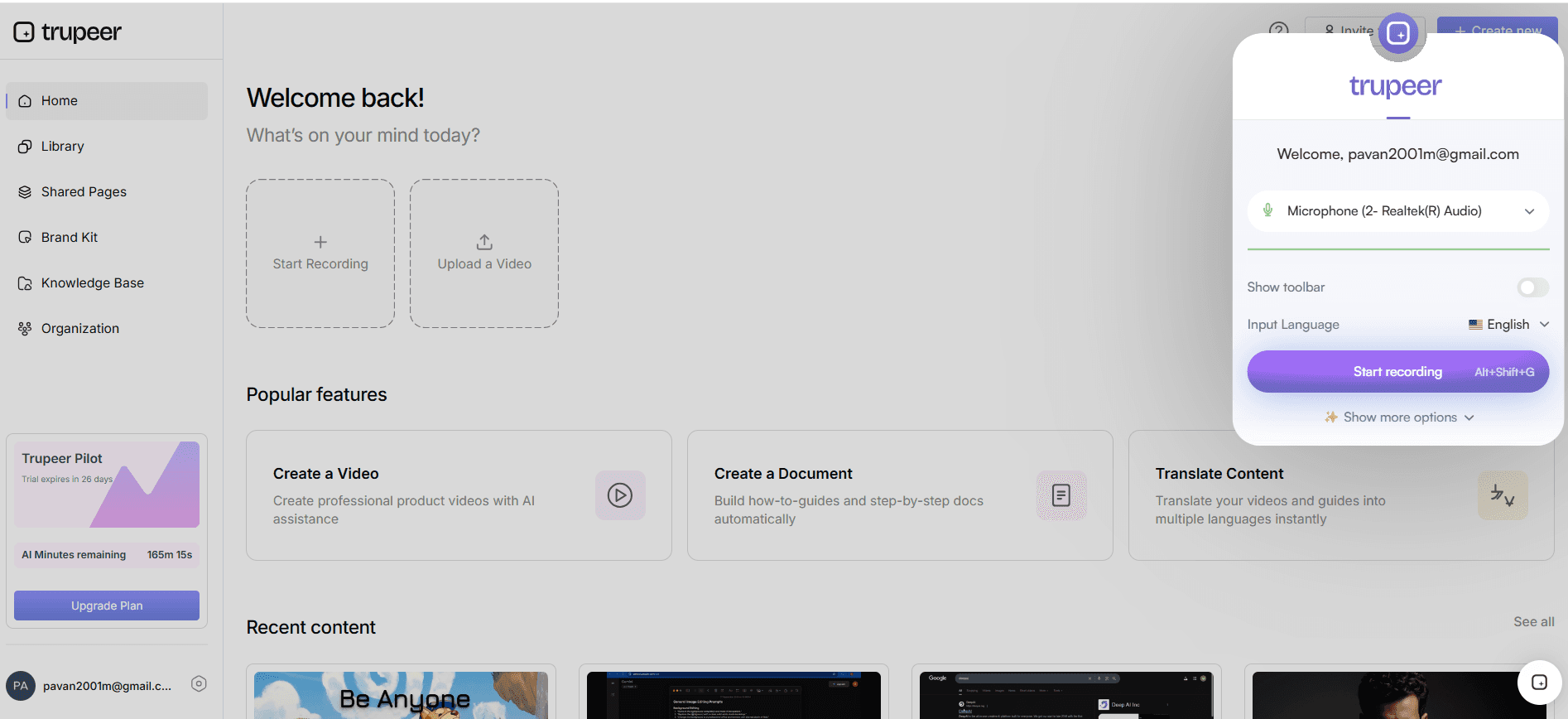
Start by using Trupeer's AI screen recording with auto-zoom and click detection to create detailed guides. Simply open the Trupeer browser-based recorder and select the area of the screen you want to capture. Click "Record" to start capturing your screen activity. The auto-zoom feature ensures that key actions, like button clicks, are highlighted. This makes the content more engaging and easier for users to follow. Once you're done, click "Stop" to end the recording. This step typically takes 5-10 minutes depending on the complexity of the task you're demonstrating. Ensure your instructions are clear and concise to minimize viewer confusion. If needed, re-record segments to improve clarity.
Step 2: Enhance the Recording
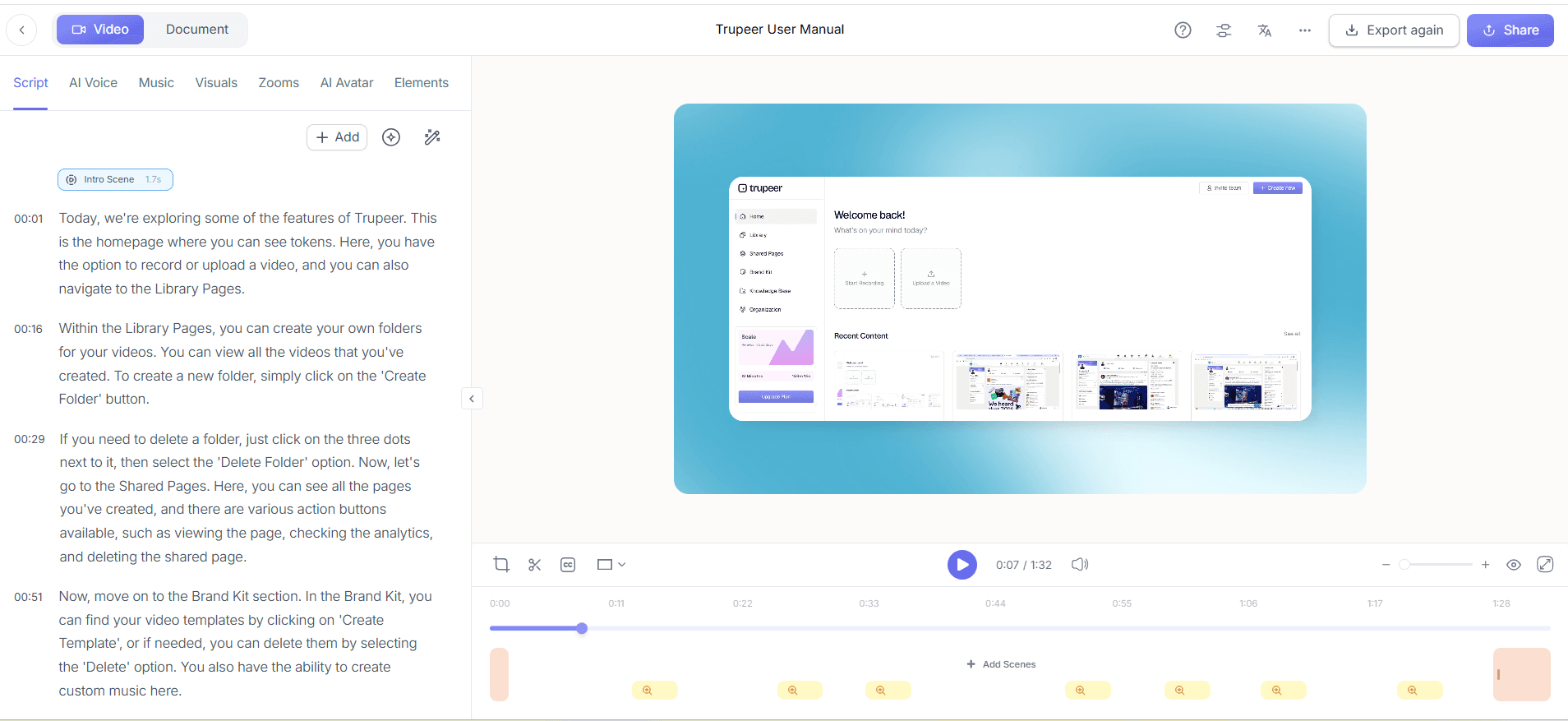
Next, enhance your recording using Trupeer's AI voiceover feature. Choose from over 65+ natural voices and adjust the pace and tone to align with your brand. To add a voiceover, upload your recording to the Trupeer platform and select the "Voiceover" option. Customize the audio settings, then click "Generate Voiceover". This process generally takes 2-3 minutes. A well-paced and clear voiceover can significantly improve the viewer's understanding and engagement. Ensure the audio matches the video content to avoid any dissonance. If your audience is diverse,
Step 3: Generate Supporting Documentation
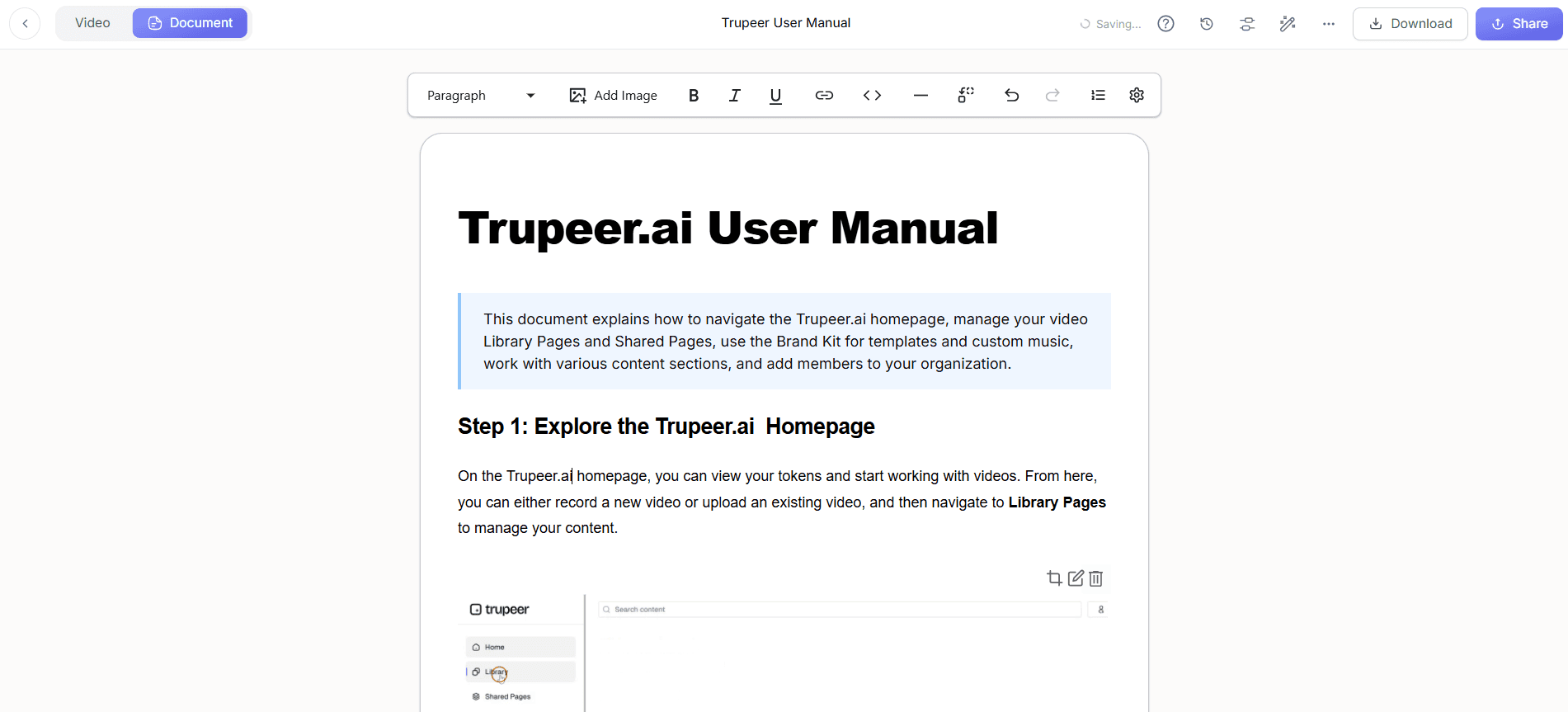
With the enhanced video ready, use Trupeer's automatic SOP generation feature to create supporting documentation. Upload your video to the Trupeer platform and select "Generate SOP". The system will automatically transcribe the video and organize it into an edit-ready document. This step usually takes around 5 minutes. Review the generated SOP for accuracy and make any necessary edits. This documentation will provide a text-based reference for users who prefer reading over watching videos. It's essential to ensure that the documentation is as detailed and accurate as the video content to maintain consistency.
Step 4: Localize the Content
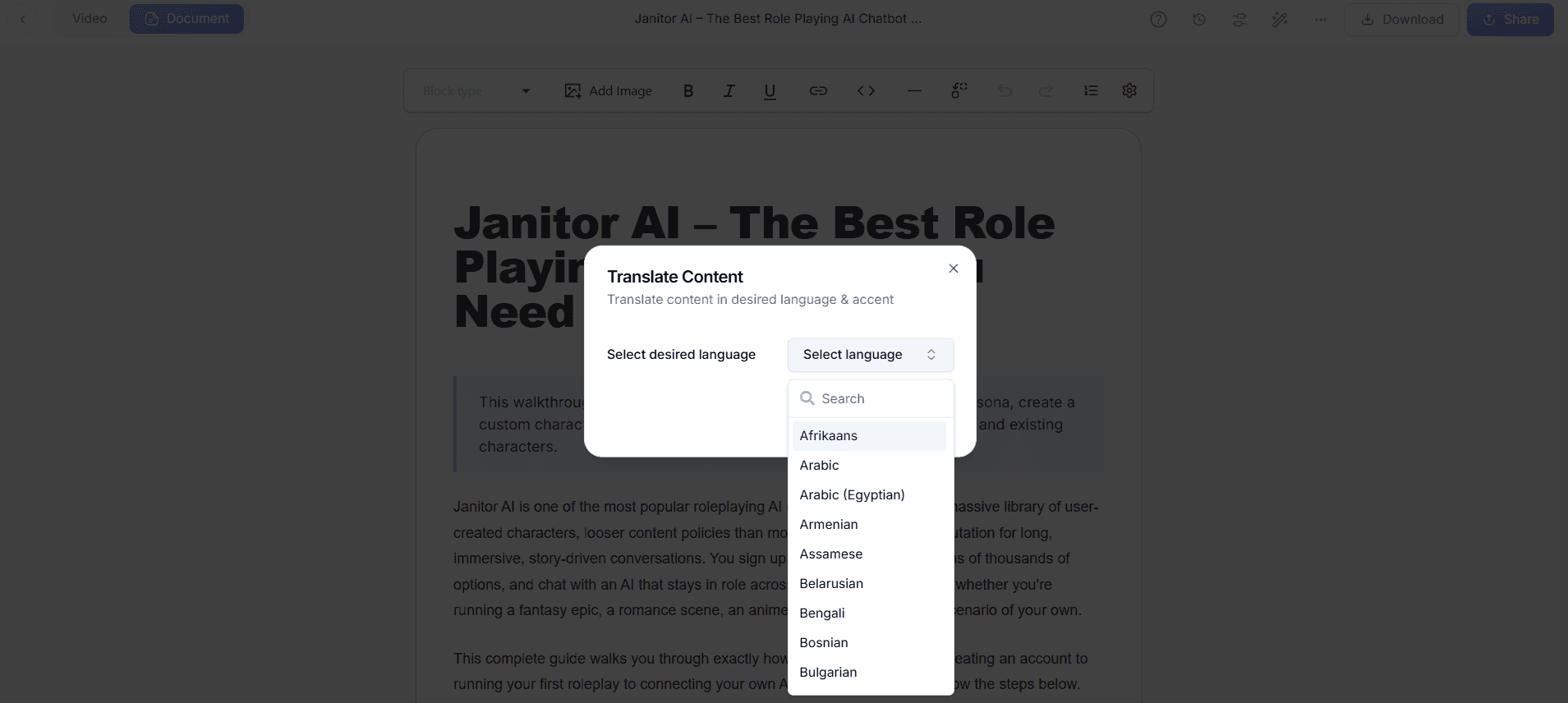
To cater to a global audience, use Trupeer's AI translation and dubbing capabilities. Select your video and choose the "Translate & Dub" option. Choose the target languages from over 40 available options. Trupeer will automatically translate and sync the audio with the video. This process can take 10-15 minutes per language, depending on the video's length. Localization ensures that non-English speaking users can fully understand the content. This step is crucial if your SaaS product is marketed internationally. Always review the dubbed versions to ensure cultural and contextual accuracy.
Step 5: Host and Distribute the Content
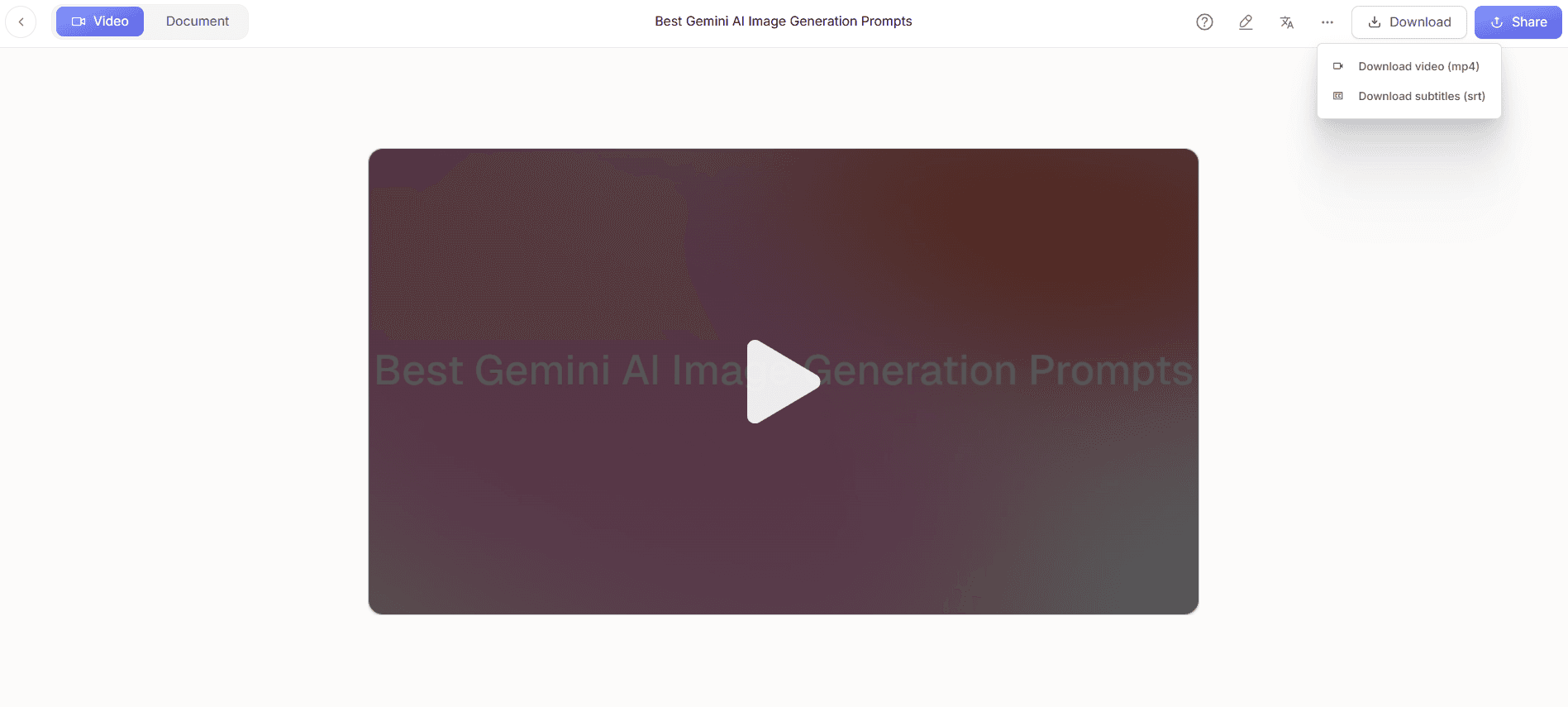
Once your content is ready, host it using Trupeer's custom-domain hosting with SSO. This feature allows you to maintain brand consistency and secure access control. To host your knowledge base, upload your content to Trupeer and select "Host on Custom Domain". Set up Single Sign-On (SSO) to simplify user access. This step ensures that your knowledge base is easily accessible to authorized users while maintaining security. You can also create shared pages or client-facing portals to tailor access for different user groups. Hosting typically takes about 10 minutes to configure.
Step 6: Measure Engagement and Optimize
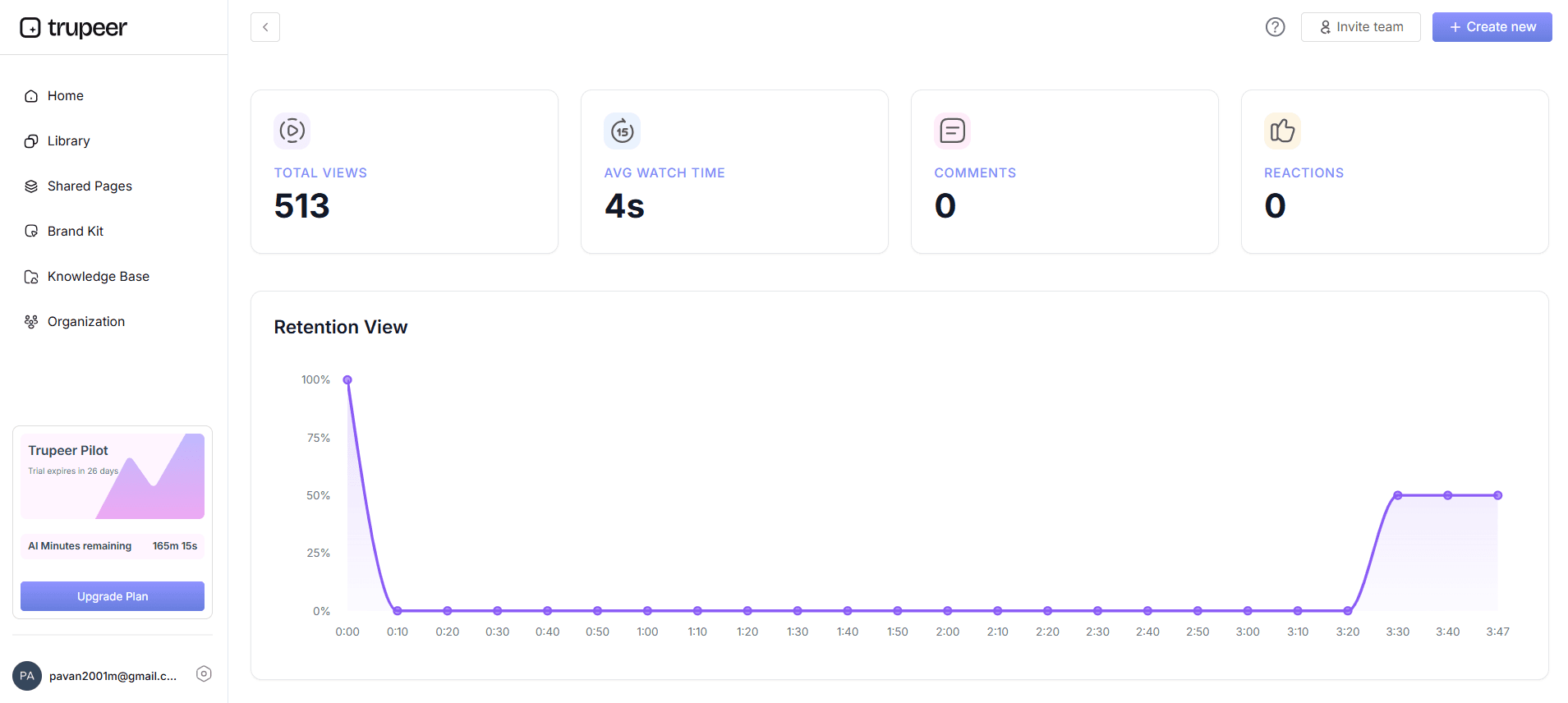
Finally, use Trupeer's viewer engagement analytics to measure how users interact with your knowledge base. Access the analytics dashboard on Trupeer to view metrics like viewer drop-off rates, heatmaps, and time spent on each section. Use this data to identify areas for improvement. For instance, if users frequently drop off at a specific point, consider revising that section for clarity. Regularly review and update your content based on user feedback and analytics to ensure it remains relevant and effective. Continuous optimization is key to maintaining an engaging and useful knowledge base. When SOPs come into the same conversation, a Scribe alternatives comparison helps clarify the scope.
What tips help you build a SaaS product knowledge base?
Building a customer-centric knowledge base requires strategic planning and execution. Here are some tactical tips to ensure your knowledge base effectively serves its purpose and enhances user experience.
Keep Content Concise. Users prefer short, direct answers. Avoid lengthy explanations and focus on delivering clear, actionable information.
Use Visuals Effectively. Incorporate screenshots and videos to break down complex processes. Visual aids can enhance understanding and retention.
Regularly Update Content. Ensure your knowledge base reflects the latest product updates. Outdated information can frustrate users. A announce SaaS product updates feature can help keep content current.
Organize with Categories. Structure your knowledge base into clear categories and subcategories to make navigation intuitive. Users should find information with minimal clicks.
Incorporate User Feedback. Regularly solicit and analyze user feedback to identify gaps in your content. This can guide future updates and enhancements.
Test for Usability. Periodically test your knowledge base to ensure it meets user needs. Usability testing can uncover issues that may not be apparent otherwise. A knowledge base generator tool can support these efforts.
Promote Self-Service. Educate users about the knowledge base's benefits. Encourage them to use it as the first point of contact for support queries.
Frequently asked questions
How do I start building a knowledge base?
Start by identifying the most common questions and issues your customers face. Gather this data from support tickets, customer feedback, and surveys. Next, use a tool like Trupeer for screen recording and SOP generation to create content that addresses these needs. Organize the information into categories and ensure it's easily searchable. Regularly update the content to reflect new features and changes. Strategy and consistency are key to building a useful knowledge base.
What makes a knowledge base effective?
An effective knowledge base is user-friendly, easily navigable, and provides accurate information. It should include a mix of text, images, and videos to cater to different learning preferences. Content must be well-organized into categories, and users should be able to find information quickly. Regular updates and user feedback are essential to maintaining its relevance. A knowledge base that meets these criteria can significantly reduce customer support burdens and improve user satisfaction.
Why should I use Trupeer for my knowledge base?
Trupeer offers a comprehensive suite of tools that simplify the creation and maintenance of a knowledge base. Its AI-powered features automate many processes, like SOP generation and video dubbing, saving time and resources. The platform's analytics offer insights into user engagement, helping you optimize content effectively. also, Trupeer supports multiple formats and languages, making it a versatile solution for diverse user bases. For more on its localization capabilities, check out the AI video translation feature.
Can I integrate my knowledge base with other tools?
Yes, most modern knowledge base solutions, including Trupeer, offer integration options with various tools and platforms. This includes CRM systems, support ticketing software, and analytics tools, allowing for smooth data flow and improved operational efficiency. Integrating your knowledge base with other tools can enhance its functionality and provide a more cohesive experience for both users and support teams.
Does a knowledge base reduce customer support costs?
Yes, a well-maintained knowledge base can significantly reduce customer support costs. By providing a self-service option, it decreases the volume of incoming support tickets, allowing your team to focus on more complex issues. This not only reduces operational costs but also leads to faster resolutions and increased customer satisfaction. A knowledge base is an investment that can yield substantial returns by improving efficiency and reducing the need for extensive customer support resources.
Related Blogs