Trupeer Blog
Summarise
You're tasked with localizing a training video for your international team. Your goal is to ensure the content is accessible to all employees, regardless of language barriers. But should you go with translated subtitles or full dubbing? Choosing between these options isn't just a matter of preference; it's about balancing cost, time, and effectiveness. According to a study,
viewers retain 70% more information when content is in their native language.
This is crucial for training videos where comprehension directly impacts performance. Companies often struggle with the trade-off between the higher cost of dubbing and the less immersive experience of subtitles. Your decision will affect not only budget but also how well your team grasps the training material. This analysis will help you weigh the options and find a workflow that keeps costs reasonable without sacrificing learning outcomes. For more insights, explore our comprehensive take on training video production.
Why does choosing between subtitles vs dubbing AI matter?
Choosing between subtitles and dubbing for your training videos matters because it directly influences how effectively your team absorbs the information. Subtitles are generally quicker and cheaper to implement. Yet, they come with the risk of distraction, as viewers must split their attention between reading and watching. On the other hand, dubbing offers a more smooth viewing experience by allowing the audience to focus entirely on the visuals. However, it can be costly and time-consuming to produce. Your choice affects not only the financial bottom line but also the educational effectiveness of the training video. This is exactly where Canadian French AI dubbing becomes useful and it's the kind of content Trupeer can generate directly from a simple screen recording.
From a business perspective, the stakes are high. Training often involves complex material that needs to be understood deeply for employees to perform well. Poor comprehension due to language barriers can lead to mistakes and inefficiencies. In a scenario where 60% of your staff is non-native speakers, the wrong localization strategy could result in AI adoption use case failures, leading to increased operational costs and decreased productivity. The decision involves HR, training departments, and financial planners, all of whom have different priorities. HR wants inclusivity, trainers want effectiveness, and finance wants cost-efficiency. Balancing these needs requires a strategic approach.
What are the benefits of choosing the right AI translation format?
Deciding on the correct AI translation format for your training videos can provide multiple advantages, ensuring your team fully understands critical content.
Cost Efficiency. Subtitles are generally cheaper to produce than dubbing. This involves less technical work and fewer resources, making it a budget-friendly option for many organizations. For more on optimizing video expenses, check out our guide to the best training video software.
Faster Turnaround. Subtitles can be generated more quickly than full dubbing, allowing you to distribute training materials sooner. This is crucial when training needs to be rolled out globally on a tight schedule.
Engagement and Comprehension. Dubbing allows employees to focus fully on visual content, potentially enhancing engagement and retention. A smooth experience can lead to better understanding and application of the training material.
Accessibility. Subtitles make videos accessible to those who are hearing impaired. This inclusivity broadens the audience for your training materials, ensuring no one is left behind.
Consistency Across Languages. Dubbing maintains a uniform training experience, ensuring that all employees receive the same quality of information. This consistency is vital in maintaining training standards.
Enhanced Brand Image. High-quality dubbing can enhance your brand's image by demonstrating a commitment to providing high-quality, localized content. This can improve employee satisfaction and perception of the company.
When SOPs come into the same conversation, a Scribe alternatives comparison helps clarify the scope.
Which Trupeer features help you add translated subtitles or full dubbing to a training video?
Trupeer offers a suite of features specifically designed to simplify the process of adding translated subtitles or full dubbing to training videos. These capabilities ensure your content is both linguistically accurate and engaging.
AI translation into 40+ languages with lip-sync
Trupeer's AI translation capability supports over 40 languages, making it ideal for global training initiatives. The lip-sync feature ensures that dubbed content matches the original video, offering a natural and smooth viewing experience. This feature is particularly beneficial for training videos where precise timing and synchronization improve viewer engagement. By using Trupeer's AI training video tool, you can ensure that your dubbing is not only linguistically accurate but also visually coherent. This is exactly where AI dubbing 120 languages becomes useful — and it's the kind of content Trupeer can generate directly from a simple screen recording.
AI dubbing for non-English audiences
Trupeer's AI dubbing feature is designed to cater specifically to non-English speaking audiences. It uses advanced algorithms to generate natural-sounding voiceovers that resonate with the audience's language and cultural nuances. This feature reduces the need for human voice actors, cutting down the cost and time traditionally associated with dubbing. When paired with other functionalities, such as AI avatars, it enhances the overall learning experience for non-English speakers.
AI screen recording with auto-zoom and click detection
This feature allows you to capture training content effortlessly. The auto-zoom and click detection enhance the clarity of actions demonstrated in the video, which is crucial for instructional content. By using this core capture feature, you can create training videos that are easier to follow, which is particularly beneficial when paired with subtitles or dubbing. This ensures that your audience can focus on both the narrated content and the visual instructions.
AI voice cloning from a short sample
Voice cloning technology allows you to create a consistent audio experience across all dubbed videos. By using a short sample, Trupeer can generate a cloned voice that maintains the original video's tone and pace. This feature ensures that your training videos maintain a uniform vocal presence, which is critical for establishing trust and understanding with your audience. It also allows for a more personalized experience by maintaining a familiar voice.
Automatic SOP generation from any recording
Trupeer's automatic SOP generation feature converts your recorded training sessions into structured, editable documents. This is invaluable when preparing multilingual training materials, as it allows you to provide supplementary written content alongside your videos. These documents can be exported in various formats, ensuring that all employees, regardless of language proficiency, have access to the training material. This enhances the learning process by providing different modes of information delivery. For more on automated documentation, explore our AI documentation platform.
How do you add translated subtitles or full dubbing to a training video step by step with Trupeer?
Step 1: Capture Your Video
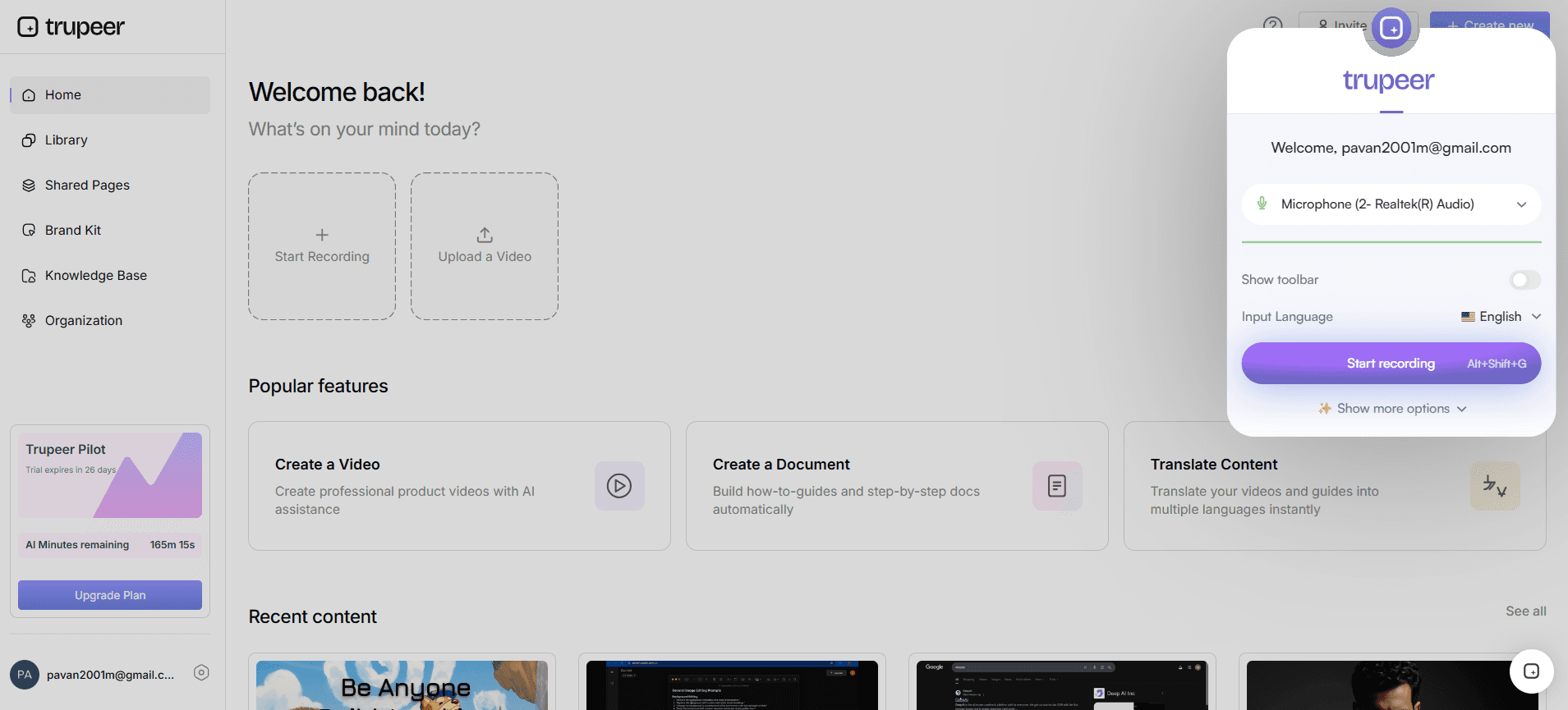
Start by using Trupeer's AI screen recording feature. This tool allows you to capture detailed video content without additional installations, thanks to its browser-based recorder. The auto-zoom and click detection enhance the clarity of the actions demonstrated, which is crucial for training materials. Once you've captured the necessary footage, Trupeer automatically processes the video, identifying key actions and ensuring that your recording is crystal clear. This step typically takes just a few minutes, depending on the length of your video. Ensure that all important details are captured accurately, as this will be the foundation for your subtitles or dubbing.
Step 2: Edit and Enhance the Video
After capturing, use Trupeer's editing capabilities to enhance your video. Use the automatic filler-word removal to create a more polished final product. This feature eliminates unnecessary "um" and "ah" sounds, making the video more professional. You can also adjust the pacing and tone with AI voiceover options, which include over 65+ natural voices. This ensures that your video maintains engagement throughout. The editing process is simplified and can be completed swiftly, typically within 30 minutes for a short video. Ensure you preview the edited content to confirm that it meets your quality standards.
Step 3: Generate Translated Subtitles
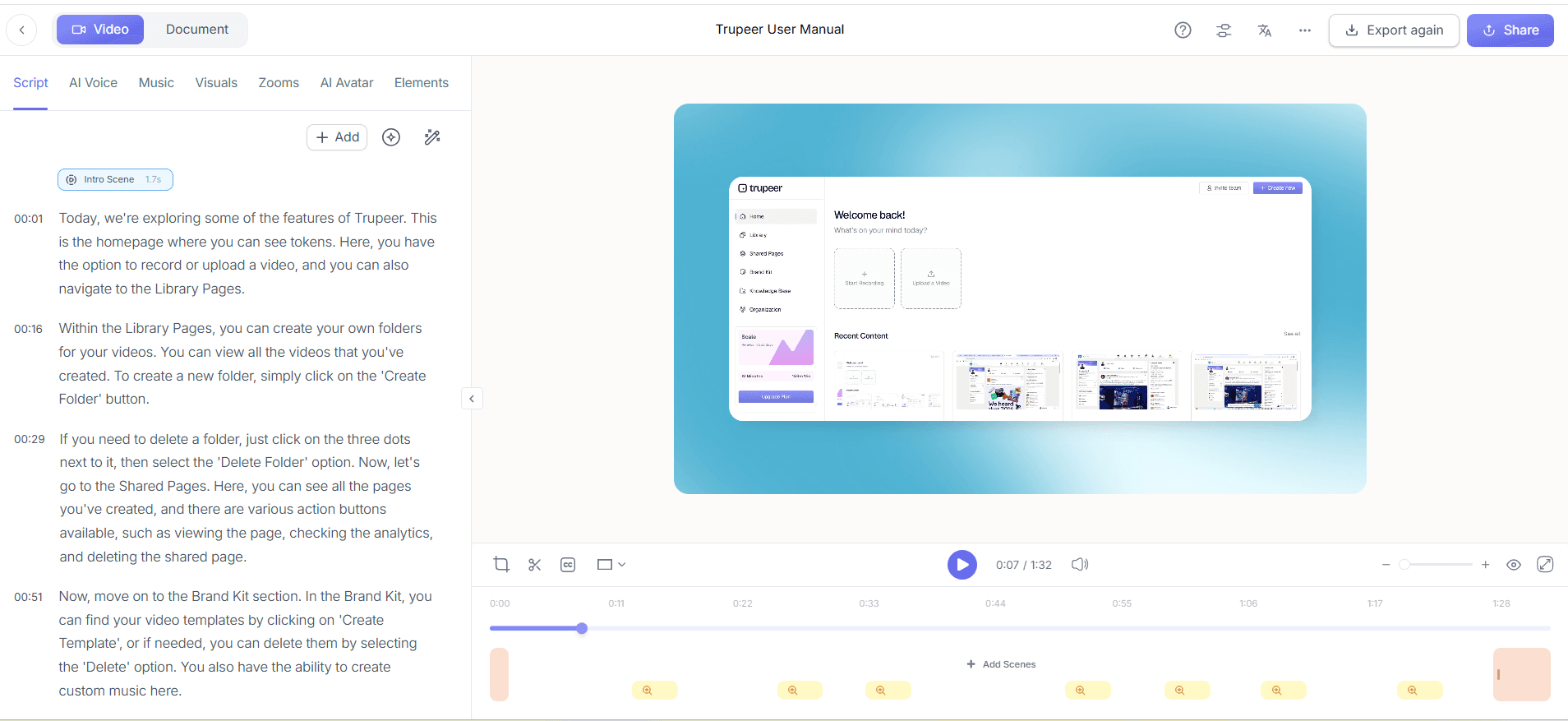
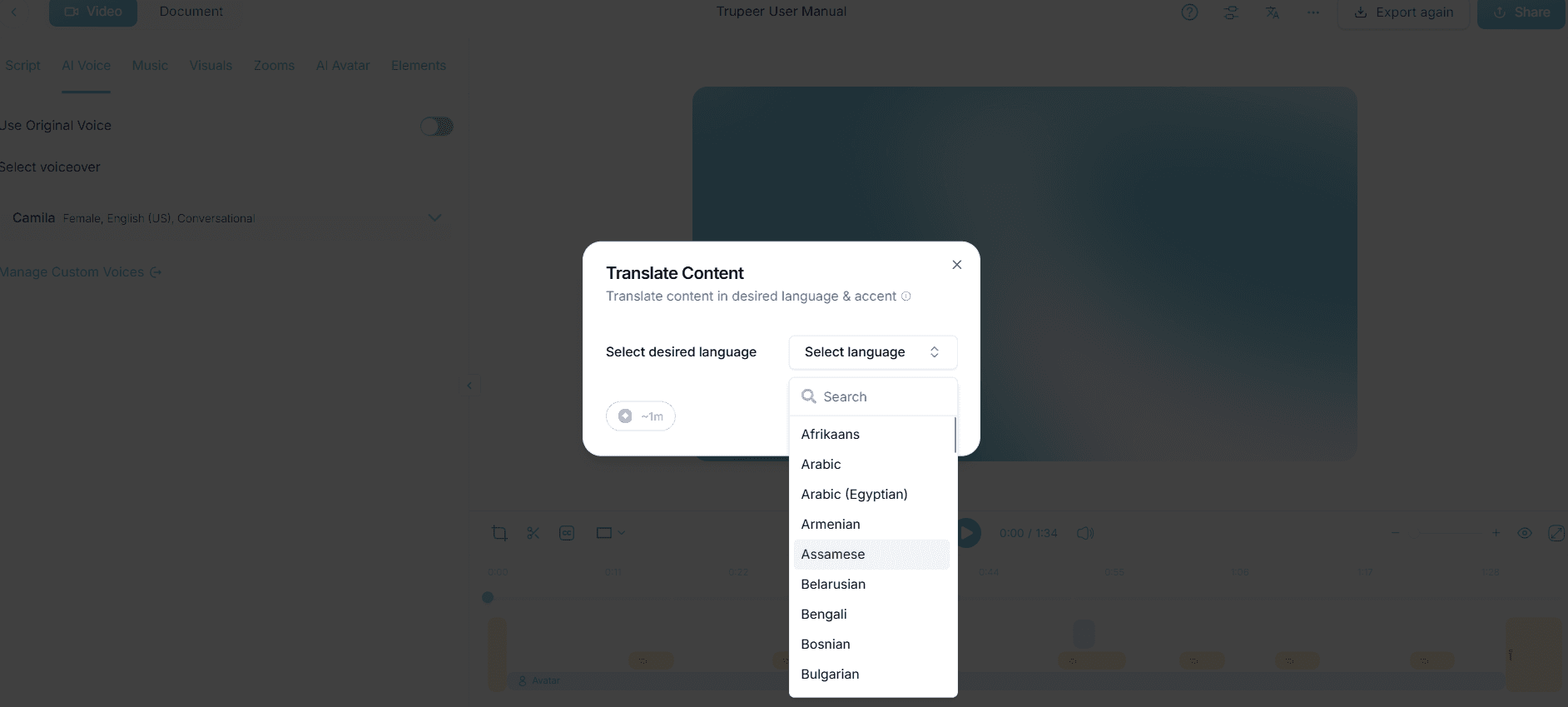
Now, move on to generating translated subtitles. Trupeer’s AI translation capability supports over 40 languages, making it an ideal solution for multilingual training content. Select the desired languages for translation, and the AI will produce accurate subtitles that align with the video’s timeline. This process is automated and takes about 10-15 minutes depending on video length and the number of languages. Ensure you review the subtitles for any context-specific nuances that may need manual adjustment. This step ensures all viewers, irrespective of language, can access the training material effectively. Storing outputs inside an AI-searchable knowledge base makes every recording findable by topic and timestamp.
Step 4: Implement AI Dubbing
If you opt for full dubbing, use Trupeer’s AI dubbing feature to create voiceovers in the selected languages. This tool uses advanced algorithms to match the audio with the video’s lip movements, enhancing viewer immersion. Begin by selecting the voice profile that best matches your original content's tone and pace. The AI takes approximately 20-30 minutes to generate each language's dubbing. Once completed, review the dubbed video to ensure synchronization and naturalness. This step is crucial for maintaining the training video’s engagement and effectiveness across different languages.
Step 5: Finalize and Export
With your subtitles or dubbing in place, finalize your video by reviewing it in Trupeer’s platform. Use the brand kits and branded templates feature to ensure your video maintains a consistent visual style that aligns with your organization's branding. You can then export the video in multiple formats such as MP4, HTML, or SCORM, depending on your distribution needs. Exporting is a quick process, usually completed in under 10 minutes. Make sure to choose the format that best suits your learning management system and distribution channels. Teams weighing tools often start with a Loom alternatives comparison before standardizing on a workflow.
Step 6: Distribute and Monitor Performance
Finally, distribute your localized training video using Trupeer’s distribution features. Host the video on a custom-domain with SSO for secure access. You can also embed video widgets for in-app guidance. After distribution, use the viewer engagement analytics to monitor how your team interacts with the video. This data provides insights into areas of the video that are most engaging or where drop-offs occur, allowing you to make informed decisions for future training content. Typically, engagement analytics become available within 24 hours of distribution, offering timely feedback.
What tips help you add translated subtitles or full dubbing to a training video?
Adding translated subtitles or full dubbing can significantly enhance your training video's accessibility and effectiveness. Here are some practical tips to ensure a smooth process and high-quality output.
Choose the Right Languages. Select languages based on your audience demographics. Prioritize languages spoken by the majority to maximize comprehension.
Maintain Consistent Quality. Use a training video editing software tool to ensure all videos meet the same quality standards.
Review Translations Carefully. Always review AI-generated translations for context accuracy. Human oversight can catch errors that AI might miss.
Test with a Small Audience. Before full rollout, test the localized video with a small segment of your audience. Gather feedback to identify potential improvements.
Update Regularly. Training content should evolve with your organization. Regularly update your subtitles and dubbing to reflect the latest information.
use Engagement Analytics. Use viewer analytics to understand which parts of the video are most engaging. Adjust future content based on these insights.
Consider a Hybrid Approach. Sometimes, a combination of subtitles and dubbing might be the best option. Evaluate each video's context to decide the most effective approach.
Teams ship this workflow end-to-end using Trupeer's AI video platform, which turns raw recordings into polished output without an editor.
Frequently asked questions
How do you decide between subtitles and dubbing?
Deciding between subtitles and dubbing depends on factors like budget, audience preferences, and content complexity. Subtitles are cost-effective and quicker to implement, making them suitable for straightforward content. Dubbing provides a more immersive experience, which can be crucial for complex training material where comprehension is key. Consider your audience's language proficiency and the importance of engagement when making your decision. For example, if your content is highly technical, dubbing might help in conveying nuances better.
What is the cost difference between subtitles and dubbing?
Subtitling is generally less expensive than dubbing. The cost of subtitling typically ranges from $3 to $8 per minute of video, depending on language and complexity. Dubbing costs can range from $50 to $150 per minute due to the need for voice actors and additional editing. By using AI tools like Trupeer, you can reduce these costs significantly. AI voiceover and translation tools can lower the cost of dubbing by up to 50% by eliminating the need for human voice actors.
Can AI-generated subtitles and dubbing be customized?
Yes, AI-generated subtitles and dubbing can be customized. With Trupeer, you can adjust the pace, tone, and even the voice used in dubbing. This customization ensures that the final product aligns with your brand’s style and meets audience expectations. You can also manually edit AI-generated subtitles to make sure they fit context-specific needs. This flexibility allows you to create a more tailored training experience that resonates well with your viewers.
Does using AI for subtitles and dubbing affect quality?
Using AI for subtitles and dubbing can enhance quality by providing consistent and accurate translations. However, the quality of AI-generated content depends on the algorithms and data sets used. Trupeer's advanced algorithms ensure high-quality output, but human review is recommended to ensure cultural nuances are correctly captured. AI can manage large volumes quickly and accurately, but a final human check can ensure the content meets the highest standards.
What are the technical requirements for AI dubbing?
The technical requirements for AI dubbing include a stable internet connection and access to an AI platform like Trupeer. No special hardware is needed since the process is cloud-based. The platform handles the heavy lifting, from voice generation to lip-syncing. You'll need to upload your video in a supported format, typically MP4, and specify the target languages. Once this is done, the AI takes care of the rest, producing a dubbed video that's ready for distribution. For more insights into AI dubbing, explore our video localization tool.
Related Blogs