Trupeer Blog
Summarise
Imagine a scenario where your team needs to produce detailed knowledge base articles at a rapid pace, yet the current process is bogged down by manual steps and inconsistencies. Every week, your team faces the challenge of transforming complex technical recordings into polished documentation. The stakes couldn't be higher, as delays in publishing can lead to missed opportunities for customer engagement and retention. According to industry reports,
businesses that simplify their documentation pipeline can increase their content velocity by up to 40%.
This isn't just about efficiency; it's about staying competitive. For organizations looking to optimize their documentation process, using AI-driven tools can be a big shift. The right tools can transform raw recordings into professional knowledge base articles, removing friction and ensuring consistency across all content outputs. But before you embark on this journey, it's essential to understand the components of a successful documentation pipeline. Teams weighing tools often start with a Loom alternatives comparison before standardizing on a workflow.
Why does documentation pipeline automation matter?
In the fast-paced world of enterprise operations, the need for a simplified documentation process is more critical than ever. As businesses strive to deliver consistent and up-to-date information to their stakeholders, the traditional methods of manual documentation fall short. The challenge lies in the sheer volume of content that needs to be processed and published without losing accuracy or quality. A delayed or inaccurate knowledge base can directly impact customer success workflows, leading to increased support tickets and decreased user satisfaction.
Automating the documentation pipeline reduces the time spent on repetitive tasks and minimizes errors, so ensuring that the content is both timely and reliable. This is particularly important for teams responsible for maintaining product documentation and customer-facing knowledge bases. A well-oiled documentation pipeline allows these teams to focus on more strategic tasks, such as content strategy and user engagement. By using automation, companies can ensure that their knowledge bases are always current, accurate, and aligned with the latest product updates.
What are the benefits of documentation pipeline automation?
Implementing an automated documentation pipeline offers numerous benefits that extend beyond mere efficiency. Here are some of the most compelling advantages:
Increased Efficiency. Automation reduces the time spent on manual documentation tasks, allowing teams to focus on high-value activities. For instance, with a best documentation software, teams can produce content 30% faster.
Consistency and Accuracy. Automated processes ensure a uniform style and format across all documentation, reducing errors and improving readability. This consistency is crucial in maintaining brand integrity and user trust.
Scalability. As your company grows, so does the volume of documentation required. An automated pipeline can easily scale to accommodate increased demand without compromising on quality.
Improved Collaboration. Team members can work on different aspects of the documentation simultaneously, thanks to cloud-based platforms. This collaborative environment builds innovation and speeds up the content creation process.
Enhanced User Experience. A polished and well-organized knowledge base enhances the user experience, making it easier for users to find the information they need quickly. This leads to higher engagement and satisfaction levels.
Cost Reduction. By reducing the need for manual intervention and minimizing errors, automation can significantly lower operational costs. Companies can save up to 25% in documentation-related expenses by using an AI-powered video tool.
Which Trupeer features help you automate your documentation pipeline?
Trupeer offers several features specifically designed to simplify the documentation pipeline from recording to published knowledge base articles. These capabilities enable efficient and effective content creation.
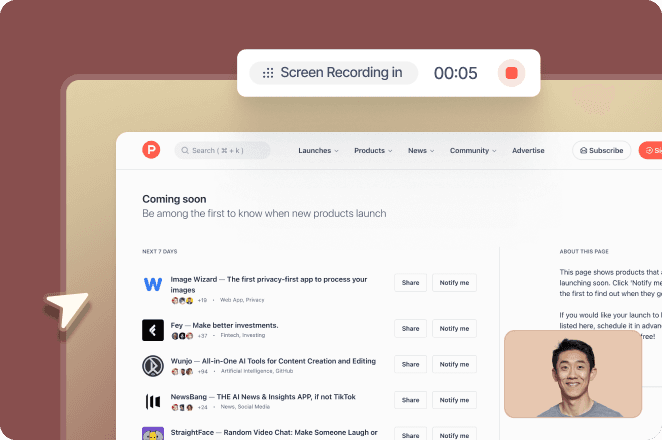
AI screen recording with auto-zoom and click detection
This feature allows users to capture high-quality screen recordings effortlessly. The auto-zoom and click detection ensure that every critical detail is highlighted, making it easier to produce comprehensive documentation. For teams that need to convey complex processes, this tool is invaluable. It captures interactive elements on the screen in real-time, providing a clear and concise visual guide for users. This capability is particularly useful for creating tutorials and product demos, where details matter. With Trupeer, teams can produce recordings that are both informative and engaging.
Silent screen recording with automatic AI narration
Trupeer's silent screen recording feature is a big shift for those who need to create content without background noise. The automatic AI narration adds a professional touch, ensuring that the recording is both clear and informative. This feature is ideal for environments where silence is preferred or required, such as in-depth training sessions or product walkthroughs. The AI narration is customizable, allowing users to choose from various voice options to match the tone and style of their brand.
Automatic filler-word removal
One of the most tedious aspects of editing recordings is removing filler words and long pauses. Trupeer's AI-driven editing tools handle this automatically, resulting in a polished final product. This not only saves time but also enhances the overall quality of the documentation. The automatic removal of fillers ensures that the content is concise and to the point, making it easier for users to follow and understand. This feature is especially beneficial for teams that produce a large volume of content regularly, as it maintains a high standard of quality across all outputs.
Auto-updating documentation tied to the underlying recording
Trupeer's auto-generated documentation feature ensures that your knowledge base is always up-to-date. By linking documentation directly to the original recording, any changes made to the source material are automatically reflected in the published document. This reduces the risk of outdated information and ensures that users always have access to the latest updates. It's a critical feature for fast-paced industries where products and processes are constantly evolving.
AI-searchable knowledge base with timestamp deep-links
With Trupeer's AI-searchable knowledge base, users can easily find the information they need using natural language queries. The timestamp deep-links make navigation intuitive and efficient, allowing users to jump directly to relevant sections of the recordings. This feature enhances the user experience by making the knowledge base more interactive and accessible. By integrating AI search capabilities, Trupeer ensures that users can find answers quickly, reducing frustration and increasing satisfaction.
How do you automate your documentation pipeline step by step with Trupeer?
Step 1: Capture the Recording
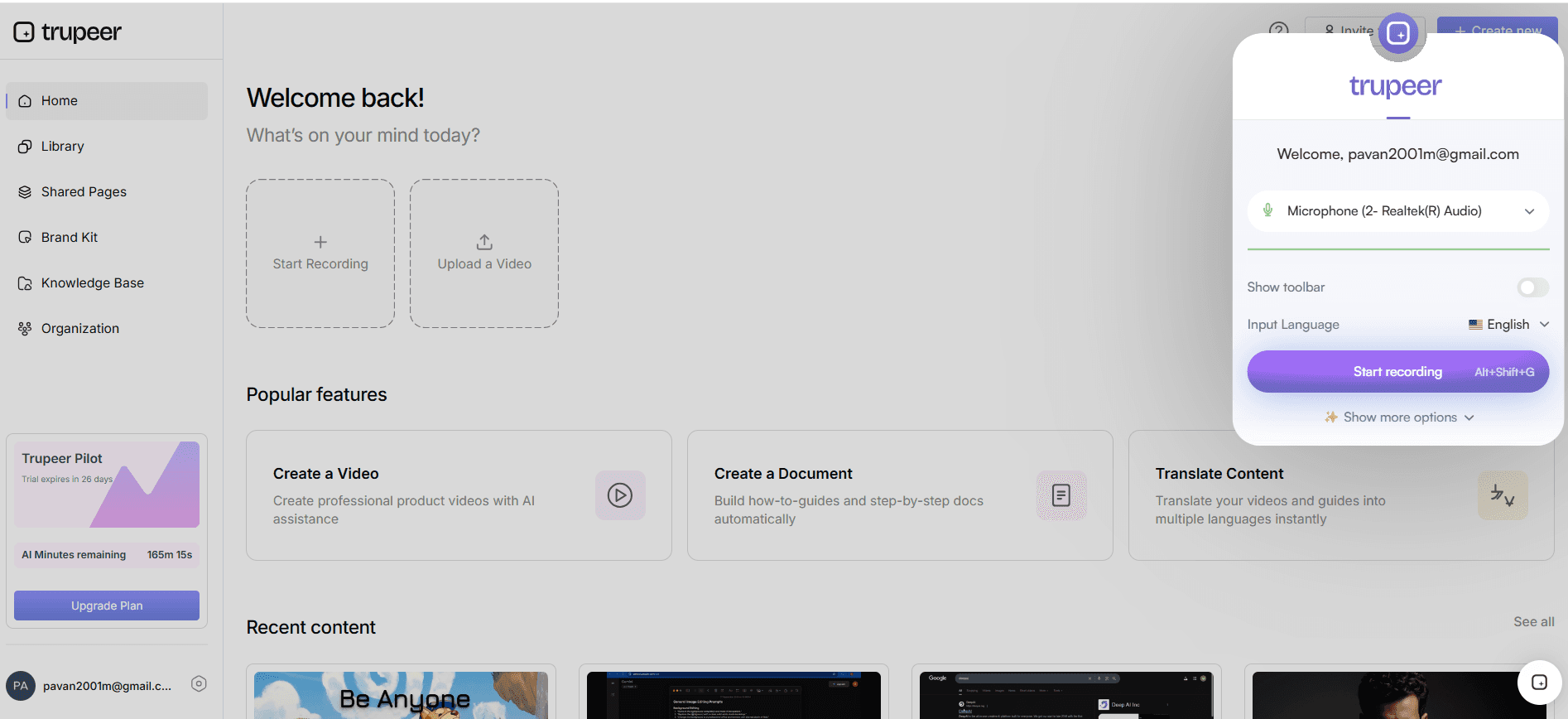
Begin by opening Trupeer's browser-based recorder, which requires no installation, simplifying the process for users on various devices. Select the "AI screen recording with auto-zoom and click detection" feature. This ensures every important detail is captured clearly. As you walk through the process you'd like to document, the software automatically focuses on key areas of the screen, highlighting clicks and movements. This recording method is efficient, typically taking only as long as the process itself, and eliminates the need for extensive post-recording edits. Once completed, the recording is automatically saved to your Trupeer library, ready for the next step in the pipeline.
Step 2: Edit and Enhance the Recording
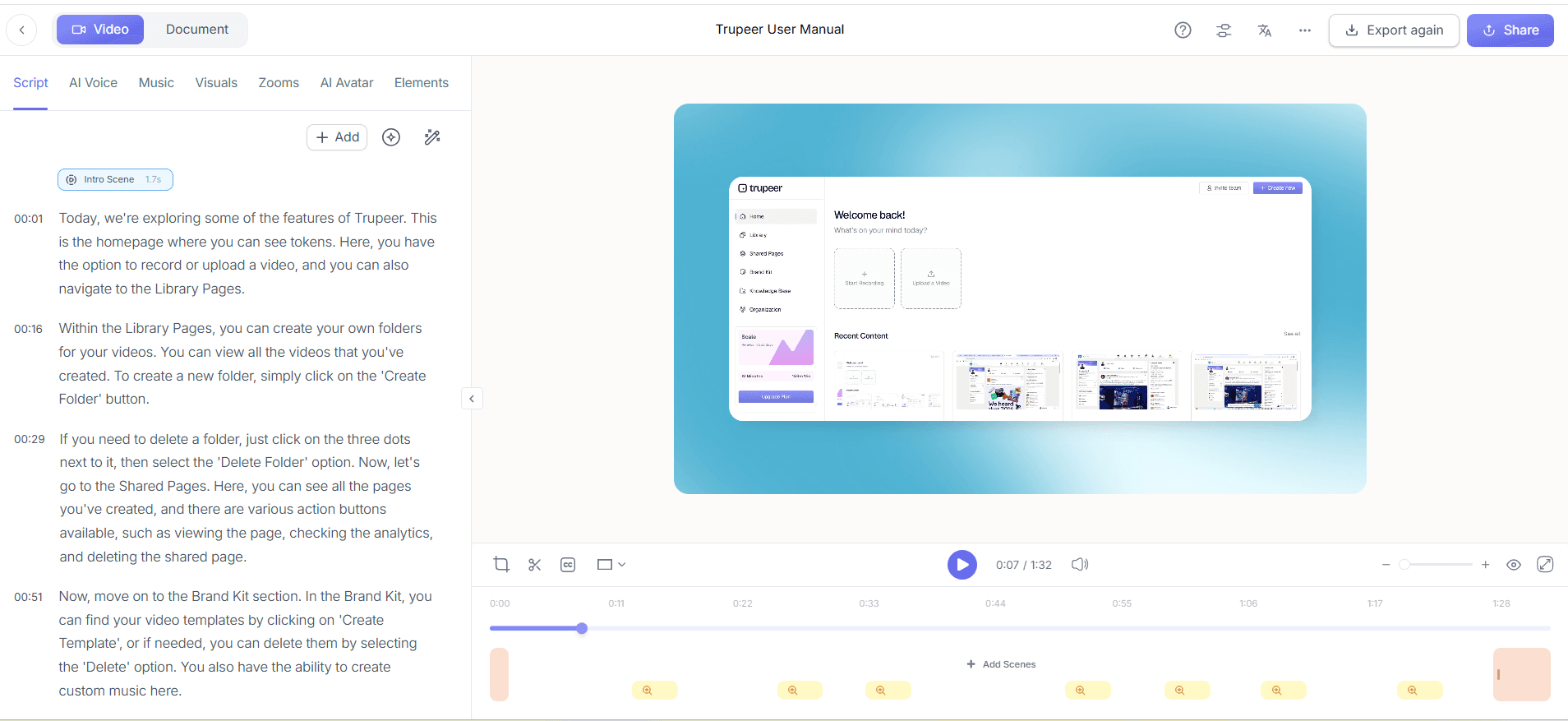
After capturing your recording, navigate to the Trupeer editing suite. use the "automatic filler-word removal" feature to clean up the audio track. This tool swiftly removes any unnecessary pauses and filler words like "um" and "ah," resulting in a polished recording. Next, adjust the pacing and tone using Trupeer's "AI voiceover in 65+ natural voices" if needed. This step typically takes around 15 minutes, depending on the length of your recording. The result is a smooth and professional video, ready for documentation integration.
Step 3: Generate Automatic SOPs
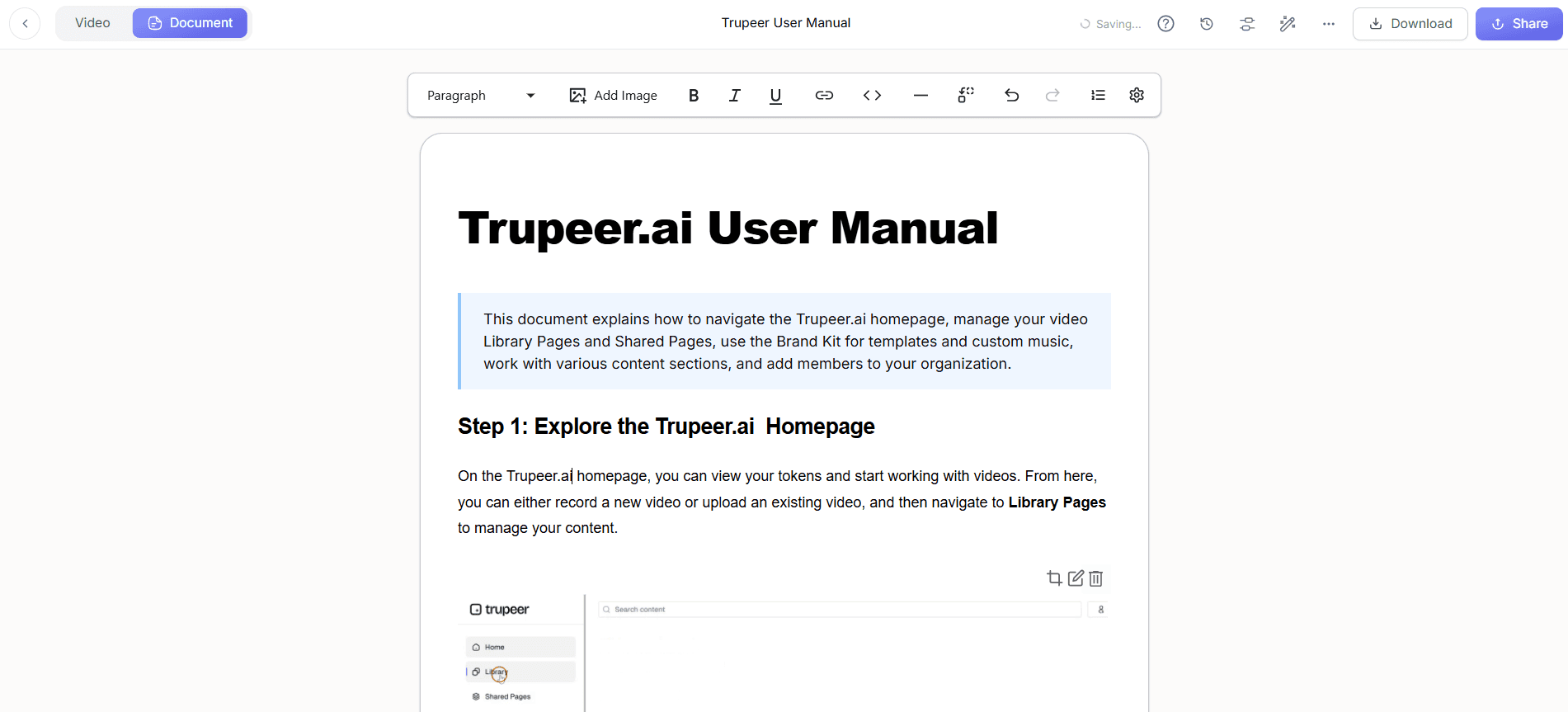
With the enhanced recording ready, move on to creating the documentation using the "automatic SOP generation" feature. This tool analyzes the recording and produces a detailed, edit-ready standard operating procedure document. It extracts key steps and descriptions, transforming video content into written form. This process is fast, often completing within a few minutes per video. The generated SOP can be reviewed and adjusted for any necessary tweaks, ensuring it meets your organization's standards.
Step 4: Link Documentation to the Original Recording
Now, ensure that your documentation remains up-to-date by tying it directly to the original recording. use Trupeer's "auto-updating documentation tied to the underlying recording." This feature creates a live link between the documentation and the video, so any future updates to the video automatically reflect in the documentation. This guarantees consistency and accuracy, eliminating the need for manual updates. It's an efficient approach that saves time and reduces the risk of outdated information.
Step 5: Translate and Localize Content
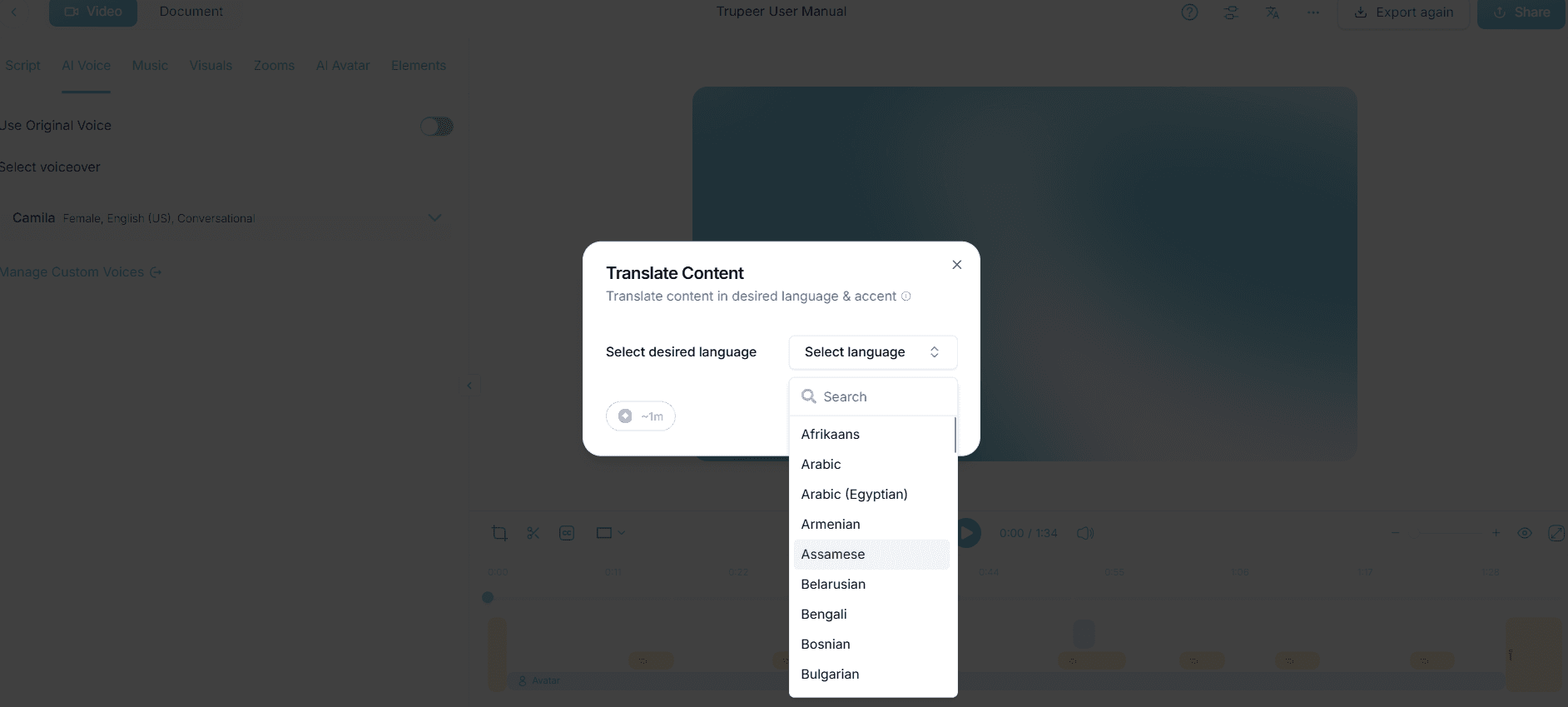
If your organization operates globally, translating your documentation is crucial. Use Trupeer's "AI translation into 40+ languages with lip-sync" capability. This feature not only translates the text but also ensures that spoken content in videos aligns with the new language, complete with lip-syncing. Select the desired languages, and Trupeer handles the rest, producing localized content in under an hour. This step broadens your documentation's reach, making it accessible to international audiences without compromising on quality. For a deeper look, our guide on ai documentation generator covers the adjacent playbook.
Step 6: Publish and Distribute the Documentation
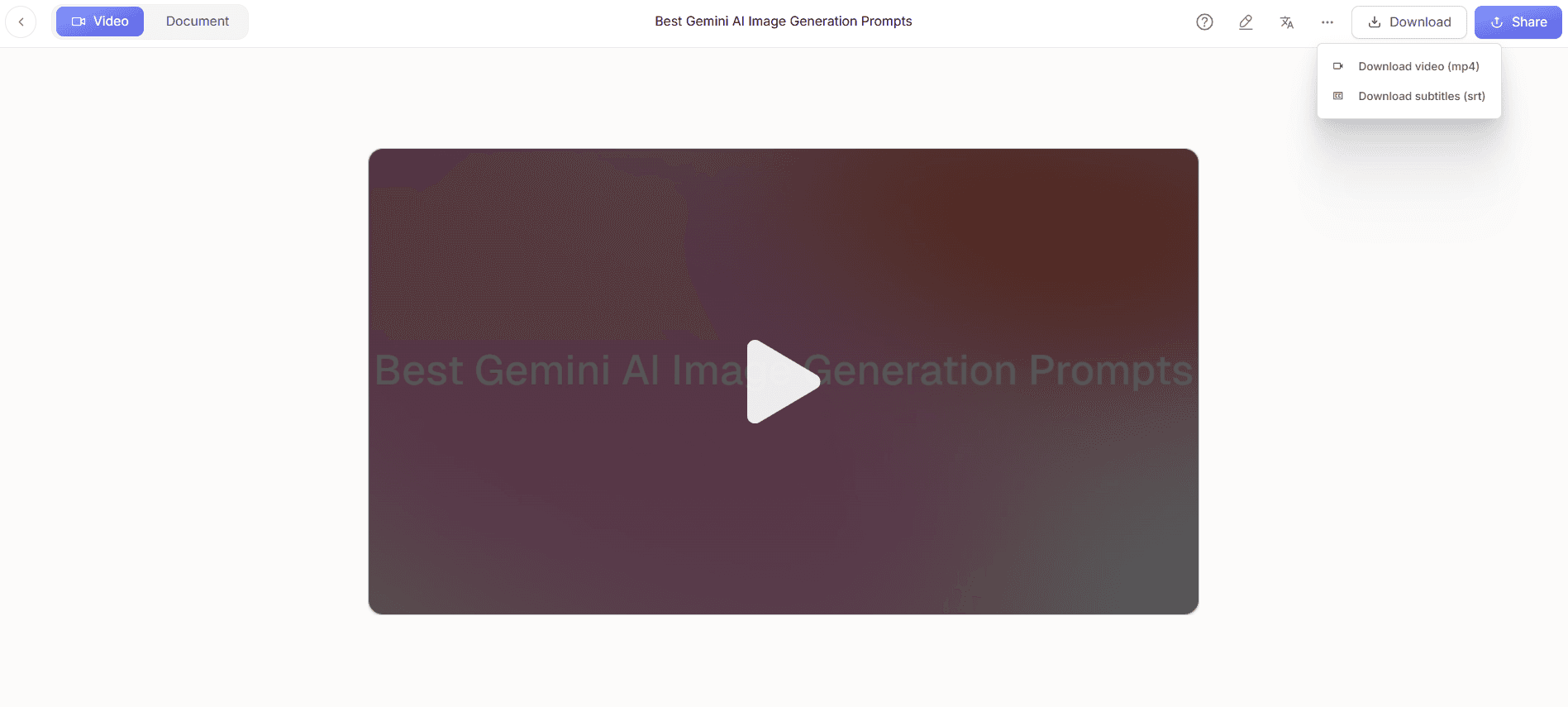
Finally, publish your documentation using Trupeer's "AI-searchable knowledge base with timestamp deep-links." This feature allows you to host your content on a custom domain with single sign-on (SSO) capabilities, ensuring secure access for users. The knowledge base is fully searchable, and users can navigate directly to specific video segments via timestamp links. This step is crucial for ensuring that your documentation is both accessible and user-friendly, enhancing the overall user experience.
What tips help you automate your documentation pipeline?
Automating your documentation pipeline can significantly enhance efficiency and accuracy. Here are some practical tips to optimize this process:
Standardize Recording Procedures. Develop a consistent format for screen recordings to ensure uniformity across all documentation. This helps maintain clarity and professionalism.
use AI Tools. Use AI capabilities to handle repetitive tasks like editing and translation. This reduces manual workload and speeds up the pipeline.
Regularly Update Templates. Keep your templates current to reflect any changes in branding or style guidelines. This ensures consistency in all published content.
use Feedback Loops. Incorporate feedback from users to continuously improve your documentation. This can help identify areas for enhancement and ensure user satisfaction.
Integrate with Existing Systems. Ensure that your documentation tools can smoothly integrate with other systems your team uses. This reduces friction and enhances workflow efficiency.
Monitor Analytics. Use viewer engagement analytics to understand how users interact with your content. This data can guide future improvements and content strategy.
Explore Alternatives. Regularly review Scribe alternatives for SOPs to ensure you’re using the best tools for your needs.
Frequently asked questions
How does Trupeer ensure documentation accuracy?
Trupeer enhances documentation accuracy by using AI-driven features that automate and simplify the documentation process. With the "auto-updating documentation tied to the underlying recording," any updates made to the original recording automatically reflect in the document, ensuring that the most current information is always available. This reduces the chances of human error and ensures that documentation remains reliable across updates, making it particularly effective for fast-paced industries where changes are frequent.
What is the advantage of using AI for translation?
AI translation offers significant advantages by delivering fast, accurate, and contextually appropriate translations. Trupeer's "AI translation into 40+ languages with lip-sync" enables smooth localization of both text and video content. This feature ensures that translated materials are not only linguistically correct but also culturally relevant, maintaining the original intent and meaning. This capability is crucial for global businesses aiming to reach diverse audiences without compromising on quality or engagement.
Why should I automate my documentation process?
Automating your documentation process can dramatically improve efficiency, reduce errors, and enhance content consistency. With automation, repetitive tasks such as editing and updating are handled swiftly, freeing up your team to focus on strategic initiatives. This approach also ensures that your documentation is always up-to-date and aligned with the latest product changes, which is vital for maintaining user trust and satisfaction. Automation ultimately leads to faster content delivery and better resource allocation. For global audiences, adding AI video translation extends the same workflow across 40+ languages with lip-sync.
Can Trupeer handle multilingual documentation?
Yes, Trupeer is equipped to handle multilingual documentation efficiently. Its AI-driven translation features allow you to convert your content into over 40 languages, complete with accurate lip-syncing for videos. This capability ensures that your documentation is accessible to a global audience, maintaining consistency and quality across different languages. The integration of AI translation simplifies the localization process, making it both cost-effective and time-efficient.
Does Trupeer support real-time collaboration on documentation?
Yes, Trupeer supports real-time collaboration, allowing multiple team members to work on documentation simultaneously. This feature enhances teamwork and speeds up the documentation process by enabling instant sharing of updates and feedback. The collaborative environment is crucial for maintaining alignment and ensuring that all team members are on the same page. This capability is especially useful for distributed teams looking to enhance productivity and communication.
What does healthy team documentation actually look like?
Healthy documentation is centralized, searchable, current, visual where it helps, and owned by the process expert. Trupeer's documentation software captures the process on screen and produces a searchable, current record for the team.
Related Blogs