Trupeer Blog
Summarise
IT teams tasked with maintaining efficient operations often find themselves bogged down by the need to keep documentation current. Whether you're using Atomicwork or ServiceNow, the documentation process can become a complex web of updates, revisions, and approvals. This is particularly challenging when you're dealing with a large volume of service requests or changes. According to a survey by Gartner, 62% of IT leaders say outdated documentation significantly hampers service delivery. This isn't just a minor inconvenience; it's a critical operational hurdle. Effective documentation can mean the difference between simplified service management and costly errors.
For teams working with Atomicwork or ServiceNow, these platforms offer solid capabilities but require a strategic approach to documentation to truly use their potential. It's not just about writing down procedures; it's about creating a living document that evolves with your IT ecosystem. To achieve this, you might ai/blog/ai-documentation-generator">AI documentation generator to automate and enhance your documentation process. This guide is designed to help you understand the stakes and navigate the complexities of documentation within these ITSM platforms.
Why does effective documentation matter for Atomicwork and ServiceNow users?
Documentation serves as the backbone of any IT service management (ITSM) process, and in platforms like Atomicwork and ServiceNow, it becomes even more crucial. These platforms are designed to manage complex workflows and facilitate smooth service delivery. However, without accurate and up-to-date documentation, even the most sophisticated tools can fall short. For IT teams, outdated or incomplete documentation can lead to miscommunication, errors, and a lack of compliance with industry standards. This is particularly problematic in high-stakes environments where precision and accountability are non-negotiable. The same documentation can feed straight into the it documentation solution, so you're not putting it together separately.
Also, operations use cases often require quick access to accurate information. When a service disruption occurs, the last thing your team needs is to sift through outdated or poorly organized documents. Effective documentation helps reduce downtime by providing clear, actionable steps for resolution. It also ensures that all team members, regardless of experience level, have access to the knowledge they need to perform their tasks efficiently. This is especially important in large organizations where teams may be spread across different locations and time zones.
What are the benefits of structured ITSM documentation?
Structured documentation provides a framework that supports efficient service management and operational excellence. Here are some specific benefits:
Consistency Across Teams. A well-documented process ensures that every team member follows the same procedures, reducing variability and errors. This is crucial for maintaining quality across best documentation software platforms.
Improved Knowledge Transfer. When team members leave or new ones join, having structured documentation facilitates quick onboarding and reduces the learning curve. This is a tangible benefit, saving both time and resources.
Enhanced Compliance. Accurate documentation helps organizations meet regulatory requirements and avoid penalties. It serves as a verifiable record of policies and procedures, which is essential for audits.
Faster Resolution Times. Access to comprehensive documentation allows IT teams to resolve issues more quickly, improving service delivery and customer satisfaction. This often translates into measurable gains in productivity.
Resource Optimization. By standardizing processes, teams can identify redundant tasks and simplify operations. This optimization often results in cost savings and more efficient use of resources.
Scalability. As organizations grow, structured documentation supports scalability by providing a clear framework for expanding operations without compromising service quality. This is particularly beneficial for global enterprises using an AI video platform for training and communication.
Which Trupeer features help you create effective ITSM documentation?
Trupeer offers a suite of features specifically designed to enhance documentation efforts in platforms like Atomicwork and ServiceNow. These features simplify the creation, updating, and distribution of documentation, ensuring it remains relevant and accessible.
Automatic SOP generation from any recording
Trupeer's capability to automatically generate Standard Operating Procedures (SOPs) from any recording is a big shift for IT teams. This feature allows you to convert complex processes into clear, concise documents without manual transcription. After capturing a process with Trupeer's AI screen recording, SOPs are generated in an edit-ready format, which can be exported in multiple formats like HTML and PDF. This not only saves time but also ensures accuracy by reducing the likelihood of human error. With this feature, teams can focus on higher-level tasks, knowing their documentation is both reliable and up-to-date.
Auto-updating documentation tied to the underlying recording
This feature links your documentation directly to its source recordings, ensuring that any changes in the process are automatically reflected in the documentation. This dynamic updating is crucial for maintaining accuracy in fast-paced IT environments where processes frequently evolve. The auto-update capability eliminates the need for repetitive manual updates, freeing up valuable time for IT personnel. It also guarantees that your team is always working with the most current information, reducing the risk of errors caused by outdated instructions.
AI-searchable knowledge base
Trupeer's AI-searchable knowledge base indexes every recording with timestamp-level deep links, making it incredibly easy to find specific information quickly. This feature is invaluable for IT teams that need to access detailed process information on the fly. By enabling keyword searches across your entire documentation library, Trupeer ensures that team members can locate necessary documents without sifting through irrelevant data. This enhances efficiency and supports faster incident resolution, which is a key performance indicator in IT service management.
AI voiceover in 65+ natural voices
For teams that operate globally, Trupeer's AI voiceover capability offers narration in over 65+ natural voices, with adjustable pace and tone. This feature is particularly useful for creating training materials or user guides that need to be accessible to a diverse audience. The ability to adjust voice characteristics ensures that the narration matches your organization's brand voice or specific audience preferences. This enhances understanding and engagement, making complex technical information more digestible for non-technical users.
Multi-format export
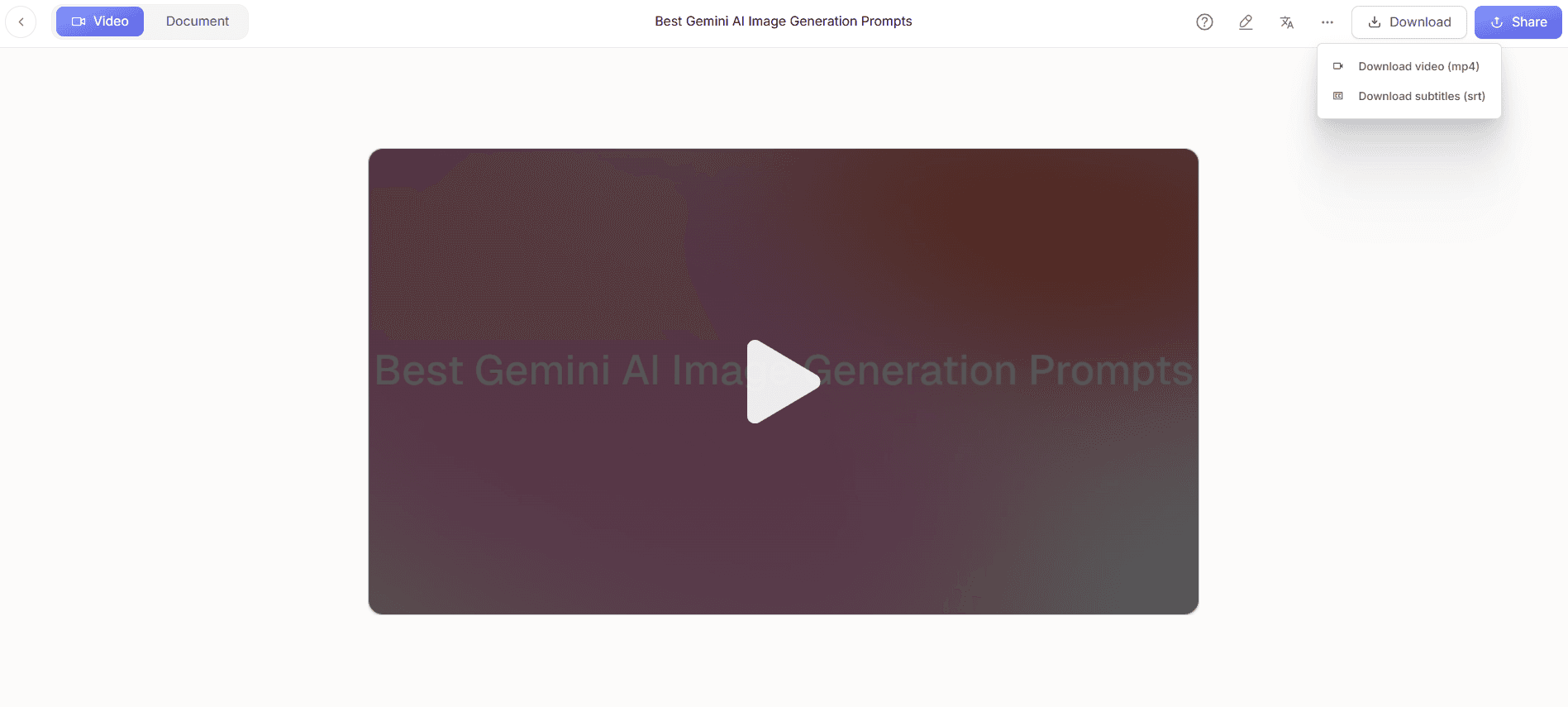
Trupeer supports multi-format export, allowing you to distribute documentation in formats like MP4, HTML, PDF, and SCORM. This flexibility ensures that your documentation can be accessed on various platforms, accommodating different user preferences and technical requirements. Whether your team needs video tutorials or text-based guides, Trupeer's export options make it easy to provide the right format for every situation. This versatility is especially beneficial for organizations that employ a mix of learning and communication styles across their teams.
How do you create effective documentation step by step with Trupeer?
Step 1: Capture the Process
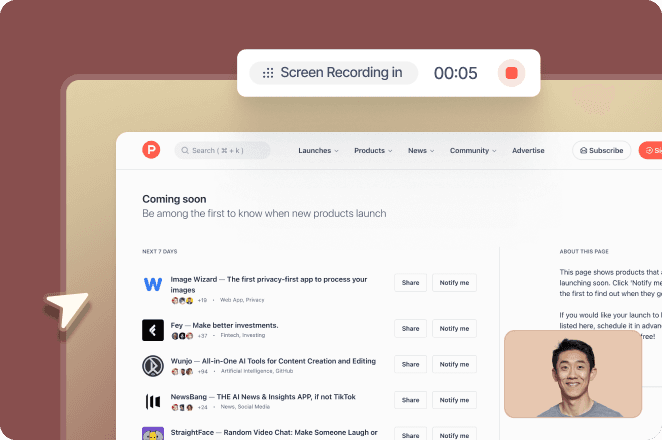
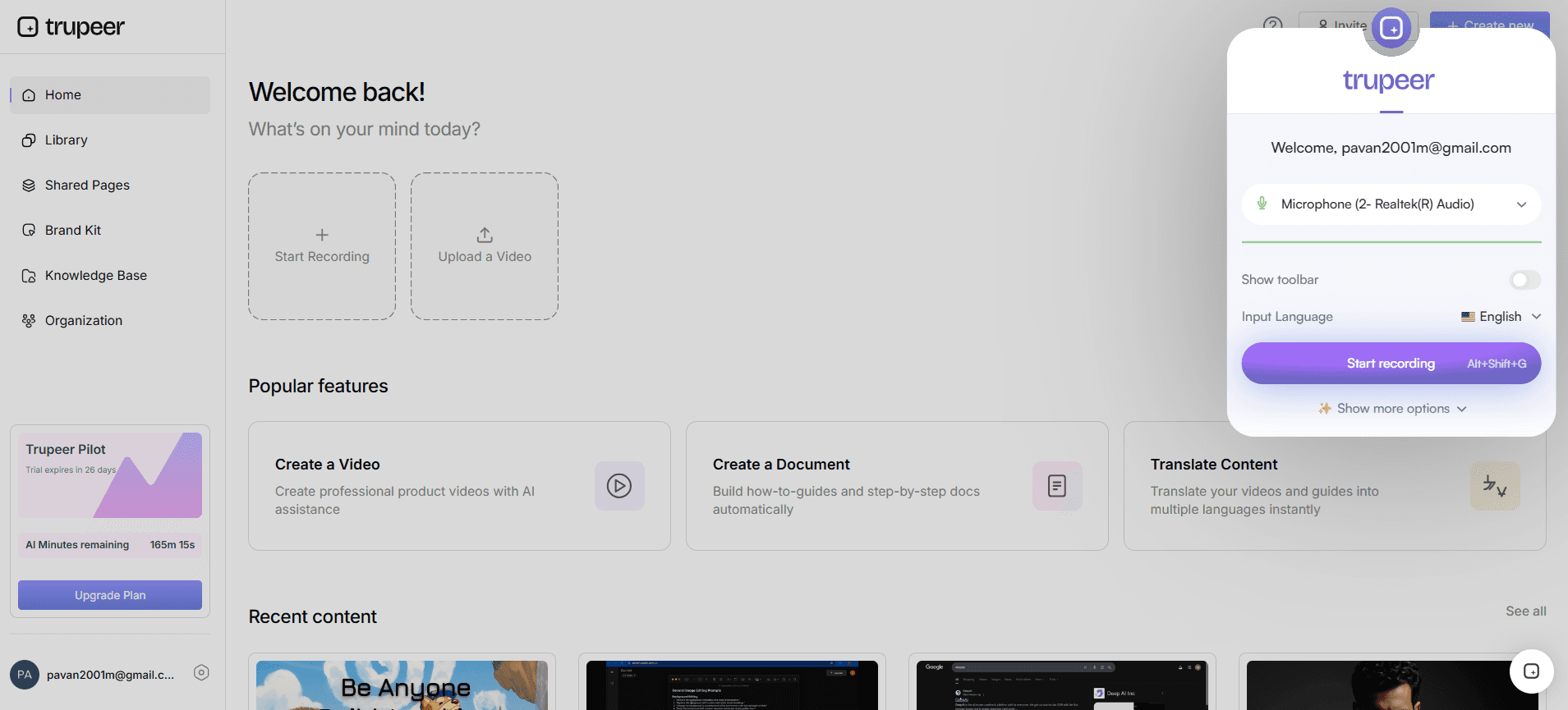
Start by using Trupeer's AI screen recording with auto-zoom and click detection. Open the Trupeer browser-based recorder or desktop app, and begin capturing the process you want to document. The auto-zoom feature highlights key areas, ensuring clarity. Click detection automatically marks interactions, making it easier to follow the steps later. This method is particularly useful for documenting complex workflows, as it captures every detail in high resolution. Depending on the complexity, allow 10-20 minutes for a thorough recording. In cases where the process involves multiple systems, ensure each is captured sequentially to avoid confusion.
Step 2: Edit and Enhance
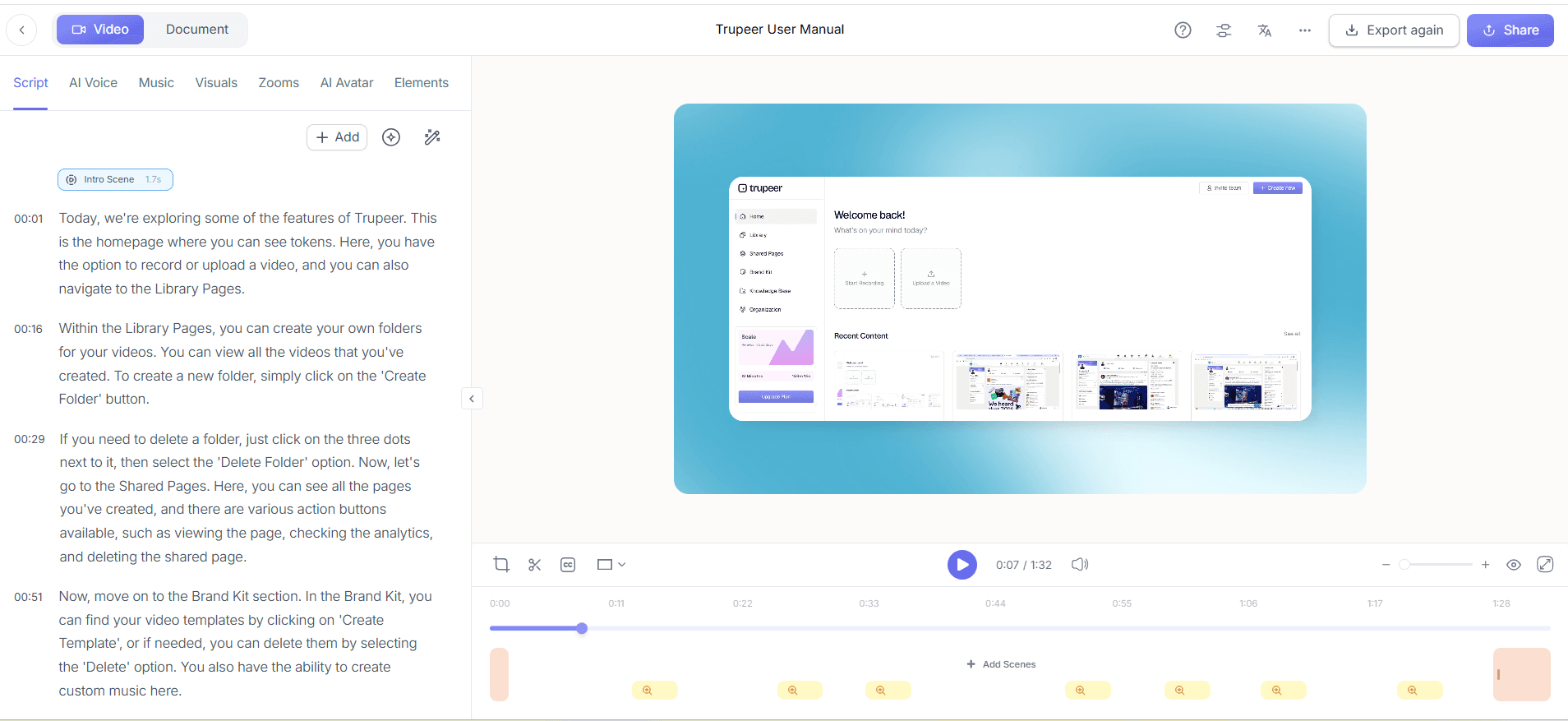
Once the recording is complete, use Trupeer's automatic filler-word removal to clean up the audio. This feature takes out unnecessary pauses and filler words like "um" and "ah," resulting in a polished final product. Next, apply AI voiceover to add narration, selecting from 65+ natural voices. Adjust the pace and tone to match your organization's style. This step typically takes 15-30 minutes, depending on the recording length. If your organization uses custom avatars, integrate them using HeyGen, enhancing visual consistency across your documentation.
Step 3: Generate SOPs
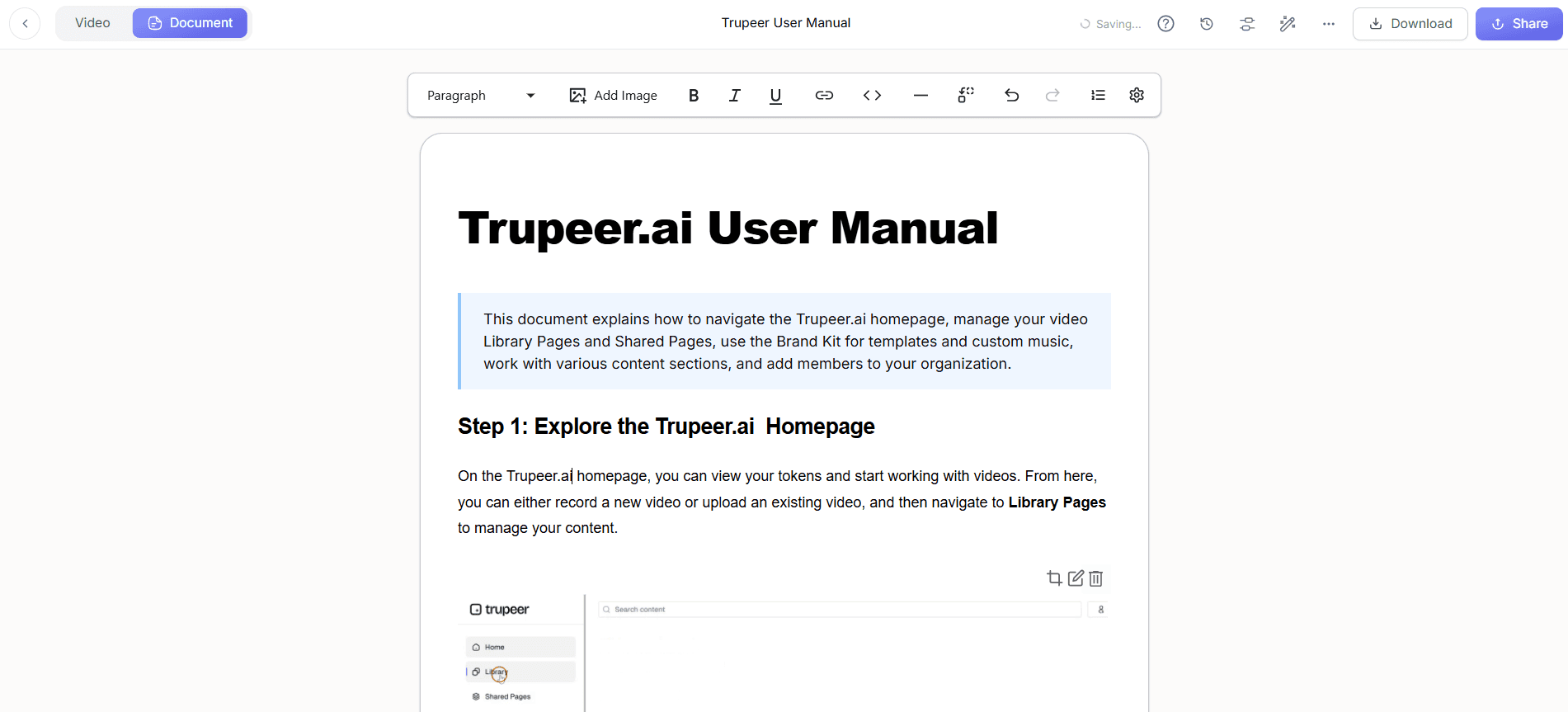
After editing, use Trupeer's automatic SOP generation. Navigate to the documentation tab and select "Generate SOP." The platform automatically converts your recording into an edit-ready document. Review the generated SOP for accuracy, making adjustments as needed. This feature saves significant time compared to manual transcription, often completing in under five minutes. For organizations with specific compliance requirements, ensure the SOP aligns with industry standards and adjust accordingly. Export the SOP in your desired format, such as PDF or HTML, for distribution. Teams weighing tools often start with a Loom alternatives comparison before standardizing on a workflow.
Step 4: Update Documentation
Link your SOPs to the original recordings using Trupeer's auto-updating documentation feature. This ensures any future changes in the process are automatically reflected in the documentation. Access the "Link to Recording" option and select the relevant video. This linkage ensures accuracy and consistency, reducing the need for manual updates. The auto-update process is smooth, completing in a matter of seconds. For teams managing multiple processes, this feature simplifies updates significantly, allowing focus on more strategic tasks.
Step 5: Translate and Localize
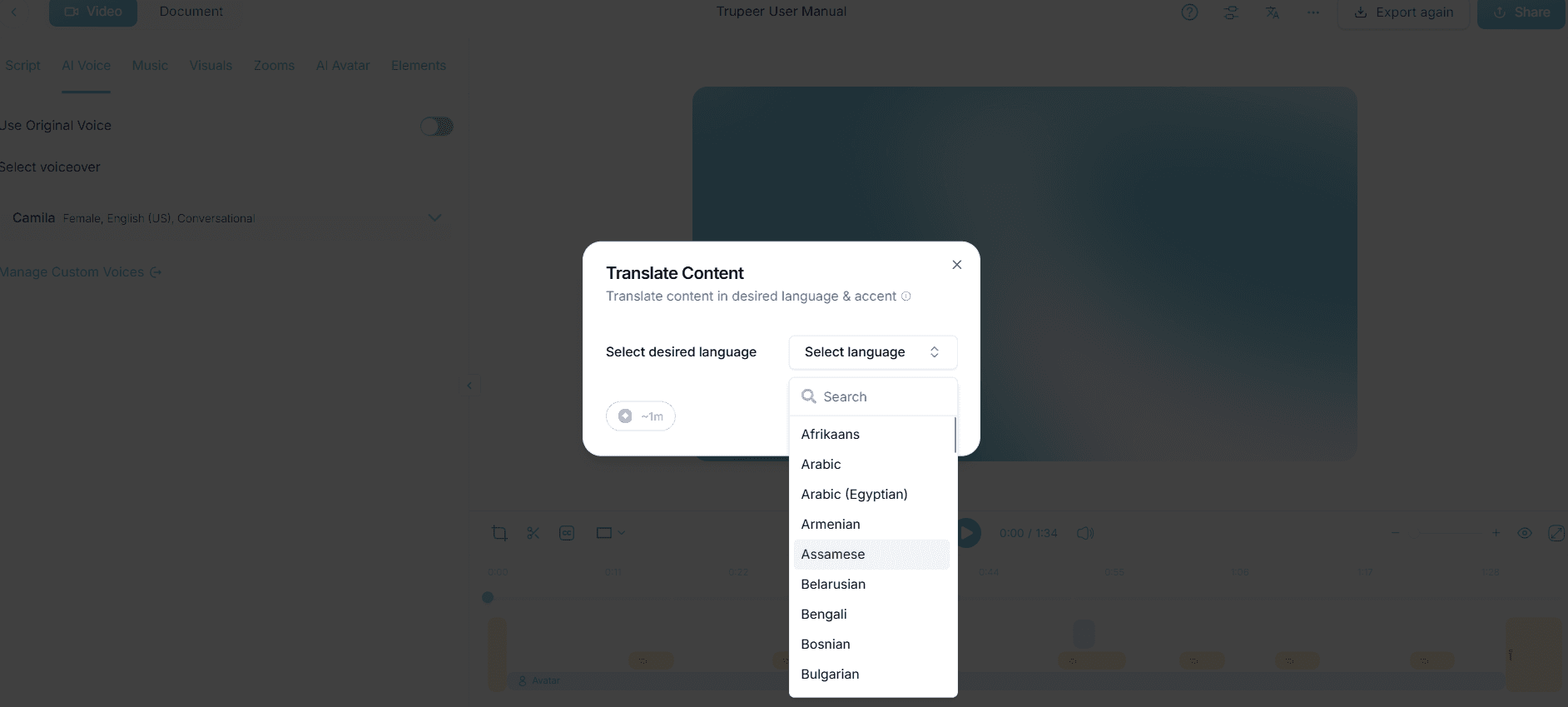
For global teams, translate the documentation using Trupeer's AI translation into 40+ languages. Access the "Translate" feature and select your desired languages. This capability includes AI dubbing, which syncs the translated voiceover with the video, maintaining lip-sync accuracy. The translation process is quick, typically taking less than 10 minutes per language, depending on document length. Ensure that translated versions are reviewed by native speakers to verify cultural and contextual accuracy. This step ensures your documentation is accessible to all team members, regardless of language.
Step 6: Distribute and Monitor
Finally, distribute the documentation using Trupeer's AI-searchable knowledge base. Upload your documents to the knowledge base, ensuring they are indexed with timestamp-level deep links. This makes it easy for team members to find specific information quickly. Enable custom-domain hosting with SSO for secure access, and consider creating shared pages or client-facing portals if needed. Monitor viewer engagement analytics to understand how team members interact with the documentation, identifying areas for improvement. This feedback loop is crucial for maintaining high-quality documentation over time.
What tips help you create effective ITSM documentation?
Creating effective ITSM documentation involves strategic planning and the use of the right tools. Here are some practical tips to enhance your documentation process:
Standardize Formats. Use consistent templates to ensure all documentation maintains a uniform appearance, which improves readability and professionalism.
Integrate Multimedia. Include images, videos, and diagrams to break up text and provide visual examples. This is especially effective when using a Scribe alternative comparison for visual SOPs.
Regularly Update. Schedule periodic reviews of your documentation to keep it current. Outdated information can lead to costly errors.
use Feedback. Encourage team members to provide feedback on documentation usability. This input can drive improvements and ensure that materials meet user needs.
use AI Tools. Use AI-powered tools to automate repetitive tasks and improve accuracy. This includes translation and voiceover capabilities, which are part of a documentation platform internal external docs tool.
Focus on Clarity. Write in clear, concise language. Avoid jargon unless it's necessary, and always define terms for new users.
Train Your Team. Ensure all team members know how to access and use the documentation effectively. Regular training sessions can help maintain this skill set.
Frequently asked questions
How can Trupeer improve ITSM documentation efficiency?
Trupeer enhances ITSM documentation efficiency by automating repetitive tasks, such as SOP generation and translation. This reduces the time spent on manual documentation processes. With features like AI screen recording and automatic updates, Trupeer ensures your documentation is both accurate and current. These capabilities free up your IT team to focus on more strategic tasks, ultimately improving service delivery and reducing downtime. By integrating smoothly with other tools and platforms, Trupeer offers a comprehensive solution that supports simplified operations.
What makes Trupeer different from other documentation tools?
Trupeer stands out with its AI-driven features that automate key documentation tasks. Unlike traditional tools, Trupeer offers AI voiceover, automatic filler-word removal, and real-time translation, which significantly enhance the quality and accessibility of your documentation. Its AI-searchable knowledge base provides quick access to relevant information, improving efficiency. The platform's ability to auto-generate and update SOPs tied to recordings ensures accuracy and saves time. These unique features make Trupeer an ideal choice for teams looking to modernize their documentation processes.
Can Trupeer handle multilingual documentation?
Yes, Trupeer is equipped to handle multilingual documentation efficiently. With AI translation into over 40 languages and synchronized dubbing, it ensures your documentation is accessible to a global audience. This feature is crucial for organizations operating in multiple regions, as it maintains consistency and accuracy across languages. Trupeer's translation capabilities, coupled with its AI video translation, provide a smooth experience, allowing you to cater to diverse audiences without compromising on quality.
Does Trupeer offer analytics for documentation usage?
Trupeer provides solid analytics for documentation usage. Its viewer engagement analytics feature tracks how team members interact with your documentation, offering insights into areas that may require improvement. Metrics such as viewer drop-off points and heatmaps help identify sections that may be confusing or irrelevant. This data-driven approach allows you to refine your documentation continuously, ensuring it remains effective and user-friendly. By using these analytics, teams can enhance their documentation strategy and improve overall service efficiency.
Is Trupeer suitable for both small and large IT teams?
Trupeer is designed to accommodate the needs of both small and large IT teams. Its scalable features ensure that as your organization grows, your documentation processes can expand smoothly. For small teams, Trupeer simplifies documentation through automation, reducing the burden on limited resources. Large teams benefit from its advanced capabilities, such as multi-format export and shared client-facing portals, which support complex and distributed operations. Trupeer's flexibility and comprehensive suite of tools make it a valuable asset for any team size.
What would happen if your SOPs disappeared tomorrow?
Onboarding would stall, support would slow, and tribal knowledge would rule, which is why guides are critical infrastructure. With Trupeer's process documentation template, one recording becomes a documented guide you can refresh in a single click.