Trupeer Blog
Summarise

Imagine you're leading an enterprise IT team facing a constant barrage of support requests. Each day, your team spends hours answering the same questions and troubleshooting similar issues. You wish there were a way to capture this information efficiently and make it accessible to everyone in your organization. This is where setting up a solid knowledge base comes into play. A well-structured knowledge base can reduce your team's workload by up to 30%, freeing up valuable time for more strategic tasks. The challenge lies in establishing a system that is comprehensive yet easy to maintain from day one. For insights on how to approach this, check out some of the best knowledge base examples in the industry. This guide is designed specifically for enterprise IT teams looking to set up an efficient Atomicwork knowledge base, ensuring that your documentation is not just a static repository but a dynamic tool for ongoing learning and improvement.
Why does an Atomicwork knowledge base setup matter?
In large enterprises, IT teams often find themselves overwhelmed by repetitive support inquiries and troubleshooting tasks. This can lead to increased operational costs and decreased productivity. The absence of a centralized knowledge repository means that each team member must independently solve problems that may have already been addressed, leading to fragmented solutions and inconsistent service quality. IT teams need a simplified process for capturing, updating, and disseminating information across the organization. This is where an Atomicwork knowledge base becomes crucial. It allows for the consolidation of institutional knowledge, ensuring that all team members have access to the same information, so reducing redundancy and improving service consistency. Implementing a knowledge base not only saves time but also enables team members to resolve issues independently, building a culture of self-service and continuous improvement.
Also, a well-managed knowledge base supports various operations workflows by providing a single source of truth. This is particularly important in enterprise environments where the accuracy and timeliness of information can significantly impact decision-making processes. By maintaining up-to-date documentation, IT teams can quickly adapt to changes in technology and business processes, ensuring that they remain aligned with organizational goals. This proactive approach not only enhances operational efficiency but also contributes to a more resilient IT infrastructure, capable of supporting the evolving needs of the enterprise.
What are the benefits of setting up an Atomicwork knowledge base?
Establishing an Atomicwork knowledge base offers numerous advantages that can significantly enhance the effectiveness of your IT team. Here are some key benefits:
Improved efficiency. By centralizing information, your team can find answers quickly, reducing time spent on repetitive queries. This simplifying can lead to a 30% reduction in response times.
Consistent information. A centralized repository ensures that all team members access the same, up-to-date information, reducing inconsistencies and errors in communication. This consistency is critical for maintaining high service quality.
Enhanced onboarding. New team members can access a knowledge base one to quickly get up to speed, decreasing time to productivity by 20%.
Scalability. As your organization grows, the knowledge base can scale to accommodate new information and processes, ensuring that it remains a valuable resource without requiring a complete overhaul.
Self-service capabilities. With an accessible knowledge base, employees can resolve common issues on their own, reducing the volume of support requests and enabling users to take charge of their learning.
Reduced training costs. using an AI video platform for tutorials and guides can cut training costs by up to 40%, as employees can learn at their own pace.
Which Trupeer features help you set up an Atomicwork knowledge base?
Trupeer offers a suite of features designed to enhance the setup and management of your Atomicwork knowledge base. These features ensure that your knowledge base is comprehensive, user-friendly, and easy to maintain.
AI screen recording with auto-zoom and click detection
Trupeer's AI screen recording feature allows IT teams to capture detailed walkthroughs of processes and solutions. With auto-zoom and click detection, the tool highlights key actions and areas on the screen, making recordings more engaging and informative. This capability is ideal for creating step-by-step guides that users can easily follow. The recordings can be stored directly in your AI-searchable knowledge base, ensuring that all team members have access to the most current and relevant information. This feature is particularly useful for documenting complex software installations or troubleshooting steps, as it captures the nuances that written instructions might miss.
Automatic SOP generation from any recording
The automatic SOP generation feature transforms your recordings into edit-ready, exportable standard operating procedures. This capability saves time and ensures consistency in documentation practices. Once a recording is captured, Trupeer's system analyzes it and generates a text-based SOP that is linked to the original video. This dual-format approach allows users to choose their preferred method of learning, whether through video or text. also, the SOPs can be exported in multiple formats, including MP4 and PDF, making them versatile for different use cases. This feature is essential for maintaining accurate and up-to-date procedures in your AI documentation platform.
AI avatars / talking-head video
Adding a human touch to your knowledge base is made easy with Trupeer's AI avatars and talking-head videos. This feature allows you to create engaging instructional content that feels more personal and relatable. You can choose from a stock library of avatars or create custom ones using HeyGen integration. The avatars can be used to explain complex topics, provide step-by-step instructions, or even conduct virtual training sessions. This not only enhances the learning experience but also increases user engagement and retention. By incorporating avatars into your knowledge base software teams customers tool, you make the content more approachable and easier to understand.
AI translation into 40+ languages with lip-sync
For global organizations, language barriers can pose a significant challenge to effective knowledge sharing. Trupeer's AI translation feature offers a solution by translating your content into over 40 languages, complete with lip-sync for video content. This ensures that your knowledge base is accessible to all employees, regardless of their language preference. By providing translated content, you build inclusivity and ensure that everyone in the organization can benefit from the shared knowledge. This feature is particularly valuable for multinational enterprises looking to unify their documentation efforts across different regions and languages.
Viewer engagement analytics, drop-off, and heatmaps
Understanding how users interact with your knowledge base is crucial for ongoing improvement. Trupeer provides detailed analytics on viewer engagement, including drop-off rates and heatmaps. These insights help you identify which parts of your content are most effective and which areas may need enhancement. By analyzing user behavior, you can tailor your content to better meet the needs of your audience, ensuring that it remains relevant and useful. This data-driven approach allows you to continuously refine your knowledge base strategy, making it a more effective resource for your team.
How do you set up an Atomicwork knowledge base step by step with Trupeer?
Step 1: Capture the Process
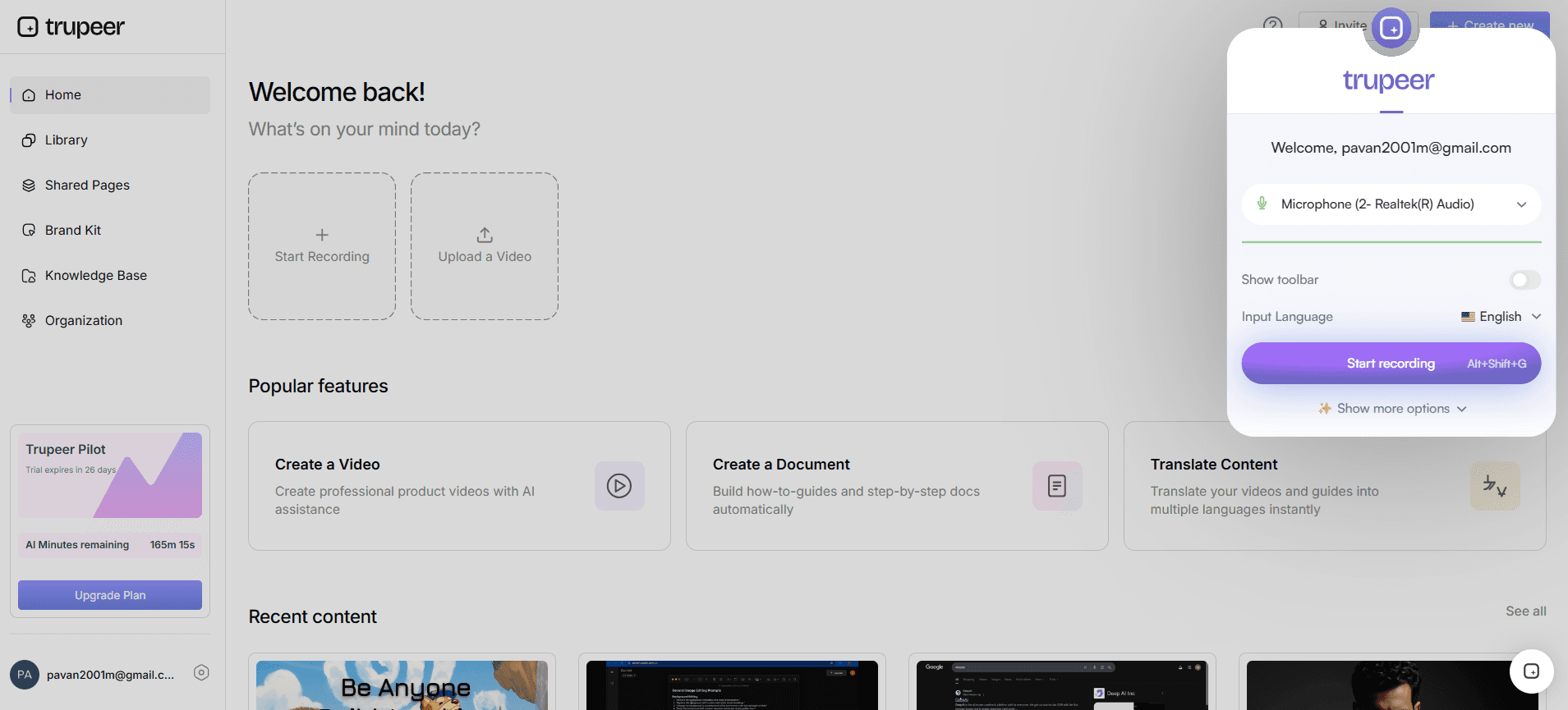
Begin by using Trupeer's AI screen recording with auto-zoom and click detection to document the process you want to include in your knowledge base. Open the Trupeer desktop app or browser-based recorder, and start a new recording session. As you perform each action on your screen, Trupeer automatically zooms in on key areas and highlights clicks, creating a clear visual guide. Once the recording is complete, stop the session. The recording is processed within minutes, ready for review. Ensure the video captures all essential steps, as this will form the foundation of your documentation. If necessary, reshoot any sections that are unclear or incomplete.
Step 2: Generate the SOP
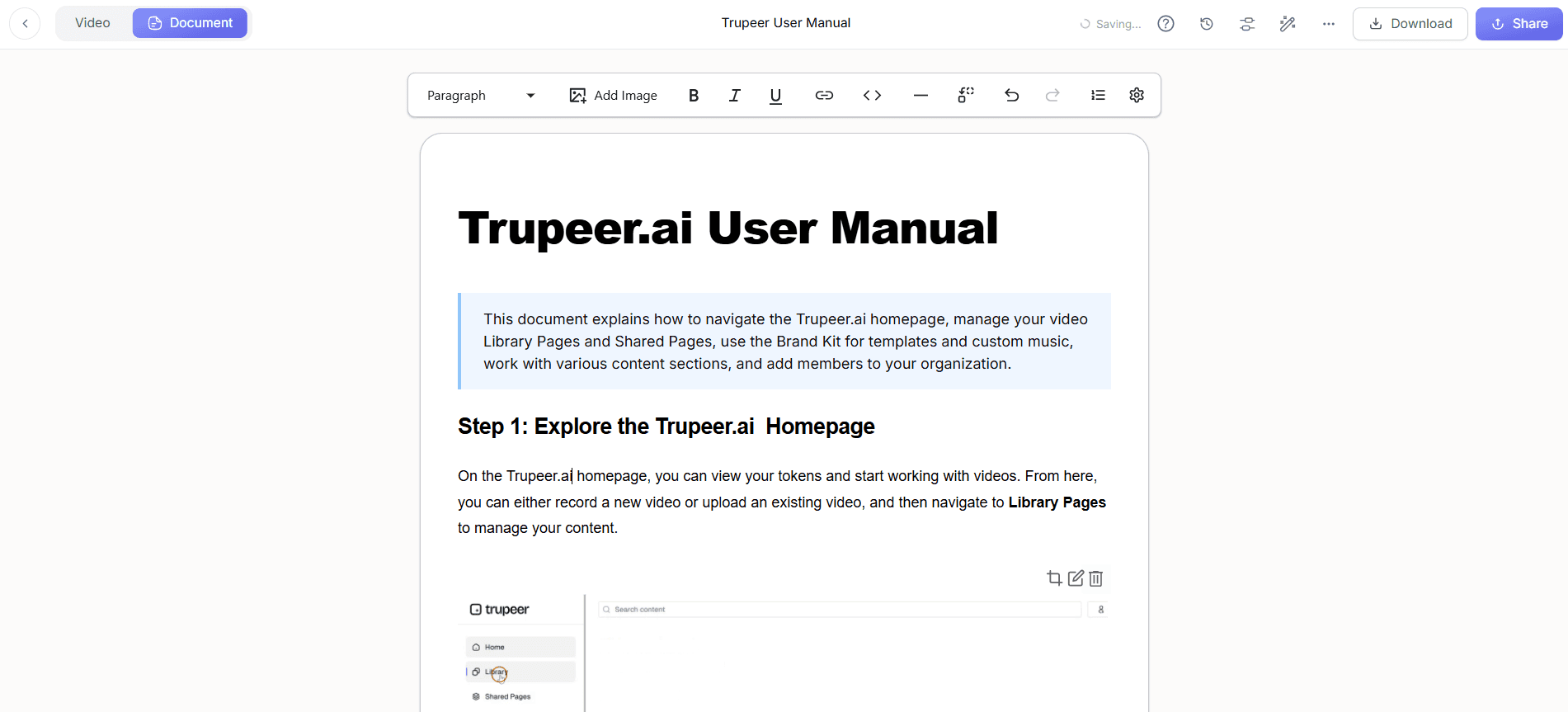
With your recording ready, use Trupeer's automatic SOP generation feature. Navigate to the recording in your library and select "Generate SOP." Trupeer analyzes the video and transcribes it into a detailed, text-based standard operating procedure. This SOP is edit-ready and can be exported as MP4, HTML, PDF, or SCORM, making it versatile for various documentation needs. Review the SOP and make any necessary edits to clarify instructions or add additional context. The process usually takes a few minutes, but the editing phase depends on the complexity of the content and your specific requirements.
Step 3: Enhance with AI Avatars
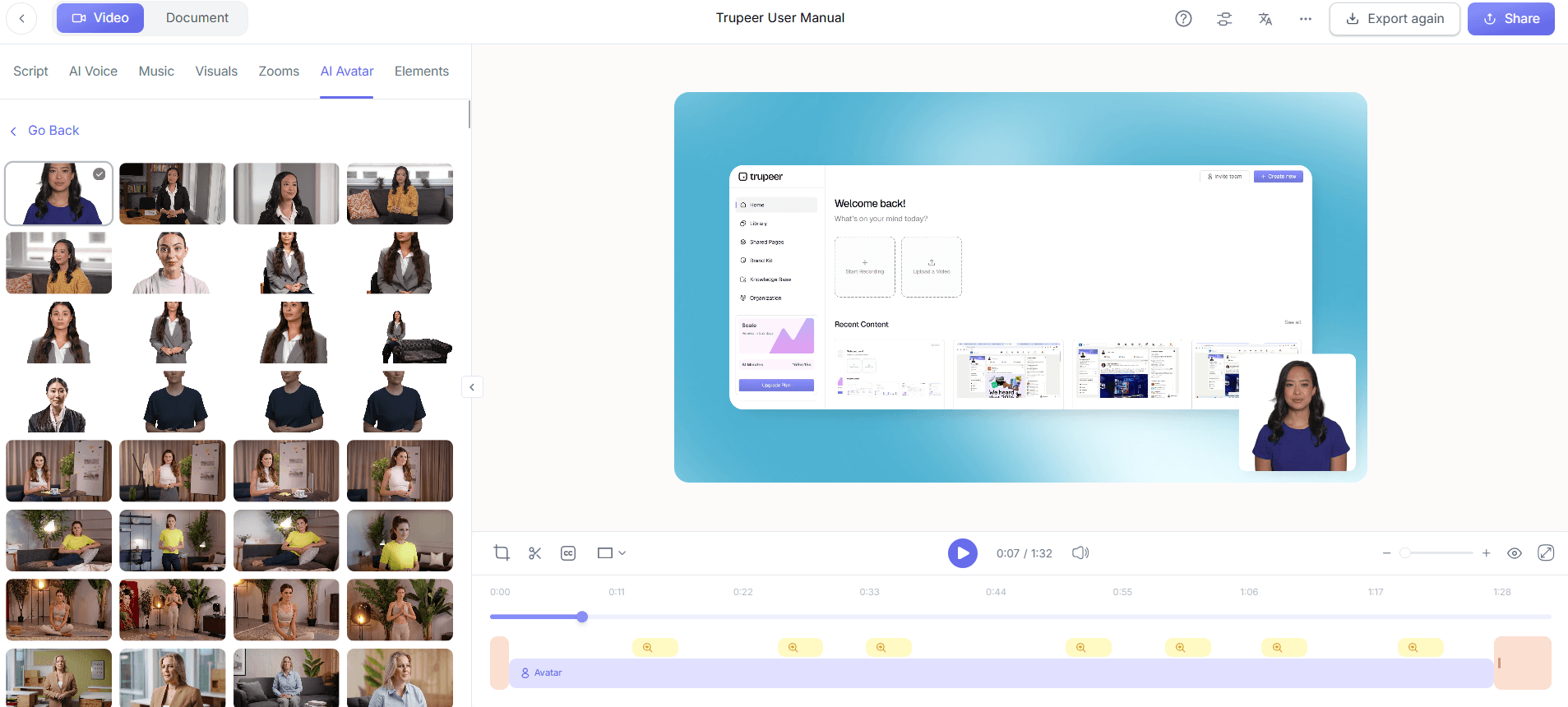
To make your knowledge base more engaging, integrate AI avatars into your content. Choose a suitable avatar from Trupeer's stock library or create a custom one with HeyGen integration. Add the avatar to your video using the "Add Avatar" option in the video editor. The avatar can serve as a presenter, guiding viewers through the steps outlined in your SOP. This feature not only makes the content more relatable but also helps in maintaining viewer interest. It might take a few attempts to sync the avatar perfectly with your narrative, but the effort pays off in user engagement.
Step 4: Translate Content
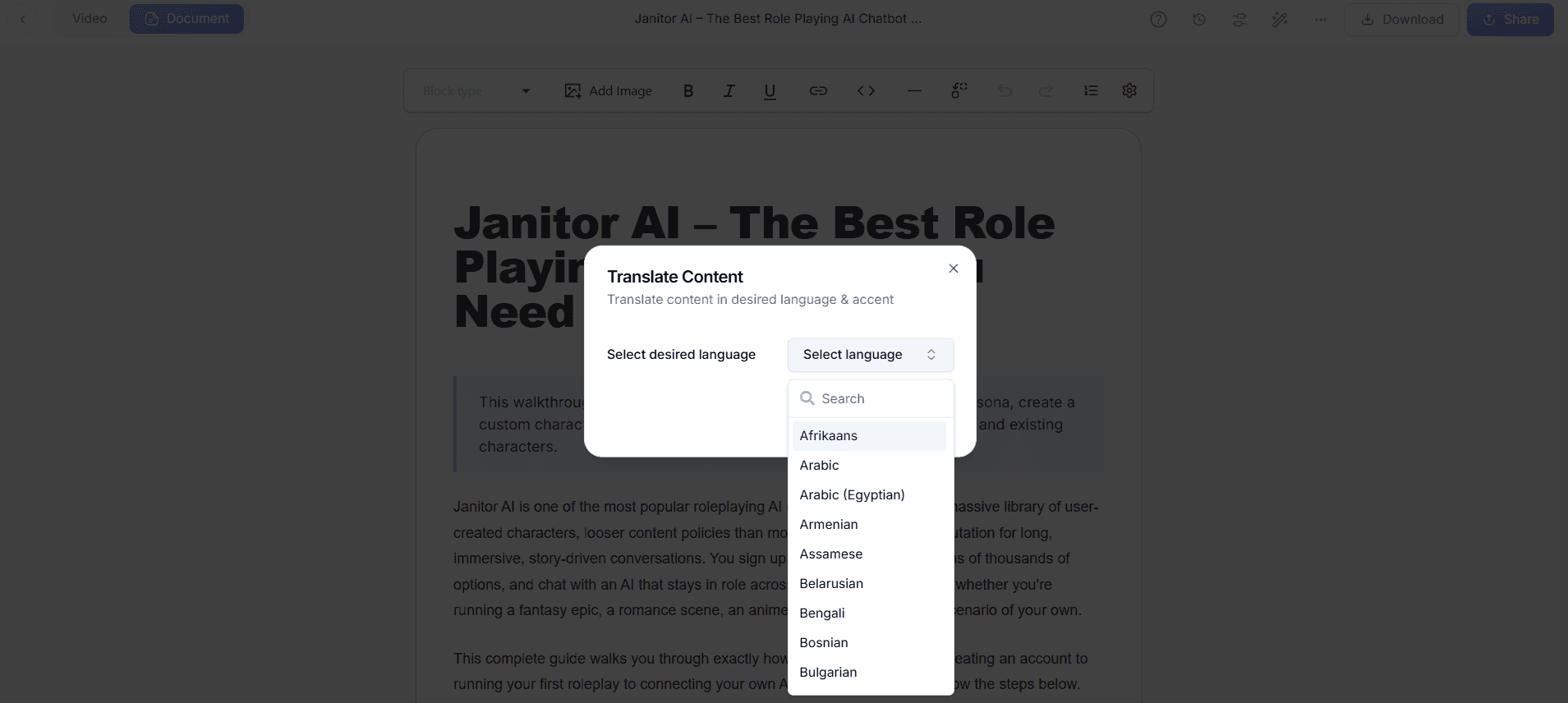
If your organization operates globally, you'll want to make your knowledge base accessible to non-English speakers. Use Trupeer's AI translation feature to convert your content into over 40 languages. Select "Translate" from the video options, choose the target language, and let Trupeer handle the rest. The translation process includes lip-sync adjustments for video content, ensuring smooth viewing. This step typically takes several minutes, depending on the length of the content. After translation, preview the content to confirm accuracy and make any necessary adjustments, especially for technical terms that might not translate directly.
Step 5: Distribute the Knowledge Base
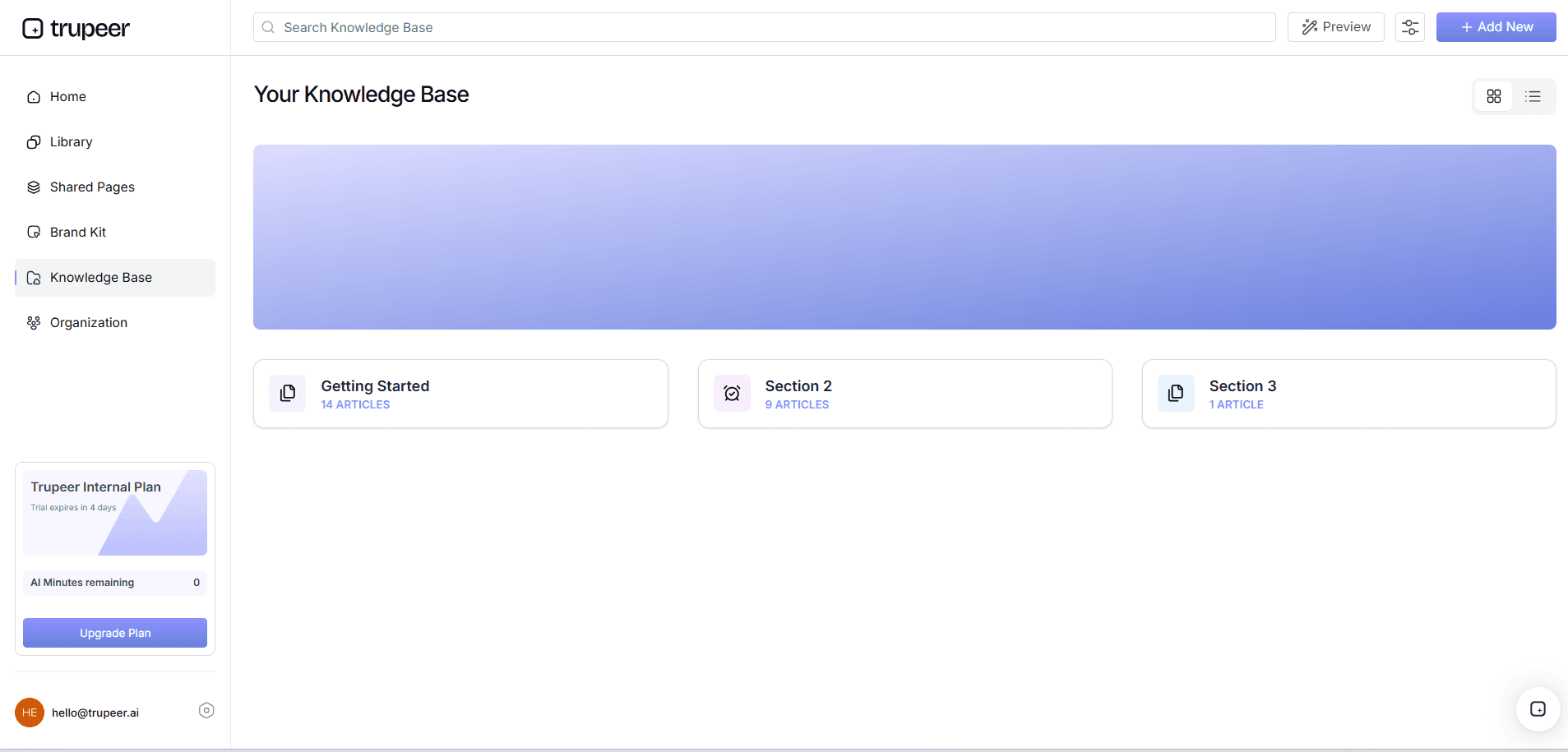
With your content ready, it's time to distribute it using Trupeer's distribution capabilities. Host your knowledge base on a custom domain with SSO for secure access. Share individual pages or create client-facing portals for specific audiences. Use embeddable video widgets to integrate content directly into relevant applications or websites. This approach ensures that your knowledge base is not just a standalone resource but an integral part of your organization's digital ecosystem. You can check out a Loom alternative comparison to see how Trupeer stands out in this regard.
Step 6: Monitor and Improve
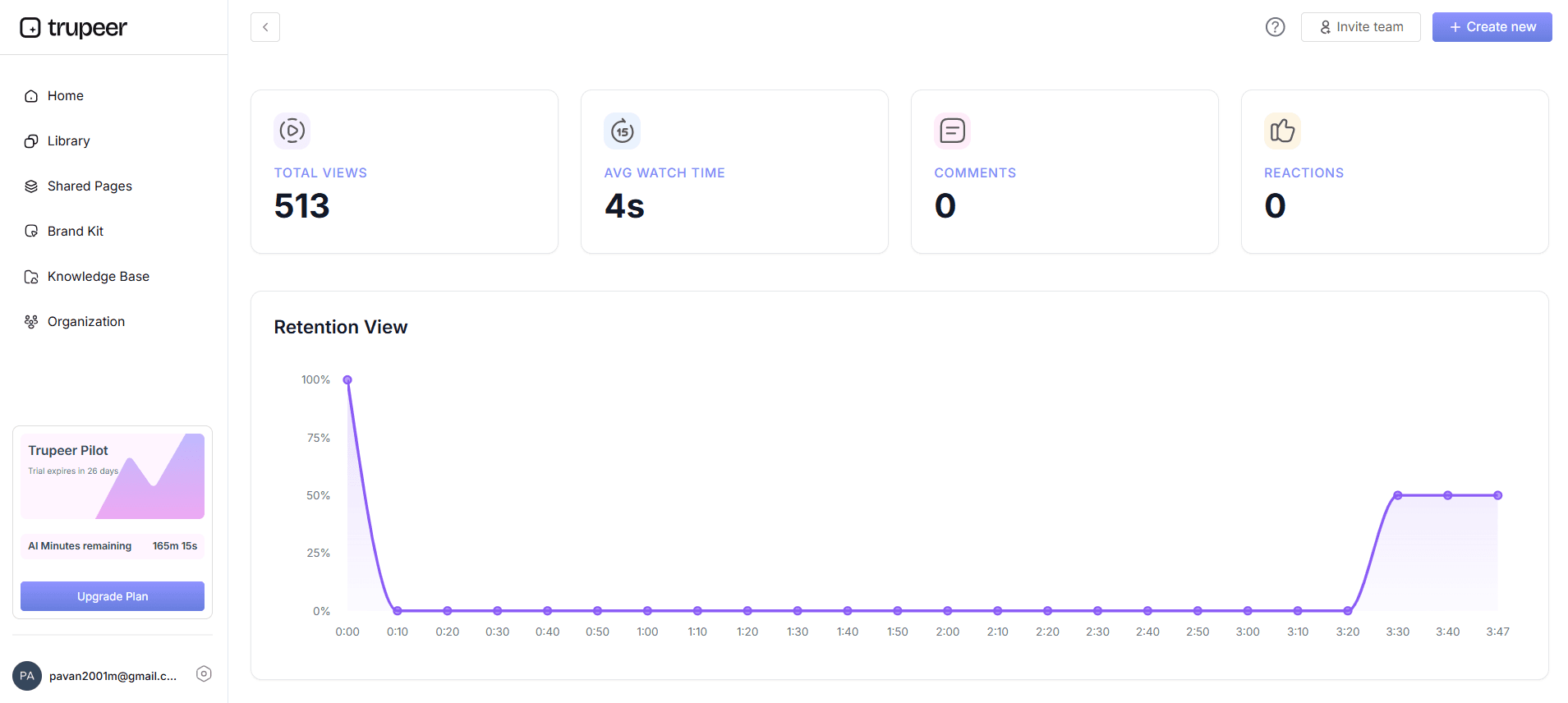
After launching your knowledge base, use Trupeer's viewer engagement analytics to track performance. Access drop-off rates and heatmaps to see which parts of your content are most effective and which need improvement. Regularly update the knowledge base with new recordings and SOPs to keep it relevant. Encourage feedback from users to identify gaps or areas for enhancement. This continuous improvement process ensures that your knowledge base remains a valuable resource, aligned with the evolving needs of your team. For further refinement, explore online knowledge base software teams customers options.
What tips help you set up an Atomicwork knowledge base?
Creating an effective Atomicwork knowledge base requires strategic planning and execution. Here are some tips to help you maximize its impact and usability:
Keep content concise. Ensure each entry is clear and to the point. Overly lengthy content can deter users from engaging fully.
Regularly update information. Information can become outdated quickly. Schedule routine reviews to ensure accuracy and relevance.
Use multimedia elements. Incorporate videos and images to make complex information more digestible. Visual aids can enhance understanding.
Organize logically. Structure your knowledge base with intuitive navigation. Categories and subcategories should reflect user needs.
Encourage feedback. Allow users to comment or flag issues within the knowledge base. This can highlight areas needing clarification or expansion.
Train your team. Educate team members on best practices for using and contributing to the knowledge base. This ensures consistent quality and style.
Consider security. Protect sensitive information with appropriate access controls. A Scribe alternative comparison can offer insights into secure documentation methods.
Frequently asked questions
How do you maintain an Atomicwork knowledge base over time?
Maintaining a knowledge base requires regular updates and reviews. Schedule periodic audits to check for outdated or irrelevant information. Encourage contributions from team members who can provide fresh insights or solutions. Use analytics tools to monitor which content is frequently accessed and which is not, guiding you on what to update or remove. Automated tools can help simplify this process, ensuring consistency and reducing manual effort.
What is the most effective way to organize a knowledge base?
An effective organization strategy involves categorizing content by topics and subtopics that align with user queries. Use clear and descriptive titles, and implement a search function for easy navigation. Consider user feedback to continually refine the structure. A well-organized knowledge base minimizes search time and maximizes efficiency, making it easier for users to find the information they need quickly.
Can Trupeer handle multilingual knowledge bases?
Yes, Trupeer supports multilingual knowledge bases through its AI translation feature. This capability allows you to translate content into over 40 languages, complete with lip-sync for videos. By offering multilingual support, you make your knowledge base accessible to a broader audience, promoting inclusivity and ensuring that language barriers don't impede access to information.
Does using AI avatars improve engagement in knowledge bases?
AI avatars can significantly enhance engagement by adding a personal touch to instructional content. They make explanations more relatable and can help maintain viewer interest, especially in complex topics. By humanizing the content, avatars can increase information retention and make the learning experience more enjoyable, so improving overall user satisfaction.
What role does analytics play in optimizing a knowledge base?
Analytics provides valuable insights into how users interact with your knowledge base. By examining viewer engagement metrics, such as drop-off rates and heatmaps, you can identify which content resonates most with users and which areas need improvement. This data-driven approach allows for targeted updates, enhancing the overall effectiveness of your knowledge base. For a deeper understanding of how Trupeer integrates analytics, explore its AI video translation and analytics capabilities.