Trupeer Blog
Summarise
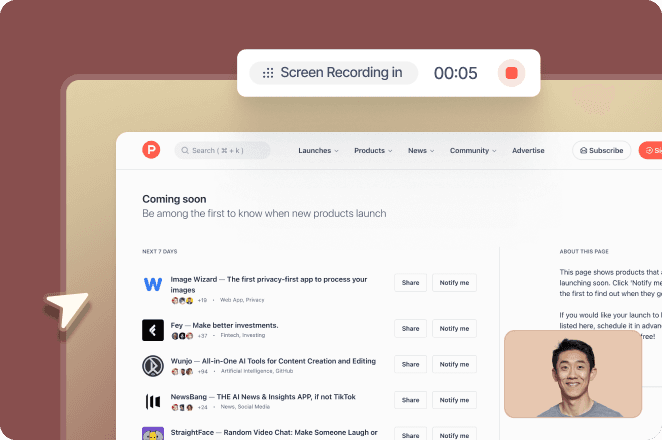
Appcues is a solid product-onboarding tool, but narrow. Here are eight alternatives matched to different product shapes, with honest tradeoffs.
Why Teams Consider Appcues Alternatives
Appcues has been a player in the product onboarding category for over a decade, known for its specialization in in-app tooltips, walkthroughs, and checklists specifically for SaaS products. For product-led teams that are tightly focused on these aspects, it's a reliable choice. However, teams often find themselves looking beyond Appcues for several key reasons. One significant factor is the pricing structure, which can become prohibitive for products with high monthly active users (MAU). Additionally, Appcues's feature set is quite narrow: it lacks native video capabilities, offers limited analytics depth, and doesn't provide coverage for enterprise internal apps. As teams grow and evolve, their needs often outpace what Appcues can offer, necessitating a search for a tool that can accommodate their next stage of development. Below are eight alternatives that are worth evaluating, each with its own set of tradeoffs and benefits.
For a comprehensive understanding of the broader Digital Adoption Platform (DAP) category, refer to the documentation overview for more insights.
Feature Comparison: Appcues vs. Alternatives
Tool | Best for | Video support | Enterprise apps | Starts at |
|---|---|---|---|---|
Trupeer | Video-first onboarding | Yes (native AI) | Via recording | $2,400/yr |
Appcues | Product-led teams | Embed | No | $300/mo |
Userpilot | Mid-market SaaS | Embed | No | $299/mo |
Pendo | Analytics-first | No | Limited | Free (500 MAU) |
Chameleon | Design-heavy | Embed | No | $279/mo |
UserGuiding | SMB budget | Embed | No | $89/mo |
HelpHero | Simple SaaS | No | No | $55/mo |
Whatfix | Enterprise | Yes | Yes | $30,000/yr |
Intercom Tours | Intercom users | Embed | No | Bundled |
Tool Breakdowns
1. Trupeer
Best for: Teams wanting video-first onboarding with SOP + docs included.
Trupeer stands out by providing an integrated solution that generates video, SOP, and documentation from a single screen recording. This makes it particularly suitable for teams that need more than just simple tooltips and are looking to enrich their onboarding content. The pricing model is based on a per-user system, which helps avoid unexpected costs as your product's MAU grows. This predictable pricing strategy can be a relief for teams looking to manage their budget effectively while scaling their operations.
Pros: Native video generation, content velocity, predictable pricing.
Cons: While Trupeer offers a comprehensive suite of features, its pure-tooltip builder is less sophisticated than Appcues when it comes to handling complex flow branching.
2. Userpilot
Best for: Mid-market SaaS teams on transparent pricing.
Userpilot is a direct competitor to Appcues, offering a similar set of features and a comparable pricing model. What sets Userpilot apart is its emphasis on user experience, with a slightly different user interface that some teams may find more intuitive. It also boasts a published pricing model that provides clarity on costs, which is particularly appealing for mid-market SaaS teams that need to plan their budgets meticulously.
Pros: Published pricing, effective event triggers that can enhance user interaction and engagement.
Cons: The pricing model is based on MAU, which can become costly as your user base expands.
3. Pendo
Best for: Analytics-first teams needing guidance secondarily.
Pendo excels in providing deep analytics, making it a preferred choice for teams that prioritize detailed insights into user behavior and product engagement. While it may not be as user-friendly for building guidance flows as other tools, its analytics capabilities are unrivaled. Pendo's free tier is also a plus, allowing smaller teams to access its core features without an upfront cost.
Pros: Exceptional analytics depth that supports comprehensive funnel analysis and user tracking.
Cons: The platform can be cumbersome to configure, which might require a steeper learning curve for new users.
4. Chameleon
Best for: Design-focused teams.
Chameleon offers greater flexibility in customizing the appearance of tooltips and other in-app messages, making it an excellent choice for design-centric teams. This tool allows for a high level of design control, enabling teams to ensure their onboarding flows are aesthetically aligned with their brand identity.
Pros: Extensive design control that suits teams looking to maintain a strong visual brand presence.
Cons: The added flexibility comes at a cost, with Chameleon being one of the pricier options in the market.
5. UserGuiding
Best for: SMB budget-conscious teams.
UserGuiding is tailored for small to medium-sized businesses that need a cost-effective solution for product onboarding. It offers a self-service model that covers the basics of user guidance without breaking the bank, making it an attractive option for teams with tighter budgets.
Pros: Very affordable pricing that allows smaller teams to implement onboarding solutions without significant financial investment.
Cons: The feature set is limited and may not scale well as your business grows and requires more sophisticated capabilities.
6. HelpHero
Best for: Simple SaaS products.
HelpHero is a low-cost option ideal for SaaS products with minimal onboarding needs. It provides a straightforward feature set that is easy to use and implement, making it suitable for teams that don't require advanced functionality.
Pros: Inexpensive solution that delivers basic onboarding features efficiently.
Cons: Extremely limited in scope, lacking advanced features needed for more complex user onboarding strategies.
7. Whatfix
Best for: Enterprise teams beyond product onboarding.
Whatfix distinguishes itself by offering comprehensive support for enterprise applications, including those that Appcues can't cover, like SAP, Salesforce, and Workday. This makes it invaluable for large organizations that need to onboard both customers and employees across a variety of complex platforms.
Pros: Deep enterprise integration capabilities that address both external and internal onboarding needs.
Cons: The high cost and lengthy implementation process can be barriers for smaller teams or those with less complex needs.
8. Intercom Product Tours
Best for: Intercom customers.
Intercom Product Tours are integrated directly with the Intercom platform, providing a smooth experience for teams already invested in Intercom's suite of tools. This integration is particularly useful for teams that want to consolidate their communication and onboarding tools into a single platform.
Pros: Convenient integration with Intercom's support and messaging tools, enhancing the overall customer support experience.
Cons: As a standalone product, it lacks the depth and breadth of features that dedicated onboarding tools offer.
In-Depth Analysis: Which Alternative Fits Which Job
If You Need Video Natively
Appcues does support embedded video, but it doesn't generate video content itself. For teams that want to include 30 to 60-second explainer clips directly within tooltips without relying on external video creation tools, a platform that offers native video production is essential. Trupeer is uniquely positioned to meet this need, using its screen recording to video workflow to produce video content quickly and efficiently. Teams that adopt this capability often experience an activation lift of 15 to 25 percent on more complex user flows, significantly enhancing user engagement and comprehension.
If You Need Enterprise App Coverage
For teams requiring onboarding tools that cover a range of enterprise applications, Appcues falls short, as it doesn't support platforms like SAP, Salesforce, or Workday. Alternatives such as Whatfix, WalkMe, Apty, and Trupeer (via screen recording) extend coverage to these critical enterprise applications. For teams facing adoption challenges that span both customer-facing and employee-facing applications, a combination of tools is often the best approach. Using Appcues for product onboarding while employing Trupeer or Whatfix for internal app training can create a well-rounded onboarding strategy that addresses all user needs.
If You Need Deeper Analytics
While Appcues provides adequate analytics for product onboarding, teams that require in-depth funnel and retention analysis often turn to tools like Pendo, Amplitude, or Heap. These teams generally prefer to maintain Appcues for its guidance capabilities while integrating a dedicated analytics tool for more detailed data insights. This dual approach allows them to benefit from Appcues's user onboarding strengths while using solid analytics platforms to gain deeper insights into user behavior and product performance.
Challenges When Switching From Appcues
Flow rebuild. One of the primary challenges when switching from Appcues is the need to rebuild your existing onboarding flows. Appcues's flows don't easily port to alternate systems, requiring teams to recreate their onboarding processes from scratch.
Segment migration. User segments that have been meticulously crafted within Appcues need to be rebuilt in the new platform. This can be a time-consuming process that requires a deep understanding of the new tool's segmenting capabilities.
Team retraining. Product managers and other team members who have become accustomed to Appcues need to be trained on the new platform. This retraining process can temporarily slow down productivity as the team adapts to the new tools and workflows.
Analytics continuity. If your team has been heavily reliant on Appcues for analytics, consider maintaining a lower-tier subscription to Appcues to preserve historical analytics data. This continuity will ensure that you don't lose valuable insights and can make informed decisions during the transition.
Must-Have Features
No-code builder: Essential for enabling non-technical team members to create and manage onboarding flows without extensive coding knowledge.
Event-based triggers: These allow for more dynamic and responsive onboarding experiences, reacting to user actions in real-time.
Role-based targeting: Customizing onboarding experiences based on user roles ensures that the right guidance is delivered to the right users, enhancing relevance and engagement.
Video support native or easy embed: Video content is a powerful tool for explaining complex concepts and should be easily integrated into onboarding flows.
A/B testing: Crucial for optimizing onboarding strategies by testing different approaches and identifying the most effective methods.
Analytics tied to activation: Directly linking analytics to user activation metrics helps teams measure the effectiveness of their onboarding efforts.
Integration with CRM and product analytics: smooth integration with existing CRM and analytics tools ensures that onboarding efforts are aligned with broader business objectives.
Mobile support: As mobile usage continues to rise, supporting mobile onboarding flows is critical for reaching users across all devices.
Use Cases and Personas
Growth-stage SaaS: Keiko, Head of Product, 70-person B2B SaaS
Keiko, as the Head of Product at a 70-person B2B SaaS company, found that Appcues's pricing model became unsustainable as their monthly active users tripled. To address this issue, she decided to transition to Userpilot, which offered similar functionality at 40% lower cost. Within three weeks, her team was able to replicate their existing onboarding flows, ensuring a smooth transition without disrupting user experience. This move not only saved costs but also provided the flexibility needed to support their growth trajectory.
Video-first SaaS: Matthew, Senior PM, 150-person Developer Tools Company
Matthew, a Senior Product Manager at a 150-person company specializing in developer tools, faced challenges with complex API workflows that required clear and concise explanations. He decided to switch from Appcues to Trupeer to take advantage of its native video generation capabilities. By embedding 45-second video clips in 12 key tooltips, Matthew's team saw a 22-point increase in user activation on their most complex APIs. This strategic shift not only enhanced user understanding but also significantly improved engagement metrics.
Enterprise Expansion: Chi, VP of Customer Experience, 600-person Enterprise SaaS
Chi, the VP of Customer Experience at a 600-person enterprise SaaS company, encountered limitations with Appcues when her company integrated an enterprise CRM for internal use. Appcues couldn't provide the necessary support for Salesforce internally, prompting Chi to incorporate Trupeer for internal training and to build a comprehensive SOP library. By keeping Appcues for product onboarding and using Trupeer for internal applications, Chi's team was able to simplify both external and internal user onboarding processes effectively. For further insights into digital adoption platform combinations, see our DAP comparison.
Best Practices
Match the tool to your stage. It's crucial to select an onboarding tool that aligns with your company's current stage of growth. Smaller teams may prioritize cost-effectiveness and simplicity, while larger enterprises might seek comprehensive feature sets that cater to complex needs. Evaluating your stage and future growth plans will help ensure a better fit and avoid unnecessary transitions later.
Consider video as a native need, not an afterthought. As user expectations evolve, incorporating video into onboarding can significantly enhance user engagement and comprehension. Video content should be integrated into your onboarding strategy from the outset, rather than being added as an afterthought. This approach ensures that the videos align with your overall user journey and deliver the most impact.
Separate product guidance from internal enablement. Differentiating between customer-facing product guidance and internal staff enablement is key to creating focused, effective onboarding experiences. This separation allows teams to tailor each experience to the specific audience, ensuring that both external users and internal employees receive the guidance they need to succeed.
Model MAU pricing over 18 months. To avoid unexpected costs and ensure budget predictability, model your anticipated monthly active user growth over an 18-month period. This forecasting will help you choose a pricing model that accommodates growth without financial strain, allowing smoother scaling of your onboarding efforts.
Pilot before switching. Before fully committing to a new onboarding tool, conduct a pilot test to evaluate its performance and fit within your existing workflows. This trial phase provides valuable insights and can help identify potential issues early, reducing the risk of a challenging transition.
Frequently Asked Questions
Is Appcues still a good tool?
Yes, Appcues remains a reliable tool for focused product onboarding, particularly within mid-market SaaS companies. It excels at providing in-app tooltips, walkthroughs, and checklists, which are essential for guiding users effectively. However, its narrow feature set might not meet the needs of teams requiring advanced capabilities, such as native video support or enterprise application coverage.
What's the cheapest Appcues alternative?
UserGuiding and HelpHero are among the most affordable alternatives to Appcues. Both offer lower-cost solutions with basic onboarding features; however, they also come with trade-offs in terms of functionality and scalability. These options are best suited for smaller teams or those with limited budgets that don't require the advanced features offered by more expensive tools.
Which alternative has the best video?
Trupeer is the standout choice for native video generation. Its ability to smoothly create and integrate video content within onboarding flows sets it apart from other alternatives. This capability is particularly valuable for teams that want to enhance user engagement by incorporating concise, informative videos directly into their product guidance.
Can I replace Appcues in a month?
Replacing Appcues with an alternative tool can be done within a month for simple onboarding flows. However, for more complex setups with intricate branching and segmentation, the process can take between six to eight weeks. During this time, teams will need to rebuild flows, migrate user segments, and retrain team members on the new platform to ensure a smooth transition.
Do I need an analytics tool alongside?
If your team requires deep funnel analysis and detailed insights into user behavior, integrating a dedicated analytics tool alongside your onboarding platform is recommended. While Appcues provides basic analytics capabilities, tools like Pendo, Amplitude, or Heap offer more comprehensive data analysis, enabling teams to make data-driven decisions and optimize their onboarding strategies effectively.
What is a Whatfix alternative teams can roll out without IT?
Whatfix and similar platforms need configuration and IT time before value shows up. Trupeer combines guides, AI video, brand kits, and 65+ language translation, as our Tango alternatives details.
Final Word
Appcues is a narrow yet reliable choice for product-led onboarding. However, as teams grow and their needs evolve, exploring alternatives that offer lower costs, native video capabilities, enterprise coverage, or deeper analytics becomes essential. Ultimately, the key lies in matching the alternative to your specific organizational goals and the job you need the tool to accomplish. While feature matrices are helpful, the real value comes from aligning the tool with your team's unique requirements and future ambitions.
Related Blogs