Trupeer Blog
要約
Every outsourcing deal makes a promise: the provider will deliver the work to agreed service levels from go-live. Whether that promise holds depends less on the contract than on what was documented before the switch. If the provider's team goes live with incomplete process documentation, the gaps show up as errors, backlogs and escalations in the first weeks.
Process documentation for outsourcing is the record of how each process works: the steps, systems, rules, exceptions, controls and service levels the provider needs to run it. It's what turns knowledge held by a few experienced people into something a new team can follow, be trained on and be measured against.
This guide covers what outsourcers need documented before go-live, the levels of documentation that matter, why traditional documentation often falls short, and a recording-first method for capturing it faster.
What Is Process Documentation for Outsourcing?
Process documentation for outsourcing is the set of materials that describe how a business process runs, created so that an outsourcing provider can take it over and deliver it consistently. It usually includes process maps, SOPs or desktop procedures, business rules, system details, controls and service level definitions.
It's used throughout the outsourcing lifecycle:
Before contract, to scope the work and price it accurately.
During transition, as the basis for knowledge transfer and training.
At go-live, as the reference the provider's team works from.
In steady state, for quality checks, audits, onboarding new staff and continuous improvement.
At the next transition, when the work moves to another provider, a GCC or back in-house.
Why Process Documentation Matters Before Go-Live
Go-live is the point where accountability moves to the provider. From that moment, the documentation is what the provider's team relies on when nobody from the original team is in the room. Good documentation:
Protects service levels by giving every team member the same instructions.
Reduces errors by capturing exceptions and business rules, not just the standard path.
Shortens hypercare because the new team checks the SOP before asking the old team.
Supports audits and compliance by showing which controls exist and how they're performed.
Makes the provider measurable, because you can only hold a team to a standard that's written down.
Protects the client by keeping knowledge in a form the client owns, not only in people's heads.
What to Capture Before Go-Live
These are the documentation components outsourcers need in place before go-live. Not every process needs all of them in equal depth, but every process should be checked against the list.
1. Process Inventory
A complete list of every process in scope, with owner, volume, frequency, systems, locations and complexity. The inventory is the backbone of the transition: it shows what needs documenting and tracks progress.
2. End-to-End Process Maps
Visual maps showing how each process flows from trigger to output, including handoffs between teams, the client and the provider. Swimlane maps are useful for showing who does what, and where the work crosses organizational boundaries.
3. SOPs and Desktop Procedures
Step-by-step instructions for each task, at the level a new team member can follow in the actual system: which screen, which field, which button, what to check. This is the most important layer for go-live, and the one that takes longest to create.
4. Business Rules and Decision Criteria
The rules that decide what happens at each decision point: approval thresholds, matching tolerances, priority rules, policy limits. These are often known to experienced staff but missing from documents.
5. Exceptions and Edge Cases
What to do when the work doesn't follow the standard path: missing data, unusual customers or vendors, system errors, manual adjustments. Exceptions cause most post-go-live errors, so capture them explicitly.
6. Systems, Access and Tools
Which applications, environments, reports and tools each process uses, the access each role needs, and any workarounds or known issues.
7. Inputs, Outputs and Handoffs
Where work comes from, what it produces, who receives it, and the format and timing of each handoff, including upstream and downstream dependencies.
8. Service Levels and KPIs
The SLAs and KPIs for each process, how they're measured, data sources, and the reporting calendar. Without clear definitions, service level disputes are almost guaranteed.
9. Controls and Compliance Requirements
Every control in the process, such as approvals, reconciliations, segregation of duties or data checks, plus the evidence each one produces. This matters especially for finance, regulated and audited processes.
10. Escalation Paths and Contacts
Who to contact for what, at the client and the provider, with escalation levels and response expectations.
11. Calendars and Cycles
Daily, weekly, month-end, quarter-end and year-end activities, with deadlines and dependencies. Processes that only run periodically are easy to miss during transition.
12. Quality Checklists
The checks used to review work before it's released, and the criteria used in quality audits after go-live.
13. Version Control and Ownership
Who owns each document, when it was last updated and approved, and how changes are made. Documentation without ownership goes stale quickly.
Levels of Process Documentation
It helps to think about documentation in levels, from the big picture down to individual tasks:
Level 1, process area: the function or tower, such as accounts payable or customer support.
Level 2, process: an end-to-end process within that area, such as invoice processing.
Level 3, sub-process: a stage within the process, such as invoice matching or exception handling.
Level 4, task or desktop procedure: the step-by-step instructions someone follows in the system.
Most documentation projects cover levels 1 to 3 well because they come from design workshops. Level 4 is where the gaps usually are, and it's the level the provider's team needs most at go-live.
Why Traditional Process Documentation Falls Short
Traditional documentation is built by hand: interviews and workshops, then a writer turning notes and screenshots into SOPs. It often falls short in outsourcing for a few reasons:
It's slow. Screenshot-by-screenshot SOPs take days each, so documentation lags behind the transition timeline.
It misses tacit knowledge. Interviews capture what people say they do, not what they actually do, so exceptions and workarounds get lost.
It depends on scarce experts. The people who know the process are also running it, and writing documentation competes with their day job.
It goes stale. Once written, manual documents are expensive to update, so they drift away from how the work really runs.
It's hard to localize. Multi-location providers need documentation in several languages, which adds another manual step.
A Recording-First Method for Outsourcing Documentation
A recording-first method uses recordings of the real work as the source for documentation. Instead of writing from interviews, you capture experts doing the process and generate documentation from that.
Build the inventory and set priorities. Start with high-volume, high-risk processes and those where knowledge sits with one or two people.
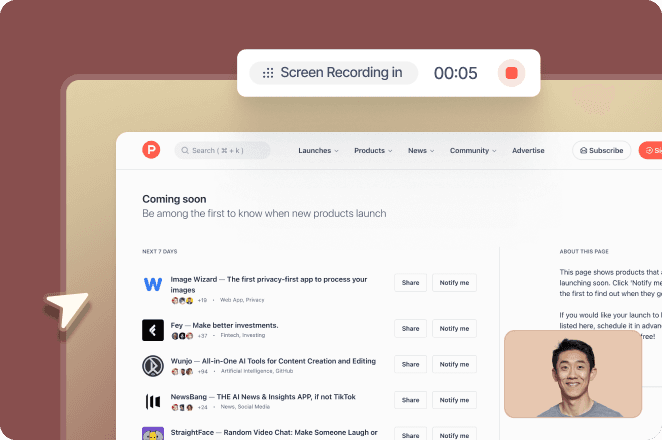
Record experts doing the real work. Capture each task in the live system, with the expert explaining each step and its exceptions. Use MS Teams or Zoom sessions, or a tool like Trupeer's AI screen recorder.
Generate SOPs and videos from each recording. Trupeer turns each recording into a step-by-step SOP with screenshots and written instructions, plus a narrated video, in your template and brand kit.
Add the layers recordings can't show. Link each SOP to its process map, business rules, controls, SLAs and escalation path.
Review and approve. The expert checks accuracy and exceptions; the process owner approves the SOP for use.
Translate for every delivery location. Use translation to produce SOPs, voiceovers and captions in each team's language from the same source.
Publish to one knowledge base. Store everything in a searchable knowledge base, organized by process level, and use it for training, shadowing and day-to-day work.
Update after go-live. When a step changes, re-record that step and update the SOP and video.
Because documentation is generated from recordings, experts spend their time reviewing rather than writing, and Level 4 documentation keeps pace with the transition.
How Trupeer Helps With Process Documentation for Outsourcing
Trupeer is built for the hardest part of outsourcing documentation, the step-level detail the provider's team needs at go-live:
Capture real work, not descriptions: record experts in the live system, or upload existing KT recordings.
One recording, two formats: every recording becomes a step-by-step SOP and a narrated video.
Consistent documentation: templates and brand kits make every SOP look the same, whoever recorded it.
Multi-location delivery: translation keeps every site working from the same version in its own language.
One source of truth: a searchable knowledge base the client and provider can both use, organized by process.
Easy updates: re-record only the step that changed, so documentation stays current after go-live.
Enterprise ready: review security and data handling in the trust center.
Genpact used this approach to turn recorded process sessions and SME walkthroughs into 500+ SOPs and training videos in five languages in 3 months, for a program that would otherwise have taken 12. Read the Genpact customer story.
Pre-Go-Live Process Documentation Checklist
Before a process goes live with the outsourcing provider, confirm that:
The process is in the inventory with an owner, volumes and systems.
An end-to-end process map shows handoffs between client and provider.
Step-level SOPs exist for every task, with screenshots or video.
Business rules, decision criteria and exceptions are documented.
System access is set up and documented for every role.
SLAs, KPIs and reporting are defined, with data sources.
Controls and compliance evidence are documented.
Escalation paths and contacts are current.
Periodic activities such as month-end and year-end are covered.
Quality checklists are in place.
Every document has an owner, a version and an approval date.
Everything is published in one knowledge base, in every language the provider needs.
For related guides, see vendor-to-vendor transition knowledge transfer, GCC setup knowledge transfer, the transition hypercare period and our guide to effective video SOPs.
Conclusion
Process documentation for outsourcing is what lets a provider deliver from day one. The process maps and design documents usually exist. What's often missing is the step-level detail, the exceptions and the rules that live in experienced people's heads, and that's exactly what the provider's team needs at go-live.
A recording-first method captures that detail from the real work, turns it into SOPs and videos, and keeps it in one knowledge base. Start free with Trupeer and turn your next process walkthrough into documentation your outsourcing provider can use from go-live.
Frequently Asked Questions
What is process documentation for outsourcing?
It's the set of materials that describe how a business process runs, such as process maps, SOPs, business rules, systems, controls and service levels, created so an outsourcing provider can take over the process and deliver it consistently.
What should be documented before outsourcing a process?
A process inventory, end-to-end process maps, step-level SOPs, business rules, exceptions, systems and access, inputs and handoffs, SLAs and KPIs, controls, escalation paths, calendars, quality checklists and document ownership.
What is the difference between a process map and an SOP?
A process map shows the flow of a process from start to finish, including who does what. An SOP gives step-by-step instructions for performing each task in the actual system.
What are the levels of process documentation?
Level 1 is the process area, Level 2 the end-to-end process, Level 3 the sub-process and Level 4 the task or desktop procedure. Level 4 is usually where outsourcing documentation has the biggest gaps.
Who should create process documentation for outsourcing?
Subject matter experts who perform the work should provide the content, process owners should approve it, and the provider should help shape it for how the work will run after go-live. Recording experts doing the work reduces the time they spend writing.
Who owns process documentation after outsourcing?
Ideally the client, with the provider maintaining it day to day. Keeping documentation in a client-owned knowledge base protects the knowledge if the work moves again in future.
How do you document processes faster for outsourcing?
Record experts doing the real work, generate SOPs and videos from the recordings, have experts review instead of write, and publish everything in one knowledge base.
How often should outsourcing process documentation be updated?
Whenever the process, system or policy changes, and at least as part of regular service reviews. Assign an owner to each document so updates don't depend on someone remembering.