Trupeer Blog

Summarise with:
Claude
ChatGPT
Gemini
Perplexity
Grok
Imagine you're leading a global learning and development (L&D) team tasked with rolling out training videos across multiple regions. Each team member relies on these resources to stay informed and effective. Yet, language barriers can hinder this goal. Without high-quality translations, your carefully crafted videos won't serve their purpose. For enterprise teams, the stakes are high. A study found that businesses lose over $62 million annually due to inadequate communication. This statistic underscores the importance of effective SOP best practices in multilingual training environments. For L&D and enablement teams, translating video content effectively isn't just about converting words from one language to another. It's about maintaining the integrity and intent of the original material while ensuring it's accessible to everyone, regardless of language. This challenge requires a strategic approach that combines the right tools and best practices. Your goal is to create a uniform learning experience that resonates with global audiences. This guide explores the nuances of video translation for enterprise L&D and provides actionable insights to raise your multilingual training efforts.
Why does video translation for enterprise L&D matter?
For enterprise L&D and enablement teams, video translation isn't just a tactical necessity; it's a strategic imperative. In multinational corporations, training videos are a cornerstone of employee education and development. However, language diversity can turn these valuable resources into obstacles rather than tools for empowerment. When your workforce spans continents, translating video content becomes essential to ensure consistent learning outcomes. Without it, you risk alienating non-native speakers, leading to inconsistent knowledge transfer and potential skill gaps.
Effective video translation enhances training efficacy, boosts employee engagement, and supports organizational goals. It also mitigates the risk of miscommunication, which can be costly. Misunderstandings in employee training can lead to mistakes, inefficiencies, or even compliance issues, impacting the bottom line. For customer facing workflows, ensuring your team is uniformly educated across languages is crucial. When translations maintain the original content's intent and clarity, employees are more likely to adopt best practices and perform tasks accurately. This consistency is vital for maintaining operational efficiency and achieving business objectives.
What are the benefits of video translation for enterprise L&D?
Effective video translation offers numerous advantages that can significantly enhance your enterprise L&D initiatives. Here are some key benefits:
Increased Training Accessibility. By translating your training videos into multiple languages, you ensure that all employees, regardless of their native language, have access to the same information and learning opportunities.
Enhanced Employee Engagement. Multilingual training materials engage employees better as they can learn in their preferred language, leading to improved retention and application of knowledge.
Consistency Across Regions. Translation ensures that the message remains consistent, reducing the risk of misinterpretation. This consistency is crucial for upholding company standards and procedures worldwide.
Faster Onboarding Processes. Translated training videos expedite the onboarding of new employees, enabling them to start performing their roles efficiently from day one, which is a sales demo best practice.
Cost Efficiency. By using a single AI video platform for translation, you can reduce the costs associated with creating separate training materials for each language.
Improved Compliance. Accurate translations help ensure that all employees understand and comply with legal and regulatory standards, reducing the risk of violations.
Which Trupeer features help you enhance video translation for enterprise L&D?
Trupeer offers a suite of features tailored to meet the specific needs of enterprise L&D teams looking to improve their video translation efforts. Here are some key capabilities:
AI Translation into 40+ Languages with Lip-Sync
Trupeer's AI translation capability allows you to translate your training videos into over 40 languages, ensuring your content is accessible to a diverse audience. This feature includes lip-sync technology, which matches the spoken words to the video, providing a smooth viewing experience. The result is a polished final product that feels natural and engaging, rather than a disjointed overlay of audio and visuals. This can be particularly beneficial in maintaining viewer engagement and ensuring the message is conveyed clearly.
AI Voiceover in 65+ Natural Voices
With Trupeer's AI voiceover feature, you can choose from over 65+ natural voices to narrate your translated videos. This allows for customization in pace and tone, ensuring the narration aligns with the style and intent of your original content. Whether your video requires a professional tone or a more conversational style, this feature delivers high-quality voiceovers that enhance the overall viewer experience. It's an essential tool for creating engaging and accessible training materials.
AI Avatars / Talking-Head Video
Trupeer's AI avatars allow you to add a human touch to your translated videos. By integrating talking-head videos using a stock library or creating custom avatars, you can maintain viewer attention and present information in a visually appealing manner. This feature is particularly useful for scenarios where a personal connection enhances comprehension, such as in best AI training video generator scenarios.
Automatic SOP Generation from Any Recording
Trupeer's automatic SOP generation capability creates edit-ready documentation from your video recordings. This feature is invaluable for training teams who need to produce and update procedures quickly. Once generated, these SOPs can be exported in multiple formats, including HTML and PDF, making them easily shareable and accessible. The ability to tie documentation to video content ensures that your training materials remain current and consistent with your ongoing educational efforts. For more on this, explore our AI documentation platform.
AI-Searchable Knowledge Base with Timestamp Deep-Links
Trupeer's AI-searchable knowledge base indexes every video with timestamp-level deep links, enabling employees to find specific information quickly and efficiently. This feature supports self-directed learning, as users can search for keywords and jump directly to the relevant sections of a training video. It enhances the overall accessibility of your training resources and encourages continuous learning within the organization. Discover how this feature integrates into a video knowledge base for a comprehensive learning ecosystem.
How do you translate L&D videos step by step with Trupeer?
Step 1: Capture Your Video
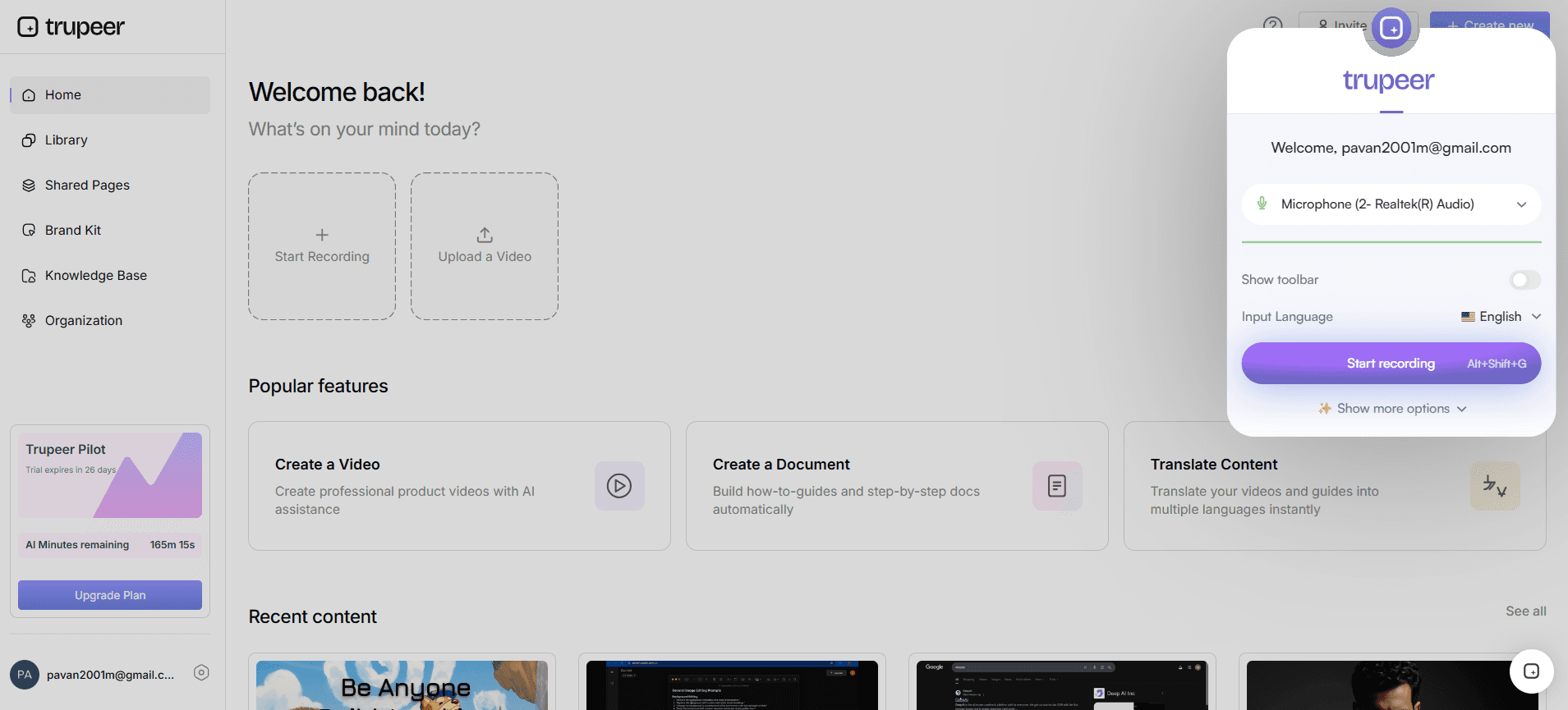
Begin by using Trupeer's browser-based recorder to capture your training session. This tool requires no installation, providing a smooth start. You can record your screen silently while Trupeer’s AI automatically narrates the content, ensuring a consistent and professional tone. The AI screen recording with auto-zoom and click detection highlights relevant areas of your screen, enhancing viewer focus. Once recorded, save your video to your Trupeer library. This process typically takes as long as your training session, plus a few minutes for setup and saving. The result is a foundational video ready for further enhancement and translation.
Step 2: Edit and Enhance Your Recording
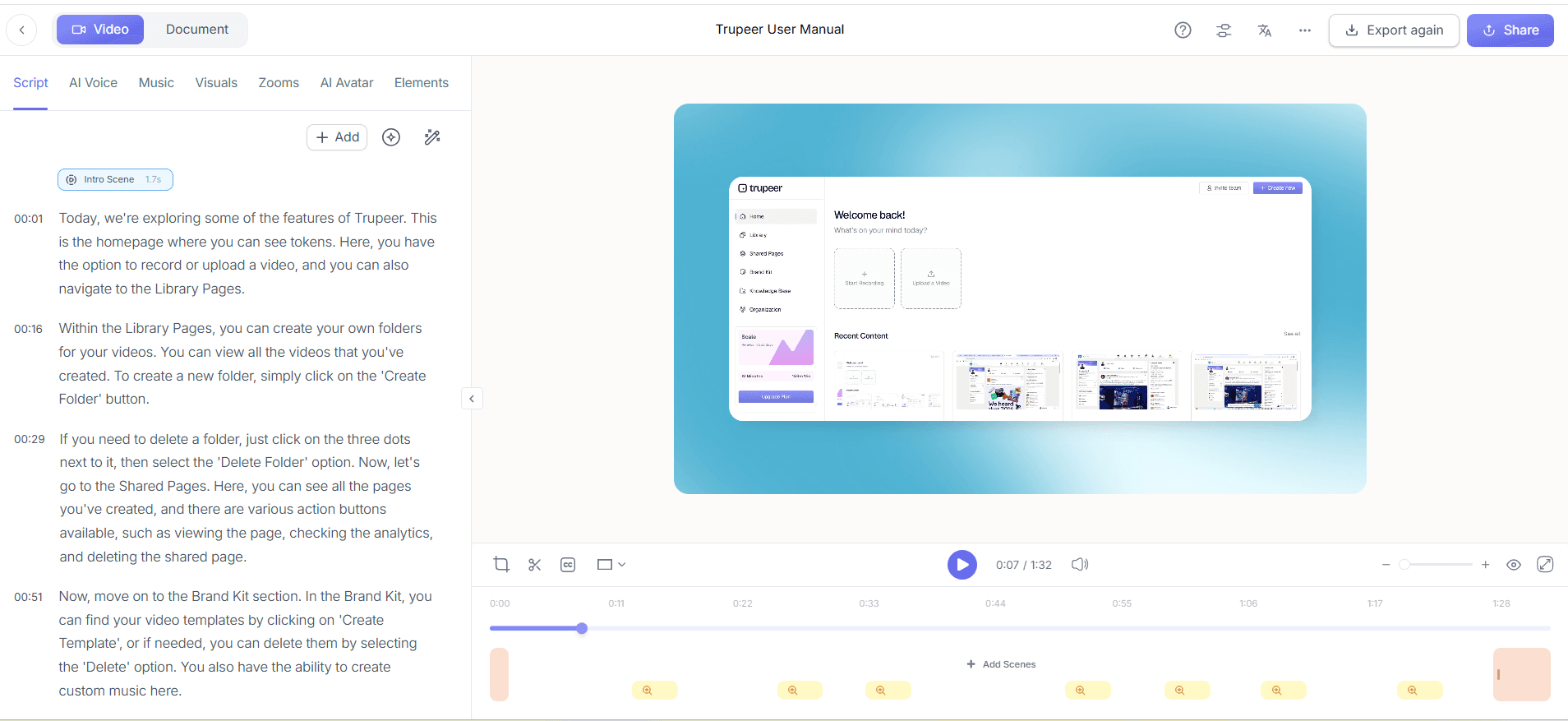
With your video in the library, head to the editing suite. Trupeer's AI automatically removes filler words, such as "um" and "ah," and long pauses, ensuring a polished final product. You can also adjust the video’s pace and tone using the AI voiceover in 65+ natural voices. This step refines your video for a more engaging and professional presentation. Editing typically takes 15-20 minutes per hour of original footage, depending on the extent of adjustments needed. These enhancements prepare your video for effective translation. Teams weighing tools often start with a Loom alternatives comparison before standardizing on a workflow.
Step 3: Generate Your SOP
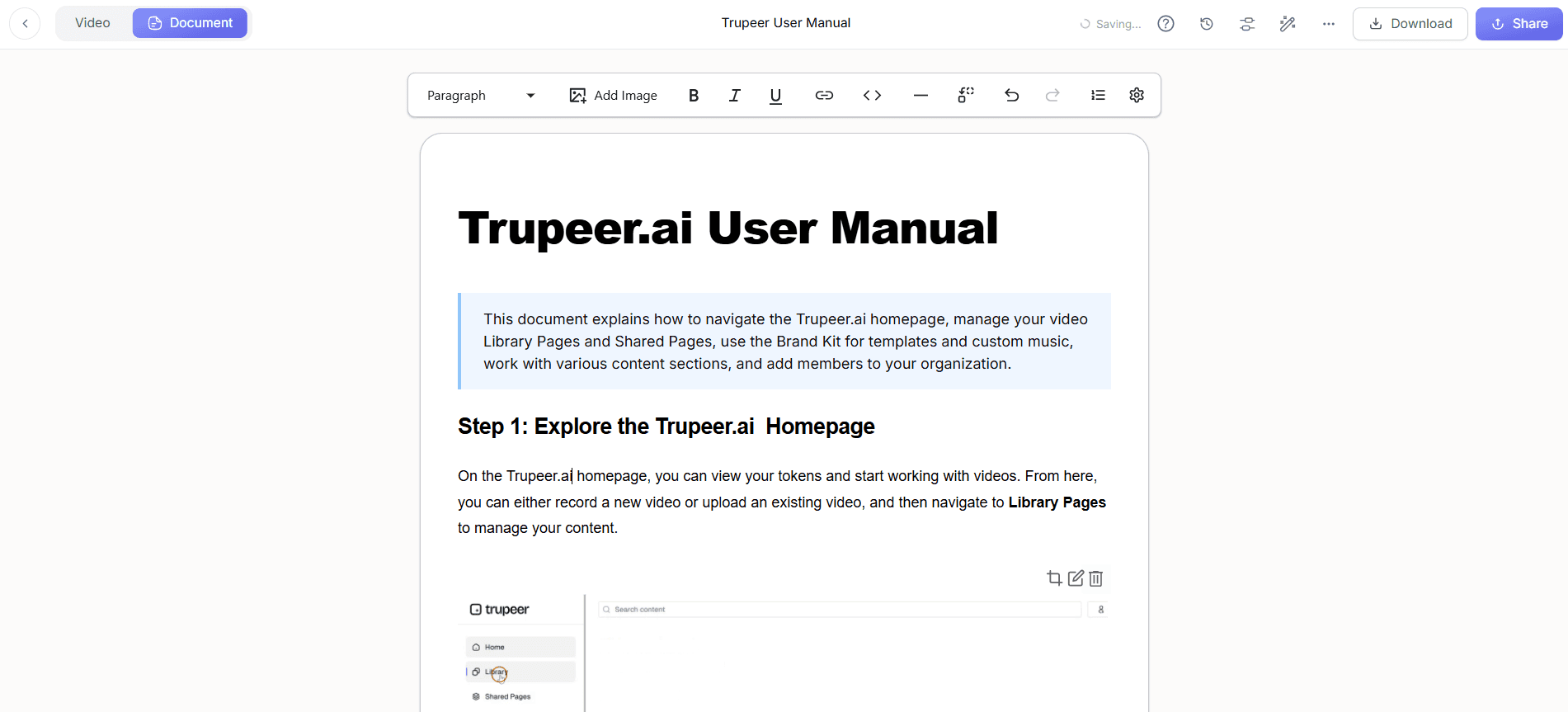
Use Trupeer’s automatic SOP generation feature to create documentation from your video. This tool transforms your recorded sessions into edit-ready Standard Operating Procedures (SOPs), which are exportable in formats like HTML and PDF. The integration ensures that your SOPs are directly tied to the video content, maintaining consistency and accuracy. Generating an SOP is quick, often completed within minutes, and provides a valuable resource that complements your video, especially for detailed procedural training.
Step 4: Translate Your Video
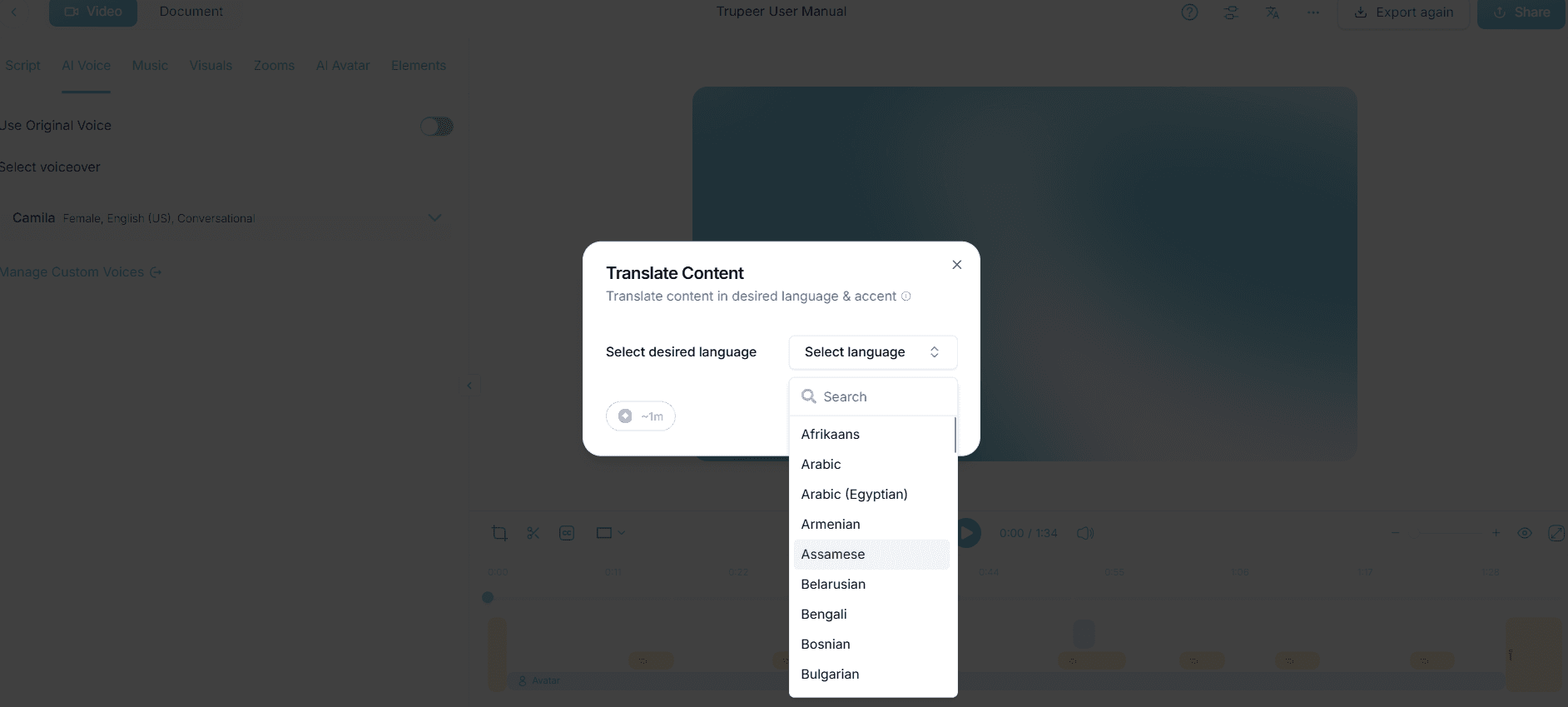
Now, use Trupeer’s AI translation into 40+ languages with lip-sync functionality. Select your target languages and let Trupeer handle the rest. The AI synchronizes translated audio with the speaker's lip movements, creating a natural viewing experience. This translation, including lip-sync, generally takes about twice the video’s duration to process, depending on the complexity and length of the content. This feature ensures your message resonates across language barriers, essential for global enterprises.
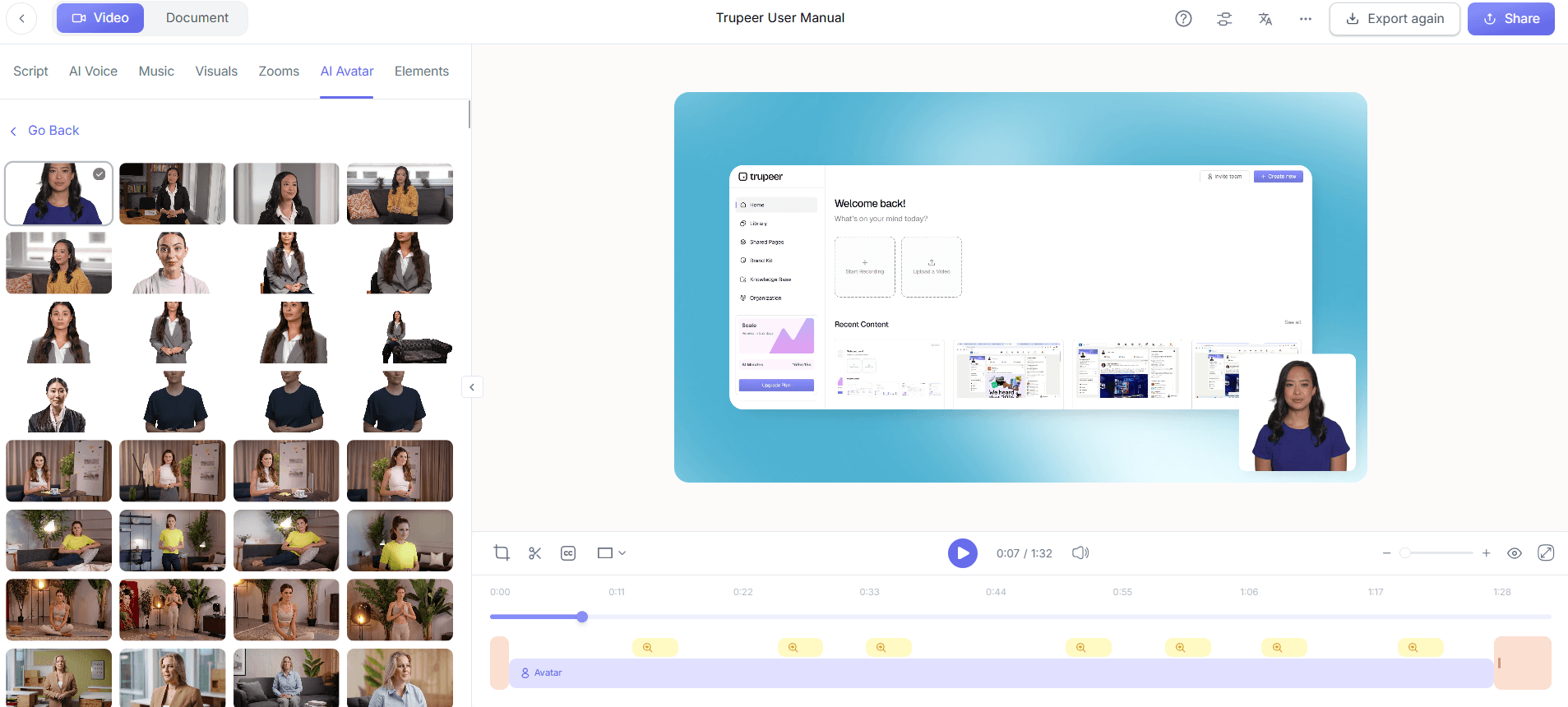
Step 5: Customize with AI Avatars
Enhance your translated video further by integrating AI avatars or talking-head videos. This step personalizes the learning experience, making it more relatable and engaging. Choose from Trupeer’s stock library or create custom avatars that fit your brand’s image. Adding avatars typically requires 10-15 minutes per segment, depending on customization needs. This feature is particularly useful for maintaining viewer engagement in diverse cultural contexts.
Step 6: Distribute and Analyze Engagement
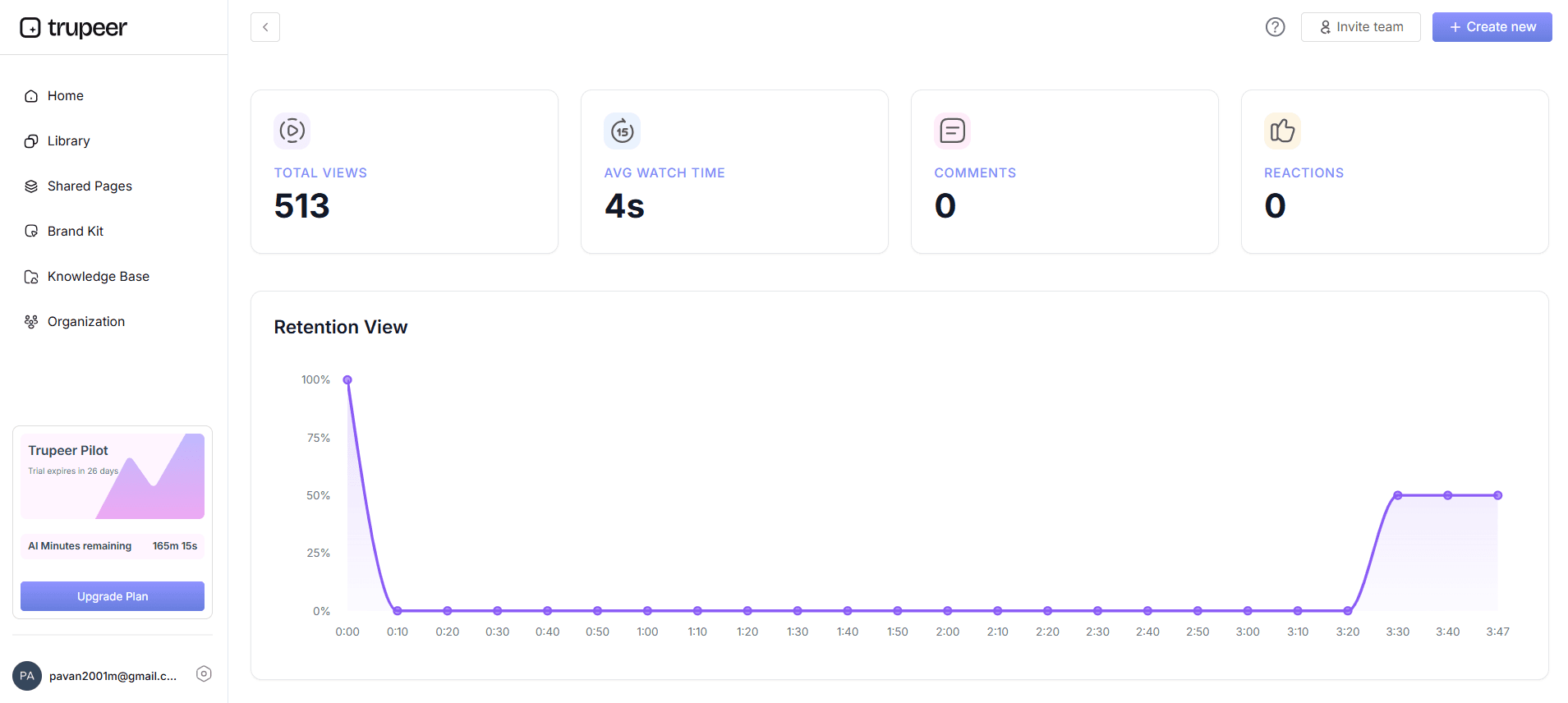
Finally, distribute your translated video through Trupeer’s AI-searchable knowledge base, which allows users to access content with timestamp deep-links. This distribution method supports self-directed learning, enabling users to quickly find specific information. Monitor viewer engagement analytics, drop-off rates, and heatmaps to assess the video’s impact. This data provides insights into how your training is being received and where improvements might be needed. The entire process, from distribution to analysis, can be set up and reviewed in under an hour.
What tips help you optimize video translation for enterprise L&D?
Enhancing video translation for enterprise L&D involves strategic practices that ensure both quality and efficiency. Here are some tips to guide your process:
Standardize Video Templates. Consistent templates ensure that translated videos maintain a uniform look and feel, crucial for brand integrity. using a enterprise training video software tool helps maintain this consistency.
Use Professional Voiceovers. High-quality voiceovers enhance the professionalism of your training videos. Trupeer’s AI voiceover options offer a range of natural-sounding voices to choose from.
Incorporate Cultural Nuances. Tailor translations to reflect cultural differences, improving relatability and understanding among international teams.
use Analytics. Use engagement analytics to identify which parts of your videos are most effective or need improvement, guiding future content creation.
Engage Local Experts. Collaborate with local language experts to review translations and ensure accuracy and cultural appropriateness.
Test with Focus Groups. Before full deployment, test translated videos with small focus groups to gather feedback and make necessary adjustments.
use AI Tools. Implement AI tools such as Trupeer to simplify the translation process, increasing efficiency and reducing manual effort. For instance, compare Scribe alternatives for SOPs to find the best fit for your needs.
Frequently asked questions
How do you ensure video translation accuracy?
Ensuring accuracy in video translation involves using advanced AI tools and engaging native speakers for review. AI tools like Trupeer provide initial translations with lip-sync capabilities. However, to ensure cultural relevance and linguistic precision, it's advisable to have native speakers review the translations. This dual approach helps catch subtle language differences and cultural references that AI might miss. Regular updates and feedback loops with your team also improve the accuracy and quality of future translations.
What is the role of AI in video translation?
AI plays a crucial role in video translation by automating the process and ensuring consistency across languages. It speeds up translation with features like voice cloning, natural voiceovers, and lip-sync technology. This automation reduces the workload on human translators and minimizes errors. However, while AI handles bulk tasks efficiently, human oversight is still essential for quality control. AI can manage vast datasets quickly, but humans ensure the translation aligns with cultural nuances and organizational goals.
Can video translation tools handle multiple languages simultaneously?
Yes, many video translation tools, including Trupeer, can handle multiple languages simultaneously. This capability is essential for enterprise L&D teams that operate globally. By selecting multiple languages in the translation tool, you can produce several language versions in one go. This simultaneous processing not only saves time but also ensures that all versions maintain the same high quality. Using a video localization tool ensures consistent messaging across regions.
Why is lip-sync important in translated videos?
Lip-sync is crucial because it makes translated videos appear more natural and engaging. Without lip-sync, viewers might find the video jarring, as the audio and visual elements don't align. This misalignment can distract from the content's message, reducing the training video's effectiveness. Trupeer’s translation with lip-sync technology addresses this by synchronizing translated audio with the original video, maintaining a high-quality viewer experience. This feature is particularly important for training videos where clarity and engagement are key to understanding.
Is it possible to update translations as content changes?
Yes, with modern tools, updating translations as content changes is not only possible but simplified. Trupeer, for instance, offers auto-updating documentation tied to the underlying recording. This means any updates to your original content can trigger corresponding updates in your translations. This feature ensures that all language versions remain current, saving time and reducing the risk of outdated information being disseminated. Regularly updating translations is crucial in fast-paced environments where content frequently changes.
Related Blogs