Trupeer Blog
Summarise
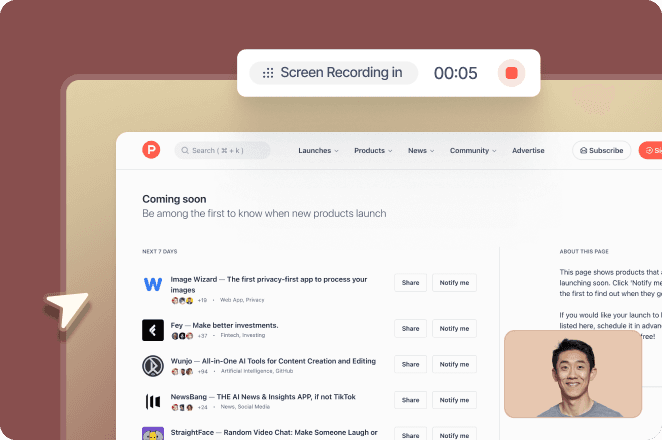
Imagine your customers can find answers to their questions without having to wait for a service representative. That's the power of a well-designed self-serve content hub. It's not just a single page, but a comprehensive architecture that allows users to easily navigate and find the information they need. According to recent data, companies with self-serve support systems experience a
25% reduction in customer service calls
. This isn't just about efficiency; it's about enabling your users and enhancing their experience with your brand. But building a successful self-serve content hub requires thoughtful planning and execution. we'll explore the essential pages and content types that transform your hub into a valuable resource. Whether you're in charge of customer support, product management, or content strategy, these insights will help you design a hub that truly serves your audience. For a deeper understanding of how content design plays a role in this process, you might find it useful to read more about instructional design.
Why does self-serve hub architecture matter?
-centric market, providing immediate solutions isn't just a luxury, it's a necessity. Users expect to solve their problems quickly and efficiently. Without a proper self-serve content hub, your business risks overwhelming its support team and frustrating customers. A well-structured hub not only alleviates these pressures but also enhances the customer journey. When users can easily access information, they feel more in control and satisfied with their experience.
From a business perspective, a self-serve hub can dramatically reduce operational costs. By enabling users to find solutions independently, you decrease the need for live support interactions. This is crucial for scaling your operations without proportionally increasing your customer service expenses. It's not just about saving money; it's about strategically reallocating resources to areas that drive growth. The impact of a well-designed customer hub extends beyond support. It influences product development, marketing strategies, and overall customer satisfaction. For businesses looking to create a smooth customer education workflow, a self-serve hub is an invaluable asset.
What are the benefits of a self-serve hub architecture?
A well-implemented self-serve hub can transform your customer interactions and operational efficiency. Here are some key benefits:
Reduced support costs. A self-serve hub decreases the need for live support, cutting down operational expenses by up to 30%.
Increased customer satisfaction. When customers can find answers quickly, they report higher satisfaction rates, often by 20% or more.
Improved knowledge retention. A centralized knowledge base one ensures consistent information, reducing knowledge gaps.
Enhanced content scalability. An AI-powered video tool allows you to quickly update and expand resources without significant overhead.
Better analytics. Track user interactions to understand what information is most sought after, optimizing your content strategy.
Faster onboarding. New users learn the platform independently, reducing the time and resources needed for traditional onboarding.
Which Trupeer features help you build a self-serve content hub?
Trupeer offers several features that can simplify and enhance the creation of a self-serve content hub, making it easier for you to provide valuable resources to your users.
AI screen recording with auto-zoom and click detection
This feature allows you to create intuitive and clear tutorials that highlight key actions automatically. It detects clicks and zooms in on relevant parts of the screen, ensuring that users focus on the most important elements. This capability is crucial when documenting complex processes or when a visual guide is more effective than text alone. By using customer service ai writer tool, you can translate these recordings into comprehensive guides that are easy for users to follow.
Automatic SOP generation from any recording
With Trupeer's automatic SOP generation, every screen recording can be turned into a structured, step-by-step document. This is particularly useful for creating procedure manuals and product guides that are both accurate and easy to update. The AI documentation platform ensures that each document is ready for export in multiple formats, such as HTML or PDF, making distribution smooth.
AI-searchable knowledge base with timestamp deep-links
Trupeer's AI-searchable knowledge base indexes every recording with timestamp-level deep links. This allows users to jump directly to the part of the video that addresses their specific concern, saving time and improving the user experience. It's an essential feature for any self-serve hub, as it drastically reduces the time users spend searching for information.
Automatic filler-word removal
Ensuring that your instructional videos are concise and focused is crucial. Trupeer's automatic filler-word removal cleans up recordings by eliminating unnecessary pauses and filler words. This AI-driven editing tool simplifies content, making it more engaging and professional. It's a fundamental step in creating high-quality videos that don't waste your audience's time.
AI translation into 40+ languages with lip-sync
Global reach is vital for any modern self-serve hub. Trupeer's AI video translation feature allows you to translate and dub content into over 40 languages while maintaining lip sync. This ensures that your resources are accessible to a wider audience, breaking down language barriers and expanding your user base.
How do you build a self-serve content hub step by step with Trupeer?
Step 1: Record Your Initial Content
Begin by using Trupeer's browser-based recorder to capture the foundational content for your self-serve hub. This tool requires no installation, making it accessible for anyone on your team. Simply click the record button in your browser and start demonstrating your product's key functionalities. Trupeer's AI screen recording with auto-zoom and click detection enhances the clarity of your recordings by automatically focusing on areas of interest. This ensures that even complex processes are easy for users to follow. Typically, a 10-minute recording session is sufficient to capture a full walkthrough of a basic feature, but plan for extra time to address any unexpected glitches or interruptions.
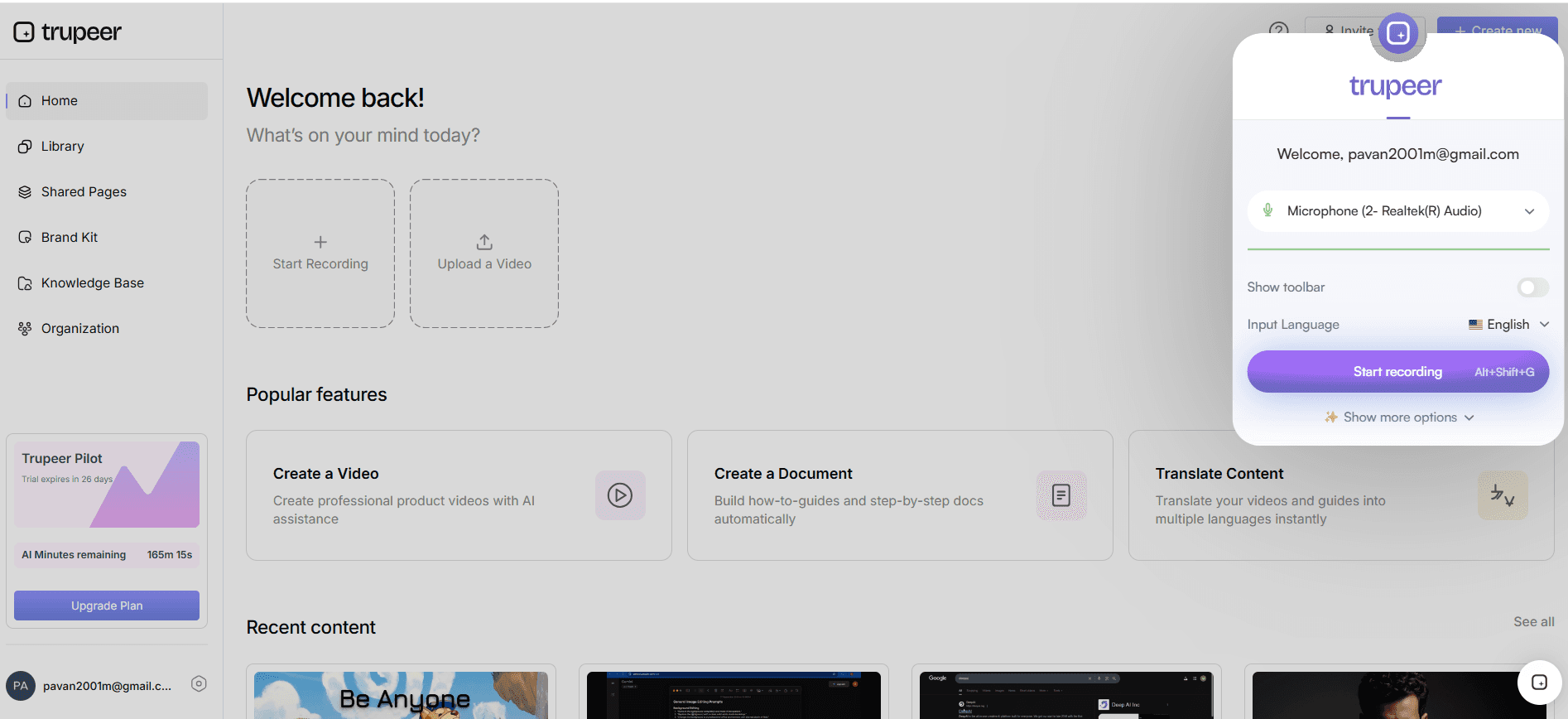
Step 2: Edit and Enhance Your Recordings
Once your recordings are complete, use Trupeer's AI editing tools to refine them. The automatic filler-word removal feature eliminates unnecessary pauses and filler language, simplifying your content to be concise and engaging. Use the AI voiceover option to add narration in one of 65+ natural voices, selecting the pace and tone that best suits your audience. This editing phase typically takes about 15-30 minutes per video, depending on the length. Keep in mind that the use of AI avatars can add a visual element, making your videos even more engaging. However, this might add a few more minutes to your process.
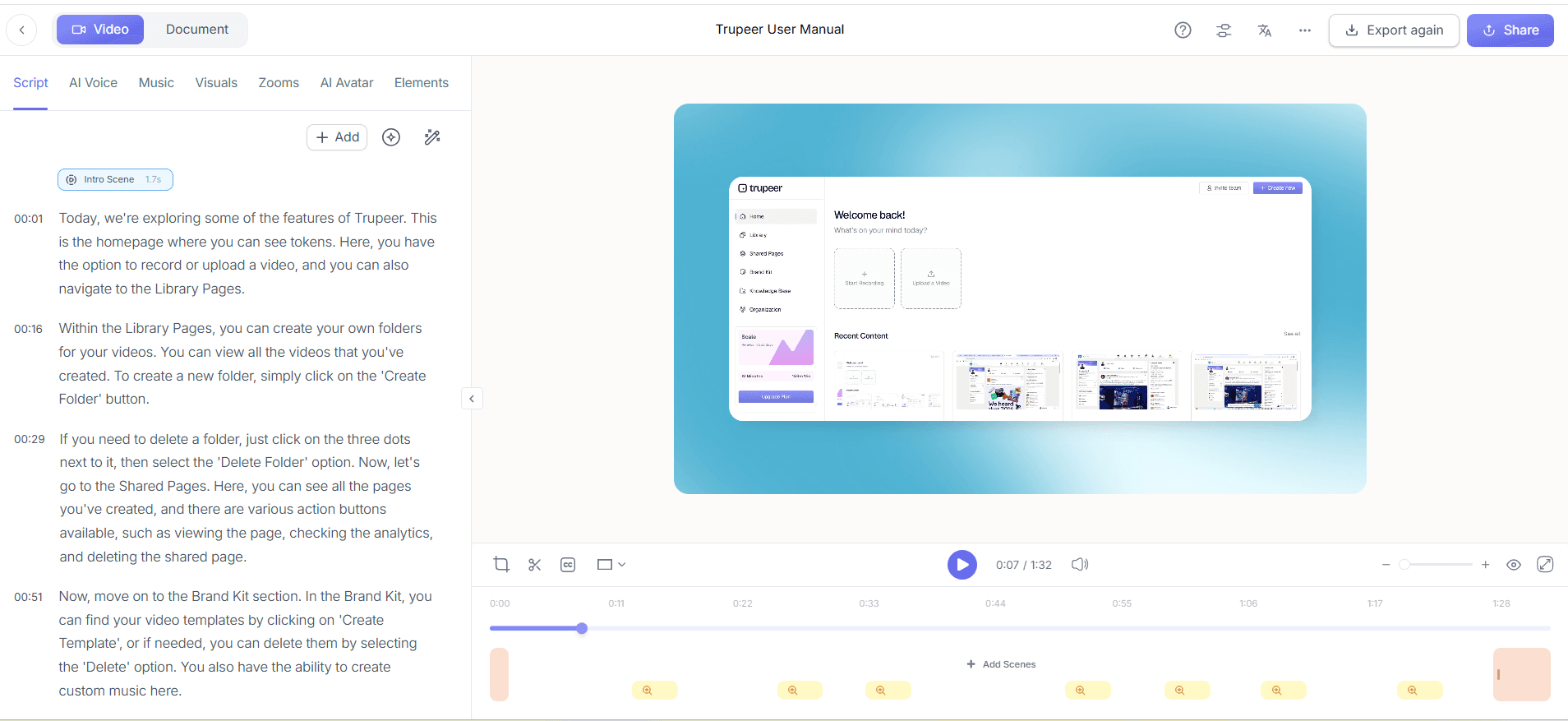
Step 3: Generate Supporting Documentation
Employ Trupeer's automatic SOP generation to transform your recordings into comprehensive documentation. This feature creates structured, step-by-step guides directly from your video content. Once generated, review and make any necessary edits to ensure clarity and accuracy. This step is crucial for users who prefer text-based resources. The documentation can be exported in multiple formats, including HTML and PDF, allowing for easy distribution across various channels. Expect this process to take around 20 minutes per document, factoring in the time for review and adjustments.
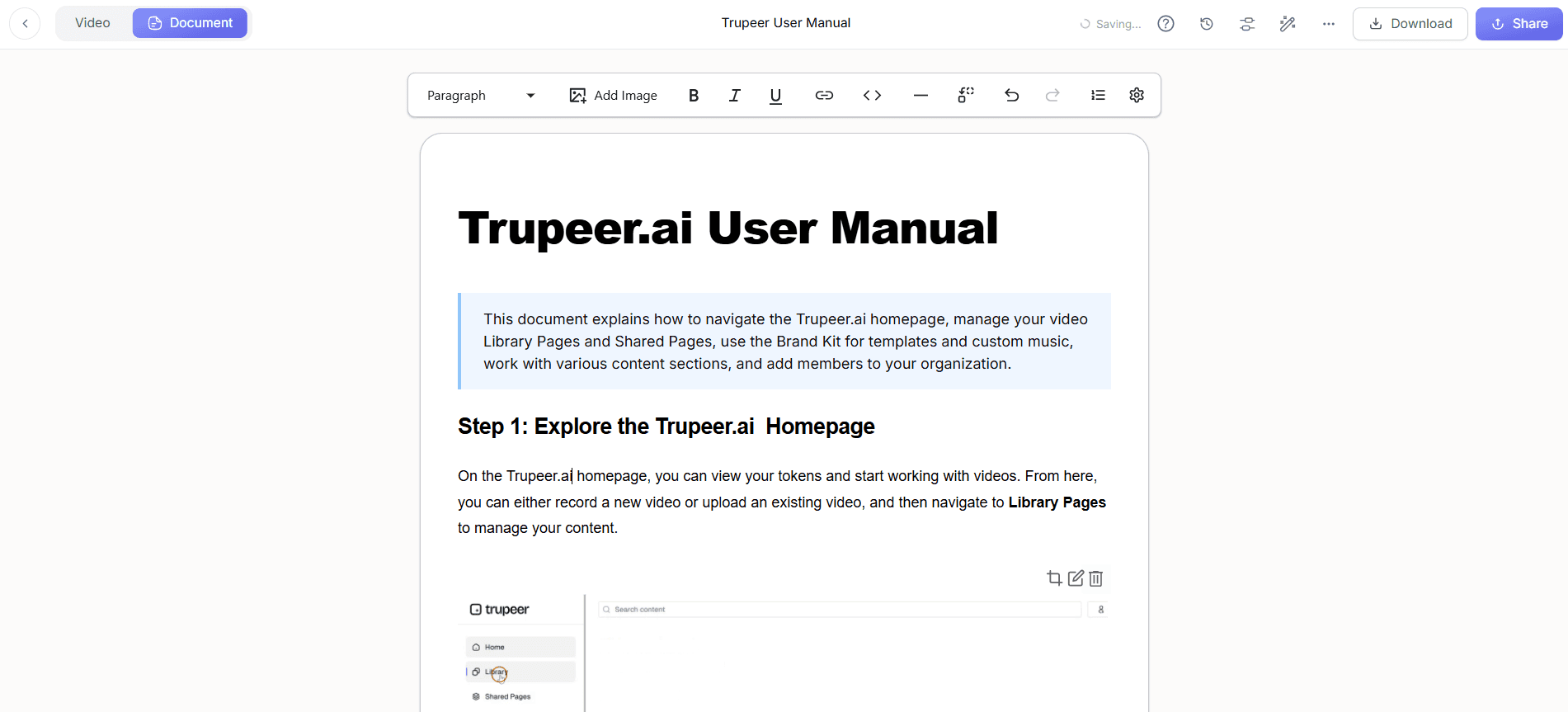
Step 4: Localize Your Content
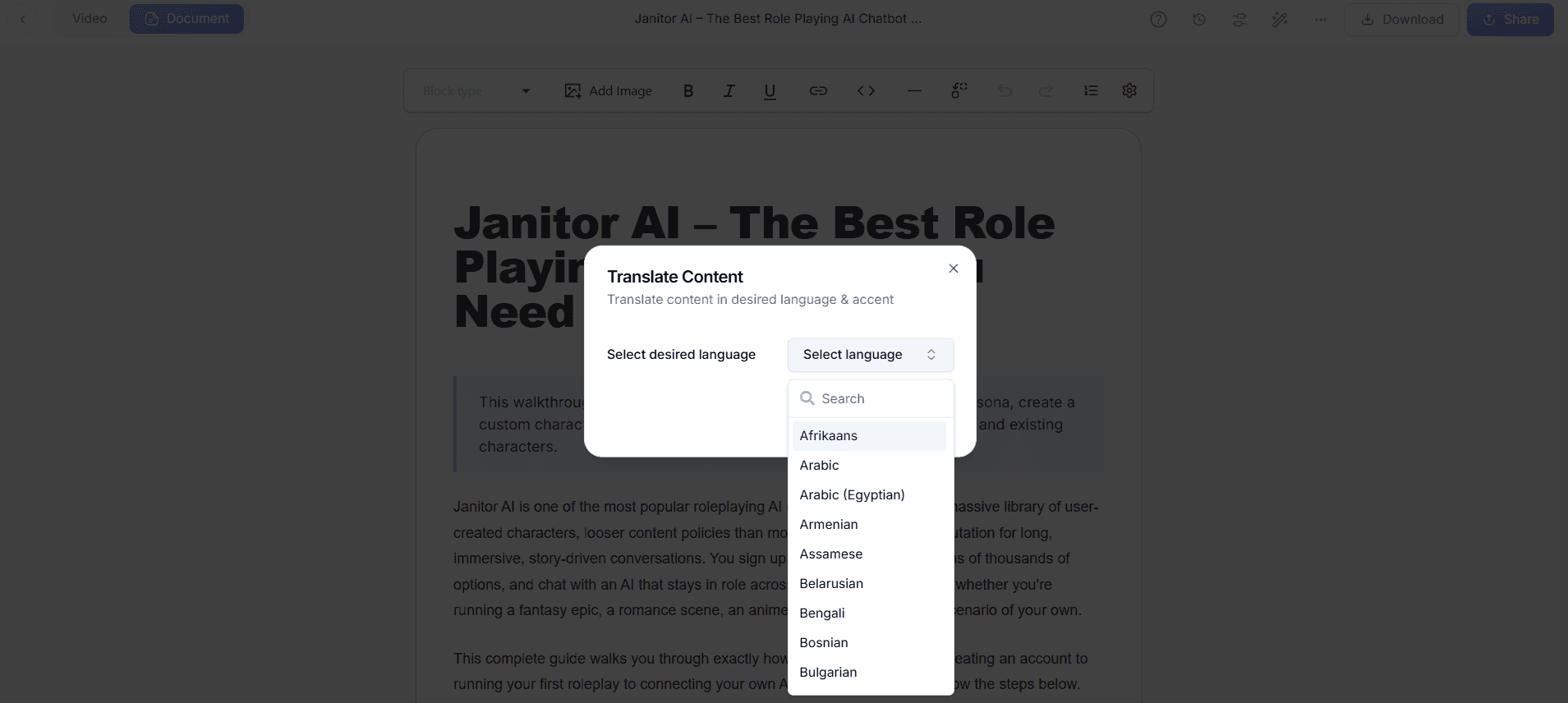
To make your hub accessible to a global audience, use Trupeer's AI translation and dubbing capabilities. You can translate your content into over 40 languages while ensuring that the dubbing is lip-synced with the original video. This feature is especially useful for non-English speaking users, broadening your hub's reach. Localization might take an additional 10-15 minutes per video, depending on the length and complexity of the content. Ensure that your translations are accurate by using Trupeer's video localization tool, which provides a smooth experience for all users.
Step 5: Index and Organize Your Hub
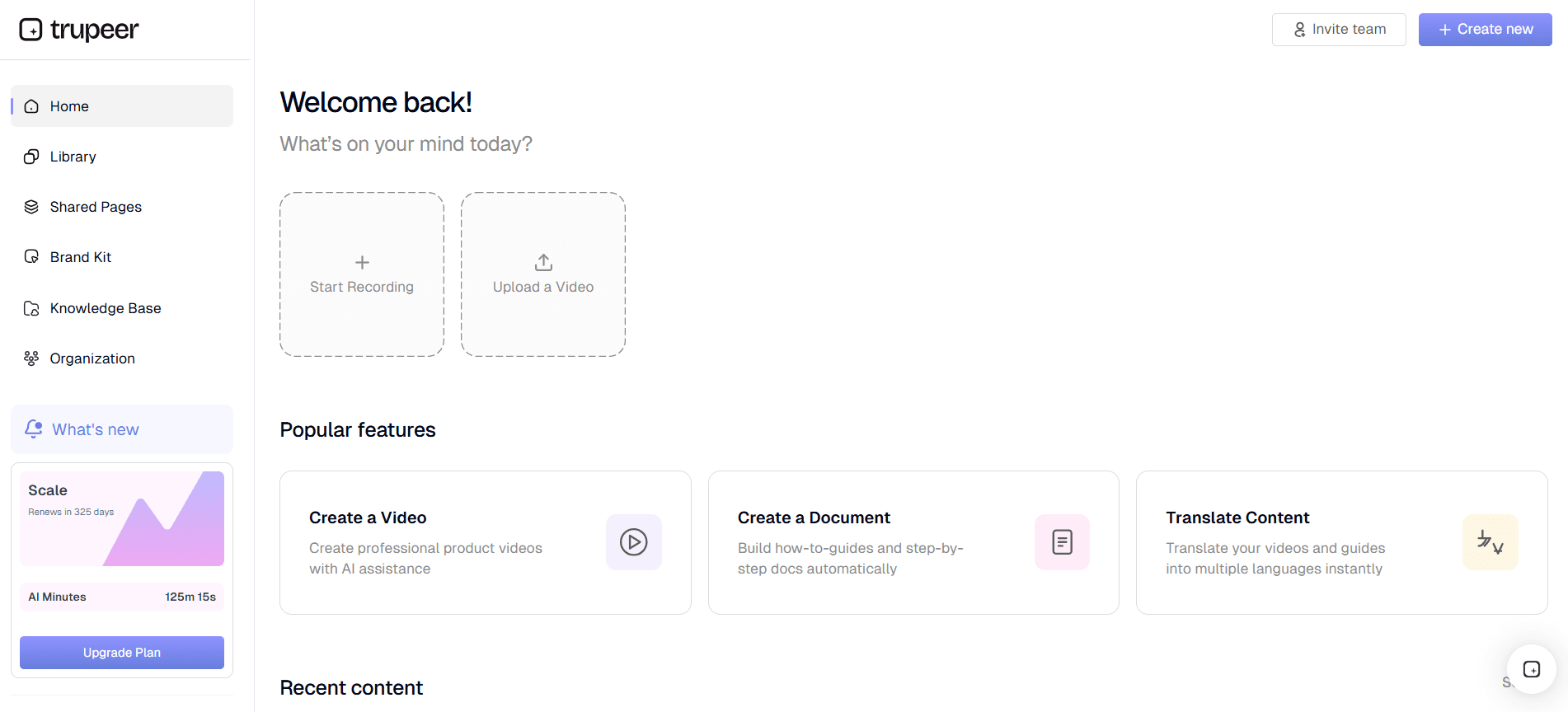
Next, integrate your content into Trupeer's AI-searchable knowledge base. This platform indexes your recordings with timestamp-level deep links, allowing users to jump directly to relevant sections. Organize your hub by categorizing content into intuitive sections based on user needs. This organization not only makes navigation easier but also enhances the overall user experience. The setup process for the knowledge base might take about an hour, but it's a one-time investment that significantly improves content accessibility. Teams weighing tools often start with a Loom alternatives comparison before standardizing on a workflow.
Step 6: Monitor and Iterate Based on Analytics
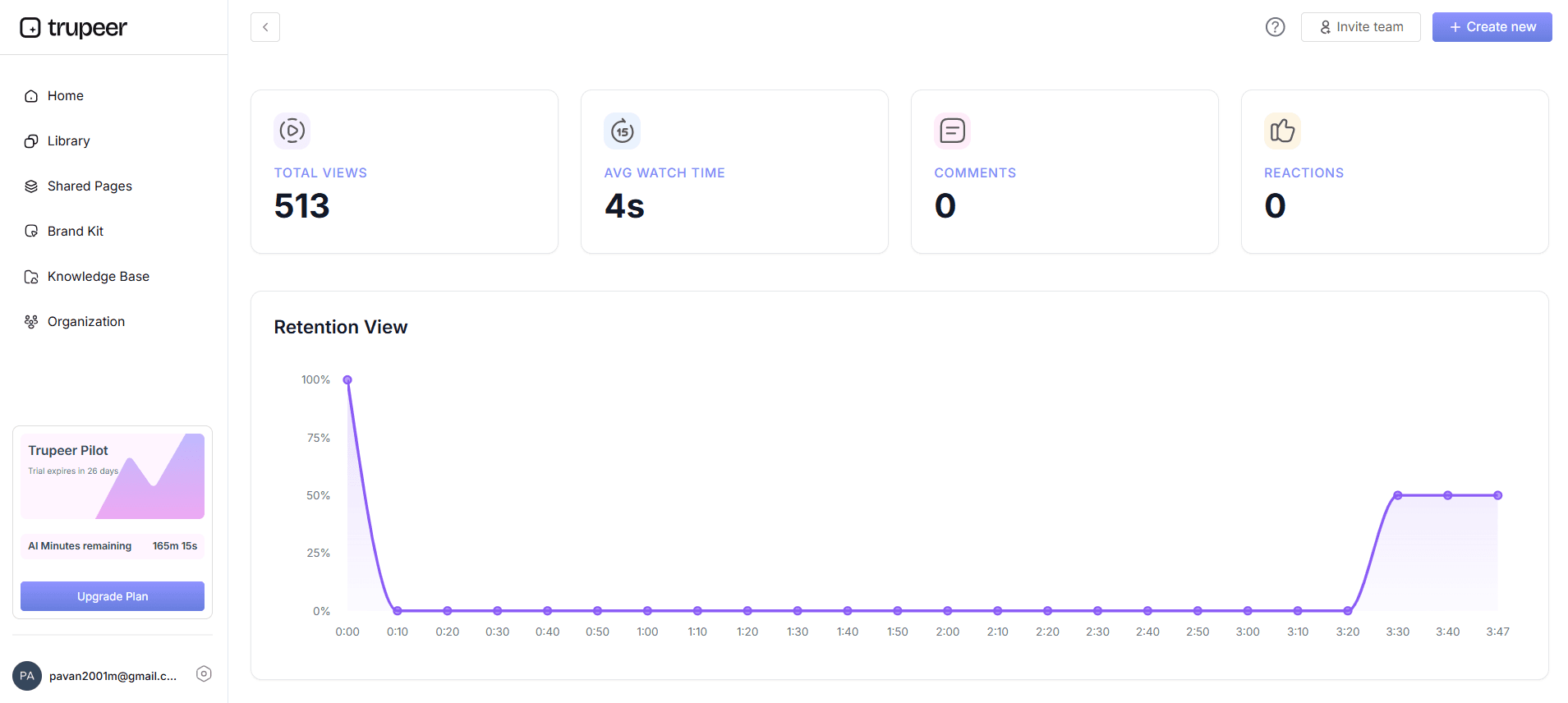
Finally, use Trupeer's viewer engagement analytics to monitor how users interact with your hub. Analyze heatmaps and drop-off points to identify which areas of your content are most engaging and which may need improvement. This data-driven approach allows you to make informed decisions about updates and enhancements. Regularly review the analytics dashboard, which can take about 30 minutes a week, to ensure your content remains relevant and valuable. Adjust your strategy accordingly, focusing on the areas that drive the most engagement and conversion.
What tips help you build a self-serve content hub?
Creating an effective self-serve content hub requires strategic planning and execution. Here are some actionable tips to ensure your hub is both useful and accessible:
Focus on User Needs. Prioritize content that addresses the most common user queries and pain points, ensuring your hub is relevant.
Keep Content Concise. Use Trupeer's AI tools to edit out unnecessary information, making your guides quick and easy to follow.
use Video and Text. Combine video tutorials with text-based documentation for a comprehensive learning experience.
Regularly Update Content. Ensure your hub stays current by scheduling regular reviews and updates of your resources.
use Analytics. Monitor user interactions to identify areas of improvement and adjust your content strategy accordingly.
Standardize Formats. Consistent layouts and styles enhance readability and user trust. Consider the Scribe alternative comparison for insights on SOPs.
Incorporate Feedback. Actively seek user feedback to refine and enhance your hub, ensuring it meets evolving customer needs.
Trupeer also ships a training video generator that handles this step without extra setup.
Frequently asked questions
How does Trupeer help in creating a self-serve content hub?
Trupeer provides a comprehensive suite of tools that simplify the creation and management of a self-serve content hub. With capabilities such as AI screen recording, automatic SOP generation, and a searchable knowledge base, Trupeer enhances both the production and organization of content. These features allow businesses to efficiently create detailed guides and tutorials that are easily accessible to users. By using these technologies, companies can offer immediate, self-help solutions that improve customer satisfaction and reduce support costs.
What is the role of AI in enhancing a self-serve content hub?
AI plays a critical role in optimizing content creation and user experience within a self-serve hub. It automates the editing process, removing filler words and enhancing video clarity, which ensures that content is concise and engaging. AI also facilitates translations, making content accessible to a global audience. also, AI-driven analytics provide insights into user interactions, helping to refine and improve the hub continuously. This intelligent application of AI not only simplifies operational workflows but also enhances the user's experience by providing relevant and timely information.
Can Trupeer's tools replace traditional customer support?
While Trupeer's tools significantly reduce the need for traditional customer support, they are designed to complement rather than completely replace it. Self-serve content hubs provide immediate solutions for common queries, allowing customer support teams to focus on more complex issues that require personalized assistance. This balance improves overall efficiency and customer satisfaction by ensuring that users have access to both automated and human support as needed.
Does Trupeer support multilingual content creation?
Yes, Trupeer supports multilingual content creation through its AI translation and dubbing features. These capabilities allow businesses to translate their content into over 40 languages, complete with lip-sync. This ensures that non-English speaking users can access and understand the resources just as effectively as native speakers. By enabling multilingual support, Trupeer expands the reach of your content hub, making it inclusive and accessible to a global audience.
Why is it important to monitor user engagement in a self-serve hub?
Monitoring user engagement is crucial for maintaining the effectiveness of a self-serve hub. Analytics provide valuable insights into how users interact with your content, highlighting which resources are most popular and where users might face difficulties. This data-driven approach allows you to make informed decisions about content updates and improvements. Regular engagement monitoring ensures that your hub remains relevant and continues to meet the evolving needs of your users, contributing to higher satisfaction and reduced support requests. Trupeer also ships a technical design document generator that handles this step without extra setup.
Related Blogs