Trupeer Blog
Summarise
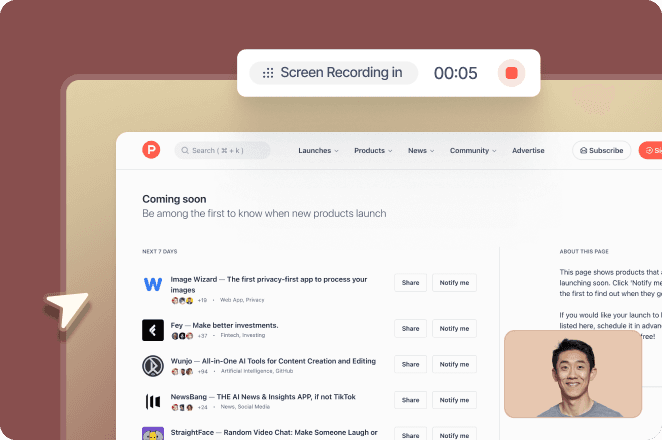
Imagine you're the point person for a significant RFP response. The stakes are high, with a potential contract worth millions at play. You know that a well-crafted response could be the difference between winning or losing the deal. But with hundreds of pages to fill out, how do you make your proposal stand out? Integrating video into your RFP responses can be a big shift, offering a dynamic way to convey your message and engage with evaluators. According to recent data,
RFPs that include video content see a 34% higher engagement rate from decision-makers compared to text-only submissions.
This makes a compelling case for incorporating video strategically. But not every question benefits from video, so identifying the right spots to include it is crucial. This blog is for sales and presales professionals, proposal managers, and anyone involved in crafting RFP responses, providing a clear path to where video can make the most difference. Teams weighing tools often start with a Loom alternatives comparison before standardizing on a workflow. This is exactly where RFP demo video becomes useful and it's the kind of content Trupeer can generate directly from a simple screen recording.
Why does adding video to RFP responses matter?
In the competitive world of RFPs, capturing the attention of evaluators is increasingly difficult. Decision-makers are inundated with documents, and standing out requires innovation. Video content offers a unique opportunity to engage evaluators in ways traditional text cannot. It adds a personal touch and brings to life the capabilities and advantages of your solution. This humanizes your response and makes it easier for evaluators to remember your proposal.
Also, videos can effectively demonstrate complex concepts that are hard to convey through text alone. For example, a step-by-step product demonstration video can clarify how your solution addresses specific RFP requirements. This visual representation can be particularly impactful for technical stakeholders who need to see a solution in action. By integrating video, you're not just telling evaluators what you can do, you're showing them, which can significantly improve your chances of progressing through the pre sales workflow and ultimately winning the contract.
What are the benefits of adding video to RFP responses?
Incorporating video into your RFP responses offers several advantages that can enhance your proposal's effectiveness. Here are the top benefits.
Enhanced Engagement. Videos are more engaging than text, capturing attention quickly and retaining it longer. This helps in ensuring that your key messages are understood and remembered.
Clearer Communication. A video can convey complex ideas more clearly than text. Demonstrations or walkthroughs can illustrate your solution's capabilities in a way that text descriptions cannot, making it easier for evaluators to grasp your value proposition.
Increased Retention. People remember visual content better than text. By using video, you increase the likelihood that evaluators will remember your solution when it's time to make a decision. This is particularly crucial in long evaluation processes.
Improved Differentiation. In a sea of text-heavy RFP responses, video helps your submission stand out. This differentiation is vital in competitive industries where every vendor's solution starts to look the same on paper.
Stronger Connection. Videos humanize your proposal by putting a face to your company. This personal connection can build trust and make your proposal more relatable and convincing.
Effective Video Prospecting. By incorporating video prospecting, your response can reach a wider audience, making it easier for stakeholders at all levels to engage with your content.
Teams ship this workflow end-to-end using Trupeer's AI video platform, which turns raw recordings into polished output without an editor.
Which Trupeer features help you add impactful video to RFP responses?
Trupeer offers a range of features that can significantly enhance your RFP responses. Here's how Trupeer can help you integrate video effectively for maximum impact.
AI screen recording with auto-zoom and click detection
Trupeer's AI screen recording feature allows you to create dynamic video demonstrations with ease. This capability automatically highlights key actions on the screen using auto-zoom and click detection, ensuring that the most important parts of your demonstration are emphasized. This is particularly useful when you need to showcase the functionality of your software or service. The intuitive interface of Trupeer means you can produce these videos without extensive technical skills, saving time and resources in the RFP response process.
Silent screen recording with automatic AI narration
For situations where you need a professional voiceover without the hassle of recording audio yourself, Trupeer's silent screen recording with automatic AI narration is invaluable. This feature generates clear and concise narration based on the actions captured in your screen recording. It's perfect for creating polished, professional-looking videos quickly. This capability is a big shift for ensuring your RFP response videos are clear and engaging without requiring a dedicated voiceover artist.
AI avatars / talking-head video
The AI avatars feature allows you to create talking-head videos using either stock avatars or custom ones via HeyGen integration. This brings a personal, human element to your RFP response, which can be critical in building rapport with evaluators. Whether you're delivering a welcome message or explaining a complex concept, these avatars can convey a sense of presence and professionalism. This feature is especially useful in industries where face-to-face interaction is limited but still highly valued.
Automatic SOP generation from any recording
Trupeer's ability to generate automatic Standard Operating Procedures (SOPs) from your recordings is a powerful tool for documentation. As you create video responses for your RFP, this feature can automatically produce accompanying documentation that is ready for export. This ensures that every video has a corresponding text document, enhancing the comprehensiveness of your response. It is particularly useful for technical RFPs where detailed documentation is required alongside video content.
AI-searchable knowledge base
Once your RFP response videos are ready, hosting them in an AI-searchable knowledge base makes them easily accessible. This feature indexes every recording with timestamp-level deep links, allowing evaluators to jump directly to the sections that matter most to them. This not only makes your RFP response more user-friendly but also enhances the evaluator's experience, making it easier for them to find the information they need to make a decision.
How do you add impactful video to RFP responses step by step with Trupeer?
Step 1: Capture Your Screen with AI Screen Recording
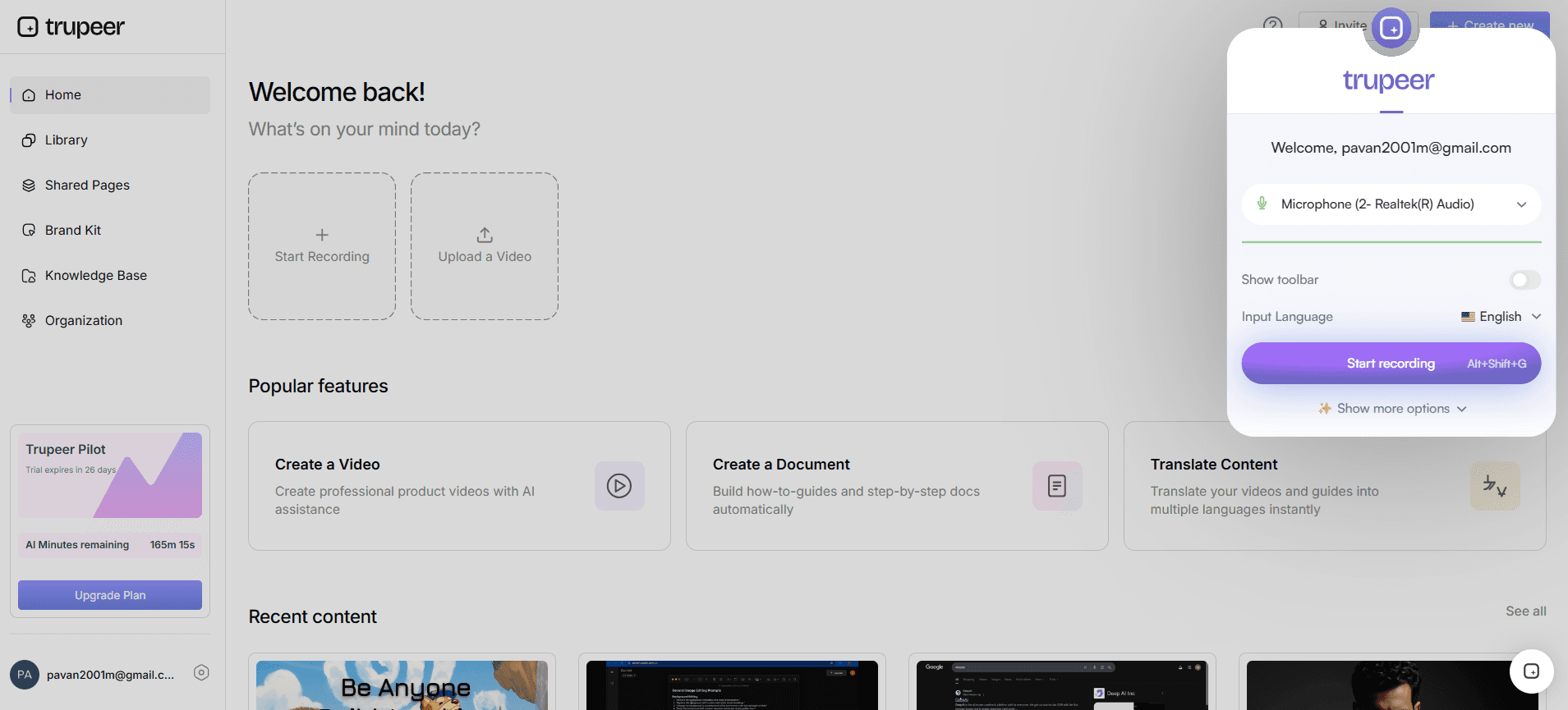
Begin by opening Trupeer's browser-based screen recorder, which requires no installation. Select the area of your screen you want to capture. With the AI screen recording feature, Trupeer automatically detects clicks and zooms in on important actions, ensuring your audience focuses on what's essential. The process is intuitive, as you simply perform the actions you want to showcase. This recording process typically takes the same amount of time as the task itself, making it efficient and easy to integrate into your workflow.
Step 2: Add AI Narration
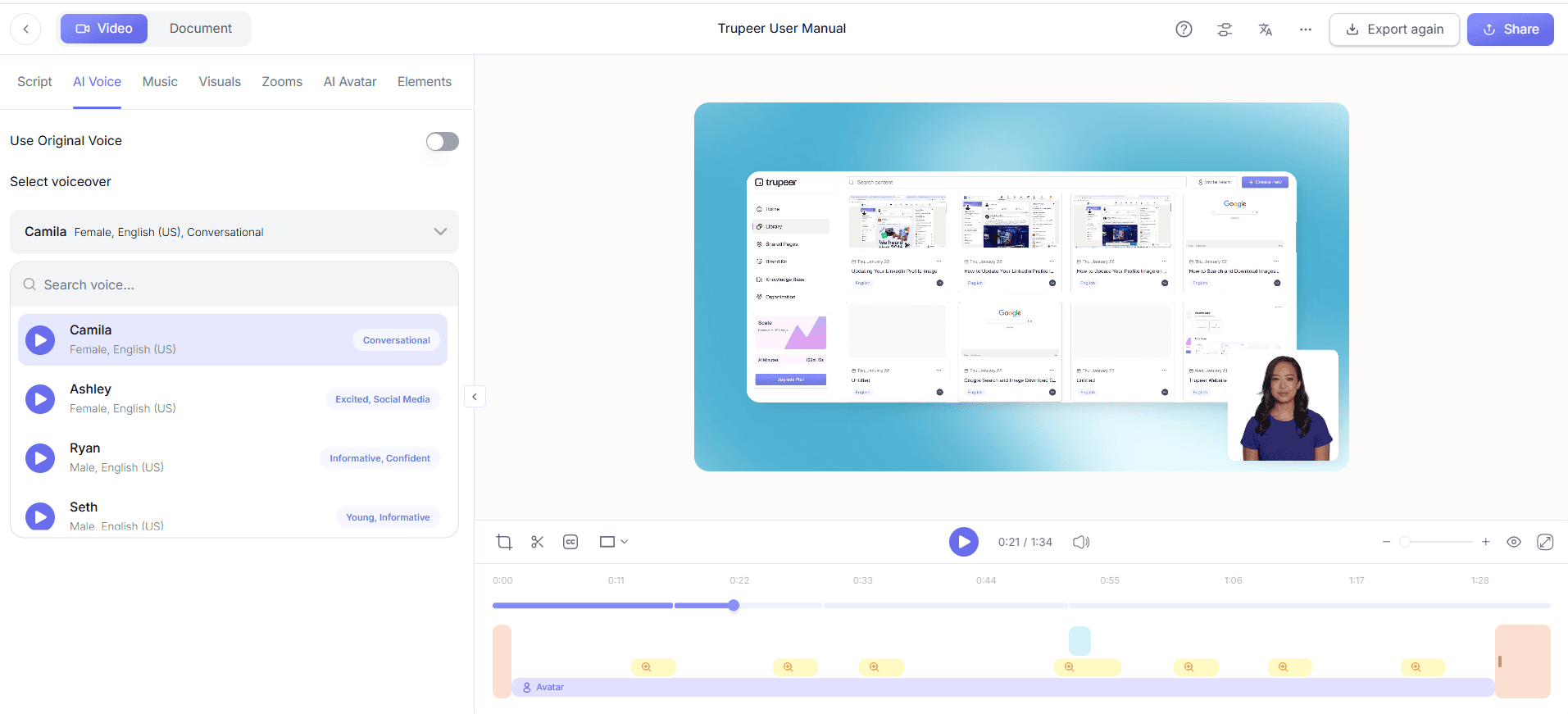
After capturing your video, enhance it with Trupeer's automatic AI narration. Select the narration option and choose from over 65+ natural voices. Adjust the pace and tone to match the desired mood of your presentation. This feature is perfect for providing clear, professional audio without needing to record your own voice, saving time and avoiding potential issues with background noise. Trupeer generates the narration in minutes, providing a smooth audio overlay for your video. For a deeper look, our guide on ai video editing covers the adjacent playbook.
Step 3: Incorporate AI Avatars for a Personal Touch
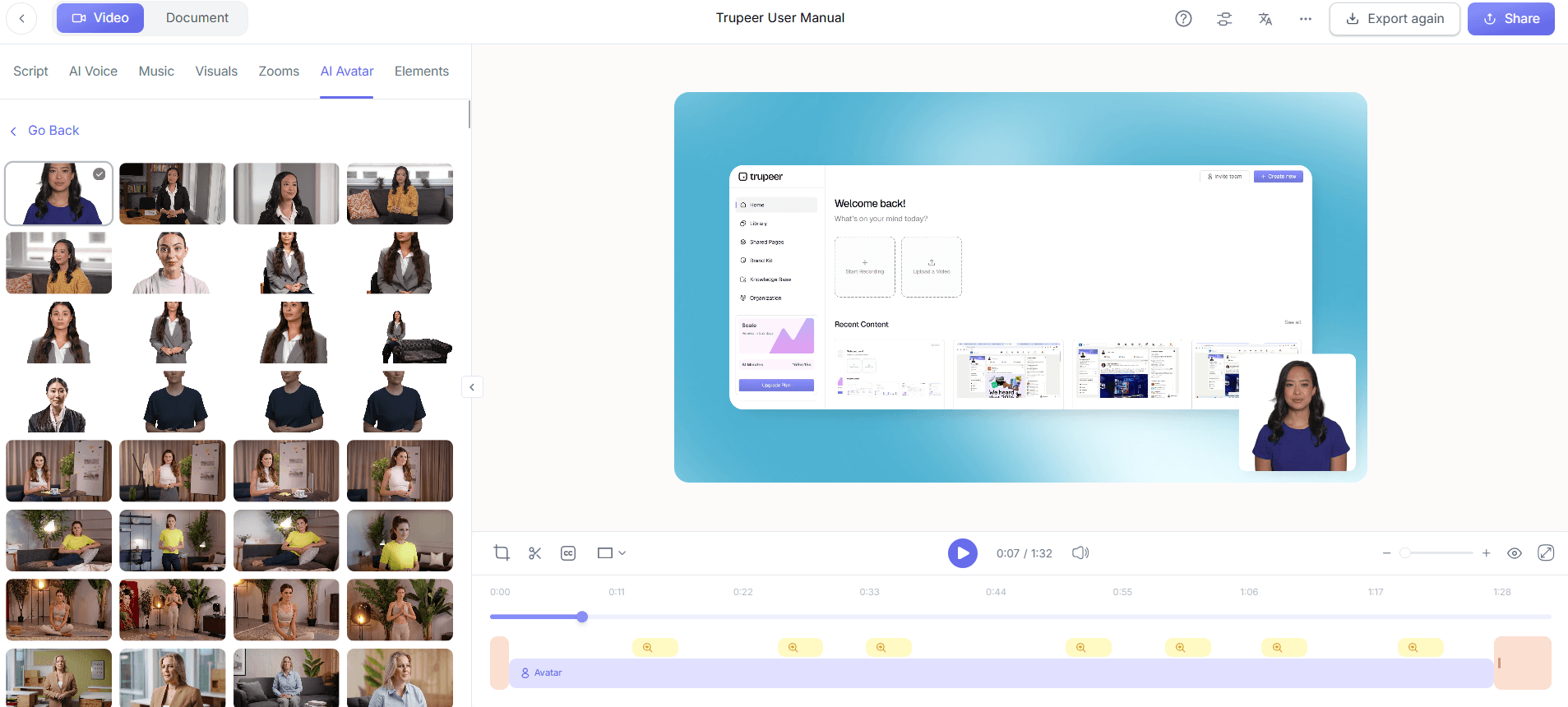
Add a human element to your video by using Trupeer's AI avatars. You can choose from a stock library or create a custom avatar through HeyGen integration. Simply click on the avatar option, select your desired avatar, and position it within your video. This step adds a personal, engaging touch, making your RFP response stand out. The avatars can deliver key messages or highlight important points, keeping evaluators engaged throughout the video.
Step 4: Generate and Edit SOPs Automatically
With your video complete, use Trupeer to automatically generate Standard Operating Procedures (SOPs). This feature creates detailed, edit-ready documentation from your video, ensuring consistency and clarity. Click on the SOP generation tool and choose the export format, MP4, HTML, or PDF. This step complements your video content by providing a text-based reference that evaluators can review at their convenience. The entire process takes a few minutes, adding significant value to your RFP response.
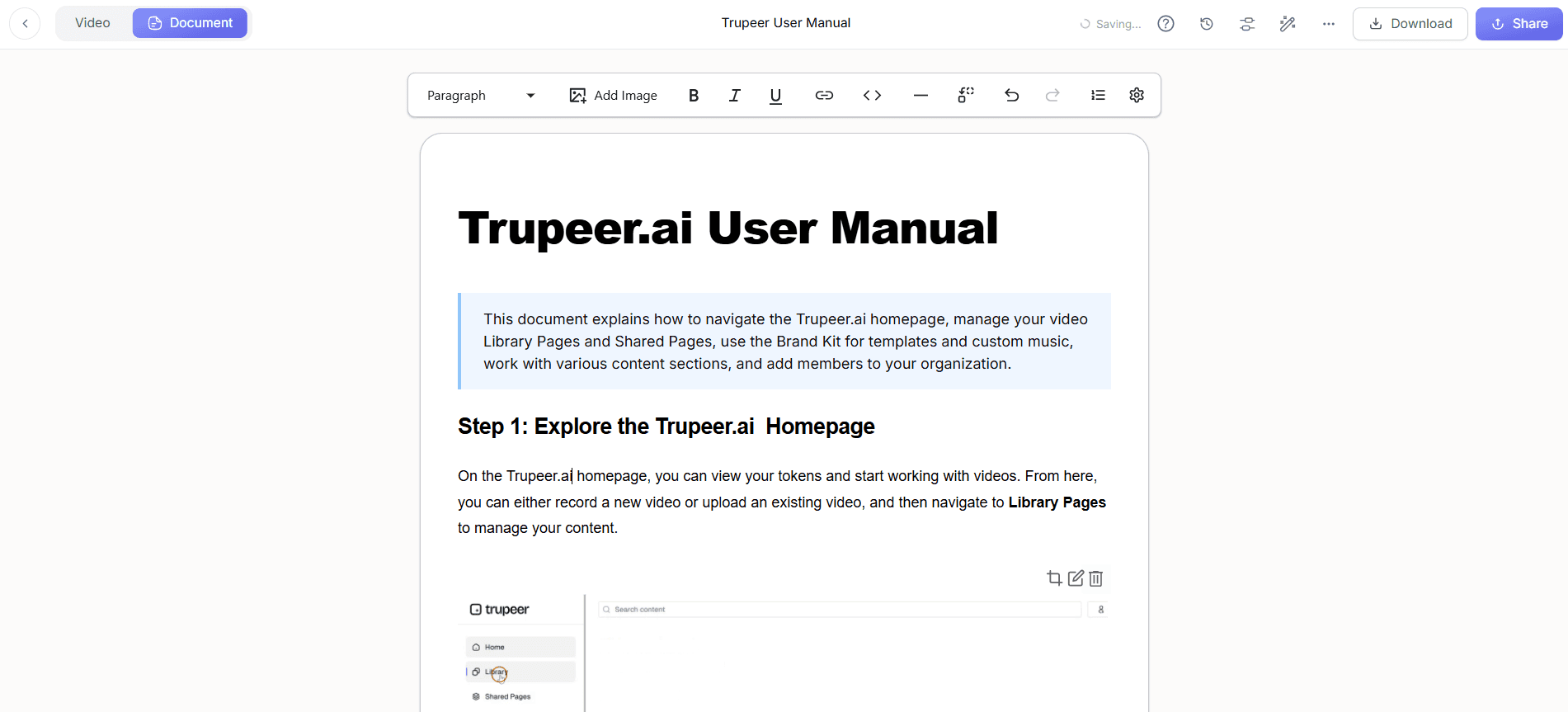
Step 5: Localize Your Video for Global Audiences
Trupeer's AI translation feature allows you to translate your video into over 40 languages, including lip-sync and dubbing options. Select the localization tool, choose your language, and let Trupeer handle the rest. This capability ensures your RFP response is accessible to non-English speaking evaluators, broadening your reach and demonstrating your commitment to inclusivity. The translation process is quick, often completed in under an hour, depending on the length of your video.
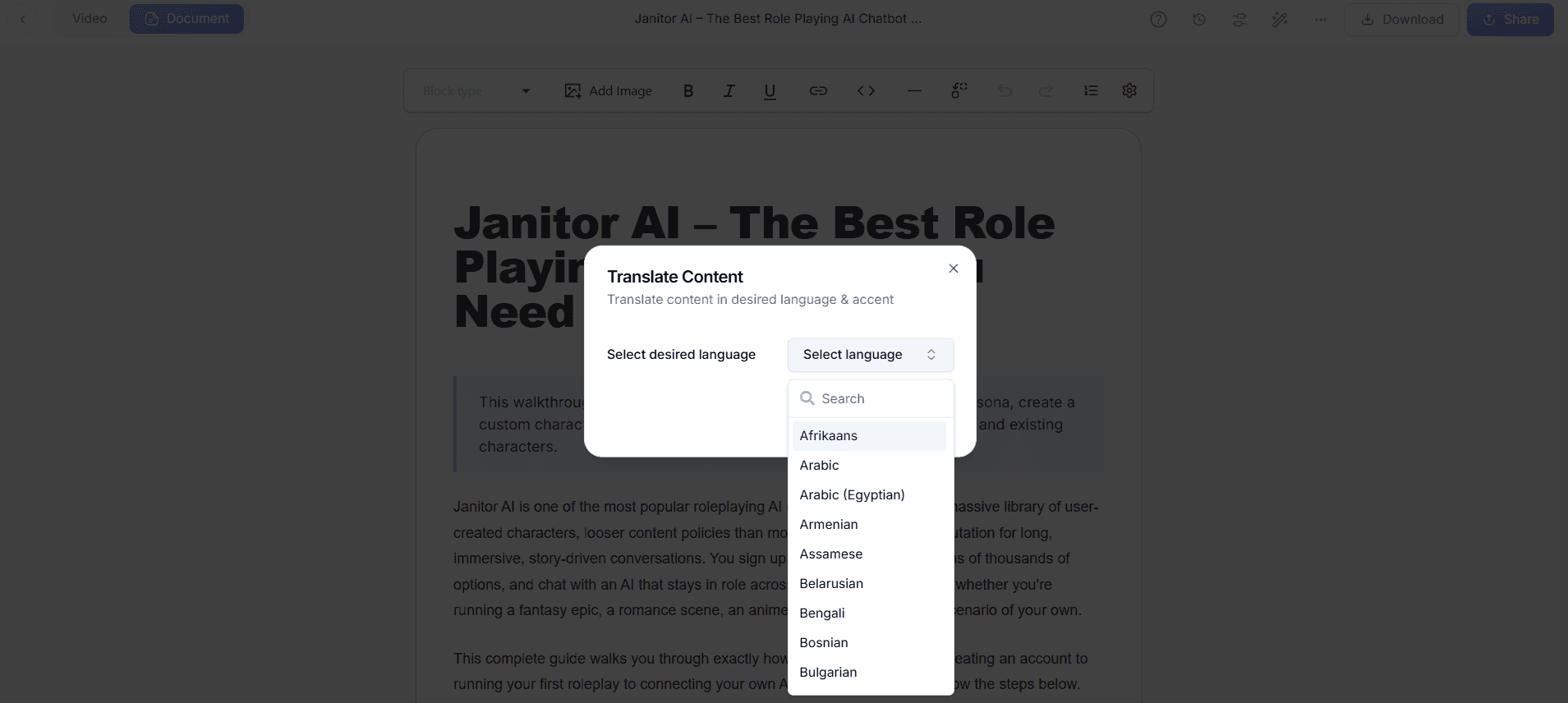
Step 6: Host Videos in an AI-searchable Knowledge Base
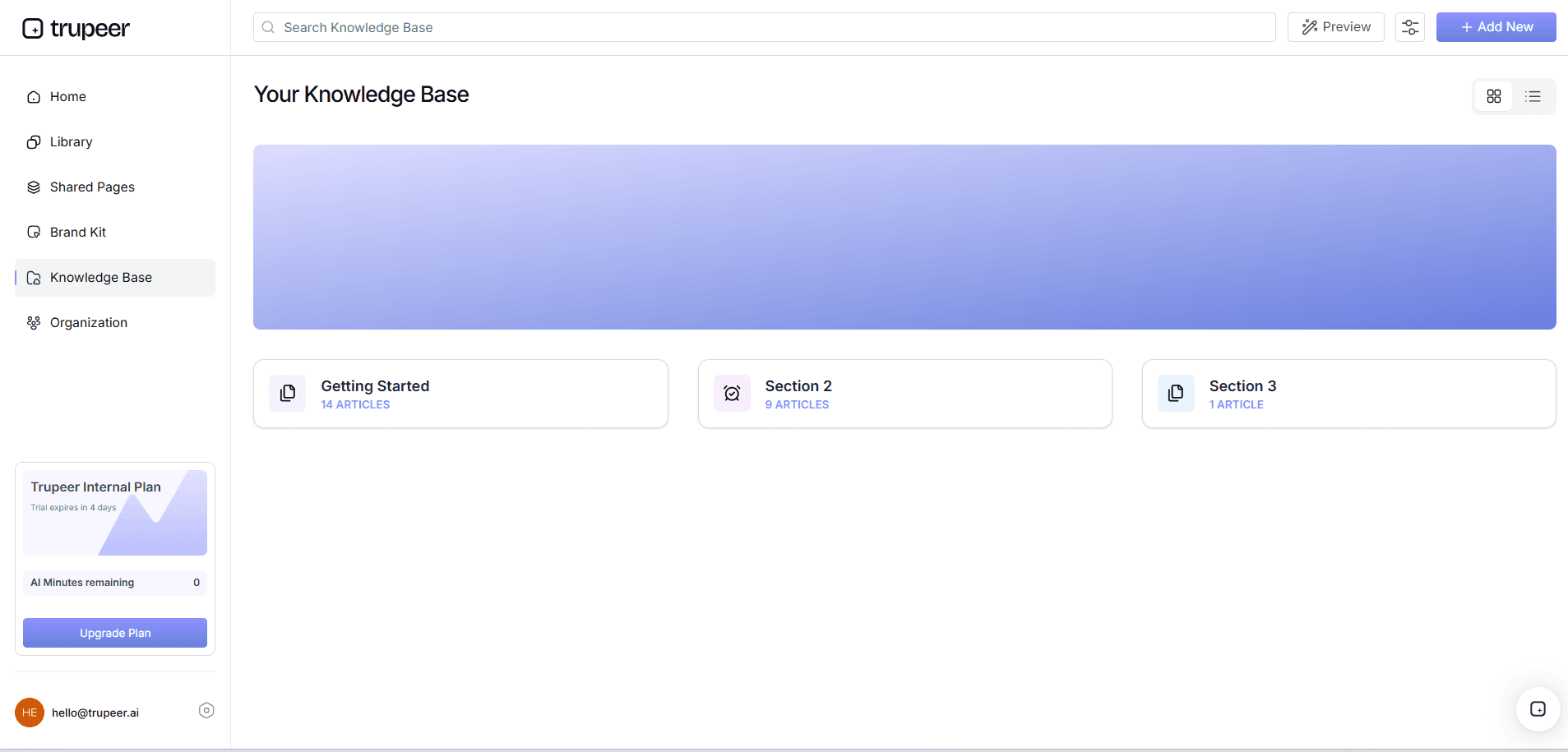
Finally, upload your completed video to Trupeer's AI-searchable knowledge base. This platform indexes your video with timestamped deep links, allowing evaluators to quickly find specific content. Access the knowledge base through the Trupeer dashboard, upload your video, and configure the access settings. This step enhances the user experience by making it easy for evaluators to navigate your content, ensuring that your RFP response is both comprehensive and accessible.
What tips help you add impactful video to RFP responses?
Creating effective video content for RFP responses requires strategic planning and execution. Here are some practical tips to ensure your videos are impactful and aligned with your objectives.
Plan Your Content. Outline the key messages and actions you want to capture before you start recording. This helps in creating focused and relevant content.
Keep Videos Concise. Aim for videos that are two to three minutes long. This keeps the viewer engaged and ensures your message is delivered without unnecessary filler.
Use Clear Narration. Ensure that the AI narration is easy to understand. Adjust the pace and tone to suit the content and audience.
Focus on Visuals. Highlight important actions with auto-zoom and annotations to draw attention to critical parts of the video.
Test Across Devices. Ensure your videos play well on different devices and browsers, as evaluators may use various platforms to view your content.
Get Feedback. Use collaborative review workflows to get input from team members before finalizing your video. This helps in refining content and improving quality.
Compare Tools. Review a Scribe vs Trupeer comparison to ensure you're using the best tool for your needs.
Frequently asked questions
How can I make my RFP response videos more engaging?
To make your RFP response videos more engaging, incorporate interactive elements such as clickable links and embedded documents. Use Trupeer's AI avatars to add a personal touch, which can captivate your audience and keep them interested. Ensure your video content is concise and focused on delivering key messages effectively. also, using auto video editor can enhance visual appeal by removing unnecessary filler words and maintaining a professional tone throughout the video.
What types of RFP questions are best suited for video responses?
Video responses work best for RFP questions that involve complex processes or require visual demonstrations. These include technical specifications, product demonstrations, and workflow explanations. For example, if an RFP asks you to describe how your software integrates with existing systems, a video showing the actual integration process can be more effective than a detailed text description. Videos help bring these elements to life, making it easier for evaluators to understand and remember your solution.
Why should I use Trupeer over other video tools?
Trupeer offers unique capabilities like AI screen recording with auto-zoom, AI avatars, and automatic SOP generation, all of which simplify the creation of engaging video content. Its comprehensive suite of tools allows you to produce, edit, and distribute videos efficiently. The integration with an AI video translation platform ensures your content is accessible to a global audience. Trupeer's competitive edge lies in its focus on automating complex tasks, saving you time while enhancing video quality.
Can I edit my RFP response videos after creating them?
Yes, Trupeer allows you to edit your videos after creation. Use the AI-enhanced editing features to trim, add voiceovers, or include AI avatars. This flexibility is crucial for refining content and ensuring it meets your RFP requirements. You can remove filler words automatically, adjust the pacing of the video, and even update videos with new information without starting from scratch. These editing capabilities make it easy to adapt your video content to changing RFP demands.
Does using video in RFP responses improve win rates?
Yes, including video in your RFP responses can significantly improve your win rates. Video content is more engaging and memorable than text, making it easier for evaluators to understand your solution. It also allows you to demonstrate your product or service's unique capabilities in action, providing a clearer picture of its value. Studies have shown that proposals with video content have a 34% higher engagement rate, leading to increased chances of success in competitive bidding processes.
Related Blogs