Trupeer Blog
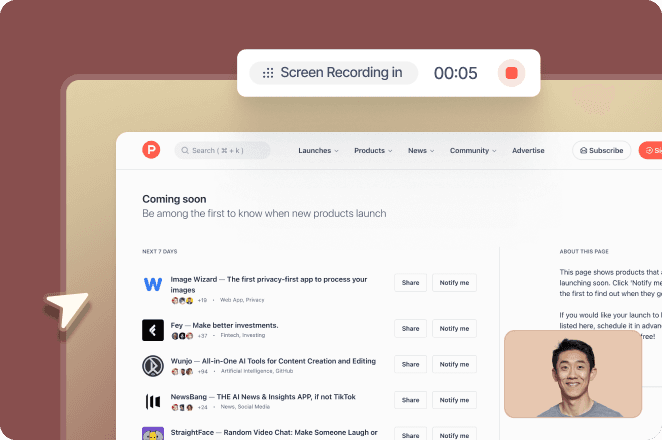
Imagine you're managing a team that relies heavily on a Learning Management System (LMS) to deliver training programs. The LMS has served you well, but it's starting to show its age, especially engaging today's multimedia-savvy workforce. You need a solution that's more dynamic, more engaging, and better suited for the way people consume content in 2026. Enter the video knowledge base. This approach prioritizes video as the core medium for knowledge sharing, offering a more engaging and accessible learning experience. According to research,
video-based learning increases knowledge retention by up to 60% compared to text-based learning.
Yet the thought of migrating is daunting. What happens to your existing content? Will you lose important compliance records? These are valid concerns. But the prospect of offering a more compelling, video-first learning environment is too appealing to ignore. For those tasked with making this transition, understanding the steps and benefits, as well as using the right tools like Trupeer, is crucial for a smooth migration. To see some of the best knowledge base examples that have successfully transitioned, visit best knowledge base examples for inspiration.
Why does migrating from an LMS to a video knowledge base matter?
Traditional LMS platforms, while functional, often fall short user engagement and content accessibility. Many organizations find themselves struggling with low course completion rates and poor user satisfaction scores. A video knowledge base can directly address these issues. By using video content, you can offer a more engaging and interactive learning experience that resonates with how today's learners prefer to consume information. When learners are more engaged, they're more likely to complete courses, retaining more information in the process. Trupeer also ships a internal knowledge base wiki software that handles this step without extra setup.
Also, businesses are under increasing pressure to deliver continuous learning and development opportunities. Static LMS platforms often require extensive administrative overhead to update and maintain content. A video knowledge base, in contrast, supports dynamic content updates and smooth integration of new material. This allows your team to stay agile, adapting quickly to new challenges or changes in industry standards. It's not just about keeping up with the competition; it's about proactively driving innovation within your organization. For those involved in customer success workflows, transitioning to a video knowledge base can simplify processes and enhance user satisfaction, as shown in this customer success use case.
What are the benefits of migrating from an LMS to a video knowledge base?
Shifting from an LMS to a video knowledge base offers numerous advantages. Here are the top benefits that can transform your organization's approach to learning and development:
Enhanced Engagement. Video content is more engaging than text, leading to higher retention rates. An AI video platform can help you create content that captures attention and maintains interest.
Increased Accessibility. Videos can be accessed on various devices, making learning more accessible to employees working remotely or on-the-go. This flexibility ensures that knowledge isn't confined to a single location or device.
Cost-Effective Content Creation. Producing video content can be more cost-effective in the long run, especially when using AI tools to automate parts of the process. This reduces the need for expensive, time-consuming content production cycles.
Scalable Learning Solutions. As your organization grows, a video knowledge base can easily scale to accommodate new learners and content. This scalability supports ongoing growth and development initiatives.
Improved Compliance and Tracking. A well-integrated system offers solid compliance tracking, ensuring that you meet industry standards and regulatory requirements.
simplified Updates. Updating video content is straightforward, allowing you to keep your knowledge base current without extensive downtime or resource allocation. This ensures that learners always have access to the most recent information.
Teams ship this workflow end-to-end using Trupeer's AI video platform, which turns raw recordings into polished output without an editor.
Which Trupeer features help you migrate from an LMS to a video knowledge base?
Trupeer offers several capabilities that are particularly useful for organizations looking to transition from an LMS to a video knowledge base. These features simplify the migration process, enhance content creation, and improve the overall user experience.
AI Screen Recording with Auto-Zoom and Click Detection
Trupeer's AI screen recording feature is a big shift for creating high-quality video content effortlessly. This tool captures your screen activities with precision, automatically zooming in on relevant sections and detecting clicks to highlight actions. This capability is essential when transitioning from text-heavy LMS content to engaging video demonstrations. With no additional software installation required, the browser-based recorder ensures you can start creating content immediately. This feature is ideal for developing step-by-step guides or tutorials that require clear visual instructions. It's also particularly useful for capturing complex processes that are difficult to convey through text alone.
AI Voiceover in 65+ Natural Voices
One of the key challenges in video content creation is ensuring high-quality audio narration. Trupeer's AI voiceover feature offers over 65+ natural voices, allowing you to choose a tone and pace that best fits your content. This capability is especially important when converting complex LMS modules into video format, ensuring that the narration is clear and engaging. The AI voice cloning option can replicate your voice from a short sample, maintaining a consistent audio presence across all videos. This eliminates the need for professional recording equipment and reduces the time spent on post-production editing. To see how this can enhance your content, explore the AI documentation platform.
Automatic SOP Generation from Any Recording
Standard Operating Procedures (SOPs) are crucial for organizational consistency, and Trupeer simplifies their creation with automatic SOP generation. This feature converts any video recording into an editable SOP document, simplifying the documentation process. It's particularly beneficial for teams migrating from an LMS, as it ensures that all procedural knowledge is captured and easily accessible. This auto-generated documentation can be exported in multiple formats, including HTML and PDF, making it versatile for various applications. This capability not only saves time but also ensures that your knowledge is documented accurately and efficiently.
AI Translation into 65+ Languages
Global teams require content that's accessible across different languages and regions. Trupeer's AI translation feature supports over 40 languages, making it easier to localize your video content. This capability is crucial for organizations transitioning from a monolingual LMS to a multilingual video knowledge base. It ensures that your training materials reach a broader audience without language barriers. The AI dubbing feature offers lip-sync capabilities, providing a smooth viewing experience for non-English speaking users. This enhances the inclusivity of your content, allowing you to cater to a diverse workforce effectively.
AI-Searchable Knowledge Base with Timestamp Deep-Links
Organizing and retrieving video content can be challenging, but Trupeer's AI-searchable knowledge base feature simplifies this process. It indexes every recording with timestamp-level deep links, allowing users to jump directly to the relevant section of a video. This feature is invaluable for teams migrating from an LMS, as it improves content accessibility and user experience. By providing a video knowledge base that is easily navigable, you ensure that learners can find the information they need quickly and efficiently. This capability enhances the usability of your knowledge base, making it a powerful tool for ongoing learning and development.
How do you migrate from an LMS to a video knowledge base step by step with Trupeer?
Step 1: Capture Content with AI Screen Recording
Start by using Trupeer's AI screen recording feature to capture your existing LMS content. Open the browser-based recorder, which requires no installation, and select the screen or application window you want to record. The AI automatically zooms in on important areas and detects clicks, ensuring that all critical interactions are highlighted. Record tutorials, presentations, or any other instructional material you wish to migrate. This process typically takes as long as the original content duration, but the enhanced clarity and focus on user actions provide a more engaging viewer experience. If you're recording complex software demonstrations, the auto-zoom ensures viewers won't miss important details.
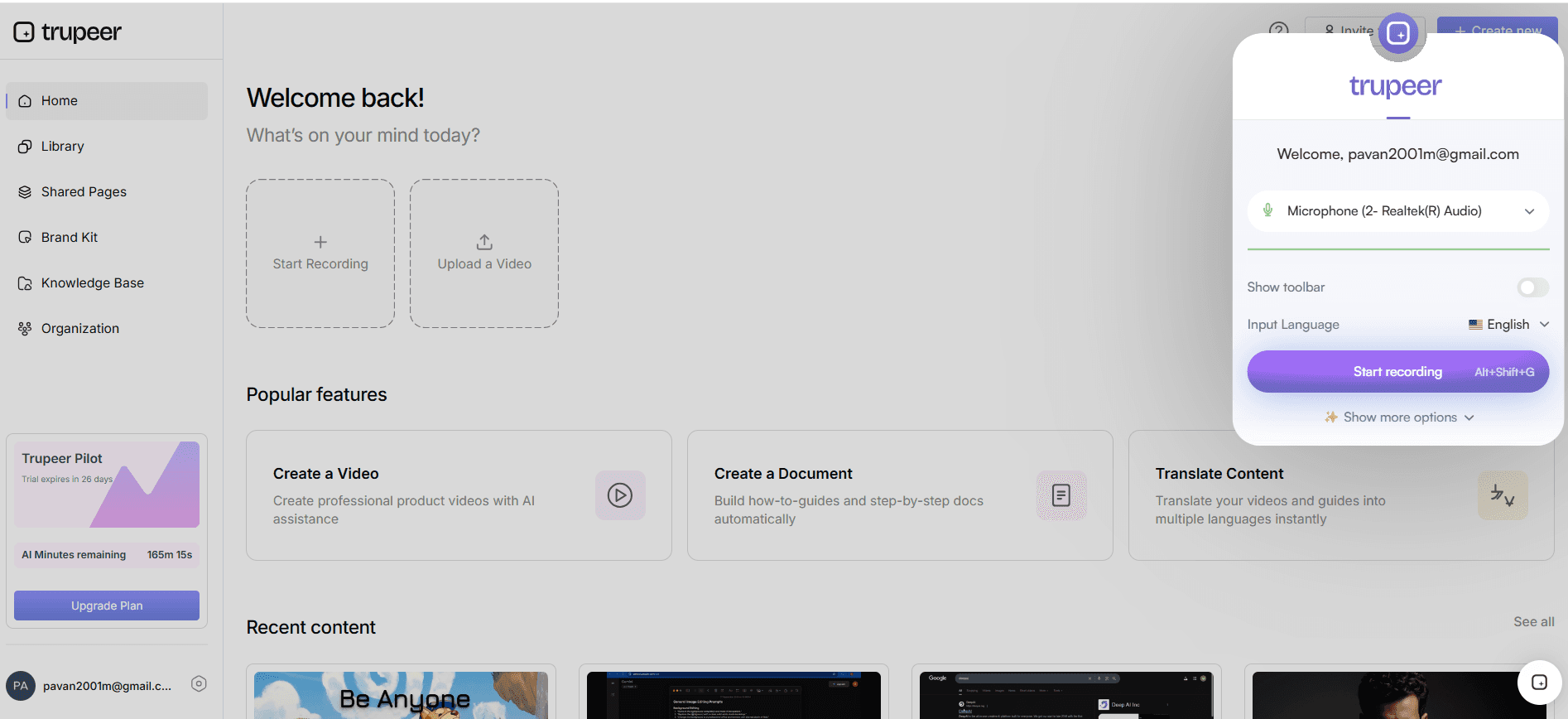
Step 2: Enhance Video with AI Voiceover
Once your video is captured, use Trupeer's AI voiceover to add narration. Choose from over 50 natural-sounding voices, and adjust the pace and tone to match your content. If you prefer a personal touch, use AI voice cloning to replicate your voice. This step is crucial for making your content more accessible and engaging. The voiceover process is quick, often completed in minutes, and drastically reduces the time you'd spend on traditional voice recording. This feature is particularly beneficial when updating multilingual training modules, as it eliminates the need for separate voice talent for each language.
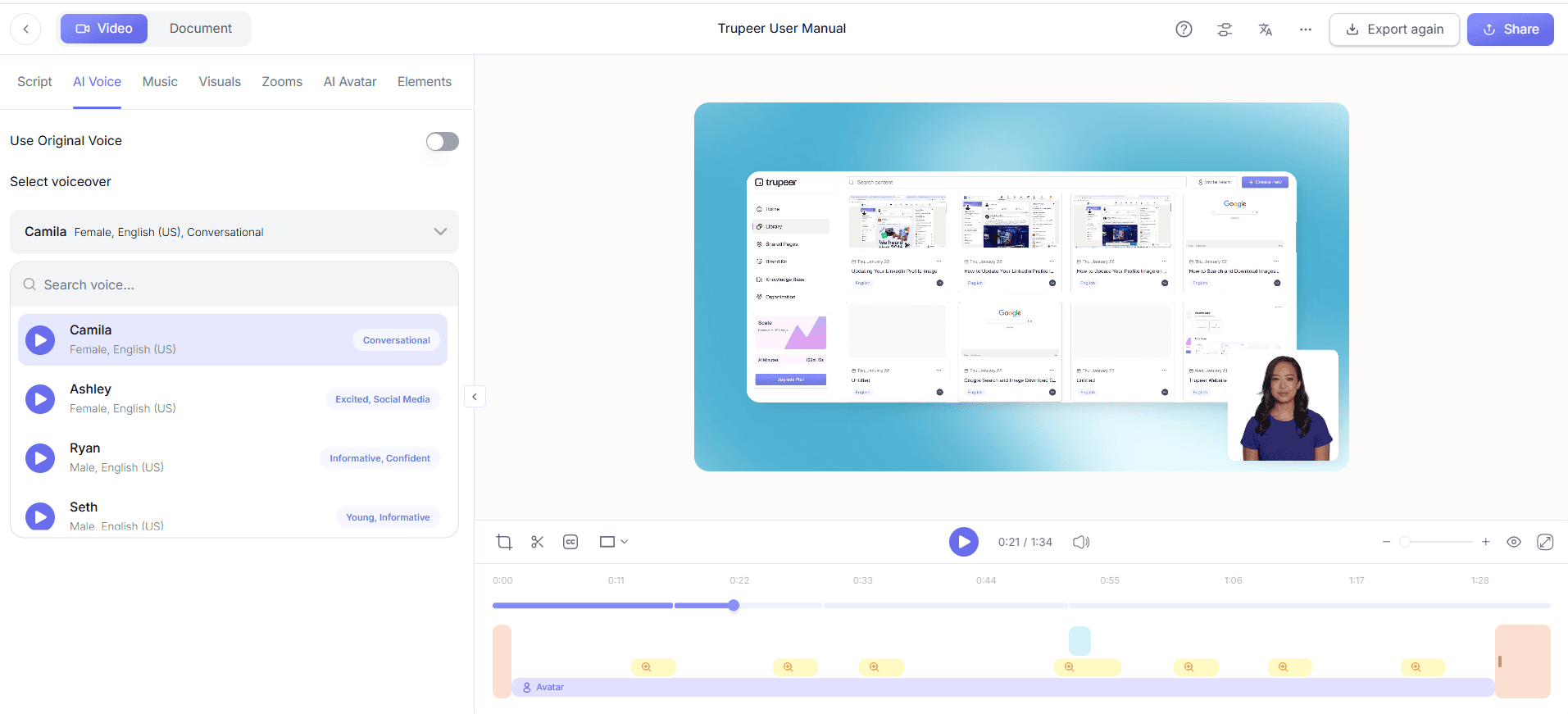
Step 3: Generate Automatic SOPs
Trupeer's automatic SOP generation capability transforms your videos into written procedures. Simply select the recording, and the platform will generate an editable SOP document. This feature is invaluable for organizations that rely on detailed procedural documentation. Within minutes, you have a draft SOP that can be further refined or exported in various formats such as HTML or PDF. This ensures that even users who prefer text over video have access to the information they need. It also allows for easy updates, maintaining consistency across your documentation.
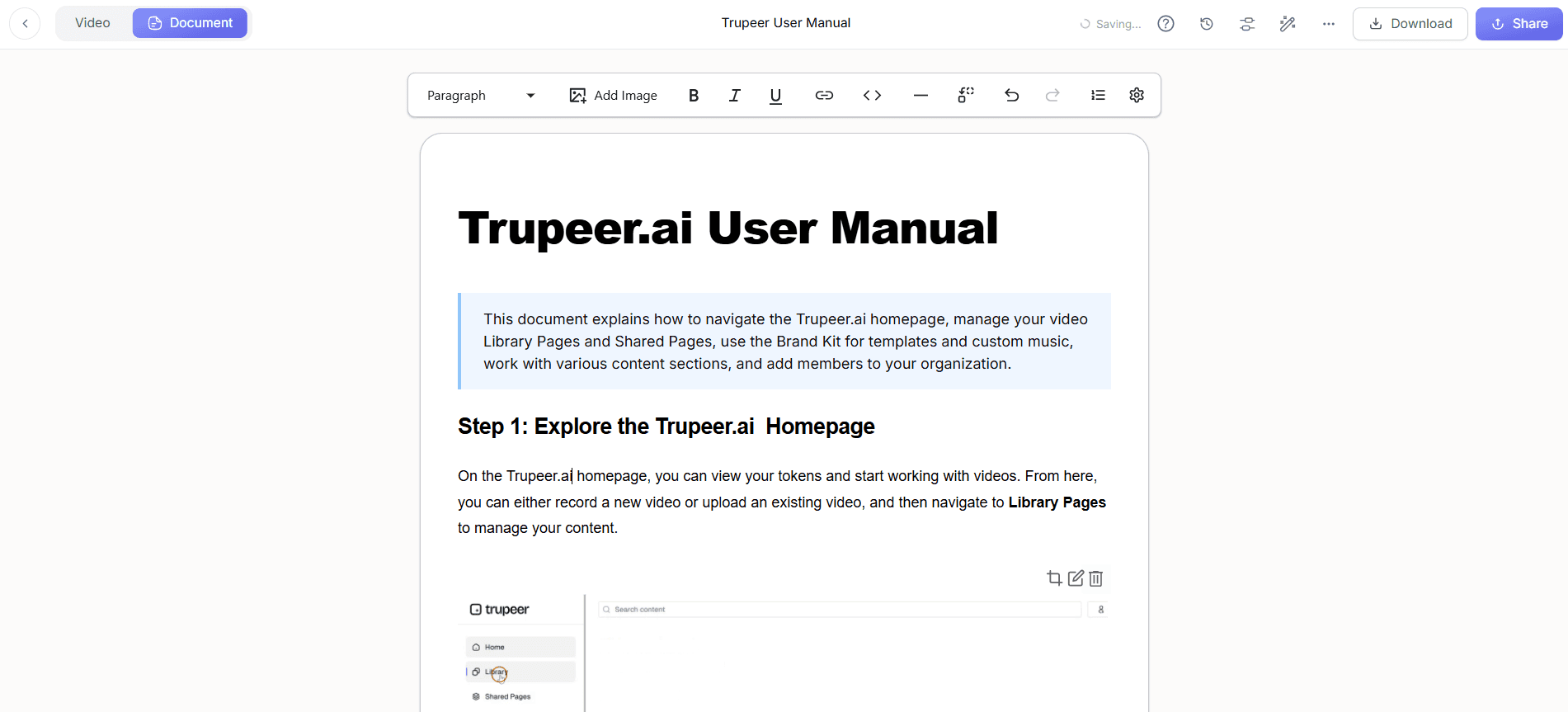
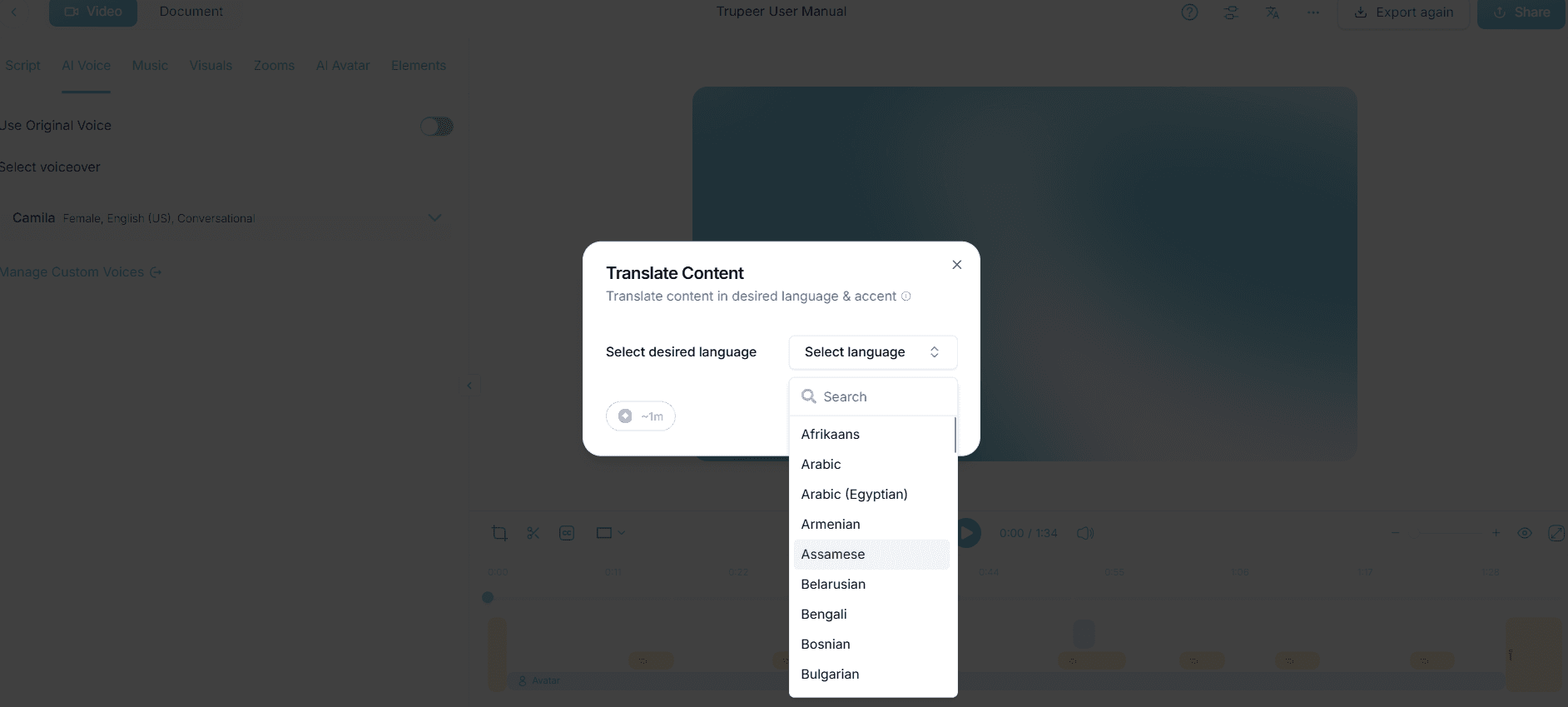
Step 4: Localize Content with AI Translation
For a global team, localizing your content is essential. Use Trupeer's AI translation to convert your videos into more than 40 languages. Select the video, choose the target language, and let the AI handle the translation and dubbing. The platform's lip-sync feature ensures that the translation looks natural, which is crucial for maintaining viewer engagement. This step takes a few hours depending on the video length, but it's much faster than traditional translation methods. This capability makes it easy to reach international audiences without compromising on the quality of your content.
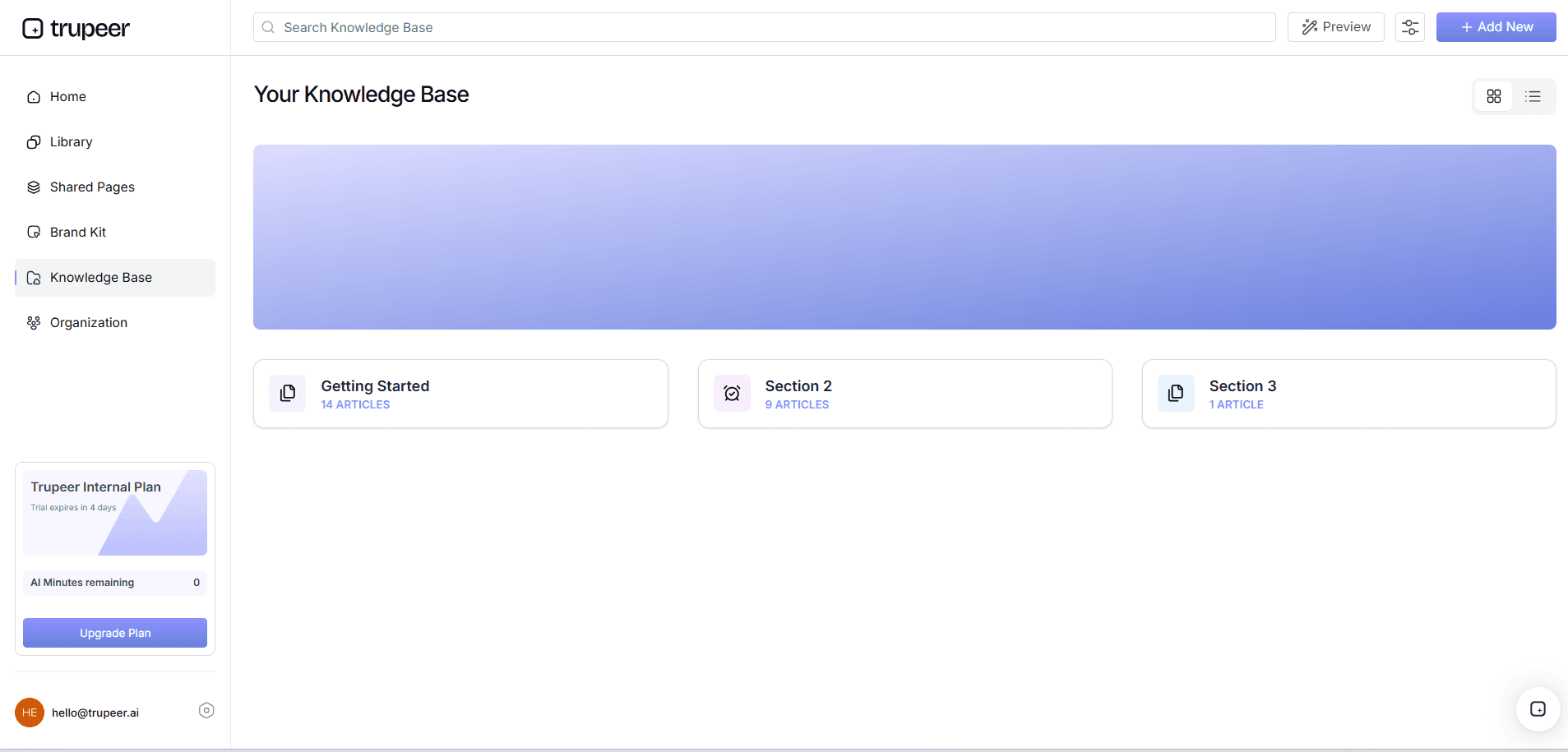
Step 5: Organize with AI-Searchable Knowledge Base
After your videos are prepared, integrate them into Trupeer's AI-searchable knowledge base. Upload your content, and the system automatically indexes each video with timestamp deep-links. This allows users to jump directly to the most relevant sections. This feature enhances user experience by making content easily searchable and navigable. For example, if a team member needs to revisit a specific part of a training module, they can do so without scrubbing through the entire video. Setting up the knowledge base is straightforward and can be completed in a few hours, depending on the volume of content.
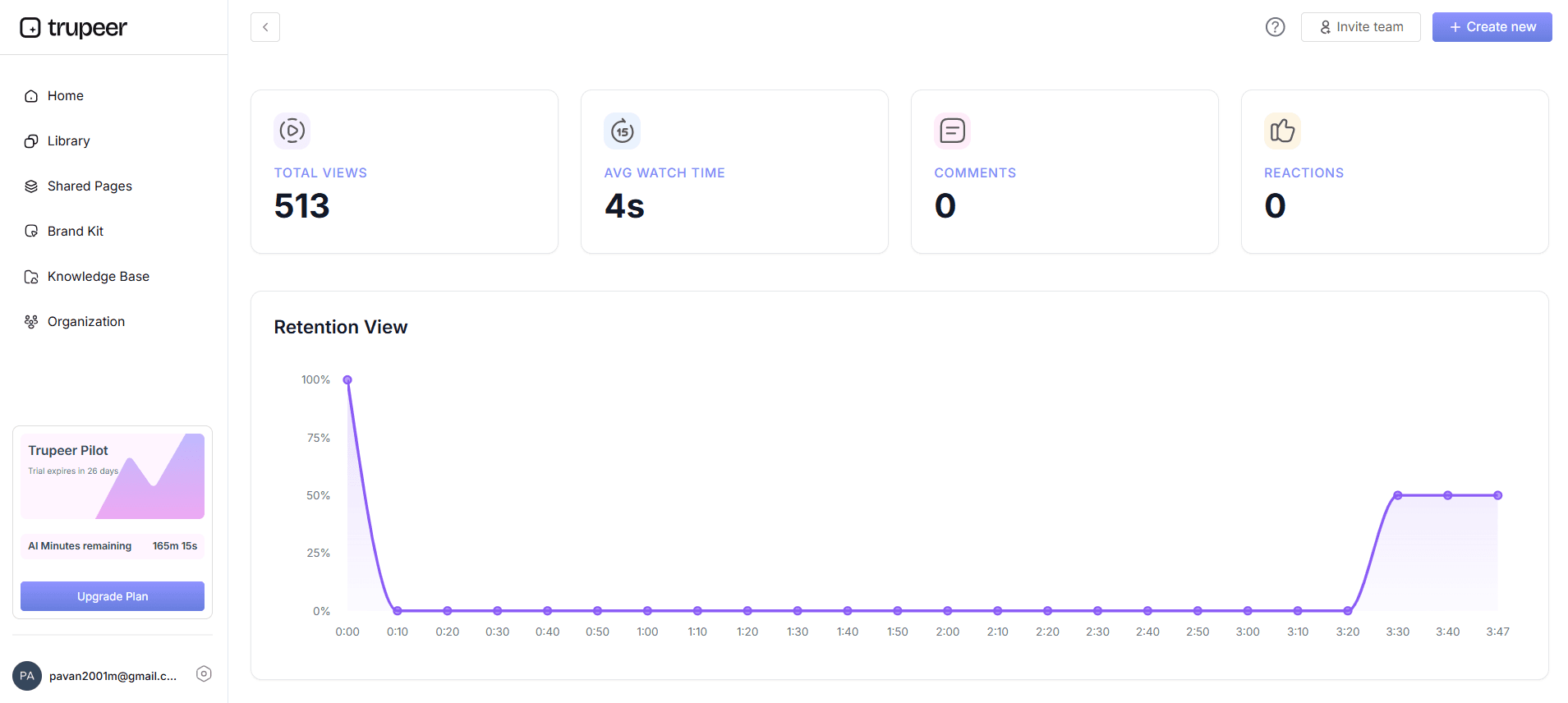
Step 6: Distribute and Monitor Engagement
Finally, use Trupeer's distribution features to share your new video knowledge base. Host it on a custom domain with single sign-on (SSO) for secure access. You can also create shared pages or client-facing portals. Trupeer provides engagement analytics, so you can monitor viewer interactions, drop-off points, and heatmaps. This data is crucial for understanding how users engage with your content and identifying areas for improvement. The setup for distribution takes a day or two, but ongoing analytics provide continuous insights, helping you refine your learning materials over time. For a Loom alternative comparison, Trupeer offers comprehensive features that enhance this distribution process.
What tips help you migrate from an LMS to a video knowledge base?
Migrating from an LMS to a video knowledge base can be a complex process, but with the right strategies, you can make the transition smoother and more effective. Here are some practical tips to guide you:
Plan Your Content Structure. Before migration, outline how you'll organize your video content to ensure a logical flow. A well-structured knowledge base enhances user navigation.
use AI Tools. Use AI-powered features to automate tasks like voiceovers and translations. This reduces manual effort and speeds up the migration process. For SOP creation, consider a Scribe alternative comparison.
Test Content with a Pilot Group. Roll out your video knowledge base to a small group first. Gather feedback to identify potential issues before a full-scale launch.
Maintain Legacy Content. Keep a backup of your LMS content during the transition. This ensures you can retrieve information if needed while your new system stabilizes.
Train Your Team. Provide training sessions to familiarize your team with the new video knowledge base. This helps them adapt quickly and make the most of the new system.
Monitor Engagement Metrics. Use analytics to track how users interact with your content. This data helps you refine your strategy and improve user experience. For comprehensive tools, check out knowledge base software teams customers.
Iterate and Improve. Continuously update and improve your video content based on user feedback and analytics. A dynamic knowledge base is always evolving.
Frequently asked questions
How do I ensure all my existing LMS content is transferred?
To ensure a complete transfer, start by auditing your current LMS content. Identify key modules and materials that need to be moved to the new system. Use Trupeer's AI screen recording and documentation tools to capture and document this content effectively. This ensures nothing gets left behind. Consider categorizing content based on priority and relevance, so you focus on the most critical materials first. By using Trupeer's organized approach, you can systematically transfer and verify each piece of content in your new video knowledge base.
What are the technical requirements for using Trupeer?
Trupeer is designed to be accessible with minimal technical overhead. It offers a browser-based recorder, eliminating the need for additional software installations. All you need is a stable internet connection and a modern web browser. The platform is compatible with most operating systems, including Windows, macOS, and Linux. This flexibility ensures that your team can use Trupeer regardless of their device preference. For best performance,
Why should I choose a video knowledge base over a traditional LMS?
A video knowledge base offers several advantages over traditional LMS platforms. It enhances engagement through dynamic video content, which is more appealing to modern learners. Video-based learning improves retention rates and provides a more flexible learning experience. also, a video knowledge base supports multilingual capabilities and real-time updates, making it suitable for global and rapidly changing environments. Compared to static LMS content, video offers a richer, more interactive medium that aligns with contemporary learning preferences.
Can Trupeer handle multilingual content effectively?
Yes, Trupeer excels at managing multilingual content. It offers AI translation into over 40 languages, complete with lip-sync capabilities for smooth video dubbing. This feature ensures that your content is accessible to a diverse audience without compromising on quality. The platform's translation and dubbing tools are designed to be user-friendly, allowing you to localize content efficiently. With Trupeer, you can expand your reach and ensure that all team members, regardless of language, can benefit from your video knowledge base.
Does Trupeer provide analytics for content engagement?
Yes, Trupeer includes comprehensive analytics tools to monitor content engagement. These tools provide insights into viewer interactions, drop-off points, and heatmaps, allowing you to understand how users engage with your video knowledge base. By analyzing this data, you can identify areas for improvement and tailor content to better meet user needs. The analytics are easy to access and interpret, providing valuable feedback for continuous content optimization. For teams looking to expand globally, Trupeer's AI video translation capabilities further enhance analytics by accommodating diverse audiences.
Related Blogs