Trupeer Blog
Summarise

Imagine you're launching a new software tool. Your team is excited, but there's a major hurdle. Users struggle to understand new features without clear guidance. Static text isn't cutting it. The solution? Integrating demo videos directly into your product documentation. This approach transforms dry manuals into dynamic resources that engage users effectively. A recent study found that
users are 75% more likely to retain information from video content compared to text alone.
That's a compelling reason to rethink your documentation strategy. But how do you smoothly combine videos with written docs without overwhelming your resources? You're not alone if this feels daunting. Many companies face this, especially as products become more complex. Whether you're in SaaS, e-commerce, or any tech-driven field, embedding demo videos alongside written instructions could be your big shift. It's about providing clarity, reducing support tickets, and enhancing the user experience. If you're tasked with creating or revamping product documentation, this guide is for you. We'll explore practical steps, tools, and tips to integrate video content effectively, making your documentation a valuable asset for users and stakeholders alike. For additional insights on creating impactful demos, check out how to make a product demo video.
Why does embedding demo videos and written docs in product documentation matter?
Product documentation plays a critical role in user adoption and satisfaction. When users can't quickly understand how to use your product, frustration builds. This leads to increased support requests and potential churn. Text-heavy documentation often fails to engage users or convey complex processes effectively. Embedding demo videos addresses these issues by providing an interactive and visually engaging way to learn. Videos can simplify complex information and show real-time product interactions that are difficult to describe with words alone. For instance, a video demonstration of configuring settings can save users time and effort, allowing them to see exactly where to click and what to type.
Different stakeholders benefit uniquely from embedded videos in documentation. For instance, customer support teams can reference these resources to resolve tickets faster. Marketing teams can use them to highlight features in campaigns. Product managers gain insights into user behavior by analyzing video engagement metrics. This cross-functional utility underscores the value of integrated video content. In fact, customer education workflows become more effective with video. With the right tools, maintaining and updating these resources doesn't have to be a burden. Automation can simplify content creation and management, ensuring your documentation remains current and relevant.
What are the benefits of embedding demo videos and written docs in product documentation?
Combining demo videos with written documentation offers several tangible benefits that directly impact user experience and business efficiency.
Enhanced User Engagement. Videos capture attention better than text, increasing the likelihood users will engage with your content. This means users are more likely to understand and retain information, leading to a smoother product experience.
Improved Knowledge Retention. Users retain information more effectively when they watch videos compared to reading text. This results in fewer repeated questions and support tickets, as users can self-serve more successfully.
Reduced Support Costs. With comprehensive video and text resources, users can find answers independently, reducing the volume of support inquiries. For example, a well-placed video can cut support tickets by up to 30%, freeing up your team's time for more complex issues.
Faster Onboarding. New users can quickly get up to speed by watching instructional videos. This accelerates the onboarding process and helps users become proficient with your product faster.
Flexibility in Content Creation. You can repurpose demo videos across different platforms and use cases. This maximizes the return on your content creation efforts, allowing you to reach broader audiences with minimal additional work.
Consistent Messaging. Using a single AI video platform ensures your messaging remains consistent across all content formats, maintaining brand integrity and user trust.
Which Trupeer features help you embed demo videos and written docs in product documentation?
Trupeer offers a suite of features tailored for integrating demo videos with documentation, making the process efficient and effective for teams.
AI screen recording with auto-zoom and click detection
Trupeer's AI screen recording makes capturing demo videos smooth. It automatically detects clicks and actions, zooming in to highlight important sections. This ensures users see exactly what they need to focus on, reducing confusion. Whether you're demonstrating a simple task or a complex workflow, this feature highlights critical steps without manual intervention. It saves time and enhances clarity, making your videos both informative and engaging. By capturing the screen with precision, you provide users with a clear visual guide that complements written instructions.
Automatic SOP generation from any recording
With Trupeer's automatic SOP generation, any recording can be converted into a step-by-step document. This feature is a big shift for teams that need to maintain detailed procedures alongside video content. Once a video is captured, Trupeer generates a text document outlining each step, which can be edited and exported in various formats. This integration ensures that your documentation remains consistent and up-to-date, aligning your video and text resources smoothly. You can explore how this AI documentation platform helps simplify the creation of comprehensive guides.
Shared pages / client-facing portals
Trupeer enables you to create shared pages or client-facing portals where users can access both video and text resources in one place. This centralized approach enhances user experience by providing easy access to all necessary information. Clients and team members can view embedded videos alongside written guides, ensuring they have all the resources they need at their fingertips. This feature is particularly useful for onboarding, training sessions, and customer support interactions.
AI-searchable knowledge base with timestamp deep-links
Embedding demo videos becomes more powerful when paired with an AI-searchable knowledge base. This feature indexes every recorded video with timestamp-level deep links, allowing users to jump directly to relevant sections. It enhances the usability of your documentation by making it easy for users to find and access specific information quickly. Whether they're troubleshooting an issue or learning a new feature, users can navigate your documentation with precision and ease.
Embeddable video widgets for in-app guidance
Trupeer's embeddable video widgets allow you to integrate video guides directly into your application. This feature provides users with in-context assistance, reducing the need to leave the app for support. When users encounter a new feature, an embedded video guide provides immediate help, ensuring they can continue working without interruption. This capability is ideal for enhancing user experience and ensuring users have access to the right resources exactly when they need them.
How do you embed demo videos and written docs in product documentation step by step with Trupeer?
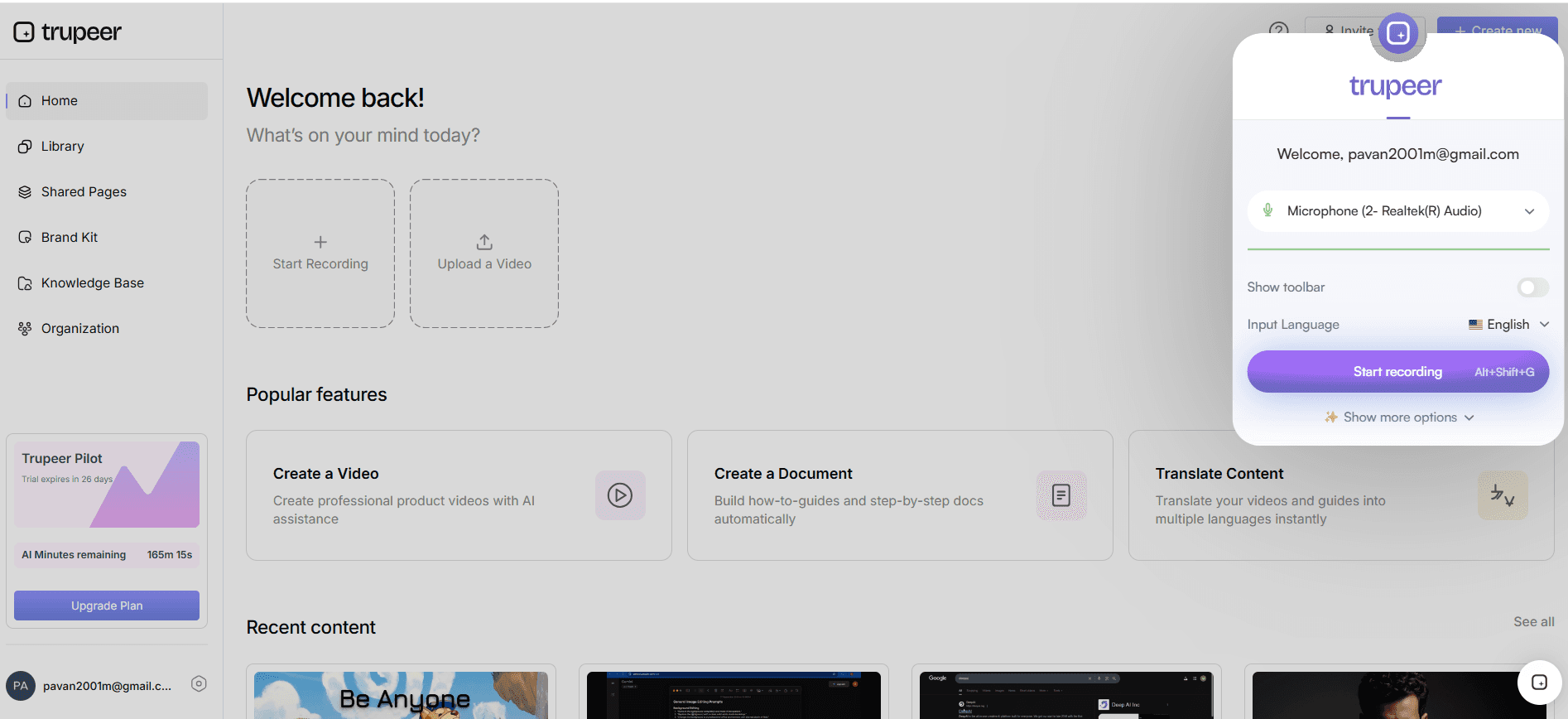
Step 1: Initiate Screen Recording
Begin by using Trupeer's browser-based recorder to capture your screen. There's no need for installation, making it quick to start. Simply click "Record" after opening your product interface. Trupeer's AI will automatically detect clicks and apply auto-zoom on areas of interest. This ensures your video captures the most significant parts of your demonstration, providing clarity to viewers. The recording process is intuitive and allows you to pause and resume as needed. This flexibility is useful if you need to adjust your presentation or handle interruptions.
Step 2: Enhance with AI Narration
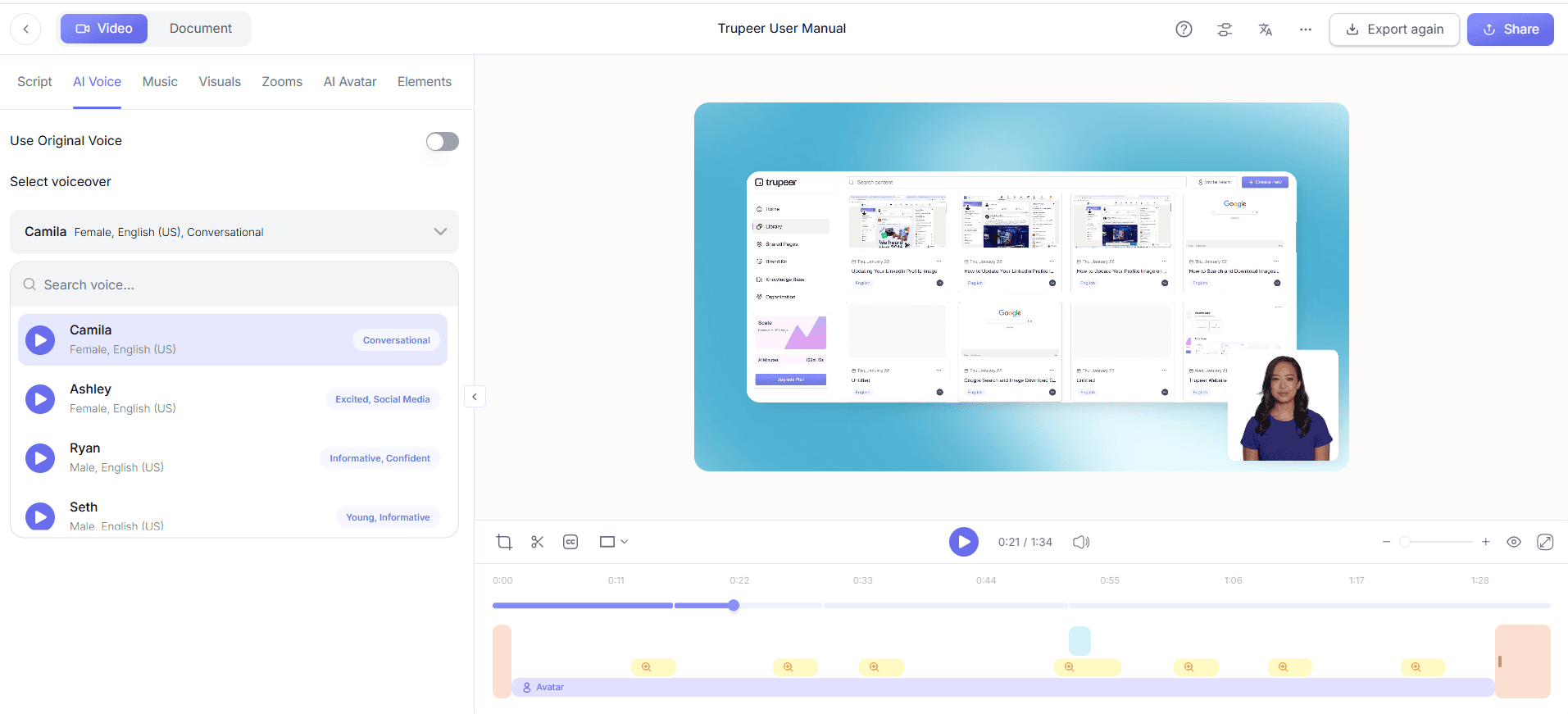
Once your recording is complete, enhance it with Trupeer's AI voiceover. Choose from over 65+ natural voices, adjusting pace and tone to match your brand's style. This feature is particularly useful if you want to maintain a consistent audio experience across your documentation. The AI voiceover can narrate based on a script you provide or generate narration from the actions in your video. It typically takes a few minutes to process, depending on the length of your video. This step ensures your content is engaging and easily understandable.
Step 3: Generate Automatic SOPs
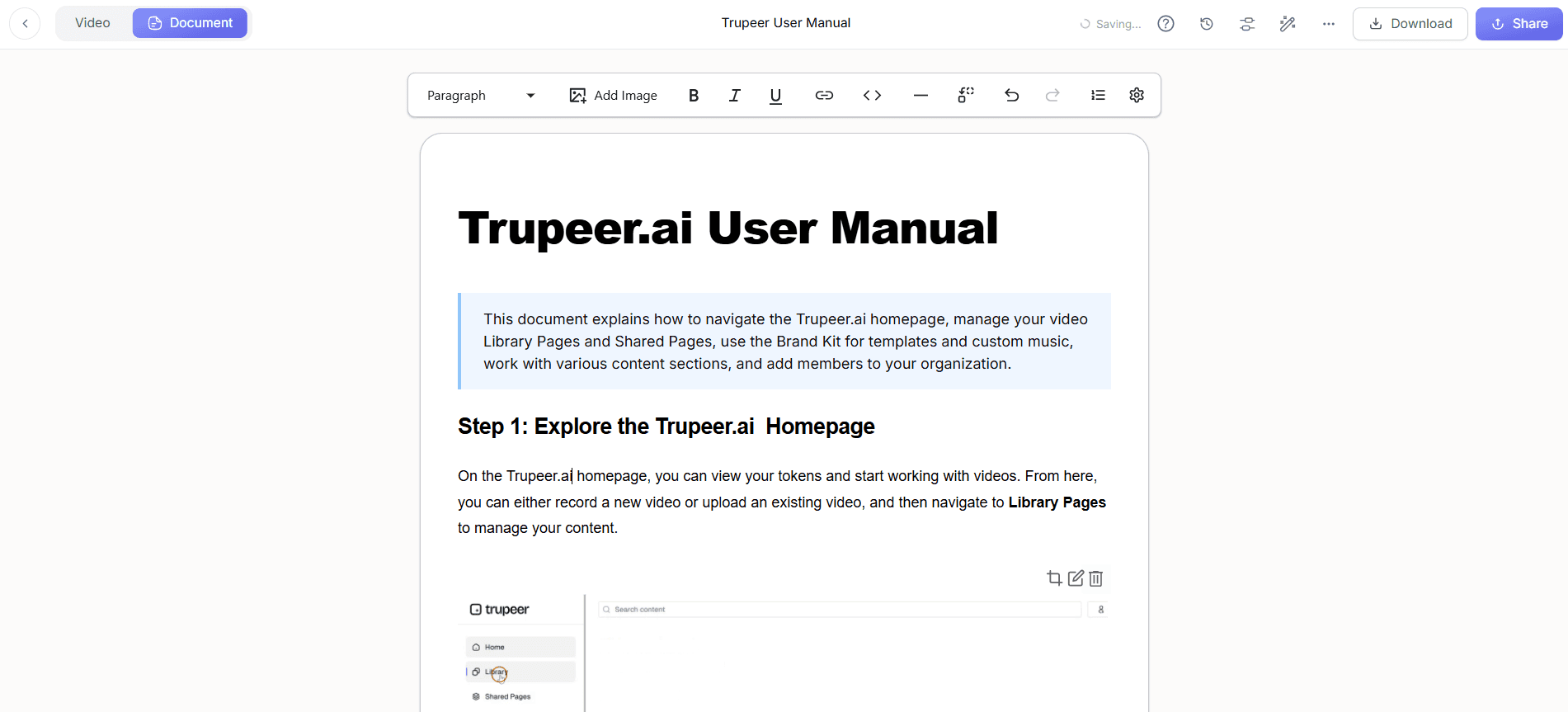
After enhancing your video, convert it into an automatic SOP using Trupeer. This feature creates a detailed, step-by-step document from your recording, which can be edited for accuracy and exported in formats like HTML or PDF. This integration ensures that video content is complemented by written documentation, catering to users who prefer text. The SOP provides a comprehensive guide that aligns with your video, making it easy to update and maintain. The process is swift, taking only a few moments to generate and customize. Teams weighing tools often start with a Loom alternatives comparison before standardizing on a workflow.
Step 4: Localize for Global Audiences
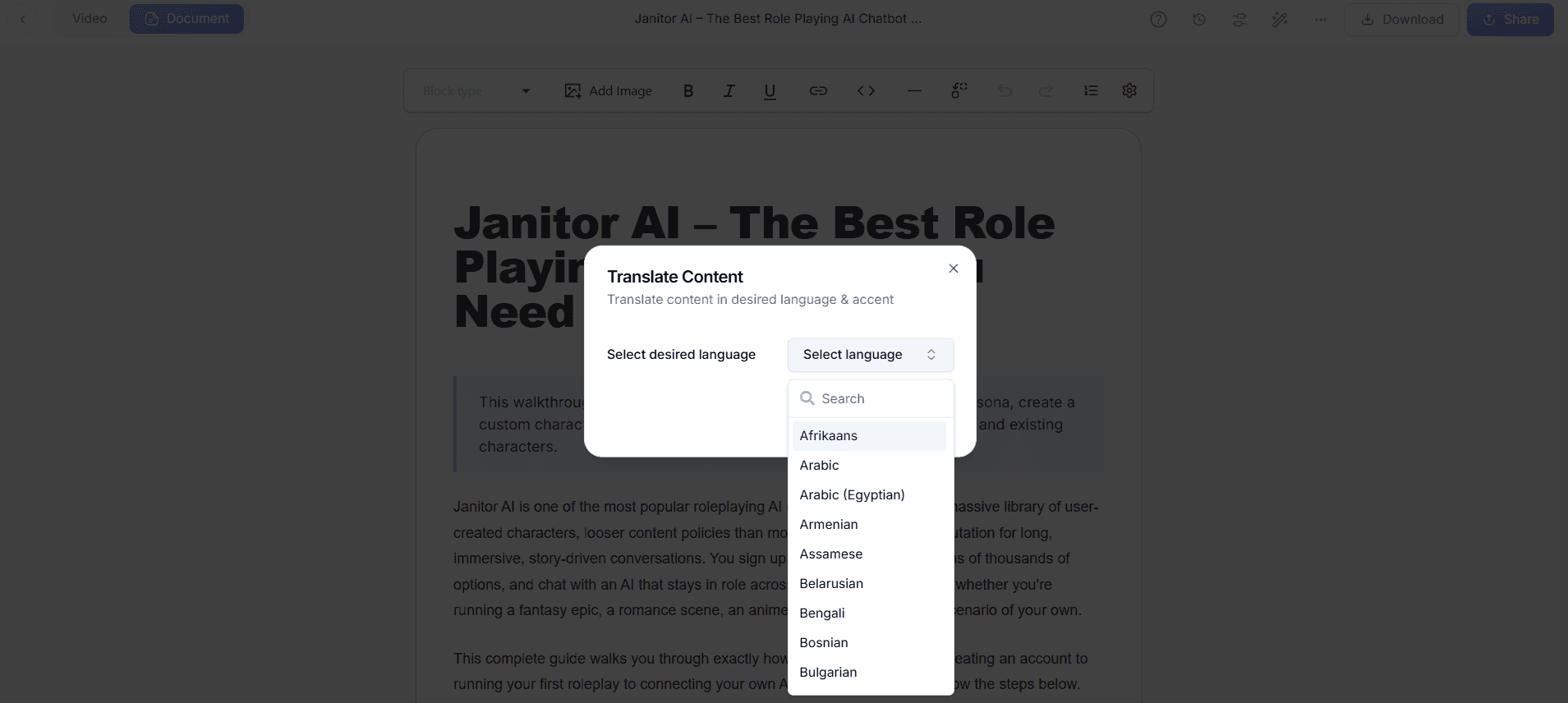
Next, use Trupeer's AI translation to cater to non-English speaking users. With support for translation into 40+ languages, you can ensure your documentation and videos are accessible worldwide. Trupeer's AI provides accurate translations with lip-sync capabilities, preserving the quality of your content. The translation process is automated and typically completes in minutes, depending on the content length. This step broadens your audience reach and enhances user satisfaction by providing localized resources.
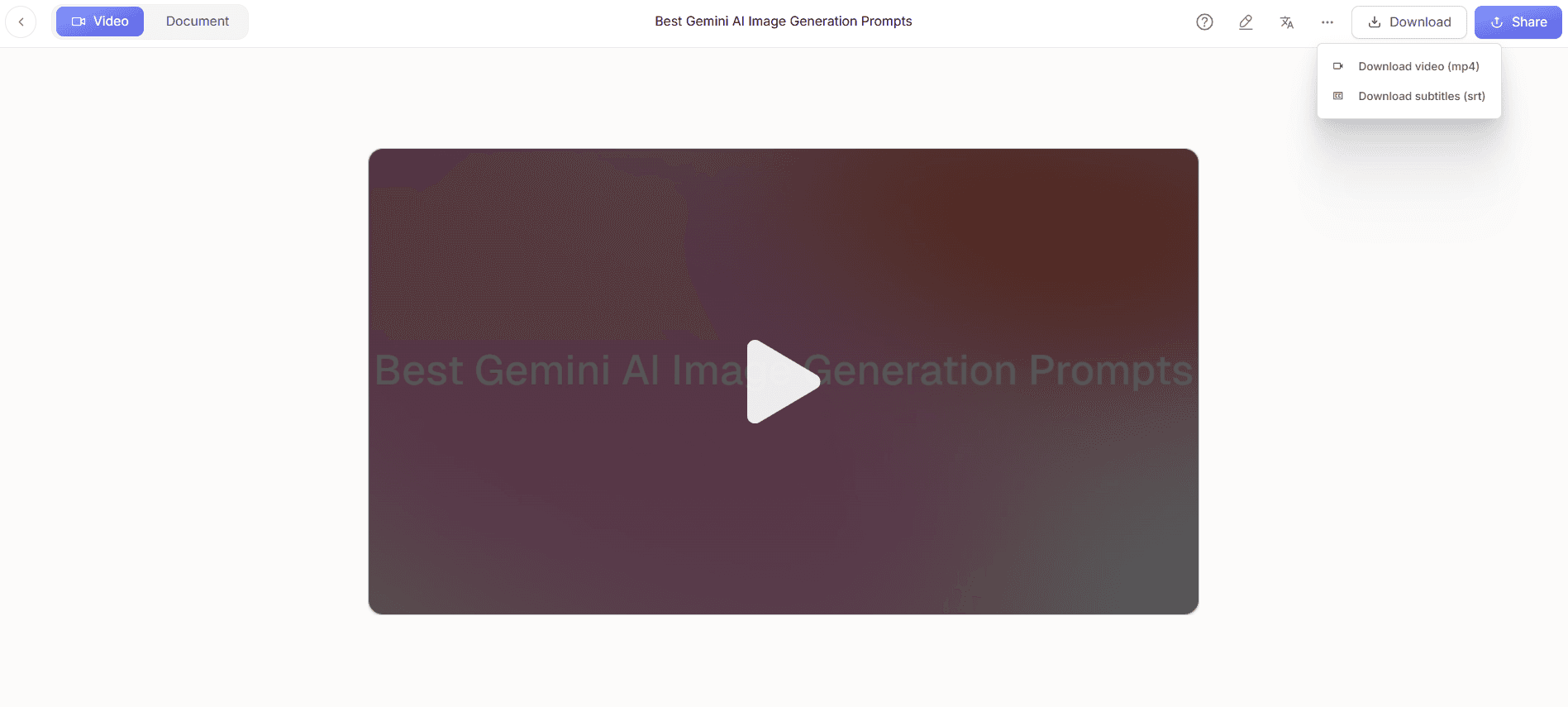
Step 5: Embed Video Widgets
To integrate your videos into your documentation, use Trupeer's embeddable video widgets. These widgets allow you to place videos directly within product pages or help sections, providing in-context guidance. Simply embed the widget code generated by Trupeer into your documentation platform. This capability ensures users have immediate access to visual guidance without leaving the page. It's an effective way to reduce friction and enhance user experience by integrating help resources directly where they're most needed.
Step 6: Analyze Viewer Engagement
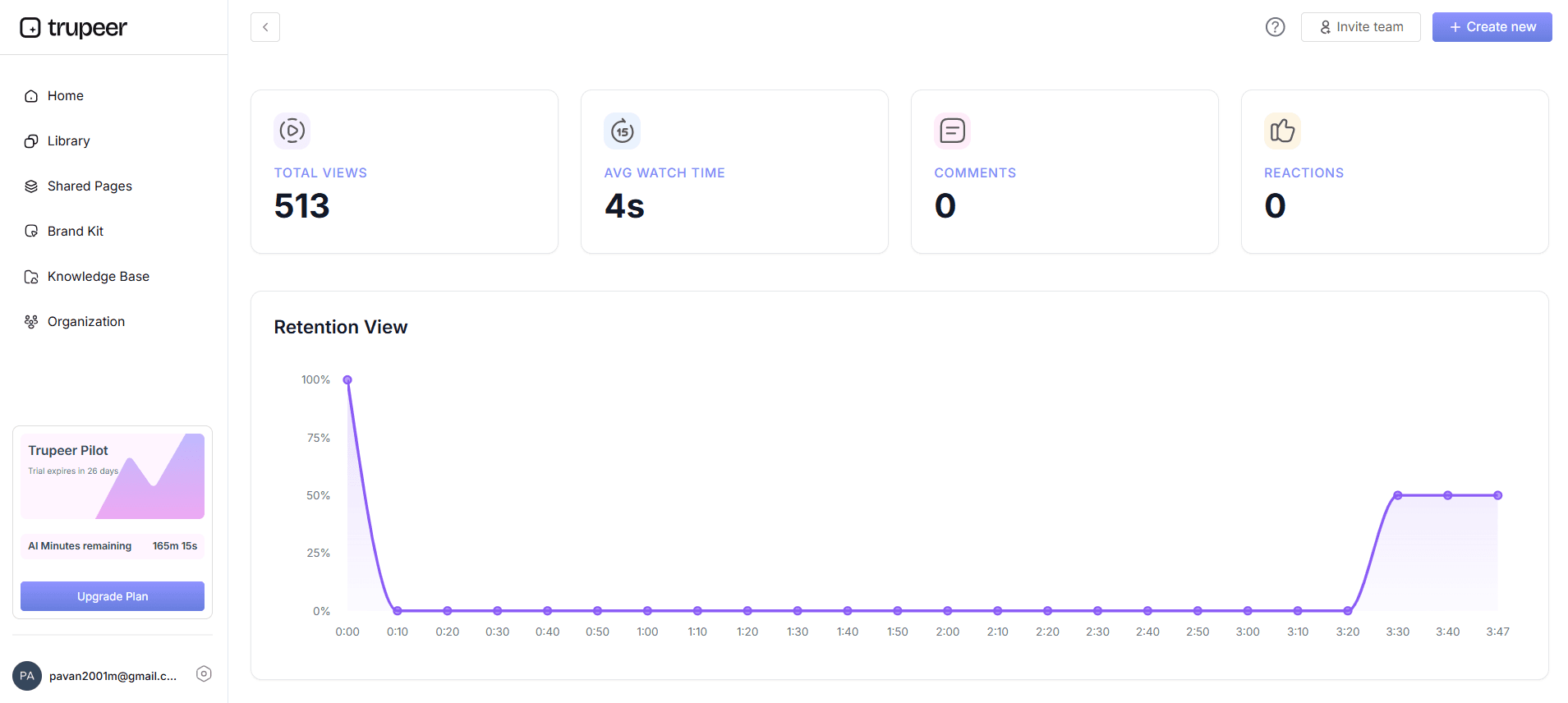
Finally, assess the impact of your embedded videos using Trupeer's viewer engagement analytics. This tool provides insights into how users interact with your content, showing engagement heatmaps and drop-off points. By analyzing these metrics, you can identify which sections of your video are most engaging or where users lose interest. This data is invaluable for refining your content and ensuring it meets user needs effectively. Regularly reviewing these analytics helps maintain high-quality, user-centric documentation.
What tips help you embed demo videos and written docs in product documentation?
Integrating demo videos with written documentation requires strategic planning and execution. Here are practical tips to enhance your documentation process using Trupeer.
Use Consistent Branding. Apply Trupeer's brand kits to your videos for a uniform look. Consistency reinforces brand recognition and trust.
Keep Videos Short. Aim for concise videos under three minutes. This keeps user attention and ensures focus on key points.
Standardize Narration. Consistent audio quality across all videos is essential. Use Trupeer's AI voice cloning for uniform narration style.
Test Localization. Before full deployment, test translated content with native speakers to verify accuracy and cultural relevance. This aligns with Scribe alternatives for SOPs.
Update Regularly. Use Trupeer’s auto-updating documentation to ensure your resources reflect the latest product changes.
Embed in Context. Position video widgets where they're most needed, like within specific feature guides or FAQs, to maximize utility.
Use Data to Refine. use engagement analytics to understand user behavior and improve future content, aligning with product videos strategies.
Frequently asked questions
How do I ensure video quality remains high during embedding?
To maintain high video quality, use Trupeer's AI screen recording with auto-zoom. This feature optimizes the focus on important areas, ensuring clarity. also, when embedding, choose a resolution that balances quality and load time for your audience. Consider the typical bandwidth of your users to avoid buffering issues. It's also crucial to test the embedded video on multiple devices to ensure compatibility and performance. Consistent branding, such as using branded templates, further enhances perceived quality by maintaining a professional appearance.
What’s the best format for exporting documentation?
The best format depends on your audience's needs and how they interact with your content. Trupeer offers multi-format export options like MP4 for videos and PDF or HTML for text documents. If your users primarily access content online, HTML provides a smooth viewing experience. For downloadable content, PDFs are ideal due to their universally compatible format. Evaluate your audience's preferences and access habits when deciding on the export format. Offering multiple formats can cater to diverse user needs, enhancing accessibility and usability.
Why should I integrate videos into my product documentation?
Integrating videos into product documentation provides a dynamic learning experience, enhancing user comprehension and engagement. Videos demonstrate complex processes more effectively than text, reducing user error. They also support different learning styles, accommodating users who prefer visual or auditory information. This approach can significantly decrease support tickets, as users find answers independently. For businesses, it means better user satisfaction and lower support costs. The combination of video and text ensures comprehensive coverage and a solid resource for users.
Can Trupeer assist with video localization?
Yes, Trupeer offers solid tools for video localization via AI translation and dubbing. This service translates content into over 40 languages, with accurate lip-sync, ensuring your videos are accessible to a global audience. The localization process is simplified and automated, minimizing the manual effort required. By localizing your content, you not only expand your reach but also enhance user satisfaction by providing culturally relevant resources. Trupeer's AI video translation tools make it easy to engage diverse markets effectively.
Is it possible to measure the effectiveness of embedded videos?
Absolutely, Trupeer provides comprehensive viewer engagement analytics. These analytics track how users interact with your videos, offering insights into viewing patterns, engagement rates, and drop-off points. By analyzing this data, you can identify which parts of your videos are most effective and where improvements are needed. This feedback loop is crucial for refining your content strategy and ensuring your documentation meets user needs. Regular analysis helps maintain high-quality documentation and supports continuous improvement efforts.
Related Blogs