Trupeer Blog
Imagine you're managing a growing SaaS company. Your team is working hard on smooth software integrations with multiple APIs. But, as your integration projects grow, the documentation becomes an unwieldy beast. Stakeholders can't find the right information, and developers spend hours deciphering outdated workflows. A Gartner report reveals that
73% of IT leaders face significant challenges due to inadequate documentation of software integrations.
This isn't just about keeping records; it’s about ensuring every team member can access and understand the critical connections that keep your systems running smoothly. Without clear documentation, you risk losing institutional knowledge and slowing down your integration projects, which can lead to missed opportunities and higher operational costs. This guide will help you master the art of documenting software integrations, ensuring your team can work efficiently and effectively. Teams weighing tools often start with a Loom alternatives comparison before standardizing on a workflow.
Why does documenting software integrations matter?
Documenting software integrations is crucial because it serves as the blueprint for understanding and maintaining the connections between various systems within your organization. When these integrations are clearly documented, your team can quickly navigate through API intricacies and workflow connections, reducing downtime and improving productivity. If documentation is lacking or poorly organized, your team may face significant setbacks. For instance, developers could spend hours or even days trying to reverse-engineer how an integration was set up, leading to frustration and inefficiency. Clear integration documentation ensures that no matter who is working on a project, they have the information they need at their fingertips.
Also, effective documentation supports better decision-making in operational contexts. When your team knows precisely how systems interact, they can make informed choices about expanding or modifying integrations. This is particularly important for businesses that rely on a complex web of software solutions to deliver their services. By documenting integrations thoroughly, you're not just aiding your team in their current tasks; you're also building a solid foundation for future operations. In the context of operations use case, this means smoother processes, fewer disruptions, and a more agile response to changes in business needs.
What are the benefits of integration documentation?
Documenting software integrations provides numerous advantages for businesses looking to maintain efficiency and adaptability.
simplified onboarding. New team members can quickly get up to speed with existing systems by referring to detailed documentation, reducing the learning curve and minimizing training time. This is where a good user guide software can be invaluable.
Enhanced troubleshooting. When issues arise, having a well-documented integration allows for faster diagnosis and resolution. This minimizes downtime and helps maintain service continuity.
Efficient updates. As software evolves, integrations need updates. Clear documentation makes it easier to implement changes without disrupting existing workflows, ensuring continuous improvement with minimal risk.
Compliance and auditing. Many industries require strict adherence to regulatory standards. Proper documentation ensures that your integrations meet these standards, simplifying the auditing process and ensuring compliance.
Knowledge retention. As team members come and go, documented integrations prevent loss of institutional knowledge. This assures continuity and stability within your organization.
Improved collaboration. With a single source of truth, different departments can collaborate more effectively, using a shared understanding of system interactions. This is particularly effective when using an AI video platform to visually explain complex workflows.
Which Trupeer features help you document software integrations?
Trupeer offers a suite of features specifically designed to enhance your documentation process, making it easier to capture, edit, and share integration details effectively.
Automatic SOP generation from any recording
Trupeer's capability to automatically generate Standard Operating Procedures (SOPs) from any recording is a big shift for teams documenting software integrations. By capturing workflows directly from the source, you ensure accuracy and completeness. This feature translates complex integration processes into clear, editable SOPs, which can be exported in various formats like MP4, HTML, and PDF. The ability to quickly convert video content into text-based SOPs not only saves time but also ensures that your documentation remains consistent and up-to-date. For a comprehensive look at how this works, explore Trupeer's AI documentation platform.
Auto-updating documentation tied to the underlying recording
With Trupeer, documentation updates itself as the underlying recording changes. This means you don't have to worry about manually updating every detail each time an integration process is modified. The auto-updating feature ensures that your documentation remains relevant and accurate, reflecting the latest changes to your workflows. This capability is essential for maintaining the integrity of your integration documentation and reducing the administrative burden on your team. By connecting documentation directly to recorded workflows, Trupeer ensures that your integration docs are always current.
AI-searchable knowledge base with timestamp deep-links
Trupeer's AI-searchable knowledge base makes finding specific details within your documentation effortless. By indexing every recording with timestamp-level deep links, your team can quickly jump to relevant sections of a video, bypassing the need to watch entire recordings. This feature enhances your team's ability to troubleshoot and understand complex integrations without wading through unnecessary information. The searchable knowledge base is particularly useful for large organizations with extensive integration setups, as it allows for rapid access to critical information.
AI screen recording with auto-zoom and click detection
Trupeer's AI screen recording feature simplifies the process of capturing detailed integration workflows. The auto-zoom functionality ensures that key actions are highlighted, while click detection provides clarity on user interactions. This means that every step of an integration process is clearly documented and easy to follow. By using this feature, teams can create high-quality, instructional videos that serve as an invaluable resource for onboarding new team members or refreshing existing staff's knowledge. This ensures that your documentation is not only informative but also engaging and easy to understand.
Embeddable video widgets for in-app guidance
Trupeer offers the ability to embed video widgets directly within applications, providing contextual guidance exactly where it's needed. This feature is ideal for supporting software integrations, as users can access instructional content without leaving their current environment. By embedding videos in-app, you offer real-time assistance, reducing friction and improving user experience. This capability is especially useful for customer-facing platforms or complex internal systems where users may require additional support to navigate integrations effectively. Trupeer's workflow documentation software tool enhances this process by ensuring that your guidance is always accessible and relevant.
How do you document software integrations step by step with Trupeer?
Step 1: Capture the Integration Workflow
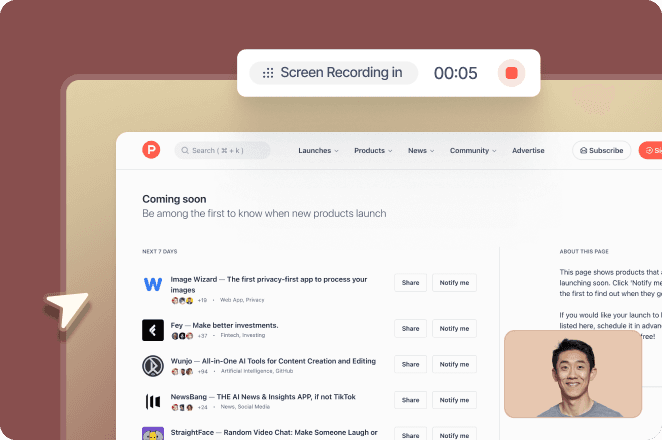
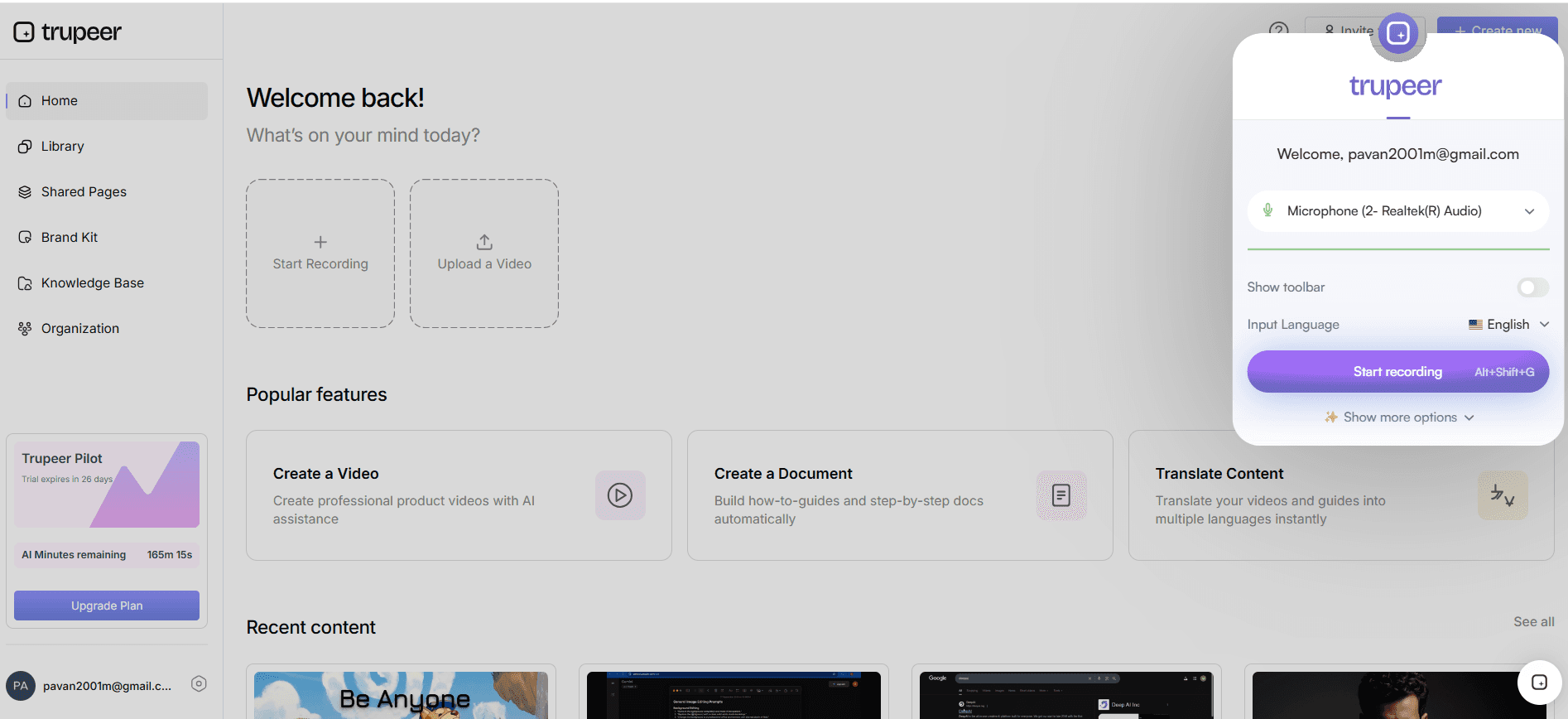
Begin by using Trupeer's AI screen recording with auto-zoom and click detection. Open the Trupeer browser-based recorder and select the screen where the integration occurs. As you navigate through the workflow, Trupeer automatically zooms in on essential actions and clicks, ensuring every critical step is highlighted. This captures a detailed visual record of the process. Spend about 10-15 minutes on this step to ensure all necessary actions are documented. If a step is missed, the recording can be paused and resumed, allowing for smooth editing. This feature is particularly useful for complex integrations where visual clarity is paramount. For a deeper look, our guide on best documentation software covers the adjacent playbook.
Step 2: Generate SOPs from the Recording
Once the recording is complete, use Trupeer’s automatic SOP generation feature. Within the platform, select the option to create SOPs from your recording. Trupeer will convert the actions captured into a comprehensive, step-by-step document. The generated SOP is exportable in formats like PDF and HTML, making it accessible across various platforms. This process typically takes just a few minutes, as Trupeer's AI efficiently analyzes and organizes the recorded data. This step is crucial for transforming visual content into actionable text that team members can follow with ease.
Step 3: Edit for Clarity and Detail
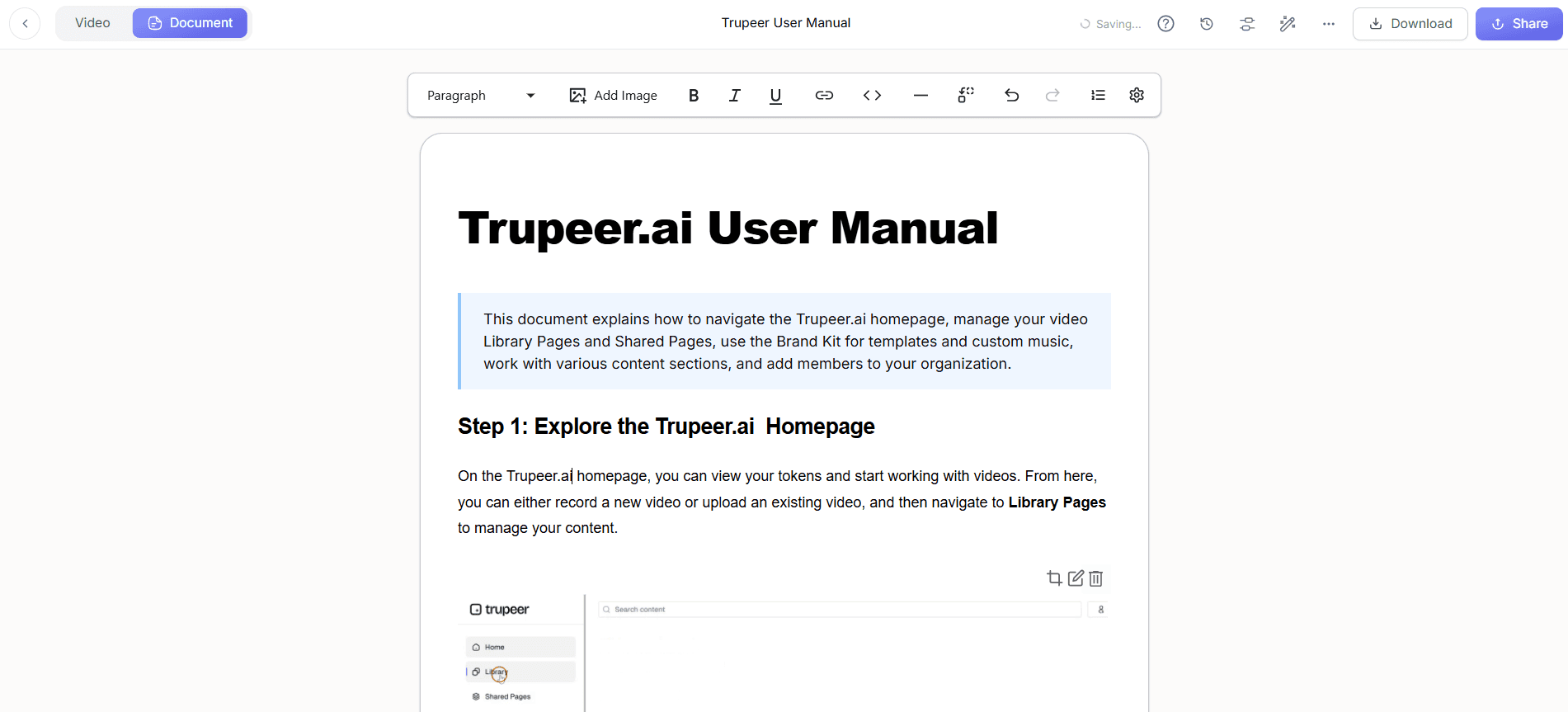
After generating the SOP, review and edit the document for clarity. Trupeer allows for easy editing directly within the platform. Use this time to refine descriptions, add annotations, and ensure all technical jargon is explained. This step ensures that the documentation is not only accurate but also user-friendly. Editing might take about 20-30 minutes depending on the complexity of the integration. Pay attention to edge cases that might not have been captured during the initial recording, and include additional notes or screenshots as necessary.
Step 4: Localize the Documentation
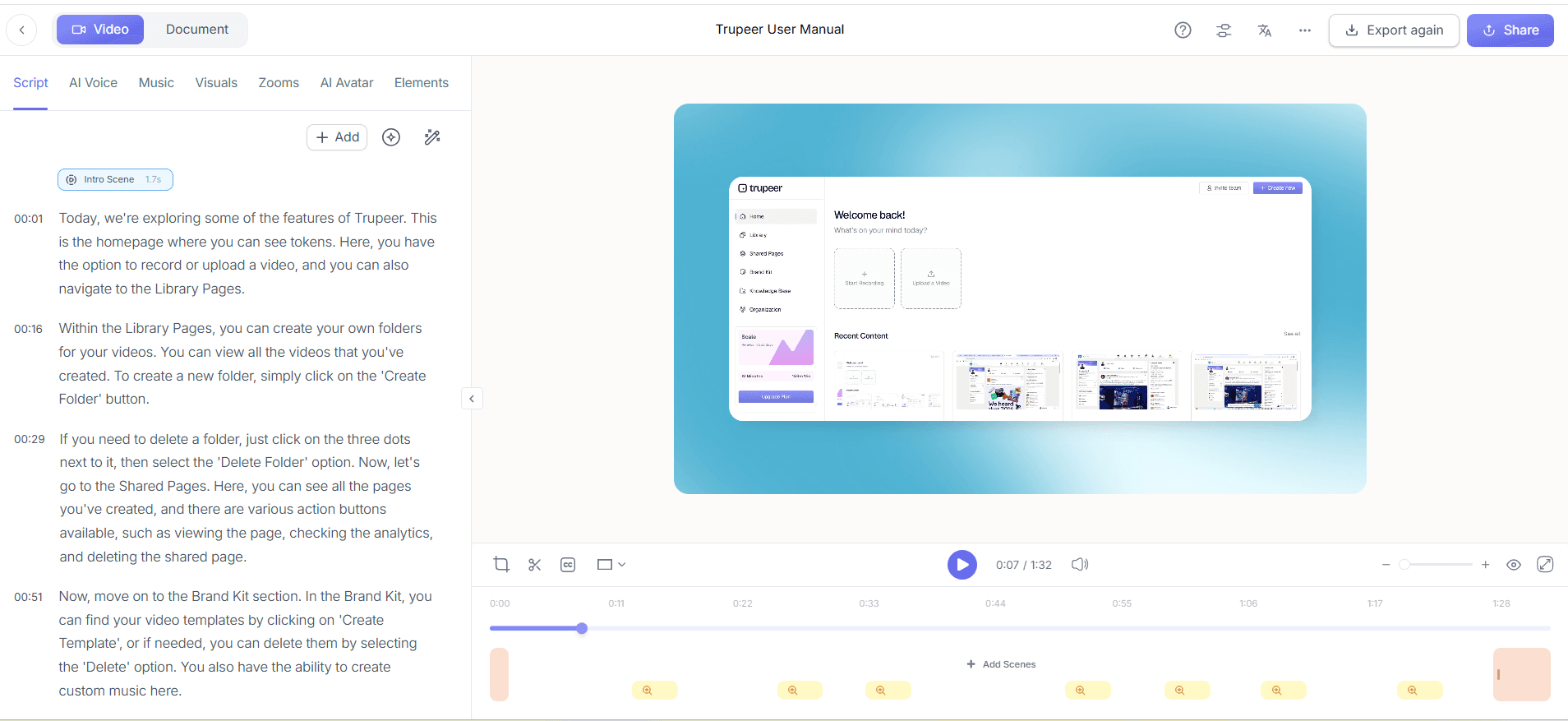
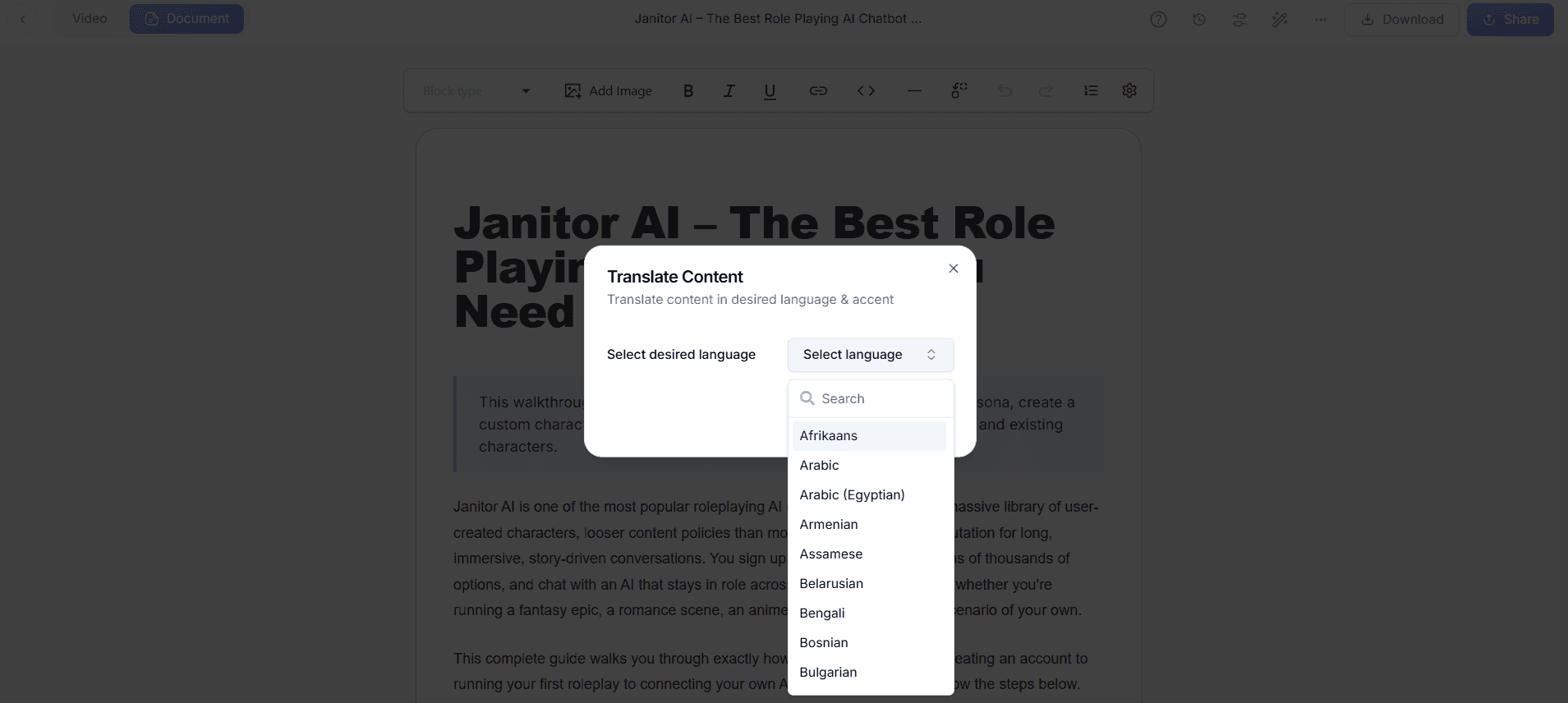
For teams working across different regions, use Trupeer's AI translation into 40+ languages. Access the localization feature directly from the Trupeer dashboard and choose the languages you need. Trupeer provides AI dubbing and lip-sync, ensuring that translated content matches the original context. This process is quick, often taking under 10 minutes per language, depending on the length of the document. Localization is vital for ensuring every team member, regardless of language, can effectively engage with the documentation.
Step 5: Distribute via Knowledge Base
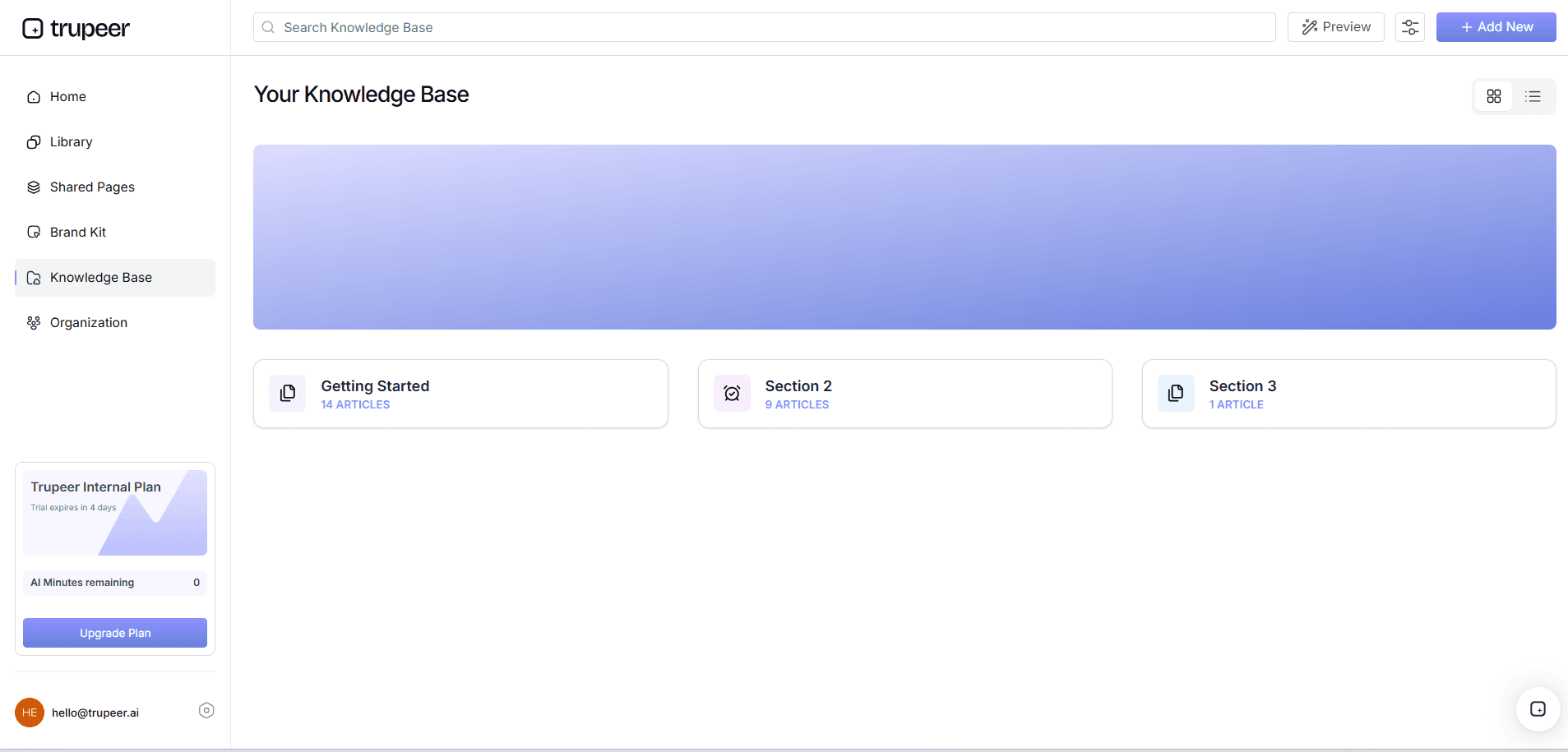
Now, upload your finalized documentation to Trupeer’s AI-searchable knowledge base. This feature allows you to create a centralized repository where all team members can access integration documents. Use the timestamp deep-links to direct users to specific sections within videos, enhancing usability. Uploading and indexing typically take under 15 minutes. The knowledge base serves as a dynamic resource, facilitating easy access and collaboration across teams, ensuring everyone has the information they need when they need it.
Step 6: Monitor Engagement and Gather Feedback
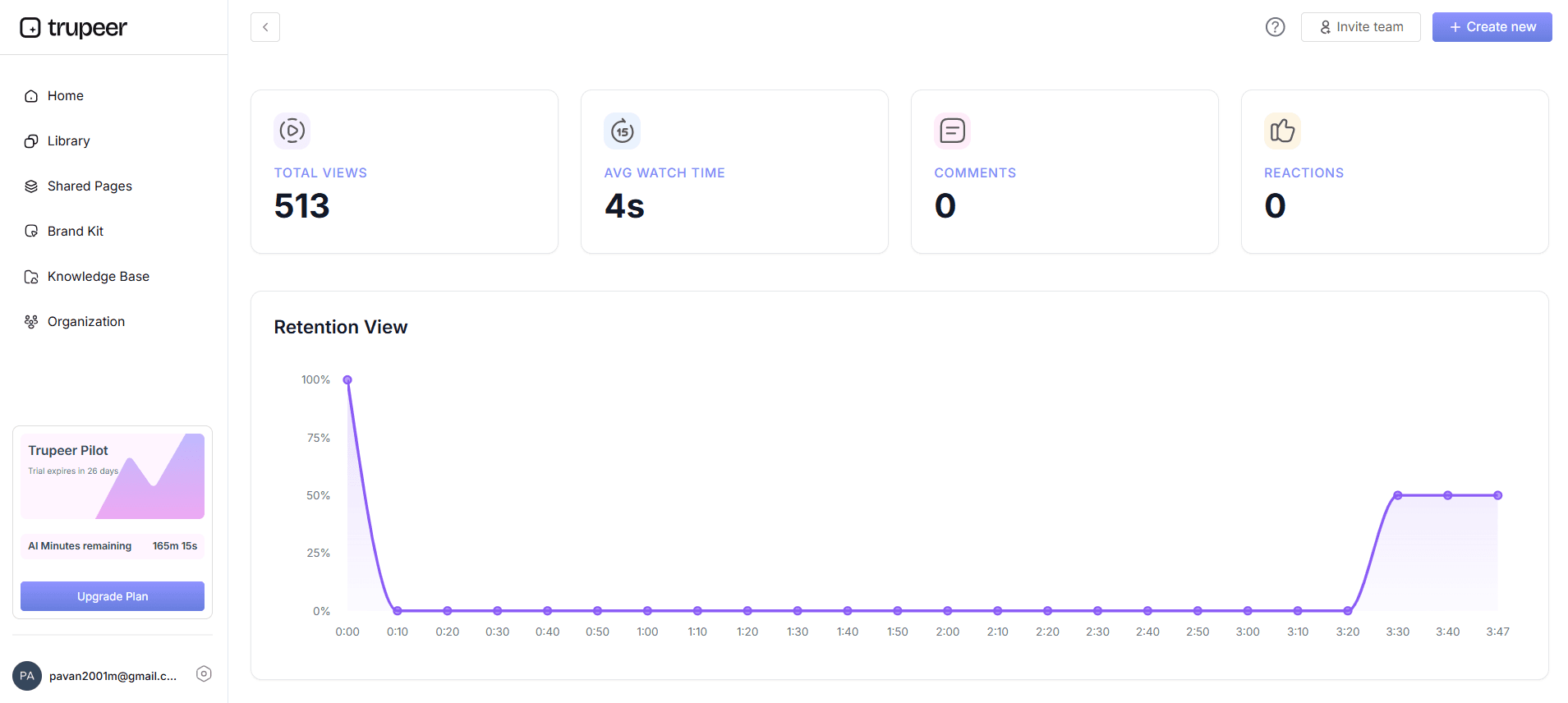
Finally, use Trupeer’s viewer engagement analytics to track how team members interact with the documentation. Access the analytics dashboard to monitor views, drop-off rates, and heatmaps. This data helps identify which parts of the documentation are most useful and which may need further clarification. Collect feedback from users to make iterative improvements, ensuring the documentation remains relevant and effective. This ongoing process highlights the dynamic nature of documentation, supporting continuous improvement and adaptation to team needs.
What tips help you document software integrations?
Effective documentation isn't just about capturing information; it's about making it accessible and useful for your team. Here are some practical tips to enhance your documentation process.
Standardize Your Format. Choose a consistent format for all documentation to facilitate easier reading and comprehension. This approach ensures uniformity and helps your team quickly locate information.
Use Visual Aids. Incorporate screenshots and diagrams to complement written instructions. Visuals can significantly enhance understanding, especially for complex processes.
Regularly Update Content. Set a schedule to review and update documentation. This practice ensures that your documents remain accurate and reflect any changes in workflows or integrations.
Solicit Team Feedback. Encourage team members to provide feedback on documentation usability. This input is invaluable for making necessary adjustments and improvements.
Train Your Team on Tools. Ensure everyone knows how to effectively use tools like Trupeer. Training reduces the learning curve and enhances the overall efficiency of your documentation process.
use Automation Features. Use automation for repetitive tasks like translation and SOP generation to save time and reduce errors. Trupeer's document generation workflow automation software is ideal for this.
Focus on Clarity Over Complexity. Avoid technical jargon when simpler language will suffice. Clarity ensures that all team members, regardless of technical expertise, can understand the documentation.
When SOPs come into the same conversation, a Scribe alternatives comparison helps clarify the scope.
Frequently asked questions
How can I ensure my documentation is always up-to-date?
To keep your documentation current, integrate an auto-updating system like Trupeer that links documentation to the underlying recordings. This method ensures that any changes in your workflows automatically reflect in your documentation, reducing the manual effort involved in updates. Regularly scheduled reviews and updates are essential, especially after major software updates or integration changes. By automating this process, you minimize errors and ensure that your team always has access to the latest information, enhancing productivity and reducing downtime.
What are the key elements of effective integration documentation?
Effective integration documentation should include a clear overview of the integration's purpose, detailed step-by-step instructions, error-handling tips, and a list of required tools or permissions. also, it should contain visual aids like diagrams or screenshots, and references to relevant APIs or data sources. Providing a glossary of technical terms can also be helpful. By covering these aspects, you ensure that the documentation is comprehensive and user-friendly, facilitating easier understanding and implementation by various stakeholders.
Why is localization important for integration documentation?
Localization ensures that documentation is accessible to team members across different regions, accommodating language preferences and cultural differences. Trupeer's AI translation feature offers a quick solution, translating documents into over 40 languages while maintaining context. This approach is critical in global organizations where language barriers could impede understanding and execution of processes. Localization not only supports inclusivity but also enhances collaboration by ensuring everyone has equal access to the necessary information, regardless of their native language.
Can I use Trupeer for customer-facing documentation?
Yes, Trupeer's features are well-suited for creating customer-facing documentation. With capabilities like AI voiceover and customizable video widgets, you can produce professional, engaging content that guides users through product features and integrations effectively. Embedding these resources within your application or website provides users with on-demand support and reduces the need for direct customer service interactions. This approach not only improves the user experience but also frees up your support team to focus on more complex queries, enhancing overall service efficiency.
Does Trupeer support video translation for international teams?
Yes, Trupeer offers solid AI video translation capabilities, allowing you to translate video content into over 40 languages. This feature includes lip-sync and dubbing options, ensuring that translated videos remain engaging and accurate. By supporting multilingual video documentation, Trupeer helps international teams access critical information in their preferred language, enhancing understanding and collaboration. This capability is particularly valuable in multinational corporations where language diversity is a factor in daily operations.