Trupeer Blog
Summarise
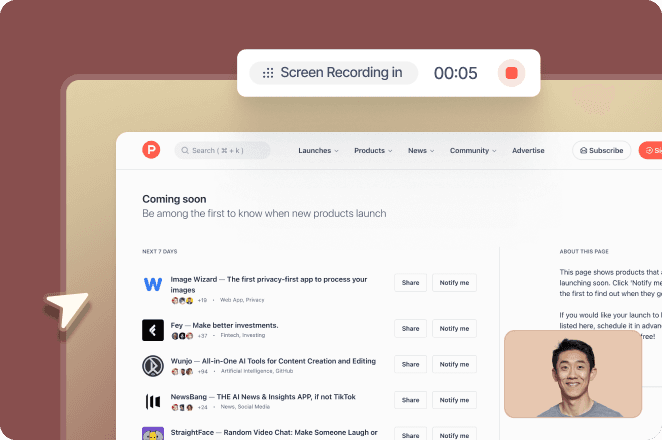
Imagine you're a junior IT staff member handling a critical incident at 3 AM. The network's down, the phones are ringing, and your senior engineer is unreachable. You scramble to find the right documentation, only to face a wall of text that doesn’t clearly show you what to do. This scenario is all too common, but it doesn’t have to be this way. By creating video-based runbooks, you can transform the way IT incidents are managed, making it easier for less experienced staff to handle complex situations effectively. According to industry reports,
78% of IT teams find video runbooks help reduce incident resolution time by 30% or more.
This approach isn’t just for large enterprises; small to medium-sized businesses can also benefit from turning tribal knowledge into easy-to-follow visual guides. The stakes are high when every minute counts, and creating instructional video content can be a big shift for your team’s efficiency and confidence in handling IT incidents. Teams weighing tools often start with a Loom alternatives comparison before standardizing on a workflow.
Why do video-based runbooks for IT incidents matter?
Video-based runbooks are game-changers in the IT field because they address the critical issue of knowledge transfer during high-pressure situations. When an IT incident occurs, the speed and accuracy of the response can significantly impact business operations. Traditional text-based documentation often falls short, as it assumes the reader has a baseline understanding that might not exist among all team members. Videos, on the other hand, provide a visual and auditory learning experience that can bridge these gaps effectively.
Another reason video runbooks matter is their ability to capture and convey complex procedures that text alone cannot. For instance, troubleshooting a server outage involves multiple steps and tools, each requiring precise execution. A video-based runbook can show exactly where to click and what to expect at each stage. The result is a repeatable, reliable process that minimizes downtime and reduces the risk of human error. This visual approach is essential for customer education workflows where precision and clarity are paramount. By using video, teams can ensure that even the most intricate procedures are understood and executed correctly, enhancing overall IT service management and reliability.
What are the benefits of video-based IT incident runbooks?
Video-based runbooks offer significant advantages over text-based documentation, making them a valuable tool for any IT team.
Improved Clarity. Videos provide step-by-step visual guidance, reducing ambiguity inherent in text instructions. This clarity ensures that procedures are executed accurately, minimizing errors.
Faster Onboarding. New hires can ramp up quickly by watching videos rather than sifting through dense documentation. This approach accelerates learning and reduces the time to productivity.
Better Retention. Visual and auditory elements in videos enhance memory retention. IT staff are more likely to remember procedures after watching a video, leading to more consistent execution.
Time Savings. Video runbooks reduce the time spent searching for information. IT teams can quickly reference video clips to resolve issues, lowering incident resolution times significantly.
Reduced Training Costs. By creating a library of video-based runbooks, companies can cut down on repetitive training sessions. This self-service model saves both time and money, allowing IT staff to learn at their own pace.
Scalable Knowledge Sharing. Videos can be easily shared across teams and departments, promoting a culture of knowledge sharing. As a result, organizations can create effective video SOPs that are accessible and useful to a wide audience.
When SOPs come into the same conversation, a Scribe alternatives comparison helps clarify the scope.
Which Trupeer features help you create video-based IT incident runbooks?
Trupeer offers a suite of features designed to facilitate the creation of video-based IT incident runbooks, ensuring that your team can produce high-quality, effective content.
AI screen recording with auto-zoom and click detection
This feature allows you to capture every detail of your screen activity with precision. As you navigate through the steps of resolving an IT incident, Trupeer automatically zooms in on key actions and detects clicks, highlighting them in the recording. This capability makes it easier for viewers to follow along and understand the process, ensuring no critical steps are missed. It's perfect for complex procedures that require visual focus and accuracy.
Silent screen recording with automatic AI narration
Sometimes, creating a video in a noisy environment or without disturbing others can be challenging. Trupeer’s silent screen recording feature captures video without audio, while the automatic AI narration adds the necessary verbal instructions. This ensures your runbooks are informative and professional, with a consistent tone throughout. This feature is ideal for creating content in shared workspaces or for those who prefer to add narration post-capture.
Automatic filler-word removal
One of the challenges in creating polished video content is eliminating unnecessary filler words like "um" and "ah." Trupeer's automatic filler-word removal cleans up your audio, resulting in a more professional and concise final product. This saves you editing time and ensures your videos are clear and to the point. It's a crucial feature for maintaining viewer engagement and delivering a smooth experience.
AI avatars / talking-head video
Adding a personal touch to your video runbooks can make them more engaging. Trupeer offers AI avatars and talking-head video options, allowing you to include a virtual presenter in your content. This feature can be particularly useful in scenarios where a human presence adds value, such as introducing the runbook or explaining a particularly complex step. With Trupeer, you can create your own custom AI avatar video to make your content more interactive and relatable.
AI-searchable knowledge base with timestamp deep-links
Organizing and retrieving video content is crucial for effective knowledge management. Trupeer's AI-searchable knowledge base indexes every recording with timestamp-level deep links, making it easy to locate specific parts of a video. This feature enhances the usability of your runbooks, enabling team members to quickly find and jump to the exact information they need. It's a vital tool for maintaining an efficient and accessible video library.
How do you create video-based IT incident runbooks step by step with Trupeer?
Step 1: Record Your Screen
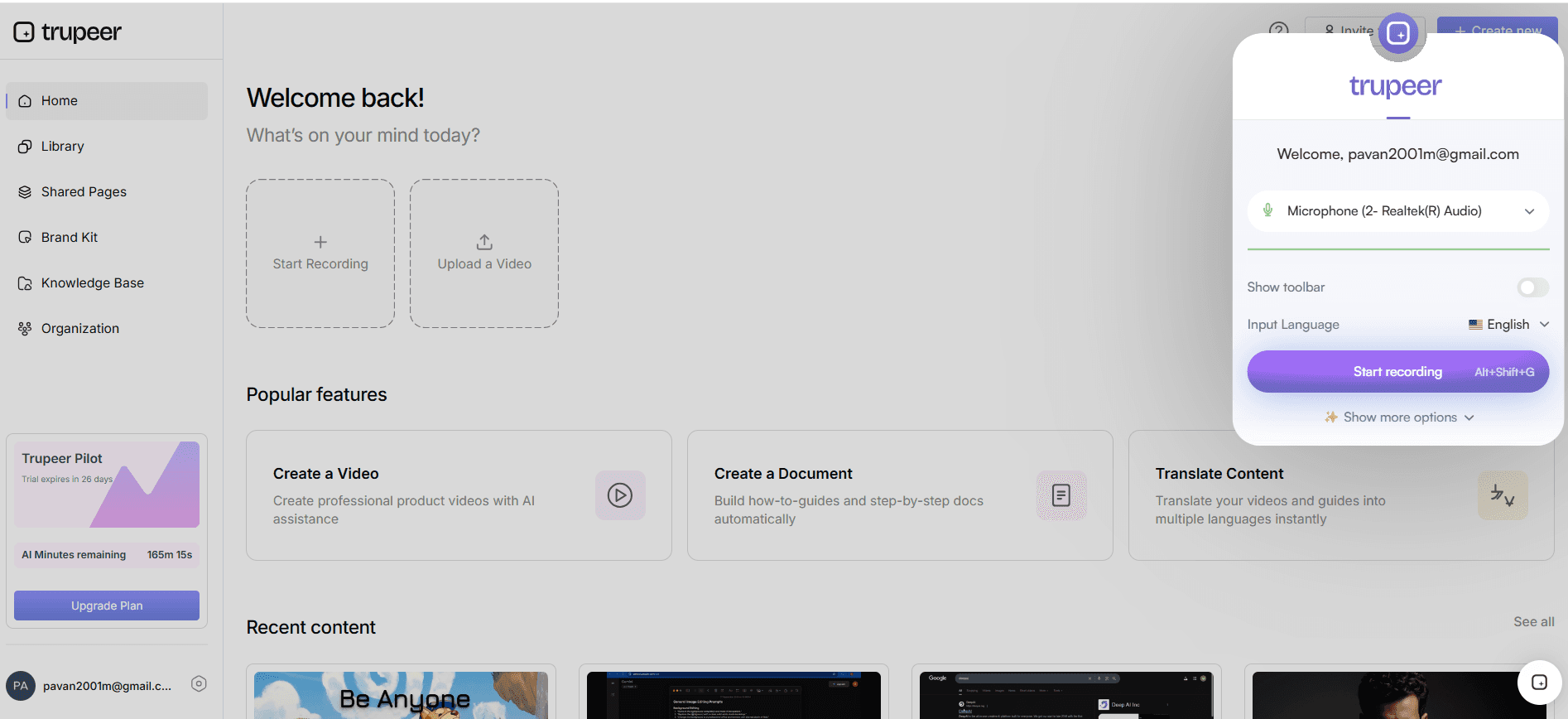
Begin by using Trupeer’s AI screen recording with auto-zoom and click detection. Open the desktop app or browser-based recorder, then start your screen recording as you walk through the IT incident resolution process. Trupeer automatically highlights mouse clicks and zooms in on areas of interest, ensuring that every crucial detail is captured. This automatic focus adjustment is perfect for showing intricate steps, like software configurations or command-line operations. Once you've finished, stop the recording. The entire session is saved, ready for editing. The auto-zoom ensures that viewers won’t miss any key actions, making this step vital for clarity and precision.
Step 2: Add Narration
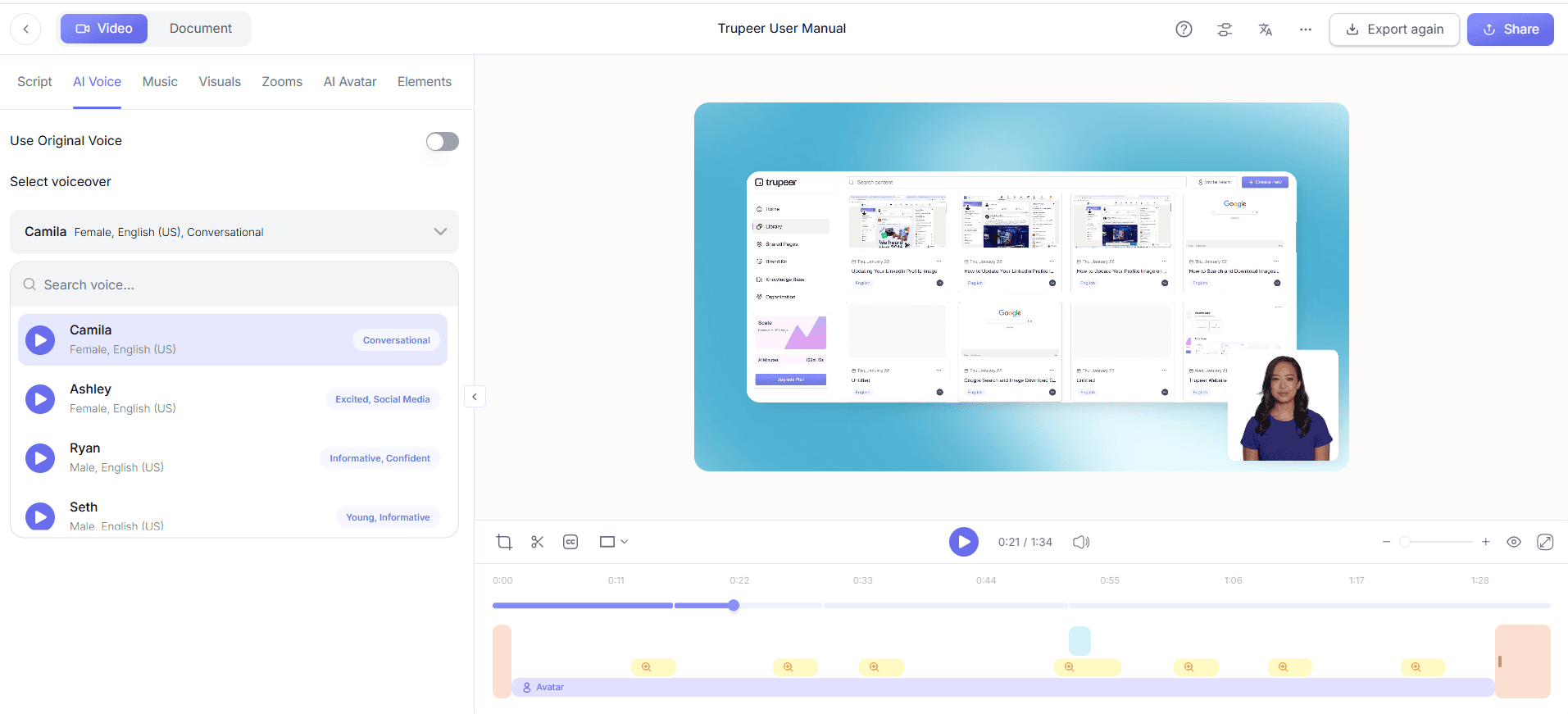
After the screen recording, enhance your video with Trupeer’s silent screen recording with automatic AI narration. This feature allows you to add clear, consistent voiceovers without needing a quiet environment or professional recording equipment. Simply select the AI narration option and choose from over 65+ natural voices, adjusting the pace and tone to suit your content. Trupeer synchronizes the narration with your video, providing a polished final product. This step is crucial for maintaining viewer engagement and ensuring the instructions are easy to follow. In just a few minutes, your video will have a professional voiceover that complements the visual elements.
Step 3: Edit Your Video
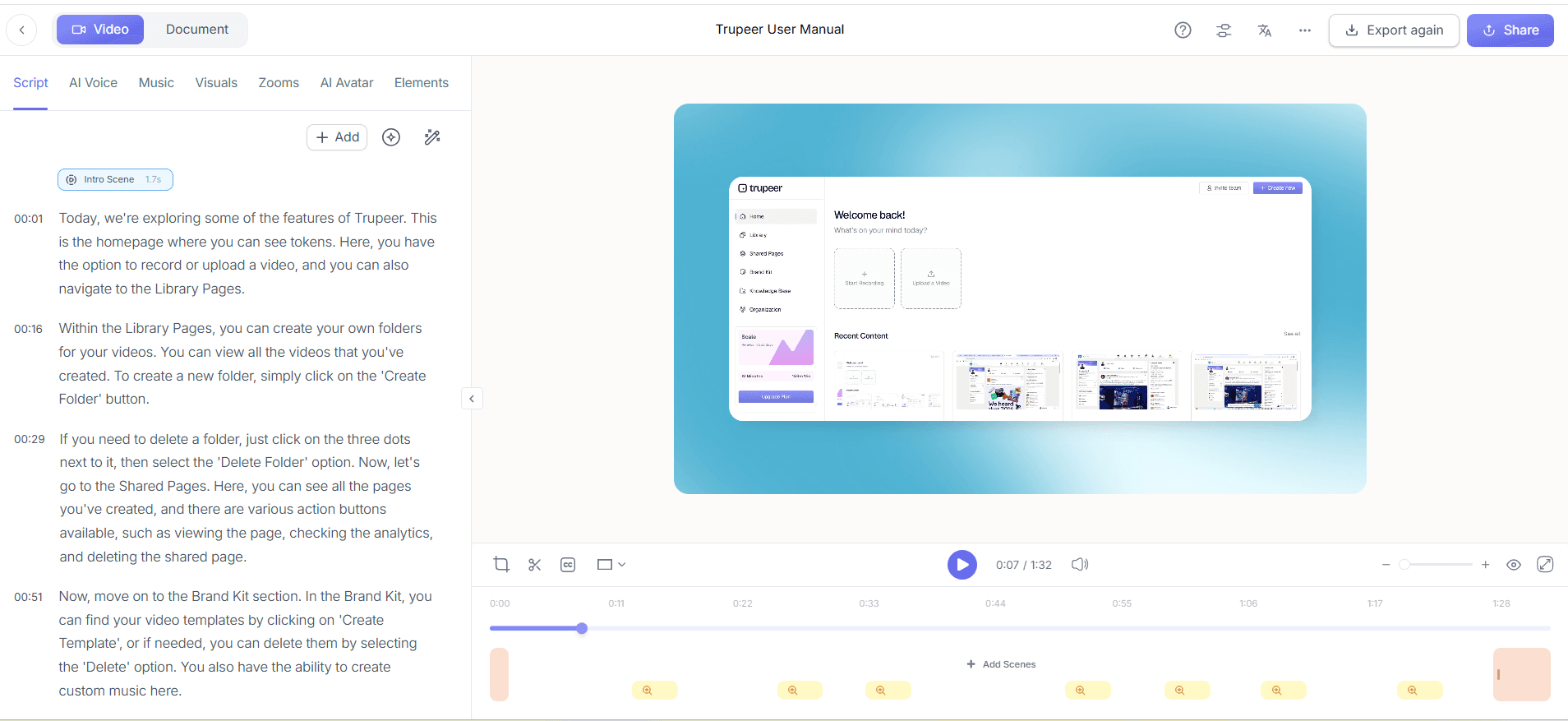
Edit your recording using Trupeer’s automatic filler-word removal tool. This feature scans your video for filler words like "um" and "ah," and removes them to create a more concise and professional video. You can access this tool directly within the Trupeer platform, saving you time and effort in post-production. The result is a smoother, clearer video that maintains viewer interest. also, you can manually adjust sections if needed, but the AI does most of the heavy lifting, ensuring that your video is polished and ready for distribution in a fraction of the time it would take manually. For a deeper look, our guide on create instructional video covers the adjacent playbook.
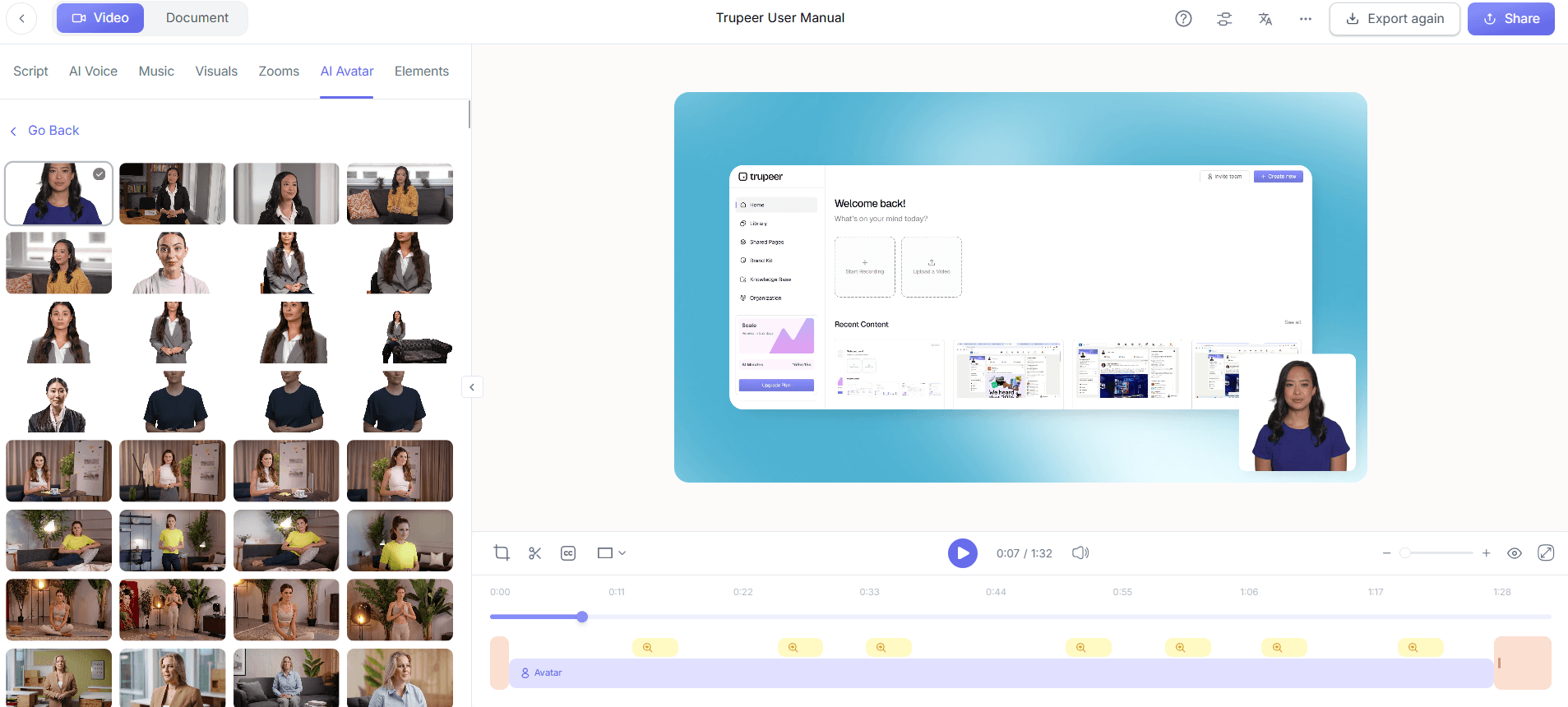
Step 4: Incorporate AI Avatars
To make your runbook more engaging, incorporate AI avatars using Trupeer’s AI avatars and talking-head video capabilities. Choose from a library of stock avatars or create a custom one using the HeyGen integration. Position the avatar at key points in the video to provide additional context or explanations. This feature is particularly effective for introducing the video or emphasizing important steps. By adding a human touch, you can increase viewer engagement and make complex information more relatable. The process is straightforward; select your avatar, decide where it appears in the video, and let Trupeer do the rest.
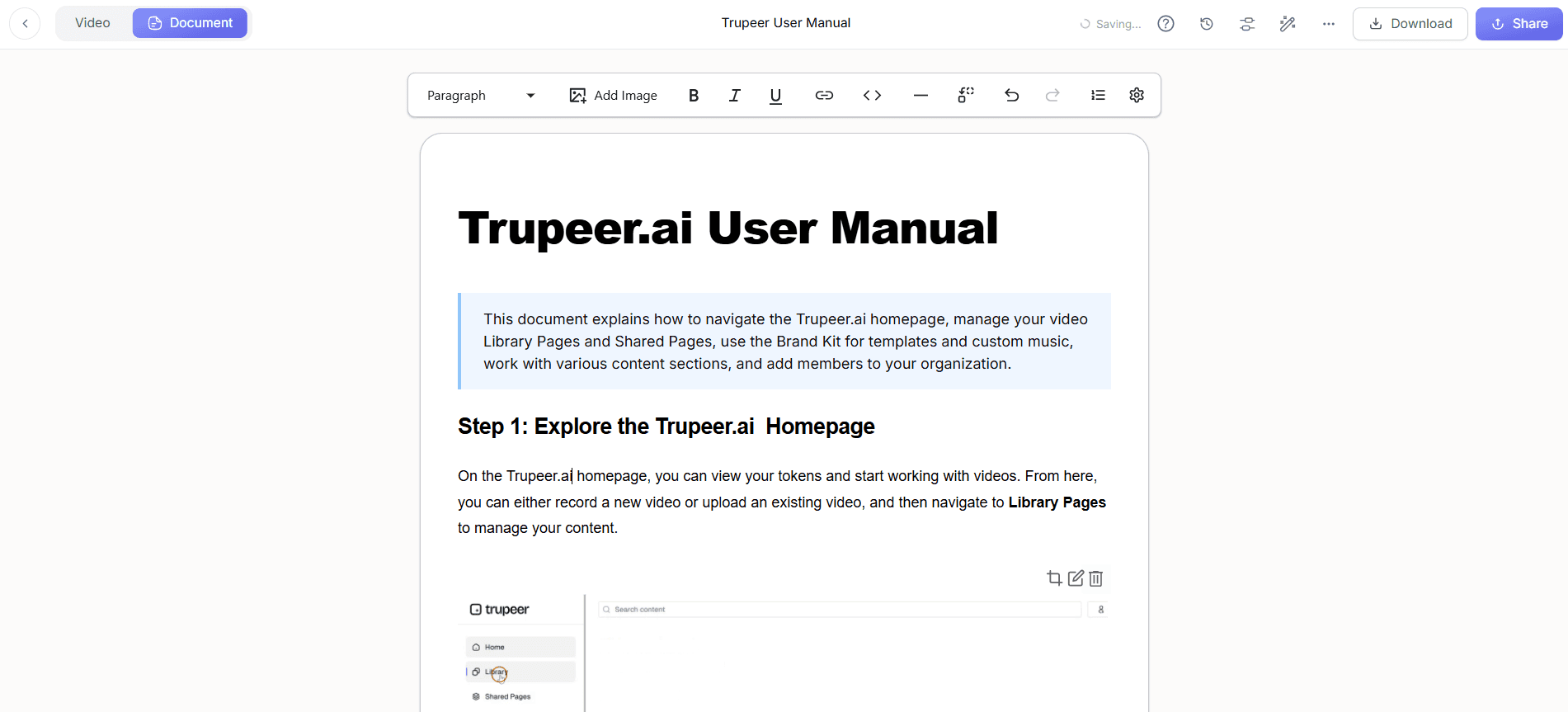
Step 5: Generate Documentation
Use Trupeer’s automatic SOP generation from any recording. Once your video is edited and finalized, Trupeer can transform it into a comprehensive SOP document. This feature is invaluable for creating complementary text-based guides that align with your video. You can export the document in various formats, such as PDF or HTML, for easy sharing. This auto-generated documentation is editable, allowing you to refine details or add additional context as needed. The integration between video and text ensures consistency and provides a dual-format resource for your team, catering to different learning preferences.
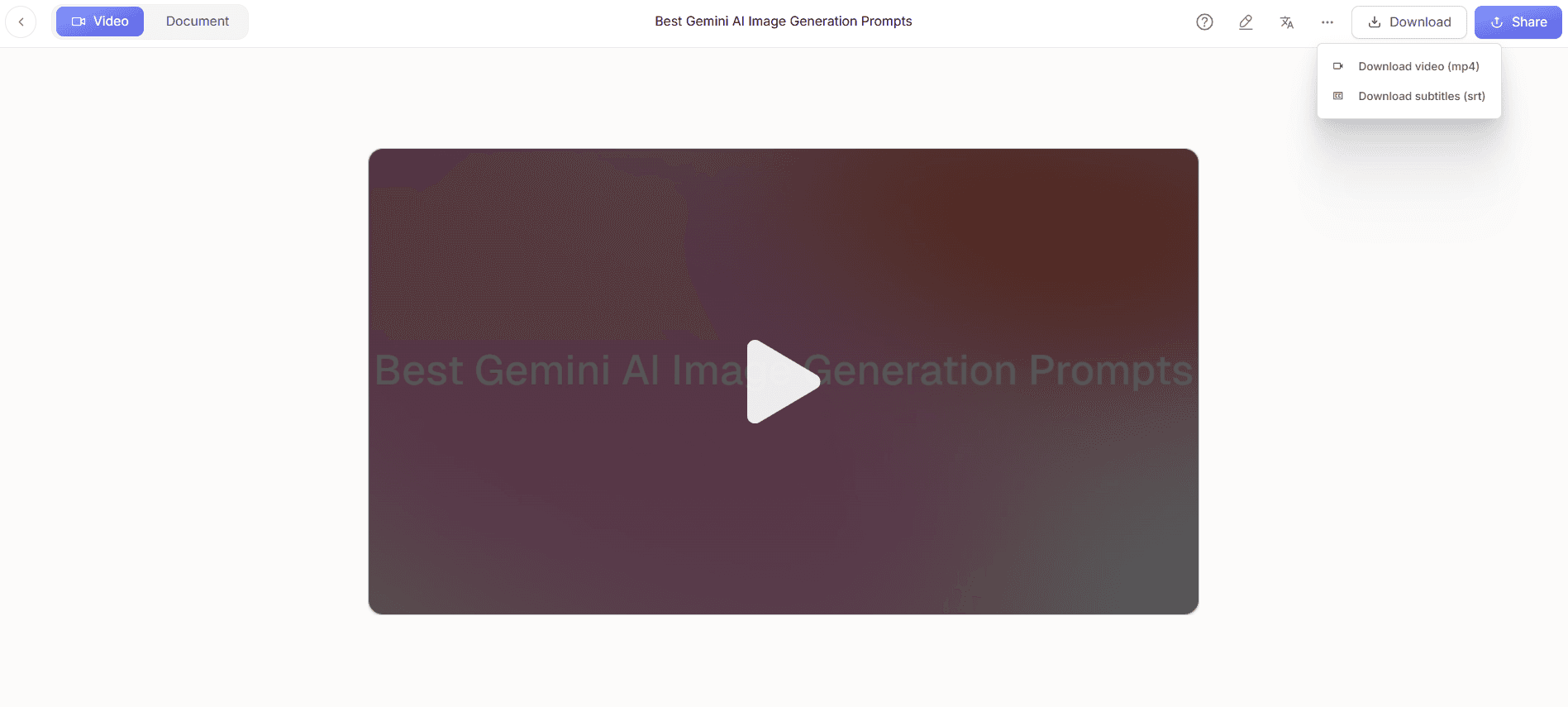
Step 6: Distribute and Share
Finally, distribute your video runbook using Trupeer’s AI-searchable knowledge base with timestamp deep-links. Upload your video to the knowledge base, where it can be indexed and easily retrieved by your team. The timestamp deep-links enable users to jump directly to sections of interest, simplifying the information retrieval process. also, you can host the video on a custom domain with SSO for secure access, or embed widgets within existing platforms for smooth integration. This distribution step ensures that your video-based runbooks are accessible and used effectively, closing the loop on your runbook creation process.
What tips help you create video-based IT incident runbooks?
Creating effective video-based IT incident runbooks requires both technical skills and strategic planning. Here are some tips to ensure your runbooks are useful and accessible:
Consistency is Key. Use a consistent visual style and narration throughout your videos to ensure a professional look and feel. This can be achieved with Trupeer’s brand kits and templates.
Keep It Short. Focus on the most critical steps and avoid unnecessary details. A concise video is more engaging and easier to follow, improving viewer retention.
Use Visual Cues. Incorporate highlights, annotations, and captions to draw attention to important elements within your video. These cues help guide the viewer’s focus.
Test for Clarity. Before finalizing your video, have someone unfamiliar with the process watch it to ensure the instructions are clear and understandable. This feedback is invaluable.
Make It Accessible. Provide subtitles and translations for non-native speakers. Trupeer’s video tutorial tool can assist with this, ensuring everyone can benefit from your content.
Update Regularly. Technology evolves rapidly, so keep your runbooks up to date with the latest procedures and tools. Regular updates prevent outdated information from causing errors.
Standardize Processes. Use video runbooks to standardize procedures across teams, reducing variability in incident responses and ensuring consistent handling of IT issues.
Teams ship this workflow end-to-end using Trupeer's AI video platform, which turns raw recordings into polished output without an editor.
Frequently asked questions
How do video runbooks improve incident response times?
Video runbooks improve incident response times by providing clear, visual instructions that reduce the time needed to understand and execute tasks. Unlike text-based documents that can be dense and hard to follow, video runbooks show exactly what needs to be done, significantly cutting down on the learning curve. This immediate clarity enables even junior staff to handle incidents more efficiently, minimizing downtime and operational disruptions. By having a visual reference, teams can quickly grasp complex processes and respond faster, which is crucial in time-sensitive situations.
What equipment do I need to create video runbooks?
You don’t need expensive equipment to create video runbooks. A computer with a reliable internet connection and access to Trupeer’s recording tools is sufficient. Trupeer’s browser-based recorder and desktop app make it easy to capture high-quality screen recordings without the need for additional hardware. For narration, Trupeer’s AI capabilities eliminate the need for professional microphones. The platform’s comprehensive features simplify the creation process, making it accessible for teams of all sizes to produce professional-grade runbooks with minimal investment.
Can Trupeer integrate with other ITSM tools?
Yes, Trupeer can integrate with other IT service management (ITSM) tools to enhance workflow efficiency. For example, it can connect with platforms like ServiceNow and Jira for smooth video sharing and documentation management. This integration allows teams to access video-based runbooks directly from their ITSM dashboards, ensuring that the right information is available when needed. By embedding video links or using Trupeer’s video localization tool, teams can ensure that incident resolution procedures are consistent and accessible across different tools and platforms.
Why should I choose video runbooks over traditional text documents?
Video runbooks offer several advantages over traditional text documents, including enhanced clarity, faster comprehension, and improved retention. They provide a visual guide that helps users understand complex processes more quickly than text alone. Videos also cater to different learning styles, making them more inclusive. By using video, you can demonstrate exact actions, reducing the likelihood of misinterpretation and errors. This approach not only improves the efficiency of incident response but also enhances the overall quality of IT service management.
Is it possible to track who views the video runbooks?
Yes, Trupeer provides viewer engagement analytics that allow you to track who views your video runbooks, how long they watch, and where they drop off. These insights are invaluable for understanding which parts of your runbooks are most effective and where viewers might be struggling. This data can inform future updates and help tailor content to better meet the needs of your audience. By analyzing viewer behavior, you can ensure your video-based runbooks continually improve and remain relevant to your team’s needs.
Related Blogs