Trupeer Blog
Summarise

Field installation training is crucial for companies that rely on precise equipment setup and maintenance. However, traveling to multiple sites to conduct in-person training can be both time-consuming and costly. By converting existing mobile recordings into structured training videos, organizations can significantly reduce these expenses. The same idea works for written installation manuals: turn existing documents into training videos. In fact, companies have reported saving up to 50% on training-related costs by transitioning to video-based learning. That's a tangible difference in the bottom line. This approach is especially beneficial for industries with high turnover rates or those that require frequent updates to installation procedures. It ensures that all team members have access to consistent and accurate instructional content without the logistical challenges of coordinating in-person sessions. For those responsible for training and development, this method not only cuts costs but also frees up valuable time to focus on other strategic initiatives. With the right tools, you can transform raw field footage into polished, impactful training videos that enhance learning outcomes. When SOPs come into the same conversation, a Scribe alternatives comparison helps clarify the scope.
Why does creating field installation training videos from existing mobile recordings matter?
In industries where field installations are a part of everyday operations, the ability to provide consistent and accurate training is a significant challenge. The traditional approach often involves sending trainers to various locations, which can lead to inconsistencies in how information is conveyed. also, the costs associated with travel and logistics can be prohibitive. By creating field installation training videos from existing mobile recordings, companies can overcome these hurdles. The videos ensure that every trainee receives the same high-quality instruction, which can be repeated as needed. This is particularly important in industries where precise execution is critical, such as telecommunications, construction, and renewable energy.
Also, the accessibility of video training allows for on-demand learning, which is crucial for accommodating different learning paces and styles. Technicians can revisit the material as often as needed, ensuring they fully understand the procedures before applying them in the field. This flexibility can lead to a decrease in errors and an increase in overall installation quality. For stakeholders like training managers and operations leaders, the shift to video-based learning represents a more scalable and sustainable model. It aligns with the growing trend of digital transformation in training and development, where companies strive to deliver efficient, engaging, and effective learning experiences remotely. To understand the broader implications of this shift, consider the extensive insights provided in the training videos use case.
What are the benefits of creating field installation training videos from existing mobile recordings?
Training videos offer multiple advantages over traditional methods, especially when derived from existing mobile recordings.
Cost Efficiency. By using existing footage, companies can drastically cut production costs associated with hiring videographers or trainers. This approach uses resources that are already available.
Consistency in Training. Every technician receives identical instructions, minimizing the variance that can occur with in-person training. This uniformity leads to fewer mistakes and higher quality installations.
Scalability. Once created, videos can be distributed to an unlimited number of learners. This scalability is essential for companies experiencing rapid growth or operating across multiple locations.
Flexibility and Accessibility. Technicians can access training materials anytime, anywhere, accommodating different learning styles and schedules. This flexibility enhances retention and understanding.
Enhanced Engagement. Well-produced videos can incorporate graphics, animations, and interactive elements to make the learning experience more engaging. This can be achieved using an AI-powered video tool to enhance the overall production.
Measurable Outcomes. Modern video platforms offer analytics that allow trainers to track engagement and completion rates. This data helps in refining and improving the training content over time using a video generation platform.
Which Trupeer features help you create field installation training videos from existing mobile recordings?
Trupeer offers a suite of features designed to convert raw mobile recordings into polished training videos efficiently.
AI screen recording with auto-zoom and click detection
This feature allows users to capture high-quality screen recordings that automatically focus on relevant areas, such as clicks and interactions, without needing manual adjustments. This ensures that the most critical parts of the installation process are highlighted, making it easier for viewers to follow along. It's especially useful for field installations where every detail counts. The recordings are crisp, clear, and require minimal post-production edits, saving time and resources.
Automatic filler-word removal
During the editing process, Trupeer's AI automatically removes filler words like "um" and "ah" and long pauses. This results in a more professional and concise training video. It enhances clarity and maintains viewer engagement, which is crucial for technical training. The feature is particularly beneficial for those who might be new to video creation, as it simplifies the editing process without requiring advanced skills.
AI voiceover in 65+ natural voices
With Trupeer, you can add voiceovers to your videos using a selection of over 50 natural-sounding voices. This feature is ideal for ensuring that the narration matches the video content perfectly. You can adjust the pace and tone to suit the training material, making it accessible to a global audience. This capability can transform a silent mobile recording into a comprehensive training resource without needing to record new audio.
Automatic SOP generation from any recording
Trupeer's ability to generate Standard Operating Procedures (SOPs) from any recording is a big shift. This feature converts video content into text documents that can be exported and edited. It's perfect for creating detailed, step-by-step guides that accompany your training videos. By doing so, you ensure that your team has both visual and written resources to refer to, enhancing the learning process. To explore how automated documentation can optimize your training strategy, consider Trupeer's AI documentation platform.
AI-searchable knowledge base with timestamp deep-links
This feature allows you to build a comprehensive, AI-searchable database of your training videos. Users can search for specific topics and jump directly to the relevant timestamp in the video. It's an invaluable tool for field technicians who might need quick access to specific information while on the job. This capability not only supports efficient learning but also serves as a just-in-time reference tool, boosting productivity. To see how this feature can be integrated into your workflow, explore the video knowledge base.
How do you create field installation training videos step by step with Trupeer?
Step 1: Capture the Initial Recording
Start by using Trupeer's browser-based recorder for capturing the initial mobile video. This tool requires no installation, making it convenient for field technicians who need to capture footage directly from their devices. Simply log into your Trupeer account, select "Start Recording," and choose the area of the screen you want to capture. As the recording progresses, Trupeer's AI automatically detects and highlights clicks and interactions, ensuring the most relevant parts of the process are clear. This initial recording is essential as it forms the foundation of your training video. Expect the setup and capture process to take about 10-15 minutes, depending on the complexity of the installation being recorded.
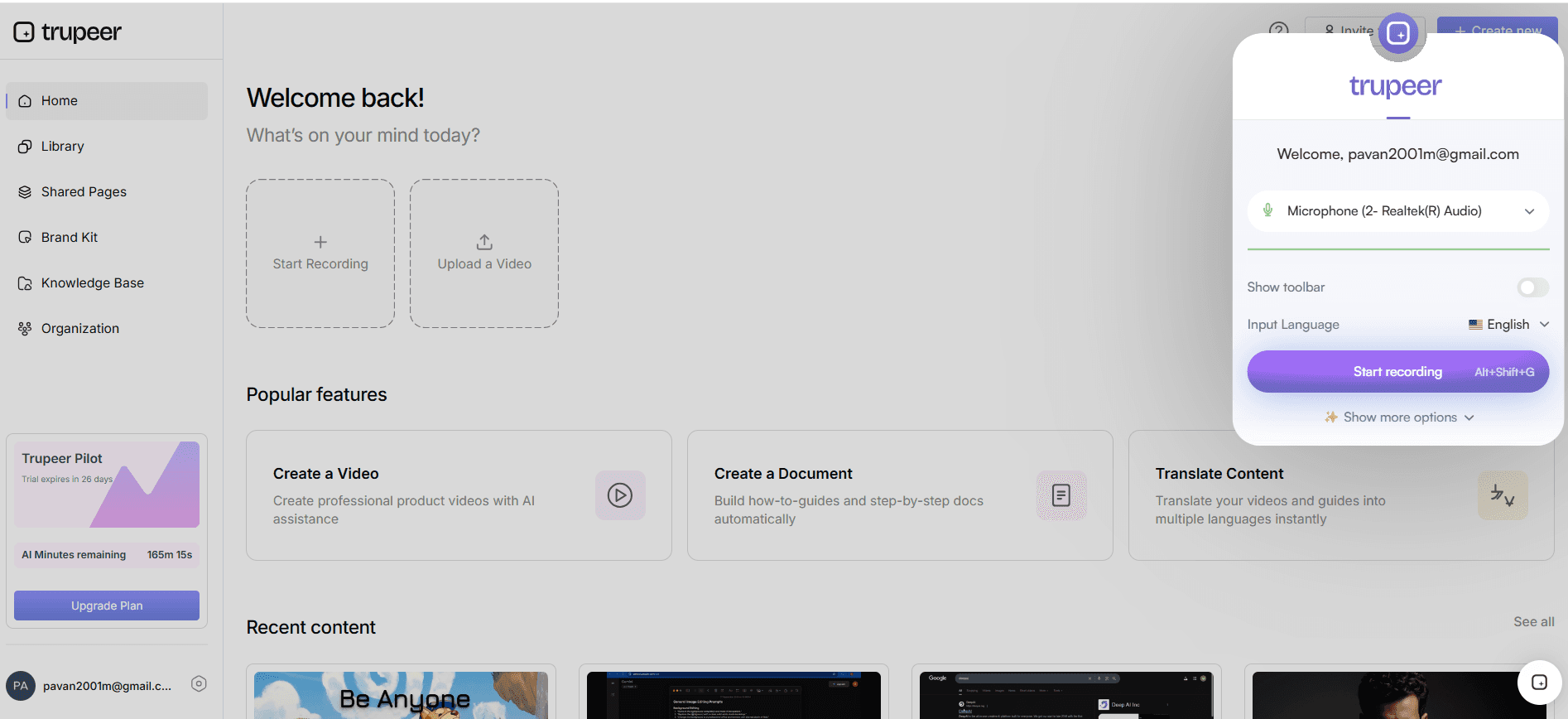
Step 2: Edit and Enhance the Recording
Once the recording is complete, move to the editing stage using Trupeer's automatic filler-word removal. This feature scans the video to eliminate unnecessary pauses and filler words, enhancing the clarity and professionalism of the content. Access the editing options by clicking on "Edit Video" in the dashboard. This process is quick, usually taking only a few minutes, and significantly reduces the time you would otherwise spend manually editing. If you encounter any issues, such as background noise, Trupeer provides additional noise reduction tools to ensure your audio remains crisp and clear. Teams weighing tools often start with a Loom alternatives comparison before standardizing on a workflow.
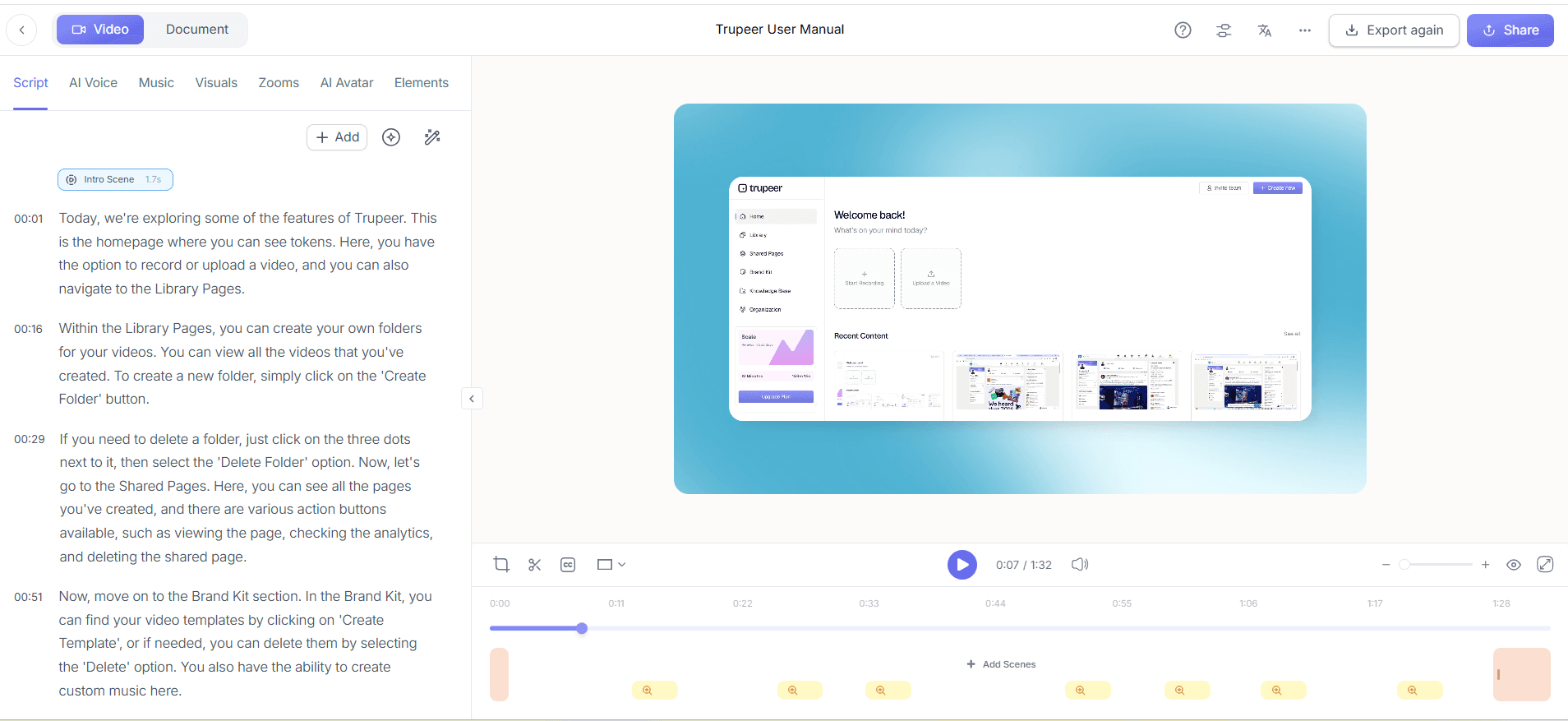
Step 3: Add AI Voiceover
Next, integrate a voiceover using Trupeer's AI voiceover in 65+ natural voices. Choose a voice that suits your brand or audience by handling to the "Voiceover" section. Here, you can select from various options, adjusting the pace and tone as needed. This feature is particularly useful for making the training video accessible to non-native speakers, as you can match the voiceover with corresponding subtitles if required. The AI handles this smoothly, allowing you to focus on content rather than technical details. The entire process of adding a voiceover takes about 20 minutes.
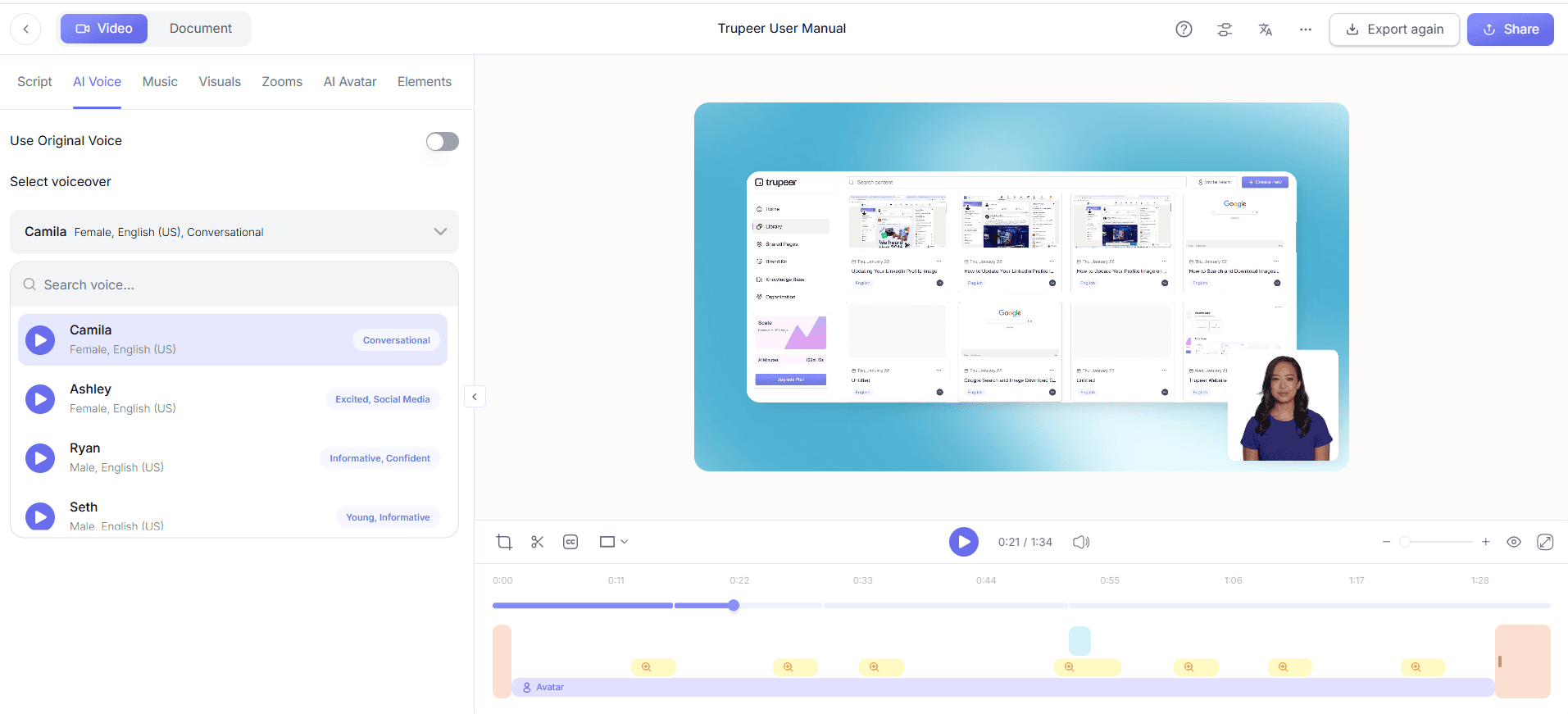
Step 4: Generate and Attach SOPs
Trupeer's automatic SOP generation feature allows you to create detailed procedural documents directly from your recordings. After finalizing the video edits, click on "Generate SOP" to produce a text document that outlines each step of the installation process. This SOP can be edited and exported in various formats such as PDF or HTML. The integration of SOPs ensures that trainees not only watch the video but also have written guidelines to refer to. This dual-format approach enhances comprehension and retention, especially for complex installations.
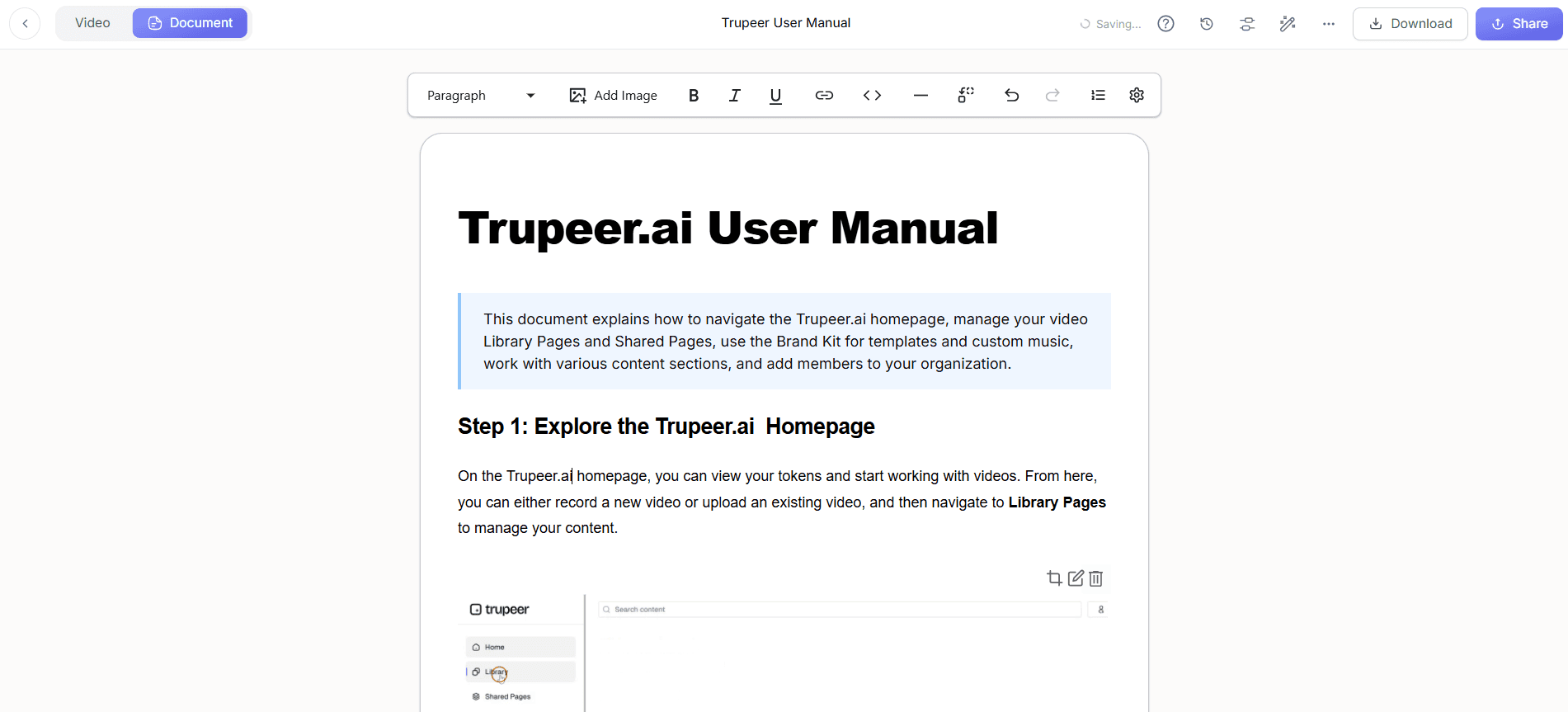
Step 5: Localize for Global Teams
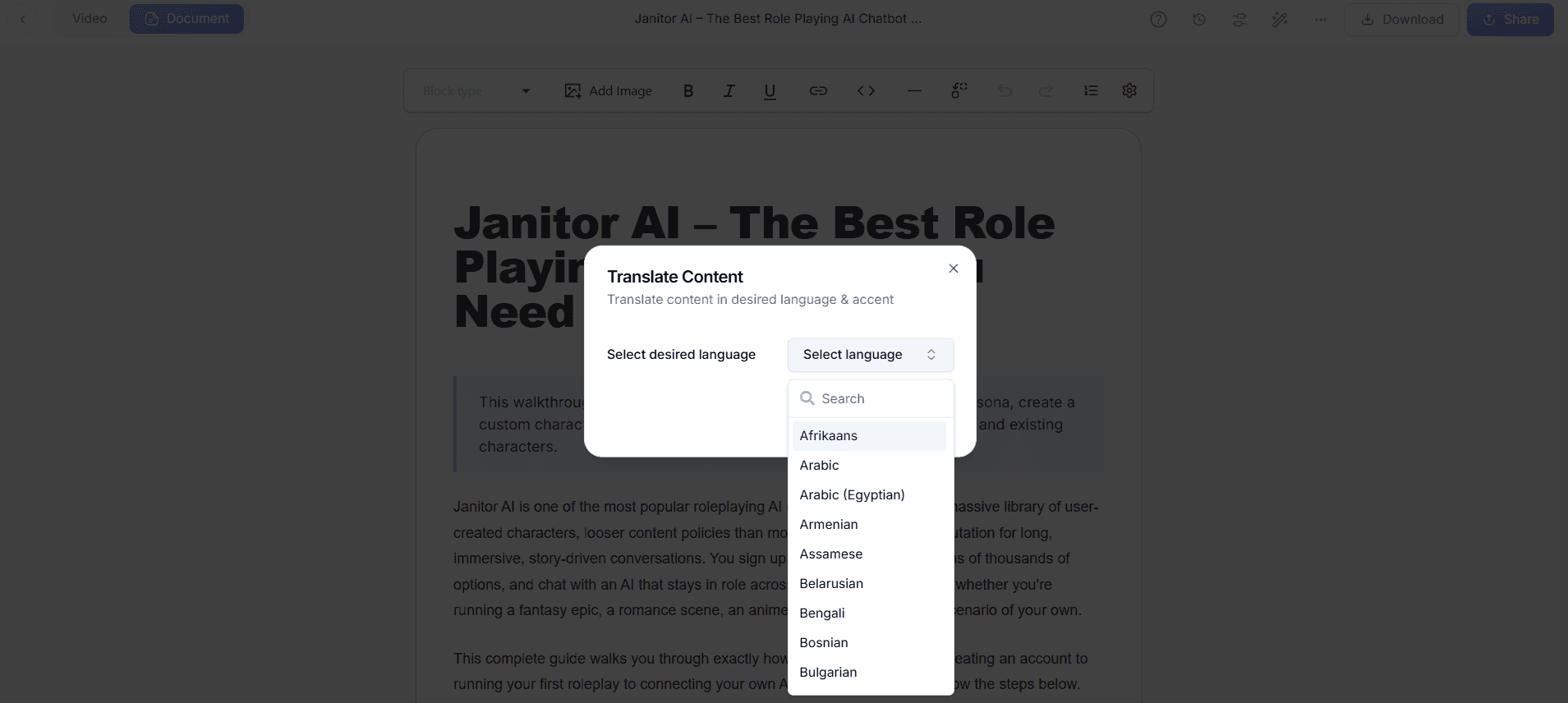
To make your training videos accessible to a global audience, use Trupeer's AI translation feature. This tool translates the video content into over 40 languages, complete with lip-syncing for dubbed versions. Select "Translate Video" and choose the desired languages. This step is crucial for multinational companies where installations occur in diverse linguistic regions. The translation process takes approximately 30 minutes per language, depending on video length, and ensures your training materials are inclusive and widely usable.
Step 6: Distribute and Monitor Engagement
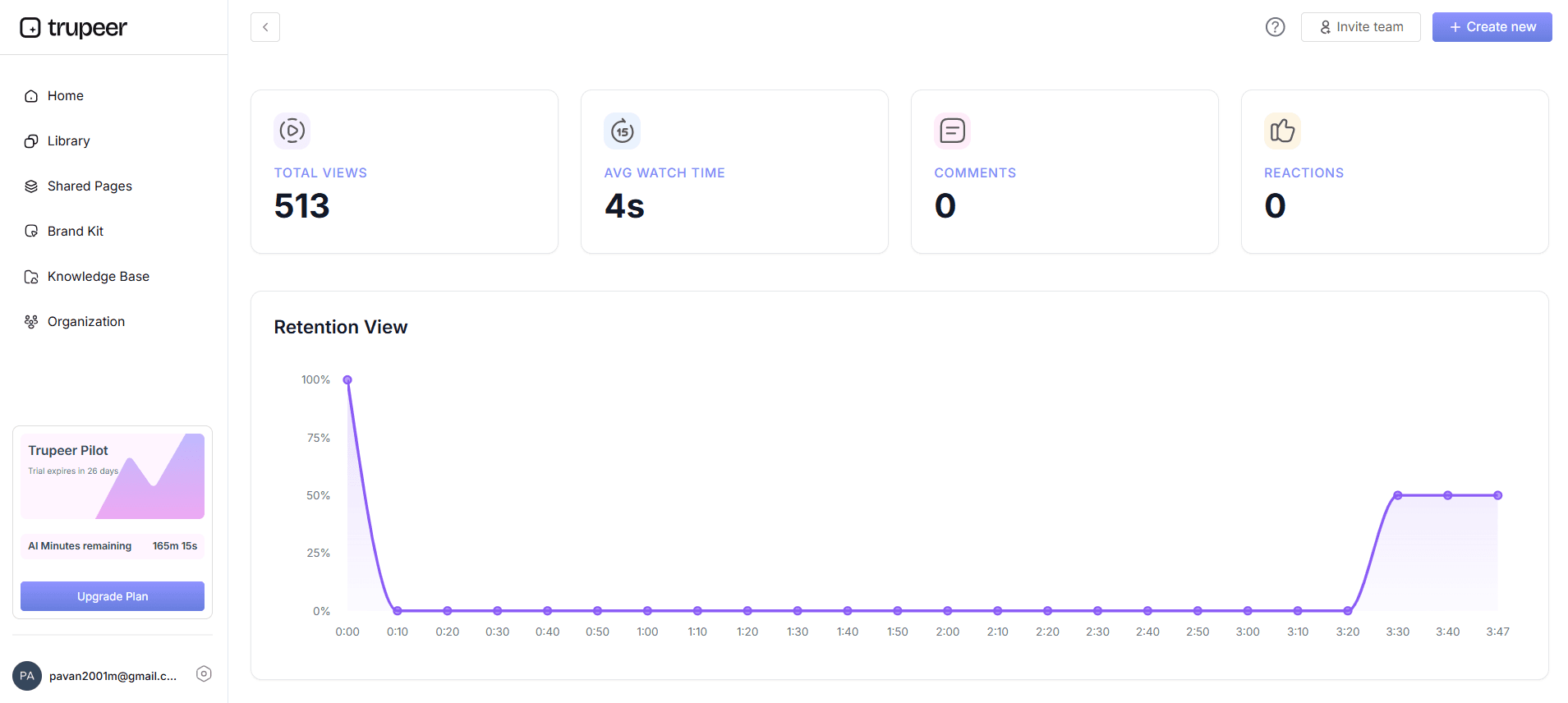
Finally, distribute your training video using Trupeer's AI-searchable knowledge base. Upload the video to the platform and configure it with timestamped deep-links for easy navigation. This feature allows users to quickly find sections relevant to their needs, enhancing the learning experience. Monitor engagement through Trupeer's analytics dashboard, which provides detailed insights into viewer behavior, including completion rates and drop-off points. This data is invaluable for refining future training materials and ensuring effective knowledge transfer. The entire distribution setup can be completed in under an hour.
What tips help you create field installation training videos?
Creating effective field installation training videos requires strategic planning and execution. Here are some essential tips to enhance your video production process.
Plan Your Recording. Before capturing your video, outline the key steps and messages to ensure concise and focused content. This preparation helps reduce editing time.
Maintain Consistent Branding. Use branded templates to ensure a professional look across all videos. Consistency reinforces brand identity and viewer recognition.
Keep It Concise. Aim for videos no longer than 10 minutes to maintain engagement. If necessary, break longer content into chapters using Trupeer's auto chapters feature.
Test with a Pilot Audience. Share a draft version with a small group and gather feedback. This step helps identify unclear sections or areas needing improvement.
Use High-Quality Audio. Invest in a good microphone or use Trupeer's noise reduction tools to ensure clear audio. Clear sound enhances comprehension and professionalism.
use Analytics. Use viewer data to understand engagement patterns. This information is crucial for improving future training materials.
Consider Language Needs. If your audience is multilingual, take advantage of Trupeer's translation features to create accessible content for all users.
Frequently asked questions
How can I ensure the quality of mobile recordings?
To ensure high-quality mobile recordings, use a stable setup and a device with a good camera resolution. Avoid recording in noisy environments to minimize background noise. Trupeer's AI tools can help enhance quality by removing filler words and stabilizing footage. also, Testing your setup before recording the full session can prevent common issues, ensuring the resulting video is of professional quality. These steps collectively contribute to a polished and effective training video.
What are the best practices for structuring training videos?
Effective training videos should begin with a clear introduction, outlining the objectives and what viewers can expect to learn. Break the content into logical sections, and use Trupeer's auto chapters to facilitate easy navigation. Incorporate engaging visuals and animations to illustrate key points. Summarize the main takeaways at the end of each section. These practices help maintain viewer interest and enhance retention. A well-structured video is more likely to be watched in full and understood by the audience.
Can Trupeer integrate with existing learning management systems?
Yes, Trupeer videos can be exported in various formats like SCORM, making them compatible with most learning management systems. This integration allows you to track learner progress and completion rates within your existing LMS infrastructure. By using SCORM-compliant exports, you ensure that the content is interactive and aligned with e-learning standards. This capability is crucial for organizations aiming to simplify training material distribution and maintain cohesive learning ecosystems. For global audiences, adding AI video translation extends the same workflow across 40+ languages with lip-sync.
Does Trupeer offer support for video localization?
Trupeer provides comprehensive localization features, including translation into over 40 languages with synchronized lip-syncing. This ensures your training videos are accessible to a global audience. The platform's translation tools allow you to select languages and apply translations smoothly to your content. Localization is essential for multinational companies, ensuring consistent training quality across different linguistic groups. This feature enhances the inclusivity and reach of your training programs, making them more effective.
Is it possible to update training videos after they're published?
Yes, Trupeer allows for easy updates to training videos even after they've been published. With the auto-updating documentation feature, any changes made to the source video automatically reflect in the documentation tied to it. This dynamic updating capability is vital for keeping training materials current and relevant, especially in fast-evolving industries. It ensures that learners always have access to the most accurate information without requiring a complete re-production of the video content.
Related Blogs