Trupeer Blog
Your company has invested significant resources into building a comprehensive knowledge base, expecting it to reduce the volume of repetitive support queries. However, without a clear understanding of how to measure its success, you might be flying blind. Calculating the support ticket deflection rate is key to assessing whether your knowledge base is achieving its goal. This metric directly correlates to cost savings and customer satisfaction improvements. In fact, studies show that successful ticket deflection can reduce support costs by up to 25%. But how do you ensure these numbers are accurately calculated and trustworthy enough for leadership to make strategic decisions? This is where understanding the nuances of ticket deflection calculation comes into play. For those managing customer support operations or tasked with optimizing self-service channels, an accurate calculation of the ticket deflection rate is crucial to proving the ROI of your knowledge base. Explore how successful organizations achieve this by analyzing the best knowledge base examples.
Why does calculating the support ticket deflection rate matter?
Measuring the support ticket deflection rate is essential because it provides a direct indicator of how well your knowledge base serves its purpose. For support managers, it's a tangible measure of the effectiveness of self-service resources in reducing the workload on live agents. A well-optimized knowledge base can preemptively address customer issues, minimizing the need for direct support interactions. This not only saves time and resources but also enhances customer satisfaction by providing immediate answers. Knowing the exact deflection rate helps managers make informed decisions about resource allocation and content updates.
Also, support ticket deflection is a critical component of the customer success strategy. Companies need to ensure that their customers can find solutions independently, building a sense of empowerment and reducing frustration. When customers find answers quickly through a knowledge base instead of waiting for a support response, it improves their overall experience with your company. This is particularly important in competitive markets where customer retention is key. The deflection rate also serves as a performance metric for the customer support team, offering insights into areas where the knowledge base might need enhancement to increase its effectiveness.
What are the benefits of calculating the support ticket deflection rate?
Understanding the deflection rate offers several advantages, not only for your support team but for the entire organization. Here are some key benefits:
Cost Efficiency. By accurately measuring how many tickets are deflected by your knowledge base, you can reduce the need for live support interactions, leading to substantial cost savings. This frees up resources for other strategic initiatives.
Improved Customer Satisfaction. Customers who find quick solutions without needing to contact support report higher satisfaction levels. A precise deflection rate helps identify high-performing content, enabling you to craft a more effective knowledge base one.
Data-Driven Decisions. The deflection rate provides concrete data that can guide decisions about where to invest in content development or training. This ensures that your support strategy is based on real-world performance metrics.
Resource Allocation. Knowing which areas of your knowledge base are most effective allows for focused improvements and better resource allocation. This might mean more targeted content creation or reallocation of support staff.
Enhanced Training Programs. A detailed analysis of deflected tickets can highlight training opportunities for both support staff and customers. This helps in developing programs that bolster self-service efficiency.
Innovation Opportunities. Tracking deflection rates can uncover insights into customer behavior and preferences, informing the development of new solutions or services. For instance, integrating a video generation platform might address complex queries more effectively.
Which Trupeer features help you calculate the support ticket deflection rate?
Trupeer offers a suite of features that enhance your ability to accurately measure and improve your support ticket deflection rate. These tools are designed to provide a comprehensive understanding of your knowledge base's performance.
AI-searchable knowledge base
Trupeer's AI-searchable knowledge base indexes every recording with timestamp-level deep links, making it easy for users to find exactly what they need quickly. This capability not only improves search efficiency but also provides insights into which topics are accessed most frequently, helping you identify areas where deflection is occurring successfully. The AI-driven search functionality ensures that your content is easily navigable, allowing for a smooth user experience and reducing the likelihood of customers needing to reach out for support. This feature is crucial for measuring how effectively the knowledge base is deflecting support tickets by tracking user interactions and search success rates.
AI documentation platform
The AI documentation platform from Trupeer facilitates the creation of auto-generated documentation, which is crucial for maintaining an up-to-date knowledge base. This tool automatically updates documentation tied to the underlying recording, ensuring that your knowledge base always reflects the latest information. By consistently providing accurate and relevant content, you can enhance the deflection rate as users are more likely to find the answers they need. The platform also supports multi-format exports, making it easy to share updated documents across various channels, so expanding the reach and effectiveness of your self-service resources.
Viewer engagement analytics
Trupeer's viewer engagement analytics provide detailed insights into how users interact with your knowledge base content. By analyzing metrics like drop-off rates and engagement heatmaps, you can identify which content effectively deflects tickets and which areas need improvement. This data-driven approach allows you to refine your content strategy based on user behavior, so enhancing the overall effectiveness of your knowledge base. Understanding viewer engagement helps pinpoint content gaps and opportunities for improvement, contributing to a higher ticket deflection rate.
Auto-updating documentation
Trupeer's auto-updating documentation feature ensures that your knowledge base content is always current, which is essential for maintaining a high deflection rate. This capability automatically updates content based on changes in the recorded material, eliminating the risk of outdated information leading to increased support tickets. By keeping your knowledge base fresh and accurate, you can improve user satisfaction and confidence in finding solutions independently. This feature is particularly beneficial for fast-paced environments where product updates are frequent, ensuring that your support content remains relevant and effective.
Knowledge base generator
The knowledge base generator tool simplifies the process of creating and maintaining a comprehensive knowledge base. It uses AI to produce well-structured and easily searchable content, maximizing the potential for ticket deflection. By simplifying the content creation process, this tool helps ensure that your knowledge base covers all necessary topics thoroughly, reducing the likelihood of unresolved customer queries. The generator's ability to produce high-quality content quickly means your knowledge base can adapt swiftly to new information, maintaining its effectiveness as a self-service resource.
How do you calculate the support ticket deflection rate step by step with Trupeer?
Step 1: Capture Relevant Data
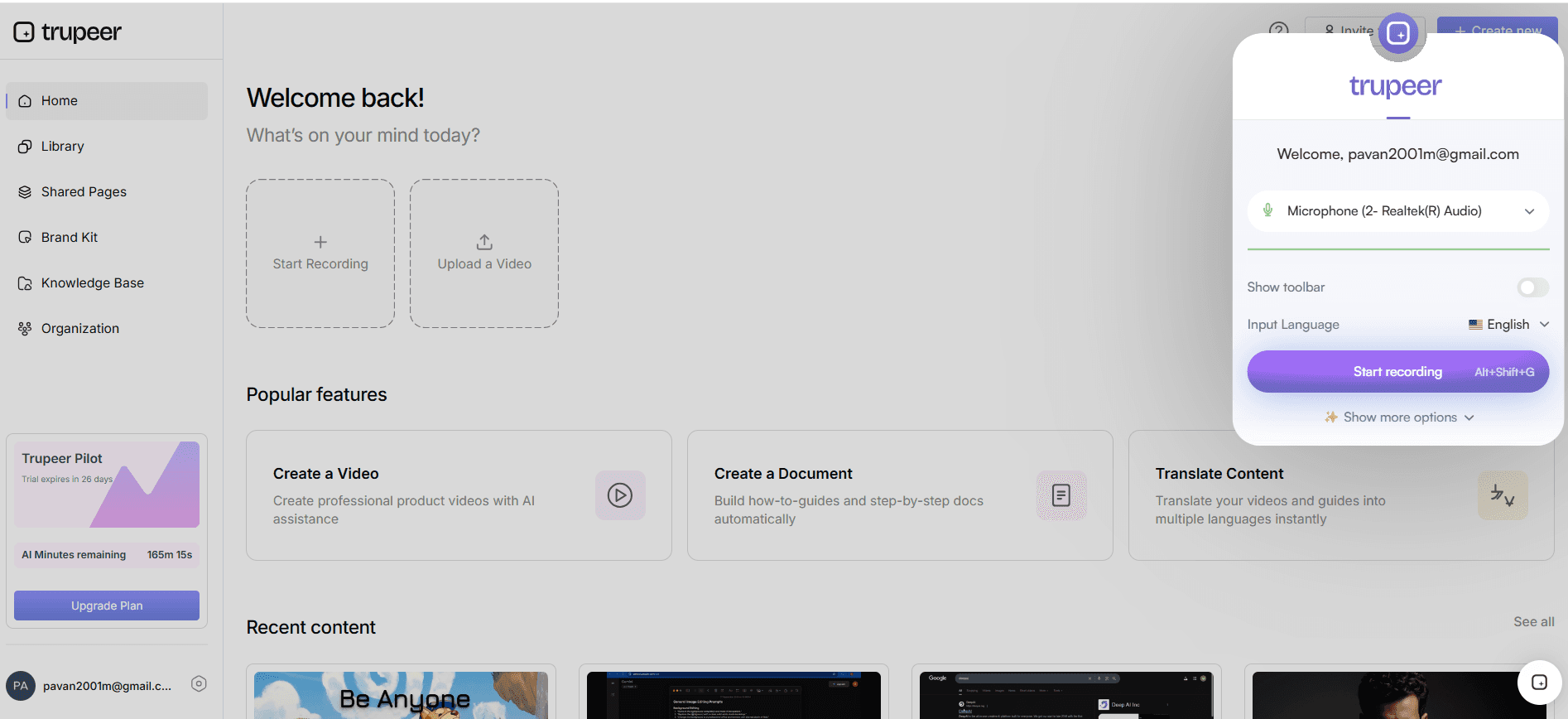
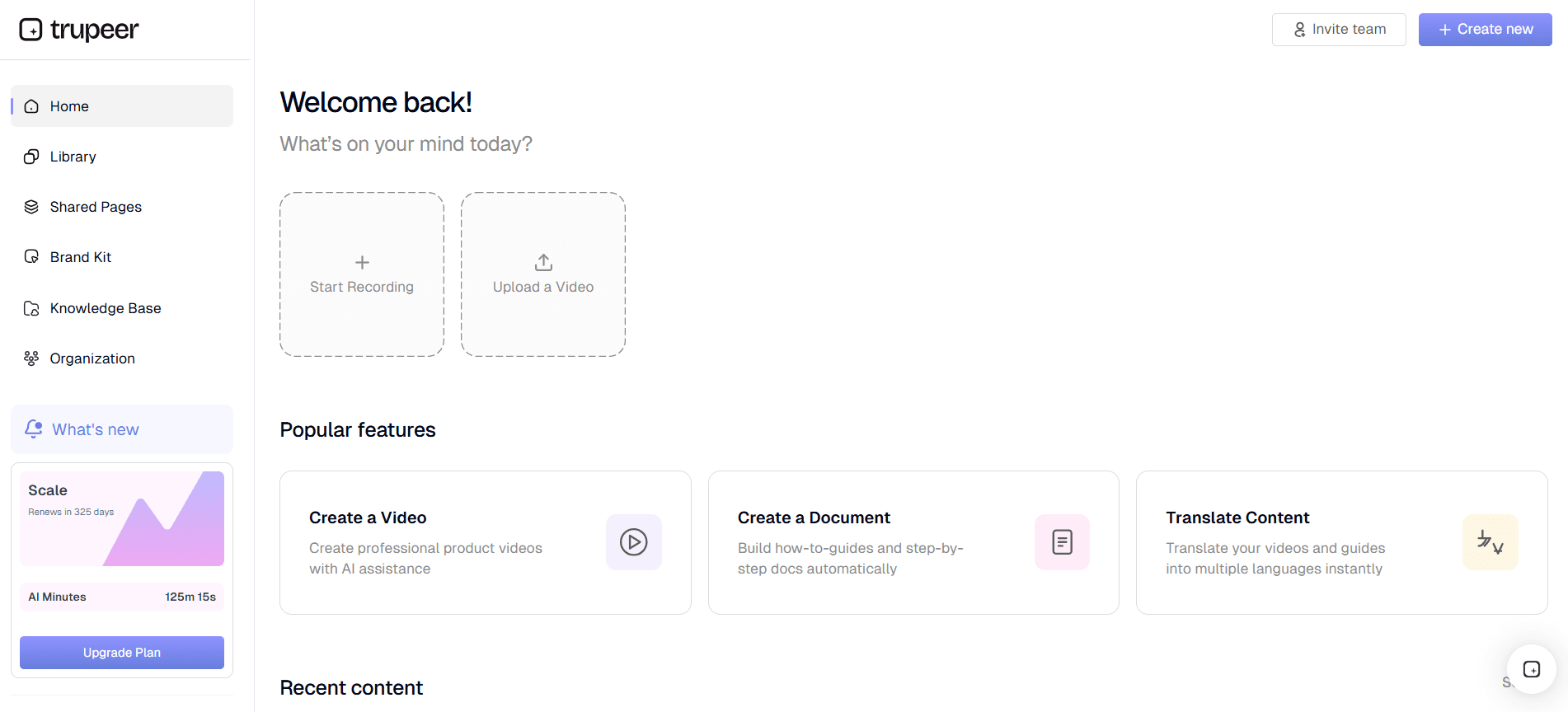
Begin by capturing data on the types of interactions your support team handles. Use Trupeer's AI screen recording with auto-zoom and click detection to record sessions where support agents resolve customer inquiries. This ensures you have detailed, high-fidelity records of typical support interactions. Click the "Start Recording" button on the Trupeer interface to begin capturing these interactions. The AI will automatically focus on the most relevant parts of the screen, highlighting critical actions taken by support agents. These recordings will serve as a baseline to compare against the knowledge base content, helping you identify which issues are being deflected successfully.
Step 2: Analyze User Engagement
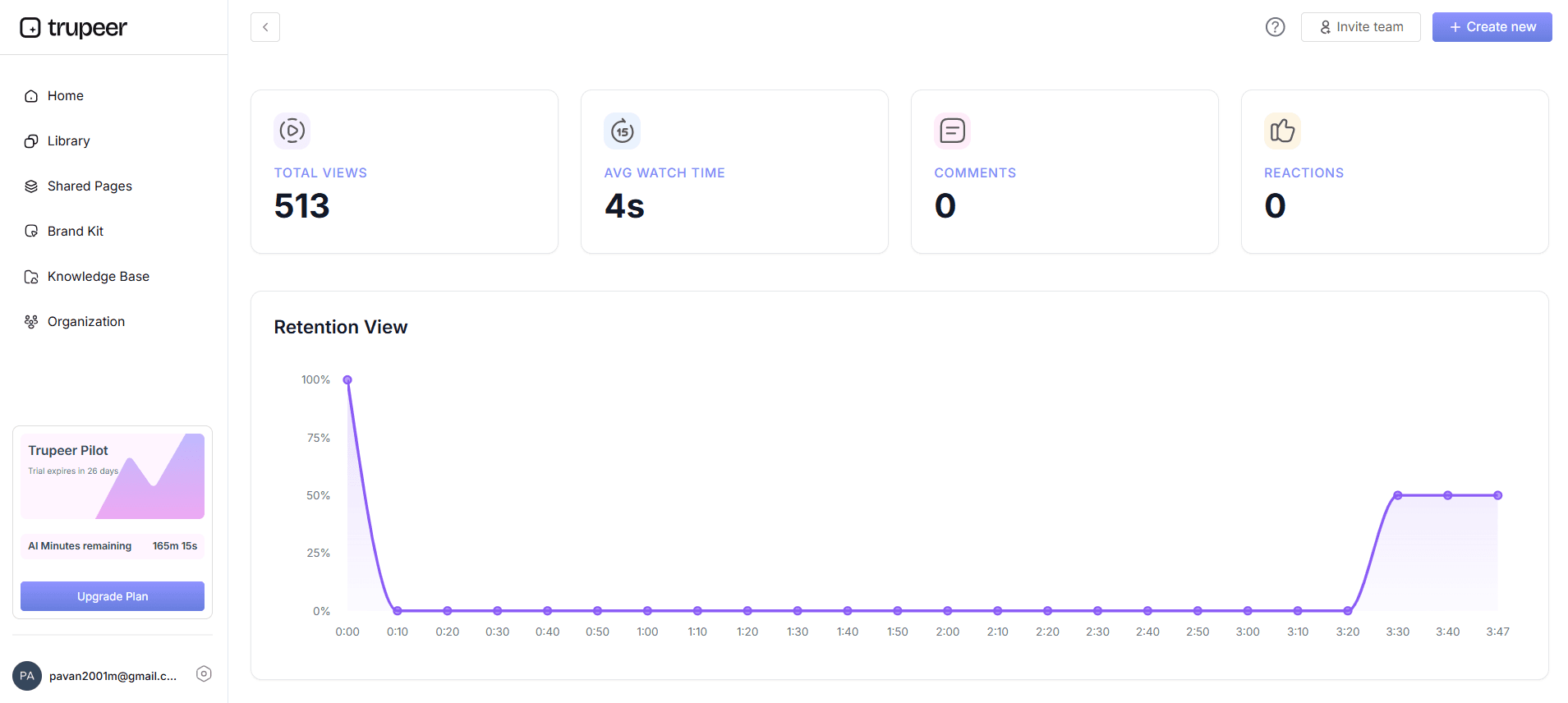
Next, use Trupeer's viewer engagement analytics to gain insights into how customers interact with your knowledge base. Navigate to the "Analytics" section in the Trupeer dashboard, where you can view metrics like page views, average time spent, and user drop-off points. This data is crucial for understanding which areas of your knowledge base are effective at deflecting tickets. Analyze patterns to see if users are finding solutions or if they abandon the search, leading to a support ticket. Regularly reviewing this data can help you adjust your content strategy to improve deflection rates over time.
Step 3: Update Knowledge Base Content
After analyzing user engagement, use Trupeer's auto-updating documentation feature to ensure your knowledge base content remains current. This step involves clicking on the "Update" button within the Trupeer platform's documentation section. This action will refresh content linked to new recordings, ensuring that users always have access to the latest information. Keeping your content up-to-date is crucial for maintaining a high deflection rate, as outdated or incorrect information can lead to increased support requests. This automatic update process takes just a few minutes, ensuring minimal downtime and maximum efficiency.
Step 4: Create Targeted Content
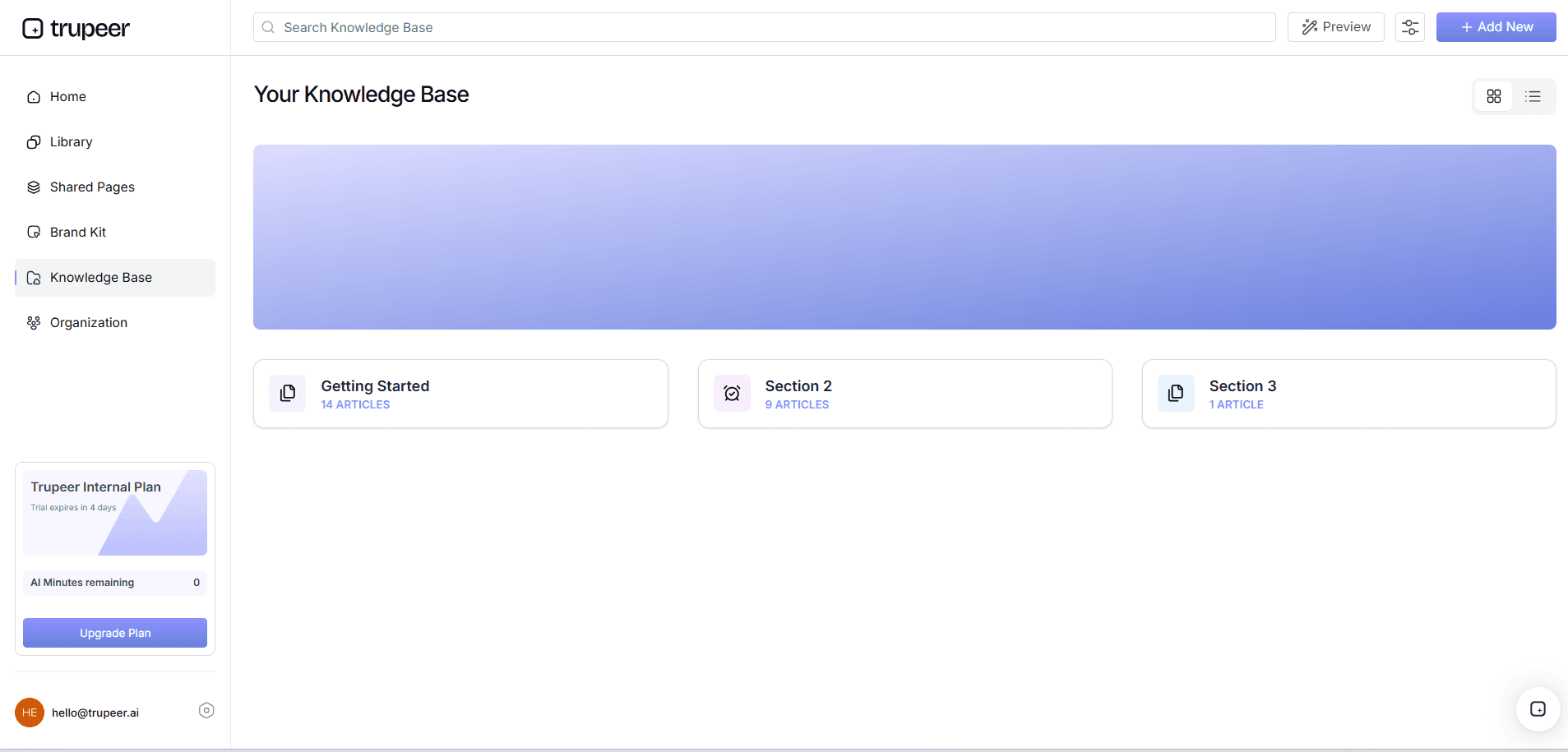
Use Trupeer's knowledge base generator to produce targeted content that addresses common queries identified during data analysis. Access the generator tool from the Trupeer dashboard, select "Create New Content," and input key topics identified in Step 2. The AI will assist in crafting detailed articles or multimedia content that directly addresses user needs. This process helps fill gaps in your knowledge base, improving its ability to deflect tickets effectively. Expect the content generation process to take about 10-15 minutes per topic, allowing for rapid deployment of new resources. Teams weighing tools often start with a Loom alternatives comparison before standardizing on a workflow.
Step 5: Test and Iterate
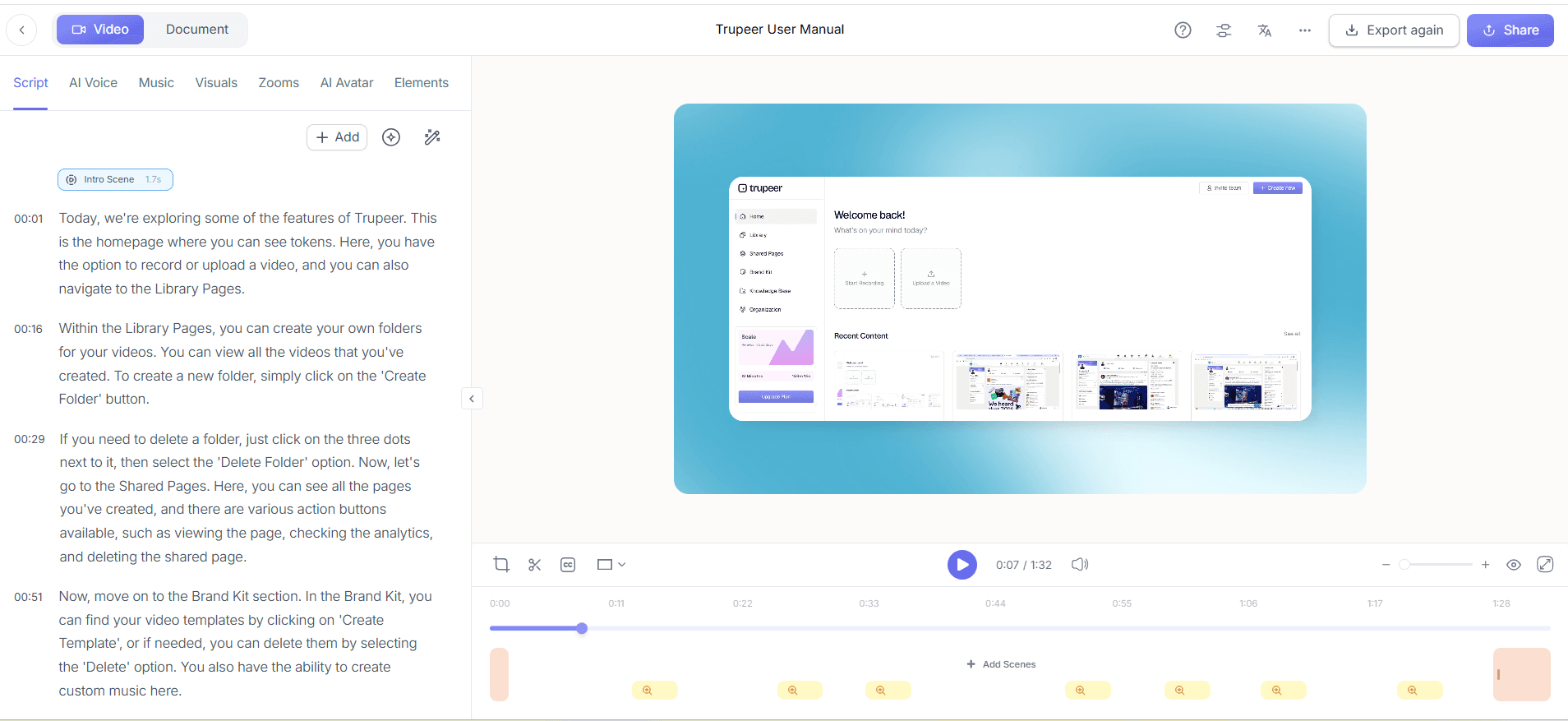
Once new content is implemented, test its effectiveness using Trupeer’s AI-searchable knowledge base. Conduct A/B testing by directing a portion of your audience to the updated knowledge base while monitoring deflection rates. This involves setting up a test group within the "Testing" section of the Trupeer platform, where you can compare metrics between the control and test groups. Based on the results, iterate on the content as needed, making adjustments to improve performance. Regular testing and iteration ensure that your knowledge base continuously evolves to meet user needs and deflect more tickets over time.
Step 6: Report and Optimize
Finally, report on the success of your deflection efforts using Trupeer’s comprehensive analytics. Access the "Reports" section to generate detailed reports that summarize deflection rates and other key metrics. Share these reports with stakeholders to demonstrate the knowledge base's impact on reducing support interactions. Use insights from these reports to identify further optimization opportunities and refine your strategy. By continuously monitoring and reporting on deflection rates, you can make data-driven decisions that enhance your knowledge base's effectiveness and contribute to overall business success. Trupeer also ships a internal knowledge base wiki software that handles this step without extra setup.
What tips help you calculate the support ticket deflection rate?
Optimizing your knowledge base to effectively deflect tickets involves more than just monitoring metrics. By adopting strategic approaches and using tools, you can enhance your calculation process and achieve better results. Here are some tips to consider:
Track Search Queries. Monitor what users are searching for within your knowledge base to identify content gaps and create relevant resources.
Regularly Audit Content. Conduct periodic reviews of your knowledge base to ensure all information is accurate and up-to-date, preventing misinformation from leading to support tickets.
use Feedback. Gather user feedback on your knowledge base content to understand its effectiveness and identify areas for improvement.
Enhance Accessibility. Make sure your knowledge base is easy to navigate and accessible to all users, potentially using a Scribe alternative comparison to simplify content delivery.
Integrate Multimedia. Use videos and images to explain complex topics; they often deflect more tickets than text alone.
Promote Self-Service. Encourage users to explore the knowledge base before contacting support, perhaps by highlighting knowledge base software teams customers features.
use AI Tools. Implement AI-driven analytics and content generation tools to automate and improve your deflection strategies.
Frequently asked questions
How do you accurately calculate the ticket deflection rate?
To accurately calculate the ticket deflection rate, compare the volume of issues resolved through your knowledge base against those submitted to support. First, track the number of unique users visiting your knowledge base and the number of support tickets submitted. Subtract the number of tickets from the number of unique visitors, then divide by the number of visitors, and multiply by 100 to get the deflection percentage. Ensuring accurate data collection and regular updates to your knowledge base are crucial, as they directly impact the reliability of your calculations. Tools like Trupeer can automate data tracking, making calculations more precise.
What tools help in measuring support ticket deflection?
Several tools can assist in measuring support ticket deflection effectively. Analytics platforms like Google Analytics track user interactions with your knowledge base. Trupeer offers viewer engagement analytics that provide detailed insights into how users interact with your content, highlighting successful deflections. also, automated documentation tools keep your knowledge base current, directly impacting deflection accuracy. These tools collectively offer a comprehensive view of your knowledge base performance, enabling you to fine-tune your strategy for better results.
Why is ticket deflection important for customer service?
Ticket deflection is crucial for customer service as it reduces the workload on support teams and improves customer satisfaction. When customers find solutions independently, it frees up resources and allows support agents to focus on more complex issues. This efficiency leads to faster resolution times and happier customers. also, an effective deflection strategy demonstrates your commitment to providing a smooth customer experience. By enhancing self-service resources, companies can improve retention rates and reduce operational costs, driving overall business success.
Can AI improve ticket deflection rates?
Yes, AI can significantly improve ticket deflection rates by enhancing the searchability and relevance of knowledge base content. AI-powered tools analyze user behavior to identify common issues and optimize content accordingly. For instance, AI-driven analytics can pinpoint which articles are most effective at deflecting tickets, allowing you to focus improvement efforts strategically. also, AI can automate content updates and generate new resources, ensuring your knowledge base remains a valuable self-service tool. Integrating a video translation platform can further extend your reach to non-English speaking audiences.
Does the size of a knowledge base affect its deflection rate?
The size of a knowledge base can impact its deflection rate, but quality is more critical than quantity. A large, well-organized knowledge base with targeted, relevant content will deflect more tickets than one with redundant or outdated information. The key is to maintain an up-to-date, easily navigable resource that addresses common customer queries effectively. Tools like Trupeer's AI documentation platform can help manage and optimize large knowledge bases, ensuring they remain efficient and effective at deflecting tickets. Regular content audits and strategic updates are essential to maintaining high deflection rates.
Related Blogs